We (well, my partner Jesse) bought a pallet of solar panels. Guaranteed to still have 90% of their capacity in 40 years1, they’ll cover all our household energy needs—powering our kitchen, heating our water, charging our electric car2—for the rest of our lives.

We've already been using 40-year-old panels to power our kitchen, proving that aging solar tech keeps on ticking.
And while our battery system to store our solar energy will need to be replaced sooner than our panels—in about 10-20 years—the total cost will average out to about $82.75/month for all our energy needs.
Compare that to what people spend just filling their gas tanks alone!
It feels good to lower our cost of living and be independent from the grid3, a grid still largely dependent on fossil fuels. And it’s more than just a personal win—it positions us to help others when the grid is down (just last month, 4.7 million people were without power after hurricane Helene).
Growing up in the US in the early 2000s, I felt alien to my own species that seemed unable to understand that we depend on the environment and should. not. destroy. it. Back then, renewables were for a fringe group of hippies, auto manufacturers' only innovation was increasing the size of gas guzzlers, and the government seemed to only intervene on behalf of corporations destroying the environment.
And look where we are now, two decades later:

Solar energy is on track to become the world’s largest source of electricity by 2027, with prices still dropping4. Energy-efficient heat pumps met about 10% of global heating needs in 2021. And even the American government has woken up to the importance of biodiversity—farmers in a dozen states now receive stipends to let regions of wild prairie grow back5.
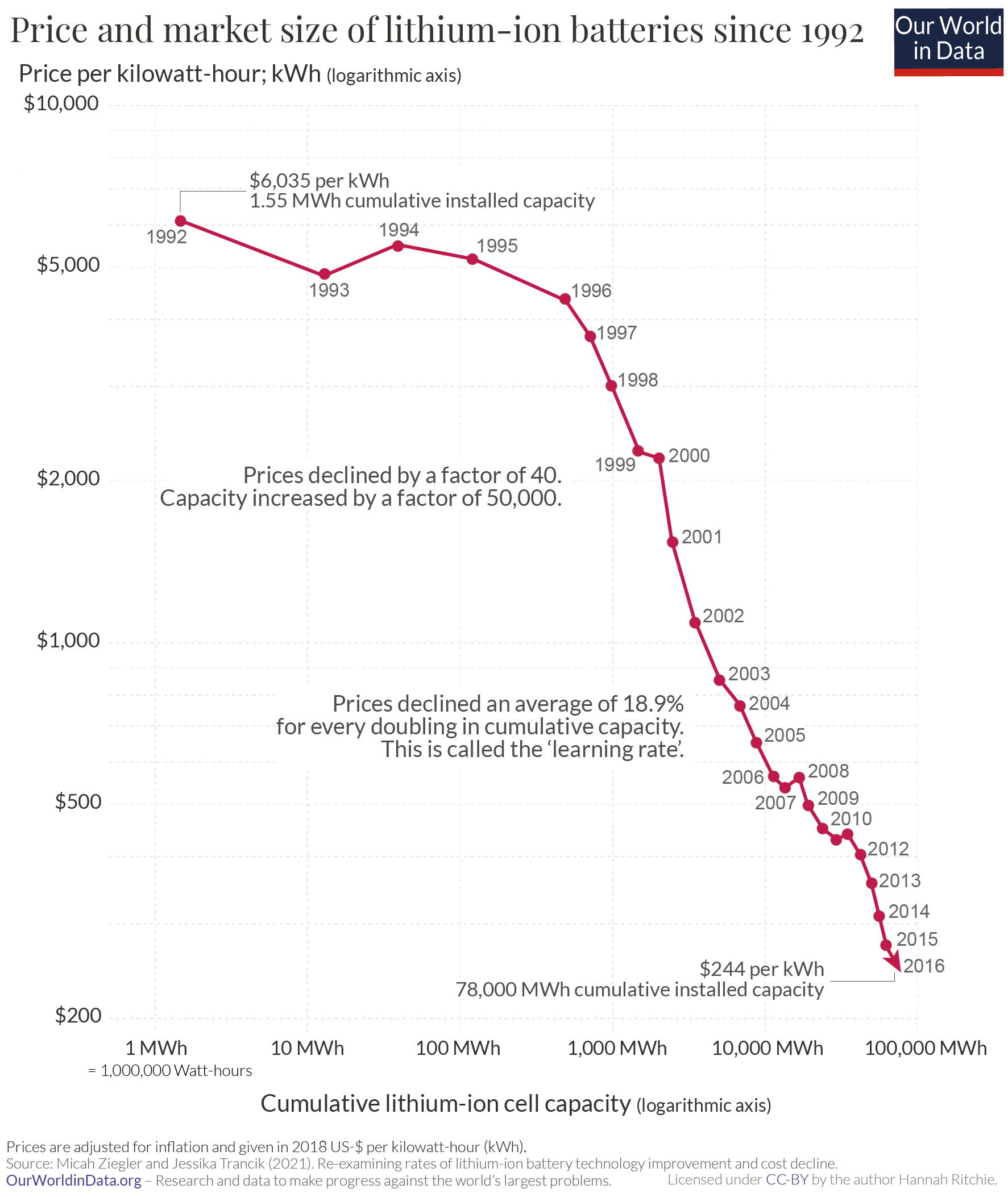
Battery technology keeps improving and getting cheaper, too. Sodium-ion, nickel-hydrogen, and iron-air batteries are in the works, and will be far more durable than lithium-ion batteries. Electric vehicles are mainstream and last longer than their gas engine counterparts, with an estimated lifespan of 200,000 miles. And when EVs’ batteries degrade too much for driving, they can be repurposed to store solar energy.
Even lessening our addiction to factory farmed animals is on the horizon: an edible microbial protein is being developed that would be as flexible as wheat.
All of this has rekindled my faith in the future. Yes, we're up against huge challenges—species and habitat loss is a greater threat than ever, we have not learned how to exist without war, and climate disasters are on the rise.
And yet... hope is a precious resource and I feel nourished to sit and drink from its oasis. I hadn't realized how sad it was to believe that the future will be worse than the present.
But... what if it's not?
What if we’re the ones who can make the Anthropocene awesome—figuring out how to live in a way that will weather the coming storms, and how to foster spirits resilient in times of hardship?
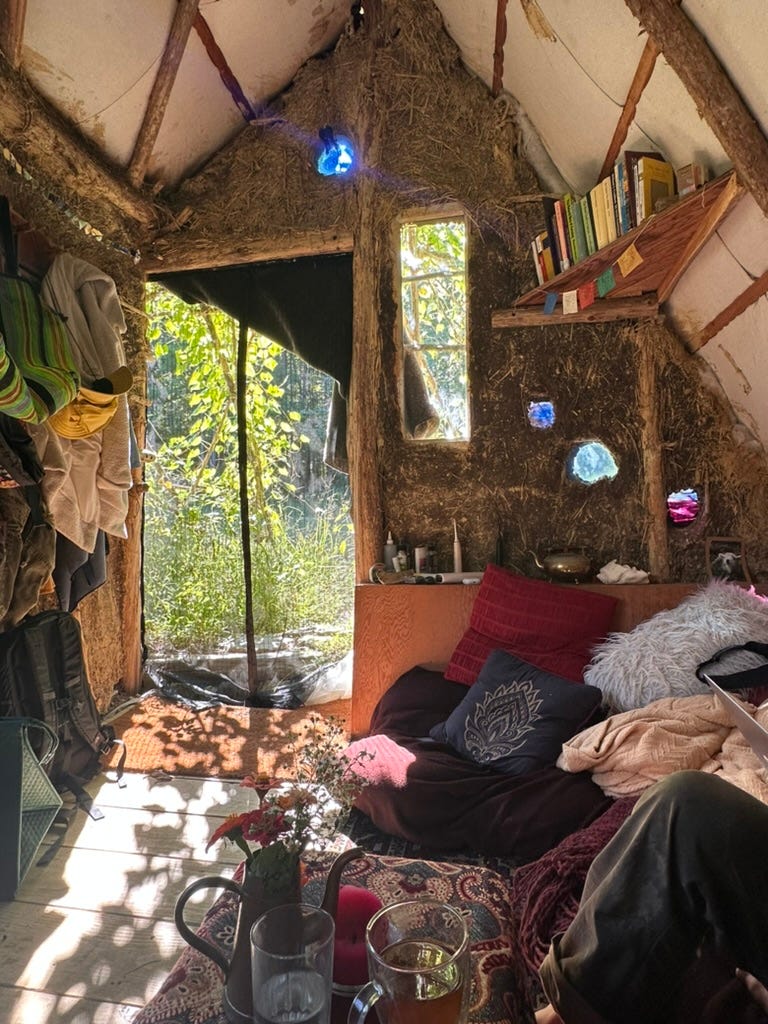
As I literally chop wood and carry water, I wonder what the point of putting our energy into our small homestead is. Couldn't we do more by living in an apartment with all the modern amenities, outsourcing our food, utilities, and shelter to others so we can focus on building something that helps a greater proportion of people? Isn't that what Silicon Valley has told us what “changing the world” looks like?
But after working (and burning out) for “change-the-world” startups, I wonder if my newfound hope comes from directly sowing the seeds of a sustainable future. Each day here on the homestead seems to compost and feed a micro-culture of resilient, sustainable life.
The other day I stumbled across Wikipedia's definition of solarpunk.
Solarpunk is a literary and artistic movement […] that envisions and works toward actualizing a sustainable future interconnected with nature and community. The "solar" represents solar energy as a renewable energy source and an optimistic vision of the future that rejects climate doomerism, while the "punk" refers to do it yourself and the countercultural, post-capitalist, and sometimes decolonial aspects of creating such a future.
Turns out, we’ve been living that definition. We’re taking a literary movement and making it real.