Hello and welcome to a jam-packed edition of the Ink & Switch Dispatch! It begins with our first public update about the ARIA Safeguarded AI Programme, introducing our project GAIOS and the new lab staff working on it, followed by a report on its implementation of our new local-first auth system Keyhive. We’ll share three presentations from the LIVE 2025 conference, and cue-up a new lab note from the Backstitch video game version control project. Finally, we have two new researchers-in-residence in the spotlight, and a fresh coat of yellow paint for the Automerge website. Phew!
GAIOS
In the previous
The GAIOS logo, designed by Todd Matthews.
The team working on GAIOS includes many longtime Ink & Switch researchers, and a few new faces:
- The mononymous
grjte will lend her expertise in zero-knowledge proofs and programmable cryptography to the GAIOS team. Previously at Bain Capital Crypto, grjte recently sharedGroundmist , a series of experiments building local-first tools that leverage the AT Protocol and Automerge. - Maciek Sakrejda worked on Postgres tooling for most of his career but has now seen the local-first light. He’s already an active contributor to Automerge
Repo , and since joining the lab has helped land presence indicators for our in-house instance of Patchwork. His full-stack skills will be instrumental as we prepare GAIOS for real-world use. - Fresh from presenting at LIVE 2025, Orion
Reed brings his knack for quick-and-compelling prototypes, programmable canvas tools, and malleable substrates to the lab. Orion’s work spans disciplines, leading him to collaborate with varied groups likeFolkJS , the mysterious TentpoleCollective (with researcher-in-residence alumni Elliot Evans and Lu Wilson), and the LiberatoryComputing collective.
Keyhive
We’ve accelerated our work on
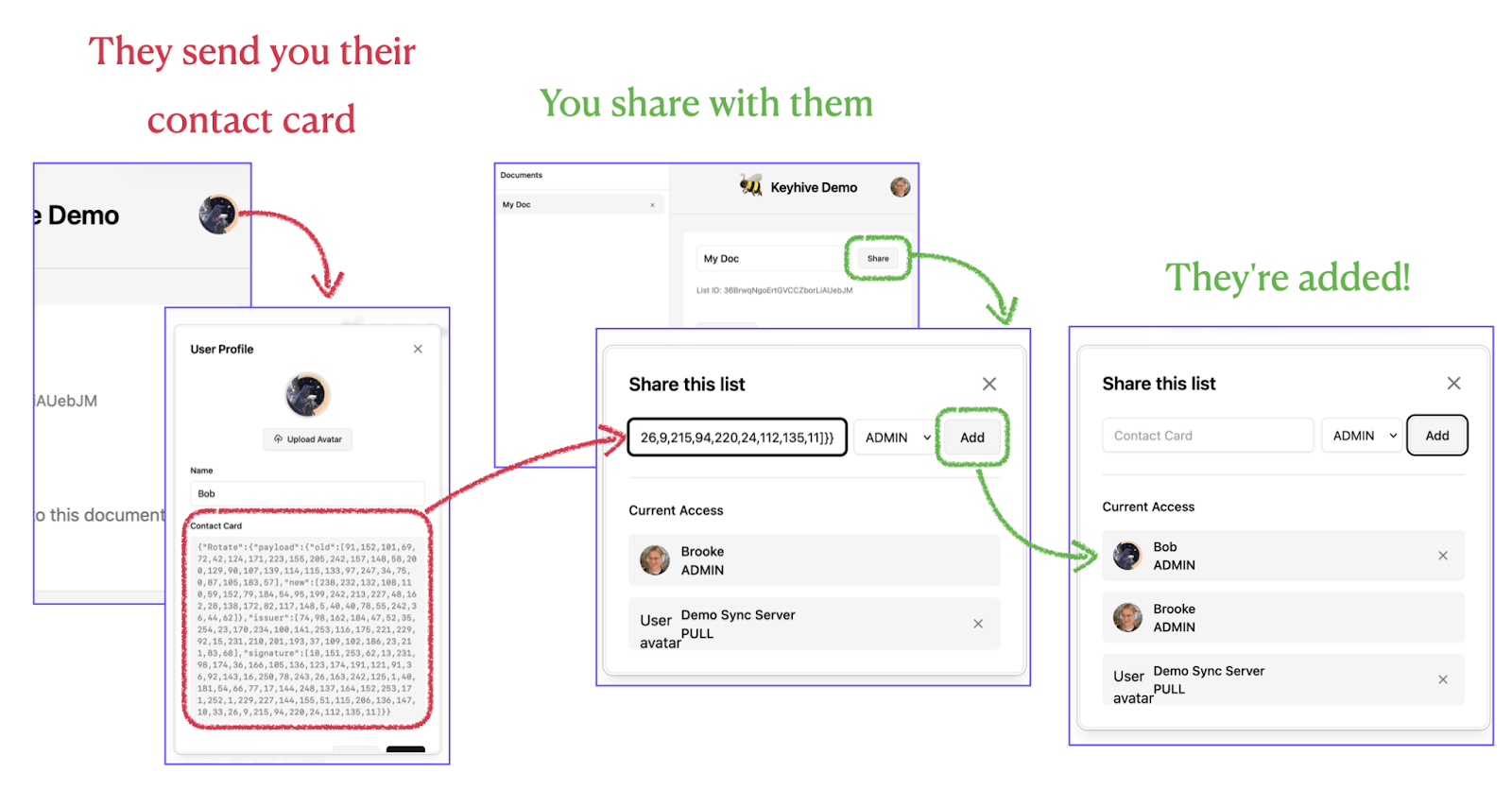
Sharing a document in the Keyhive proof-of-concept.
Integration into GAIOS
Automerge
- All messages sent or received are signed with the local non-extractable signing key
- Messages for a particular document are authorized by checking the access rights of the authenticated sender of the message against the local Keyhive instance
- Keyhive’s ops are synchronized over the same network stack as the rest of Automerge Repo, but currently with a naive diffing mechanism which we plan to replace with the new sync system (Subduction — more on that below)
The end result is that all documents in GAIOS are protected at the network boundary by the Keyhive access control CRDT and GAIOS guest applications are passed an interface to manage this access control state without needing to know about storage or synchronization. This is an initial integration, and ongoing work includes adding E2EE and enforcing revocations on backdated Automerge content.
In parallel, we began prototyping a “share” (permissions) dialog for users. This menu provides a clear UI to invite collaborators, adjust permissions, and revoke access. The goal is to make capability management feel familiar — more like adding a collaborator in Google Docs, less like managing cryptographic keys. Behind the scenes, these actions map to issuing or revoking Keyhive capabilities. This design aims to connect the user mental model (“sharing a document”) with the technical enforcement layer (capabilities).
We’ve recorded a short video demonstrating this early UI prototype if you’d like to see it in action.
Subduction
One recurring challenge in CRDT-based systems is synchronization at scale. As more users join, and as documents grow larger, our reference sync server implementation has shown stress points:
- It maintains a fully materialized version of every document in memory.
- It computes hashes and related states eagerly for each request.
- Being written in Node.js — which being 32-bit has a 4GB memory limit — it can run into memory pressure.
The result: servers sometimes time out under heavy load, particularly when handling large diffs or very active documents.
To address this, we’ve been developing an alternative sync strategy we call Subduction. Instead of materializing entire documents, Subduction deterministically chunks documents and streams only the minimal state needed to reconcile peers.
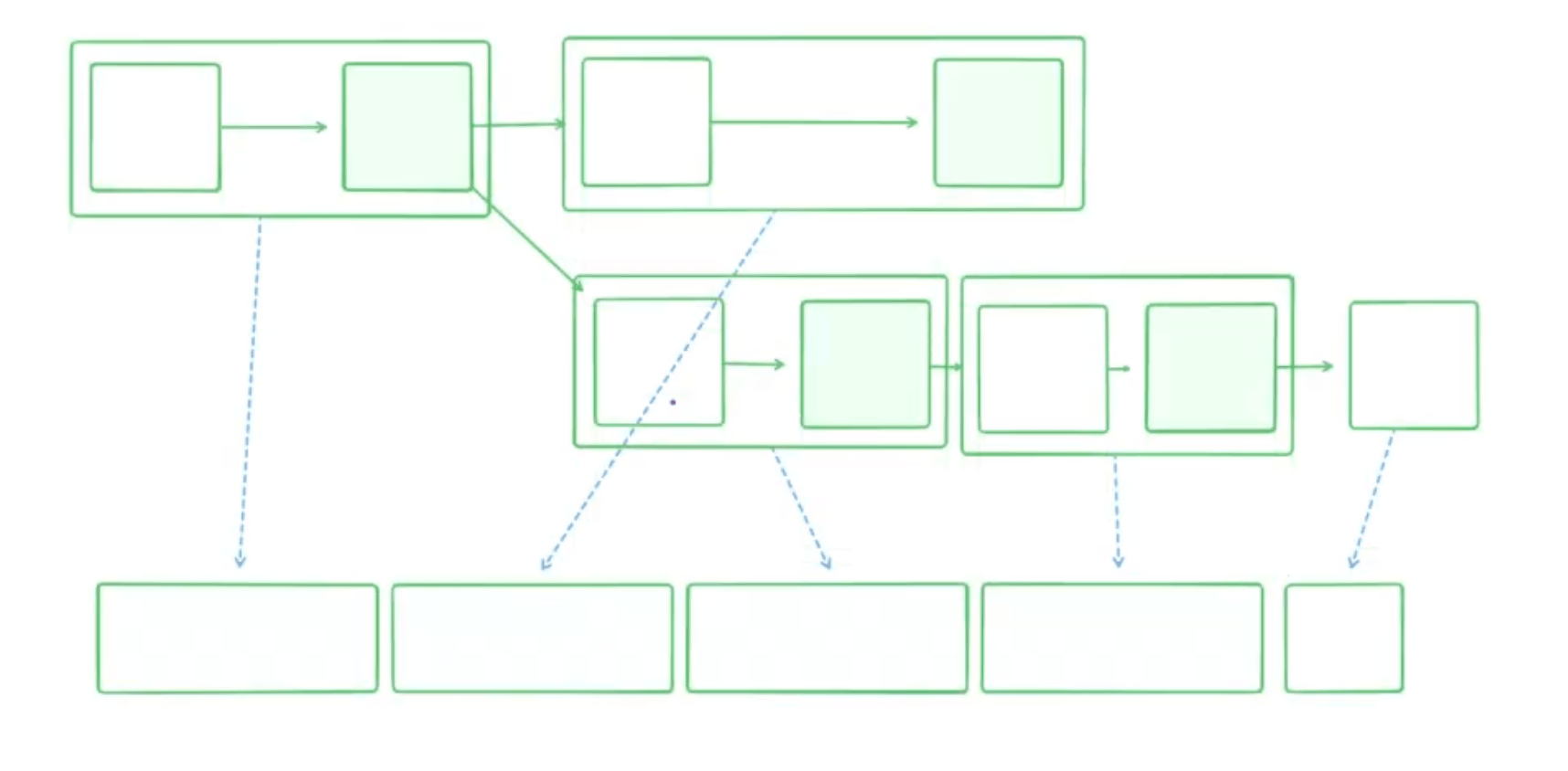
An illustration of document chunking.
We believe that this should result in:
- Improved scalability: less memory overhead, much less CPU use per request.
- Better performance: faster diffs, quicker round-trips.
- Set us up for E2EE documents since it doesn’t need to know anything about the underlying document other than some hash identifiers.
We are finalizing the integration of Subduction with Automerge Repo, and hardening the integration of Keyhive in GAIOS. Subduction and Keyhive are nearly ready for their public debut — after just a little bit more internal testing and dogfooding.
LIVE 2025
In September we participated in LIVE
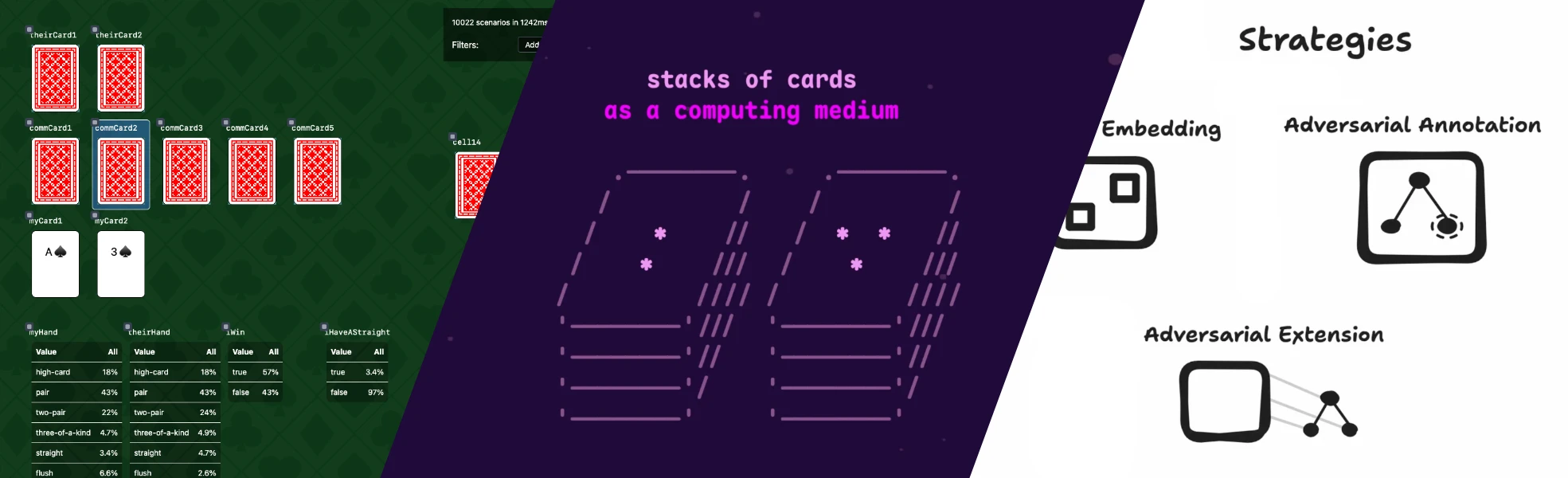
Screenshots from the three live presentations, showing a poker game with various statistics and scenarios in Ambsheets, an illustration of Nova’s stacks, and a few strategies for adversarial interoperability.
A spreadsheet for exploring scenarios
In Ambsheets: A spreadsheet for exploring
Nova
June Gardner, a researcher-in-residence at the lab, presented her work on
Live Programming in Hostile Territory
Orion Reed, who recently joined the lab to help build GAIOS, collaborated with Christopher Shank on Live Programming in Hostile Territory. The
Version Control for Space and Structure
Backstitch — our exploration of version control inside the Godot game engine — continues apace. We’re pleased to share that Lilith
Speaking of work-in-progress, we’ve just published the first Backstitch lab note, Version Control for Space and
And Points Beyond
We’re also pleased to spotlight two more new people who have joined Ink & Switch as researchers-in-residence. June
Mimi
Finally, after months of internal brainstorming and iteration, we unveiled a brand-new website for
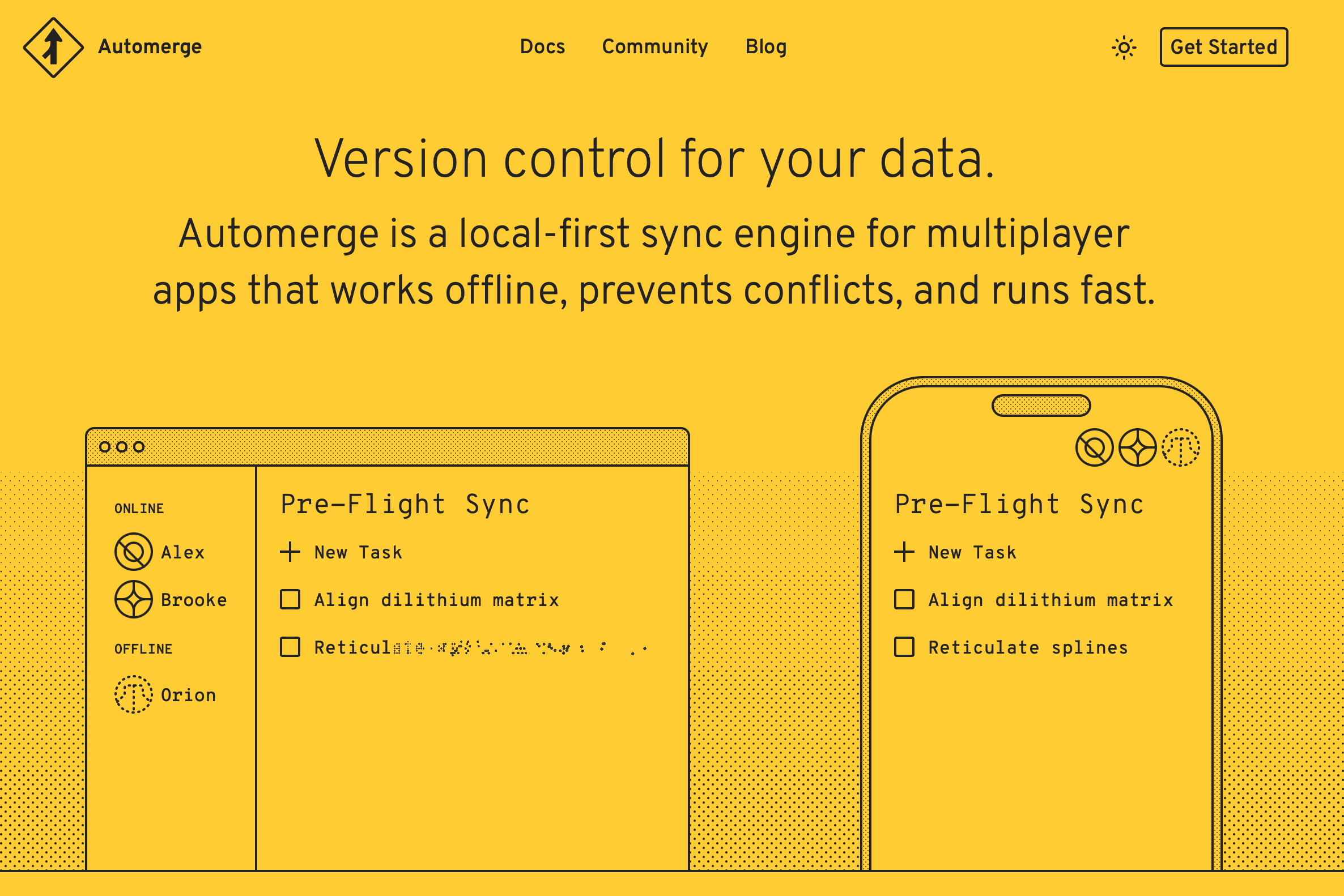
The new Automerge website, in vibrant yellow, with an interactive demo on the home page.
That’s all for this mega-sized Ink & Switch Dispatch. If you’d like to collaborate with us or share your thoughts, we’re all
The Ink & Switch Dispatch
Keep up-to-date with the lab's latest findings, appearances, and happenings by subscribing to our newsletter. For a sneak peek, browse the archive.