

By many measures, GitHub is as popular as ever. One new user joins every second, the service hosts over 600 million repositories, and nearly one billion commits were made in 2025.
But scratch the surface, and something else is going on. Some users are concerned about a range of issues, from technical problems like frequent downtime to the service’s political direction, especially since it was taken over by Microsoft.
A few high-profile projects have taken things much further, abandoning the offering altogether, in a move that may represent the beginnings of a more widespread exodus.
Some key players have abandoned GitHub
A slow trickle that may gain momentum
When you’re searching for open-source software, it can seem like every project is hosted on GitHub. Even the Linux kernel source code has a read-only GitHub mirror, although its main home has a domain of its own.
But this isn’t always the case, and it may become less and less so if moves by a handful of projects become a wider trend.

Probably the highest-profile departure so far has been Ghostty, a cross-platform terminal emulator. The project’s maintainer, Mitchell Hashimoto, announced in April 2026 that Ghostty was leaving GitHub, although not immediately:
It'll take us time to remove all of our dependencies on GitHub and we have a plan in place to do it as incrementally as possible. We plan on keeping a read-only mirror available on GitHub at the current URL.
Zig, a system programming language that’s a spiritual successor to C, also announced its departure, back in November 2025. The project made its first commit back in 2015, and enjoyed an uninterrupted run on GitHub, until recently.
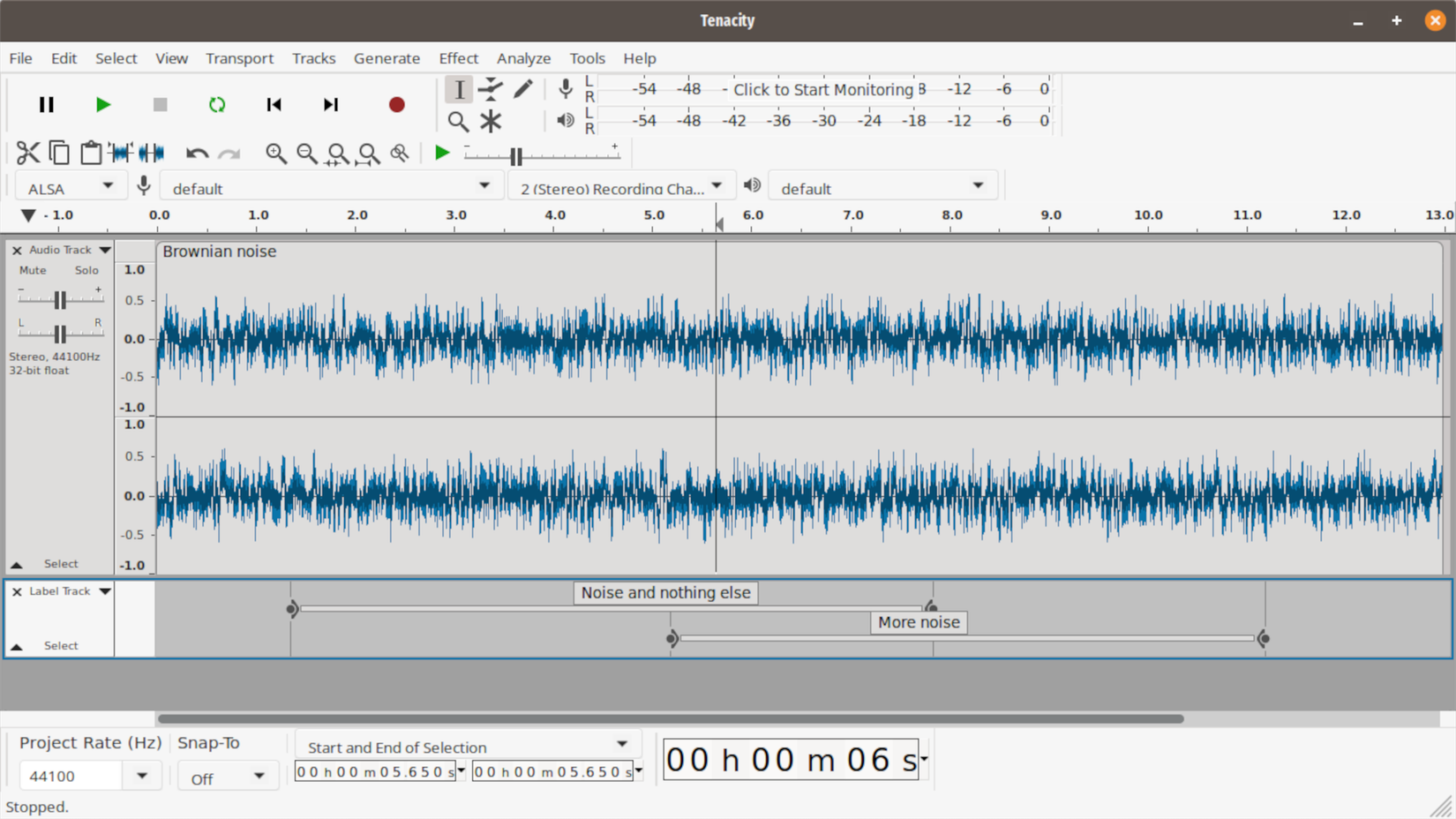
Another significant project that’s made a switch is Tenacity. This cross-platform audio editor announced its move on a Reddit forum in 2023 and now only maintains a mirror presence on GitHub.
Alongside these more prominent repos, many other projects have migrated, such as the Dillo web browser and the Hare programming language. Even more were never on GitHub in the first place, choosing to self-host their repositories, like GNOME or Apache’s vast array of software.
 Quiz
Quiz
8 Questions · Test Your Knowledge
GitHub alternatives for developers
Trivia challenge
Think you know your GitLab from your Gitea? Put your source control knowledge to the test.
PlatformsOpen SourceHistoryFeaturesDevOps
Which company developed GitLab, one of the most popular GitHub alternatives?
That's right! GitLab Inc. was founded in 2014 by Dmitriy Zaporozhets and Sid Sijbrandij. The platform started as an open-source project and has grown into one of the most feature-rich DevOps platforms available today.
Not quite — GitLab was created by GitLab Inc., founded by Dmitriy Zaporozhets and Sid Sijbrandij in 2014. While Microsoft owns GitHub itself, GitLab is an entirely separate company and product.
Which GitHub alternative is a lightweight, self-hosted Git service written in Go, known for its low resource usage?
Correct! Gitea is a community-managed fork of Gogs, written in Go, and is celebrated for being incredibly lightweight. It can run on a Raspberry Pi and offers a GitHub-like interface without heavy server requirements.
Close, but the answer is Gitea. While Gogs is also written in Go and inspired Gitea, Gitea is the more actively maintained fork with a larger community. Both are self-hosted options, but Gitea has surpassed Gogs in development activity.
Bitbucket, a major GitHub alternative, was originally acquired by which company in 2010?
Spot on! Atlassian acquired Bitbucket in 2010, integrating it into their suite of developer tools alongside Jira and Confluence. This made Bitbucket especially popular among teams already using the Atlassian ecosystem.
Not quite — Bitbucket was acquired by Atlassian in 2010, not Microsoft or any of the other options. Atlassian is the company behind Jira, Confluence, and Trello, making Bitbucket a natural fit for its developer-focused product lineup.
Which GitHub alternative is best known for offering a fully integrated DevOps lifecycle platform, including CI/CD, security scanning, and project management in a single application?
Exactly right! GitLab markets itself as a complete DevOps platform, offering everything from source control and CI/CD pipelines to container registries and security scanning — all within one unified interface. This all-in-one approach is a key differentiator.
The correct answer is GitLab. While Bitbucket also offers CI/CD via Pipelines, GitLab is uniquely recognized for packaging the entire DevOps lifecycle — from planning to monitoring — into a single cohesive platform, making it a favorite for enterprise teams.
SourceForge, one of the earliest code hosting platforms, launched in which year?
Well done! SourceForge launched in 1999 and was a pioneer in open-source code hosting before GitHub existed. At its peak it hosted millions of projects, though it later lost ground to GitHub due to controversy over adware bundling.
Not quite — SourceForge launched in 1999, making it one of the oldest code hosting services on the internet. It predates GitHub by nearly a decade and was once the go-to platform for open-source projects before GitHub disrupted the space.
Which self-hosted Git repository manager, developed by Perforce, is widely used in enterprise environments and supports both Git and Mercurial?
Correct! RhodeCode is an enterprise-grade, self-hosted source code management platform that supports Git, Mercurial, and SVN. It was acquired by Perforce and is used by organizations that need strong access controls and audit trails.
The right answer is RhodeCode, now part of Perforce. It stands out among self-hosted alternatives for supporting multiple version control systems — Git, Mercurial, and SVN — making it attractive for enterprises managing legacy codebases alongside modern repos.
Which platform, primarily used for large-scale open-source projects, is maintained by Canonical and hosts the development of many Ubuntu-related packages?
That's correct! Launchpad is maintained by Canonical and serves as the central hub for Ubuntu development. It offers bug tracking, code hosting via Bazaar and Git, and translation tools, making it a specialized but powerful platform for the Ubuntu ecosystem.
The answer is Launchpad, run by Canonical — the company behind Ubuntu. While it's not as general-purpose as GitHub or GitLab, Launchpad is integral to Ubuntu's development workflow and hosts thousands of packages and projects tied to the Debian/Ubuntu ecosystem.
Codeberg is a nonprofit-run GitHub alternative based in Germany. Which open-source software does it run under the hood?
Exactly! Codeberg is powered by Gitea, the lightweight open-source Git platform written in Go. As a nonprofit hosted in the EU, Codeberg appeals strongly to privacy-conscious developers and those who want an ethical alternative to commercial platforms.
The correct answer is Gitea. Codeberg uses Gitea as its underlying software and operates as a registered nonprofit based in Berlin, Germany. It has become a favorite in the open-source and privacy-focused developer communities as a transparent alternative to GitHub.
Challenge Complete
Your Score
/ 8
Thanks for playing!
Projects have left for these key reasons
Downtime, artificial intelligence, and politics are all concerns
Maintainers have given various reasons for moving away, including these:
- Technical quality: probably the most common complaint is that GitHub suffers from frequent outages. IncidentHub tracked a total downtime of 112 hours across 48 “major outages” in the year from May 2025, noting that such outages were the driver behind the migrations of Ghostty and Zig.
- Politics: Andrew Kelley, creator of Zig, mentioned GitHub’s relationship with ICE in passing. The company’s $200k deal with the immigration agency was also criticized by employees way back in 2019.
- AI: Still a divisive topic, artificial intelligence has touched almost every aspect of our tech lives, including GitHub, where Copilot is being increasingly integrated. The service nailed its colors firmly to the mast in 2025, when CEO Thomas Dohmke commented, “Either you embrace AI, or get out of this career.”
Complaints about GitHub are probably best summarized by another quote from Mitchell Hashimoto:
It's not a fun place for me to be anymore. I want to be there but it doesn't want me to be there. I want to get work done and it doesn't want me to get work done. I want to ship software and it doesn't want me to ship software.
Aside from these departures, those projects that have always avoided GitHub have their own reasons. The GNU Project, for example, has always been fiercely ideological and rejects GitHub because it requires non-free software (JavaScript) to run. It also notes the host’s encouragement of “bad licensing practice.”
Alternatives to GitHub are doing well
From self-hosting to Codeberg, various options are available
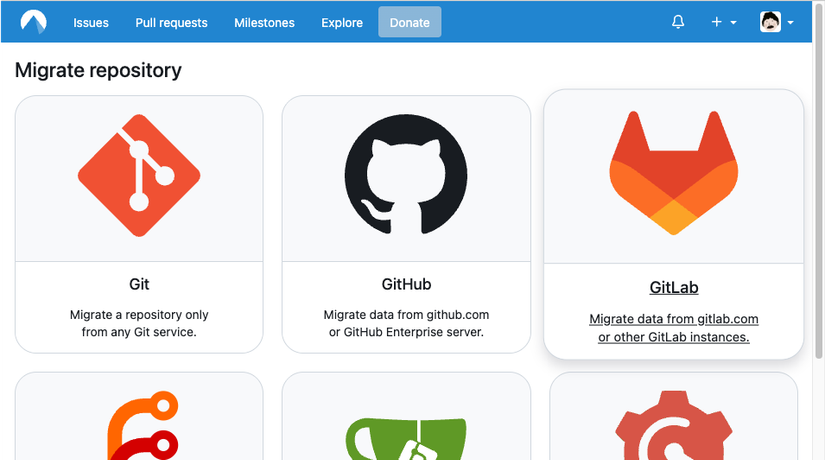
Codeberg is probably the singular most popular competing service that projects like Zig have chosen to abandon GitHub for. It has many of the same features as GitHub: issue tracking, static page hosting, and Continuous Integration/Continuous Delivery (CI/CD), for example.
There are other options, such as GitLab, which has a self-hosting option, or Bitbucket, GitHub’s most contemporary alternative.
Sourcehut is a completely open-source offering, with equivalents of GitHub’s core features and an emphasis on an email-based workflow. Others choose to host their own forge, with popular options including Gitea and Forgejo, the software that runs in the background at Codeberg.
There are even whole movements encouraging people to give up GitHub, like the Software Freedom Conservancy’s campaign, which has many resources to help you make the move.
GitHub can be great, but it’s not your only option
Although it’s probably done more than any other web app to encourage open source development and collaboration, GitHub isn’t without its problems. Some are technical, some are more idealized, but whatever your stance, it’s good to know that alternatives are available.