
Linux fans like to dream of the day when Linux is a mainstream OS instead of a hacker's tool. As much fun and useful as Linux is, it seems that Linux will still be a "geek" OS. Here's why the Linux community should embrace this rather than fight it.
Linux is a developer's workbench
In 1985, Paul Schindler, who was the software reviewer for the PBS show The Computer Chronicles, delivered a short editorial during the show's episode on Unix, when observers were speculating that AT&T could unseat IBM as the dominant force in computing with Unix in the wake of the breakup of the Bell System. AT&T, now legally able to market computers and software directly, and Unix in particular.
Schindler poured cold water on the idea, comparing marketing Unix to mainstream computer users to trying to open a can of tomato juice with a screwdriver (starting at around 21:54 in the embedded video below).
Schindler's main argument was that while Unix was a great environment for writing minicomputer software (a class of machine we would now call a server), the proliferation of different Unix versions even in 1985 made software portability difficult.
While Unix had made a splash in academia and Unix workstations were becoming popular in science and engineering, the fragmentation and lack of office software made it a tough sell in the business market compared to the ubiquitous MS-DOS systems outside of specialized applications.
Joel Spolsky, in a review of Eric S. Raymond's The Art of Unix Programming, pointed out that at the time Unix was first developed, the division between developers and end-users didn't exist in the minicomputer era. Users had to write their own software. Unix culture evolved to make things easier for developers through its command-line and pipeline design, even at the expense of end users, and Linux largely inherited this attitude.
Unix-like systems are so close to developers' hearts that an early version at Bell Labs was even dubbed "Programmer's Workbench."
Linux advocates have been trying to push Linux as an alternative to Windows in turn, just about as long as Linux systems have existed. It's not hard to see why. Linux source code is free in both speech and beer, and one big obstacle to Unix desktop adoption was the cost of licensing the software.
While Windows will likely be the OS of choice of those who use their machines as the means to some other end, Linux has inherited Unix's reputation as a hacker's and tinkerer's paradise. As with Unix, this feature might be an ironic liability when trying to pitch Linux to mainstream users, even as Linux might be the best environment to develop and host their applications.
Linux is the platform for serious work
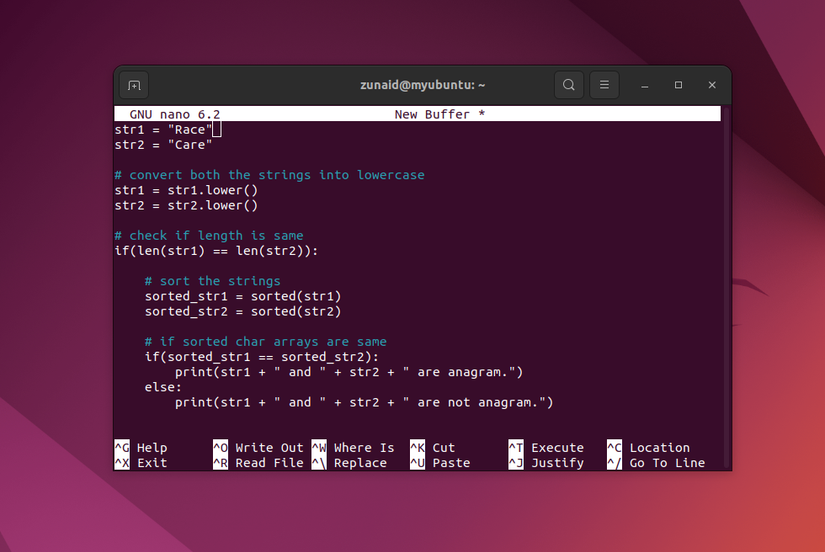
There are several reasons why Linux looms so large in software development. Linux, as Unix before it, is a common teaching tool in computer science academia. CS students learn to code on it, or at least those who haven't already been tinkering with it in their bedrooms and dorm rooms.
Many Linux distros already come with programming tools installed. If they aren't, it's trivial to use the package manager to install editors, compilers, interpreters, debuggers, and so on. Again, a lot of these tools have their roots in the classic Unix era. The most important programming tool might be the shell, which lets users string together existing commands into pipelines.
While most "mundane" users might use Windows or macOS on the desktop and a smartphone in their pocket (more on that later), their applications, if not incubated on a Linux system, are almost certainly running on one. Web servers like the one bringing you this article are most likely to be running on Linux, as well as many mobile apps on the back end.
A real "desktop Linux" won't look like Linux

Despite the efforts of companies like Red Hat and Canonical, the makers of the popular Ubuntu variant, Windows is still the dominant desktop for most end users, despite recent grumblings over Microsoft's promotion of AI features in the system, something that the rest of the mainstream tech industry is also guilty of.
The most widespread Linux-derived projects in the hands of non-programmers might be Android and ChromeOS. Most observers would not recognize these systems as standard Linux distributions. If other Linux systems were to become popular, they would likely have to follow this model, such as coming up with their own user interfaces and application infrastructures. Hardcore Linux enthusiasts would scoff at this sort of thing, as they do toward ChromeOS (though not Linus Torvalds, according to Fortune).
ChromeOS's ubiquity in primary and secondary education proves that a lot of the barriers to Linux adoption might be cultural and structural rather than with the software itself. There's only one version of ChromeOS rather than the myriad desktop environments on Linux.
Valve, the creator Steam and the Steam Deck, would possibly be another contender for promoting more "mainstream" Linux use, since Steam by itself is the game store on the PC. GOG is also making a push toward more Linux support now that the store is independent. These would also be more specialized applications. The Steam Deck's success is more because it offers a way to run PC games portably rather than as a Linux machine, though it is popular with tinkerers.
Linux shouldn't try to be something it's not
Linux isn't going away, but it will likely never become "mainstream" on its own. More nontechnical users are turning to smartphones and tablets as their primary devices and will likely never dive into the details of their systems. Linux's future will likely lie in embracing its status as a platform for tinkering and development. The hobbyist who experiments with a Raspberry Pi, opens up a WSL terminal, or dual-boots another Linux system will ensure that Linux will still be the OS for people who want to get the most out of their machines.