Backed by


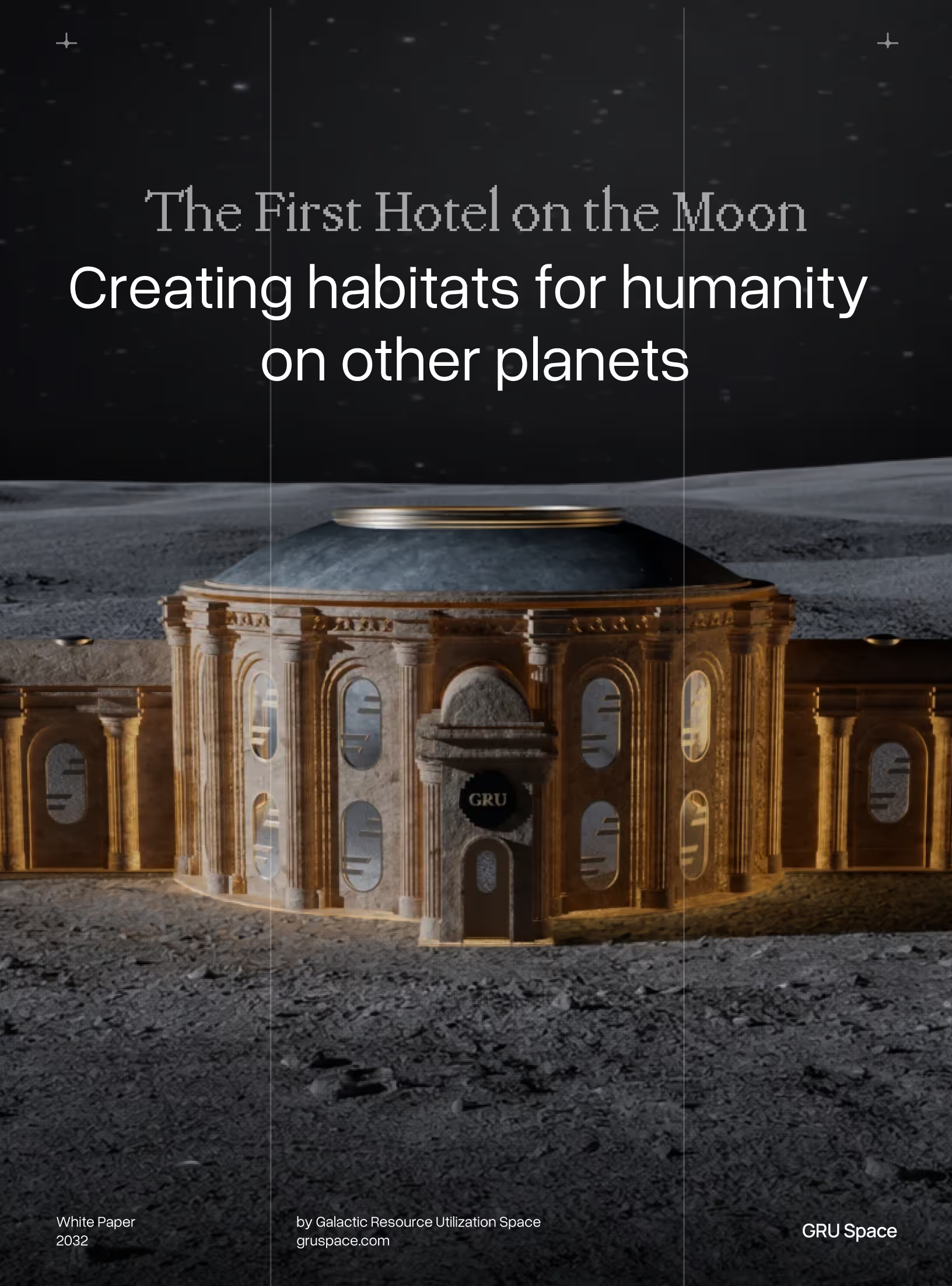
The First Hotel on the Moon
Take Part in Humanity’s Journey to the Next Frontier
Mission I
First Lunar Systems Test
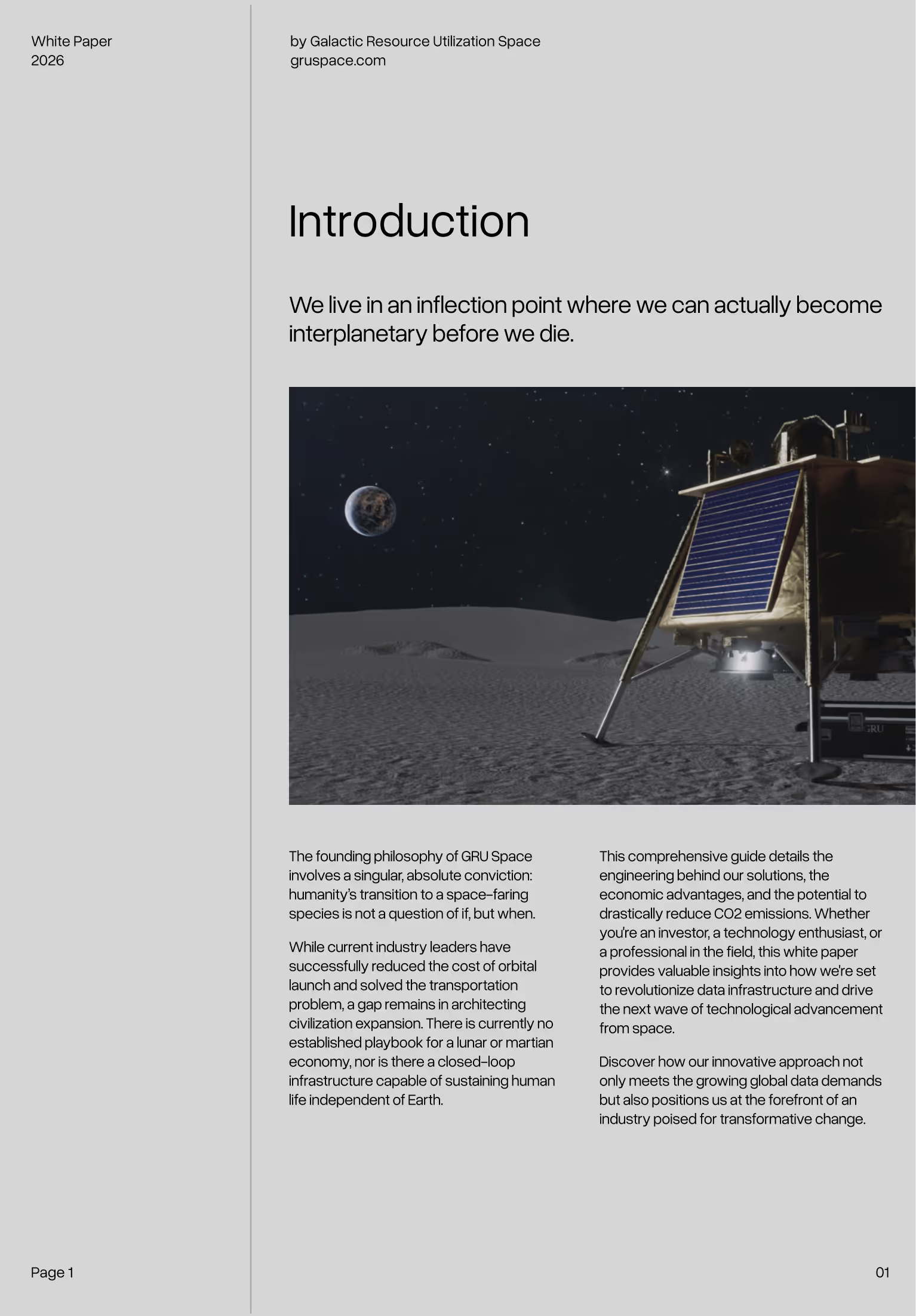
A pressurized test payload is placed on the lunar surface to evaluate controlled environmental conditions, alongside early construction experiments using locally sourced materials. Together, these tests reduce risk ahead of larger, more complex missions.
Mission II
Lunar Cave Base
A larger payload lands near a lunar pit chosen for its natural shielding from radiation and temperature extremes. Inside, an inflatable system is deployed, and further construction tests begin, preparing the way for building at scale.
Mission III
First Lunar Hotel
In 2032, the first hotel is landed and deployed on the Moon. Built on Earth and delivered by a heavy lander, the inflatable structure is installed to host up to four guests for multi-day stays.
Designed to operate for 10 years, the hotel offers views of the lunar landscape and Earth, along with envisioned experiences such as surface experiences including Moonwalks, driving, golfing, and other activities.
Future Missions
Long-Term Presence
Future missions scale construction on the Moon using ISRU systems and robotic equipment. Modular inflatable habitats are enclosed by structures made from lunar material, increasing capacity from four to ten guests and extending operational life.
As payload costs drop and launch cadence improves, this supports a permanent lunar presence and opens the path to similar destinations on Mars.
Built from Lunar Regolith

How is This Actually Possible?
Our whitepaper explains how the first hotel on the Moon can become the foundation for scalable lunar infrastructure.
It outlines why humanity’s move beyond Earth is now within reach, and how a clear technical and economic roadmap turns that inevitability into reality.
GRU Space Team
GRU Space brings together builders with backgrounds in spaceflight, autonomous systems, and large-scale hardware, united by a single goal: making humanity interplanetary.

Skyler Chan
Founder & CEO
Skyler graduated early from Berkeley EECS to make humanity interplanetary. Previously he built vehicle software at Tesla, built a NASA funded 3D-printer launched into space, and authored at the largest space conference. Air Force-trained pilot at 16.

Dr. Kevin Cannon
Founding Member of Technical Staff
Kevin was a professor at Colorado School of Mines, and previously CTO at Ethos. He is the world expert in lunar and martian regolith. Kevin holds a PhD in Planetary Sciences from Brown University. Kevin leads GRU’s ISRU program.

Dr. Robert Lillis
Advisor
Associate Director for Planetary Science at UC Berkeley’s Space Sciences Laboratory and PI of ESCAPADE (NASA Mars mission). His research addresses radiation, space weather, and atmospheric loss critical to human presence beyond Earth.

We’re not imagining life beyond Earth. We’re engineering the next human frontier.
Featured in
GRU Space has been covered by leading global media since launch.
Featured in
GRU Space has been covered by leading global media since launch.

Galactic Resource Utilization Space