Jerry Bonner has written for many publications, including IGN, Electronic Gaming Monthly (EGM), Ars Technica, GamePro, Compute’s! Gazette, and many others.
During the halcyon days of the ‘80s, I was a digital pimp. I make no bones about it.
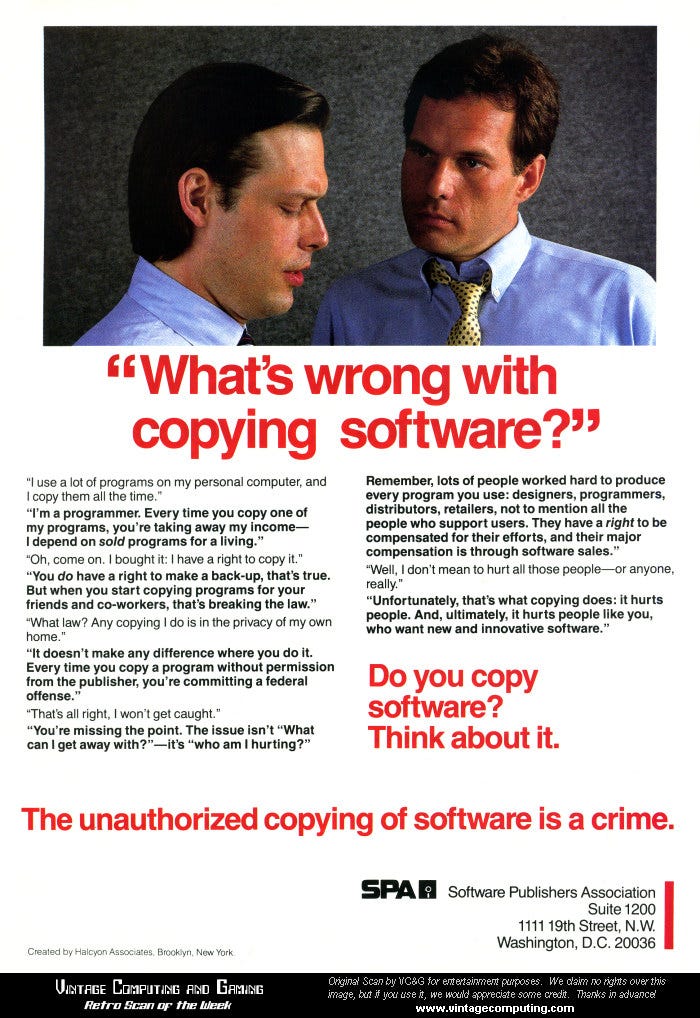
Maybe a drug dealer or even a fence is a more apropos analogy… I’m not sure. Either way, I was providing illicit (digital) goods and services to a rather large portion of Northeast Philadelphia in the mid-to-late ‘80s.
If you wanted video games, especially computer video games, I was your guy. In my neighborhood, in the backs of cars, in the basement bars, in the shopping malls, and in the high school halls (RIP Neil), I was the most likely source for that copy of Street Sports Basketball that you just needed in your life.
Funny thing about that whole situation was: I never owned a modem back in the day… therefore never connected to any BBSes or the like to pillage those vast treasure troves of video gaming goodness. All of the games that I acquired, copied, and passed on to my many “customers” were obtained through old school networking, pounding the pavement, and what we’d eventually come to call a sneakernet.
It’s a damn good thing I didn’t have a modem, quite honestly, because I have the impulse control of a coked up lemur. I’m a much more laid back guy now that I’m older, but back in the day I’m sure I would have racked up phone bills for BBS/modem calls that would have given my poor parents no choice but to consider medieval forms of punishment.
There were dozens of youths that I corrupted with my wicked, piratical ways, but my favorite memories are my times with the adults… when I was in the driver’s seat, showing them what was what in regard to being a virtual candyman.
What I didn’t realize at the time, though, was that the games themselves were only part of the fun. Passing them around was a social network unto itself, decades before anyone started using that term to describe websites designed to make us cringe at our relatives latest, and not so greatest, escapades.
There are three instances of this I will always recall:
First and foremost, I became the main supplier of computer video games for almost the entirety of the Philadelphia Fire Department. While firefighters have an extremely dangerous job, they also have a lot of downtime in-between calls, and it seems they filled the majority of this downtime by organizing competitions within Epyx’s Games series.
Our family was very good friends with another family, the Kuehn’s, that lived around the block and their dad was a lieutenant at the local fire house, Engine 46. Once he found out that I had a computer and hundreds of disks brimming with games, he subtly reminded me of all the movies he recorded for me off of HBO then handed me a box of empty floppy disks. Soon after more empty disks arrived at my house and those would be going to other various Engine houses in and around the greater Philadelphia area.Honestly, it was my distinct pleasure to do this for any and all firefighters. Those men and women risk their goddamn lives on a daily basis; the very least I could do for them was hook them up with Space Taxi and Raid over Moscow.
The second instance of this was my sophomore year of high school. I had a teacher that year who was one of the best, and most laid back, teachers I’ve ever had, as he was both hysterically funny and infinitely informative. His name was Mr. Birzes, and he wasn’t so much your teacher as he was your big brother or cool-dude uncle. He taught Biology the way John Keating taught English in Dead Poets Society, sans the whole “standing-on-the-desk-because-I’m-so-different” nonsense.
Mr. Birzes just happened to live around the block from me, as well, on the same street as Mr. Kuehn, the firefighter. Mr. Birzes also liked video games. Mr. Birzes asked if he could borrow Microprose’s Gunship from me for “research” purposes. I gladly lent him the game, but he and his cohort, Mr. Aceto, another esteemed member of my high school’s science department, somehow erased and/or destroyed my poor Gunship disk while attempting to copy it.

To his credit, Mr. Birzes immediately copped to this faux pas, and bought me a brand new copy of Gunship to replace the one that was unintentionally sacrificed to the wrathful God of Bits and Bytes.
Somehow, the story of this accident spread throughout our class like wildfire, and lo and behold, before the end of the day I was summoned to Mr. Birzes’ classroom where I was gently admonished to keep my stupid mouth shut before he got fired. Mr. Birzes wasn’t the type of teacher to read some dumb kid the riot act and I, for one, appreciated that.
After that weird little incident though, I became a trusted family friend to him, and we exchanged software almost on a daily basis. Hell, I even babysat his kids a few times. Crazy, right?
And finally, this nostalgic essay would not be complete if I didn’t relate to you the tale of Burnout Bob...a cruel moniker that was foisted upon him before I even knew him. Bob was somewhere in his mid-to-late 20s when I was 16-17, and he was a pretty cool dude as burnouts go. He had an epic car at least: a badass late ‘60s fire red Mustang that you could tell he loved more than life itself.
Bob lived in his mom’s basement and her house was next door to my friend’s house where we frequently played basketball in the driveway. I’m not recalling how we started talking about Lucasfilm Games’ Maniac Mansion, just that we did. And for a good month or two during the summer of 1988, we talked about that game almost every day, exchanging various tips and tricks we discovered while traversing the Edison’s zany mansion the night before. I honestly don’t think that either of us would have completed that nefarious game if it wasn’t for our frequent collaborations.
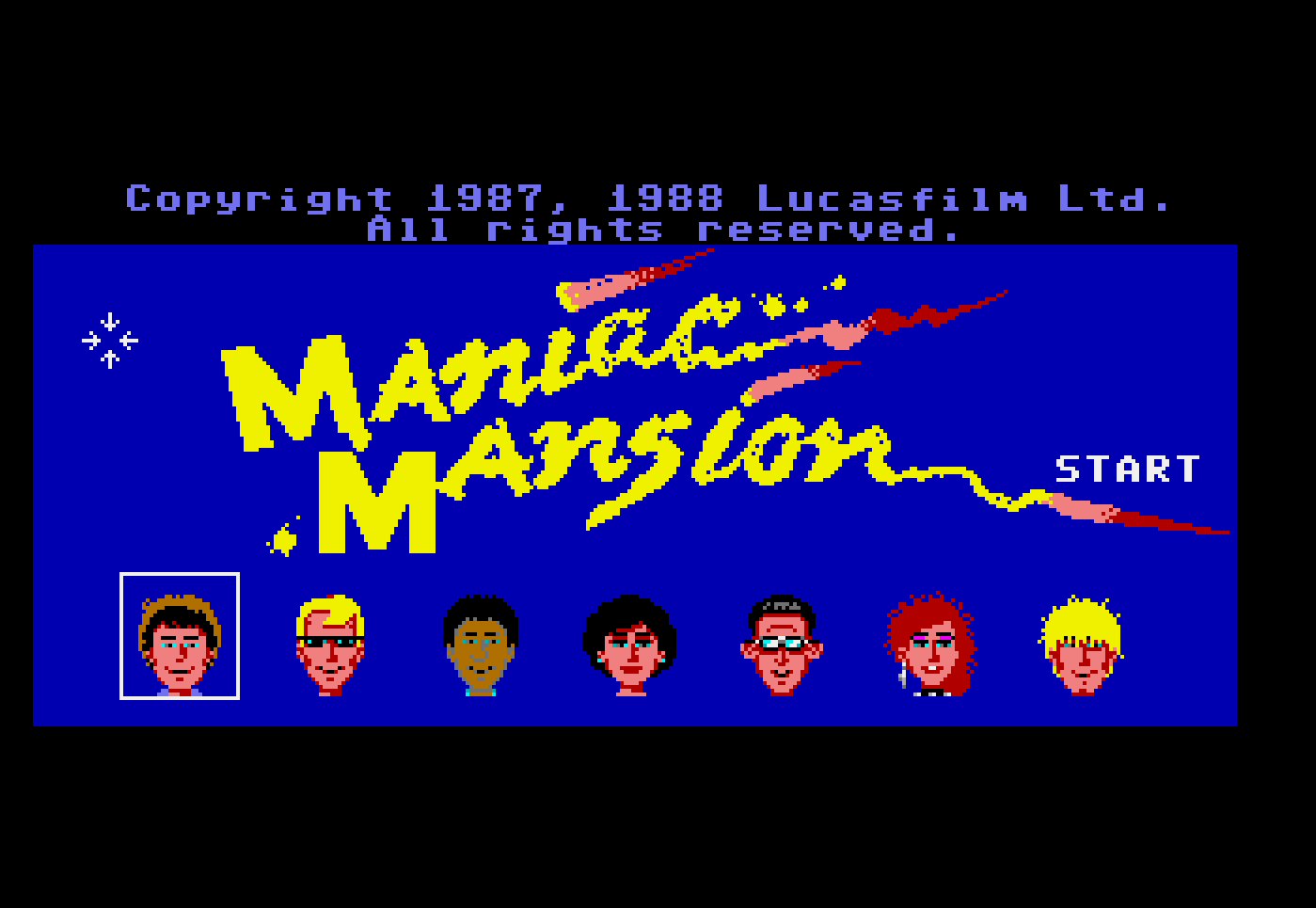
After Maniac Mansion was defeated, I hooked Bob up with a plethora of games that I knew he would dig… especially Accolade’s original Test Drive. And that hookup earned me a hearty “Wassup, dude?!” each and every time I saw him henceforth… and I can’t say that greeting didn’t make me smile every time I heard it.
Looking back, I’m not going to pretend any of us were engaged in some noble act of digital preservation. We copied games because we wanted more games, we had stacks of blank disks, and that little red LED light on our disk drives practically begged us to make questionable decisions. But there was something wonderfully communal about the whole enterprise. Software moved from person to person, and along with it came friendships, arguments, tips, handwritten instructions, and the occasional destroyed copy of Gunship. The irony is that forty years later, after becoming respectable adults who actually pay for our games, we’re increasingly told that the digital stuff we “buy” isn’t really ours at all. Licenses disappear. Servers shut down. Games get delisted. Access can vanish. Which brings us to that wonderfully provocative modern refrain: If buying isn’t owning, then piracy isn’t stealing. Legally, of course, things aren’t nearly that simple, but after spending my adolescence as Northeast Philadelphia’s digital candyman… oh, do I totally get that sentiment.