As energy bills continue to squeeze household budgets, new research reveals how switching from central heating to targeted warming methods could slash your winter costs by thousands of pounds – with electric blankets costing just £1.51 per week.
Millions of households are facing a daily dilemma: turn on the heating or reach for an extra jumper? New analysis suggests there’s a third option that could save families thousands of pounds over the cold months ahead.
Research from accounting specialists ViFi UK Finance Team has identified five heating alternatives that cost a fraction of central heating bills, with the cheapest option – electric blankets – delivering savings of more than 98% compared to running a gas boiler.
Central heating costs £80 per week for average use
At current energy prices, running a 24-kW gas boiler costs approximately £1.42 per hour. For a typical household using heating for eight hours daily, this translates to £11.36 per day or £79.52 per week.
With the UK government’s energy price cap setting electricity at around 27p per kilowatt-hour, the search for cheaper alternatives has never been more urgent.
Electric clankets: The clear winner at just £1.51 per week
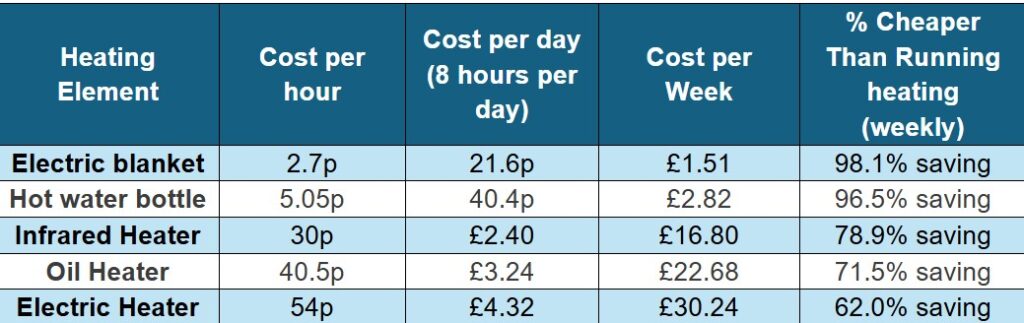
Topping the list of cost-effective heating solutions, electric blankets emerge as the runaway champion for budget-conscious households. Using around 100 watts of power, they cost a mere 2.7p per hour to run – or £1.51 for a full week of eight-hour daily use.
They won’t warm your entire home, but electric blankets provide targeted comfort for bed, sofa or desk work, making them ideal for households spending most evenings in one or two rooms.
Hot water bottles retain their crown as a budget classic
The humble hot water bottle proves its enduring value, costing just 5.05p per boil. A typical 3kW kettle takes 45 seconds to one minute to heat sufficient water, translating to weekly costs of approximately £2.82 for daily use.
As hot water bottles retain heat for several hours, the actual cost may be even lower, with users potentially needing just one or two refills per evening.
Infrared heaters offer efficiency through direct heating
For those requiring more substantial warmth, infrared heaters present a middle-ground option at around 30p per hour. Unlike conventional heaters that warm the air, infrared models heat objects and people directly, reducing heat loss and improving efficiency.
A 1.1kW infrared heater would cost £2.40 over eight hours, or £16.80 per week – still 78.9% cheaper than central heating.
Oil-filled radiators and electric heaters round out the top five
Oil-filled radiators, operating at approximately 1.5kW, cost around 40.5p per hour or £22.68 weekly for eight hours daily – representing a 71.5% saving on central heating bills.
Standard 2kW electric heaters, whilst the most expensive option in the top five, still deliver 62% savings at £30.24 per week compared to running central heating throughout the home.
Heat the person, not the property
Ben Steele, Founder of ViFi UK Finance Team, emphasised the practical benefits of the targeted approach: “With the average UK household spending most of its time in just one or two rooms each evening, heating an entire home can be an unnecessary expense.
“Our figures show that targeted alternatives, such as electric blankets, hot water bottles and low-wattage heaters, can reduce weekly heating costs by more than 60%, and in some cases over 95%, compared with running central heating for long periods.
“As energy bills continue to put pressure on household budgets, small changes like heating the person rather than the property can make a meaningful difference over the course of winter.”
The maths behind the savings
The research compared each heating method against the £79.52 weekly cost of running central heating for eight hours daily. The potential annual savings are substantial:
- Electric blankets could save approximately £4,056 over a full winter season
- Hot water bottles offer savings of around £3,990 annually
- Even standard electric heaters deliver savings exceeding £2,564 per year
For households struggling with rising energy costs, these figures suggest alternative heating choices could make the difference between financial strain and stability throughout the winter months.
As temperatures continue to drop and energy prices remain elevated, sometimes the warmest option isn’t heating your home – it’s heating yourself.