
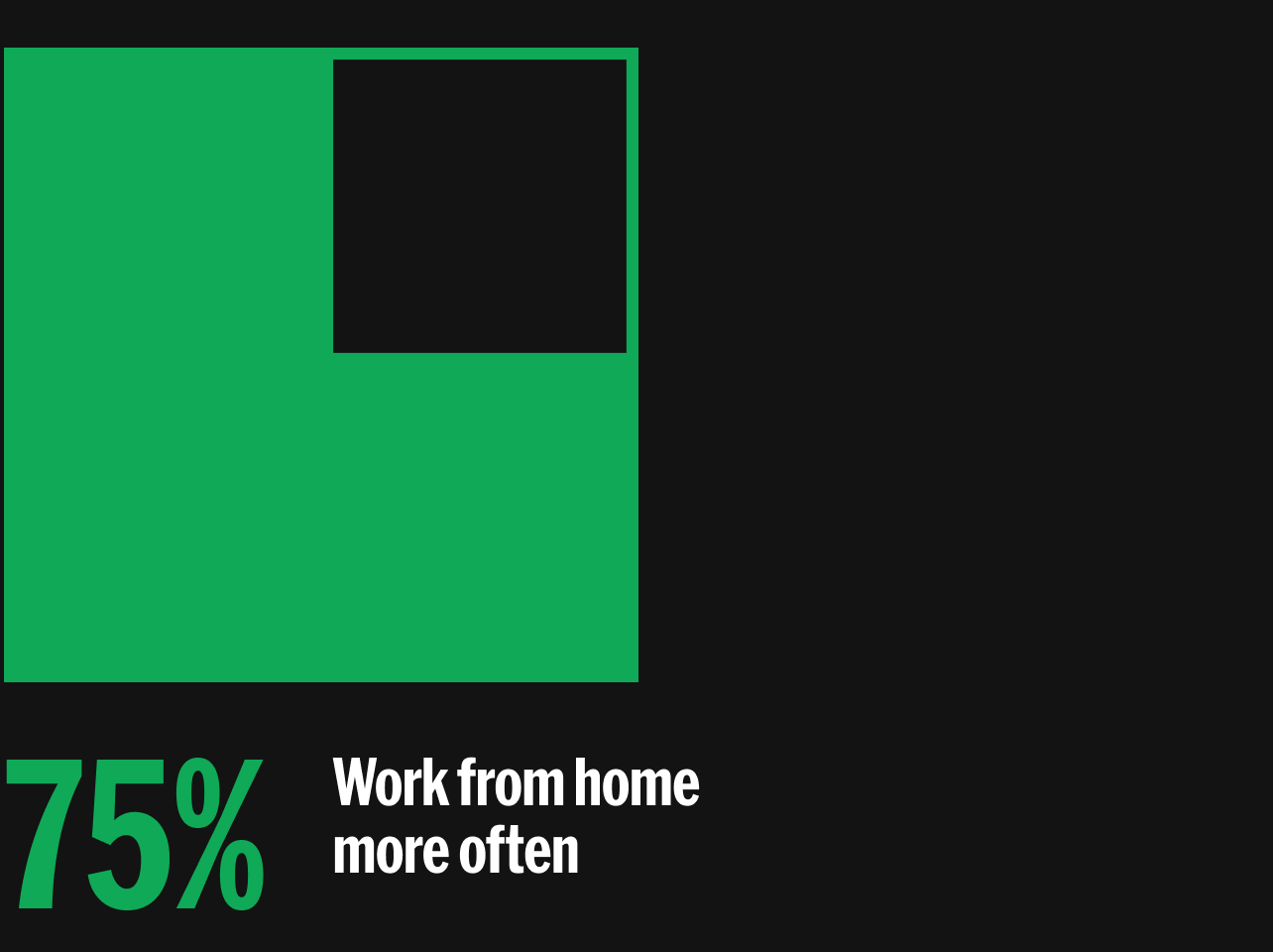
In a Figma survey of designers across Europe and Asia, 75% of designers say they work from home more often than before the pandemic.
Once upon a time, product design was synonymous with conference rooms and brainstorming sessions. These days, however, the script for how work gets done is being rewritten. Across every industry, people have become accustomed to seeing cursors and avatars appear in files, documents, and presentations—just like we used to see faces around the office. The traditional, physical domain of collaboration has been augmented in a new era of “multiplayer work” —one where we’re all inventing our own ways to get our jobs done.

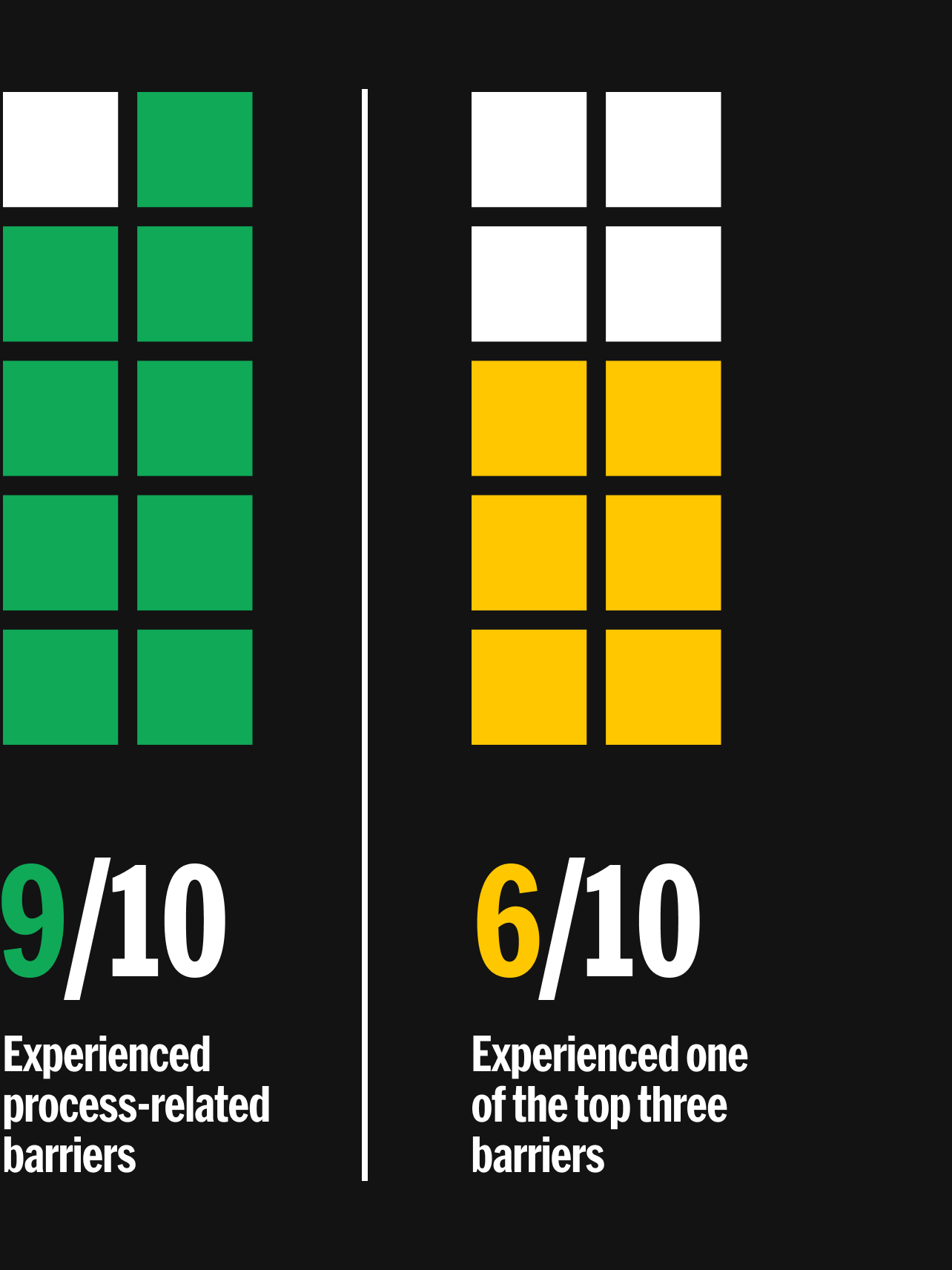
Forrester Consulting found that 9 out of 10 respondents experienced some type of barrier in the product development process; 6 out of 10 experienced one or more of the top three: 1) lack of alignment across teams, 2) difficulty making decisions, and 3) lengthy development cycles.
And while this shift happened suddenly, it mostly accelerated existing trends. Now, this ‘new normal’ has seemed to, well, normalize. Research shows there are more distributed teams meeting in person less often. And while “...online shopping, eating out, sports attendance, travel, and many other activities are back to pre-pandemic trends,” as Stanford Professor Nick Bloom points out, “WFH—and related activities like office occupancy and public-transit use—appear to have permanently changed.” Distributed work is here to stay. After more than a few years under our belts, you would think that we’d be used to impromptu co-design sessions and folks popping into our docs to take a look. And yet, why does it still feel so hard to do our best work?
The sort of good news is: If you’re finding that making good work is still pretty tough, you’re not alone. In a recent study we commissioned from Forrester Consulting, researchers found almost 9 out of 10 respondents experienced some type of barrier in the product development process, with 60% reporting either a lack of alignment across teams, difficulty making decisions, or lengthy development cycles. These barriers aren’t necessarily new, but have been amplified by three major forces at work:
- More people involved
- More distributed work
- More work in progress

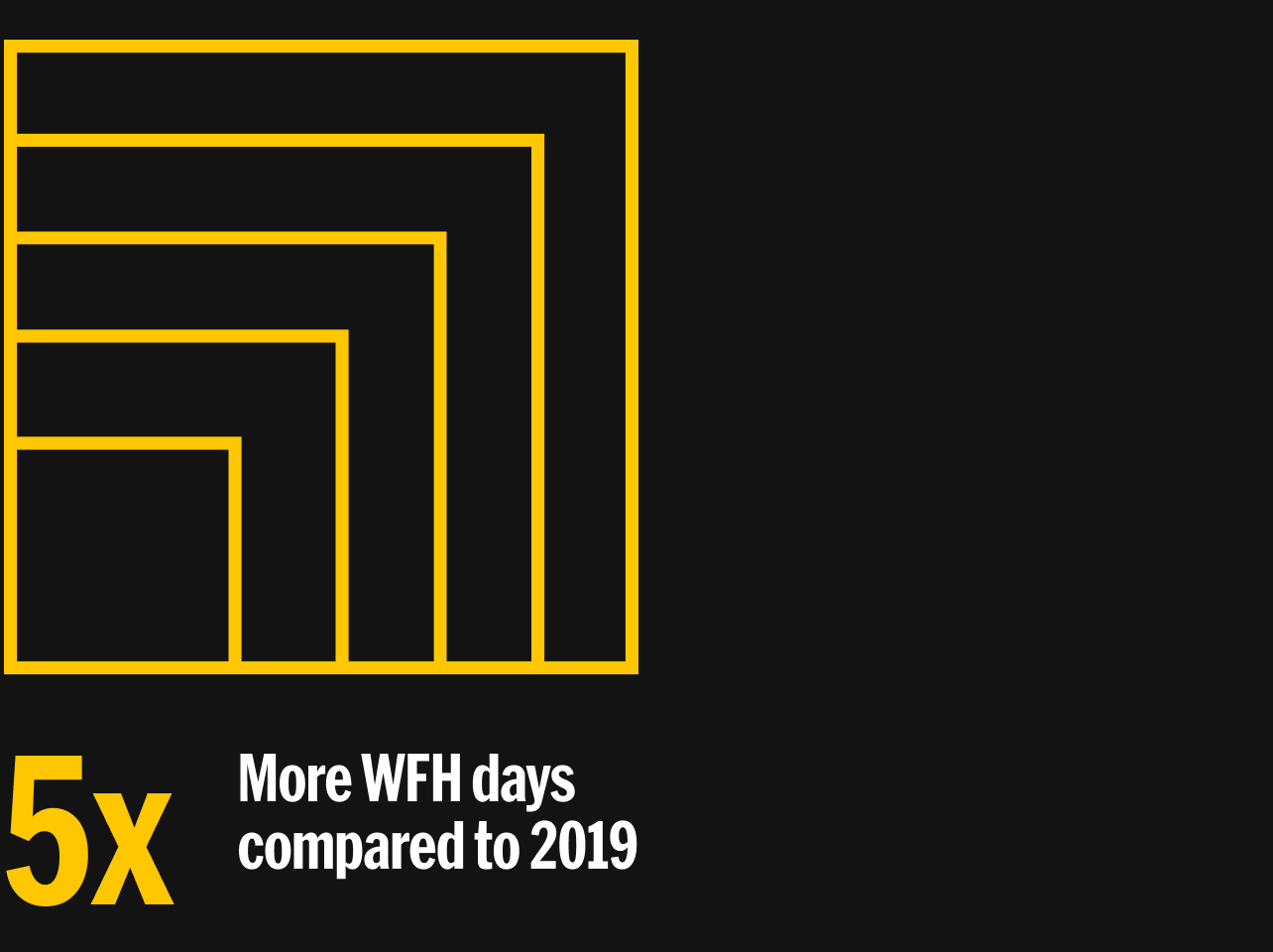
In the US, there are now five times more work from home days compared to 2019, according to Stanford’s WFH research.
These three forces aren’t new, but there are surprising benefits to unpacking how each is contributing to the strain we all feel at work and what we might do to alleviate it. More people are now involved in digital product and design and now also spend less time together in person. Physical distance often translates to emotional distance, with teams finding it harder to establish trust—an essential ingredient to making great work. This is compounded by the accelerated demand and expectation for companies to release new versions of sites, apps, and digital products much more often, leading some teams to do magical things and others to feel deeply frustrated.
In-person is so ingrained for many people that there’s even a common management technique called "managing by walking around." It’s not managing by Teams-ing, Zoom-ing or Slack-ing around, it’s walking around.
While many teams have benefited from the efficiencies of real-time edits, a single source of truth, and melded minds on a multiplayer canvas, many more are experiencing a cooperative mess instead. Like a never-ending game of digital whack-a-mole, we’re immersed in a chaotic jamboree of alerts, notifications, and comment threads. As sites, apps, and products have become increasingly critical to business, so too have the stakes and the different roles involved. Mark Kawano, Senior Vice President of Design at Zendesk, put it like this: “When I started it was just the designer and the engineer...now we have data and security, content, marketing, product management, executives—all in the mix.” Forget the designer-engineer duo of yesteryear; today’s product development is more like a superhero crossover event. Everyone from content to security is in the file. Geographical barriers have crumbled, enabling talent collaboration from every corner of the world.

So, what separates the synergy from the shambles? Turns out, a heavy dose of transparency, a shared understanding, and a little bit of intentional connection.

What do top performing teams do differently? In a commissioned study conducted by Forrester Consulting on behalf of Figma, we explored the specific behaviors that set successful product and design teams apart. Get the study.
Offer surprising transparency

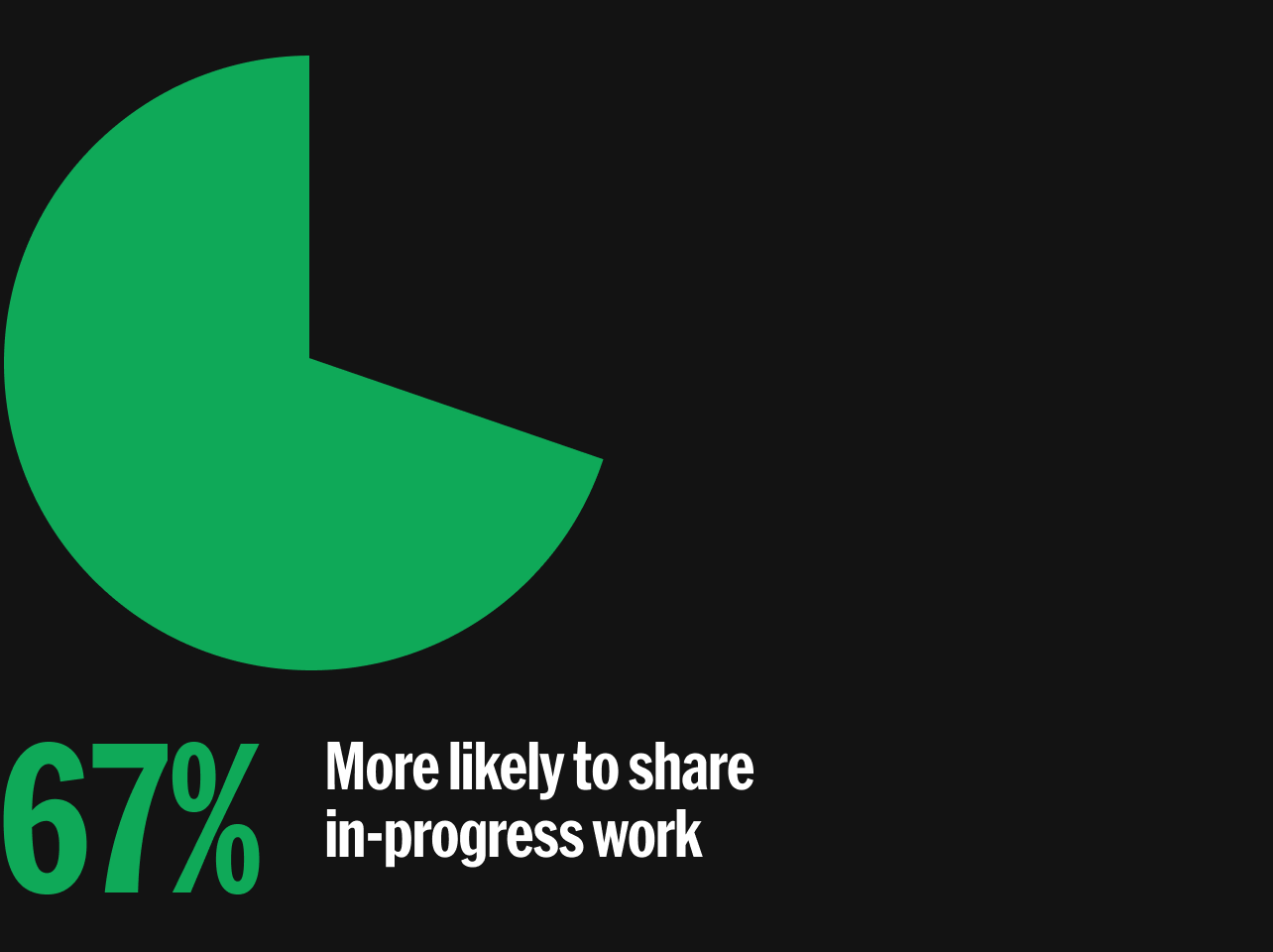
Successful teams are 67% more likely to share in-progress work across design, development, and product.
In this study, Forrester defines successful teams as teams who say they are “creating great digital sites, apps, products, and experiences.”
In the world of digital product development, transparency is one of the key behaviors for shipping great work. Successful teams are 67% more likely to share in-progress work across design, development, and product, according to Forrester. (And we don’t just mean unblurring your Zoom background.) These teams have tossed out the old “need-to-know” rulebook, ignored discipline-based swimlanes, and extended an open invite to the feedback party, long before the work is buttoned up or ready for final review. One head of design in a financial services firm attributes their success to open discussions involving 70 to 100 employees, spanning multiple departments.
But it’s not merely about more eyes on a project. “The more people, the more viewpoints you have—and that’s good. But we should be intentional about adding types, not just numbers of people,” says Sam Berg, Head of Design at Seatgeek. “You might want one PM from team A, a designer from team B and an engineer from team C—all with different backgrounds and viewpoints.” By diversifying the kinds of expertise reviewing a project, teams are more likely to catch potential issues, reducing delays and wasted cycles. One engineering manager at another company told Forrester, “When we catch something in code, it’s already too late. The alignment has to happen at design time.”
As Figma Chief Product Officer Yuhki Yamashita says, “Today, every digital product is a work in progress. And this has changed how we design.”
And when it comes to meeting those product release demands, teams and companies are expected to make more changes to sites, apps, and products more frequently. “You went from releasing a couple times a year, to releasing multiple times a week, to releasing multiple times a day,” recalls Tamar Yehoshua, partner at IVP and former Chief Product Officer at Slack. When managed well, this frequency leads to something closer and closer to great. Otherwise, it can yield increasing frustrations and ways for teams to end up off track.
Rachel Kobetz, Chief Design Officer at PayPal, says her teams utilize centralized statuses, links to work in progress, Slack broadcasts, and bi-weekly memos to keep everyone in the loop internally. She extends that with quarterly showcases of work and case studies that celebrate their cross functional partners, too. “The more you open your process and practices to others, the more champions you will have across the company,” she says.

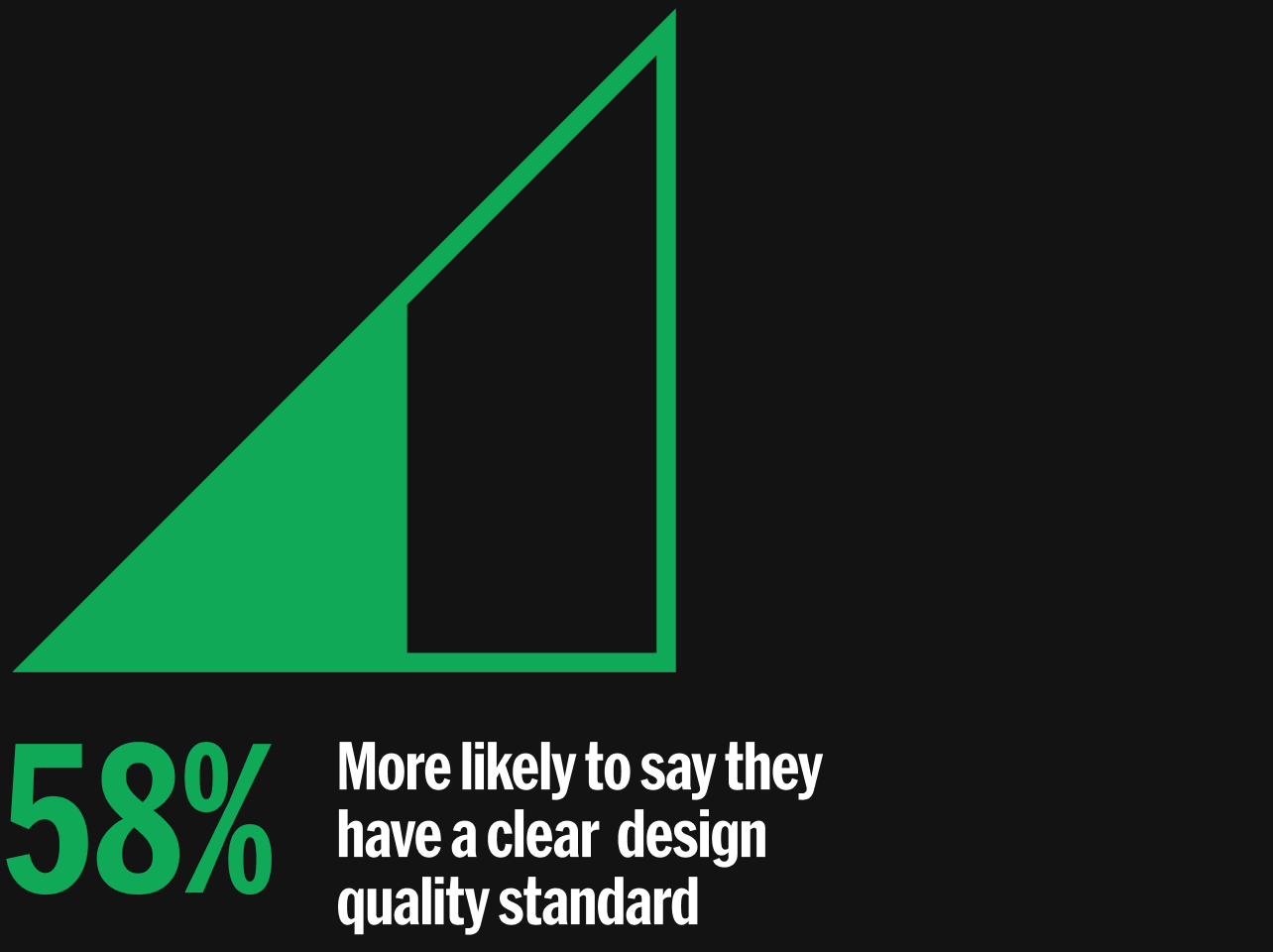
Successful teams are 58% more likely to say they have a clear standard of design quality.
While product teams benefit from more feedback sooner, transparency also ensures that everyone is working from a shared place of awareness. The most successful teams aren’t just sharing in-progress flows, they are on the same page about goals, outcomes, values, responsibilities, and decision-making. They’re also 58% more likely to say they have a clear standard of design quality. It’s much easier to create magic when everyone agrees what magic is. However, this doesn’t happen by accident. It requires a nuanced understanding of how to communicate effectively in a digital space, where tone and context can easily be misunderstood.
Despite gaining a new digital lexicon of comments and emotes, we often experience a kind of flatness when it comes to digital communication. This flatness can often lead to miscommunication, making things like feedback harder. “Giving and receiving feedback can be vulnerable places to be,” says Nannearl Brown, a researcher at Figma. “You might share new ideas and be judged. Comments that might have been softer in person are now ‘What are you doing? Why would you do it this way?’” She adds, “People giving and receiving feedback want to feel heard and understood. That’s harder to do with less in-person time.” It’s especially hard to understand tone or be able to pick up context like a power dynamic between individuals.
This pain point is felt acutely by management as well. Leaders describe how they’ve changed the way they influence and shape culture using Slack, Zoom, or Teams chat windows, cursor chat, and fire emojis. One Head of Insights at a software company shared that a new Chief Technology Officer joined and immediately changed the tenor of otherwise dry company meetings with their enthusiasm in chat. Bob Baxley, long-time design evangelist and Senior Vice President of Design at Thoughtspot, sets the tone by dropping jokes in Zoom. The more over-the-top the better. “If the team sees I’m relaxed, they’ll be relaxed, and having that type of tone is essential to us coming up with good ideas together.”
Many teams cited focused meetings as a recurring tool they use to arrive at mutual understanding. Whether a weekly team kickoff or engineering crit, these meetings are aimed at specific types of feedback and outcomes. Sam Berg, SeatGeek’s Head of Design, sees value in hour-long meetings divided into 10 to 20 minutes of reading with synchronous comments and sticky-based discussions that then lead into big group discussions in the last 40 minutes—a practice shared by Shishir Mehta, Coda’s Chief Executive Officer. In other scenarios, Sam found success eschewing synchronous meetings in lieu of running an entire project over Slack, or giving feedback on a document without scheduling a formal review.
Part of this all is finding the right ways of working that work well for your culture. At Metalab, Vice President of Design Sara Vienna says her team outlines a product’s key deliverables including roles, objectives, priorities, key features, definitions, and technology. She says it’s “part executive summary, part blueprint” and builds the foundation for every project. Having a clear approach helps everyone understand the shared goal they are working towards. Above all, context remains key. At Seatgeek, Sam emphasizes the importance of setting the context whether in a meeting or in a file. “In the current environment ... everything also has to live on its own,” she says. She also pushes to review prototypes in their native environments, such as on phones instead of big screens.

Make work more than just work

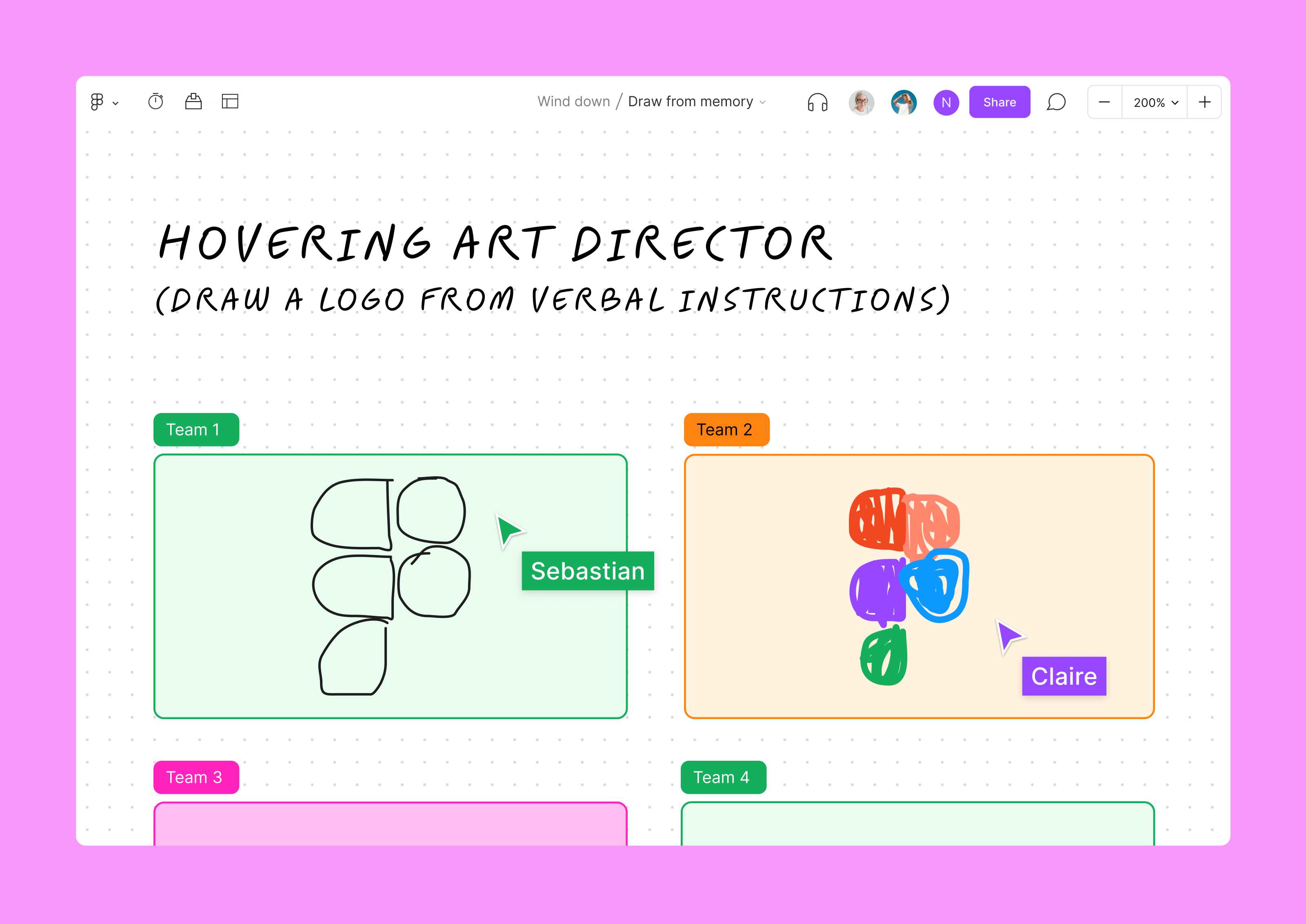
Sebastian and his team at Shopify have weekly "cool downs" where they do activities with just-for-fun prompts.
One major criticism of distributed work is that it can feel transactional, draining the emotional connectivity among team members. Sebastian Speier, UX manager at Shopify, tells us “it’s very taxing emotionally ... to have 100% of your communications with your team be about making your work better.” That’s where the third ingredient comes in: making work about more than work. Successful teams understand the need to inject a dose of fun and humanity into the mix. Winding up and cooling down with playful prompts, such as Stripe’s prompt for their team to draw their Starbucks order, or Shopify where they draw a logo from verbal instructions, can be a way for teams to let loose together and get to know each other better.

“Making space for people to share their passions outside of work is crucial with deliberate rituals,” says Rachel Kobetz. At Figma, new employees share what makes them a maker at our company-wide FigNation, while local offices host “Three Things,” short talks where people share three things that have shaped who they are. We also have an extremely robust culture of digital card making for celebrating milestones, and just letting someone know you appreciate them.
As Metalab’s Sara Vienna says, “This constant work of bringing people together is what we have to do to have a team that feels deeply connected, wherever they are. Helping teams feel connected enough to create the best work of their careers is my number one job, and I will never stop thinking about it.”
The (collaborative) magic was inside us all along

In the end, the magic of collaboration in this new era of work is not about finding the perfect formula or the latest tech. It’s about staying adaptable in the face of change and continuously striving to improve collaboration. There will always be changes, like the coming wave of AI, that require us to learn to collaborate with increasingly intelligent applications.
One striking finding from Forrester’s study was that the most successful teams collaborate more and also see improving this collaboration as critical. According to the study, successful teams want to improve feedback on work in progress, get more people involved earlier, and increase cross-team collaboration.
As Sam puts it: “There is no going back to the office of 2019. We look for a thing we call normal, but part of me thinks that’s a fallacy and a waste of time. Too many companies are focused on moving backwards and not moving forwards.” So, as we continue to navigate this brave new world of work, let’s keep the magic alive. Let’s keep pushing boundaries, challenging norms, and finding new ways to create, make, and build together.
What do top performing teams do differently? In a commissioned study conducted by Forrester Consulting on behalf of Figma, we explored the specific behaviors that set successful product and design teams apart. Get the study.