The FREE science and technology book
Want to know why giant ships can float, how your earbuds make music, what graphene is, or how windows can clean themselves? You've come to the right place! Here you'll find simple explanations you can really understand—hurrah!

Explain that Stuff is an online book written by science writer Chris Woodford (author of many popular science books for adults and children). It includes over 400 easy-to-understand articles, richly illustrated with over 4000 photos, artworks, and animations, covering how things work, cutting-edge science, cool gadgets, and computers. We take the "pain" from explain and the "tough" out of stuff! There's more information on this website than in your average expensive science book, it's continually updated, and it's completely free to use! Explain that Stuff also helps to support curriculum learning (conventional STEM education and home-schooling).
How to use this site
There are five simple ways to find what you want:
- A-Z index: Browse articles by name.
- Timeline: Find inventions by date.
- Random: Discover something new.
- Search: Use the search engine (at the top of each page).
- Teaching guide: Browse study topics.
What's hot in August 2025?
Our simple introductions explain the science behind the headlines. In the news now...

Nuclear power
NASA wants to put a small nuclear power plant on the Moon. How will it work? What are the good and bad points of nuclear energy? [News story]

Heat pumps
The British government is changing planning laws to encourage takeup of heat pumps—super-efficient machines that can warm your home using heat from outdoors, even on cold days. [News story]

Lasers
Photonic (laser-light-powered) microchips have long been touted as an alternative to pure electronics. Two newly released versions could be a bright sign for the future of computing. [News story]

Geoengineering
How could we intervene to slow the collapse of glaciers in our ever-warming world? Glacial engineering is the new geoengineering! [News story]

Climate change
NASA and the World Meterological Organization have confirmed 2024 as the hottest year on record, and the first with a global mean temperature over 1.5°C the 1850–1900 average. [News story].

Materials
A recent report in The New York Times reminds us how all the "stuff" humans have made in the last century (plastics, concrete, and other things) weighs more than all the material produced by nature. A fascinating new visualization compares the two things, side by side. [News story]

Space rockets
India's heading for another space first—it's first ever test of a space rocket "docking" mission. What exactly are rockets and how do they work? [News story]

Quantum computing
Google has unveiled Willow, a new quantum computing chip that's miles better at error correction. Critics wary of quantum hype say it's more of a "milestone" than a "breakthrough." [News story].
What's new?
Some of our newest and most recently updated articles...

Solar cells
How did solar become the world's favourite new form of power... and what does the future hold for it?

Electric cars
Are they as good as the hype? Are they as clean and green as people claim? Why are they taking so long to catch on?

Artificial intelligence
Can we imagine a world where computers are smart enough not to need us? Is "human intelligence" a good starting point for designing useful machines?
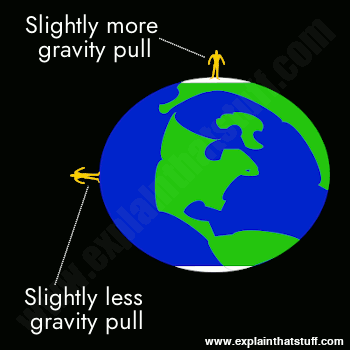
Gravity
It's taken over two millenia for people to understand how gravity holds the universe together. What do we know so far about this most mysterious of forces?

History of flight
Planes can trace their history back thousands of years to ancient myths and legends. Why have humans always dreamed of soaring to the sky... and why did it take us so long?

Cranes
The science behind cranes is easy to understand, but why are there so many different types? How much can they lift... and what stops them toppling over?

History of electricity
Electricity is an ancient science that powers our modern world. Why did it take so long to figure out how it works and put it to practical use? Find out in our sparky story of electric power!

Software
Computers are wonderful machines you can reprogram to do almost anything. Learn more about algorithms, computer languages, and the basic principles of coding in our simple guide.

Great psychology experiments
It's no big surprise that other people aren't quite what they seem. But the astonishing finding from modern psychology is that even our own minds are strange and complex things we don't fully understand.

What is science—and why does it matter?
From atoms and cells to nuclear power plants and the human brain, the scope of science is truly amazing. But what exactly is the scientific method... and why is it still our best hope for making sense of the world?

History of communication
How did we get from the alphabet to the Internet in a few thousand years? Follow the story of shared information from cuneiform and hieroglyphs, through radio and TV, to streaming media and the Web.
Most popular
These are some more of our classic, ever-popular articles:

Water pollution
Rivers and seas take a long time to recover from the effects of careless human treatment. What causes pollution and what can we do to stop it?

Electricity
The most versatile and useful form of energy in our world, electricity is going to become a whole lot more important in future.

Nanotechnology
Can we build a brave new world just by shuffling atoms and molecules under a microscope?

Magnetism
One of the first bits of science people studied, magnetism is still just as relevant today in everything from electric cars to body scans at the hospital.

Gears
Wheels with teeth carved around them can make you go faster or bump up your power—and here's how.

Batteries
We all need electricity, wherever we happen to be, so thank goodness for batteries—miniature power plants you can carry in your pocket.

Electric motors
These amazing machines turn electricity and magnetism into movement, powering everything from handheld toothbrushes to bikes, cars, and trains.
Global warming
Climate scientists recently issued their strongest ever warning about the growing risks of irreversible "global warming." If you find the subject baffling, try our easy-to-follow introduction.

Cloud computing
Why buy yourself an expensive computer or programs to go with it when you can get access to something just as good over the Internet? What are the benefits and drawbacks of working in "the cloud"?
What else is on our site?
The articles on our site are divided up into broad topical areas, listed below. We've also given you a rough idea of the kind of questions you're going to find answers to in each section:

Communications
Why do we bounce telephone calls off satellites? How do cellphones work? What's the difference between digital radio and ordinary radio?

Computers
How can you make a computer think like a human brain? Who invented the computer—and why on Earth did it take them so long?

Electricity and electronics
What's the difference between "electric" and "electronic"? How can you make coffee with a stream of electrons? How can magnets detect burglars in your home?

Energy
How does wind energy come from the Sun? Is nuclear power safe or not? Will the world ever run out of energy? Why are we still so dependent on "fossil fuels"?

Engineering
What stops a bridge falling over? Why can a person lift more stuff with a crane than with their bare hands? What's the difference between hydraulics and pneumatics?

Environment
Can we still stop dangerous climate change? What causes air and water pollution and how can the world clean up its act? Is organic food really "better"—and, if so, why?

Gadgets
How does a flash memory card store your holiday snaps? Why can a synthesizer mimic any musical instrument that's ever been invented (and even ones that haven't been)?

Home life
How can you make windows turn dark at the flick of a switch? If an energy-saving lamp saves energy, how come it still makes exactly the same amount of light?

Materials
If you had a piece of platinum as big as a man, how much would it be worth? Why doesn't a dry-stone wall fall over? Is it true that glass is a kind of liquid?

Science
Which part of a candle flame is the hottest? Why does chocolate actually taste good? Where's the best place to sit on a rollercoaster if you want to scare yourself to death?

Transportation
If a man can't fly, how can a plane fly if it weighs as much as 5000 men? How come we say a wheel reduces friction if it's got a tire that grips the road? Why do huge ships float when even tiny bits of metal sink?
Who uses this site?

In the ~19 years we've been online (2006–2025), pages from this site have been viewed over 140 million times in total. Our articles have been cited by dozens of books and over 2000 academic papers and patents. We've received over 4000 user feedback forms in the last decade and 92% gave us four or five stars out of five—a weighted average of 4.6—but there's always plenty of room to do better. We hope you find this site useful too!
Follow us on your favorite sites!
Now you've found us, don't lose us. Why not join our friendly Facebook page, where we post cool science and technology news? You'll find our photos on Flickr and we're also on Pinterest.
In 2024 and 2025, we recorded a 50-episode podcast with audio versions of some of our articles. Although it's currently on hiatus, you can still listen to the old episodes by subscribing to our podcast feed in Apple Podcasts, Spotify, or your favorite player. Our podcast is free and (because we host it on our own server) completely ad free!
Tell your friends
If you've enjoyed this website, please kindly tell your friends about us on your favorite social sites.
Press CTRL + D to bookmark this page for later, or email the link to a friend.
Privacy and cookies
Our website serves advertisements to pay its running costs. The advertisers we work with use a technical mechanism called cookies (small files stored on your computer) to help them serve relevant and useful advertisements that they think are likely to appeal to you, but you can opt in or out of these cookies at any time. The web domain explainthatstuff.com does not collect, store, sell, or share any personal information and has no plans ever to do so in the future. However, in line with the California Consumer Privacy Act (CCPA), you may still send us a "Do Not Sell My Personal Information" request if you'd like to. For more details, please see our privacy policy.
This page last updated: August 12, 2025.