A longstanding tradition on this blog has it that whenever a month has five Wednesdays, the readers get to propose topics for the fifth Wednesday post, and whichever proposal fields the largest number of votes becomes the topic for that post. This time, the winning theme was the archetypal teachings of Carl Jung, the famous Swiss occultist.
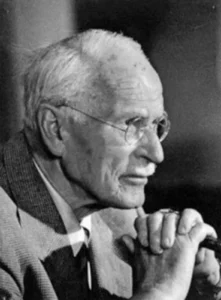
Oh, excuse me, I should have said “psychologist,” shouldn’t I? Certainly he marketed himself as a psychologist during his life, and his followers have by and large defined him and his ideas in those terms after his death. It’s unquestionably true that he attended medical school, specialized in psychology, did postgraduate study at the then-famous Burghölzli psychiatric hospital, became a student of Sigmund Freud, and published a whale of a lot of papers in psychological journals. By and large, it’s only two groups of people who have raised questions about Jung’s bona fides as a scientific psychologist, and it’s fair to say that both groups are fairly marginal these days.
The first of these groups comprises many of Jung’s critics. Richard Noll, the author of The Jung Cult and The Aryan Christ, is perhaps the best known of those just now. Some of my readers may be familiar with Freud’s claim that every male child secretly wants to murder his father and possess his mother. Whether this is true or not in general—I have my doubts—it certainly describes a distinct category of literature about modern psychology, the authors of which are pretty obviously out to murder (or at least commit character assassination against) some famous psychologist and possess (or at least score points against) the school they founded.
Noll is one of these. I found both his books worth reading, though probably not for the reasons he had in mind. His discussion of Jung can be summed up without too much inaccuracy as, “The man was an occultist. Did you hear me? An occultist. Oh, the horror! AN OCCULTIST!!!” To which I and a great many other occultists, who belong to the second of the marginal groups mentioned a little earlier, responded by perking up our ears and saying, “Was he? How very interesting! I wonder what the occult community can learn from him?”
The point Noll made might be easiest to grasp if we slip sideways through the ectoplasmic flux into a slightly different timeline than the one we’re used to. Having landed in the city of Beneficence, Rhode Island—yes, it’s called Providence in our timeline—we stroll over to the nearest upscale bookstore and start to browse the shelves. Here’s the occult section, where there’s a decent selection of books about the magical system of the Ordo Peregrini Orientem, or OPO. In case you don’t happen to be familiar with one of the most colorful organizations of the twentieth century occult revival, let me fill you in. The Order of Journeyers to the East, which is what the Latin name means, was founded in 1921 by two influential Swiss occultists named Carl Jung and Hermann Hesse, and its colorful symbols and ceremonies have been an important influence on the occult scene ever since.
The bookstore we’re in testifies to that. On the shelf are several copies of Liber Novus, Jung’s visionary narrative of the experiences that inspired the OPO, which is required reading for the order’s initiates; next to those is a tell-all volume by Francis King, The Secret Teachings of the O.P.O., which recounts the mysterious “symbols of transformation” members of the order use in their quest for the mystical state of Individuation; then there’s a volume on the highest and most complex teachings of the OPO, which use a strange game played with glass beads to synthesize all human knowledge into mandala-like patterns. It’s heady stuff, but all things considered, it’s not that different from the teachings of other occult schools of the same vintage.
Then we turn to a nearby shelf where books on psychology are waiting. Here you’ll find a shelf full of books about Firthian psychology—yes, it’s got a fancier name, but nobody uses that now except for pedants. The Firthian school was founded in the early twentieth century by two English psychologists, Violet Firth and E.A. Crowley, who both started out as fairly orthodox Freudians but went their own way in the 1920s, founding a system that makes much use of images and ideas drawn from myth, legend, and (whisper it) occultism.
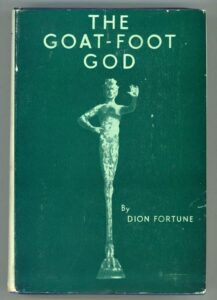
On the shelf is a copy of Firth’s early book The Machinery of the Mind, followed by Sane Psychoanalysis (a collection of essays) and then by one of her novels, The Goat-Foot God, a fictional account of a man’s inner journey from neurosis to robust psychological health. Over here you’ll find The Vision and the Voice by Crowley, an account of some of the work he did with active imagination, and then a hefty volume, Psychology in Theory and Practice, Crowley’s magnum opus, still a commonly studied volume among Firthians despite its eccentricities.
Ah, but over here is a pair of books by somebody named Lon L. Ardrich, The Firth Cult and The British Christ, going on at great length about how Violet Firth was actually an occultist. Those sparked a lot of debate when they first came out, but then Firth’s private book of visionary material saw print, after many years being kept under wraps by her heirs; it’s titled The Cosmic Doctrine, and it pretty much settled the matter, proving just how deep she was into occultism. Now nobody’s quite sure what to make of Firth and Crowley—well, except for members of the OPO and other occult orders, who are saying, “How very interesting! I wonder what the occult community can learn from them?”
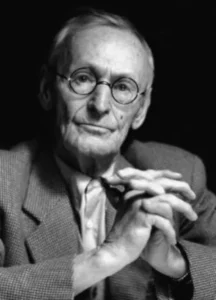
At this point, let’s do the time warp again (it’s just a jump to the left!) and plop back into the timeline we normally infest. Here, of course, Carl Jung was a famous psychologist, a student of Freud who went his own way, and Hermann Hesse was a Nobel Prize-winning author, one of Jung’s good friends, who used Jungian ideas extensively in his later novels Liber Novus, better known as The Red Book, was kept under wraps by Jung’s heirs until the copyright ran out, but is widely available now; you can find Jung’s “symbols of transformation” in quite a few of his books, including one titled Symbols of Transformation, and the mysterious game features in Hesse’s last and most intricate novel, The Glass Bead Game. (The volume by Francis King is The Secret Rituals of the O.T.O., i.e., the Ordo Templi Orientis or Order of Templars of the East.)
In our timeline, with a certain madcap symmetry, it was left to Violet Firth and Edward Alexander Crowley to go into occultism instead of Jung and Hesse. Firth took the pen name Dion Fortune, Crowley changed his first name to Aleister, and both became leading figures in twentieth century occult circles. The books of theirs I cited exist, of course, though Sane Psychoanalysis is actually titled Sane Occultism and Psychology in Theory and Practice is Magick in Theory and Practice. Nor, of course, was The Cosmic Doctrine ever squirreled away by Fortune’s heirs as as source of potential scandal: it’s been on the bookshelves of serious occultists since it first saw print not long after her death.
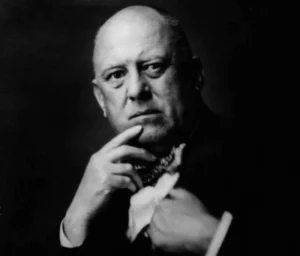
It’s worth taking a moment, to finish the thought experiment I’ve indulged in here, to think through what Firth and Crowley would have had to do if they had decided to market themselves as psychologists rather than occultists. Firth actually had the relevant training—she qualified as a Freudian psychoanalyst in the early days of the British psychoanalytical scene, when a college degree wasn’t yet required—and Crowley could have done the same easily enough. Crucially, though, they would have had to camouflage the obviously occult side of their studies. Both of them included the tarot in their systems; that would have had to go. Both of them used magical rituals straight out of the Golden Dawn tradition; those would have had to go.
Less blatantly occult practices such as scrying in the spirit vision would have had to be given some harmless label, such as “active imagination,” and when they had students make talismans they would have had them make those according to spontaneous personal designs, not traditional ones out of the old handbooks of magic. Dreams, which offer convenient access to the astral plane, might have featured much more significantly in their work, and of course the astral plane itself and the other subtle planes of being, along with much else, would have had to be relabeled in psychological jargon—calling the astral plane “the collective unconscious” or what have you would have been essential. Finally, they would have had to keep their revealed books, The Cosmic Doctrine and The Book of the Law respectively, locked away so that nobody discovered the obviously occult inspiration behind their work.
That is to say, the changes they would have had to make to escape detection as occultists were exactly the changes that Carl Jung made when he assembled his system of psychology.
It’s not as though Jung didn’t have unrestricted access to the occult traditions of his time, after all. Switzerland was a hotbed of occultism in his youth; a cousin of his was a spiritualist medium, and Jung’s doctoral dissertation—titled On the Psychology of So-Called Occult Phenomena—focused on her trance mediumship and its psychological implications. From Toni Wolff, who was by turns Jung’s patient, one of his lovers, and a core member of his inner circle of students, he learned astrology, and routinely cast his patients’ horoscopes in order to plan the course of therapy he meant to use with them.
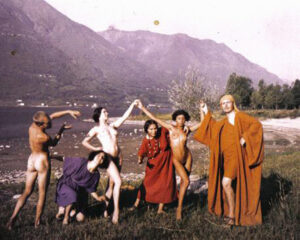
His volumes on the symbolism of alchemy show just how deeply he got into that branch of occult teachings, and his published seminars on kundalini yoga and related topics show the attentiveness to Eastern traditions that was so common in the occult scene of his time. He ran with many of the leading occultist and occult-adjacent intellectuals of his time, and had close connections with Monte Verità, the Swiss commune that basically invented the Sixties counterculture forty years in advance and also played a crucial role in the history of the Ordo Templi Orientis, the order on which I modeled the “OPO” of my earlier narrative. It’s no exaggeration, in fact, to say that Jung was up to his eyeballs in the occult milieu of early twentieth century central Europe—and so he had to know exactly what he was doing.
Furthermore, what we may as well call Jung’s occult teachings fit neatly into the history of occult thought in the modern Western world. Eliphas Lévi, whose Doctrine and Ritual of High Magic launched the modern magical revival when it was originally published in 1855, set in motion a fascinating transformation in occult thought. For more than a millennium before his time, the main currents of Western occultism all assumed that magical power came from outside the self. Mages used prayer and the sacred names of God to make contact with the sources of magical force, or they tapped into flows of power that were believed to descend from the stars and planets, or (if they were corrupt enough) they tried to bribe or browbeat spirits and demons into doing things for them. The idea that the individual human being might have sources of power in himself or herself was nowhere on the map.
Lévi changed that. A devout if rather eccentric Christian, he held that each human being had the inborn power to direct the astral light, the subtle force through which magic functions, but that most people never grasped their own capacity to shape their lives. That way of thinking caught the imagination of the age, and it joined with two other currents in alternative culture—the tradition of subtle-energy work set in motion by the Austrian physician Franz Anton Mesmer three quarters of a century before Lévi, and the New Thought psychology launched by the American healer Phineas Parkhurst Quimby at the same time as Lévi’s first publications.
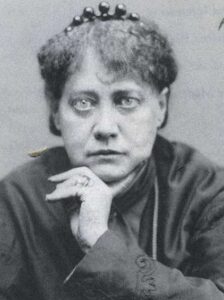
The result was the core tradition of late nineteenth- and early twentieth-century occultism in the English-speaking world. It would be fair, in fact, to call it “occultism” pure and simple, since that word was introduced to the English language by Helena Petrovna Blavatsky as her label for the broader movement of which her Theosophical Society offered a somewhat idiosyncratic take. From this perspective, alongside magic—which takes power for its keynote and uses ritual as its central practice—and mysticism—which (at least in the West) takes love as its keynote and uses prayer as its central practice—we have occultism, which takes wisdom for its keynote and uses meditation as its central practice.
This, in turn, is the tradition in which Carl Jung’s work has its natural place. Like other systems of occultism, Jungian psychology seeks to reshape the jumbled mess of the ordinary human personality, not by opening the self to the divine through love as mysticism does, not by sheer force of will backed up by paraphysical powers as magic does, but by a process of insight that leads the mind of the seeker into its own depths, where it encounters the transrational powers that underlie human consciousness and awakens a new and more enduring center of identity. Jung called the process individuation and the new center of identity the Self; other occult schools have other names for the process and the center of identity, but it’s not exactly hard to translate between Jung’s terms and those of his more obviously occult contemporaries.
The fact that Jung’s system had to avoid any obvious connection to occult traditions, during all those years that it pretended to be a system of psychology, is actually an advantage to occult students today. It’s one of the weaknesses of our modern popular culture that so few of us grasp the power provided by limits. Just as the hard walls of a cylinder and a piston can turn the steam that whistles from your teakettle into horsepower, and the rigidity of your bones gives your muscles something to work against, limits imposed on a tradition become a source of strength. Forced to work within strict limits, a tradition pushes those things it can work with much further than it would have done otherwise.
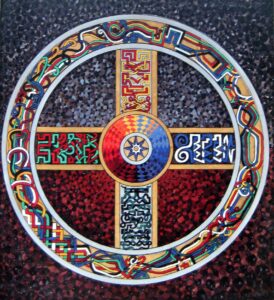
This, in turn, Jungian psychology did. Jungian practitioners took active imagination (their term for the exercise occultists call “scrying in the spirit vision”) at least as far as the Golden Dawn ever did, and took dreamwork much further than any Western occult school known to me. Their work with art, and especially with the process of painting or drawing inner imagery until this evolves into mandalas (their term for what the rest of us call “talismans”), has opened up possibilities that the rest of the occult community has yet to explore. Jungian analyses of myths and symbols likewise pick up where most other occult teachings leave off. Thus there’s a great deal that today’s occultists can learn from Jung and other Jungian writers and teachers.
We may want to get to work on that fairly soon, though, because the Jungian movement as currently constituted is frankly on its last legs just now.
Jungian psychology never was really an effective way to treat severe mental illness, and Jung and his students pitched it accordingly in their time. It marketed itself primarily, to rephrase the title of one of Jung’s popular books, to modern people in search of a soul. Just as Freud targeted the crippling neuroses that the nineteenth-century terror of sexuality made inevitable, Jung targeted the subtler but equally damaging neuroses that nineteenth-century rationalism made just as inescapable, and both men did their work well: after Freud it was impossible to keep pretending that nice people didn’t have sexual cravings, and after Jung it was impossible to keep pretending that the human psyche was nice and clean and reasonable, with nothing in common with the world of myth, symbol, and dream. In that way, both men contributed greatly to the betterment of life in the Western world—but by the same token, both men also guaranteed that their successors would eventually run out of patients.

The downside of that process has been landing hard on Jungian therapists for decades now, and the situation promises to get worse. Partly that’s because the pharmaceutical industry has managed to turn psychiatrists into little more than pill pushers, and the medical industry has settled for drugging patients into numbness instead of, you know, helping them to solve their problems. (I don’t think this is any kind of accident. As the wry slogan goes, “a patient cured is a customer lost.”) Partly it’s because, as already noted, Jungian therapy isn’t all that effective as a treatment for serious mental illness, and so insurance companies are increasingly balking at paying for it. I think the largest share of the difficulty, though, is simply that so many of Jung’s insights have become such commonplaces in modern life that the troubles that once drove many people to Jungian therapists no longer happen anything like so often as they once did.
This doesn’t mean that Jung’s work has lost its value. It means, rather, that the audience for Jungian theory and practice has shifted. The people who might benefit most these days from studying Jung’s ideas and putting his methods to use aren’t the ones he and the first few generations of his students treated, the people who had strayed into neurosis after losing their sense of values, purpose, and meaning, and needed to plunge into themselves to get back to a normal level of functioning. Rather, they’re people who can already function quite well but want to go further, to embrace their own inner potentials to function above the merely normal level.
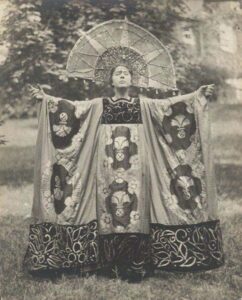
That is to say, they’re occultists, or potential occultists.
One of the central teachings of occultism is that each of us can be much more than we allow ourselves to be. Every human being contains the potential for magnificence: that’s how one of my teachers used to phrase it. The fact that so many of us settle for so much less, that we crawl like worms when we could stride like titans, is the great tragedy of our species. Carl Jung grasped that, and he offered a tolerably well-stocked toolbox of methods for digging down through the mental detritus to unearth the buried keys of our potential magnificence; he also recognized, like so many other occultists, that those keys fit locks within the self. With this in mind, it may well be time for those of us already committed to that quest to see what we can do about finding a place for Jung’s legacy in the traditions of modern occultism.