Cardona Bits
Audio & Music
Keyboards & Input Devices
A hackable electronic saxophone with mechanical keys
$30,740 raised
of $15,000 goal
204% Funded! Order Below
Recent Updates
- Jan 04, 2024 Orders Fulfilled, Code Info, and Feature Requests
- Dec 11, 2023 Haxophones on the Move
- Nov 28, 2023 One Busy Month
- Oct 17, 2023 Last Days of the Campaign
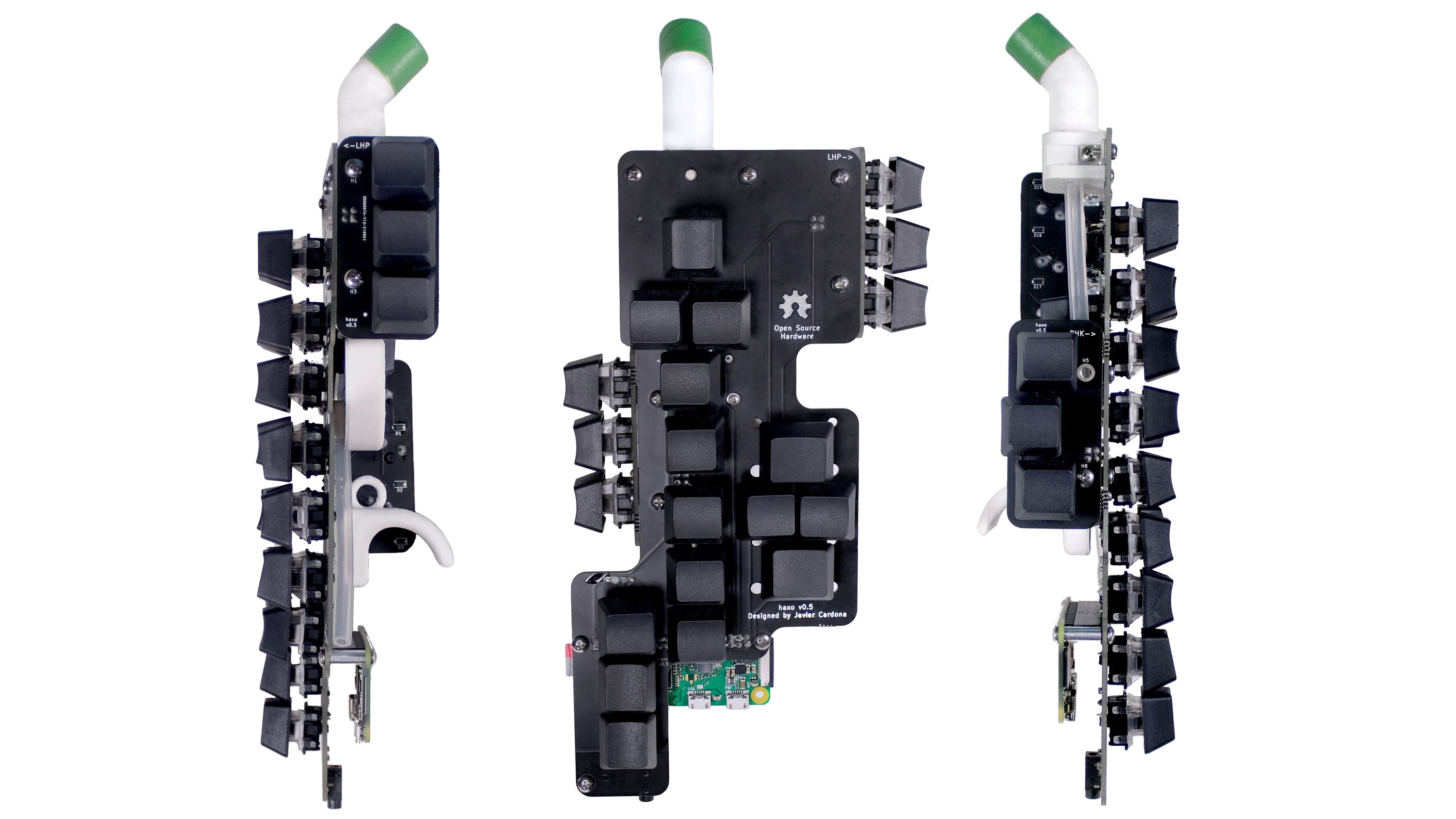
The Haxophone offers a budget-friendly and fully customizable electronic musical experience akin to a travel saxophone. Powered by an elegant Raspberry Pi HAT, this unique instrument provides mechanical keys and custom ergonomics, ensuring a satisfying feel for musicians and hackers alike. Embodying the spirit of open source, the Haxophone is hackable, OSHWA certified, and encourages creative freedom, enabling users to customize key switches, note mappings, and more.
While the Haxophone is not a direct substitute for a traditional saxophone, it offers remarkable accuracy, allowing saxophone players to practice quietly or on the move. With transferable muscle memory between the Haxophone and the traditional instrument, rehearsals can now occur in unconventional settings that were previously inconceivable with a standard saxophone. Moreover, repair costs are reasonable, and the Haxophone’s compact and lightweight design makes it more portable than any regular saxophone.
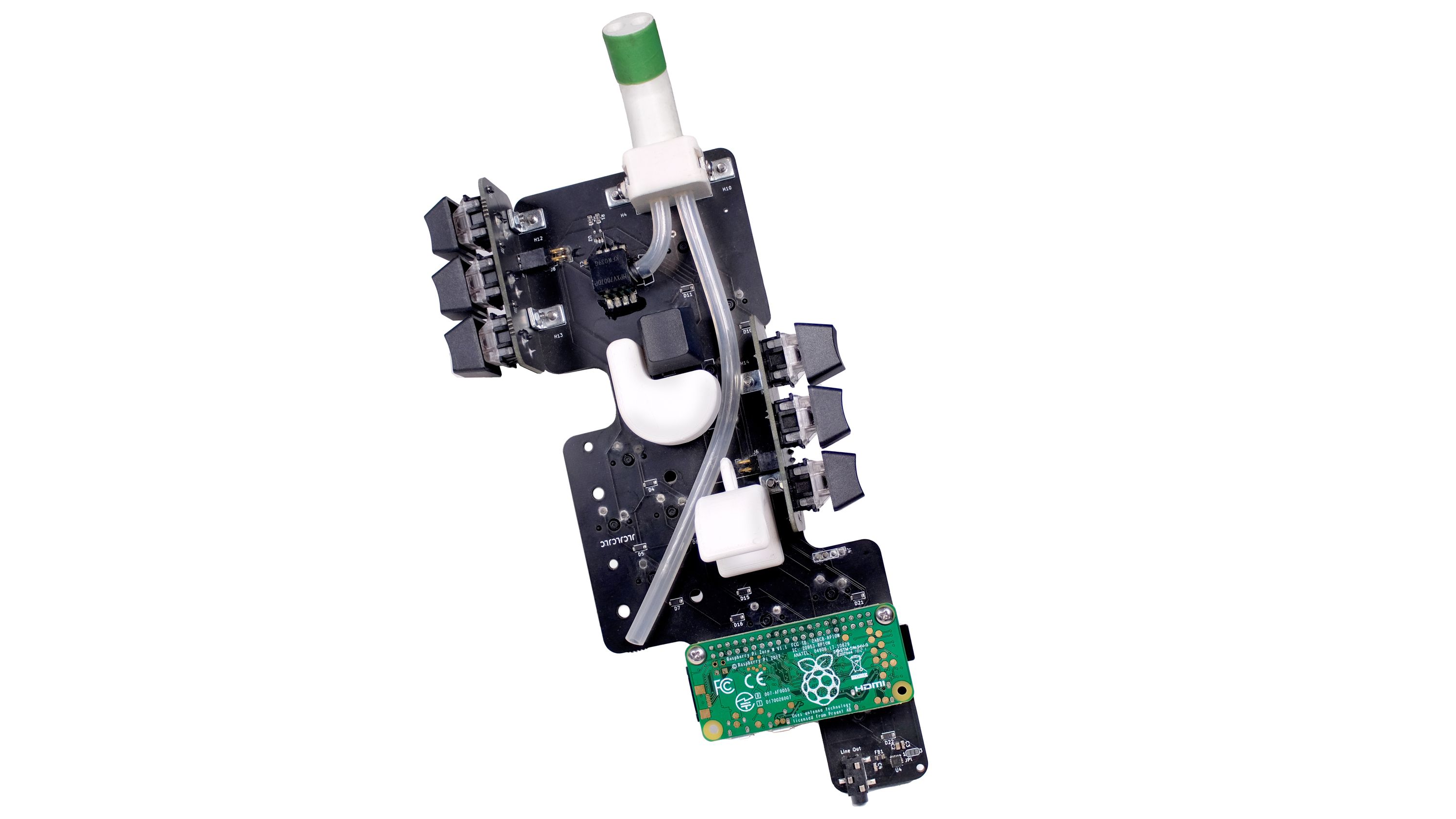
Designed for Customization
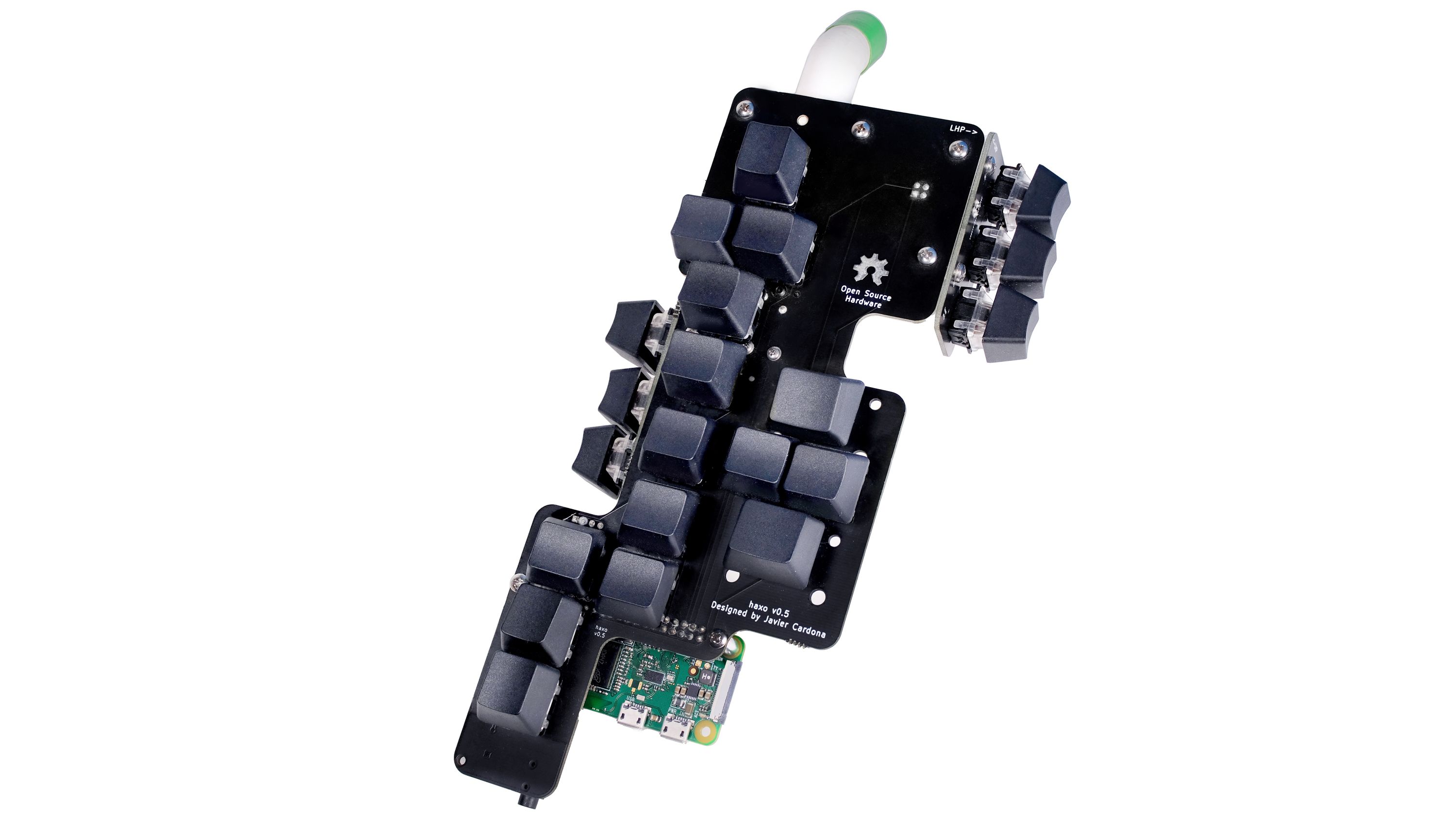
The Haxophone cleverly utilizes standard mechanical key switches as fingering keys, offering cost-effective, reliable, and easily repairable alternatives to digital saxophones’ custom molded keys.
Explore the Hackable Haxophone
Embracing hackability, the Haxophone encourages exploration and creativity. Modify fingerings, change sounds, add features like beats or LEDs—the software, written in the beloved Rust language, enables easy customization.
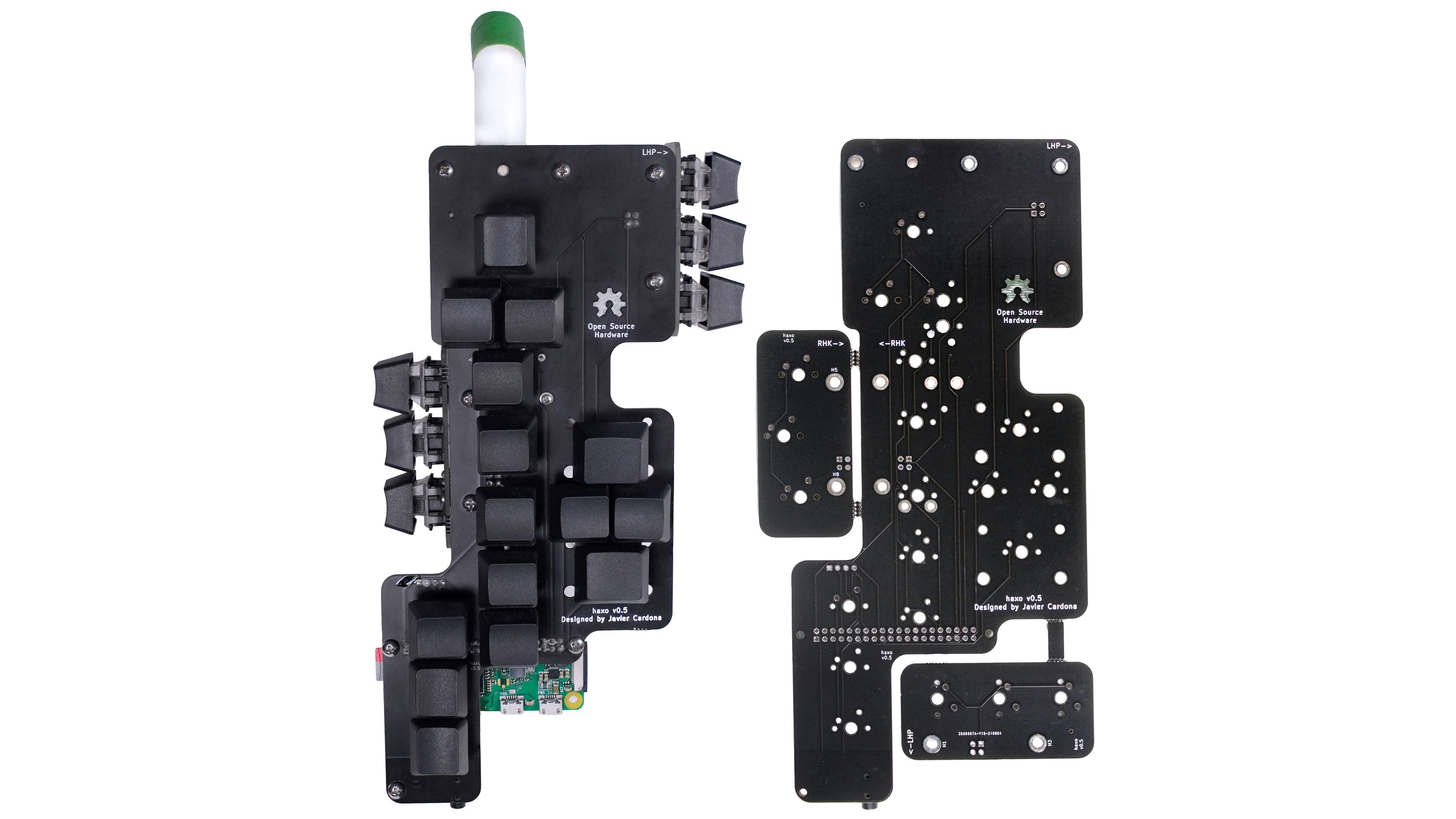
The Haxophone comes as a HAT (Hardware Attached on Top) for Raspberry Pi single-board computers. Its keyboard layout mirrors that of saxophones. Additionally, it features a neck compatible with regular saxophone mouthpieces and a pressure sensor for airflow detection. The built-in audio amplifier ensures optimal performance even with the cost-effective Raspberry Pi Zero.
For repair and customization needs, simply 3D print replacement parts, including the thumb rest, using the provided source models available in our repository.

Streamlined Design with Cost Efficiency
The Haxophone PCB is an integral part of the instrument’s structure, directly attaching key switches, thumb rests, mouthpiece, and Raspberry Pi. Side keys (left palm and right knuckle keys) are mounted on smaller detachable PCBs, effectively reducing manufacturing expenses.
Keyboard Layout
The keyboard adopts a 3x8 matrix, with the mapping of saxophone keys to keyboard column/row values.
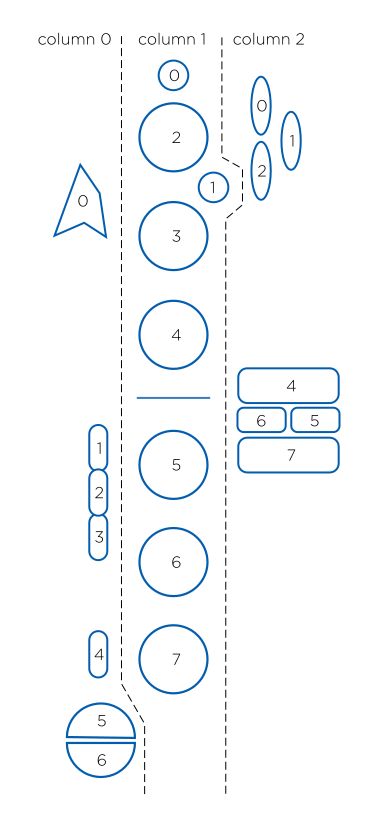
Please note that due to PCB size constraints, the high F# key is not included. However, the Haxophone is already pre-configured with common high F# mappings. For less common configurations, the software is easily extendable.
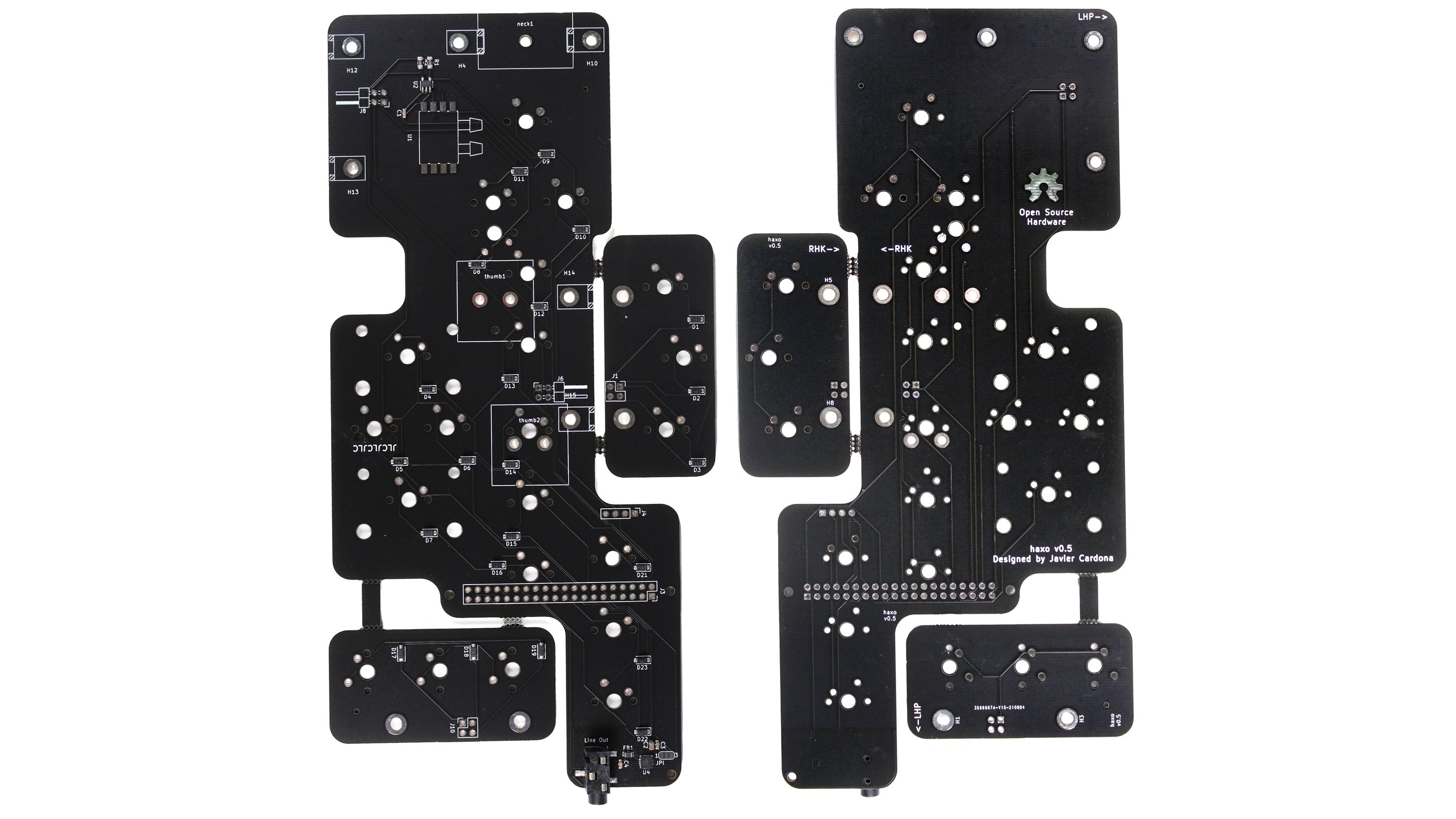
Enhanced Audio Experience
The Haxophone incorporates an audio amplifier and a 3.5mm mini-jack, facilitating connectivity to headphones or external amplifiers.
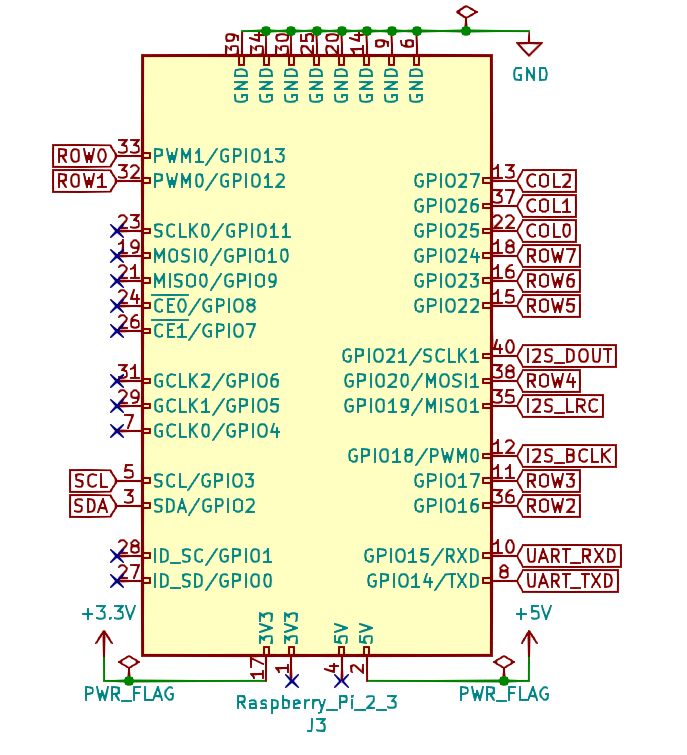
Haxophone Pinout
The diagram below shows how the Haxophone connects to a Raspberry Pi. The keyboard matrix uses discrete GPIOs, the pressure sensor uses I2C, and the audio amplifier uses I2S.
Features & Specifications
- Custom Raspberry Pi HAT PCB
- Software:
- haxo-rs: Rust-based driver for detecting key presses and breath, converting them into notes.
- fluidsynth: Synthesizer software for converting notes into sounds.
- Tactile-feedback 5-pin mechanical switches
- Mechanical keycaps
- Airflow pressure sensor
- Built-in audio amplifier (compatible with Raspberry Pi Zero and Zero W)
- USB MIDI output (only on Raspberry Pi Zero). Connect the Haxophone to a MIDI synth over USB and use it as a regular MIDI instrument.
- Serial console for hacking
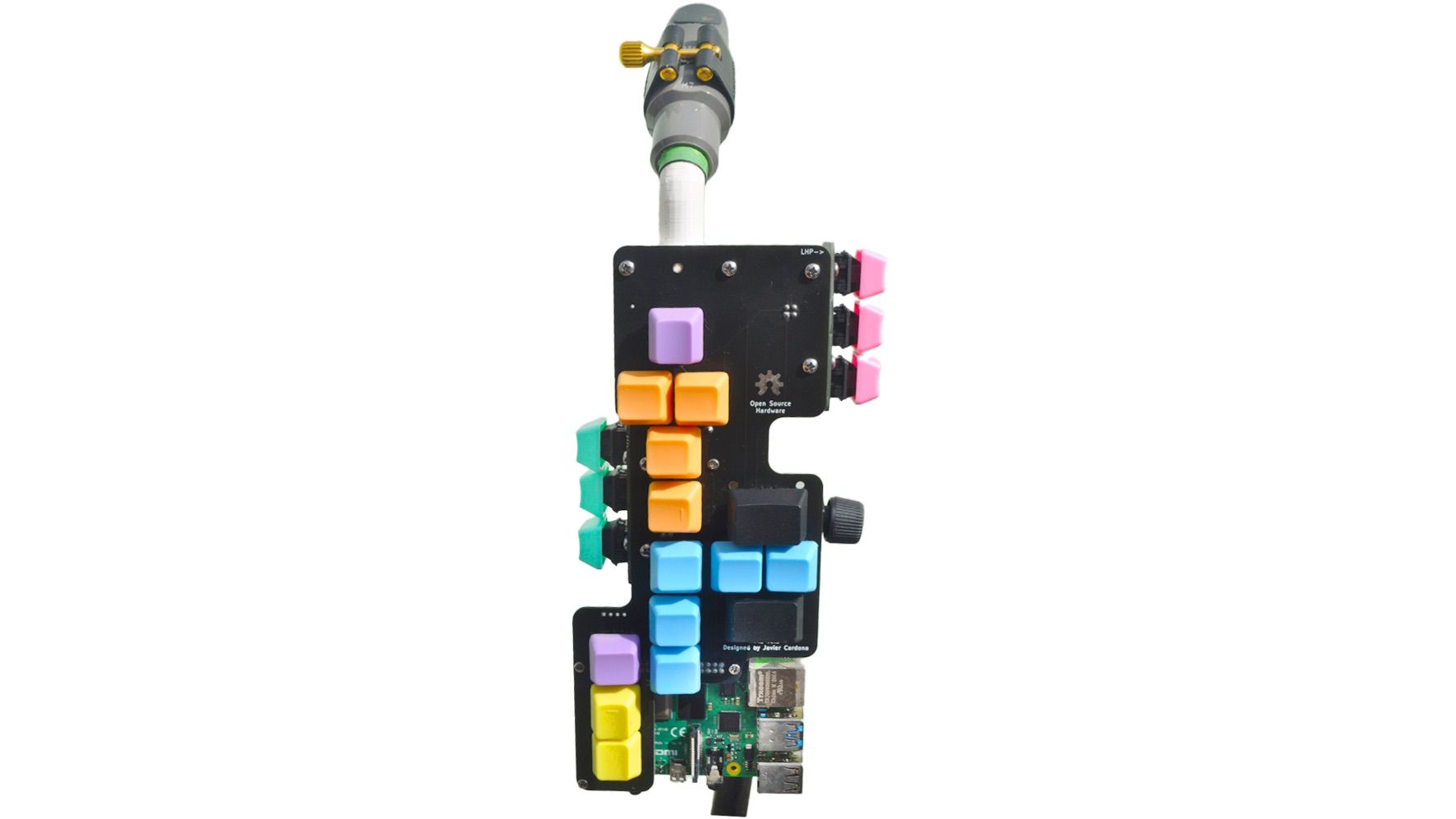
Embracing Open Source
The Haxophone is officially certified by the Open Source Hardware Association with UID PT000005.
Comparisons
| Haxophone | Mark VI tenor | YDS-150 | YVS-140 | ||
|---|---|---|---|---|---|
| Manufacturer | Cardona Bits | Selmer | Yamaha | Yamaha | |
| Quality of Sound | Good | Great | Good | Not Good | |
| Multiple Sound Instruments | Yes | No | Yes | No | |
| Same Fingering as Saxophone | Yes | Yes | Yes | No | |
| Plays in Tune | Always | Not always | Always | Always | |
| Open Source Hardware Certified | Yes | No | No | No | |
| Repairable | Yes | Only by professionals | Only by professionals | No | |
| Customizable | Yes (keycaps, code, 3d printed parts) | No | No | No | |
| Silent Playing (with Headphones) | Yes | No | Yes | No | |
| Weight | Very light (180g) | Heavy (3.5 Kg) | Medium weight (1.1 Kg) | Light (438g) | |
| Programmable | Yes | No | No | No | |
| Can Carry and Play on Airplane | Yes | No | Only in business class (due to 70cm length) | No (loud) | |
| Price | $ | $ $ $ $ | $ $ $ | $ $ |
Support & Documentation
The Haxophone is designed with transparency and community input in mind. Our extensive Github Repository includes open-source information, hardware files, software, assembly instructions, and more. For assistance, documentation, and discussions
In the Press

Ask a Question
Produced by Cardona Bits in Porto, Portugal.
Sold and shipped by Crowd Supply.
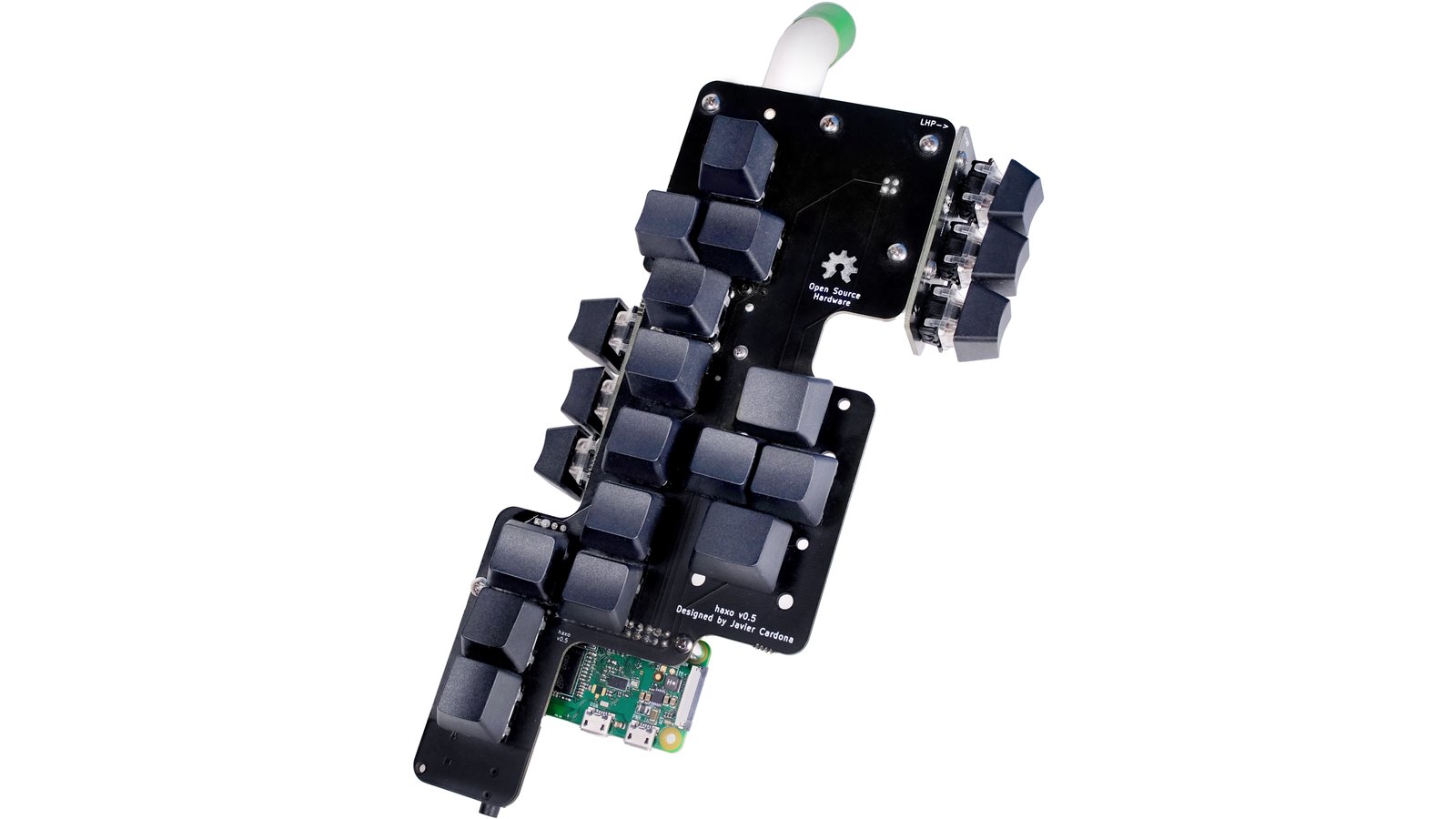
Haxophone
A fully assembled HAT ready to be plugged into a Raspberry Pi (RPi not included)
$236 $8 US Shipping / $18 Worldwide
In stock
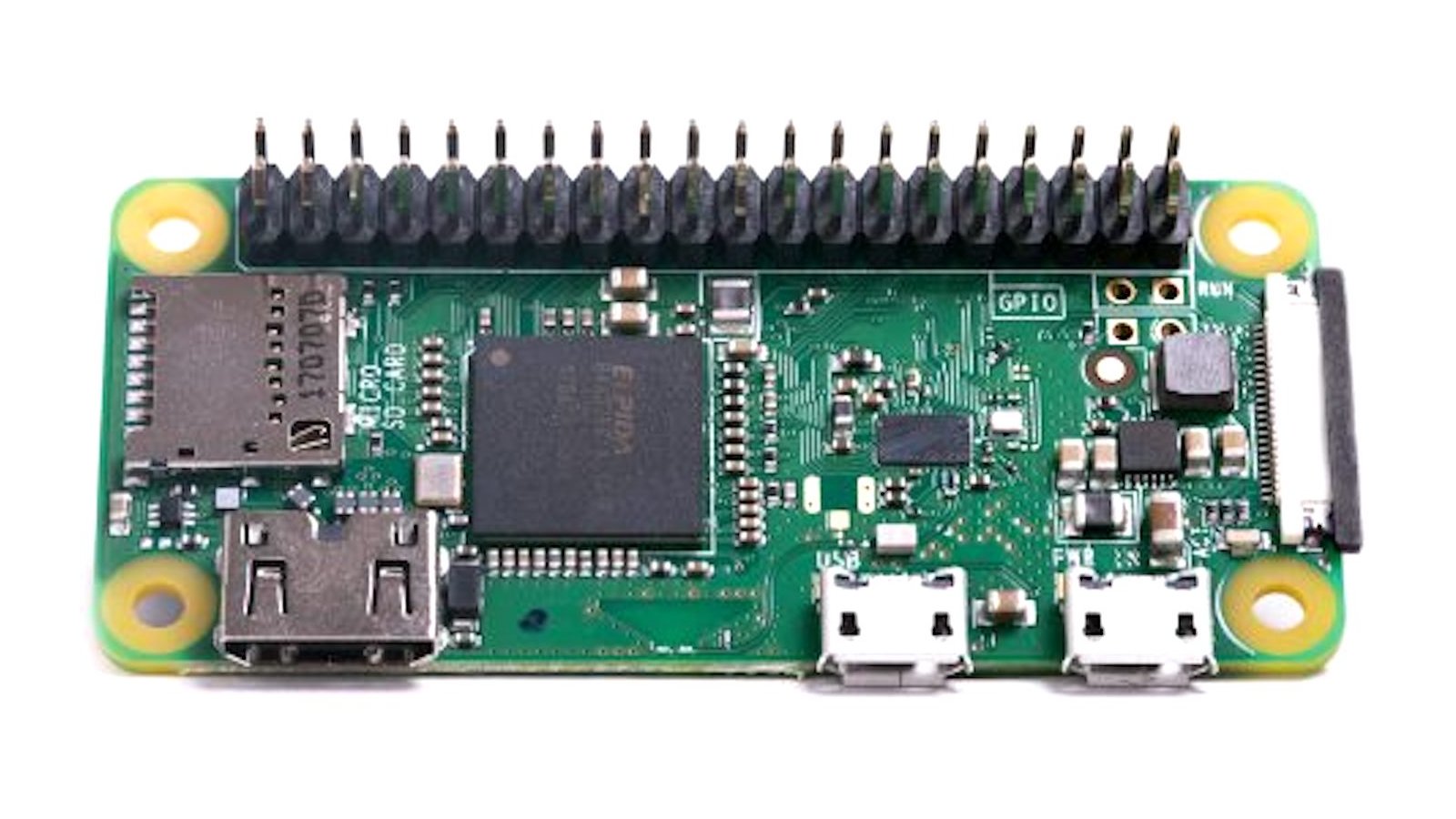
Raspberry Pi Zero WH
From the Raspberry Pi Zero project.
Half the size of a Model A+, with twice the utility, plus Wi-Fi and Bluetooth connectivity and pre-soldered pin headers.
$16 $8 US Shipping / $18 Worldwide
Orders placed now ship Feb 28, 2027.
16 GB UHS Class 4 microSD Card WD/SD
From the Crowd Supply Basics project.
16 GB UHS Class 4 MicroSD Card
$16 $8 US Shipping / $18 Worldwide
Orders placed now ship Aug 31, 2026.
About the Team