Chris Krycho
Our obsession with AI’s capabilities misunderstands what intelligence actually is.
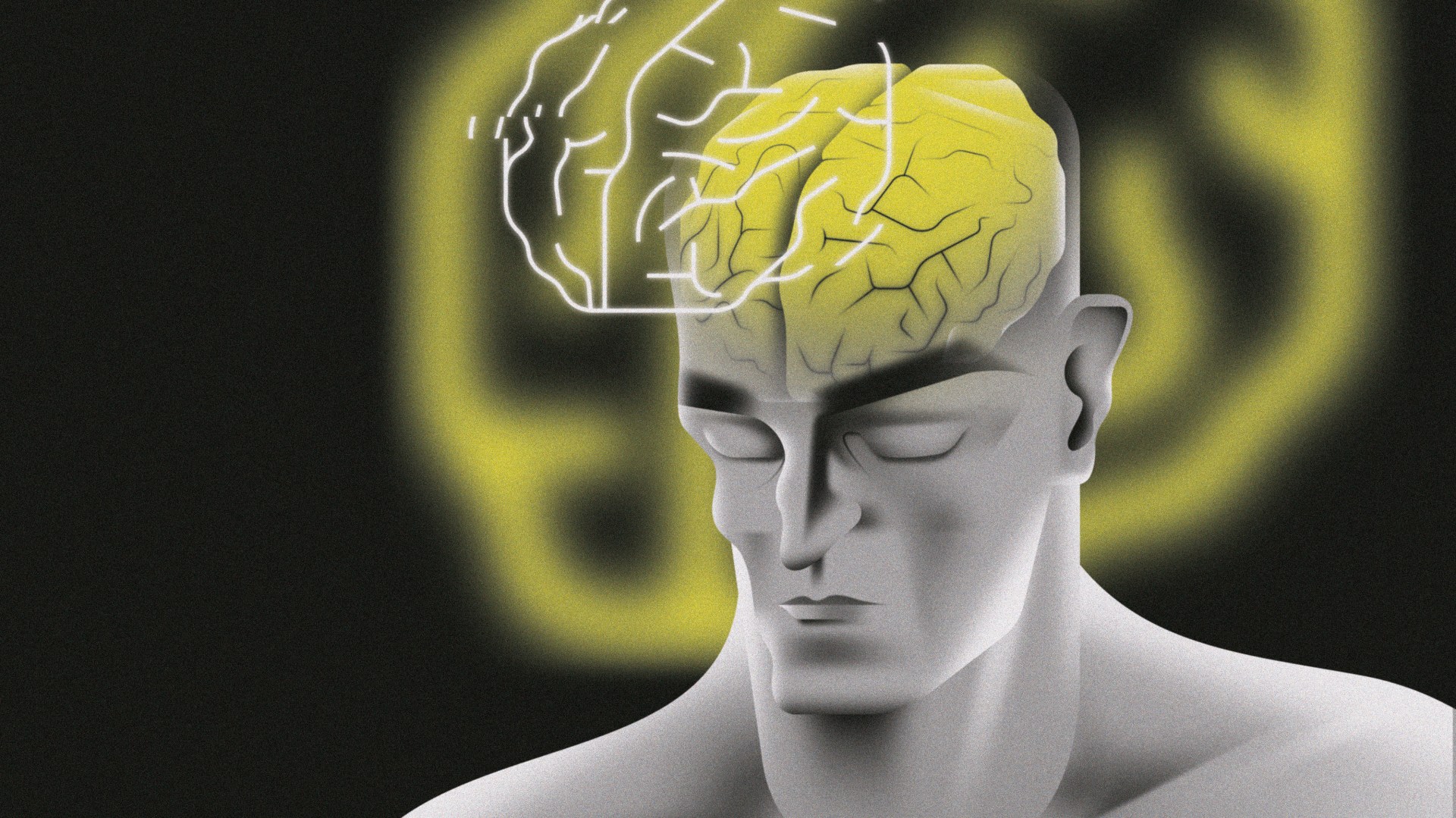
Illustration by Zhenya Oliinyik
In this series
Much of the contemporary debate about artificial intelligence tools such as large language models (LLMs) asks, first, whether such tools are truly intelligent and, second, what that means for us as human beings—for our work, for art, and even for our relationships. For Christians, this is often closely followed by questions or assertions about AI and the imago Dei. These are reasonable things to wonder about.
I submit, though, that these are mostly the wrong questions. They begin from wrong assumptions about intelligence. Consequently, they carry misleading notions about what it would mean for technologies like LLMs to be genuinely intelligent.
Worse, they misunderstand how intelligence relates to human nature. Intelligence is not one single thing at all. IQ tests deceive us because they suggest that intelligence is measurable and that a single number meaningfully represents intelligence.
Sorry, something went wrong. Please try again.
Those tests do capture something real. They accurately predict how people will perform in college, for example, and are broadly indicative of people’s chances of success in a knowledge-based economy.
But there is much they do not capture. To illustrate this, consider: Are elephants more intelligent than dolphins? It depends on the kind of thing we ask them to do. An elephant cannot use echolocation to hunt and catch fish, and a dolphin cannot use its nose to pull fruit from a tree. Both of those surely entail kinds of intelligence and senses that are utterly alien to humans.
Likewise, some software systems can outperform humans at certain tasks that we think of as matters of intelligence because we experience them as part of our mental life. These include mathematical calculations or even sophisticated games like chess.
On the other hand, the most advanced robot cannot (yet) beat a person in a one-on-one game of basketball or scurry up a tree like a squirrel. Embodied action is still far beyond even our best programming ability, including the famously dexterous Boston Dynamics robots.
This highlights one way Western culture’s view of humanity is distorted: We have made more of intelligence than we ought. We valorize people who create software, write books, or pursue “the life of the mind.” We pity those left behind in society’s transition to knowledge work; we treat physical labor as menial instead of valuing the inherent goodness of embodied work.

Even this is reductive, though. It treats intelligence as a matter of facility. Living beings and humans in particular are not mere task-accomplishing machines. We have greater purposes. Playing games around a table does not “accomplish a task.” Neither does loving someone!
Thus, we cannot say what intelligence per se requires of us. Not only does intelligence belong in different measures and wildly differing functions to many kinds of creatures; it is also the wrong starting point for thinking about ethical obligations.
In fact, treating others’ intelligence as the basis of our ethical duties to them is perverse. This would imply that the more intelligent someone is, the deeper the obligation—and vice versa. Unborn infants, people suffering from progressive dementia, and severely mentally handicapped people would require less of us than a brilliant mathematician, scientist, composer, or poet. But our Lord teaches us the opposite: Whatever we have done to the least of his brothers and sisters, we have done to him (Matt. 25:40). Christians treasure and value humans of every capacity, not fixating on things like intellectual giftedness.
We could perhaps try to thread this needle by speaking of capacities instead of abilities. There is a long tradition of Christian thought dating back to the church fathers that connects the image of God to rationality—the ability to reason and act—rather than being reliant on or chained to instinct. This tradition distinguishes between a natural capacity in a kind of creature and the ways it may be distorted or absent in particular creatures of that kind. That is, we must distinguish between humans’ general capacity for reason and their individual ability to reason.

At its simplest, rationality is that ability to reason, and even that varies enormously. Both a newborn infant and a person with late-stage dementia may be unable to reason in this sense, but both still bear the image of God.
Even apart from disabilities, people have very different degrees of intelligence along the many different axes of intelligence. We have no reason to suppose that these differences resulted from the Fall or will be eliminated in the Resurrection. This seems obvious when considering physical talents, such as running or doing complex mathematics.
Intelligence is thus not the same as rationality, and it is certainly not identical to the image of God. We must not conflate actual intelligence with creaturely value or the image of God.
What then are the right questions? One is what it is to be human. This is an ancient question, but our new circumstances may help us reflect on it more carefully. Another is how we value human beings rightly (and perhaps other creatures too), not in terms of intelligence but in terms of their creatureliness. Our answers to these questions might give us cause to reject such paths or to walk them in a particular way.
Chris Krycho is a software engineer and composer. He is a member of Holy Trinity Anglican Church and has an MDiv from Southeastern Baptist Theological Seminary.