Robots have come a long way since their inception. Previously confined to science fiction, robots are now becoming an integrated part of our daily lives. From the delivery robots delivering packages to our homes to the surgical robots assisting surgeons to perform live-saving procedures, robots are transforming how we conduct various tasks.
But how did robots, once the stuff of science fiction, become a reality? Here, we'll trace the history of robots, exploring their nascent beginnings to the remarkable modern machines shaping our world today.
Early Origin of Robots
Long before introducing industrial robots on assembly lines, humans dreamt of creating robots. In ancient Greece, the myth of Pygmalion, a sculptor who fell in love with his ivory statue (Galatea) that eventually came to life, showcased the human desire to create human-like companions.
However, away from myths, concepts akin to practical robots can be found as early as 3000 BC when ancient Egyptian civilizations created lifelike automatons capable of performing tasks or imitating humans. In ancient Egypt, inventors created intricate water clocks that deployed human figurines to strike the hour bell.
Later, in 350 BC, the Greek mathematician Archytas of Tarentum, considered the father of mathematical mechanics, postulated a mechanical bird called ''The Pigeon'', which could be propelled by steam.
Nonetheless, while robot history dates back to ancient civilizations, the first recorded designs of a humanoid robot were made by Leonardo Da Vinci in the late 15th century. Leonardo's notebooks, discovered in the mid-20th century, contained meticulous drawings of a mechanical knight in armor who could sit up, wave, and tilt his head and jaw.
In the 1700s, many automatons that could perform various actions like eating, drinking, and even playing musical instruments were built. For instance, one of the most quintessential automatons of the period, created by French inventor Jacques de Vaucanson, could imitate a duck. Known as ''The Digesting Duck,'' the automaton could mimic a real duck by flapping its wings, drinking water, eating grain, digesting it, and excreting it.
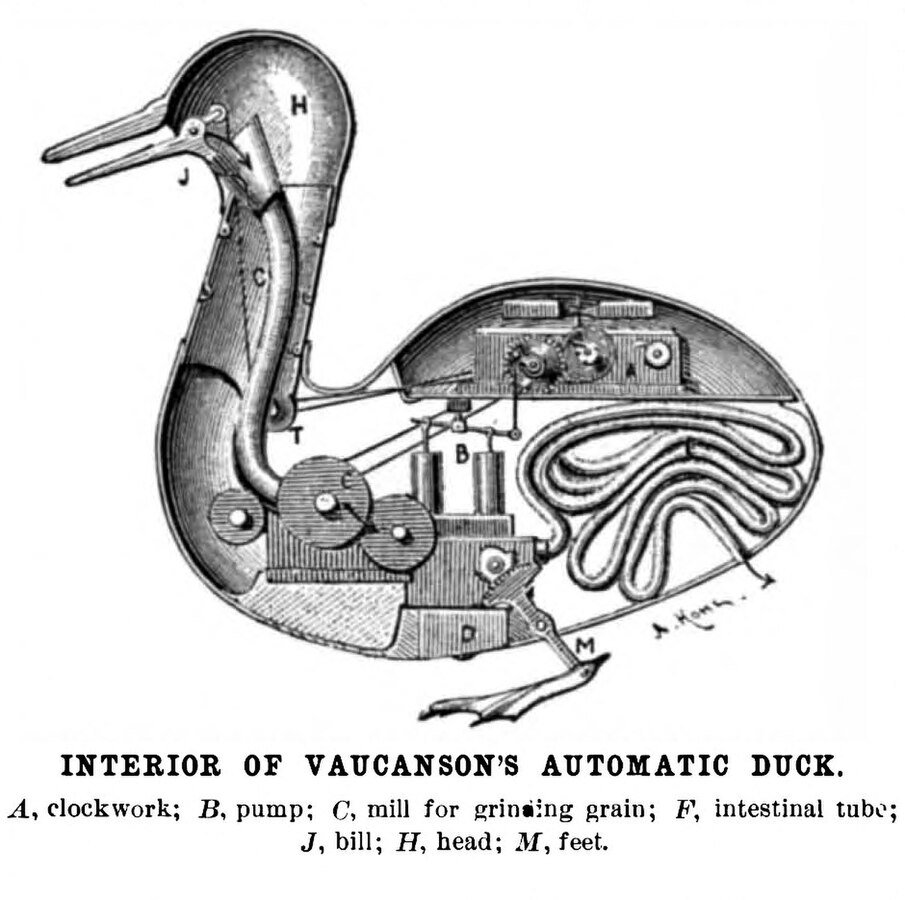
While these early machines weren't exactly like modern robots, they laid the foundation for future technological advancements.
The Rise of Modern Robots
While the 19th century saw significant advancements in automation with mechanized looms and other devices, the true robot origin of modern robots occurred in the 20th century. In fact, the term ''robot'' first appeared in a 1921 play titled R.U.R: Rossum's Universal Robots by the Czech playwright Karel Čapek. Borrowed from the Czech word ''robota,'' the term robot became more popular than the word ''automaton'', which was more commonplace then.
Later, in the early 1940s, popular science fiction writer Isaac Asimov proposed the Three Laws of Robotics and, in the process, coined the term ''robotics.'' The three laws postulated that:
Robots must never injure humans through their actions or endanger them through inaction.
Robots must comply with humans' instructions unless they go against the first law.
Robots must protect their existence as long as doing so doesn't go against the first two laws.
Away from the etymology of the term, the first modern robot, the Unimate, emerged in 1954. This groundbreaking invention, created by George Devol alongside Joseph Engelberger, was a programmable robotic arm designed to handle risky tasks in automotive manufacturing plants.
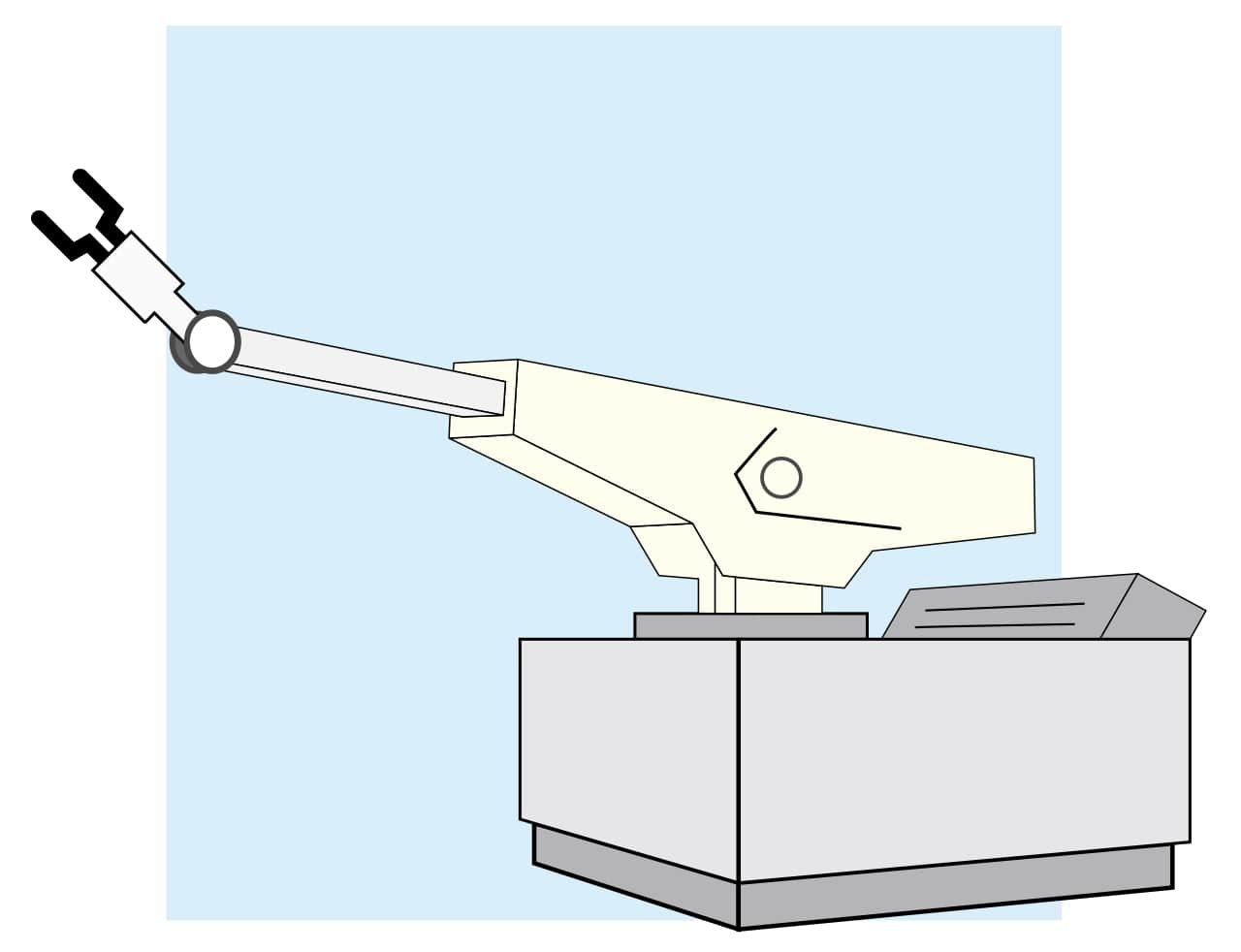
The Unimate was first deployed in a General Motors plant in 1961 to handle dangerous tasks like lifting and stacking hot, die-cut metal components. The Unimate's success paved the way for a new era in automotive manufacturing. Industrial robots quickly became ubiquitous in many car manufacturing plants, performing repetitive, mundane, and risky tasks like assembly, welding, painting, material handling, and inspection with unparalleled speed and accuracy.
Later, in 1969, mechanical engineering student Victor Scheinmann created a more advanced version of the Unimate known as the Stanford Arm. Unlike the Unimate, which received instructions from a magnetic drum, the Stanford Arm was a computer-controlled robotic arm.
As rapid technological advancements continued throughout the mid-20th century, researchers at the Stanford Research Institute launched the first robot that employed artificial intelligence (AI) in 1972.
The robot was called ''Shakey'' because of its stuttering movements. If Shakey was given a task, such as navigating obstacles in a room, the robot could accomplish the task using multiple sensors, including a TV camera, range finder, and bump sensors. This technology was a simple form of computer vision, a type of AI that today assists machines in detecting objects in pictures and enables self-driving vehicles to understand their surroundings.
Then, at the tail-end of the 1970s, Hiroshi Makino, a professor at the University of Yamanashi, developed the SCARA (Selective Compliance Assembly Robot Arm), a robot designed simply to pick and place objects. An early form of modern ''pick and place'' robots, the SCARA robot could pick and place objects with remarkable speed and precision.
The SCARA robot accelerated product production in industries that frequently moved components from one point to another, such as electronics assembly, car production, pharmaceutical manufacturing, food and beverage processing, and packaging and material handling.
Robots in the Early 2000s
The new millennium was accompanied by significant milestones in the field of robotics. At the turn of the century, Honda introduced an advanced humanoid robot named ASIMO. The robot could walk, run, interact with humans, and identify faces.
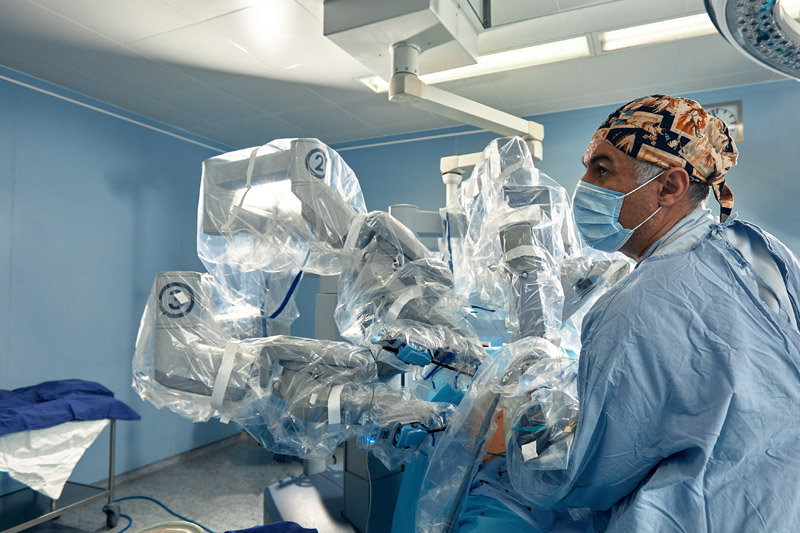
In 2000, Intuitive Surgical Inc. introduced the groundbreaking da Vinci surgical robot. The robot was designed to help surgeons perform a variety of minimally invasive surgeries, including urological, gynecological, thoracic, colorectal, and cardiac surgeries.
Since the inception of modern robots, many inventors created robots with industrial applications. However, the Roomba, a robotic vacuum cleaner launched in 2002 by iRobot, was the first functional robot to receive widespread public appeal. Less than three years after the robot was launched, iRobot had sold over one million units of Roomba, proving that robots weren't confined to large industries.
Meanwhile, Boston Dynamics, founded in 1992 as a spin-off from MIT, has played a pivotal role in shaping the history of robotics. Through their innovative creations like BigDog and Atlas, they've showcased the remarkable capabilities of robots in military, search and rescue, and industrial domains.
Robotics in the 2010s
In 2012, George Hinton and a team of researchers from the University of Toronto developed a system that could detect and sort millions of images with a remarkably low error rate compared to previous systems. The system leveraged deep learning, a type of AI that enables computers to learn and recognize patterns by analyzing algorithms and gathering massive amounts of data.
Thanks to Hinton and his team's breakthrough, today, robots can easily recognize objects in images and understand the meaning of text.
As advancements in robotics progressed throughout the 2010s, throughout the decade, there was ongoing scrutiny of how humans interact with robots, suggesting a widespread assumption that robots could attain consciousness and become deserving of human rights.
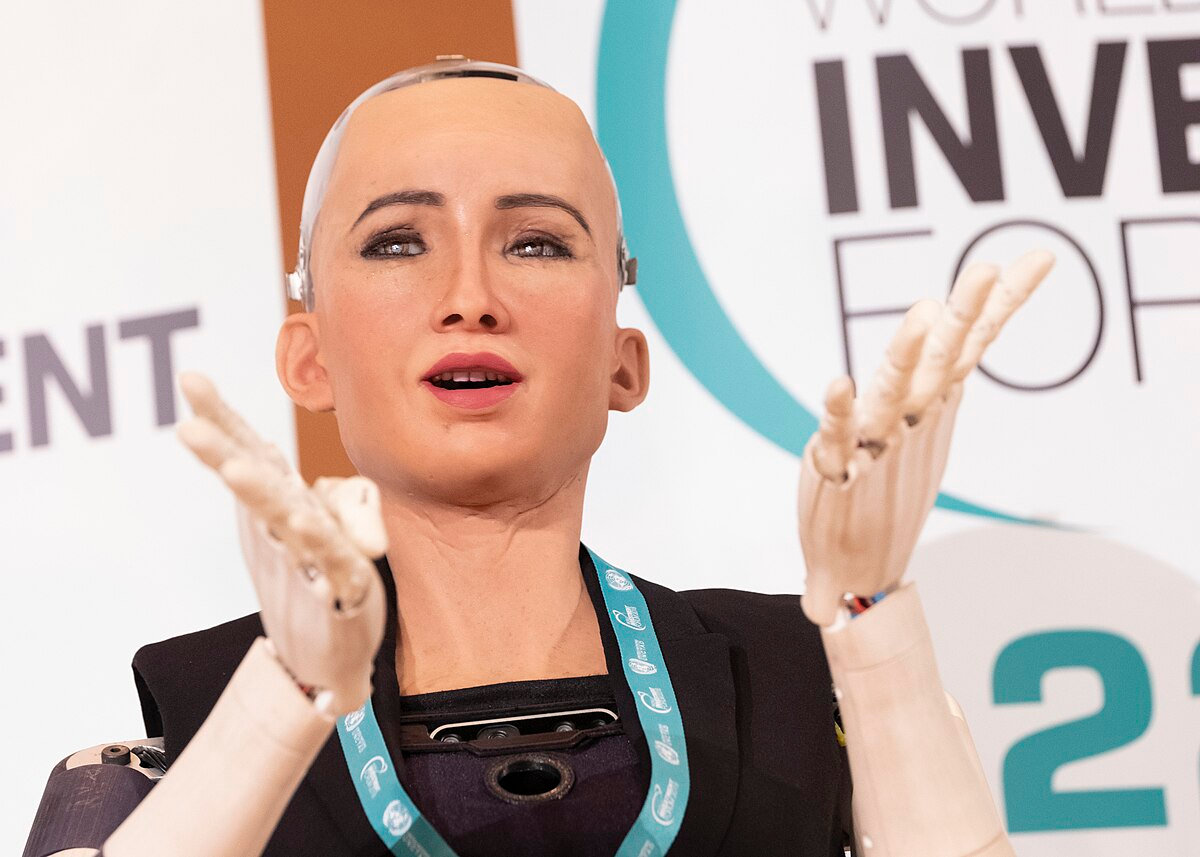
Eventually, on October 25, 2017, at the Future Investment Summit in Riyadh, a humanoid robot called Sophia received Saudi Arabian citizenship, becoming the first robot ever to have a nationality. This move received widespread criticism from certain quarters, as some experts deemed it inappropriate, nonsensical, and non-pragmatic.
The Evolution of Robots: A Promising Future
It's unlikely more countries will bestow robots with citizenship, giving them human rights like the right to vote, marry, or own property anytime soon. However, one thing's for certain: Robots will become an integral part of our everyday lives.
At present, smart home robots like voice-activated assistants are present in many homes, controlling lights, thermostats, and other smart devices. They're also present in assembly lines across all kinds of industries, helping with tasks like assembly, welding, and painting.
As a result, the global robotics market is expected to witness exponential growth, reaching a projected value of $126.96 billion by 2031, a compound annual growth rate (CAGR) of 15% between 2024-2031.
As more businesses across the globe integrate robots into their operations, you can't afford to neglect their benefits for your business.
Bota Systems provides force torque sensors for robots deployed across various industries. Contact us today to learn more about our solutions.