A landslide on May 28, 2025 devastated the town of Blatten in Switzerland’s Lötschental Valley.
Video: Lukas Kalbermatten
The Swiss Alps Reckon With the Threat of Collapsing Glaciers
A year after the town of Blatten was destroyed, Switzerland faces difficult decisions over the risks and costs of living in the mountains.
It is springtime in the Lötschental Valley, and yellow dandelions are blooming under the shadow of the Swiss Alps. The landscape is an idyll of snowcapped peaks and meltwater streams, but the changing season brings with it dangers.
Heavy rains in late April caused a mudslide that damaged the foundations of a 35-meter (115-foot) bridge hanging across a nearby gorge. It could take two or three years to fix, meaning that some popular hiking routes that lead through the valley are likely to be shut this summer.
“We don’t live in an easy landscape,” said Lukas Kalbermatten, a 55-year-old hotelier, who has lived in the area, in the southern canton of Valais, all his life. “People ask us all the time: isn’t it dangerous to live there? I tell them life is dangerous — but it’s dangerous for everybody.”
A nearby slope shows just how perilous it can be. A year ago, on May 28, 2025, an entire section of the mountain and the Birch glacier that lay on it collapsed. Within minutes, the village of Blatten, where Lukas and generations of Kalbermattens before him were born, was obliterated, along with his Edelweiss Hotel.
Perched above Blatten, the Birch glacier acted as a stopper that held rocks above. In recent years, the permafrost degraded and put more weight from stone on the glacier. Swiss officials began monitoring it with a webcam in 2013.
The extra weight of rocks caused the Birch glacier to slide as much as 70 meters (230 ft) between 2017 and 2023. In May 2025, monitoring devices detected movements suggesting the glacier was becoming more unstable, posing risk to buildings below. On May 19, Blatten was evacuated.
On May 28, 2025, at 3:24 p.m. local time, the Birch glacier collapsed over Blatten and Ried, triggering a 3.1 magnitude earthquake. Within minutes, the village disappeared under around 20 million tons of ice and rock.
The event was “one of the largest and most devastating rock-ice avalanches in modern history,” according to scientists. About 90% of the towns were buried by rock and ice as much as 32 meters (105 ft) deep.
Source: Satellite image ©2025 Vantor
Note: Image taken May 29, 2025
It significantly altered the valley’s geology. Several dammed lakes formed, including the area where the Lonza River and Blatten meet. Today, paved roads to the area remain cut, with large portions of the villages still under water.
Sources: Federal Office of Topography swisstopo; Yang, D., Qiu, H., Quevedo, R. P., Liu Y., Glade, T., (2025) Birchgletscher rock‐ice avalanche burying the village of Blatten on 28 May 2025, Valais, Switzerland, Springer Nature; Airbus
For years, scientists have been warning that climate change is leading to the melting of glaciers and the thawing of permafrost worldwide. Across the globe, glaciers have been losing mass every year for more than three decades, according to the latest data from Copernicus, the European Union’s Earth observation agency. Their shrinking is directly linked to climate change, with higher temperatures and greater solar radiation accelerating melting in summer, and low rates of snowfall in winter failing to replenish the lost ice.
Alpine glaciers are among the world’s fastest-shrinking. Average temperatures in Switzerland have increased by 3C since pre-industrial times, compared to about an average of 1.4C for the whole planet.
In Switzerland, the destruction of Blatten has brought home the risks now faced by towns and villages throughout the Alps — among them places that are central to Swiss culture and identity. It’s also revived a long running debate about the price paid by taxpayers in wealthy cities such as Zürich and Geneva to subsidize the traditional way of life in the mountains.
Between 1973 and 2016, more than 1,000 glaciers vanished in Switzerland. Twenty major Swiss glaciers have lost one quarter of their volume since 2015, according to a 2025 report led by Matthias Huss, a senior scientist at ETH Zürich and the head of Switzerland’s glacier monitoring network Glamos.
“We’re seeing these very strange years that only existed in crazy model simulations and now they’re happening in reality,” said Huss. “We’re seeing an acceleration of these trends.”
Melting Glaciers Threaten Swiss Alp Communities
Receding glaciers and thawing permafrost have increased the risk of avalanches, rock falls, floods and other hazards
Sources: Federal Office of Topography swisstopo, ETH Zurich, Bloomberg analysis, OpenStreetMap, Google Satellite, National Institute of Geographic and Forest Information
*Based on last publicly available data of at-risk categorization in 2018
Just 50 kilometers (31 miles) south of Blatten — or an hour’s drive through a meandering, scenic road carved on a steep slope — is the Saas Valley. Like the Lötschental, it’s home to small towns dotted with rural hotels and a wide network of hiking and mountain biking trails.
Among the valley’s attractions is a small museum dedicated to the history of alpinism, run by Christoph Gysel, a 67-year-old pastor turned tourist guide. The latest exhibition is dedicated to another tragedy — the 1965 collapse of the Mattmark glacier, which killed 88, mostly Italian, young workers who were building a dam nearby.
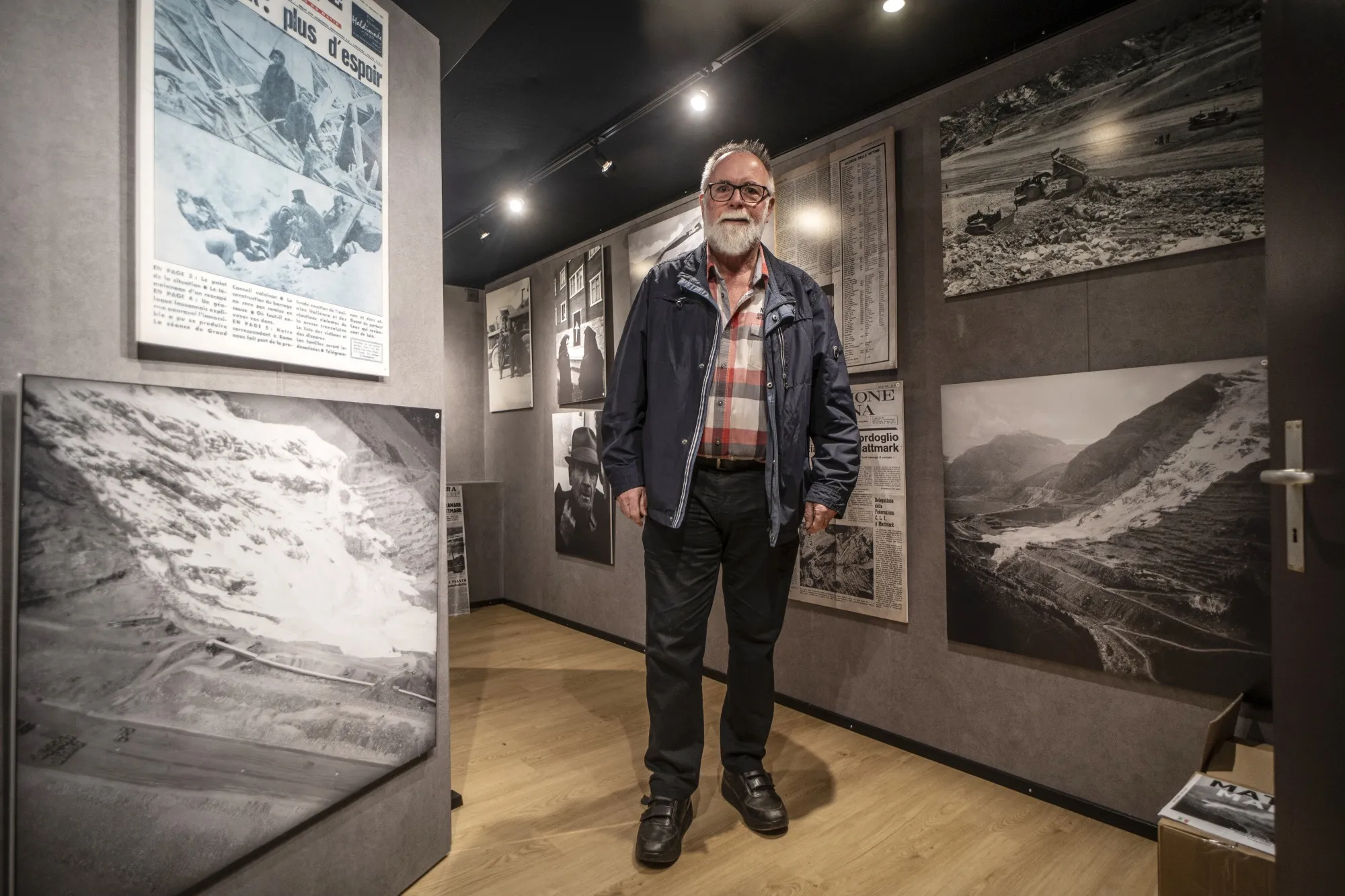
Christoph Gysel at the Sonnenhalde Culture Center in Saas-Grund.
“People over here have always said that’s life, or the Lord, and that nothing could be done about it,” Gysel said. “But these tragedies are not for nothing if we can learn from them.”
It was the Mattmark disaster that led Swiss authorities and researchers to build glacier inventories and study their mass and movements. These initial studies set the foundations for modern glaciology.
Glaciers in the Saas remain under close vigilance. In September 2017, authorities ordered the evacuation of about 220 people after detecting major ice falls on the Trift glacier, which sits above Saas-Grund and — just like in Blatten — would engulf the town if it collapsed. That time, the residents were able to return home.
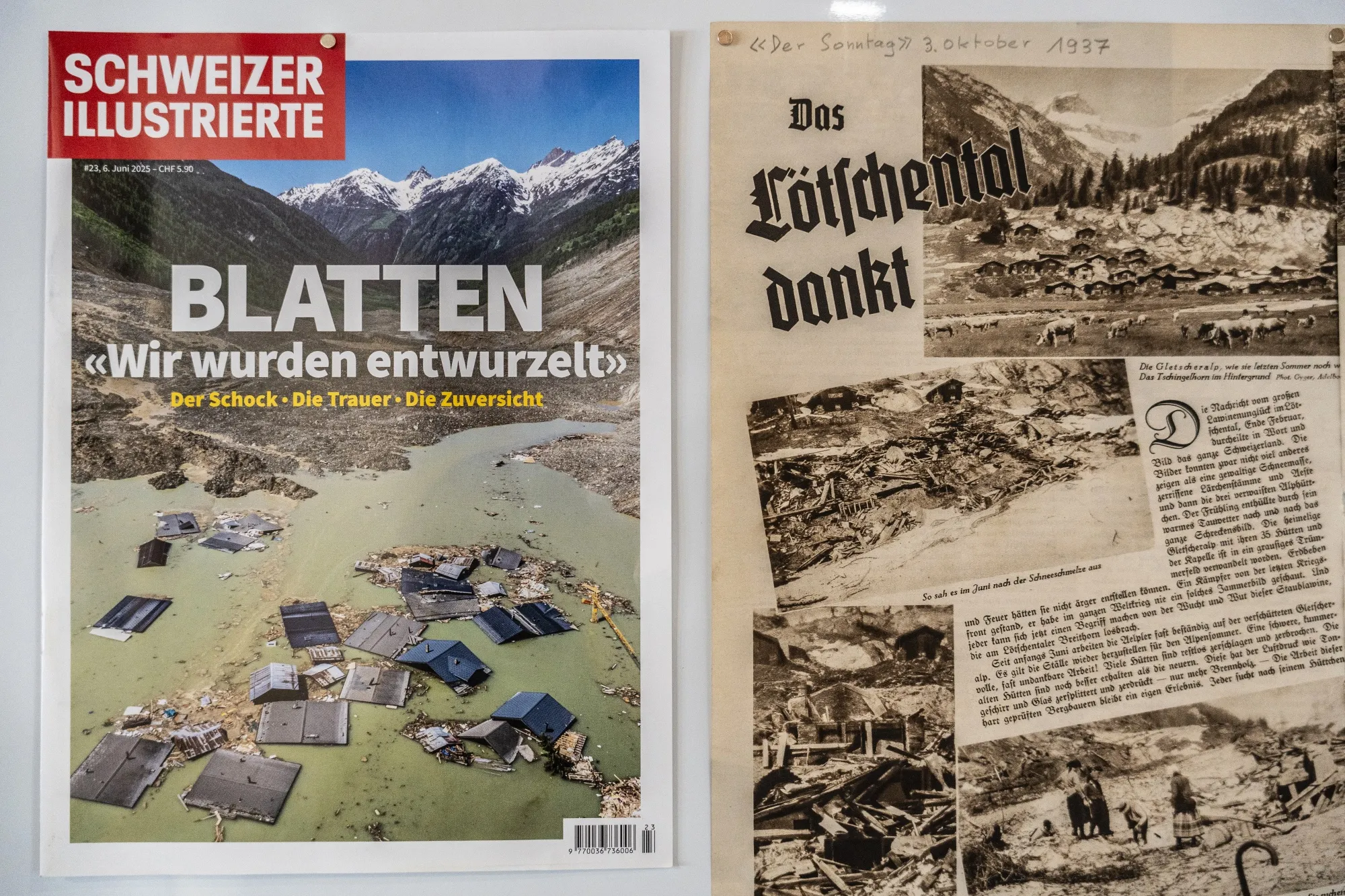
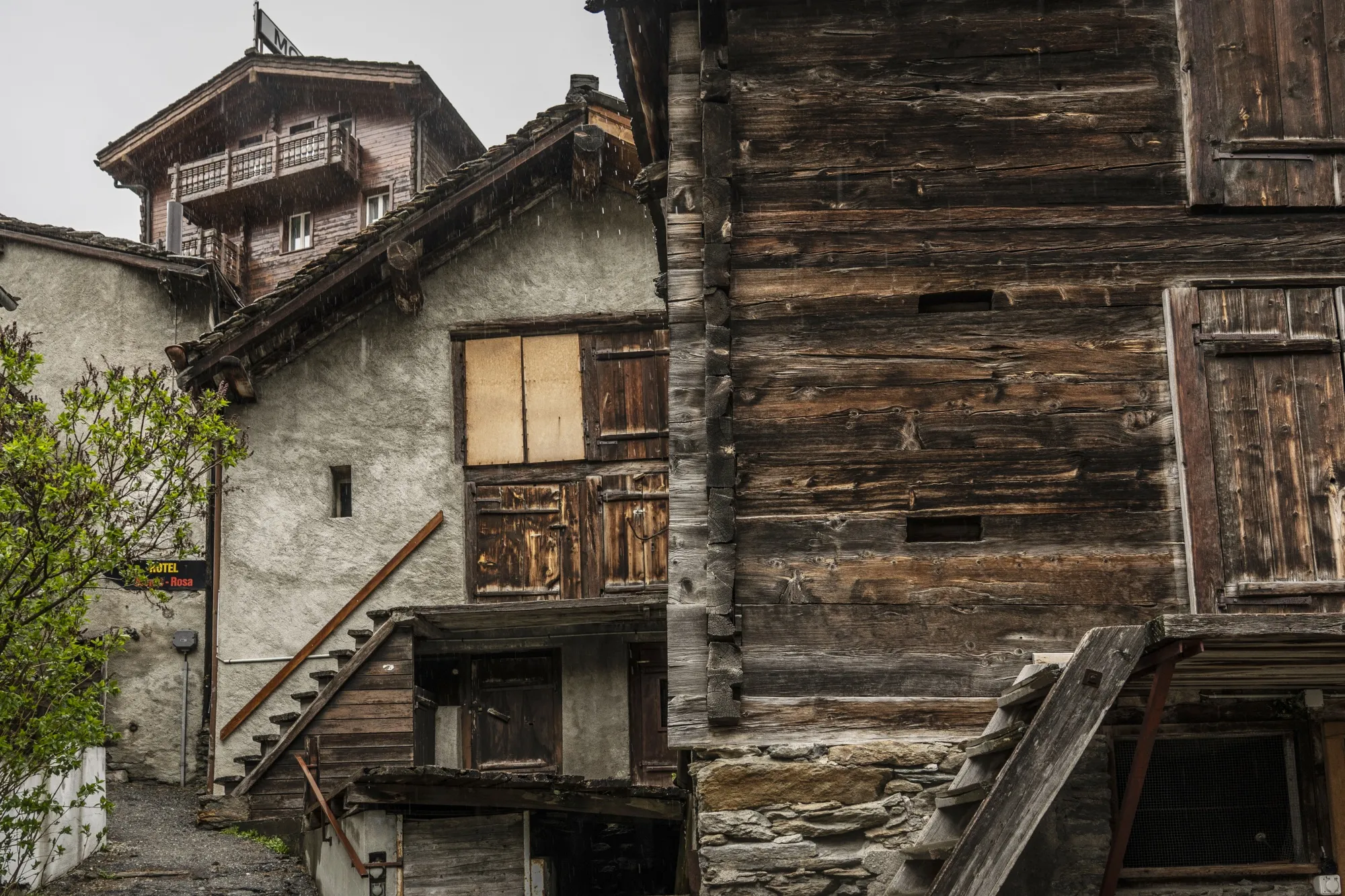
Press clippings on show at the ‘Blatten’s Memories’ exhibit in the Lötschental Museum in Kippel. Traditional housing in Saas-Grund.
Trift remains under close surveillance, with a high resolution camera continuously pointing at it and a radar sending hourly updates on its movements. It’s not the only threat locals are watching. In June 2024, heavy rains led to severe flooding of the river Triftbach, which has its source in the Trift glacier. A torrential mudslide killed one person, buried the main road and an entire area of the village. Authorities called in the army to help clear the mud, rocks and rubble.
“Something like this would happen once in a century,” Gysel said. “Now, these things that used to happen once in a century happen almost every year around here.”
Switzerland’s Glaciers Are Disappearing
Higher temperatures in the Alps mean that the region’s iconic glaciers are shrinking, with many likely to be completely gone by the end of the century
Sources: Glacier Monitoring in Switzerland
Note: Climate change assumptions based on an SSP2-4.5 scenario which assumes a “middle ground” global temperature increase of 2.5C by 2100 and global greenhouse gas emissions peaking around 2040 before slowly declining.
In the Valais canton alone, 60 glaciers are being monitored closely, with regular reconnaissance flights and continuous surveillance with cameras.
The local government acknowledges that monitoring isn’t enough. “Everything can’t be secured with preventive measures only,” said Guillaume Favre-Bulle, head of natural danger services at the Valais government, in a written reply to questions. “It is essential to imprint a true culture of risk among the population so they understand dangers better, they adapt their behavior and accept that in the mountain there’s no such a thing as zero risk.”
Monitoring techniques now allow researchers and authorities to know when an area becomes unstable and the population needs to be evacuated — Blatten residents were evacuated more than 10 days before the collapse. But it’s still impossible to predict ahead of time which glacier will fall next, said Huss. Scientists do forecast quite accurately how glaciers will retreat in the future, how snowfall will decline and permafrost will warm. But the tricky part remains knowing how each particular piece of mountain will behave as a consequence, especially when other factors like extreme precipitation and heat are thrown in.
“This is really new, unexplored terrain,” Huss said. “It’s kind of chaotic because every situation is completely different.”
The Blatten event wasn’t only triggered by climate change, he said. At play were complex, long-term geological conditions set in motion even before greenhouse gases emitted by human activities started warming the planet. But climate change might have given it a final push.
Instances of rocks and ice collapsing over a valley remain extremely rare and never before had they buried a village. But Huss is surprised at how often events that resemble the Blatten collapse have taken place in the Alps recently. He lists a landslide in southern Switzerland in 2017 where eight people died, as well as ice and rock avalanches on uninhabited valleys in 2023 and 2024.
“It is very astonishing,” Huss said. “We shouldn’t scare people and say going to the mountain is dangerous because it will fall apart, but the same logic doesn’t exclude it won’t happen again in other circumstances.”
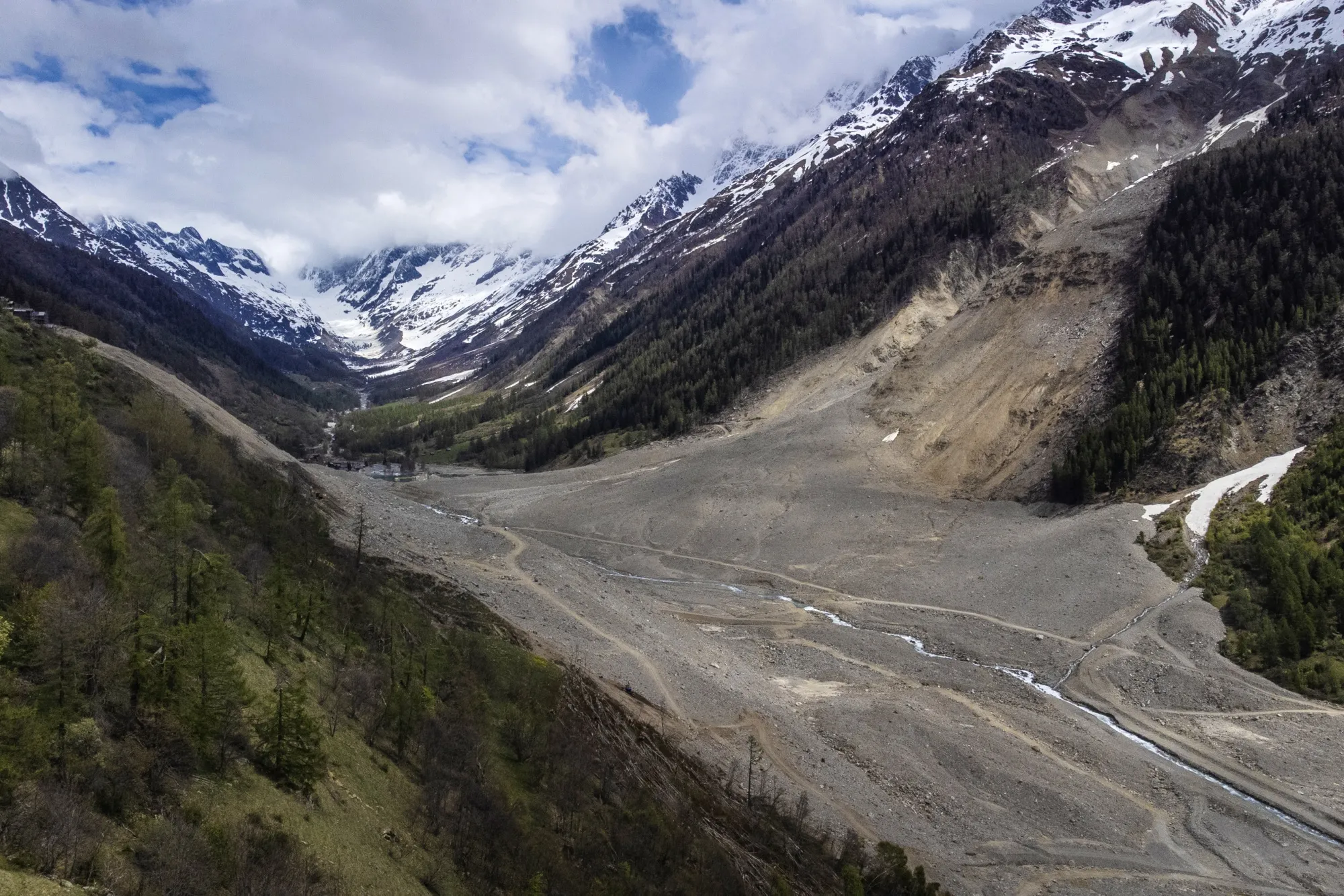
A year on from the collapse of the Birch glacier, Blatten remains shrouded in dust and debris.
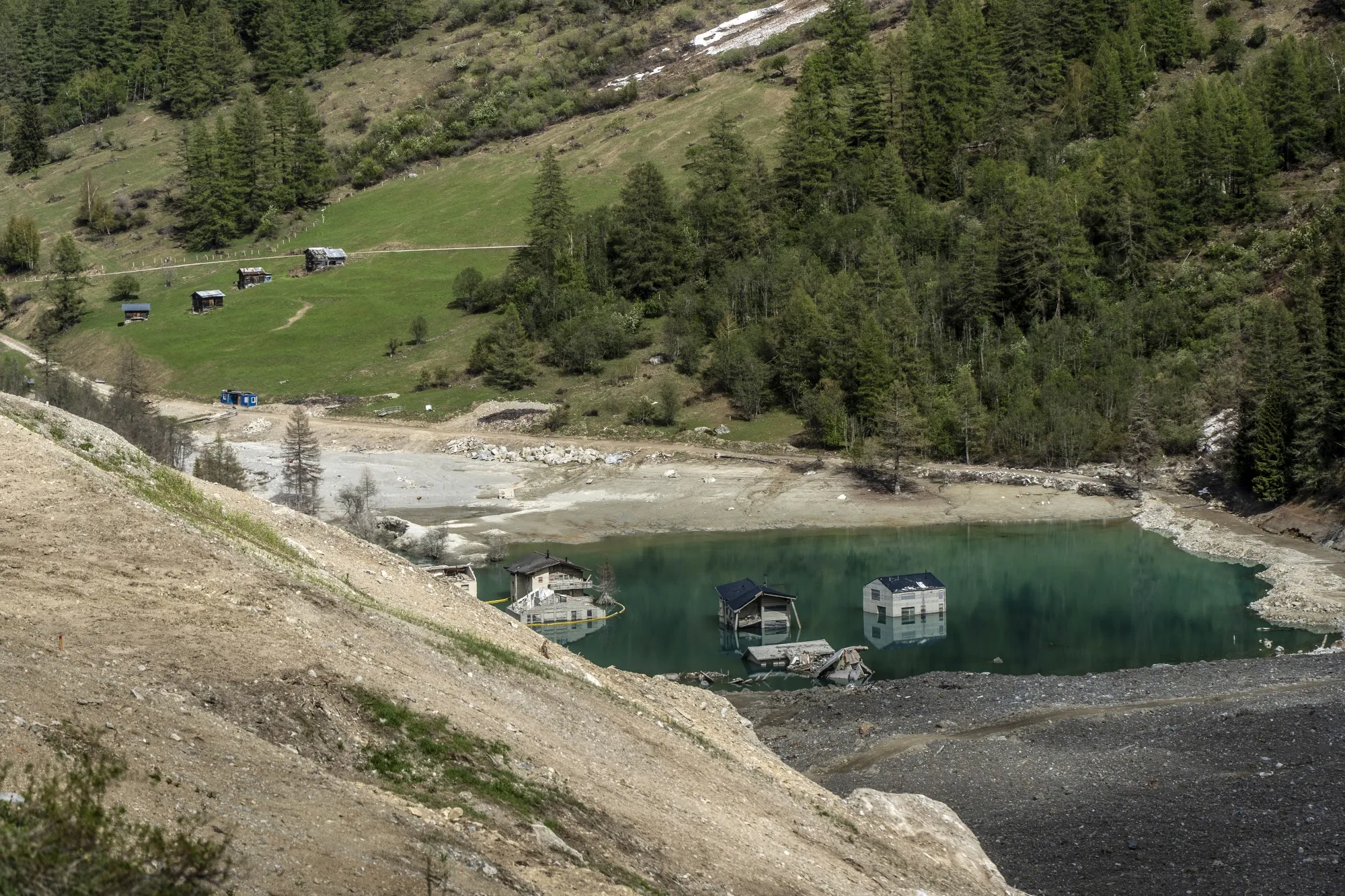
A few of the town’s houses are still standing, flooded by a new lake that formed in the valley.
The immediate financial cost of “die Katastrophe,” as locals call it, was not vast. The Swiss Insurance Association, an industry body that represents private insurers, said the collapse led to 255 million Swiss francs ($323 million) in insured losses. The Valais government provided 10 million Swiss francs in immediate emergency aid and estimates it will spend around 100 million in new infrastructure, including a road, a cable car and natural hazard protection measures.
After Blatten, S&P Global drew data from the event to feed a model to work out how natural catastrophes might impact the public finances of the cantons. In a report in February, analysts concluded the collapse of the glacier had a “manageable” 3% impact on the Valais’ budget. “Most cantons are in a very strong fiscal position to absorb one single event,” Didre Schneider, a ratings analyst with S&P covering Swiss cantons and a co-author of the report, said.
Switzerland’s insurers absorbed the shock partly because of the country’s mutualized insurance system, in which companies share the burden of payments when a natural disaster strikes. Under this model, insurers pay into a pool that bears 80% of their catastrophe payments in proportion to their market share, which guarantees no company will be disproportionately impacted. Consumers are shielded too, as insurance premiums in Switzerland are set by an independent body. “The mechanism is set in a very resilient way,” said Balz Grollimund, head of catastrophe perils at Swiss Re.
But, he added, the system needs to adapt, as climate change redraws the risk map. In 2024, a major storm in the canton of Ticino caused several deaths and damage to more than 100 buildings. An analysis of hazard maps showed that the “red zones” had not been updated to account for landslides.
“Blatten was a reminder that what we see today is not necessarily what we will see in five or 10 years’ time,” Grollimund said. “There’s bound to be shifts in areas that were seen as not exposed that will now be exposed going forward.”
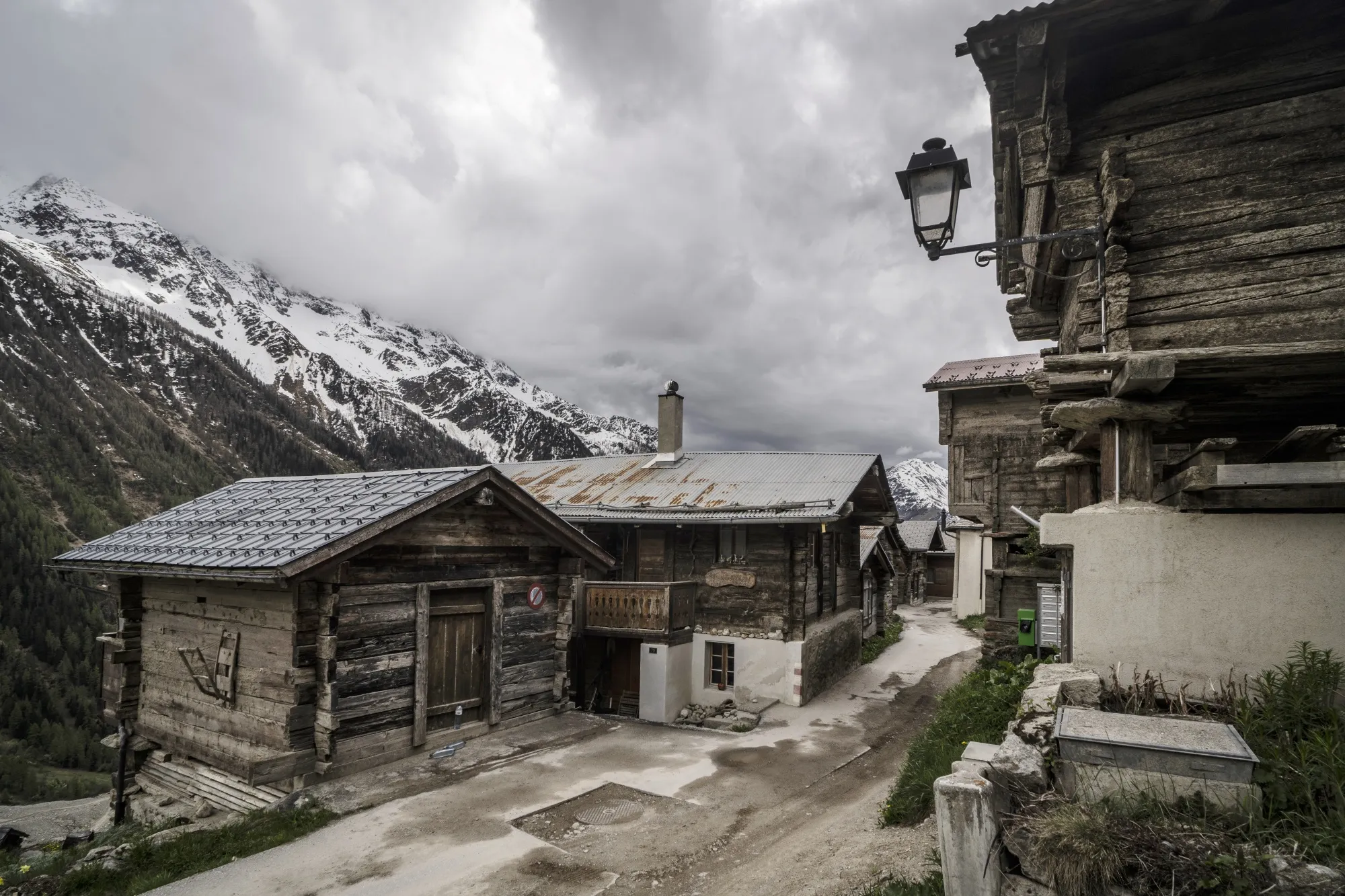
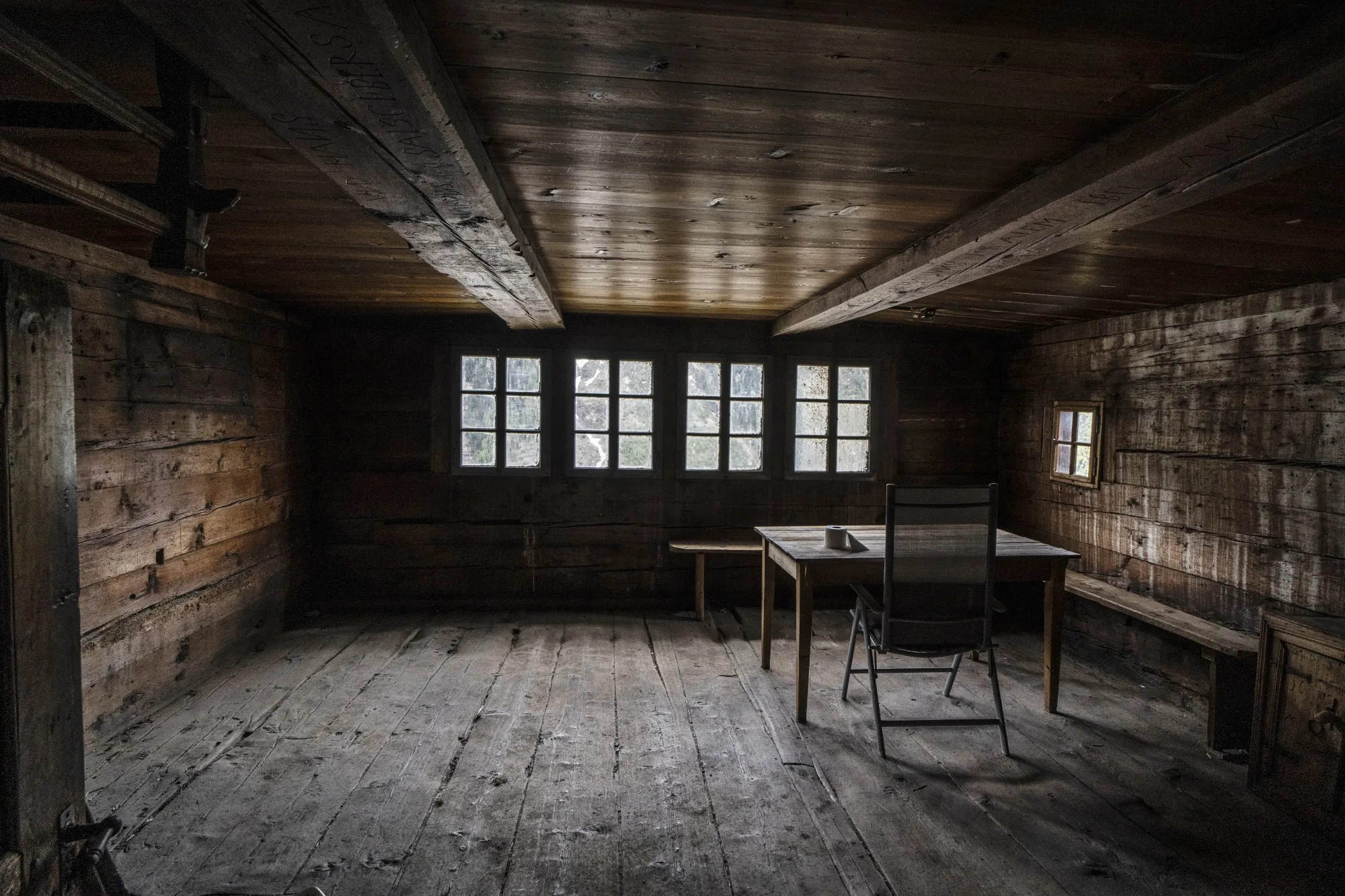
The hamlet of Weissenried, which was temporarily abandoned after the Blatten disaster. A home in the village.
But the economic impact of the collapse goes beyond insured losses and state spending.
Tourism is a lifeline for Switzerland’s Alpine regions, which host ski resorts in winter, hiking trails in summer and thermal baths all year. The sector employs around 15,500 people in Valais, and about 8% of the canton’s economy depends on visitors, compared to about 3% for the whole country, according to the Swiss Bureau of Statistics.
Three hotels were completely destroyed in the disaster, a fourth remains inaccessible, as do two camping grounds and several mountain huts. Officially, only 40 tourism jobs were lost directly due to the landslide, but the whole valley’s economy has been impacted by the decline in visitors.
Overnight stays dropped 45% in summer as the upper part of the valley shut, according to Mathias Fleischmann, chief executive officer of a consortium running the Lötschental tourism office and a cable car company that takes visitors to the nearby Lauchernalp ski resort.
Tourism projects in the valley were shaken too. Toni Enderli, a partner at Legacy Investments AG, is developing a new apartment building and a clubhouse at Lauchernalp. “We started building and all of a sudden the mountain came down,” Enderli, a 48-year-old South African of Swiss origin, said. “When we saw it on the news, my family and I just started crying — we had fallen in love with this place.”
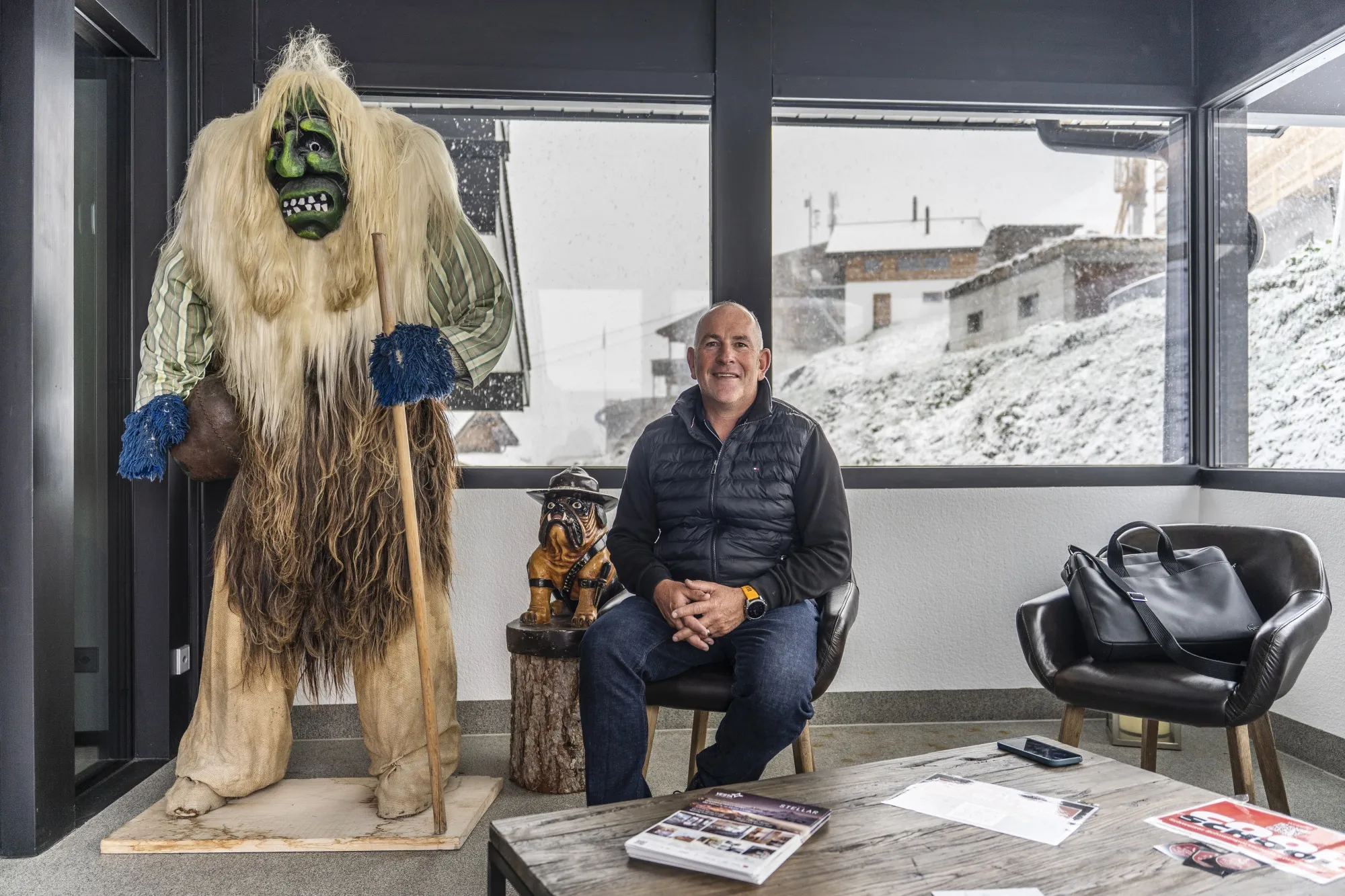
Toni Enderli sits next to a Tschäggättä, a traditional ancient figure typical of the valley, at the Lauchernalp ski resort in Wiler.
Enderli decided to go forward with the development, but banks backed out of funding the project and his insurance premiums were higher than he’d expected, he said.
“We had to make the decision ourselves and use our own equity and our own investors to move the project forward,” Enderli said. “The mountain needs us — if our project doesn’t happen, there are no beds, no people working and no people going to the restaurants.”
The impact of the catastrophe can’t be measured just in financial terms.
Anton Rieder was on the mountain checking on his cows when the Birch glacier came down on May 28. The 50-year-old farmer couldn’t understand what he was seeing, he said. His first impulse was to laugh because the chunks of ice coming down from the glacier were so big that it looked as if someone was throwing fridges down into the valley.
A far more serious thought gripped him seconds later. His friend, a 64-year-old shepherd, had requested a permit from authorities that day to check on his sheep, pasturing in the area just above Blatten. “I looked at the mountain and I knew he was there,” Rieder said. “I knew I had lost my friend.”
Rieder’s home and most of his pastures are further down the valley, so he only lost a little farmland, but revenue from his cheesery and shop in the nearby village of Wiler have fallen since the accident. For months, he carried on with his life, looking after his livestock and turning his back to the brown strip of mud and rocks visible from almost every corner of the valley, a constant reminder of the tragedy. Then one day, as he was filling out some paperwork at the town hall, he broke down.
“It all came to me at once and I couldn’t stop crying,” he said. “I thought about my parents — that was their land, the land they worked on all their lives. And it wasn’t there anymore.”
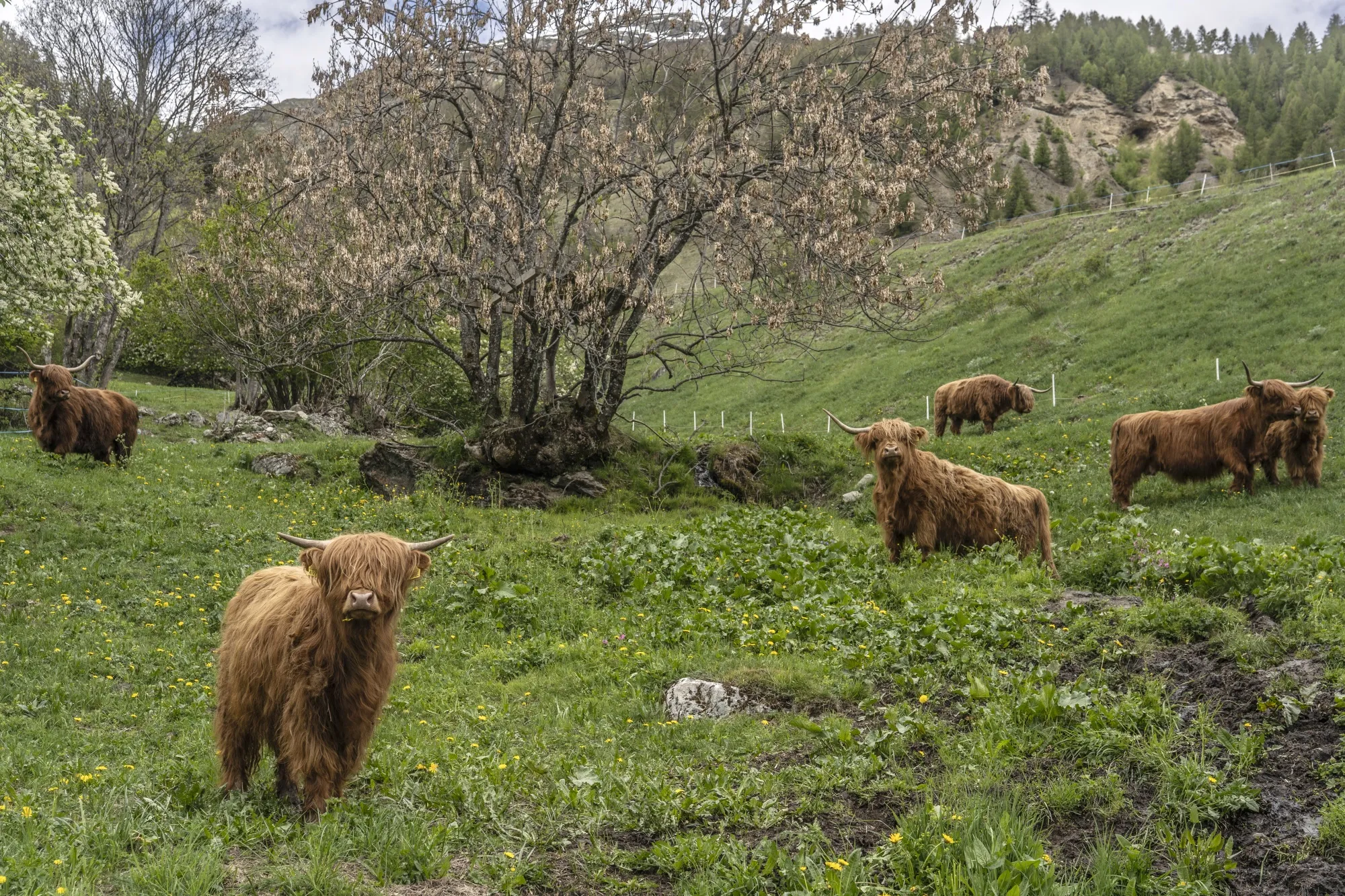
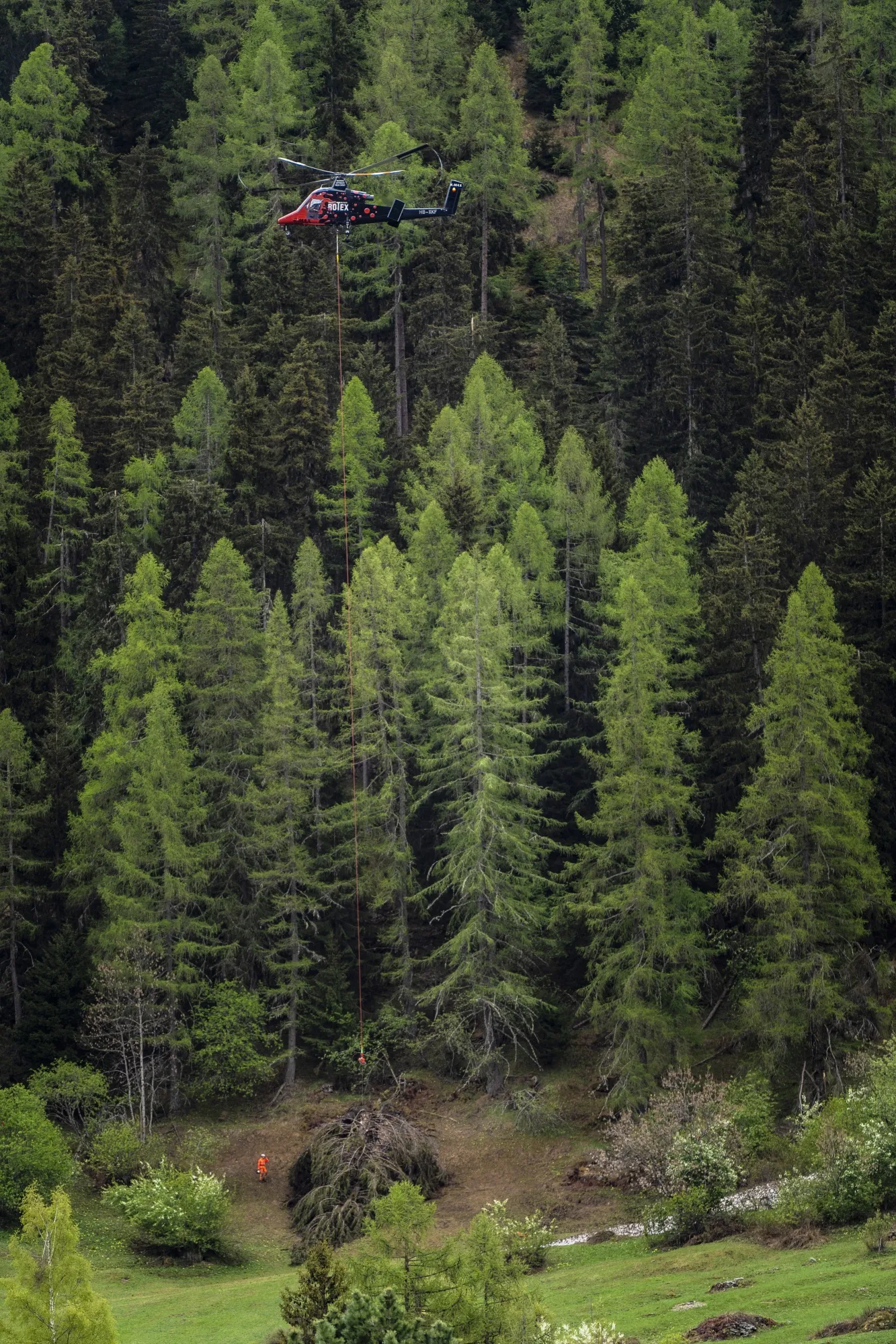
Cows grazing in Wiler village near Blatten. A helicopter conducts forest clearing operations in the Lötschental Valley.
A small helicopter hovered over the Lötschental, carrying logs and branches of dead trees that the landslide had dragged deep into the valley. Yellow cranes dotted the landscape, and trucks carrying workers in fluorescent orange vests raced along the narrow road that connects the villages of Ferden, Kippel, Wiler and — once — Blatten.
Rebuilding work is progressing fast. Last year, electricity, water and sewage services were restored for the handful of Blatten houses that survived the disaster, as well as for the hamlet of Weissenried, which sits above Blatten and was left undamaged, but was evacuated after May 28, 2025 because the landslide cut the only road.
A year later, a new dirt road links Weissenried with the other towns in the valley. The first residents were able to return to their homes on May 22. A new cable car to Weissenried is expected to start operating in winter, although finishing construction of a paved road to Blatten and the bottom of the valley will take longer.
Authorities redrew the area’s hazard map after the collapse of the glacier. Construction is forbidden within the newly designated red zone, but an area further above the river is suitable for building on. That’s where New Blatten will be built, said the town’s mayor Matthias Bellwald.
“The question of how many people will return later is on many people’s minds,” said Bellwald, who now lives with his family in a rental apartment in the Lötschental town of Kippel, and said he will submit an application to build a new house in Blatten as soon as it’s allowed.
Blatten’s population was growing before the collapse, Bellwald said, and he hopes that once it reopens, that trend will continue. “We’re already receiving inquiries from people outside the area asking if they can move here as soon as it’s possible,” the mayor said. “If we can create a good offering and leverage the existing potential, we’ll need to be careful not to grow too quickly.”
The new village’s planning will be put to tender at the end of June, with major construction starting in 2028 so residents can return by 2029, he said. In the meantime, 11 apartments are under construction in Wiler for Blatten residents who wish to return but don’t have suitable housing yet, Bellwald said.
Many of Blatten’s original inhabitants won’t wait that long. Some have already bought new apartments — most in the valley, but in other parts of Switzerland too — thanks to generous government aid and insurance payments. About 95% of the town’s properties were covered by catastrophe insurance, which in Switzerland is part of mandatory fire protection. Insurers pay 75% upfront when a property is lost, and the remaining 25% when the policyholder buys a new property.
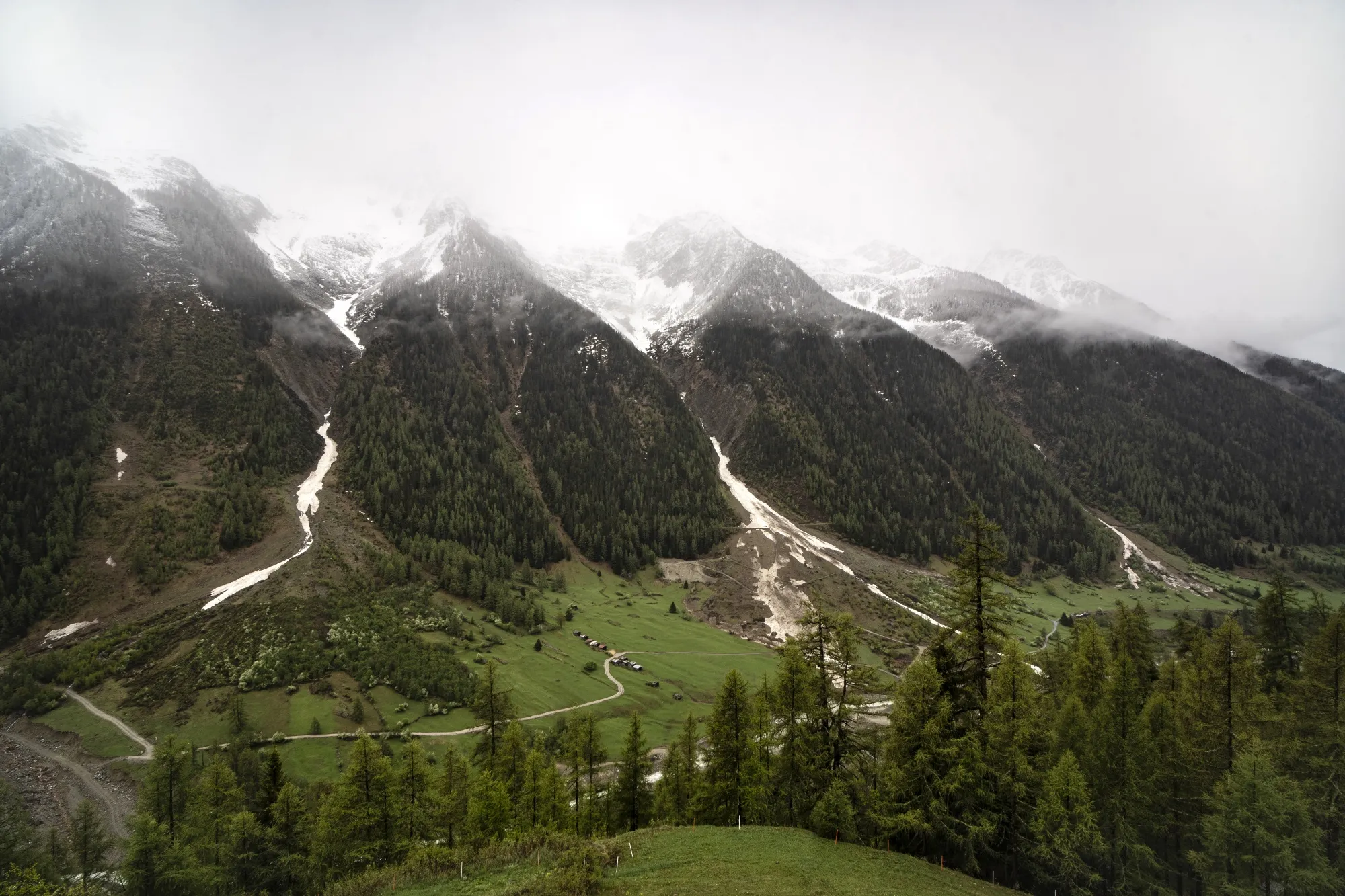
The communities of the Lötschental Valley are remote, occupying small villages strung along alpine roads.
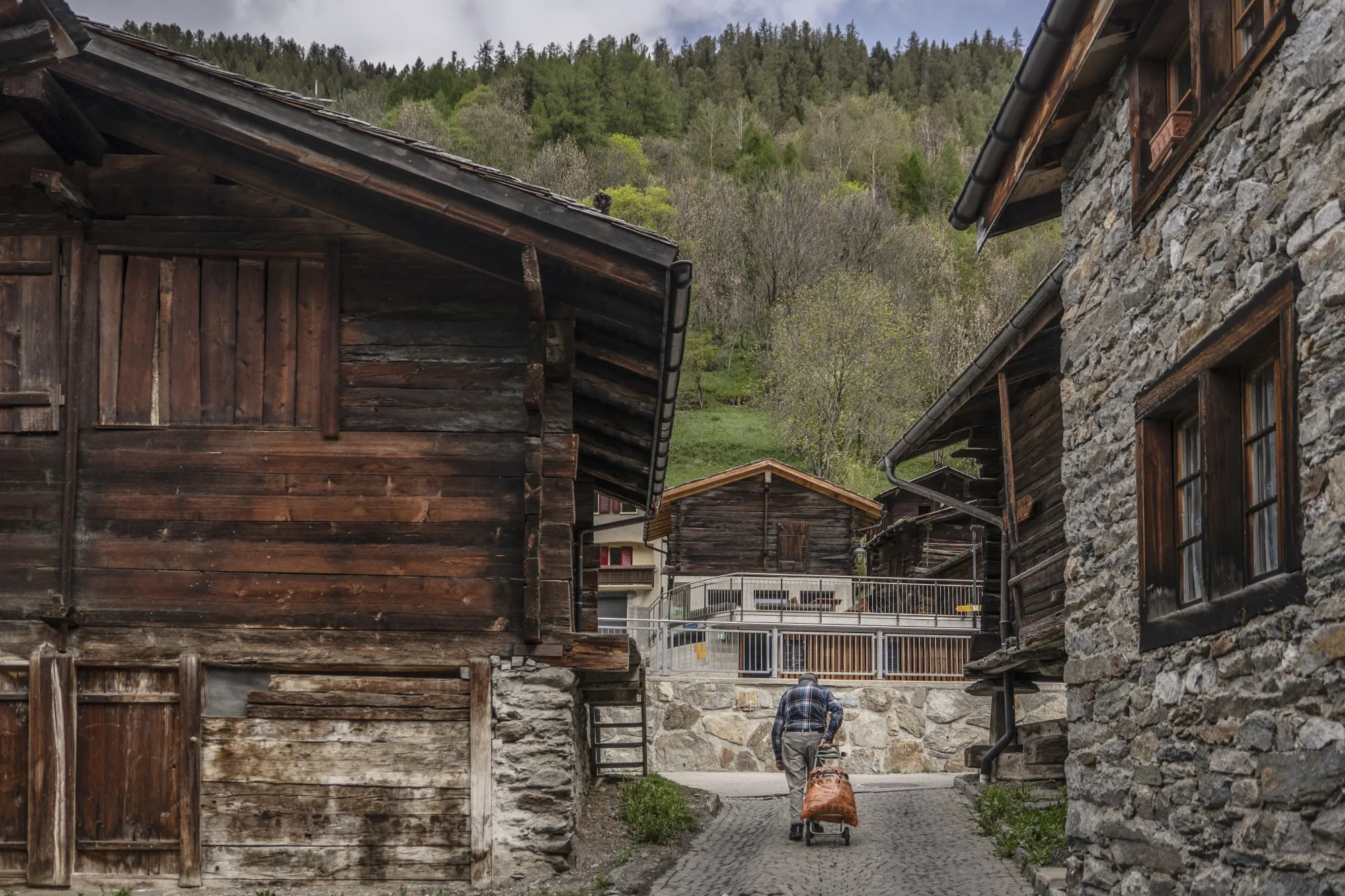
Villages, like Kippel, near Blatten, are home to families that have lived in the area for generations.
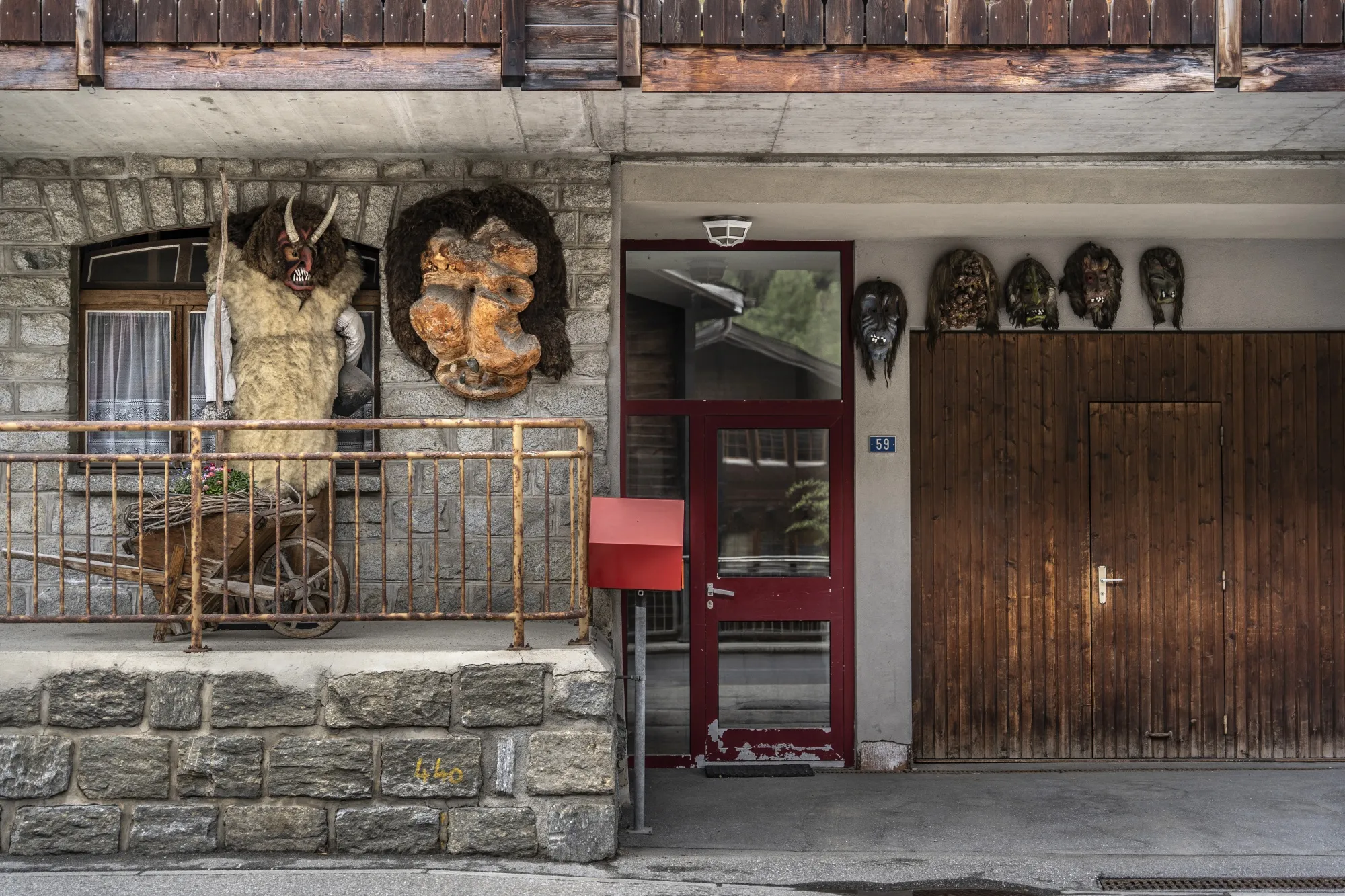
The villages have strong local identities, with unique customs and traditions that stretch back centuries.
The Kalbermattens, the Rieders and the Bellwalds are a tight-knit community that have inhabited the Lötschental for generations, moving from one town to another, but often staying in the narrow strip of green where the river Lonza flows down into the Rhône. They lived in isolation for centuries, as the only link to the world beyond the peaks was through ancient mountain paths, until a modern road was built in the 1950s. The same handful of surnames are engraved on most of the tombs in the small cemetery in the neighboring village of Kippel, and on the mailboxes in the valley’s other towns.
The Lötschental has historically struggled to keep its youth. In the 18th century, many of its young men went to fight for the Kingdom of Naples. The local school in the valley has a giant painting of the mercenaries wearing their red uniforms on its façade. These days, it’s better-paid jobs in Zürich or Geneva that are drawing the young away from the remote valleys.
Mountains make up 70% of Switzerland’s territory, but are home to just a quarter of the population. A string of articles in the Swiss press following the Blatten incident questioned whether some Alpine valleys should continue to be inhabited, because protection measures for the few that still live there were too expensive — reigniting a debate that’s simmered for decades.
In Switzerland, richer cantons pay into a system known as fiscal equalization that redistributes the money to less wealthy regions. In 2026, total compensation payments, which include funds from the federal government, amount to 6.4 billion Swiss francs, with rich cantons paying 2.065 billion Swiss francs to poorer ones. Under the fiscal equalization system, the Valais canton will receive 862 million Swiss francs this year.
Media articles questioning the system after the Blatten collapse outraged the Swiss Group for Mountain Regions, a non-profit lobby organization for the rights of the Swiss living in rural areas. “These territories are more than just landscapes where the environment is challenging,” said a statement by the group’s youth arm following the Blatten event. “It is essential to keep human presence in the mountain, not just to preserve the environment, but to keep local heritage alive and to build solutions that can face ecological and economic challenges.”
Some in the Lötschental now hope the Blatten disaster will be a chance to revive the valley’s economy. Authorities have eased the normally lengthy permitting process to kickstart growth and allow for faster rebuilding of homes and infrastructure.
Weeks after the disaster, Kalbermatten, the owner of the destroyed Edelweiss Hotel, joined up with another of the town’s hoteliers and reached a deal for a piece of land in the Lauchernalp ski resort, on a slope opposite the Birch glacier.
Along with another hotelier, he invested 3.4 million Swiss francs, and sourced another 1 million Swiss francs from the canton of Valais and 500,000 Swiss francs from donors. In four months, a new hotel was built using modular timber construction. It includes 19 rooms and can host up to 64 guests.
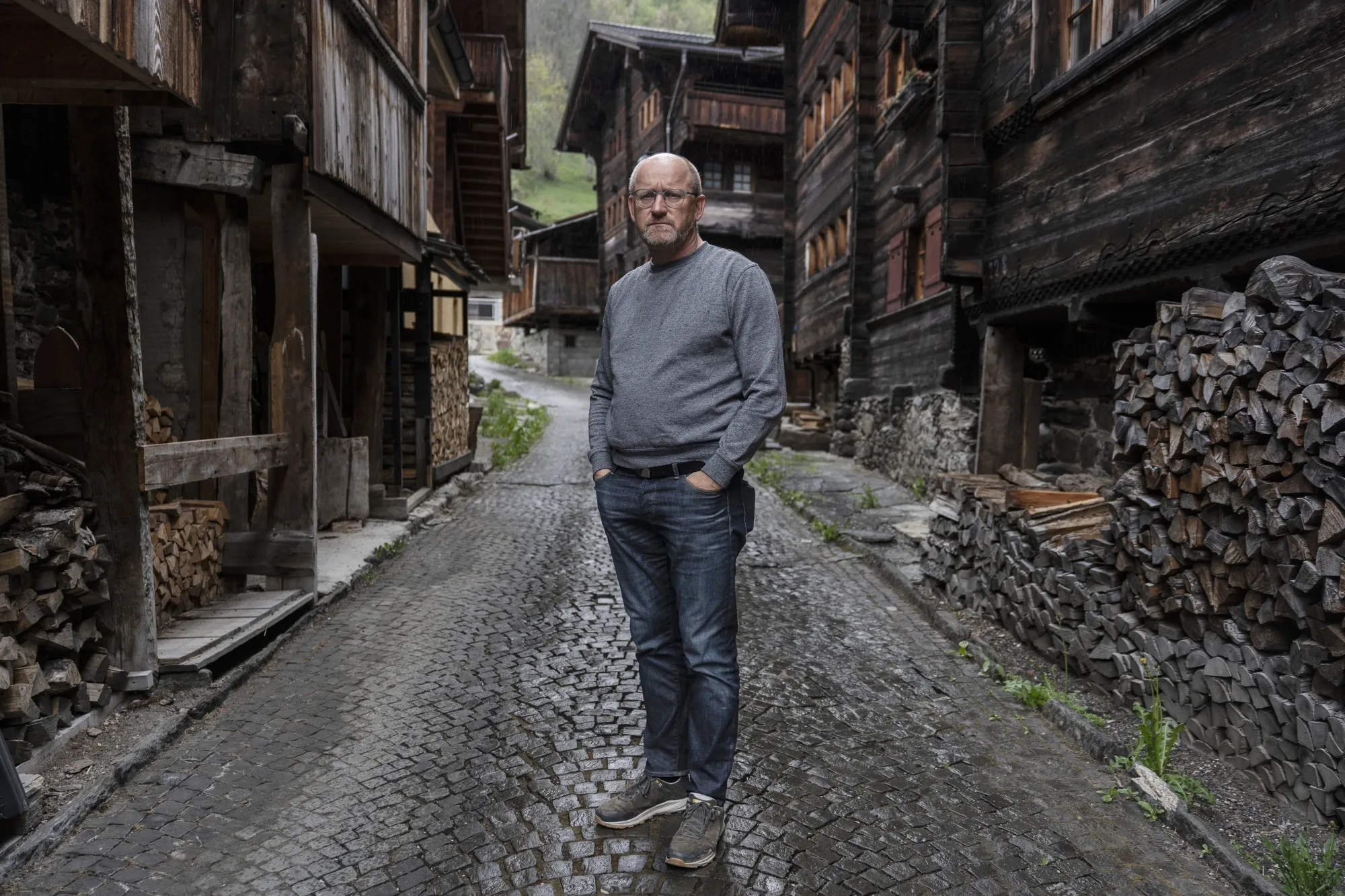
Former Blatten resident Lukas Kalbermatten in the neigboring village of Kippel.
“I went from working 150% as a third-generation hotel owner to zero,” Kalbermatten said. “That was the first impact from this big event — I thought we have to look at it face to face. And I was in the hotel business, so I looked for a hotel business.”
For others, though, Blatten has passed into history.
Months after the landslide, people started turning up at the valley’s museum in the town of Kippel, which is known for its collection of Tschäggättä, traditional figures with distinct hand-carved wooden masks that locals wear in parades during Carnival. Every year the event attracts hundreds of tourists eager to see the Tschäggättä dance along the narrow streets, an ancient tradition of uncertain origin dating back several centuries.
But locals weren’t there for the masks. They brought objects that once belonged to the town and were recovered by workers and emergency teams, or found in the river downstream. Among them are a Tschäggättä mask split in half, a wedding dress and a wooden crib.
Rita Kalbermatten — who is not directly related to Lukas, the Edelweiss Hotel owner — started cleaning them up. With time, enough objects turned up to shape the museum’s latest exhibition “Blatten’s memories.”
White cards telling each object’s history hang on the walls. Rita, 70, barely keeps anything from her house, which is mostly submerged in the small lake that has formed behind the rubble. Like many other Blatten residents, she was given just a few minutes to pack. She has moved to a different part of the valley, and won’t go back.
“I miss this beautiful landscape of the village, not really the clothes — I mean, I lost everything,” she said. “The community, the people, the neighbors — I miss that very much.”
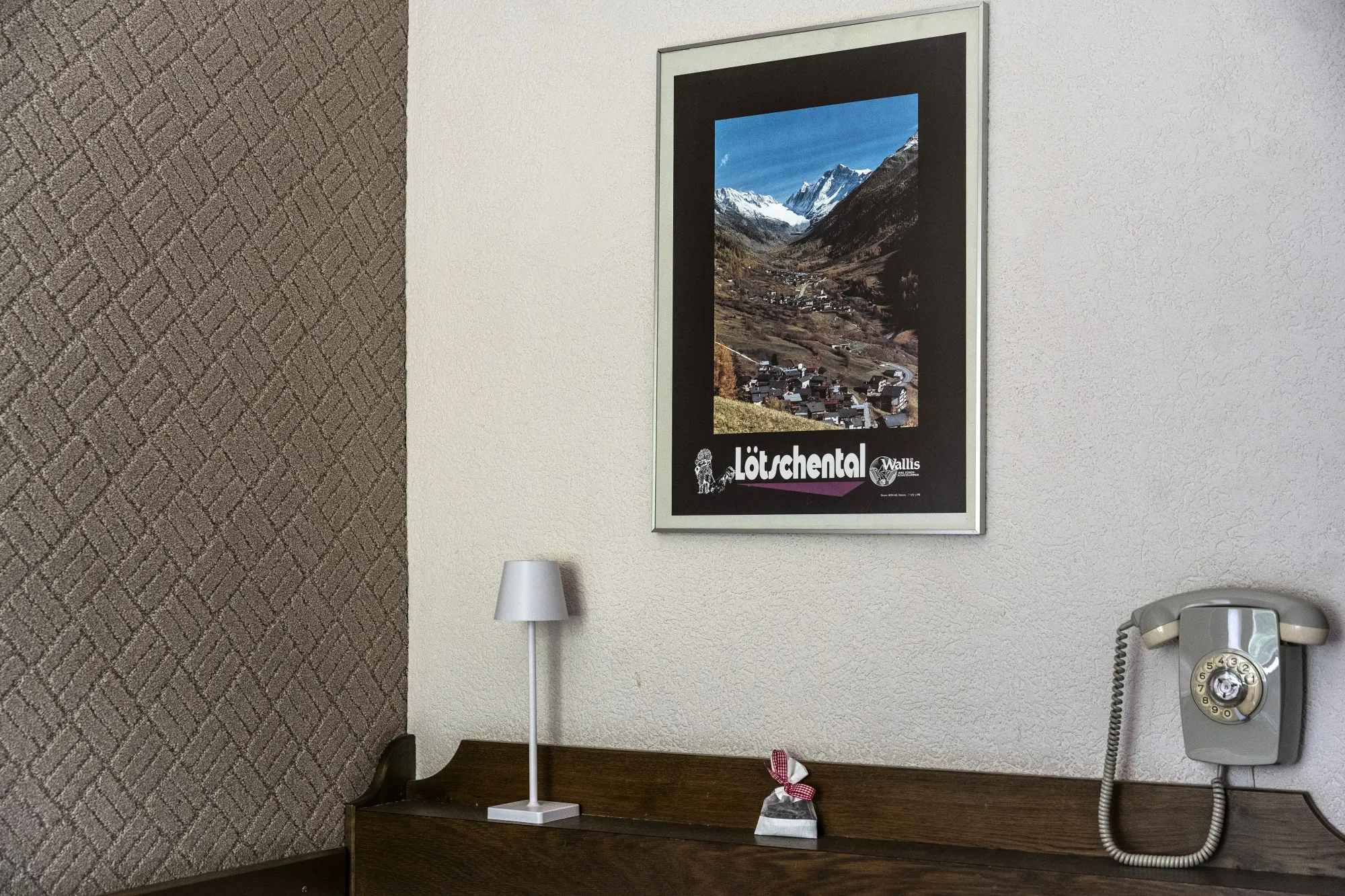
A poster of an old photo of the Lötschental Valley inside a room at the Lötschberg Zentrum hotel in the town of Kippel.
There are two types of Lötschental people, an old saying in the valley goes. Those who have climbed the Bietschhorn and those who haven’t. The 3,934-meter (12,906-feet) high peak towers above the valley, its shadow falling on the four towns. The Birch glacier used to cling to its slopes. It’s not among the Alps’ most technical climbs, but the difficulty lies in its length: a full day of hiking to a remote hut, and 14 more hours to reach the summit and walk back to the valley.
Rita first climbed it when she was 60. To commemorate the feat, she hung a picture of the mountain in her living room. Like everything else she owned, it remains stuck in Blatten — so after the landslide, Kalbermatten got the mountain tattooed on her forearm. “I wanted to take the mountains with me,” she said. “No one can take that away from me anymore.”