If the video game industry had something like an annual high school yearbook, the upcoming Grand Theft Auto VI would garner a lot of superlatives: Most Expensive Game Ever Made, Biggest Development Team of All Time, Most Likely to Shock TV Newscasters, Best Use of Hand-Holding While Committing Crimes, Most Varied Body Types, Angriest Pedestrians, Most Realistic Depiction of Sweat, Game That Required the Most “Research” Trips to Miami Beach.
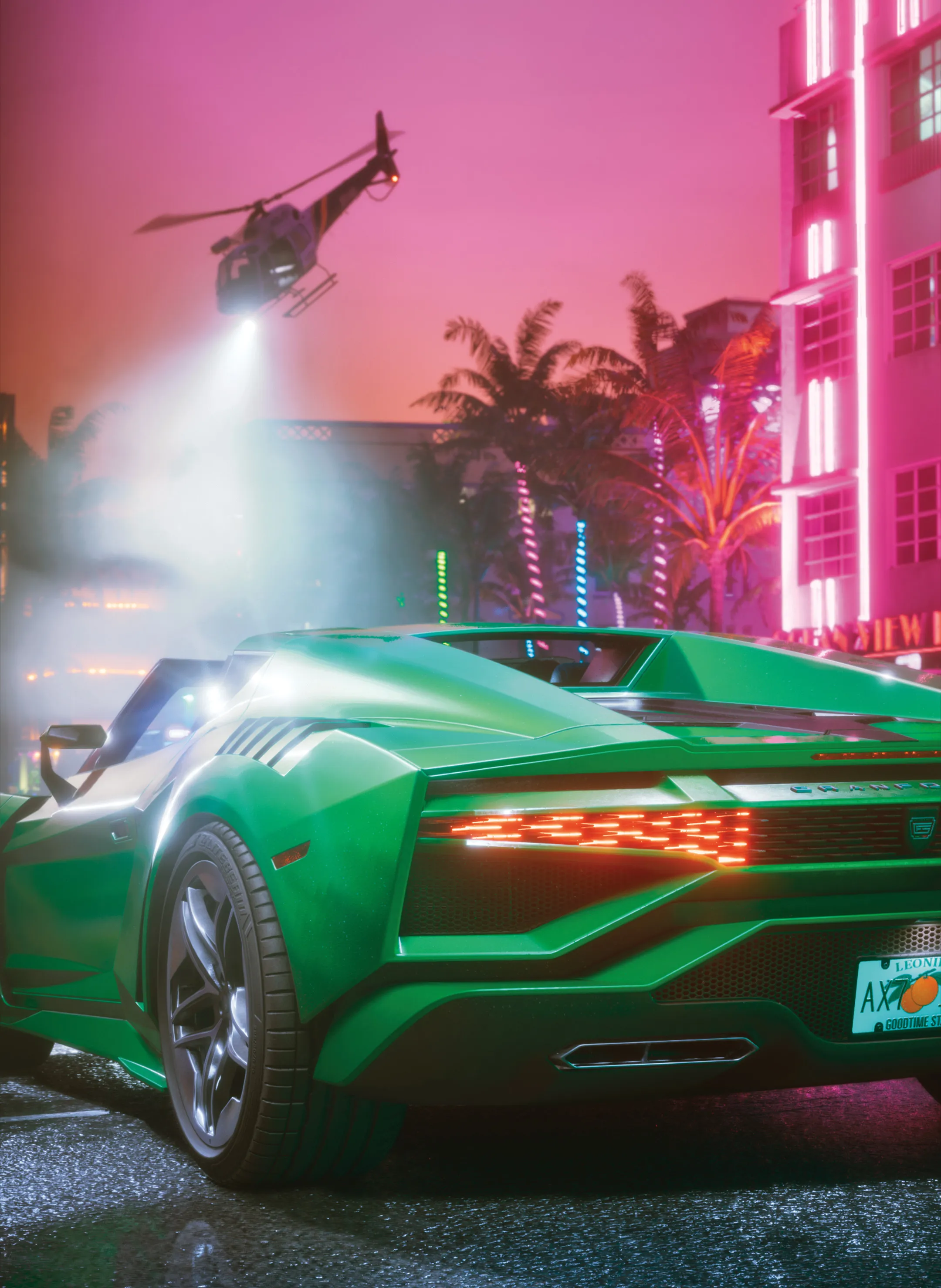
To create the sprawling world of GTA VI, staff at development studio Rockstar Games went on a series of excursions to Miami, the real metropolis on which this game’s fictional Vice City is based. They rode with police to criminal hot spots, craned out of helicopters to snap aerial shots and weaved through crowds of scantily clad dancers at the hottest nightclubs in town — all so they could evaluate the lighting. Designing a club for a typical video game might mean generating a few nonplayable characters in different-colored shirts, says top artist Aaron Garbut. In GTA VI, though, it means animating and scripting each individual patron, creating drinks, adding music, crafting lighting, matching the music to that lighting and composing all the other “layers and layers and layers of detail” that make a virtual club feel as authentic as possible.
“And now you understand why it took so long,” says Jennifer Kolbe, Rockstar’s head of publishing, during a daylong, wide-ranging interview alongside several other top staffers at the company’s office in Edinburgh. It’s the first time Rockstar has openly talked about the development challenges behind the largest and perhaps most consequential video game it’s ever made.
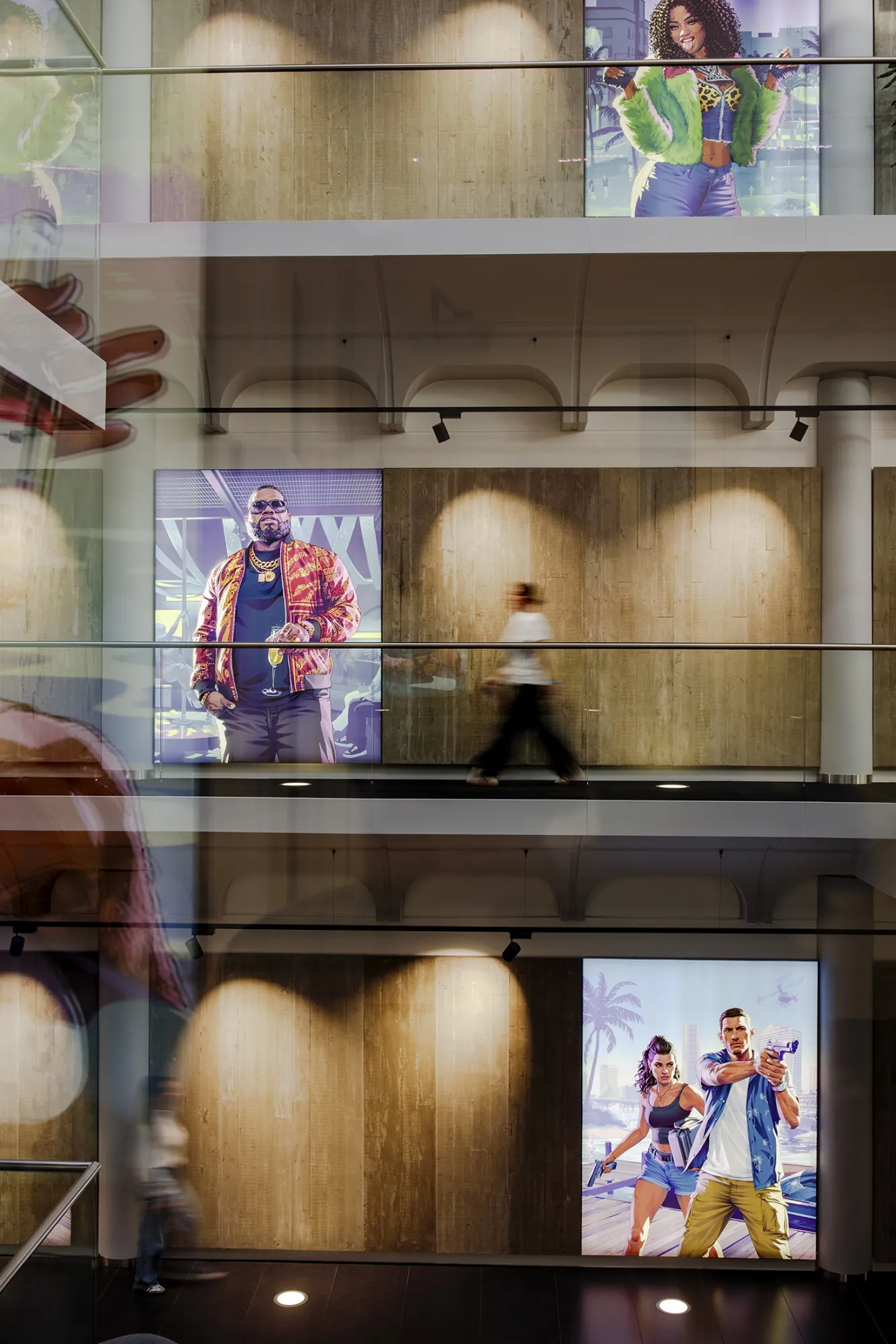
Rockstar has a dozen offices around the world, but its power center, Rockstar North, is located in the Scottish capital, a small city full of ancient castles and cobblestone streets — about as stark a contrast to Miami as could be. Rockstar North occupies a sleek, three-floor office that used to be the headquarters of a newspaper called the Scotsman. Paneled screens across the atrium display character artwork from GTA VI, while the executive suites offer stunning views of nearby crags. On a sunny day in late September, the office is full of people working to squash bugs before the release. Monitors showcase their progress with a mosaic of green and red tiles. The green is outpacing the red, a promising sign. Perhaps the game won’t be delayed again.
Fans are so desperate for morsels about GTA VI that they sometimes congregate near the Rockstar North office or even track the number of pizza orders coming in at night to figure out whether a development milestone is approaching. Much like in a Grand Theft Auto game, a security guard will come and boot them if they linger too long. Rockstar’s obsession with secrecy is well understood, even by industry colleagues. At the breakfast buffet at the Marriott across the street, a few visitors wearing apparel from other video game companies were friendly but wouldn’t acknowledge they were there to visit the game studio. “Guess we’re all here for the sightseeing,” I joked. Even the Edinburgh taxi drivers are known to probe Rockstar employees for information about the game.
GTA VI, out on Nov. 19, is expected to be one of the biggest entertainment releases in history. Its immediate predecessor has sold 230 million copies, making it the bestselling nonmobile game of all time. The first trailer for GTA VI racked up almost 300 million views on YouTube, shattering records, while a recent gameplay premiere on Netflix topped a new Robert De Niro film to become the platform’s most viewed content the week it came out. Other entertainment companies have planned their release schedules around the open-world crime game, delaying products until next year because they know GTA VI will suck up the planet’s attention for most of November. (NBA player Steven Adams recently joked that “performance is going to go down” across major sports leagues when the game is released.)
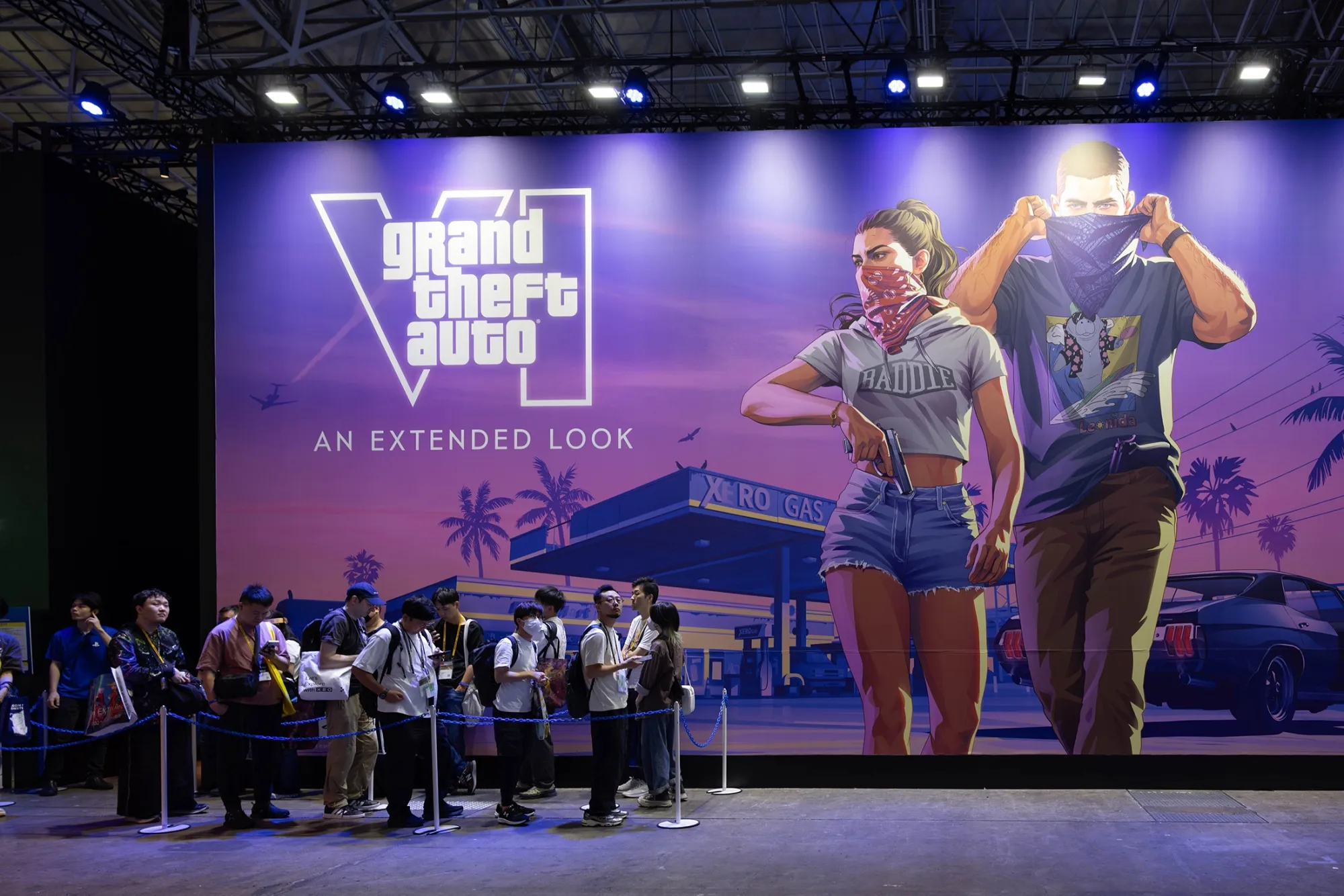
Some analysts expect the next Grand Theft Auto to sell 40 million copies on PlayStation and Xbox and generate more than $3 billion in revenue in its first four months. Rockstar won’t say how much the game cost to make (though Kolbe did shoot down a popular rumor that it surpassed the $1.5 billion it cost to build Dubai’s Burj Khalifa). But, based on the time and labor involved, it’s almost certainly the most expensive video game ever created. The developers aren’t yet talking about the planned online component, which is expected to be released in 2027, but the current version of Grand Theft Auto Online brings in an estimated half a billion dollars in revenue per year alone, making it one of Rockstar owner Take-Two Interactive Software Inc.’s most important products.
Dive deep inside the video game business in the Game On newsletter with Jason Schreier, delivered weekly.
So the stakes are high for Rockstar, which has changed drastically during production of GTA VI. Creating the game took more than eight years, including two delays and a phase that development lead Rob Nelson refers to as “a dark period,” when the vision wasn’t yet clear. Building it meant adjusting to a new reality without some crucial employees and transforming Rockstar into a brand-new company, one that’s almost twice as big and trying to avoid repeating mistakes. When Rockstar released its last major game, 2018’s Red Dead Redemption II, it had 2,441 employees. Since then the company has swelled to 4,711 staff across 12 offices, making it far larger than any of its competitors. Along the way, everyone there has had to deal with several crises including a reckoning over work-life balance, a disastrous series of leaks and accusations of union-busting after the company fired 34 employees over misconduct allegations.
Rockstar’s Remarkable Growth
Number of employees by department
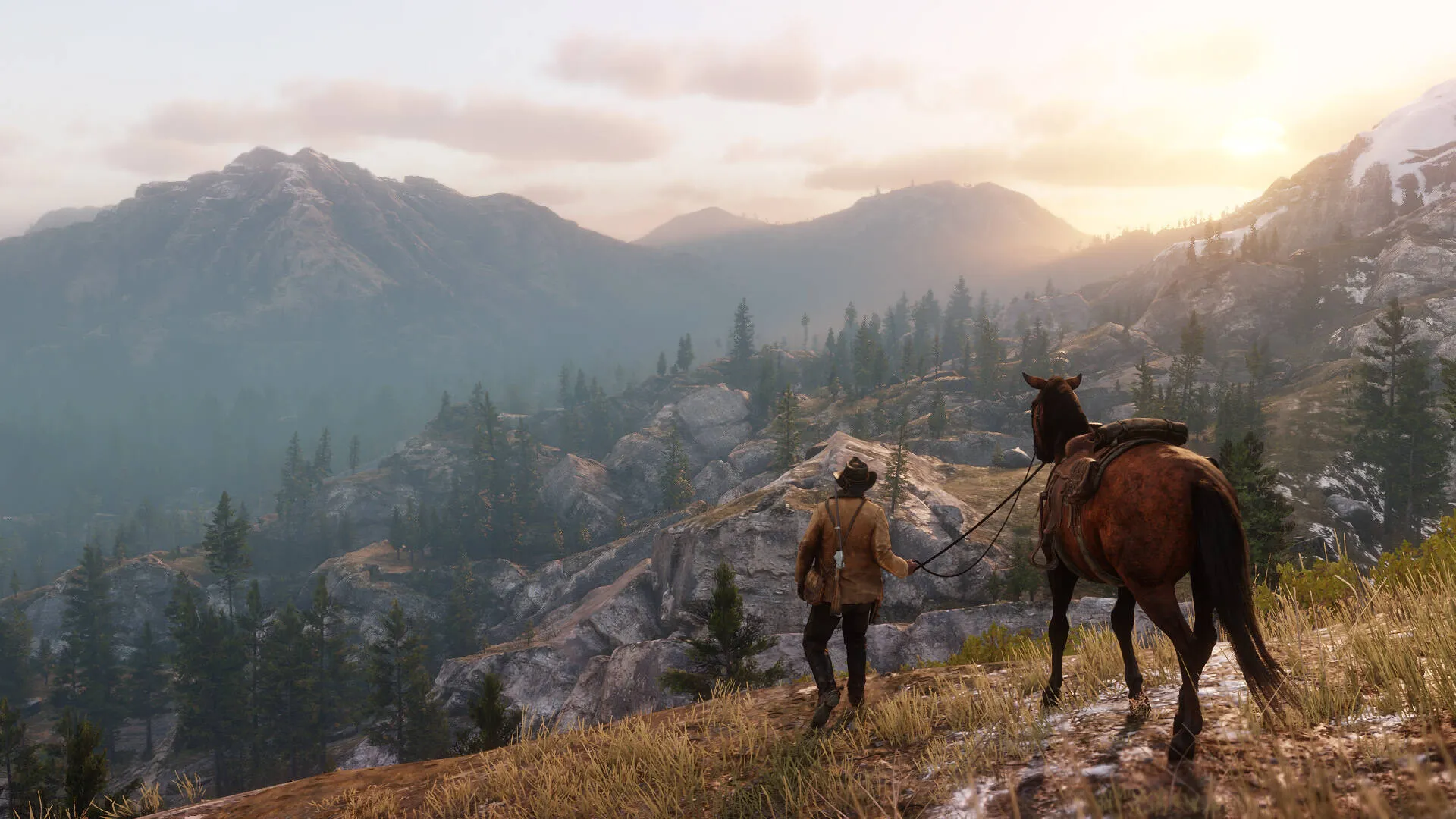
Then there’s the game itself. Rockstar titles are always acclaimed but can differ wildly in tone. Grand Theft Auto V came out in 2013, at the beginning of the second Obama administration, and its revelment in nihilism served as a counterweight to that era’s earnestness. Five years later, Red Dead Redemption II told a much more nuanced story, with an emphasis on realism sometimes at the expense of fun. GTA VI tries to find a balance between the two, but it seems to look far more toward the latter title for inspiration: a game in which you can still throw $20 bills at strippers and mow down pedestrians, but one that also wants you to empathize with its Bonnie-and-Clyde-inspired protagonists.
Rockstar’s modern games have been trying to grow up a little bit. So, too, has Rockstar. If you buy into the theory that all art is actually about the process of creating that art, you can find ample evidence here. In the first trailer for GTA VI, one of the protagonists offers up a line that could have been ripped directly from a company email during the earliest days of development: “The only way we’re going to get through this is by sticking together. Being a team.”
In 2015, Nelson and a group of other top staff flew to Miami for their first research trip. They had ambitious goals for GTA VI, which they code-named “Project Americas” because it aimed to feature big swaths of land across both North and South America. (Later that would be cut down to Miami and its surroundings.) Their hope was to develop the game concurrently with Red Dead Redemption II, which was helmed by the San Diego office. But as that game’s ambitions grew, Nelson realized he needed to mobilize most of Rockstar, including the senior leadership, to help finish it. That meant pushing GTA VI back several years, but the benefit was that everything they built could “pay off when we get to the game,” Nelson says. In the past, Rockstar had juggled multiple games simultaneously across different offices. Now the bulk of the company’s staff would be focused on just one project at a time.
After Red Dead Redemption II, several top staff departed, including Rockstar co-founder Dan Houser, who’d been the lead writer for most of the company’s games. As a result, Nelson saw his role expand. He and two other veterans, Phil Hooker and Aaron Garbut, all received the title head of development, reflecting their supervisory roles. (Nelson and Garbut were also studio heads of the Edinburgh office.) This sort of arrangement is unusual for video game development; it’s far more common for a single director to run the show.
The three leaders say their day-to-day jobs didn’t change much, as they supervised teams and filled in gaps as they did for the last game. But some staff griped there were too many cooks in the kitchen, complaining about indecision and conflicting visions. “Nobody ever really directly said to me, ‘It’s really annoying having three of you making decisions,’” Nelson says. “But I’m aware that people would say that.” He adds that the same problems emerge when a game has just a single leader. “They may be slow in making decisions,” he says. “They may change their mind all the time.”
By the end of 2019, the leadership team had figured out the skeleton of the story, which would feature a criminal couple named Jason Duval and Lucia Caminos as they robbed their way through the seedy underbelly of fake Miami. But determining GTA VI’s other fundamentals proved time-consuming for the three leaders. Some elements were no-brainers: Just like previous Grand Theft Auto games, this would be a satirical, open-world action game in which you could hijack cars and get into shootouts with both cops and criminals. But the contours of the design were tricky to define. Just how true to life would this fictional Miami be? Most video games eschew realism for fun and convenience; if you go into a store to buy a case of beer, you simply select what you want and press a button. But when the graphics are as high fidelity and the systems are as detailed as they are in GTA VI, it can be off-putting to watch a beer bottle appear in the main character’s hand out of thin air. Nelson says he and the other creative leaders debated: Would you have to go to the store’s refrigerator, grab the beer, bring it to the counter and manually pay? At what point was the game going to become less enjoyable as a result? To make a stat-boosting sandwich in your apartment, would you have to go to the grocery store and buy the ingredients? Or could you simply go prepare a sandwich? Making each of these decisions required a lot of guesswork because so much of the game wasn’t yet finished.
As Nelson, Garbut and Hooker tried to figure out what GTA VI would actually be, the company began to run into other obstacles. The pandemic drove everybody home for months, tanking productivity across the industry and forcing Rockstar’s performance-capture studios to halt work entirely. A surge of hiring made it tougher to communicate across the company. Some senior designers grew frustrated and quit, tired of what they felt was a lack of progress. “Trying to keep a team together through that is really challenging,” Nelson says. “I can imagine how I would feel if I was sitting somewhere in a studio and looking at this thing day after day and seeing it not come together and starting to go, ‘Is it ever going to come together?’” What everyone needed, Nelson says, was trust. Faith. Just like Jason and Lucia. “It is OK,” he says. “We’re going to get through it.”
By 2022, Rockstar had built enough pieces of GTA VI that if you squinted just right, you could sort of see the full picture. “The pattern is very familiar,” says Hooker. “You go through a period where things don’t work, but you see snippets.” Still, lots of decisions were left to be made. One of the reasons people love Grand Theft Auto is that each entry contains several games worth of stuff to do, from brazen robbery to barbell squats. For GTA VI, Nelson and the other directors wanted to let the two protagonists do everything together in the open world. This would require complicated artificial intelligence systems — the traditional kind, not ChatGPT — and a ton of complexities that would take years to work out. “There’s trepidation about taking that on,” Nelson says. “Then you have certain people advocating for it: ‘We need this. This is a game about a couple. They have to be a couple.’ And so we had to commit to that.”
“It feels like somebody’s wading through your dirty washing. It’s like they’re inside your head”
When this system did come together, it proved to be one of GTA VI’s most exciting innovations. As Jason, the player can text Lucia to ask if they might meet. A few minutes later they’ll be walking in a park, holding hands and reminiscing about the time Lucia’s mother got mad at him. They can then go off and hit the gym (Lucia might hop on the treadmill while Jason does squats), rob a store together and get chased by the cops, flirting and bantering the whole time. Watching the two characters interact added a whole new layer to the immersive systems carried over from Rockstar’s previous games.
Then, in September of that year, just as the game was beginning to coalesce, Rockstar staff woke up to one of the worst pieces of news they could have imagined: Someone had used a phishing attack to get access to the company’s Slack channel and leaked dozens of videos featuring raw, unfinished GTA VI gameplay. All the copyright strikes in the world weren’t enough to contain the fallout. Pundits wondered if it was the biggest entertainment leak of all time, while fans took to social media to complain about the game seeming janky and incomplete, failing to pick up on the valuable lesson that when a game is unfinished, it looks unfinished.
“It feels like somebody’s wading through your dirty washing,” Garbut says. “It’s like they’re inside your head. You see your early work out there. Nobody’s ever supposed to see that. It’s really weirdly invasive. And so it’s quite hard to deal with on an emotional level.” Rockstar addressed the leak on social media, and law enforcement would eventually track down the alleged hacker, but permanent damage had already been done. Soon the company would enact one of its most controversial new human resources policies — and risk losing much of the cultural progress it had made since its last major release.
When it came out in October 2018, Red Dead Redemption II became a flash point for conversations surrounding work-life balance at Rockstar. To build their sprawling, detailed worlds, developers at the studio had to put in long hours, working nights and weekends for extensive periods as part of a process that the video game industry calls “crunch.” For many staff, Red Dead Redemption II had been an improvement over previous projects, but it still meant months of 60-hour workweeks.
Even before the public controversy, Red Dead Redemption II’s development was “a real moment for Rockstar to look at itself,” says Kolbe, the head of publishing. “We all looked at each other and said, ‘We’re not doing it again like this.’” In emails and conversations with employees, she and the other leaders at Rockstar vowed that the next Grand Theft Auto would be different. “I said, ‘We’re not going to finish this game by crunching,’” Kolbe recalls. Throwing more people at the game was one solution. Recalibrating expectations for the speed of tasks was another, as was more rigorous scheduling and monitoring of progress. Rockstar also implemented policies offering paid time off in exchange for extra hours worked and, in some cases, additional pay. “It’s not been perfect, but it’s certainly better than Red Dead II was,” Kolbe says. “Anytime I say we haven’t crunched, someone is going to say, ‘I did.’ And I don’t want to get into arguments with individual teams or individual people. But I think we did things differently, and I’m proud of that.”’
Far more polarizing than overtime for many Rockstar staff was the elimination of remote work. By 2024 the company had announced that all employees would have to be in their respective offices five days a week, citing security issues. Perhaps most controversially, developers on GTA VI were banned from accessing Rockstar’s servers and tools outside the office, forcing them to use vacation days if they needed to stay home for childcare or other emergencies. Kolbe says the company plans to reexamine this policy after the game comes out, though she doubts it will switch to the more common three-days-in, two-days-out hybrid model. “The idea that we would have the game in that many environments is something that I think the security team would not love,” she says. “I think if we did not have a game that people wanted to steal as much, maybe it would be an easier conversation.” (Despite these security measures, another major leak happened in August, just before the preview on Netflix, leading to grumbling across the company that all this had been for naught.)
Over the past few years, I’ve spoken to dozens of employees at Rockstar who’ve mostly expressed positive sentiment with the strides the company has taken in improving its culture, both in trying to mitigate crunch and in getting rid of managers who were viewed as abusive or tough to work with. So it was a shock last year when Rockstar abruptly fired 34 people, most of whom were part of a group trying to form a union. In a legal battle that followed, the fired employees accused the company of trying to quash their organizing efforts. Rockstar countered that the workers had been dismissed for sharing confidential information on a Discord server with hundreds of members, including former employees. (The group disputes this allegation.)

Unionization has recently been on the rise in the video game industry. Over the past few years, workers at Blizzard Entertainment Inc., Bethesda Softworks LLC and other companies have turned to collective bargaining in response to what they see as unfair conditions including wage disparity and excessive overtime. At Rockstar’s UK offices, employees have been discussing unionizing for at least eight years. Rachel Crawford, one of the fired employees, says that following the release of Red Dead Redemption II, the company changed in a number of positive ways and that workers wanted a seat at the table to ensure that trend continued. “In order to have deeper changes that are maybe not things management wants to change, you need a broader base, need power, and for that you need a union,” she says.
The former employees are seeking reinstatement — or, in lieu of that, compensation — and a public declaration that the dismissals were unfair. Both parties have been making their cases at a tribunal in Glasgow, Scotland, which is expected to be resolved at the end of October. “I just want accountability,” Crawford says. “I want my colleagues who do want their jobs back to get their jobs back, and I want the people still at Rockstar to know they don’t have to live in fear about something happening to them.”
Even after the firings, unionization efforts continued at Rockstar. Over the summer the group asked for voluntary recognition and has been talking to company management every week. Kolbe says it’s been a positive process. “We go where the team goes,” she says. “So if they want a union, they will have a union.”
On Dec. 4, 2023, Rockstar released the first trailer for GTA VI, introducing the two main characters and showcasing Vice City with a series of clips ranging from glamorous to absurd. The trailer got 93 million views in 24 hours, breaking the YouTube record for most viewed nonmusic video. Internally it was a big moment for Rockstar’s staff, not just to gape at the numbers but also to help envision what success would look like. On a team with thousands of people, it’s easy to have a parochial view. “The trailers are huge guiding lights for us,” says Jonathon Ashcroft, senior vice president for technology. “You’d think it would be done through documentation or communication, but nothing aligns us like a trailer.”
The trailer also assured fans that the game would be out in 2025, which Rockstar’s leaders say they genuinely believed at the time. (Staff on the ground level were more skeptical.) But as they got closer, that deadline seemed increasingly unrealistic. “You feel a huge pressure and obligation to deliver the highest-quality game in the most aggressive time scale that you can,” Nelson says. “And then you keep evaluating it as you go. And then you have to decide when you get within striking distance of that if it is actually achievable.”
The development team went to Kolbe saying they felt a delay was necessary. She called up Take-Two Chief Executive Officer Strauss Zelnick to deliver the news, first that the game would have to be delayed to May 2026. Months later she had to do it again, asking for a second delay to November, which flabbergasted Zelnick. “I think he said, ‘You’re kidding. Please tell me you’re kidding,’” she recalls. “But once we talked through why, he got it. And I think we are really lucky that he is as reasonable as he is, because a lot of people would say, ‘You’d just better figure out how to ship it.’ And we have been really, really lucky that we have not found ourselves in that place, because that happens to a lot of teams, and we’ve all played those games. It’s not great.” Zelnick says that generally it’s “a wise investment in time and financial resources” if a game needs to be delayed to “reach the level of perfection it has the ability to reach.”
Nov. 19 appears to be GTA VI’s actual release date, though in the video game industry, you can never be 100% certain until the game is running on your machine. Leadership says there were no big, dramatic reasons for these delays, just a ton of moving pieces that didn’t quite come together at the pace they’d hoped. “The game’s never completely settled,” Hooker says. “We never have an exact blueprint. Even within the last few months, we’ve changed things.”
Rockstar’s Pace Slows Down
Major console releases from Rockstar since 2001
At one point, for example, while assessing the number of nonplayable characters they’d need to write and animate to reach their goals, they realized they didn’t have the production capabilities to pull it off. “The projections they were giving us were horrifying,” Nelson says. The company decided to throw money at the problem, quickly building out a studio in Los Angeles full of writers, producers and directors who’d be solely responsible for creating NPCs. “I think when it became apparent that some areas weren’t going to make it, that’s when we decided to make the shift of date,” Hooker says. “We could hit that schedule, but it won’t be the game we want to make.”
To some on the team, the delays were good. Decisions were being made. The game was shaping up. Every new internal review brought with it some measure of progress and the manifestation of choices made years earlier. Late in GTA VI’s development, Hooker was playing through a build of the game and was supposed to be heading to a story mission when he bumped into another car, whose driver retaliated by ramming back into him and shouting. They both pulled over to “sort it out,” and Hooker, low on health, decided to wander into a nearby convenience store to grab some restorative items.
On the way, another NPC started insulting him, which led to a violent confrontation. Nobody was at the store’s cash register, so Hooker robbed it. Then, with the cops after him, he escaped, ditched his car, hunted for a new one, found another that was worth quite a bit, began driving off to sell it, was nearly crushed by a car blasting loud music, decided to follow that car, discovered a nearby compound, scoped it out, found a load of new goods to steal, headed to a fence to sell them and received another tip for something else to do.
Two hours later, Hooker was nowhere close to the story mission he was supposed to be checking out. “I remember the sheer fun of it,” he says, “and everyone coming out of the review buoyed by the experience and despite all the concerns and doubts that plague you at that time thinking, ‘If we stick to our guns on this, we have something really special.’”
The video game industry isn’t in a great place right now. Budgets are swelling, sales are stagnating, and investors around the world have pulled back from big bets they made during the low-interest-rate era. Tens of thousands of game developers have been laid off since 2023, not just at unsuccessful companies but also at the biggest publishers, including Take-Two. Meanwhile an AI-driven memory chip shortage has spiked up hardware prices; for the first time in history, the Xbox and PlayStation game consoles now cost significantly more than they did years earlier, when they came out.
All these headwinds have led many gaming companies to take a hard look at their practices as they try to boost revenue and cut costs, which makes the release of GTA VI all the more unorthodox. During a time when other studios are going smaller, here’s one that’s gone bigger than ever. As other game publishers look to move development outside the pricey US, Rockstar built its new office in Los Angeles. (The company has also expanded significantly in India.) While other game companies try to prevent budgets from swelling past $500 million, the next Grand Theft Auto might have cost more than double that, and what’s remarkable is that it’s all but guaranteed to recoup the investment and then some more.
One of Rockstar’s secret weapons, aside from a budget that might not be unlimited but sure seems that way to the outside world, is a team full of people who’ve been working together for decades. For all the struggles they faced during the early years of GTA VI, Nelson, Garbut and Hooker say they ultimately found success because they’ve been making games for many years and know how to get them out the door. They feel as if this one is the culmination of lessons they’ve been learning for a lifetime. “The last 30 years has been practice for where we got to here,” Garbut says. “The team and us as individuals have been doing it for so long that there’s a sort of shared understanding, shared knowledge and a sort of shortcut to questions.”
Rockstar’s leaders say GTA VI is a foundation upon which they can build new content at a faster pace, and they vow that their next release won’t take another eight years. “The engine, the tools and the team we’ve built during this project will allow us to do things more quickly,” Hooker says. “I feel confident that we can build on top of this and go more sideways than upwards to build more compelling content.” One comparison point might be the transition from Grand Theft Auto III to Grand Theft Auto: Vice City, which was made in less than a year because it was built on work that was already done. “We foundationally changed a lot of stuff on this project,” Garbut says. “But now it’s done, and we’re not going to rip it apart.”