
 Getty Images
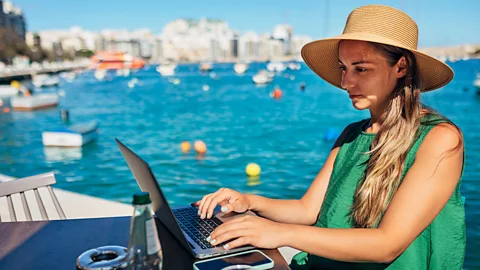
Whether seen as a positive or a negative, the digital nomad trend continues with new visas and organisations aimed at this population popping up around the world.
The term "digital nomad" may seem buzzy, but it actually comes from a book of the same name by Tsugio Makimoto and David Manners that, on its publication in 1997, predicted a future workforce of globe-trotting travellers logging in from abroad. The authors proposed that technological advances and humanity's will to explore would allow for a more mobile workforce. In the nearly three decades since, and with the advent of easily accessible wi-fi and online resources for travellers, the trend has exploded. So, too, has controversy, or at the very least, disagreement around it.
For many, digital nomadism is the ultimate dream lifestyle, allowing freedom of movement and the ability to explore the world while earning a living. Meanwhile, others say it contributes to gentrification and overtourism, that it drives up prices and makes cities nearly unliveable for locals. Now, a growing number of nations are upfront about a desire to attract these upwardly mobile visitors and have begun offering new visas for workers, while organisations spring up to attend to their needs.
Though the necessary technology existed, the digital nomad movement didn't really take off until the 2010s, largely among young people looking for an early-career escape from the decades of 9-5 office work they saw looming before them. "When we think about our parents, it was about getting into a job, getting that 401k and going up the corporate ladder," explained Evita Robinson, Emmy award-winning creator of the NOMADNESS Travel Tribe, a social community for travellers of colour. "We're really kind of blowing that ideology up in many ways because we aren't waiting to retire to travel and see the world."
But according to author, speaker and political scientist Lauren Razavi in her book Global Natives: The New Frontiers of Work, Travel, and Innovation, many of the original digital nomads were wealthy white men working either in the tech industry or as a kind of precursor to today's travel influencer, showcasing their glamorous lifestyle while making money selling guides to those interested in doing the same. However, as the possibility of remote work spread, so did the trend of working from anywhere.
Look at where you're spending your money and above all, if you're in a place for a month, and you don't at least make one friend there that's from there, I'm sorry, you're not doing it right – Marquita Harris
The Covid-19 pandemic only added fuel to the fire, as worldwide lockdowns proved that more people than ever were able to do their jobs online. Though restrictions lifted and people were able to return to the office – many chose not to. According to commercial real estate solutions provider Moody's commercial real estate market analysis, more than 20% of corporate real estate remains empty, while a 2023 report by MBO Partners, an enterprise solutions company that services companies with remote workers, estimates that more than thirty-five million people now consider themselves digital nomads.
With the increased interest in travel post pandemic and the flexible nature of remote work, it's perhaps no surprise that the trend has grown so quickly. "Now is the time in our history where we've had the most passports and we've had all of this access," says Marquita Harris, a journalist and frequent digital nomad. "To me, being a digital nomad has given me the opportunity to travel deeper, to understand way more than I ever could when I would just take a vacation for four days somewhere. And I feel like I learned just so much from those experiences."
However, not everyone sees the increase of this trend, which the MBO Partner's Digital Nomads Report estimates has grown a whopping 131% since the pandemic, as a good thing. The influx of visitors to places like Spain and Greece have also fuelled heated protests against overtourism. In places like the Dominican Republic, Bali and South Africa, many locals feel that digital nomads have caused a strain on already scarce resources and driven up the prices of goods and housing beyond what they can reasonably afford.
Thoughtful Travel
Want to travel better? Thoughtful Travel is a series on the ways people behave while away, from ethics to etiquette and more.
"I think, a lot of the same issues that arise when we're talking about tourism in general, when we're talking about digital nomads," explains Mechi Annas Estvez Cruz, a writer and native of the Dominican Republic. "Most of the time they're used to a certain level of comfort. So those Airbnb's that they're going to be looking for are going to be foreign [owned]. So, you come, and you say it's really cheap… cheap for who? With time, as you show up, and then you tell your friends to show up and this place becomes a safe haven for digital nomads, you're actually driving the cost of everything up."
It's not just happening in the Dominican Republic; across the globe, locals are finding themselves priced out of popular cities and towns. For example, let prices in the Balearic Islands have increased by about 18% in the last year according to a recent report by Idealista.
Robinson also sees the dichotomy of this situation: "This is actually a question about gentrification," she told the BBC. "I see this over and over again in the work that I do. It's heartbreaking actually and it's conflicting, these circumstances in which [visitors are] running the community out."
 Getty Images
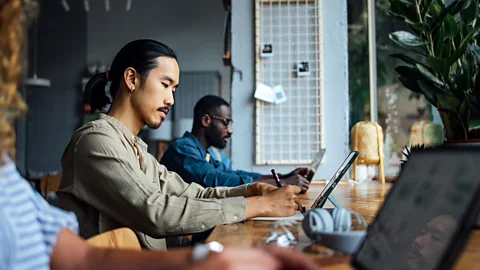
So is there a way to be a digital nomad without contributing to inequality and overtourism? Juan Barbed, Co-Founder of ROORAL, stresses the importance of connecting with locals and being part of the community. ROORAL is an organisation that creates infrastructure for remote workers interested in spending time working in struggling rural towns in Spain. For Barbed, the key to ensuring that this model was a help rather than a hinderance to local communities was involving them in the process ahead of time. "We are not a private initiative that opens up in a place and then we [move in]," Barbed explained. "We talk with the leadership of those communities to see if this is something that they want to try. If the answer is no, it's like, OK, bye."
This more community-based approach is contrary to many earlier organisations and companies that offered long-term lets and hi-speed wi-fi, but often resulted in insular, and expensive, expat communities. However, as the trend grows, the people who make up the digital nomad community has changed, instead of the young male tech workers who started the trend, an increasing number of families are taking up the lifestyle, and organisations like NOMADNESS have greatly improved its diversity, both of which will ideally have a very different impact on the destinations that welcome these groups.
This change seems reflected in Harris' thoughts on her time as a digital nomad: "[I think it's important to] make sure that you are contributing to the place's, not just economy, but like the culture of a place. You are essentially contributing to gentrification if you're not careful. Look at where you're spending your money and above all, if you're in a place for a month, and you don't at least make one friend there that's from there, I'm sorry, you're not doing it right."
Cruz however, is still sceptical: "How [do you live in a place] in a way that actually respects the dignity of the people who have been receiving uninvited guests since 1492? And trying to do so with grace, may I add, while being exploited. I need anybody who has a powerful passport and engages in travel for leisure to sit with that tension entirely."
I think people need to approach travel overall, but definitely a digital nomad lifestyle, with a sense of consciousness and accountability – Evita Robinson
With new visas in countries like Japan and the UAE, aimed at luring mobile international workers on the rise, it's likely that the trend will continue to expand to even more demographics and locations. Though it's possible that the visas will help regulate the number of digital nomads, as well as ensure they're contributing something more to the local economy.
For Robinson, the expansion and continuation of this trend is a good thing. However, she cautions that travellers and countries alike need to be a bit more mindful in order to combat the potential negative effects of the digital nomad lifestyle.
"I think people need to approach travel overall, but definitely a digital nomad lifestyle, with a sense of consciousness and accountability," she said. "There are ways to do it right, but I think that people are just so… romanticised maybe by the lifestyle and what they can get from it, that they forget that they're coming into somebody else's community, and they also need to think about how they can give back."