
 Handout via EPA
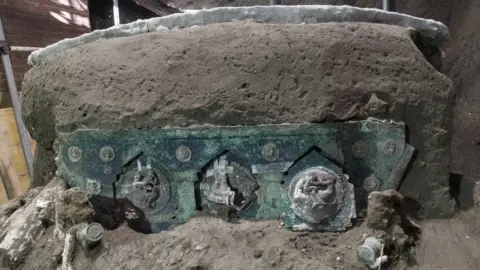
Archaeologists in Italy have unveiled a ceremonial chariot they discovered near the ancient Roman city of Pompeii.
Experts believe it was likely used in festivities and parades, with the find described as "exceptional" and "in an excellent state of preservation".
Pompeii, engulfed by a volcanic eruption from Mount Vesuvius in AD79, is an archaeological treasure trove.
The volcanic eruption buried the city in a thick layer of ash, preserving many of its residents and buildings.
The chariot was found in a double-level portico connected to stables at an ancient villa at Civita Giuliana, north of the walls of the ancient city.
 Handout
Archaeologists say efforts to safely free the chariot took weeks after it first emerged during an excavation effort on 7 January.
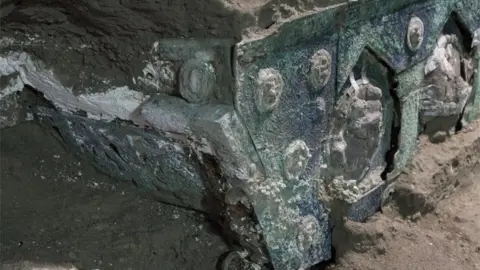
They said the fragility of the materials involved made their effort particularly complex, with special techniques, including plaster moulding, used to uncover it without damage.
 Handout via Reuters
 Handout via Reuters
The operation was carried out in collaboration with a local prosecutor's office amid criminal efforts to loot items of cultural heritage from the site using means such as illegal tunnels.
'Extraordinary discovery'
Officials described the carriage as without parallel among other finds in Italy.
"This is an extraordinary discovery that advances our understanding of the ancient world," Massimo Osanna, the director of the site, said in a press release.
 Handout via EPA
 Handout via EPA
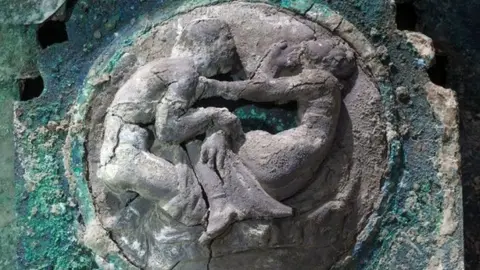
He said some of the ornate decorations on the chariot allude to it being used for community festivities, possibly including wedding ceremonies.
"Considering that the ancient sources allude to the use of the Piletum by priestesses and ladies, one cannot exclude the possibility that this could have been a chariot used for rituals relating to marriage, for leading the bride to her new household," he said.
Dario Franceschini, Italy's Culture Minister, said Pompeii "continues to amaze us with its discoveries and it will do so for many years, with 20 hectares still to be dug up".
The ancient city, which lies around 23km (14 miles) to the south-east of Naples, is a Unesco world heritage site.
It is usually one of Italy's most popular tourist spots but is currently closed due to the coronavirus pandemic.
