
 Alvaro del Campo
A study that dug into the history of the Amazon Rainforest has found that indigenous people lived there for millennia with "causing no detectable species losses or disturbances".
Scientists working in Peru searched layers of soil for microscopic fossil evidence of human impact.
They found that forests were not "cleared, farmed, or otherwise significantly altered in prehistory".
 Smithsonian
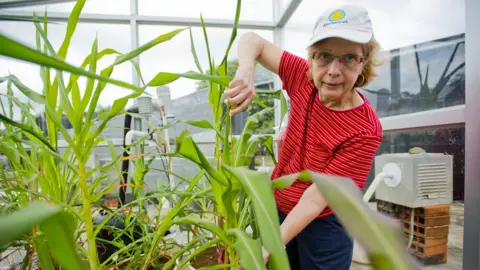
Dr Piperno's discoveries also inform an ongoing debate about how much the Amazon's vast, diverse landscape was shaped by indigenous people.
Dr Piperno told BBC News, the new findings provide evidence that the indigenous population's use of the rainforest "was sustainable, causing no detectable species losses or disturbances, over millennia".
To find that evidence, she and her colleagues carried out a kind of botanical archaeology - excavating and dating layers of soil to build a picture of the rainforest's history. They examined the soil at three sites in a remote part of north-eastern Peru.
 Dolores Piperno/Smithsonian
All three were located at least one kilometre away from river courses and floodplains, known as "interfluvial zones". These forests make up more than 90% of the Amazon's land area, so studying them is key to understanding the indigenous influence on the landscape as a whole.
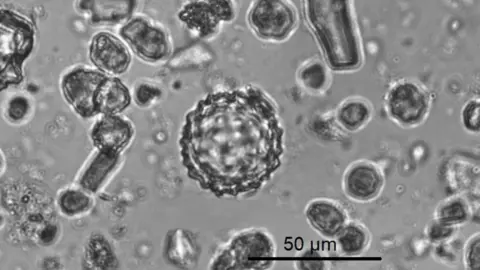
They searched each sediment layer for microscopic plant fossils called phytoliths - tiny records of what grew in the forest over thousands of years. "We found very little sign of human modification over 5,000 years," said Dr Piperno.
"So I think we have a good deal of evidence now, that those off-river forests were less occupied and less modified."
Dr Suzette Flantua from the University of Bergen is a researcher in the Humans on Planet Earth (Hope) project. She said this was an important study in working out the history of human influence on biodiversity in the Amazon.
"But it's like assembling a puzzle of ridiculous extent where studies like this are slowly building evidence that either supports or contradicts the theory that the Amazonia of today is a large secondary forest after thousands of years of human management," she said. "It will be fascinating to see which side ends up with most conclusive evidence."
 Corine Vriesendorp
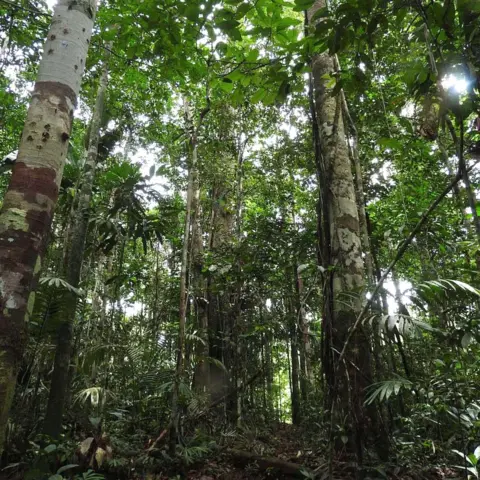
The scientists say their findings also point to the value of indigenous knowledge in helping us to preserve the biodiversity in the Amazon, for example, by guiding the selection of the best species for replanting and restoration.
"Indigenous peoples have tremendous knowledge of their forest and their environment," said Dr Piperno, "and that needs to be included in our conservation plans".
Dr Flantua agreed, telling BBC News: "The more we wait, the more likely that such knowledge is lost. Now is the time to integrate knowledge and evidence, and establish a sustainable management plan for Amazonia and the prehistoric human presence should be included."
