US sanctions six more ships after seizing oil tanker off Venezuela - follow live

14 min read Original article ↗
  • Analysis

    More pressure on Maduro as seized Venezuela oil heads for the USpublished at 23:42 GMT 11 December
    Sarah Smith
    North America editor

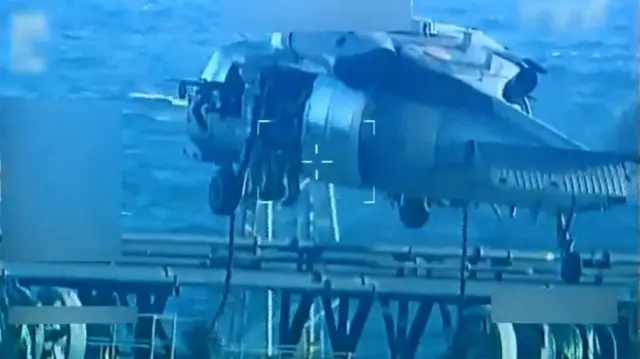
    A helicopter flies over a ship sailing on the oceanImage source, US Department of Justice

    The Trump administration is continuing to ramp up the pressure on the Venezuelan president, Nicolas Maduro by announcing sanctions on some of his relatives, and businesses associated with what the US calls his Illegitimate regime in Venezuela.

    The US is also preparing to intercept more ships carrying Venezuelan oil, after the seizure of an oil tanker earlier this week. That ship is now destined for an American port and the White House has confirmed it intends to seize the oil on board, after following the necessary legal processes.

    There have now been more than 20 American military strikes against Venezuelan boats believed to be smuggling drugs. And there has been a large build up of US forces in the region, including the world's largest aircraft carrier, which is now stationed in the Caribbean sea.

    Donald Trump has made no secret of his desire to see Nicolas Maduro removed from office - but int remains to be seen how far he is prepared to go to try to make that happen.

    We're going to end our live coverage on this page, but you can read a recap of today's main lines here: US sanctions six more ships after seizing oil tanker off Venezuela

    Thank you for joining us.
  • Former US ambassador says land action would be 'last option'published at 23:00 GMT 11 December

    A former US ambassador to Venezuela says sending US ground troops to the country would be the Trump administration’s "last option" in its efforts to force Nicolás Maduro out of power.

    "They don’t want to put troops on the ground in Venezuela," Charles Shapiro tells BBC Radio 4’s Today programme.

    The US has "made no secret" that its goal is to depose Maduro, he adds, after the Venezuelan leader won the disputed 2024 election "in the most bold-faced way".

    But a land action would be a last resort, according to Shapiro.

    "They, I assume, have a menu of options to try to turn up the pressure on Maduro to try to get him to leave office," he says. This could include a list of targets to strike from the air.

  • US politicians react to Venezuela escalationpublished at 22:37 GMT 11 December

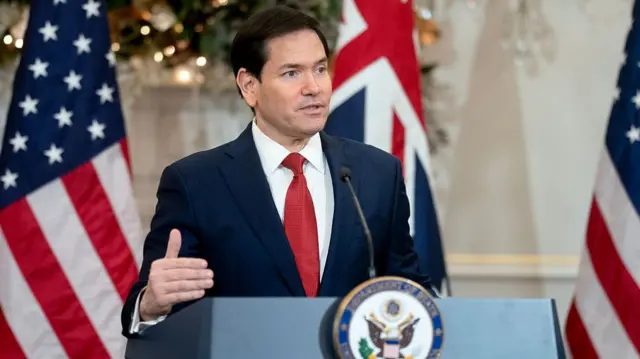
    Rubio wears a navy suit and red tie while speaking at a podiumImage source, Getty Images

    Image caption,

    Marco Rubio

    US politicians on both sides of the aisle have been weighing in on the oil tanker's seizure.

    Here's what some of them had to say:

    Secretary of State Marco Rubio praised Trump, saying this afternoon that the president is trying to end illegal activities that "hurt Americans and destabilise our entire region".

    "The US is holding accountable Maduro's narco-nephews."

    Democrat Congressman Ted Lieu said Trump's moves in the Caribbean and pulling attention away from the rising costs facing Americans. "I think Donald Trump is trying to distract the American people from the real issues," he said in an appearance on CNN.

    Other Republicans and Democrats, including Senator Lindsey Graham and California Governor Gavin Newsome have also registered their opinions. You can read about their reactions here.

  • BBC Verify

    Analysing satellite image claimed to be of the Skipperpublished at 22:07 GMT 11 December

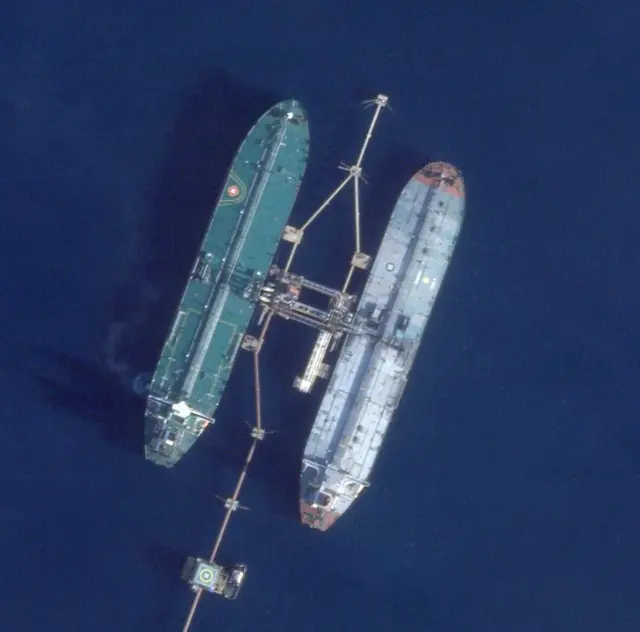
    A satellite image said to show the tanker SkipperImage source, Planet Labs PBC

    By Richard Irvine-Brown and Barbara Metzler

    We've been reviewing a high-resolution satellite image said to show the tanker Skipper that has been seized by the US at the Puerto Jose Terminal, Venezuela, on 18 November.

    The image was shared on X by TankerTrackers.com - a site that monitors crude oil shipments - which said it was the Skipper. Maritime intelligence service Kpler also said the image (above) shows the Skipper on the right.

    To verify whether the ship in the image is the Skipper we’ve been looking at its dimensions. The ship in the image is approximately 60m wide - matching publicly available data for the Skipper.

    Measuring the satellite image puts the length of the ship at about 320m compared with public sources saying it’s 333m. This would be at the upper end of the error range when measuring satellite images, we're looking into why there might be a difference.

    The coordinates of the image are correct for Puerto Jose about 230km east of Venezuela’s capital, Caracas.

    However, ship-tracking data, which can be spoofed to give a false location, is blank for the Skipper during the period at the terminal. It cuts off on 7 November, slightly over 900km away off the coast of Guyana, and only reappears on 10 December 400km away south of Grenada.

  • Will we hear from Trump on Venezuela today?published at 21:50 GMT 11 December

    Bernd Debusmann Jr
    Reporting from the White House

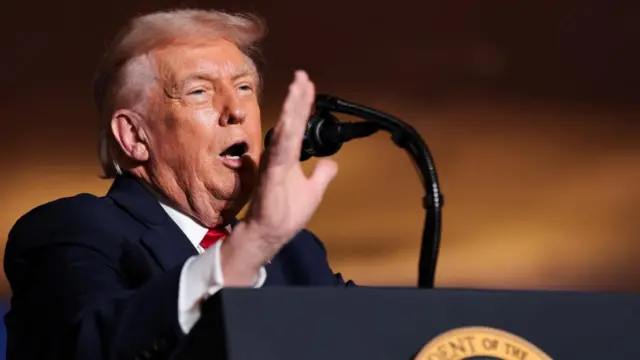
    US President Donald TrumpImage source, Reuters

    Donald Trump has a busy afternoon and evening ahead - and it's unclear whether we'll hear him talk about Venezuela today.

    The president is due to take part in a bill signing shortly.

    But that event is currently closed to the press.

    Later this evening, Trump will attend the Congressional Ball - where he's expected to give on-camera remarks.

    While he may mention the ship seizure, it seems unlikely. This is an annual, bipartisan event where the president delivers prepared remarks.

    Trump often goes off-script, but there’s no guarantee he’ll share any new information about the incident or what happens next.

  • Americast: how far will Trump go in his conflict with Venezuela?published at 21:37 GMT 11 December

    Americast banner

    Sarah Smith and Justin Webb discuss what’s happening between the United States and Venezuela, and how far Donald Trump is willing to go in his campaign against Nicolás Maduro.

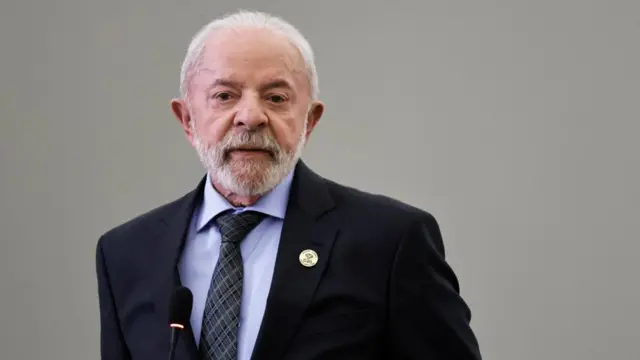
  • Maduro spoke with Brazilian president for first time since last year's election - reportspublished at 20:58 GMT 11 December

    Brazil's President Luiz Inacio Lula da SilvaImage source, EPA

    Venezuelan President Nicolás Maduro spoke with Brazil's President Luiz Inácio Lula da Silva earlier this month about the current situation in the Caribbean, according to several media outlets including Reuters news agency.

    Officials said it was a "quick call" on 2 December, Reuters reports. It was the first conversation between the two since last year's Venezuelan election. Brazilian leaders challenged Maduro's re-election at the time, but now Lula is expressing concerns about the growing US military presence in the region, Reuters says.

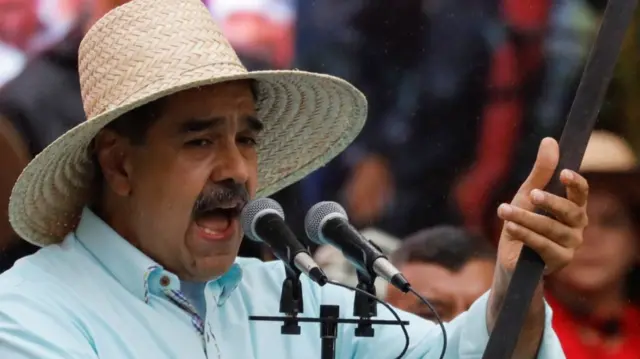
  • Who is Nicolás Maduro?published at 20:38 GMT 11 December

    Nicolas Maduro in a light blue shirt and straw hat holds up a wooden stick whilst speaking into two mics. There's a large group of people behind him in the blurred backgroundImage source, Reuters

    President of Venezuela, Nicolás Maduro, first came to power in March 2013 after the death of his mentor and predecessor Hugo Chavez.

    He is seen as an authoritarian leader and, during his 12 years in power, has cracked down on opposition groups and silenced dissent - including through the use of violence.

    Maduro’s government has faced plummeting oil prices and an economic and political crisis, made worse by international sanctions, leaving Venezuela in a state of near-collapse.

    Rampant inflation, shortages of goods, unemployment and crime have pushed at least seven million Venezuelans to flee abroad, according to the UN.

    Maduro returned to office for a third six-year term in January after an election marred by vote-rigging allegations.

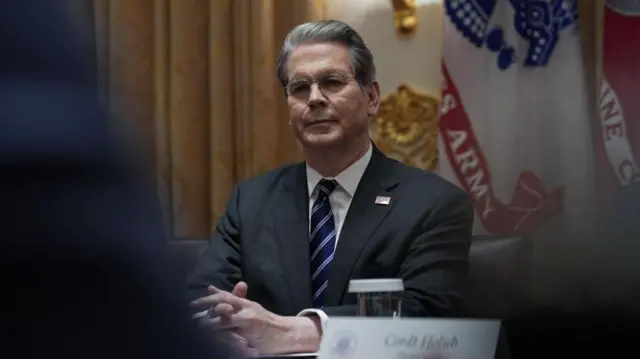
  • US Treasury says sanctions are a response to Maduro's 'dictatorial control'published at 20:16 GMT 11 December

    Bessent sat at table with hands claspedImage source, EPA

    Not long ago, we reported that three of Nicolás Maduro's nephews and six ships have been sanctioned. Now we've got more on that.

    US Treasury secretary says his department's newly announced sanctions on ships carrying Venezuelan oil will tackle "the dictorial and brutal control" of President Nicolás Maduro.

    After the sanctions were announced, Scott Bessent writes on social media: "Nicolás Maduro and his criminal associates in Venezuela are flooding the United States with drugs that are poisoning the American people."

    He adds that such sanctions will "undo the Biden Administration’s failed attempt to make a deal with Maduro".

    In 2023, former US President Joe Biden signed an agreement granting Venezuela a licence to export some of its oil to the US - despite sanctions. This was an attempt to entice the Maduro government to allow free and fair elections.

    Bessent says the US Treasury is "holding the regime and its circle of cronies and companies accountable for its continued crimes".

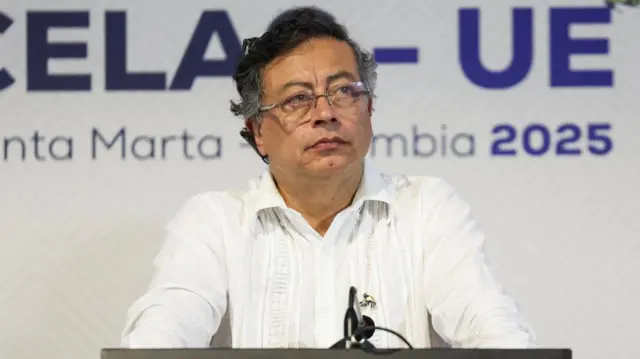
  • 'Colombia is producing a lot of drugs,' Trump saidpublished at 20:06 GMT 11 December

    Gustavo Petro in a white shirt stands at a podiumImage source, Reuters

    Image caption,

    Gustavo Petro is the first left-wing leader in modern Colombian history

    Let's bring you some more background on what the White House briefing covered earlier.

    As we've mentioned, a reporter asked about Colombia's President Gustavo Petro during the White House briefing.

    This follows Trump's response yesterday to a reporter's question about drugs coming in to the US from Colombia.

    "He's gonna have himself some big problems if he doesn't wise up," Trump said. "Colombia is producing a lot of drugs."

    "I hope he's listening, he's gonna be next."

    Colombia was once a close ally of Washington's war on drugs, receiving hundreds of millions of dollars each year in military assistance to counter drug gangs. But tensions have been building since Trump returned to office in January.

    Petro has described US strikes on alleged drug boats as an "act of tyranny", and called for a criminal inquiry at the UN General Assembly in September.

    Shortly afterwards, the US revoked Petro’s visa after he urged US troops to disobey Trump’s orders at a protest in New York. The US then placed sanctions on Petro in October, accusing him of allowing drug cartels to "flourish".

    After Trump’s comments on Wednesday, Petro shared a post on social media saying the US president was "misinformed" about Colombia, arguing his government is engaged in efforts to combat drug trafficking.

  • What we know about the seized oilpublished at 19:46 GMT 11 December

    As we've reported earlier, Karoline Leavitt says the US intends to seize the oil, although it will need to go through a legal process.

    The vessel seized yesterday is believed to have about 1.8 million barrels of heavy crude oil on board.

    Around 200,000 barrels were transferred to another vessel before the seizure, according to Reuters, which cited analysis from TankerTrackers.com and the Venezuelan state oil company PDVSA.

    Global crude oil prices are trading at roughly $61 (£46) a barrel, so the stash aboard the ship could be worth more than $95m - if it does indeed comprise 1.6 million barrels after 200,000 were removed. The BBC has not verified how much oil is on board.

    Venezuela sits on the largest known reserves of crude oil in the world, but analysts have highlighted the complexities.

    The oil is considered "heavy" and highly viscous, so extracting it needs special equipment and knowledge.

    Venezuela's ageing infrastructure and heavy US sanctions have also made it difficult for the country to monetise its vast resources.

  • Treasury sanctions six ships carrying Venezuelan oilpublished at 19:19 GMT 11 December

    Breaking

    The US Treasury has added three of Nicolás Maduro's nephews to the Office of Foreign Assets Control (Ofac) sanctions list, external.

    Six ships transporting the country's oil are also sanctioned.

    They've been listed under Executive Order 14059, which targets foreigners involved in the illegal drug trade.

    Efrain Campo Flores and his cousins Fransciso Flores de Freitas and Carlos Malpica Flores are related to the Venezuelan president through his wife, Celia Flores.

  • Oil tanker headed for US port, says Leavittpublished at 19:11 GMT 11 December

    One of the new bits of information we just learned from the briefing is where the seized oil tanker will go now.

    The tanker seized yesterday off the Venezuelan coast is set to sail to a US port, the White House press secretary has confirmed.

    Karoline Leavitt says: "The US does intend to seize the oil however there is a legal process for the seizure of that oil, and that legal process will be followed."

    Leavitt confirmed that the vessel, seized by the US yesterday, will sail to a US port where a formal legal process will take place.

    Currently, there is an investigation into the vessel - which compromises of a team on the ground and interviewing the on board crew.

    Media caption,

    White House: Venezuela tanker will go to a US port and oil will be seized legally

  • Analysis

    Trump administration frames seizure as sanctions enforcementpublished at 19:07 GMT 11 December

    Bernd Debusmann Jr
    Reporting from the White House

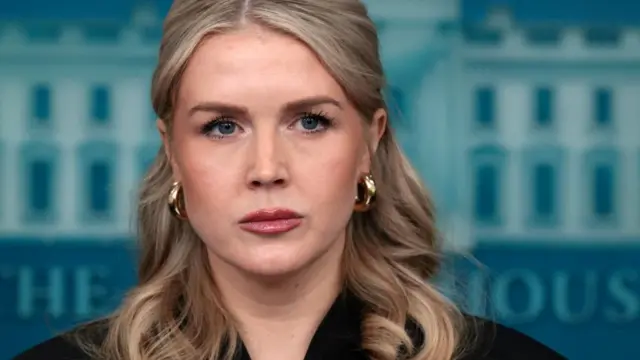
    White House Press Secretary Karoline LeavittImage source, Reuters

    By the standards of this media-savvy White House, that was a relatively short briefing, clocking in at under 40 minutes from start to finish.

    On the ship seizure, there wasn't much new information. Many of Leavitt's answers were vague, or matched what we've already heard from Homeland Security or the president yesterday.

    One notable clarification is that the administration is explicitly framing the seizure as sanctions enforcement - not as part of wider maritime operations against vessels from Venezuelan waters, or a pressure campaign against Nicolás Maduro.

    But in the end, the seizure is likely to increase pressure on Maduro's government, which sees oil as one of its few economic lifelines.

    If this is part of a larger series of seizures, the Venezuelan government's cost to export will go up - especially as it has already been forced to offer discounted oil to its main customer, China.

  • White House briefing ends, but Trump may speak further on Venezuelapublished at 19:04 GMT 11 December

    The White House briefing has now finished.

    President Trump has got two public events on his schedule today - a signing ceremony in the Oval Office and remarks at the Congressional Ball.

    It's possible we'll hear from him about the Venezuelan oil tanker and wider operations in the Caribbean.

    Stay with us as we continue to bring you the key lines of the day here.

  • Trump not interested in conflict - White House press secretarypublished at 19:01 GMT 11 December

    Leavitt is asked whether yesterday's tanker seizure is an escalation or a "step towards war with Venezuela".

    The White House press secretary says Trump sees the seizure as US forces "effectuating the administration's sanction policies".

    She's also asked whether a potential invasion of Venezuela aligns with the objectives of the president's supporters - and whether they would back a possible "prolonged war" in the country.

    Leavitt says Trump isn't interested in a conflict, but wants to see "the end of illegal drugs being trafficked into the United States".

  • Putin's support for Maduro won't concern Trump, Leavitt sayspublished at 18:59 GMT 11 December

    Leavitt is asked about reports that Russia’s President Vladimir Putin called Venezuelan President Nicolas Maduro to offer him his support today - does this concern Donald Trump?

    “I don’t think that would be concerning to the president at all,” Leavitt replies, adding that Trump has “not spoken to President Putin today”.

  • What does it mean when Trump says Colombia's president 'will be next'?published at 18:57 GMT 11 December

    A reporter asks about Trump's comments yesterday, when he said Colombia's President Gustavo Petro had better "wise up or he'll be next".

    What did this mean, exactly? And will Trump consider Petro's invitation, issued after those comments, for the US president to visit Colombia and see for himself how authorities there are working to combat drug trafficking?

    Leavitt says she'll leave Trump to respond to Petro's "very interesting" invitation himself.

    As for Trump's comments yesterday, Leavitt says Petro has been saying some "very alarming and frankly insulting things" towards the US, and that Trump "doesn't like it".

    She moves on to the next question without explaining what Trump meant yesterday when he said Petro could be "next".

  • Leavitt declines to say whether there will be more oil tanker seizurespublished at 18:56 GMT 11 December

    A reporter asks Leavitt whether yesterday's tanker seizure is the first of more similar actions, or if it's a targeting of the Venezuelan oil industry.

    Leavitt says she won't discuss any future action the administration plans to take.

    "The Trump administration is executing on the president's sanction policies..., and we're not going to stand by and watch sanctioned vessels sail the seas with black market oil," she said.

  • Analysis

    Trump administration's strategic ambiguity on full displaypublished at 18:52 GMT 11 December

    Bernd Debusmann Jr
    Reporting from the White House

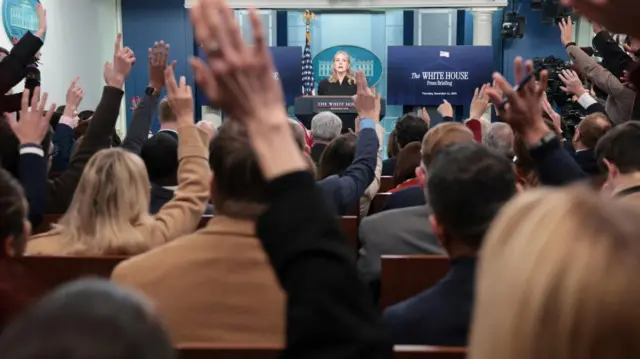
    Hands are raised as White House press secretary Karoline Leavitt holds a press briefing at the White HouseImage source, Reuters

    Asked whether the seizure of the oil tanker signals a wider campaign against Venezuelan oil targets, Leavitt kept her answer deliberately vague.

    She didn't respond directly, but did say the US wouldn't "standby" as sanctioned oil vessels fund "narco-terrorism".

    Her response - or lack of one - fits with how this administration and President Trump tend to operate.

    It's often said that Trump uses "strategic ambiguity", and he admits he likes to keep his next moves quiet and keep the world guessing.

    We saw this approach earlier this year with the back-and-forth over striking Iranian nuclear facilities.

    Now, we're seeing it with Venezuela - both over whether more ship seizures will happen, and whether US forces might strike targets on land or the Maduro regime itself.