
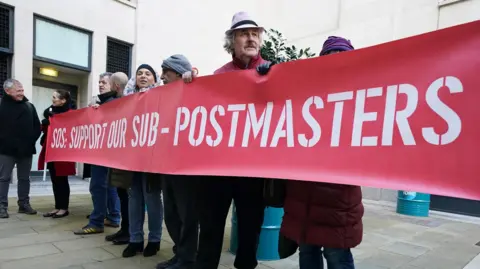
 PA Media
The Post Office Horizon scandal has been called the UK's most widespread miscarriage of justice, after hundreds of people were wrongly prosecuted due to faulty software which suggested money was missing from their branch accounts.
The scandal led to widespread public anger - partly fueled by a hit TV drama - and has been the subject of a lengthy inquiry.
In October the government accepted all but one of the recommendations made in the inquiry's first report, which had focused on the suffering endured by sub-postmasters and their fight for compensation.
What happened and how many people were affected?
More than 900 sub-postmasters were wrongly prosecuted because of incorrect information from the Horizon computer system.
Many sub-postmasters went to prison for false accounting and theft, and others were financially ruined.
The Post Office itself took many cases to court, prosecuting 700 people between 1999 and 2015. Another 283 cases were brought by other bodies, including the Crown Prosecution Service (CPS).
In 2019, the Post Office agreed to pay the group £58m in compensation, but much of the money went on legal fees.
The episode came to wider public attention at the start of 2024 when it was depicted in an ITV drama, Mr Bates vs The Post Office.
What is Fujitsu's Horizon system?
It was introduced by the Post Office in 1999.
Sub-postmasters quickly complained about bugs in the system after it falsely reported shortfalls, often for many thousands of pounds, but their concerns were dismissed.
The Horizon system is still used by the Post Office and maintained by Fujitsu. The Post Office says it has continued to make improvements to the system while it plans "to move to a new system that is being developed".
What was the impact of the scandal on Post Office staff?
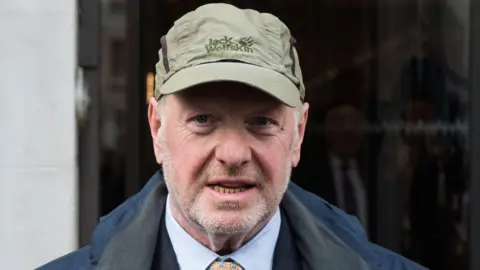 Getty Images
Many former sub-postmasters and sub-postmistresses say the scandal ruined their lives.
Some used their own money to cover non-existent shortfalls because their contracts said they were responsible for unexplained losses. Many faced bankruptcy or lost their livelihoods.
Marriages broke down, and some families believe the stress led to serious health conditions, addiction and even premature death.
It is thought that more than 13 people may have taken their own lives as a result.
What compensation schemes are in place?
There are four different compensation schemes, which are aimed at different groups of victims.
Individual eligibility for compensation depends on the particular circumstances of each case.
However, the schemes have been criticised for being too slow and complicated, with many of the worst affected victims receiving far less than their original claims.
As at 30 September 2025, a total of £1.23bn had been awarded to more than 9,100 sub-postmasters:
- Horizon Shortfall Scheme - £692m
- Group Litigation Order Scheme - £199m
- Overturned Convictions Scheme - £68m
- Horizon Convictions Redress Scheme - £270m
The Overturned Convictions Scheme closed on 2 June 2025. Claims made through this route are now being managed under the Horizon Convictions Redress Scheme.
This includes those who originally sought compensation through the Horizon Shortfall Scheme - which accounts for more than half of the compensation claims paid out so far. They will now get government-funded legal advice to help them decide whether to accept a fixed sum offer.
It is thought access to free legal advice could have a major effect on the amount of compensation some victims will receive.
What is the Post Office Horizon public inquiry?
The public inquiry began in 2022 and heard evidence from sub-postmasters, Post Office and Fujitsu employees, IT experts and politicians.
Sir Alan - whose story featured in the ITV drama - told the inquiry that the Post Office had spent 23 years trying to "discredit and silence" him.
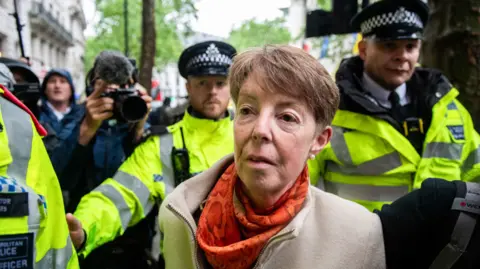 Getty Images
She was quizzed for three days and at times broke down in tears. She apologised to the sub-postmasters and their families "who have suffered as a result of all that the inquiry has been looking into for so long".
The first part of the inquiry's report was published on 8 July 2025.
In the report, inquiry chair Sir Wyn Williams said the impact on those affected had been "disastrous", and that it was not easy to "exaggerate the trauma" that people suffered as they were investigated and prosecuted.
Responding to Sir Wyn's report in October 2024, the government said it accepted all but one of the recommendations.
It agreed to provide greater clarity on the definition of "full and fair redress", and said it would begin work on a restorative justice project for subpostmasters.
It is also considering establishing an independent body to oversee redress schemes for any future scandals.