Rachel Nuwer

 Serenity Strull/ Getty Images
There is growing evidence that mind-altering drugs can be used to help people explore aspects about themselves they may not have realised.
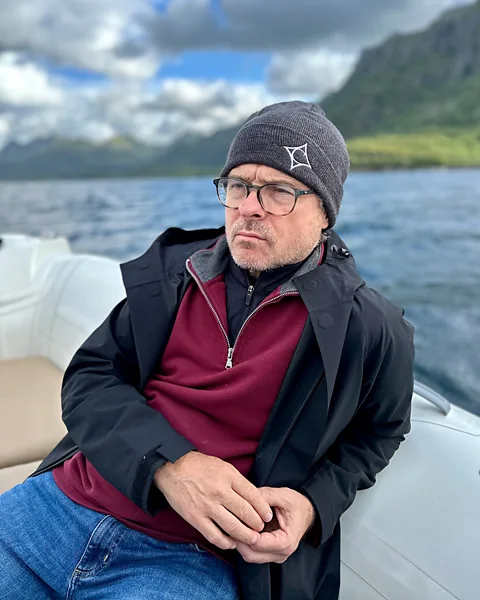
Hunt Priest identified as straight for the first 60 years of his life. While he occasionally felt attracted to men, "it was not dominant and I was just much more interested in women", he says. He was happily married to a woman and had a stable career as a senior clergyman at an Episcopal Church in the Seattle area. Priest "never had any judgement about gay people at all", but queer culture and community "wasn't strong part of my experience", he says.
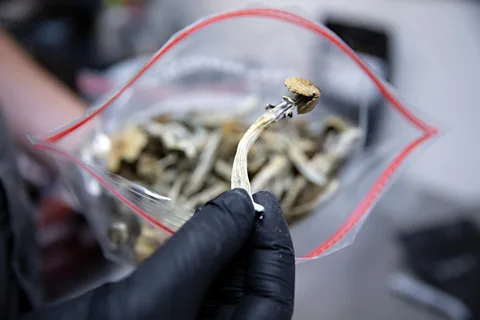
In 2016, however, Priest enrolled in a psychedelic drug trial at Johns Hopkins University. The study aimed to examine the effect of psilocybin – the primary active ingredient in magic mushrooms – on the religious and spiritual attitudes of clergy. For Priest, it would also put in motion major changes in his sexual orientation.
Psychedelic therapists, practitioners and academic researchers are beginning to recognise that mind-altering drugs can open up sides of the self that previously lay hidden, challenging entrenched understandings of gender and sexual orientation.
During two sessions of the trial where Priest received a dose of the psychedelic drug, he says he experienced the presence of God and the Holy Spirit "in a very dramatic and embodied way" that was new to him. "It was not necessarily sexual, but there was a sense of eros and sexual energy."
Priest did not experience any immediate difference in his sexual orientation. But he did notice a "subtle shift" in how he related to the world, he says. "I was more open."
Around the same time, his life was changing in other ways. He and his family moved to Savannah, Georgia. He switched jobs to work as a church rector, his son left for college and, most significantly of all, his wife asked for a divorce.
In the years that followed, Priest held off dating in the hopes that he and his wife might get back together. But five years after they separated, he was having coffee with a male friend-of-a-friend and – to his great surprise – suddenly felt "there was something there", he says. He eventually acted on those feelings. While lots happened in the years between his participation in the Hopkins trial and the start of his new relationship, he credits his psilocybin experience for making that possible. Today, he and the man are still together.
"I don't think psychedelics turned me gay," he says. What they did do, though, was make him receptive to new experiences and showed him it was OK to trust his body and intuition. "Working with psychedelics means opening yourself up to change," he says. "It brings about transformation."
 Hunt Priest
Of course, unpicking the influence of a drug in such a transformation is complex. For one, the trial that Priest took part in was not conducted blind, so participants knew they were receiving a dose of psilocybin. It could conceivably have been that knowledge itself rather than the action of the drug that gave Priest the freedom to think differently about his sexuality.
A growing body of research, however, is suggesting there is something specific about psychedelic substances that make them useful for supportive explorations of sexual orientation and gender identity.
For decades, mental health practitioners and casual users alike have recognised that psychedelic drugs have potential applications in relationships, sex and sexuality. When therapists began working with MDMA in the 1970s and 1980s, for example, one of the first things they used it for was couples counselling – something that various research groups are now empirically testing. Certain psychedelics are also well known enhancers of intimate pleasure.
Although psychedelic drugs remain illegal in many parts of the world, some of these substances are now being legalised or decriminalised in a growing number of countries – opening up new therapeutic opportunities. Experts also warn against experimenting with these drugs at home or outside a carefully controlled therapy.
"Part of the beauty of psychedelics is that they loosen our fixed notions of ourselves in the world," says Jae Sevelius, a licensed clinical psychologist and behavioural health researcher at Columbia University who conducts research on psychedelics with sexual and gender minority communities. "The fact that they can create space for new ways for people to think about themselves – including their gender or their sexuality – is not at all surprising."
This work takes many forms. Some people intentionally pursue psychedelic therapy to address internalised negativity about their gender identity or sexual orientation, while others arrive at insights unexpectedly. For some, the realisation comes in a sudden, ah-ha moment during a drug trip. For others, it may take weeks, months or even years to distill what they have learned about themselves. For most, it takes time to process and integrate it into their lives.
"For some people, this is only something they've ever asked themselves internally, and never spoken out loud," says Baya Voce, a couples counselor and MDMA-assisted couples therapy researcher in Austin. Under the influence of psychedelics, however, sensitive questions about gender or sexuality can become "an open inquiry and an exploration".
Researchers are beginning to investigate how psychedelics might assist explorations of gender and sexual orientation. A study published in March 2025 provided a snapshot of just how often people have these experiences. The survey-based study asked 581 participants about how psychedelics have shaped their sexuality, gender and relationships. The participants were self-selected, recruited through psychedelic-related email listservs, newsletters, social media and in-person events. While all of the participants were people who had used psychedelics, "we did not mention anything about sexuality or gender in the recruitment", says lead author Daniel Kruger, a social psychologist at the University at Buffalo, New York.
About one-quarter of women, one-eighth of men and one-third of people with other gender identities said the drugs had heightened their attraction to a gender that they were not usually primarily drawn to. "That's not everyone, but it's still a large number," Kruger says.
They help us remember or discover who we've always been underneath the social programming – Jae Sevelius
At first, Kruger was surprised by this finding. "If you had asked me ahead of time, I would have said that sexual attraction is something that's mostly fixed in people," he says. After more careful consideration, he realised that psychedelics probably were not rewriting fundamental aspects of who someone is, he says, but rather allowing them to "gain insights on themselves and possibly be more open to feelings that they may not have previously considered socially acceptable".
"Ultimately, psychedelics don't change who we are," Sevelius agrees. "They help us remember or discover who we've always been underneath the social programming."
Psychedelics can also increase openness – a personality trait that measures how receptive a person is toward new things. In 2011, researchers at Johns Hopkins University in Baltimore, Maryland, found that participants who took a high dose of psilocybin in a laboratory-based trial and reported a mystical experience during their trip scored significantly higher on measures of openness for over a year following the trial compared to those who received a lower dose or an inactive control drug. Openness encompasses "not only creativity and imagination, but also tolerance for new ideas and experiences", Voce says – including ones around sexuality and gender.
Beyond gender
Around 10% of participants in Kruger's study from March 2025 also said that psychedelics influenced their gender identity or gender expression. Some people reported feeling like the opposite gender while on one of those drugs while others said they experienced both genders simultaneously. There were also some who felt something entirely different. They "felt they were in a space that went beyond gender", Kruger says. "The concept of gender no longer made any sense."
Kruger warns, however, that "psychedelics are not for everyone and there are many risks that people need to be aware of". In another recent survey of over 1,200 psychedelics users, he and his colleagues found that most reported adverse experiences during their trips, including fear, sadness and loneliness. "I do not think it is a contradiction that we also documented that many people have difficult experiences with psychedelics," he says. "Taking psychedelics without adequate preparation or in difficult environments may increase that risk."
As with sexual orientation, psychedelics seem to be pulling back the curtain on pre-existing gender-related questions in the person's mind, says Chandra Khalifian, a licensed clinical psychologist and co-founder of Enamory, a psychedelic-assisted couples therapy center in Del Mar, California. "It's less that psychedelics directly cause changes in gender perception, and more that they create space to explore feelings and thoughts that were already present but perhaps not previously acknowledged."
 Shaina Brassard
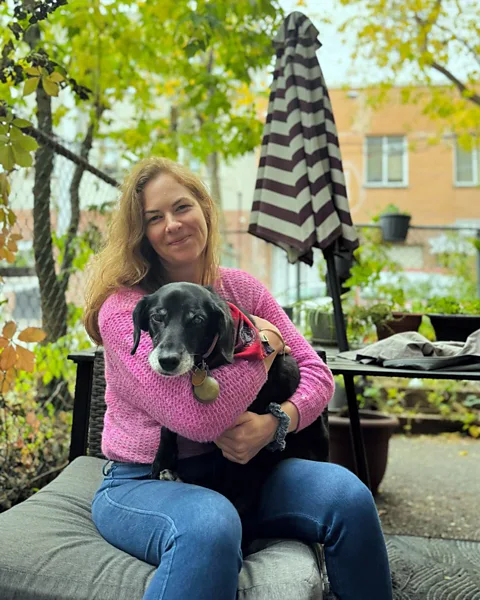
Shaina Brassard, a 39-year-old woman in Albany, New York, experienced this in 2022, during a ketamine-assisted therapy session. She was coming down from the high, gradually becoming aware of her body again, when she noticed – with a jolt of surprise – that her hand was resting on her breast. "I was like, 'Whose breast is this?'" she recalls. "The presence told me about the absence that had just taken place."
Brassard realised that she had just spent over an hour without thinking about her biological sex or social gender. "I had experienced the trip as this blissful break from the weight of being a woman in the world," she says. Instead, she had felt like a pure "consciousness or soul".
She came away from the experience still identifying as a woman, but with less attachment to her gender and more compassion for others, from non-binary people to men. "It has always been obvious to me that gender is a social construct, but this gave me a felt certainty that our bodies are containers for our souls," she says.
In some cases, psychedelic experiences can prompt people to recognise and affirm a different gender identity. The social implications of such realisations and their related changes can be highly variable based on context, Sevelius says. But having them at all is important for allowing people "to explore new and different aspects of themselves that were previously inaccessible to the conscious mind, or felt too socially stigmatised to fully acknowledge".
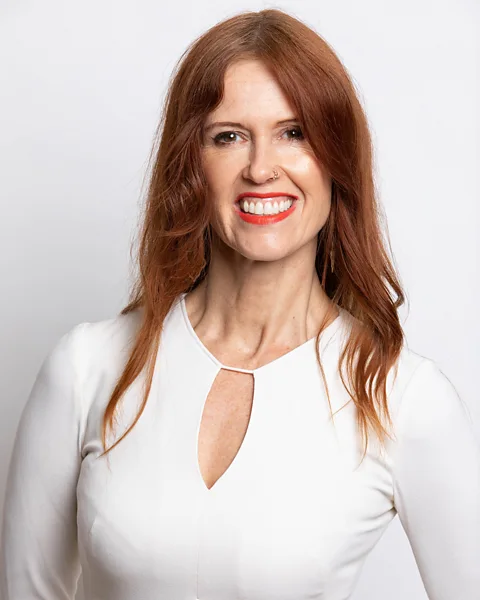
Catriona Wallace, an artificial intelligence ethicist and organisational behaviourist at the University of New South Wales in Australia, identified as a woman but "always had this sense of a boyishness about me", she says. Wallace seemed to discover the reason for that sense during an ayahuasca trip in Peru, when she had a vision of a little boy who had died and attached his spirit to her. "It was absolutely traumatic," she says.
Afterwards, she shared this vision and the women in the retreat centre performed a ceremony to "release the boy's spirit". When Wallace returned home, "I was changed," she says. She was rid of a long-standing stomach pain that had not been solved through Western medicine or operations, she says. Genderwise, she also felt "completely other". She saw a gender counsellor, who said it was ok to be something else entirely, which came as "such a relief", she says. "The binary notion was too rigid for who I am."
After publicly identifying as non-binary, she lost a few friends – mostly men, she says. Her children have all come to accept her new identity, though, and she now helps other people who are exploring their gender with the help of psychedelics.
"All in all, it's good," she says. "I have a much greater sense of peace and ease in not having to subscribe to any gender stereotypes."
Support is key
People's responses to gender- or sexuality-related insights sparked by psychedelics can depend largely on the support they receive, both professionally and personally. "These experiences – especially when they're unexpected or surprising – can be very confusing for people and may be isolating," Sevelius says.
Ideally, professional support is involved, if not during the trip itself, then in the important work that comes afterward while processing it. "It is really important that psychedelic-assisted therapy practitioners are affirming and aware of the potential for someone's sense of identity to evolve, and to see this not as a negative outcome but as potentially healing," Sevelius says.
 Getty Images
Many people do not have the resources to seek help from therapists who are competent in psychedelics, identity-affirming integration, LGBTQ+ issues or all three. Family and friends can also provide crucial lifelines for a person processing major shifts to their identity, but again, not everyone has a supportive network. For people raised by caregivers who "talked about never being able to accept a queer kid", Voce says, or who belong to a straight, conservative peer group, "it's much harder to say, 'I'm the person who's going against the grain'".
It can also be difficult if a current romantic partner is not on board. "That can be an identity shift for the other person in the relationship too," says Kayla Knopp, a licensed clinical psychologist and, with Khalifian, a co-founder of Enamory. A husband and wife in their 60s recently came to Knopp, for example, after the husband started exploring bisexuality and gender identity, and trying out cross-dressing. The wife "had a really negative reaction", Knopp says. Tensions were eased somewhat after the couple tried ketamine-assisted therapy and found, afterwards, that they were better able to talk through what this meant for their relationship. "It wasn't a big, dramatic thing," Knopp says. "They just both felt a little more open and softer with each other."
The essential question
Psychedelics can also be used therapeutically to help people who feel they have been harmed in a world isn't always supportive of sexual and gender minorities. Rachel Golden, a psychologist in private practice in New York City, regularly uses ketamine-assisted therapy to help queer, trans and gender-expansive clients see themselves more positively. "Psychedelics help to unravel entrenched notions some of these patients have of being 'wrong' and allow them to recognise that they're deserving of humanity, dignity and respect," Golden says.
Sevelius, Golden and colleagues recently developed a novel program designed by and for transgender and gender-expansive people to use ketamine-assisted group therapy to explicitly target identity-based trauma. In a small pilot study – the results of which are currently under peer-review for publication – eight participants underwent this treatment. They experienced significant improvements with their negative mental health experiences overall, including lower scores in depression and anxiety symptoms. They also had lower scores on cognitive fusion, a measure of attachment to entrenched beliefs. The participants described experiencing powerful reductions in shame and negative self-talk, decreases in internalised transphobia and increases in gender euphoria. "We got amazing results as to how affirming it was for people to work with ketamine in this context," Sevelius says.
 Catriona Wallace
One of the powerful aspects of using psychedelics in a therapeutic context is that they enable the person to do the healing work themselves, says Rob, a 60-year-old in New Jersey who asked for his last name to be withheld for privacy. The understanding and self-acceptance "is being brought to me not by a doctor or a therapist, but myself", he says.
Rob realised he was gay when he was in his mid-teens – just as the Aids crisis was ramping up. "I remember being pretty sure that I was going to die in this terrible, mortifying, painful and socially unacceptable way because of who I was and what I did," he says. "Fear and shame got right in there – right between my sexual desire and identity, and my courage to express them."
Decades later, psychedelics helped him begin the slow process of unpacking the unresolved identity issues he had spent most of his life trying to repress. On a first trip with MDMA and mushrooms, he realised that shame had caused him to hide his true self by reflexively passing "as straight or dominant". Soon after, on an ayahuasca journey in Costa Rica, he revisited "all the times in my life when I was younger that I had missed an opportunity to have sex". Rather than pass judgement, however, he was able to look back on his young self with compassion, love and even humor.
Rob insists that psychedelics have not fixed him. But they have helped him better accept what he sees as his past mistakes, he says, and to realise that who he is "is actually really great". He still has regrets, but he's better able to commit to things that matter, embrace sexual desire without shame and experience joy in the everyday. "The essential question all people ask is, 'Who am I?'" Rob says. Psychedelics he says, helped him find out.
I Feel Love: MDMA and the Quest for Connection in a Fractured World.
--
If you liked this story, sign up for The Essential List newsletter – a handpicked selection of features, videos and can't-miss news, delivered to your inbox twice a week.
For more science, technology, environment and health stories from the BBC, follow us on Facebook and Instagram.