
 Alamy
Alamy
These cosy, wardrobe-like pieces of furniture could reportedly sleep up to five people. Why did they fall out of fashion?
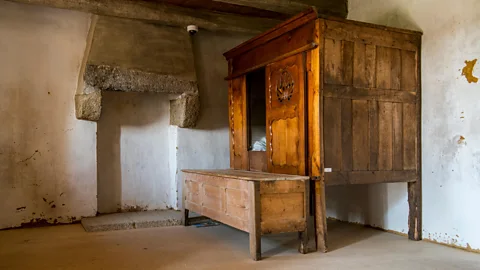
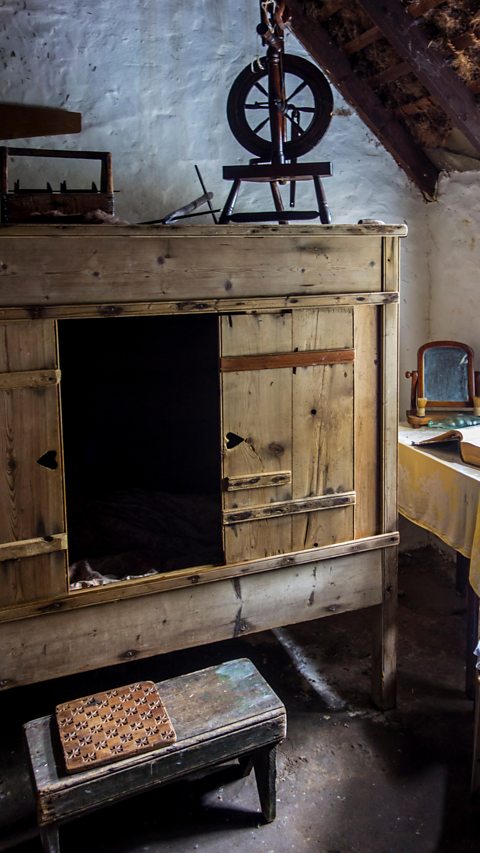
At a museum in Wick, in the far north of Scotland, is what looks like a particularly large pine wardrobe. With a pair of full-length double doors at the front, and suitcases stacked above it, it wouldn't look out of place in a modern bedroom. It's even assembled like regular flat-pack furniture – with each piece slotting together, so it can be easily moved and rebuilt. But this cupboard is not for storing shirts or jackets; there are no hangers or shelves inside. This is a box bed – and it's designed to hold sleeping people.
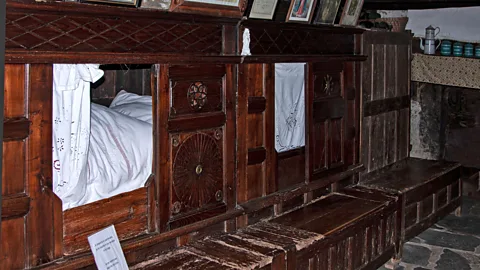
Otherwise known as a closet bed or close bed, the box bed was surprisingly popular across Europe from the medieval era to the early 20th Century. These heavy pieces of furniture involved exactly what you would expect – a box made of wood that contained a bed. Some were plain and humble, no more than basic wooden containers. Others were elaborately decorated, with carved, panelled or painted sides. Often the cupboards had doors that closed to impound the sleeper within the blackness of their cramped interiors, or a little curtained window. The fanciest had a variety of uses – with bonus drawers and a seat at their base.
For centuries, drowsy farm-workers, fish-gutters, and even members of the nobility would crawl inside these cosy wooden dens each night, presumably being careful not to bash their elbows as they did so, and shut themselves in.
 Alamy
Alamy
Box beds were versatile pieces of furniture. Often, they were used almost as miniature bedrooms – spillover places for people to sleep where there otherwise wouldn't be enough space. In one case from 1890, a family living in the Scottish Highlands was too large for their single-room house – so some members slumbered in a box bed in the barn, among dogs and horses, according to the Wick Society. It was also common to use them for migrant workers in some areas, such as the overflow of herring-gutters who descended on the region of Wick during the fishing season – with up to five or six people required to share a bed. (Read more from BBC Future about the lost ancient practice of communal sleep.)
In fact, sharing a box bed with family members or co-workers was not unusual. In the 1825 melodrama The Factory Lad, workers slept in stacks of box beds, with two or three people in each one. Some had holes for ventilation, but cramming too many people in may have carried a risk of suffocation – one tale from 13th-Century France involves a woman hiding three secret guests inside a bed, who then perish in its stuffy interior.
 Getty Images
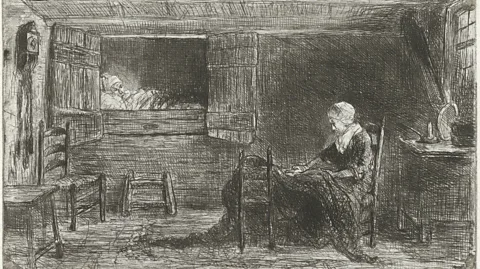
Box beds were particularly common in Britain and on the continent in Europe. According to one account from 1840, most cottages in Brittany, France, included these pieces of furniture, which were typically made from oak and piled up to 4ft (1.2m) high with bedding. There might be several to a room, and each one would have a long wooden chest placed at their base. "This is always the seat of honour, and serves also as a step to assist mine hostess in mounting to her exalted couch," wrote the author Thomas Adolphus Trollope.
But there was a further benefit to these sleeping-coffins: warmth. Without modern heating or insulation, in the winter bedrooms could be literally freezing – so cold that it was standard practice to go to bed wearing a hat, so that only your face was exposed. And it was significantly colder then.
Roger Ekirch, a university distinguished professor of history at Virginia Tech, Virginia, and the author of At Day's Close: A History of Nighttime, explains that from the 14th to the 19th Century, Europe and portions of North America were experiencing the Little Ice Age. In London, the Thames froze over on eighteen occasions – an event that hasn't happened since 1963. "Diaries spoke of sap from burning logs in fireplaces freezing as soon as it seeped from the bare ends... inkwells would freeze overnight," he says.
 Alamy
Alamy
This not only made bedmates an appealing prospect, but also the sheltered environment of a box bed, where warm air became trapped.
The box bed eventually became associated with poverty and country life, and fell out of fashion. By the mid-20th Century they were rare. However, now similar pieces of furniture are making a quiet comeback. Today it's possible to buy bed tents, which turn sleeping areas into snug little caves with the added benefit of extra privacy, while wooden sleeping "nooks" that look suspiciously similar to box beds are being sold for aspirational "cottage style" homes.