
 Alamy
Alamy
A recent study has revealed which kinds of tech have stood the test of time – in terms of recognition, if not use. Would your children recognise these? (And would you?).
 Getty Images
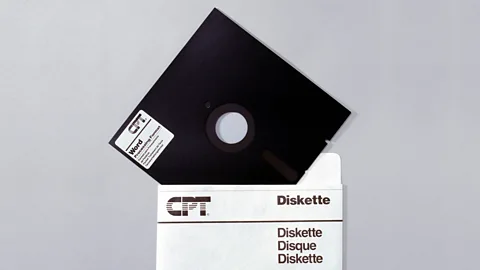
Children tend to be able to navigate the latest technology with consummate ease. But what about the technology that their parents grew up with… much of it now obsolete? Do today’s kids have a clue what a floppy disk is, or a pager? A recent You Gov study surveyed more than 2,000 children aged 6-18 in the UK to find out.
First, two-thirds of children don’t know what a floppy disk is. Some identified it as a computer’s ‘save’ icon. The first floppy disk – which measured 8in (20cm) – was developed by IBM to replace tape drives in the late 1960s, and made commercially available in the 1970s. A 5.25in (13cm) disk came next. Then Sony followed suit with the 3.5in (9cm) disk in 1981. In 1984, IBM introduced the high-density floppy disk for the PC. It could store 1.2 megabytes of data: at the time, impressive capacity. Times have changed: just compare that to a Kingston USB flash drive today, which can store 2TB – nearly 1.7 million times the amount of information.
More than five billion floppy disks were sold per year worldwide at their peak in the mid-1990s. Today, you might find one gathering dust in a seldom-opened desk drawer. If you’re lucky.
 Alamy
Alamy
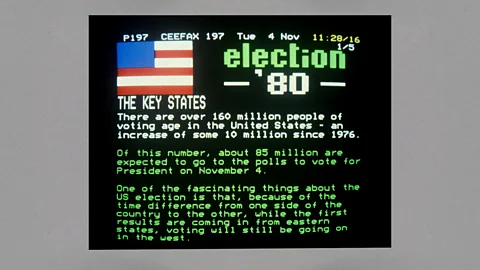
From the mid-1970s until 2012, Ceefax and Teletext were avidly watched as pages painstakingly loaded football results or the weather forecast. Ceefax (so named as it allowed BBC viewers to “see facts”) was launched in 1974 to provide the latest news headlines, sports scores, TV listings or lottery results. In a pre-internet era, the only other option was to wait for the next television or radio bulletin. Teletext was the equivalent service on channels such as ITV and Channel 4 in the UK.
Most children today – 86% – have no idea what either of these are.
Alamy
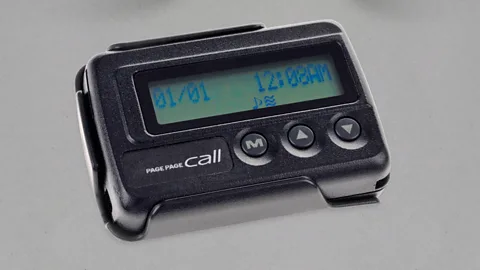
With a quarter of children aged six-or-under owning a smartphone, an antiquated pager is a baffling proposition to 86% of those surveyed. Developed in the 1950s and 1960s, these small personal radio receivers were widely used by the 1980s. They can receive and display numeric, alphanumeric or voice messages – which are broadcast via a network of radio transmitting antennas.
But they’re not entirely obsolete just yet. Pagers are still used in certain fields such as in hospitals and by the emergency services: for receiving urgent messages, they can be more efficient than mobile phones.
 Alamy
Alamy
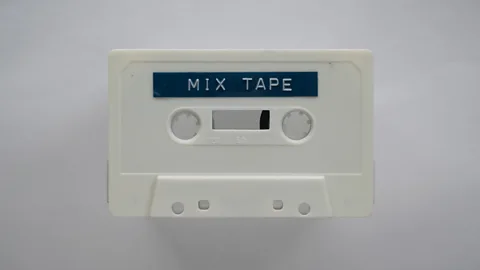
For some of us, the cassette may evoke fond memories of recording the Top 40 from the radio or creating heartfelt mix tapes for your latest crush. For others, including 40% of children, it draws a blank. The biggest electronics retailer in the UK, Curry’s, stopped selling music cassettes in 2007. But sales already had seen a slow decline in the previous 15 years as music fans were attracted to shiny, new compact discs and then to digital downloading.
 Getty Images
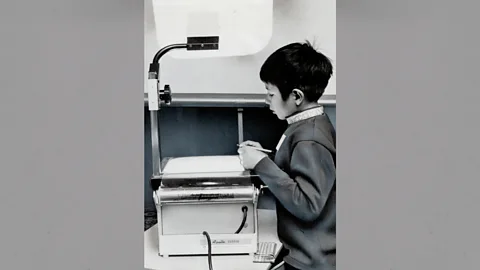
Once a mainstay of classrooms, with their accompanying stacks of acetate sheets and squeaky dry wipe pens, overhead projectors have been replaced in many schools with more sophisticated teaching aids like iPads and lessons delivered on PowerPoint. More than 70% of children weren’t able to identify these outdated contraptions.
 Alamy
Alamy
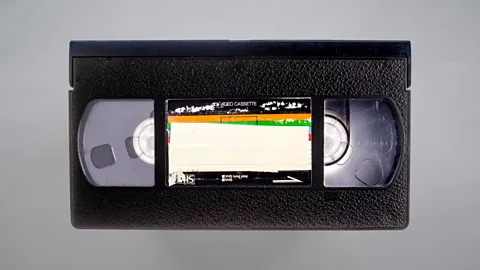
Before Netflix was a twinkle in anyone’s eye, video cassettes were all the rage. Video cassette recorders for home use were launched by Sony in 1971. Initially, these were out of reach for most families though by the late 1980s they were far more affordable. But 37% of today’s children have never had the VHS vs Betamax debate. (If you’re lucky to be young enough not to remember, there was a ‘videotape format war’ between two competing systems: Sony’s Betamax (1975) and JVC’s VHS (1976). VHS was victorious.
 Getty Images
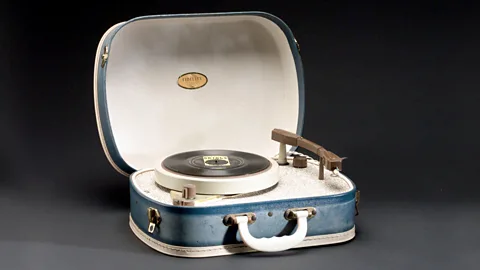
Those who sing the praises of vinyl will be pleased to know that almost three-quarters of today’s children are able to identify a record player – a much greater number than those who can recognise cassette tapes. It seems vinyl is seeing a resurgence, with one study finding that over half of consumers prefer physical formats. This is especially the case among 18-24 year olds.
 Getty Images
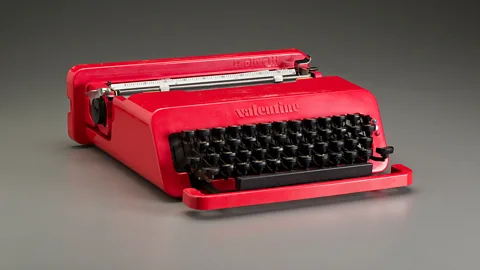
Typewriters also seem to have stood the test of time, with only 27% of children unable to name them. That being said, one slightly muddled young respondent described a typewriter as “a thing you write movies on”.
 Getty Images
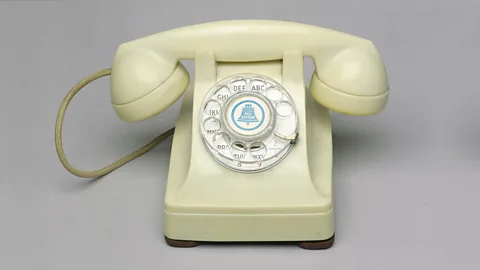
One of the most surprising findings of the survey? Even though today’s phones look so different, only 4% of children were unable to identify an old-style rotary telephone. Perhaps some of their grandparents have hung on to these retro devices – or maybe, as with the floppy disk and the save icon, it’s because the emoji for ‘telephone’ bears an uncanny resemblance to a rotary telephone.
In some ways, extinct technology still lives on – even if it is sometimes used as a symbol for the tech that succeeded it.