As Kubernetes grew in popularity, people started looking for effective ways to manage their application manifests, their declarative descriptions of the Kubernetes resources they needed to run their apps on a cluster.
There’s a bit of difficulty in that — how can I use the same app manifests to target multiple environments? How can I produce multiple variants?
The most common solution is to use some kind of templating, usually Go templates along with Helm. Helm comes with many additional drawbacks and advantages, but we’re going to ignore those for today. We’re going to focus on the problems with templating.
An Alternative API
If used by enough people, you arrive at parameterizing every value in a template. At this point, you’ve provided an alternative API schema that contains an out-of-date subset of the full API [1].
Here’s a bit of the Datadog Helm chart while you ponder that:
1
{{- template "check-version" . }}
2
{{- if .Values.agents.enabled }}
3
{{- if (or (.Values.datadog.apiKeyExistingSecret) (.Values.datadog.apiKey)) }}
4
apiVersion: apps/v1
5
kind: DaemonSet
6
metadata:
7
name: {{ template "datadog.fullname" . }}
8
namespace: {{ .Release.Namespace }}
9
labels:
10
{{ include "datadog.labels" . | indent 4 }}
11
app.kubernetes.io/component: agent
12
{{- if .Values.agents.additionalLabels }}
13
{{ toYaml .Values.agents.additionalLabels | indent 4 }}
14
{{- end }}
15
{{ include "provider-labels" . | indent 4 }}
16
{{- if .Values.agents.daemonsetAnnotations }}
17
annotations: {{ toYaml .Values.agents.daemonsetAnnotations | nindent 4 }}
18
{{- end }}
19
spec:
20
revisionHistoryLimit: {{ .Values.agents.revisionHistoryLimit }}
21
selector:
22
matchLabels:
23
app: {{ template "datadog.fullname" . }}
24
{{- if .Values.agents.podLabels }}
25
{{ toYaml .Values.agents.podLabels | indent 6 }}
26
{{- end }}
27
template:
28
metadata:
29
labels:
30
{{ include "datadog.template-labels" . | indent 8 }}
31
app.kubernetes.io/component: agent
32
admission.datadoghq.com/enabled: "false"
33
app: {{ template "datadog.fullname" . }}
34
{{- if .Values.agents.podLabels }}
35
{{ toYaml .Values.agents.podLabels | indent 8 }}
36
{{- end }}
37
{{- if .Values.agents.additionalLabels }}
38
{{ toYaml .Values.agents.additionalLabels | indent 8 }}
39
{{- end }}
40
{{ (include "provider-labels" .) | indent 8 }}
41
name: {{ template "datadog.fullname" . }}
42
annotations:
43
checksum/clusteragent_token: {{ include (print $.Template.BasePath "/secret-cluster-agent-token.yaml") . | sha256sum }}
44
{{- if not .Values.datadog.apiKeyExistingSecret }}
45
checksum/api_key: {{ include (print $.Template.BasePath "/secret-api-key.yaml") . | sha256sum }}
46
{{- end }}
47
checksum/install_info: {{ printf "%s-%s" .Chart.Name .Chart.Version | sha256sum }}
48
checksum/autoconf-config: {{ tpl (toYaml .Values.datadog.autoconf) . | sha256sum }}
49
checksum/confd-config: {{ tpl (toYaml .Values.datadog.confd) . | sha256sum }}
50
checksum/checksd-config: {{ tpl (toYaml .Values.datadog.checksd) . | sha256sum }}
51
{{- if eq (include "should-enable-otel-agent" .) "true" }}
52
checksum/otel-config: {{ include "otel-agent-config-configmap-content" . | sha256sum }}
53
{{- end }}
54
{{- if .Values.agents.customAgentConfig }}
55
checksum/agent-config: {{ tpl (toYaml .Values.agents.customAgentConfig) . | sha256sum }}
56
{{- end }}
57
{{- if eq (include "should-enable-system-probe" .) "true" }}
58
{{- if .Values.agents.podSecurity.apparmor.enabled }}
59
container.apparmor.security.beta.kubernetes.io/system-probe: {{ .Values.datadog.systemProbe.apparmor }}
60
{{- end }}
61
{{- if semverCompare "<1.19.0" .Capabilities.KubeVersion.Version }}
62
container.seccomp.security.alpha.kubernetes.io/system-probe: {{ .Values.datadog.systemProbe.seccomp }}
63
{{- end }}
64
{{- end }}
65
{{- if and .Values.agents.podSecurity.apparmor.enabled .Values.datadog.sbom.containerImage.uncompressedLayersSupport }}
66
container.apparmor.security.beta.kubernetes.io/agent: unconfined
67
{{- end }}
68
{{- if .Values.agents.podAnnotations }}
69
{{ tpl (toYaml .Values.agents.podAnnotations) . | indent 8 }}
70
{{- end }}
71
spec:
72
{{- if .Values.agents.shareProcessNamespace }}
73
shareProcessNamespace: {{ .Values.agents.shareProcessNamespace }}
74
{{- end }}
75
{{- if .Values.datadog.securityContext -}}
76
{{ include "generate-security-context" (dict "securityContext" .Values.datadog.securityContext "targetSystem" .Values.targetSystem "seccomp" "" "kubeversion" .Capabilities.KubeVersion.Version ) | nindent 6 }}
77
{{- else if or .Values.agents.podSecurity.podSecurityPolicy.create .Values.agents.podSecurity.securityContextConstraints.create -}}
78
{{- if .Values.agents.podSecurity.securityContext }}
79
{{- if .Values.agents.podSecurity.securityContext.seLinuxOptions }}
80
securityContext:
81
seLinuxOptions:
82
{{ toYaml .Values.agents.podSecurity.securityContext.seLinuxOptions | indent 10 }}
83
{{- end }}
84
{{- else if .Values.agents.podSecurity.seLinuxContext }}
85
{{- if .Values.agents.podSecurity.seLinuxContext.seLinuxOptions }}
86
securityContext:
87
seLinuxOptions:
88
{{ toYaml .Values.agents.podSecurity.seLinuxContext.seLinuxOptions | indent 10 }}
89
{{- end }}
90
{{- end }}
91
{{- else if eq (include "is-openshift" .) "true"}}
92
securityContext:
93
seLinuxOptions:
94
user: "system_u"
95
role: "system_r"
96
type: "spc_t"
97
level: "s0"
98
{{- end }}
99
{{- if .Values.agents.useHostNetwork }}
100
hostNetwork: {{ .Values.agents.useHostNetwork }}
101
dnsPolicy: ClusterFirstWithHostNet
102
{{- end }}
103
{{- if .Values.agents.dnsConfig }}
104
dnsConfig:
105
{{ toYaml .Values.agents.dnsConfig | indent 8 }}
106
{{- end }}
107
{{- if (eq (include "should-enable-host-pid" .) "true") }}
108
hostPID: true
109
{{- end }}
110
{{- if .Values.agents.image.pullSecrets }}
111
imagePullSecrets:
112
{{ toYaml .Values.agents.image.pullSecrets | indent 8 }}
113
{{- end }}
114
{{- if or .Values.agents.priorityClassCreate .Values.agents.priorityClassName }}
115
priorityClassName: {{ .Values.agents.priorityClassName | default (include "datadog.fullname" . ) }}
116
{{- end }}
117
containers:
118
{{- include "container-agent" . | nindent 6 }}
119
{{- if eq (include "should-enable-trace-agent" .) "true" }}
120
{{- include "container-trace-agent" . | nindent 6 }}
121
{{- end }}
122
{{- if eq (include "should-enable-fips" .) "true" }}
123
{{- include "fips-proxy" . | nindent 6 }}
124
{{- end }}
125
{{- if eq (include "should-enable-process-agent" .) "true" }}
126
{{- include "container-process-agent" . | nindent 6 }}
127
{{- end }}
128
{{- if eq (include "should-enable-system-probe" .) "true" }}
129
{{- include "container-system-probe" . | nindent 6 }}
130
{{- end }}
131
{{- if eq (include "should-enable-security-agent" .) "true" }}
132
{{- include "container-security-agent" . | nindent 6 }}
133
{{- end }}
134
{{- if eq (include "should-enable-otel-agent" .) "true" }}
135
{{- include "container-otel-agent" . | nindent 6 }}
136
{{- end }}
137
initContainers:
138
{{- if eq .Values.targetSystem "windows" }}
139
{{ include "containers-init-windows" . | nindent 6 }}
140
{{- end }}
141
{{- if eq .Values.targetSystem "linux" }}
142
{{ include "containers-init-linux" . | nindent 6 }}
143
{{- end }}
144
{{- if and (eq (include "should-enable-system-probe" .) "true") (eq .Values.datadog.systemProbe.seccomp "localhost/system-probe") }}
145
{{ include "system-probe-init" . | nindent 6 }}
146
{{- end }}
147
volumes:
148
{{- if (not .Values.providers.gke.autopilot) }}
149
- name: auth-token
150
emptyDir: {}
151
{{- end }}
152
- name: installinfo
153
configMap:
154
name: {{ include "agents-install-info-configmap-name" . }}
155
- name: config
156
emptyDir: {}
157
{{- if .Values.datadog.checksd }}
158
- name: checksd
159
configMap:
160
name: {{ include "datadog-checksd-configmap-name" . }}
161
{{- end }}
162
{{- if .Values.agents.useConfigMap }}
163
- name: datadog-yaml
164
configMap:
165
name: {{ include "agents-useConfigMap-configmap-name" . }}
166
{{- end }}
167
{{- if eq .Values.targetSystem "windows" }}
168
{{ include "daemonset-volumes-windows" . | nindent 6 }}
169
{{- end }}
170
{{- if eq .Values.targetSystem "linux" }}
171
{{ include "daemonset-volumes-linux" . | nindent 6 }}
172
{{- end }}
173
{{- if eq (include "should-enable-otel-agent" .) "true" }}
174
- name: otelconfig
175
configMap:
176
name: {{ include "agents-install-otel-configmap-name" . }}
177
items:
178
- key: otel-config.yaml
179
path: otel-config.yaml
180
{{- end }}
181
{{- if .Values.agents.volumes }}
182
{{ toYaml .Values.agents.volumes | indent 6 }}
183
{{- end }}
184
tolerations:
185
{{- if eq .Values.targetSystem "windows" }}
186
- effect: NoSchedule
187
key: node.kubernetes.io/os
188
value: windows
189
operator: Equal
190
{{- end }}
191
{{- if .Values.agents.tolerations }}
192
{{ toYaml .Values.agents.tolerations | indent 6 }}
193
{{- end }}
194
affinity:
195
{{ toYaml .Values.agents.affinity | indent 8 }}
196
serviceAccountName: {{ include "agents.serviceAccountName" . | quote }}
197
{{- if .Values.agents.rbac.create }}
198
automountServiceAccountToken: {{.Values.agents.rbac.automountServiceAccountToken }}
199
{{- end }}
200
nodeSelector:
201
{{ template "label.os" . }}: {{ .Values.targetSystem }}
202
{{- if .Values.agents.nodeSelector }}
203
{{ toYaml .Values.agents.nodeSelector | indent 8 }}
204
{{- end }}
205
updateStrategy:
206
{{ toYaml .Values.agents.updateStrategy | indent 4 }}
207
{{ end }}
208
{{ end }}
To be fair the above is not the API provided by the Helm chart (that would be the values.yaml), but on every Helm chart I’ve worked on I’ve had to dive into the templates. And a template plus its values is difficult to reason about, more difficult than the manifests themselves.
Bad tooling is a corollary of providing an alternative API.
Most tooling will be built off of the original API, and so the community has to build plugins (e.g. helm-kubeval).
I think the community has actually done a very good job of this, and I would credit that to Helm’s usefulness as a package manager. But why is it a templating tool and a package manager? And do we need a package manager for deploying our bespoke (in-house) applications?
Overlays
Overlays are a way to accomplish our original goal — producing variants — without templating.
You have a base, an overlay, and the variant. The base and the variant are in the same language, and the overlay operation should be crystal clear. Probably more easily understood through an example.
Imagine some card game, with rounds. You start with this hand (the base).
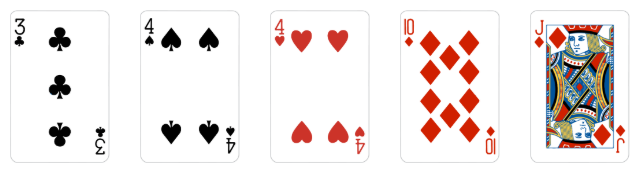
In 1 round, you experience the following change (the overlay):
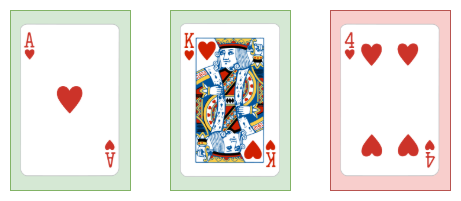
Your resulting hand would be this:
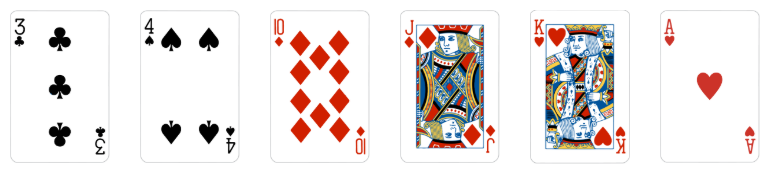
Both the initial hand and the resulting hand — the base and the variant — are clear to anybody who gets cards. At no point is there a poorly-maintained template.
This idea, of having the input and the variant be in the same language, is the core of declarative application management (DAM). As the white paper on this topic states, the ideal tool should contain the ability to instantiate multiple variants while exposing and teaching the Kubernetes APIs [1]. Templating does allow for variants, but it obfuscates the APIs.
Kustomize as an implementation of DAM
The tool built from the principles in the Declarative App Management white paper is Kustomize. In Kustomize you define a base — a set of Kubernetes resources. You then apply one or more overlays to customize the base in ways that you’d obviously want to in Kubernetes, like add resources or labels or annotations. You produce a variant, usually ready for a specific environment.
They key thing that makes this a great tool is that the input is crystal clear (it’s just normal Kubernetes manifests). Overlays are similarly easy to understand. The whole process is well-scoped and easily understandable—the tool is not doing more than it should.
Example
Here’s my own adapted version of Kustomize’s hello world, after playing around with it for a while. It’s a really fun tool to play around with.
Prerequisites
Install kustomize and kubectl. You can also optionally run a Kubernetes cluster.
$ brew install kustomize
$ brew install kubectl
$ kubectl config current-context
gke_atomic-commits_us-central1-c_my-first-cluster-1
Clone the repo
$ git clone <https://github.com/alexhwoods/kustomize-example.git>
...
$ kustomize build base
And you should see the full base kustomization. A kustomization is a kustomization.yaml file, or a directory containing one of those files. You can think of it as a general set of Kubernetes resources, with some extra metadata.
1
apiVersion: v1
2
data:
3
altGreeting: Good Morning!
4
enableRisky: "false"
5
kind: ConfigMap
6
metadata:
7
labels:
8
app: hello
9
name: monopole-map
10
---
11
apiVersion: v1
12
kind: Service
13
metadata:
14
labels:
15
app: hello
16
name: monopole
17
spec:
18
ports:
19
- port: 80
20
protocol: TCP
21
targetPort: 8080
22
selector:
23
app: hello
24
deployment: hello
25
type: LoadBalancer
26
---
27
apiVersion: apps/v1
28
kind: Deployment
29
metadata:
30
labels:
31
app: hello
32
name: monopole
33
spec:
34
replicas: 3
35
selector:
36
matchLabels:
37
app: hello
38
deployment: hello
39
template:
40
metadata:
41
labels:
42
app: hello
43
deployment: hello
44
spec:
45
containers:
46
- command:
47
- /hello
48
- --port=8080
49
- --enableRiskyFeature=$(ENABLE_RISKY)
50
env:
51
- name: ALT_GREETING
52
valueFrom:
53
configMapKeyRef:
54
key: altGreeting
55
name: monopole-map
56
- name: ENABLE_RISKY
57
valueFrom:
58
configMapKeyRef:
59
key: enableRisky
60
name: monopole-map
61
image: monopole/hello:1
62
name: monopole
63
ports:
64
- containerPort: 8080
We have a ConfigMap, a Service of type LoadBalancer, and a Deployment. Let’s deploy just the base, and see what we get.
# create a namespace to mess around in
$ kubectl create ns kustomize-example-only-the-base
# apply all resources in the kustomization to the cluster
$ kustomize build base | kubectl apply -n kustomize-example-only-the-base -f -
configmap/monopole-map created
service/monopole created
deployment.apps/monopole created
# is everything there?
$ kubectl get all -n kustomize-example-only-the-base
NAME READY STATUS RESTARTS AGE
pod/monopole-647458c669-hhkhr 1/1 Running 0 11m
pod/monopole-647458c669-k6d4c 1/1 Running 0 11m
pod/monopole-647458c669-zmcxg 1/1 Running 0 11m
NAME TYPE CLUSTER-IP EXTERNAL-IP PORT(S) AGE
service/monopole LoadBalancer 10.105.8.138 34.72.203.252 80:32142/TCP 11m
NAME READY UP-TO-DATE AVAILABLE AGE
deployment.apps/monopole 3/3 3 3 11m
NAME DESIRED CURRENT READY AGE
replicaset.apps/monopole-647458c669 3 3 3 11m
Now if I go to the load balancer’s external IP, I see a simple website.

Overlays
Now let’s add a very simple overlay. An overlay (in Kustomize) is a kustomization that depends on another kustomization.
1
.
2
├── base
3
│ ├── configMap.yaml
4
│ ├── deployment.yaml
5
│ ├── kustomization.yaml
6
│ └── service.yaml
7
└── overlays
8
└── dev
9
└── kustomization.yaml
Here is overlays/dev/kustomization.yaml
1
resources:
2
- ../../base
3
commonLabels:
4
variant: dev
Let’s look at the diff between the base and the overlay
1
$ diff <(kustomize build base) <(kustomize build overlays/dev)
2
8a9
3
> variant: dev
4
15a17
5
> variant: dev
6
24a27
7
> variant: dev
8
31a35
9
> variant: dev
10
38a43
11
> variant: dev
12
43a49
13
> variant: dev
That’s it—we just replaced the variant label with the value dev. Now let’s use it to actually make a change to our app. We’ll build another overlay, for the staging environment. Here’s our kustomization.yaml.
1
namePrefix: staging-
2
commonLabels:
3
variant: staging
4
resources:
5
- ../../base
6
patchesStrategicMerge:
7
- map.yaml
And the new ConfigMap that we’re merging with the one in the base:
1
apiVersion: v1
2
kind: ConfigMap
3
metadata:
4
name: monopole-map
5
data:
6
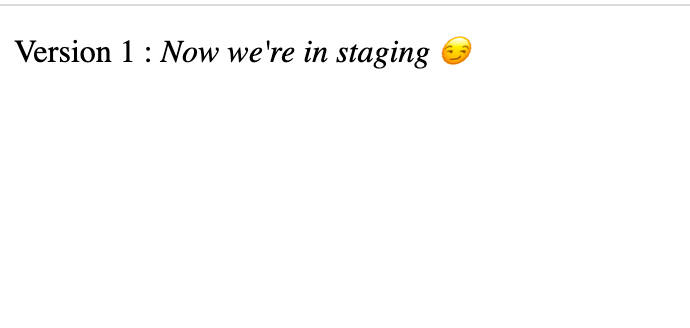
altGreeting: "Now we're in staging 😏"
7
enableRisky: "true" # italics! really risky!
We can see the effects on our website
What else can we do with a kustomization?
Here’s a non-exhaustive list:
- Target multiple resource sources to form the base
- Add common labels or annotations
- Use CRDs
- Modify the image or tag of a resource
- Prepend or append values to the names of all resources and references
- Add namespaces to all resources
- Patch resources
- Change the number of replicas for a resource
- Generate Secrets and ConfigMaps, and control the behaviour of ConfigMap and Secret generators
- Substitute name references (e.g. an environment variable)
The more I think about this, the more obvious and appealing the idea is. Although I’m sure I have many of these experiences in front of me:
1
template:
2
metadata:
3
labels:
4
app: {{ template "datadog.fullname" . }}-cluster-agent
5
{{- if .Values.clusterAgent.podLabels }}
6
{{ toYaml .Values.clusterAgent.podLabels | indent 8 }}
7
{{- end }}
8
name: {{ template "datadog.fullname" . }}-cluster-agent
9
annotations:
10
{{- if .Values.clusterAgent.datadog_cluster_yaml }}
11
checksum/clusteragent-config: {{ tpl (toYaml .Values.clusterAgent.datadog_cluster_yaml) . | sha256sum }}
12
{{- end }}
13
{{- if .Values.clusterAgent.confd }}
14
checksum/confd-config: {{ tpl (toYaml .Values.clusterAgent.confd) . | sha256sum }}
15
{{- end }}
16
ad.datadoghq.com/cluster-agent.check_names: '["prometheus"]'
17
ad.datadoghq.com/cluster-agent.init_configs: '[{}]'
18
ad.datadoghq.com/cluster-agent.instances: |
19
[{
20
"prometheus_url": "http://%%host%%:5000/metrics",
21
"namespace": "datadog.cluster_agent",
22
"metrics": [
23
"go_goroutines", "go_memstats_*", "process_*",
24
"api_requests",
25
"datadog_requests", "external_metrics", "rate_limit_queries_*",
26
"cluster_checks_*"
27
]
28
}]
29
{{- if .Values.clusterAgent.podAnnotations }}
30
{{ toYaml .Values.clusterAgent.podAnnotations | indent 8 }}
31
{{- end }}
Sources
- Declarative App Management
- Kustomize docs