40
40 dense Tops
Qualcomm®️ HEXAGON™
With VENTUNO Q, AI gets physical
Optimized for local LLM, agentic AI, and computer vision, empowering AI users to become AI creators.
The accelerated dual-brain architecture for real-world AI
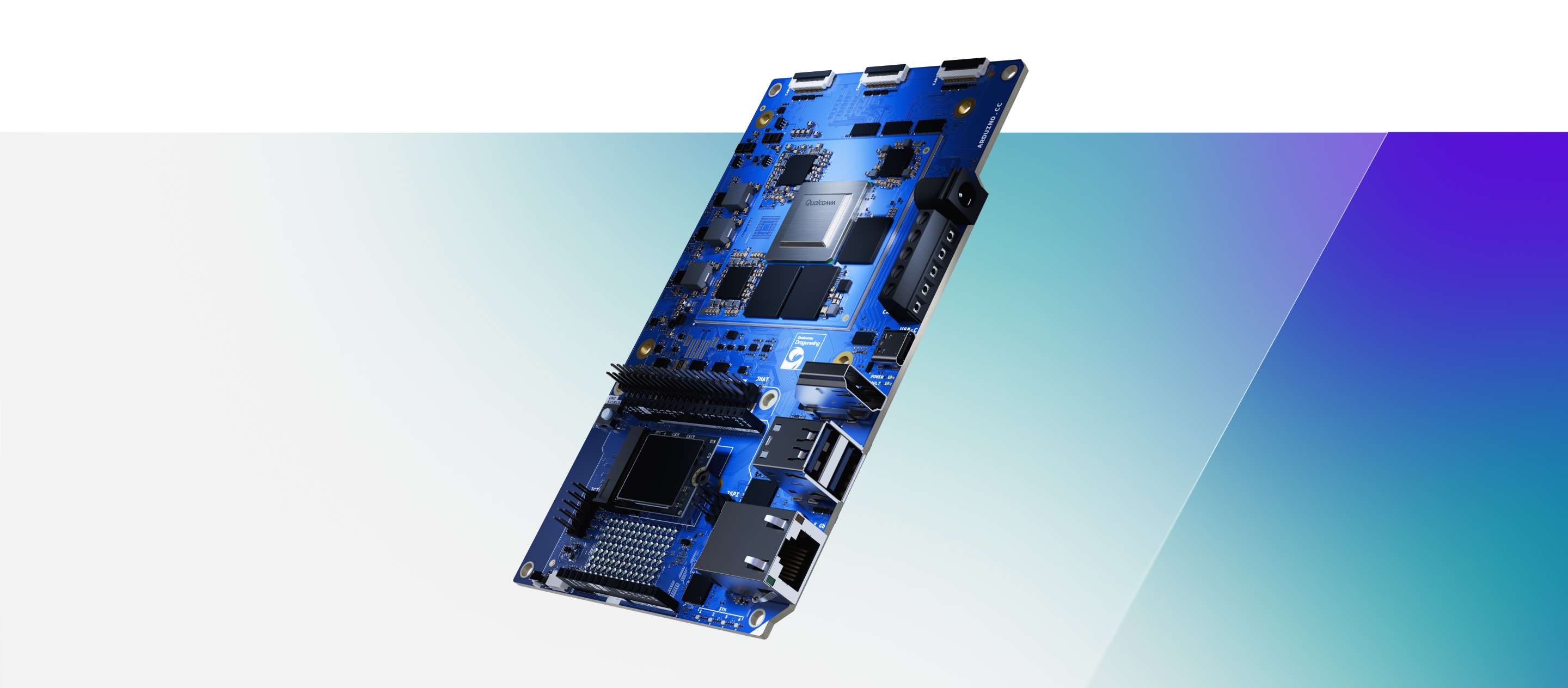
VENTUNO Q brings perception, decision, and action onto a single board – eliminating complexity, latency, and the cost of multi-device setups. It combines a Qualcomm Dragonwing™ IQ8 processor and STM32H5 microcontroller, which communicate seamlessly via RPC (Remote Procedure Call) bridge.
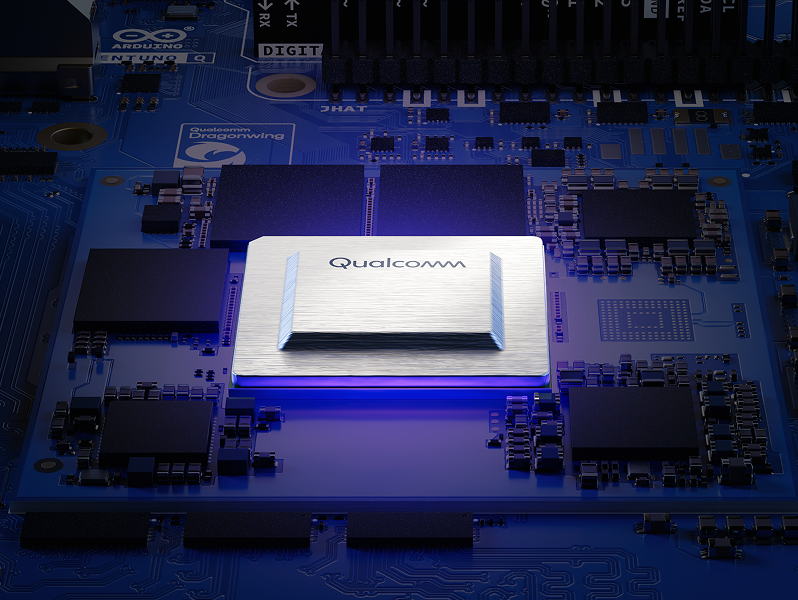
The AI Brain
The Dragonwing IQ-8275 processor delivers NPU, CPU, and GPU for complex neural network inference – with an outstanding 40 dense TOPS.
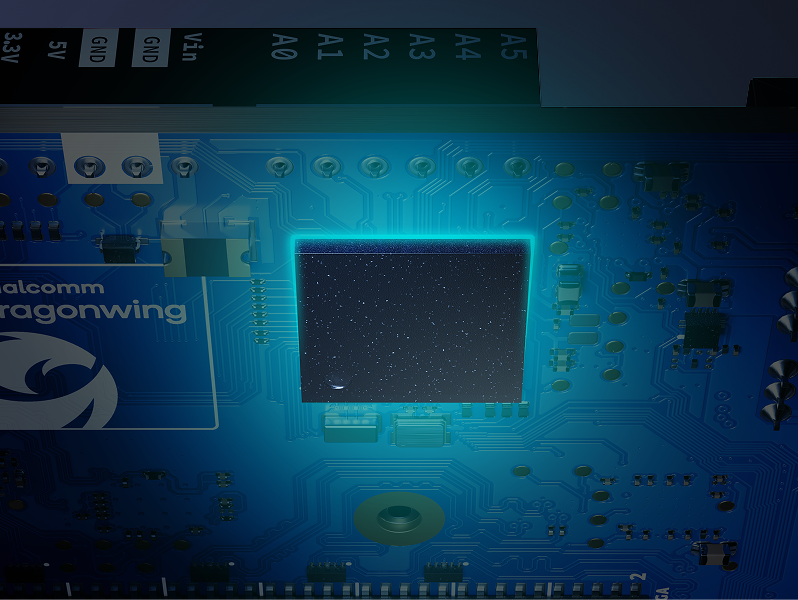
The Action Brain
The STM32H5F5 microcontroller enables sub-millisecond response to guarantee stable, deterministic control for robotics, motion systems, and industrial interfaces.
Uncompromising silicon & software
An integrated ecosystem mapping edge intelligence directly onto robust, physical actuation units.
40
40 dense Tops
Qualcomm®️ HEXAGON™
16
16 GB LPDDR5 RAM
Shared by NPU, CPU, and GPU
x8
Octa-core
QualcomM® Kryo™ up to 2.36 GHz
<1
<1 ms
STM32H5F5 at 250 MHz
GraphicsQualcomm® Adreno™ 623
ExpansionM.2 Slot for NVME (PCIe Gen.4)
OSUbuntu, Zephyr (and Debian coming soon)
Versatile, ready-to-run AI models open infinite possibilities
Accelerate development with a wide range of AI models optimized for the integrated NPU of VENTUNO Q – or customize for your unique challenges! Powered by Edge Impulse and Qualcomm®️ AI Hub, this is your gateway to extensive AI libraries.
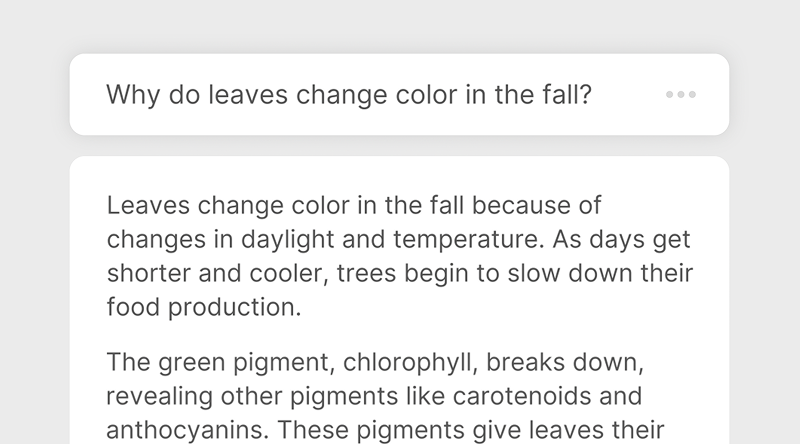
Local LLMs
Use Qwen 4 or Gemma 4 for sophisticated natural language understanding entirely on-device, without cloud dependencies or data transmission.

Local VLMs
Models like Qwen 3 VLM combines visual perception with natural language understanding for image captioning, scene description, OCR, and more.

TTS & ASR
Leverage Melo TTS and Whisper to allow offline devices to understand natural speech, transcribe, and give human-like responses.

Gesture recognition
Recognize hand gestures, finger movements, and sign language for touchless interfaces and human-robot interaction using MediaPipe.
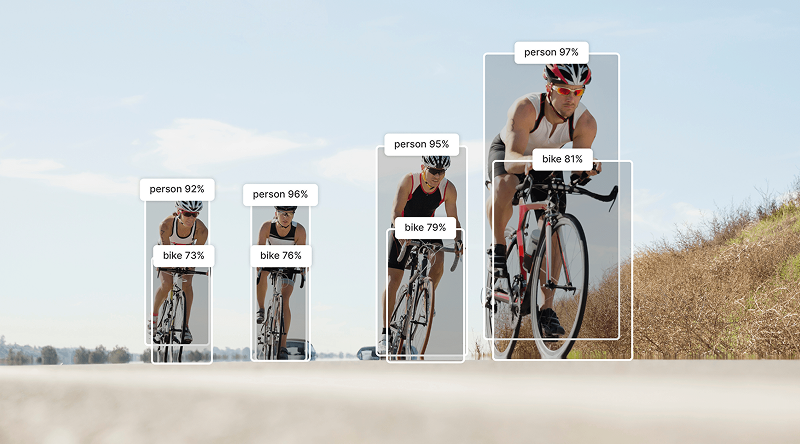
Object tracking
Use YOLO-X (You Only Look Once - eXtended) to track people, vehicles, or objects in real-time across multiple camera views.
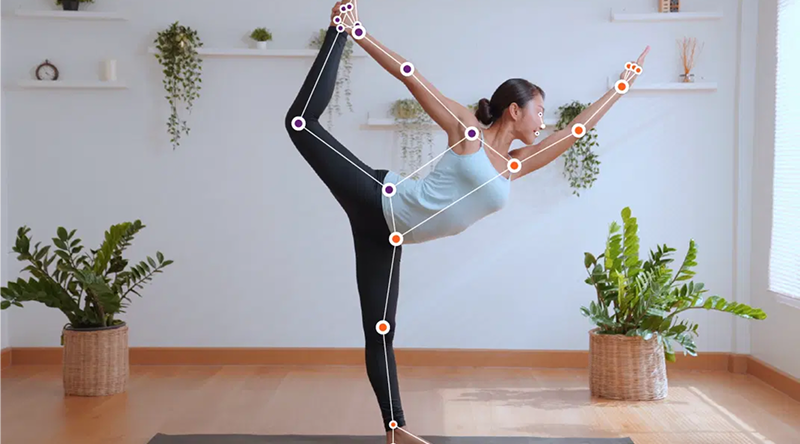
Pose detection
Track body pose, joint positions, and movement patterns with models like PoseNet. For fitness applications, safety monitoring, and interactive gaming.
4 ways you can build with AI

Play
Open a curated example and watch AI run in real time, no code required.

Tinker
Modify a ready-to-use example: adjust parameters, tweak the code, instantly update your app.

Shape
Bring your own model from Hugging Face or Qualcomm AI Hub, or train one with Edge Impulse.

Master
Customize using your own toolchains, and build advanced pipelines with the full power of Linux.
Stay tuned for more updates in AI Models

AI-powered systems
AI-capable assistants that operate entirely offline, ensuring complete data privacy. Perfect for smart kiosks, healthcare assistants, traffic flow analysis, and more.

Robotics and motion control
The complete robotics stack: vision processing for environmental awareness combined with deterministic motor control for precise manipulation and navigation.

Edge AI vision and sensing systems
Automated quality control, predictive maintenance, and process optimization: all while meeting industrial reliability, safety, and connectivity standards.

Education & research
A powerful, flexible platform for prototyping algorithms, publishing breakthrough research, and teaching advanced AI and robotics concepts.
Explore all the spectacular specs
VENTUNO Q was designed with all the hardware features to make it a powerful and accessible edge AI platform, ready to go from prototyping to production with zero friction.
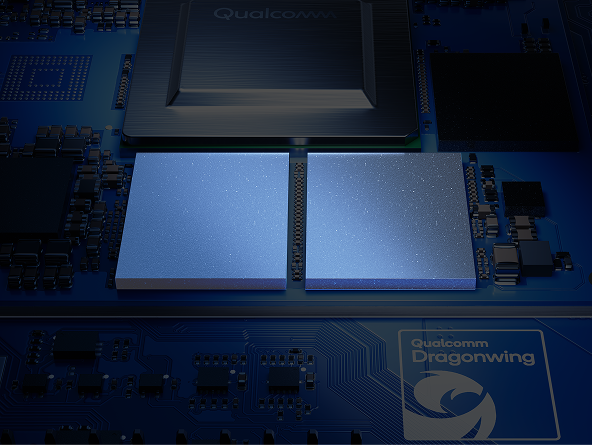
16 GB RAM
High-bandwidth 16 GB RAM enables concurrent multi-model AI inference.
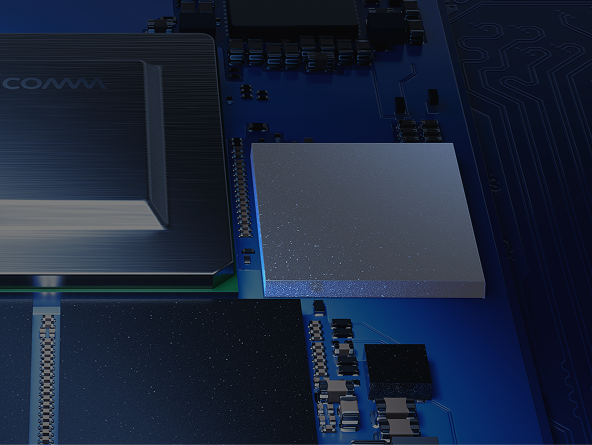
64 GB expandable storage
Industrial-grade eMMC, plus M.2 connector for NVMe Gen.4 storage expansion.
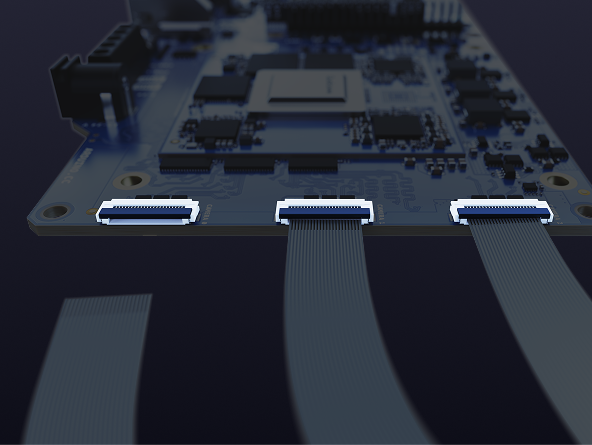
Triple MIPI-CSI camera support
Three 4-lane interfaces for 360° awareness, stereo depth perception, and multi-angle inspection.
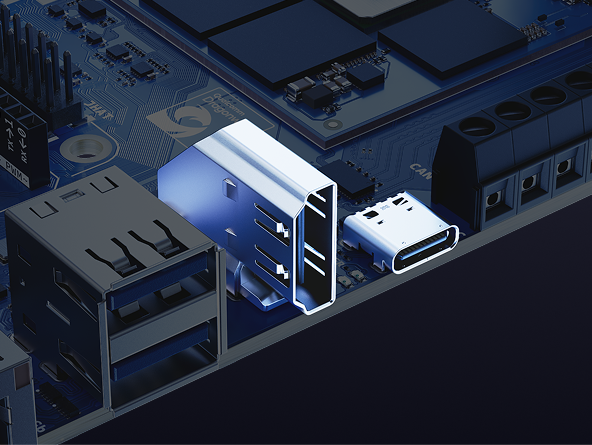
Display outputs
MIPI-DSI for touchscreens and interactive panels, HDMI for monitors and projectors, USB-C DisplayPort Alt Mode for versatile video output.
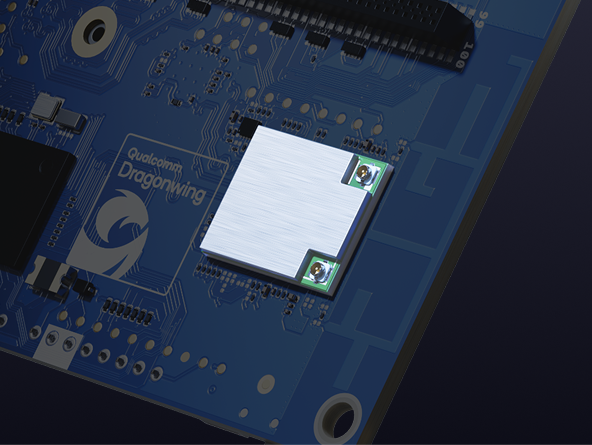
Wireless & wired networking
Tri-band Wi-Fi®️ 6 (2.4/5/6 GHz) and Bluetooth®️ 5.3 for wireless connectivity. 2.5 Gb Ethernet.
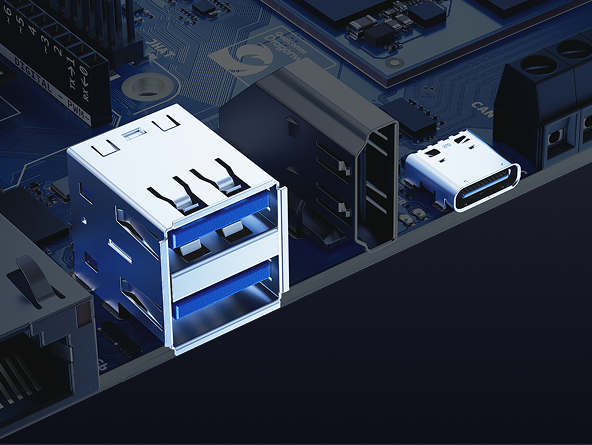
Universal USB connectivity
USB-C for high-speed vision and audio data transfer. Dual USB-A 3.0 ports for peripherals and storage.
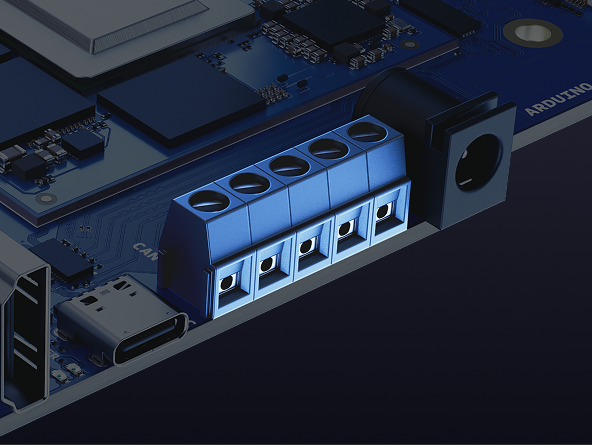
Industrial I/O & control
CAN-FD for professional motor controllers and industrial networks. PWM and deterministic GPIO for sub-millisecond response.
Unmatched hardware compatibility for rapid innovation
VENTUNO Q delivers unmatched ecosystem compatibility, extensive memory and storage, and professional-grade expansion options. Because Innovation accelerates when you have the right tools at your fingertips.

Arduino® UNO™ shields support
Native compatibility with all UNO shields, motor controllers, sensors, and wireless interfaces work out of the box.

Raspberry Pi® Hat compatibility
Standard 40-pin GPIO header provides full electrical and mechanical compatibility with Raspberry Pi accessories.

Arduino® Modulino™ nodes & Qwiic connectivity
Solder-free Qwiic connector supports chainable Modulino nodes and hundreds of Qwiic-compatible sensors with polarized, error-proof connections.

High Speed Media Carrier Support
Advanced carrier headers (JMEDIA, JOMEGA, JMISC) provide dedicated lanes for high-speed cameras, displays, multi-axis control, and sensor fusion.
| Componente | Specifiche |
|---|---|
| Microprocessor (MPU) | Qualcomm Dragonwing™ IQ8 (IQ-8275): • CPU: 8-core Qualcomm® Kryo™ • GPU: Qualcomm® Adreno™ 623 • NPU: Qualcomm® Hexagon™ 40 dense TOPS • Qualcomm Spectra 692 ISP OS: Ubuntu or Debian upstream |
| Microcontroller (MCU) | STM32H5F5: • Arm® Cortex® M33 at 250MHz • 4MB flash • 1.5MB RAM OS: Arduino core on Zephyr |
| RAM | 16GB LPDDR5 |
| Storage | • 64GB eMMC • M.2 connector for NVME Gen.4 external storage |
| Connectivity | • Wi-Fi® 6 2.4/5/6 GHz with onboard antenna • Bluetooth® 5.3 with onboard antenna • 1x 2.5Gbit RJ45 |
| Camera | • USB camera support • 3x MIPI CSI connectors muxed with 2x MIPI CSI on JMEDIA header |
| Video | • 1x HDMI muxed with MIPI DSI on JMEDIA header • Video output (DP Alt mode) support via USB-C • MIPI DSI pins on JMEDIA header |
| Audio | 2x Microphone IN / Headphone OUT / Ear OUT / Line OUT on JMISC header |
| Power Supply | • From USB-C connector 5 VDC max at 3 A • 5.5x2.1 mm Power Jack 12-24 VDC • Screw Terminal 7-24 VDC • 7-24 V on JOMEGA |
| USB | • 1x USB-C port with host/device role switching, power role switch and video output • 2x USB 3.0 Type A • 2x USB 3.0 on JOMEGA header |
| CAN | • 1x CAN-FD PHY on screw terminal • 3x CAN-FD (no PHY) on JOMEGA header • 1x CAN-FD (no PHY) on UNO Shield headers |
| Dimensions | • 160x100x25.8 mm |
Frequently Asked Question
Can I develop with standard Linux tools, instead of the Arduino App Lab?
Yes, VENTUNO Q is a real, standard Ubuntu computer. This means you can use standard IDEs such as VS Code, PyCharm, Eclipse, Vim, Emacs, Python virtual environments and package managers, Docker containers for isolated environments, SSH remote development and headless operation. Any framework or toolchain you prefer! Arduino App Lab is the fast path, not a requirement.
Which AI models does VENTUNO Q support?
VENTUNO Q delivers up to 40 dense TOPS of AI compute, supporting Qwen 3 4B LLM; Qwen 2.5 7B and 3 4B VLM; Gemma 4 E2B and E4B; Whisper ASR; Melo and Piper TTS; YoloX small object detection; MediaPipe gesture recognition; and more.
What frameworks does VENTUNO Q support?
Get started with ready-to-run Bricks, optimized for the onboard NPU through Qualcomm® AI Hub. For generative AI use cases, VENTUNO Q supports LLM inference via llama.cpp and GGUF models, ideal for running locally at the edge. You can also run these models with GenieX, the open-source Gen AI runtime by Qualcomm. At the same time, you can work with familiar frameworks like PyTorch and other advanced AI stacks, enabling custom model development, optimization, and deployment tailored to specific applications.
What makes VENTUNO Q different from other edge AI boards?
VENTUNO Q is designed to take you from idea to deployed application – not just working prototype. At the heart of this experience is Arduino App Lab, a complete end-to-end platform for building, deploying, and managing AI applications that goes well beyond what any other edge AI board offers today, making professional-grade edge AI accessible at every skill level.
A dual-brain architecture of VENTUNO Q combines up to 40 dense TOPS of AI compute with a dedicated real-time microcontroller, enabling both intelligent inference and deterministic actuation in a single board. This is ideal for robotics, industrial control, and any application where AI must interact with the physical world. Broad ecosystem compatibility with UNO shields, Raspberry Pi Hats, and Modulino nodes keeps prototyping fast and familiar.
Which operating systems does VENTUNO Q support?
VENTUNO Q ships with pre-loaded Ubuntu, distributed by Canonical, and bundled with Ubuntu Pro license that delivers enterprise-grade security updates - which make it immediately viable for professional, commercial, and industrial developers. It supports Debian (coming soon) with full upstream. It supports for embedded-focused development. The microcontroller side of its dual architecture runs the Arduino Core on Zephyr RTOS.
How much RAM and storage does VENTUNO Q have?
VENTUNO Q comes with 16 (2 X 8) GB of LPDDR5 RAM and 64 GB of eMMC onboard storage, working together so you can run real AI on the board — on the edge and offline.
16 GB RAM is your fast working memory — enough to load generative models (LLMs and VLMs like Qwen 3 and Gemma 4, plus larger GGUF models), run inference, and keep your app and Ubuntu going all at once. That's roughly double the memory of typical 8 GB edge boards, so you can work with bigger models and richer multimodal pipelines without hitting a ceiling.
64 GB onboard storage is where Ubuntu, your AI models, your application, and your data live. Because VENTUNO Q boots and runs from fast, soldered-down storage rather than a removable microSD card, you get reliable, repeatable boots and performance built to ship and stay in the field.
How much storage can I add beyond the onboard 64 GB?
The M.2 connector supports NVMe SSDs.
Can I train my own custom AI models for VENTUNO Q?
Absolutely. You can train your own models on 3rd-party and custom inference engines. We recommend using Edge Impulse’s integrated platform to upload your training data, train models on the cloud infrastructure, and automatically optimize and quantize for VENTUNO Q hardware – then you can deploy directly into Arduino App Lab with one click!
Does VENTUNO Q support ROS (Robot Operating System)?
Yes, VENTUNO Q is compatible with ROS 2.
Can I take a VENTUNO Q prototype to production?
Yes. Through the Works with Arduino™ Program, VENTUNO Q gives you a clear path from prototyping to production. Develop and validate on VENTUNO Q, then move to a third-party SOM built on the same Qualcomm Dragonwing™ IQ8 — scaling your product while preserving your software investment, since compatible Arduino Apps port across with zero code changes. Certified partners include SECO, with its SOM-SMARC-Dragonwing-IQ8 and Clea software platform, and Toradex, with its Aquila IQ8 and Torizon platform. And more OEMs are collaborating with Arduino and Qualcomm to bring additional Works with Arduino certified products to market.
Learn more about the Works with Arduino Certification Program.
Qualcomm branded products are products of Qualcomm Technologies, Inc. and/or its subsidiaries. Arduino, VENTUNO, UNO, and Modulino are trademarks or registered trademarks of Arduino S.r.l.