5G, AI, and quantum computing are pushing RF interconnects to their limits. Learn how engineers are evolving connector designs to ensure signal integrity in compact, high-speed systems.
Radio frequency (RF) systems are evolving fast, driven by the demands of high-frequency technologies like 5G, AI and quantum computing. As data rates increase and system architectures decrease, the physical interfaces that carry signals between components have a larger influence over system performance
In this article by connector specialist PEI-Genesis, we explore how these shifts are redefining RF connector requirements, particularly for next-generation technologies.
The need for higher data rates and compact architectures is shaping RF design decisions across wireless infrastructure, defence electronics and industrial automation. Systems that once allowed for significant surplus capacity must now operate in closely defined limits. The caveat is, all components must remain future-proofed against system failure and be safe for use.
Design engineers are monitoring how RF signals are launched and protected as they move through complex assemblies to get a better handle on connector design.
5G Changed Hardware Requirements
The shift towards higher-frequency design began with 5G, which pushed wireless systems to operate at a much higher radio frequency than previous generations. This changed how networks were hardwired. Where previously, 4G operated below 6 GHz, a range that offered long transmission distances and good penetration through walls, 5G enabled faster speeds and lower latency, but over shorter ranges with weak penetration.
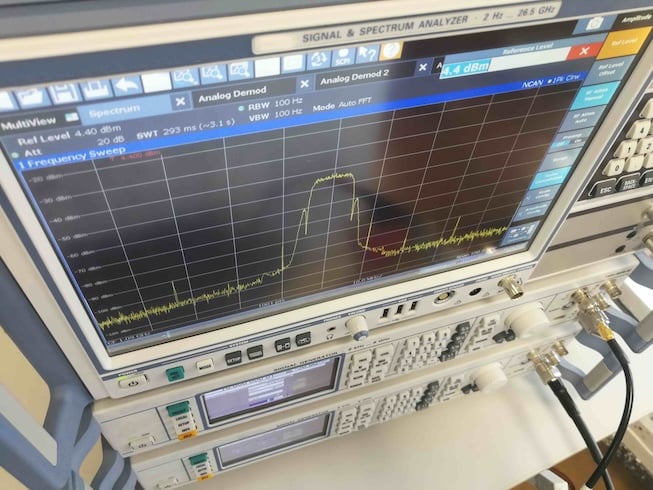
Higher frequency designs at the 5G level are making connector design more challenging. Image used courtesy of PEI-Genesis.
To keep signals clear and reliable, every connector needs to be carefully designed to prevent interference or distortion. As signals move to higher frequencies, this becomes much harder to control, especially in complex systems like phased-array radar and 5G test equipment, where even small imperfections can disrupt performance.
AI and Its Impact On Connector Design
The ‘AI Era’ has also affected connector design. With AI use across networks increasing, the movement of data between sensors, accelerators and control systems puts pressure on the signal paths that connect them. These demands are most visible in dense architectures, where high-speed links operate in close proximity.
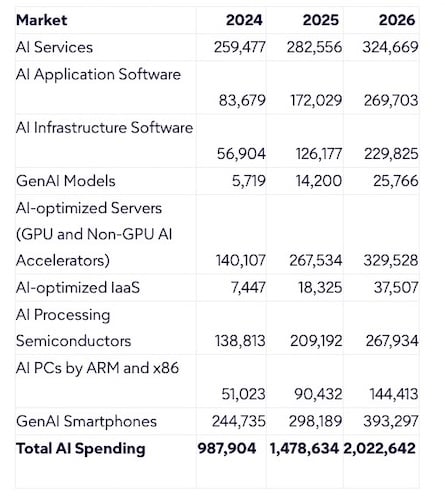
Table shows AI spending in IT markets, worldwide, 2024-2026 (millions of U.S. dollars). Image used courtesy of Gartner.
Deployment of these technologies is by no means slowing down. In fact, Gartner’s report on AI predicted that total AI spending would surpass $2 trillion (USD) by the end of 2026, led by integration of AI in smartphones, PCs and infrastructure. Already, connector designers are seeing increased demand for RF interfaces that support high data rates, while maintaining predictable performance in compact systems.
Alongside AI, there is the advent of quantum computing. With a £2 billion cash injection by the UK Government proposed in large-scale quantum computing infrastructure by the early 2030s, engineers are having to think about future RF requirements.
Quantum Computing and Material Selection
With many quantum systems still in development, there is now a greater emphasis on precision and material behaviour. RF interconnects for quantum computing must operate at cryogenic temperatures, manage high-density GHz-level signals and maintain non-magnetic, low-loss performance. Inconsistencies in material selection can introduce variability, making it difficult to correct later in the design cycle when specialised material requirements narrow the margin for error.
At higher frequencies, weaknesses in RF interfaces surface quickly. Insertion loss, impedance mismatch and unwanted coupling distort signals in ways that compromise timing accuracy and system stability, particularly as architectures scale within constrained physical spaces.
Furthermore, mechanical stress and environmental exposures can influence how consistently an interconnect behaves, often impacting system reliability. It’s important that engineers are addressing performance as part of the initial system architecture rather than relying on mitigation later in the design cycle.
What is Changing for RF Connectors?
Connector manufacturers are responding to these next-generation technologies by refining designs to support higher frequencies within smaller footprints. These designs include multi-port configurations and reduced-profile interfaces to help manage density without sacrificing performance. Meanwhile, advances in geometry control, shielding and material selection allow for interconnects to operate reliably at the millimetre-wave frequencies needed for 5G and quantum computing.
Blind-mate RF interfaces are a good example of what is already available for wireless infrastructure operating at higher frequencies. Designed for applications where controlled impedance and mechanical tolerance matter, their small form factor supports higher port counts, and their blind-mate capacity reduces alignment complexity during assembly. These connectors are well-suited to platforms like sensing systems and defence electronics, which can be demanding, often mission-critical, environments.
Material selection is also an important consideration. Dielectrics, contact plating and housing materials influence loss characteristics and signal stability, particularly across a spectrum of temperatures or under mechanical stress. For applications that extend beyond controlled environments, high-frequency performance must coexist with resistance to vibration and wear.
These considerations also shape how interconnects need to be tested once they are integrated into the wider assembly.
Testing Beyond the Datasheet
RF connector selection cannot rely solely on nominal frequency ratings. A connector may be specified for a particular operating range, but its real-world performance will depend on how it is integrated within the wider assembly. Cable choice, PCB transitions, grounding, shielding and adjacent components can all affect signal integrity.
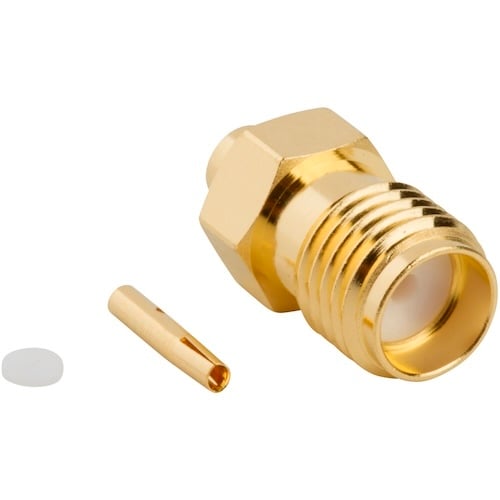
Available from PEI Genesis, the Amphenol RF SMA connectors are well suited for RF and microwave applications such as laboratory testing and industrial infrastructure. Image used courtesy of Amphenol RF.
This is especially important in systems operating at millimetre-wave frequencies, where small variations in assembly or geometry can introduce impedance mismatch or unwanted coupling that may be less significant at lower frequencies. Testing should reflect the conditions the finished system will face, rather than assessing the connector as an isolated component.
For example, engineers may need to examine how a connector performs after repeated mating cycles or across changing temperatures. In high-density platforms, it may also be important to assess potential interference between neighbouring signal paths, particularly where multiple RF connectors are positioned closely together.
Early testing can identify issues before they become embedded in the final architecture. This gives design teams more opportunity to adjust layouts and revise shielding arrangements without creating costly delays later in development. As RF systems become more compact and operate across wider frequency ranges, validation increasingly needs to form part of interconnect design rather than being treated only as a final quality control step.
How to Get the Right Connector Design
From 5G to AI and quantum computing, these trends place greater emphasis on decisions made early in the design process. At higher frequencies, interconnect selection influences layout options and long-term serviceability, making early evaluation essential for reducing uncertainty. Good communication between system designers and connector experts helps ensure all requirements are understood before layouts are finalised, supporting more stable outcomes as systems combine high-speed data transmission within narrow design constraints.
Originally driven by wireless network requirements, the ever-changing RF interconnect design now extends across many technologies. To deliver consistent performance, engineers must factor in RF limitations as system frequency and complexity continue to grow across a plethora of applications.
To find out more about high-frequency RF interconnect solutions, visit PEI-Genesis.