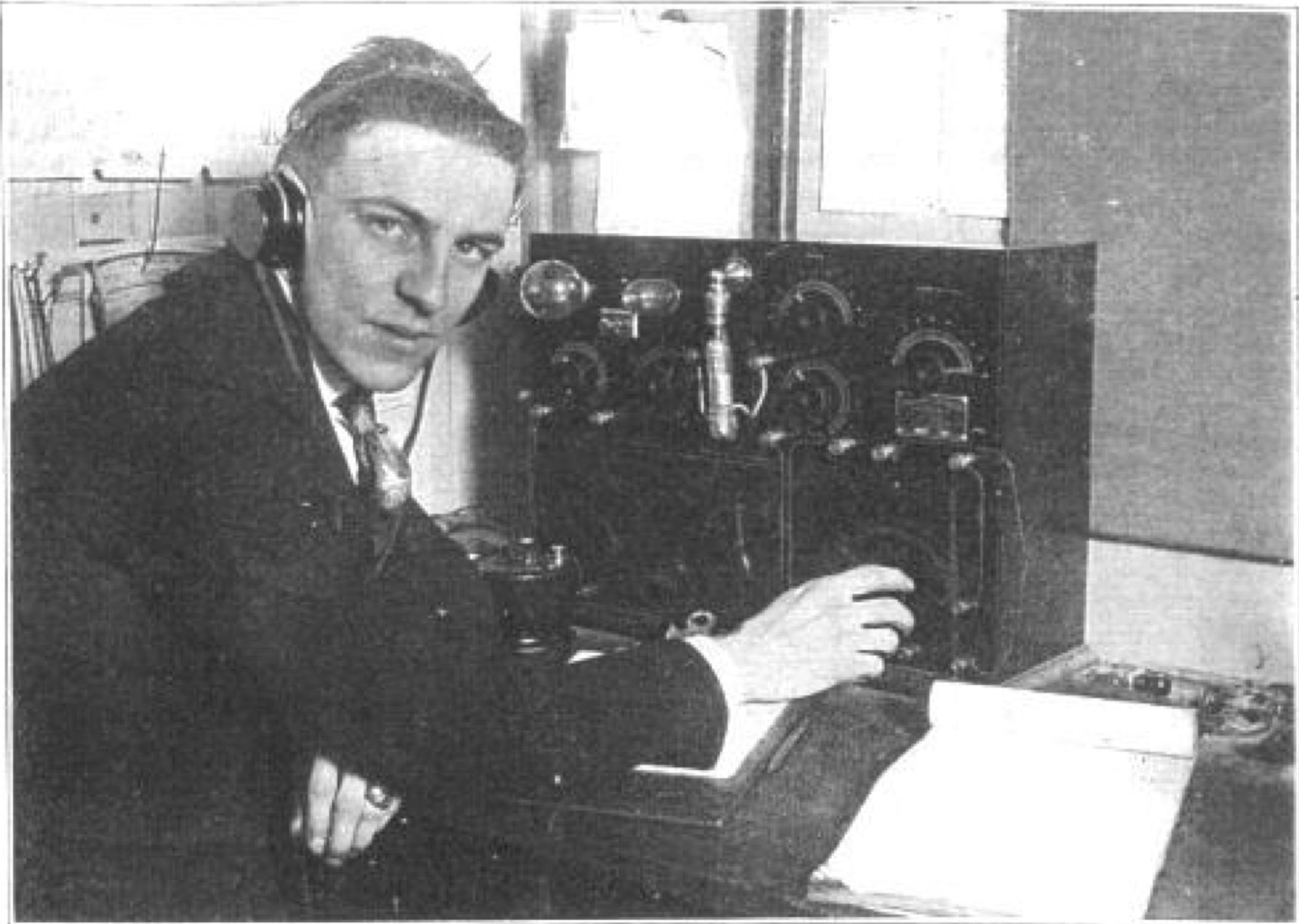
Ralph H.G. Mathews was born in 1897 in Chicago. From all sources available, Mathews was quite precocious having built his first radio station at just eleven years of age in Springfield, Ohio (call sign 9ZN). In 1912 while attending the Lane Technical High School in Chicago, Mathews built his first radio transmitter. By 1917, he was on the ARRL board of directors.
Karl Hassel was born in Sharon, Pennsylvania on the 25th of January in 1896. It was through amateur radio that these two gentlemen met despite the distance between them. The two men served in the US Navy during World War 1 at the Great Lakes Naval Training Station. I can’t imagine what it would be like, at that time, to have met only over wireless, and then to serve alongside one another.

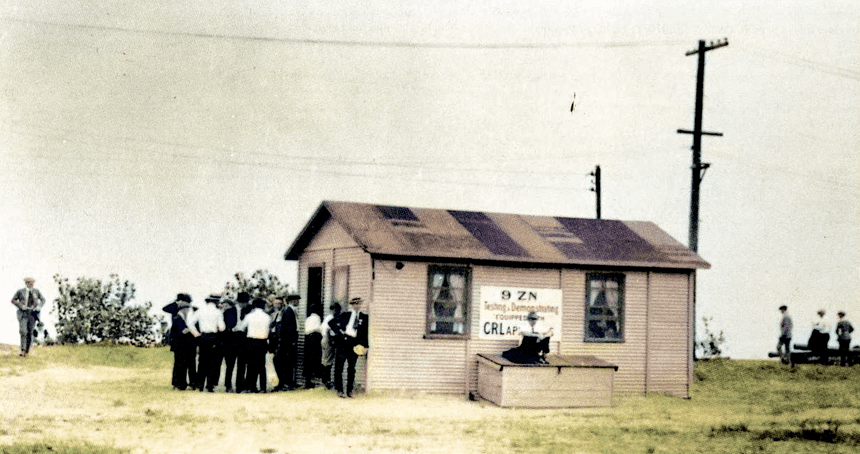
In 1918, the two men formed the Chicago Radio Laboratory in Mathews’ apartment at 1316 W. Carmen Avenue. By 1919, they had produced a catalog of parts (some of their own design, some the designs of others) that was distributed across the USA. Their sales funded an expansion to 5525 N. Sheridan Road (owned by the Edgewater Beach Hotel). This building could be described either as a detached garage or as a shack. It was roughly fourteen by eighteen feet. Half of the building served as Mathews’ ham shack, while the other half was used to produce radios with Bakelite casings and radio equipment. Eugene F. McDonald Jr joined the company in 1920, and the company moved to 6433 N. Ravenswood Avenue in 1921. Hugh Robertson and Paul Klugh joined not long after. In 1922, Chicago Radio Lab was granted a broadcast license (WJAZ). The company reincorporated as Zenith (based on Mathews’ call sign) in 1923.
Zenith went from producing just five radios each week to producing fifty, and they accomplished much quite quickly. Zenith created the first portable radio in 1924, the first AC radio in 1925, the first radio with push-button tuning in 1927, several innovations in both TV broadcasting and in TV sets, and then the FCC adopted Zenith’s FM stereo system as a standard in 1961.
As for Mathews, he didn’t stay with the company. His daily work ended in 1928, and he began a consultancy, then an advertising agency, and then he was back in the Navy for World War 2. Following the war in 1954, he worked for Magnavox, then Westinghouse in 1957. He retired in 1967, moved to Mexico, and became involved with St. Andrew’s Anglican Church in Jalico.
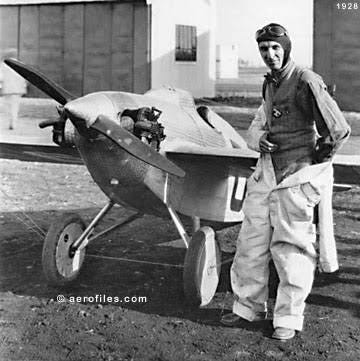
Edward Bayard Heath was born on the 17th of November in 1888 in Brooklyn to Clark Heath and Ada Johnson. The Heathkit website says his first airplane was built in 1906 while all other sources state 1909. What is far more certain is that Heath’s first aircraft was based upon the Bleriot monoplane design. In 1912, he acquired Bates Aeroplane Company in Chicago and created the E.B. Heath Aerial Vehicle Company in 1913. The company began manufacturing aviation equipment and parts. It was around this same time that he created his second airplane. World War 1 was good for business, and 1918 saw his third design, the Feather, come to market. This plane was small and light, and it was marketed as being cheap enough for any man to buy. Unfortunately, the end of the war flooded the market with cheap military planes. The Feather was ended, and Heath began to teach young pilots instead. The company became the Heath Airplane Company, and in 1921, they released the Favorite. This was a biplane design. The major success, however, was the Parasol in 1926. This was a monoplane, and the company made blueprints available for people to build the plane themselves. Successive iterations and improvements on the design followed.
In 1931, the company went bankrupt following the passing of Mr. Heath. The company was then purchased by Walter Clinnin who moved the company to Niles, Michigan, changed the name to International Aircraft Corporation, invested quite a bit in the Chicago World’s Fair, lost his money, and the business was bust, yet again, by 1934.
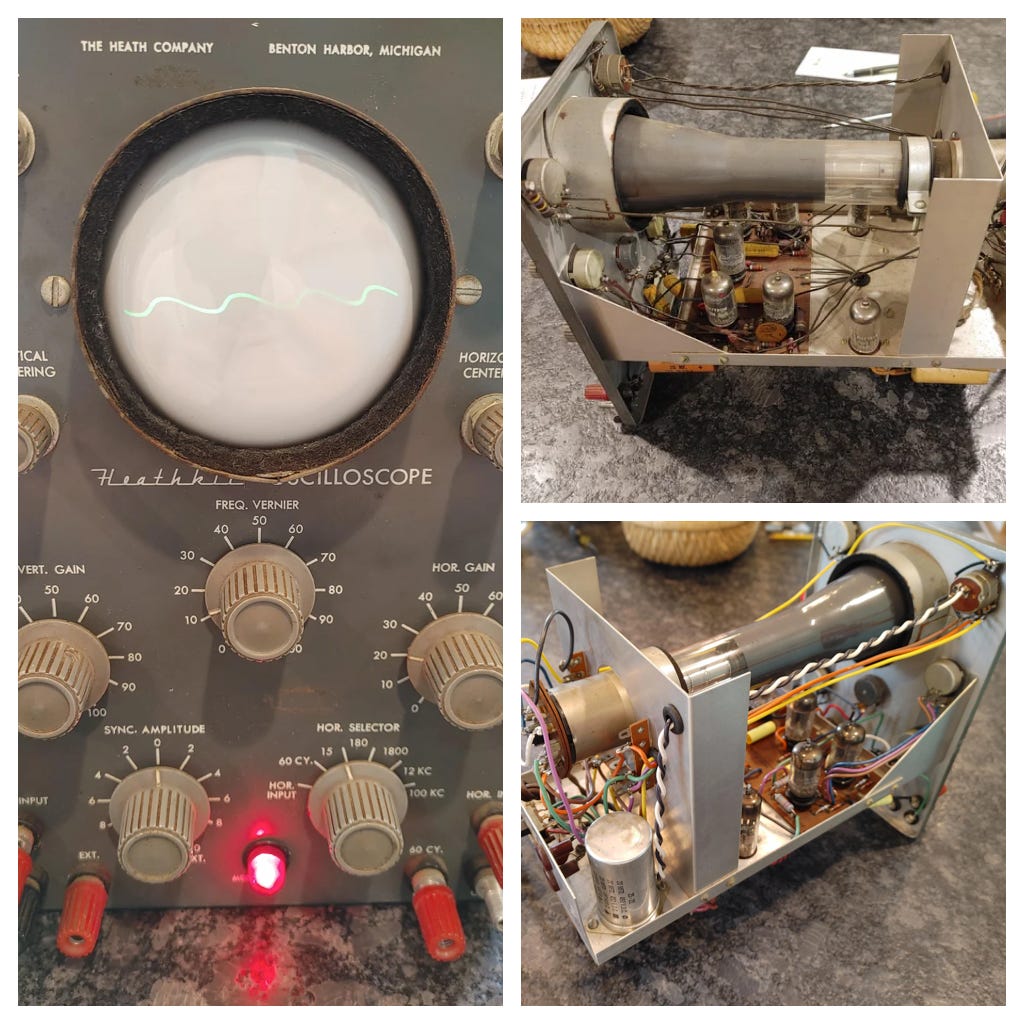
In 1935, Howard Anthony bought the company, changed the name to Heath Aircraft Company, and moved it Benton Harbor. The company was in the business of aircraft parts until the end of the Second World War, but they’d expanded to include the electronics now showing up on aircraft (especially radios). With the end of the war, many electronics parts could be had quite cheaply, and this brought the company into test equipment. With a large number of CRTs available, Anthony produced an oscilloscope in kit form. This was the O-1 oscilloscope kit of 1947, and its success changed Heath Aircraft into the Heath Company, and from an aircraft company, into an electronics company. Following oscilloscopes, the company added more test equipment, amateur radio, hi-fi, and more products besides. One of the keys to the company’s success was the quality of the instruction manuals. These manuals were step-by-step, and allowed beginners and hobbyists to learn electronics.
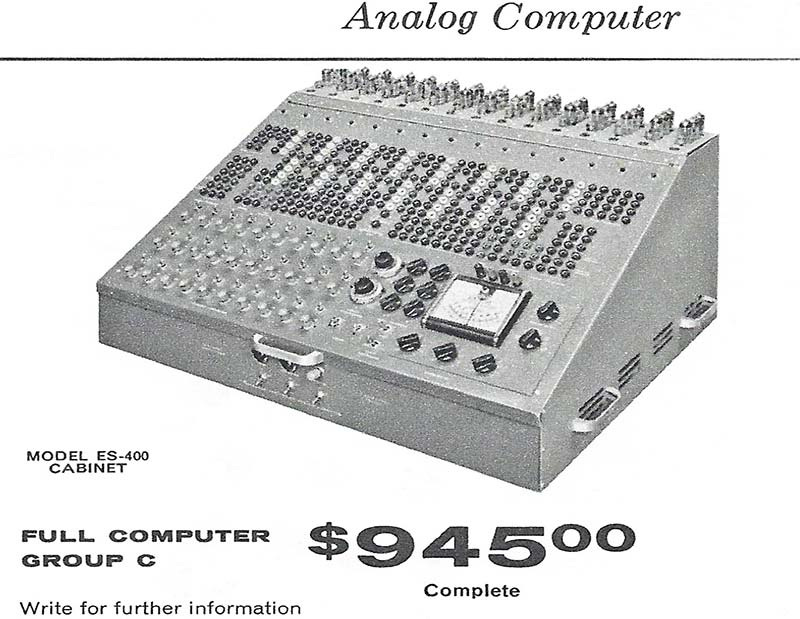
Heathkit’s first computer had been introduced in 1956. This was an analog computer, the ES-400 (occasionally referred to as the H-1), sold for $945 (around $11,638 in 2026). It weighed about 168 pounds, consisted of around seventy-three vacuum tubes total, and dissipated about 450 watts. The company sold about 325 of these (references list 250 to 400). It was built of the ES-2 applier PSU, the ES-50 reference PSU, three ES-100 initial condition PSUs, the ES-151 relay PSU, the ES-201 operational amplifier, the ES-400 cabinet and front panel (364 jacks, 52 switches, 38 pots, 14 connectors), the ES-505 repetitive oscillator (0.6 to 6Hz), the Sola voltage regulator transformer, and optionally the ES-600 function generator. Sales ended in 1962.
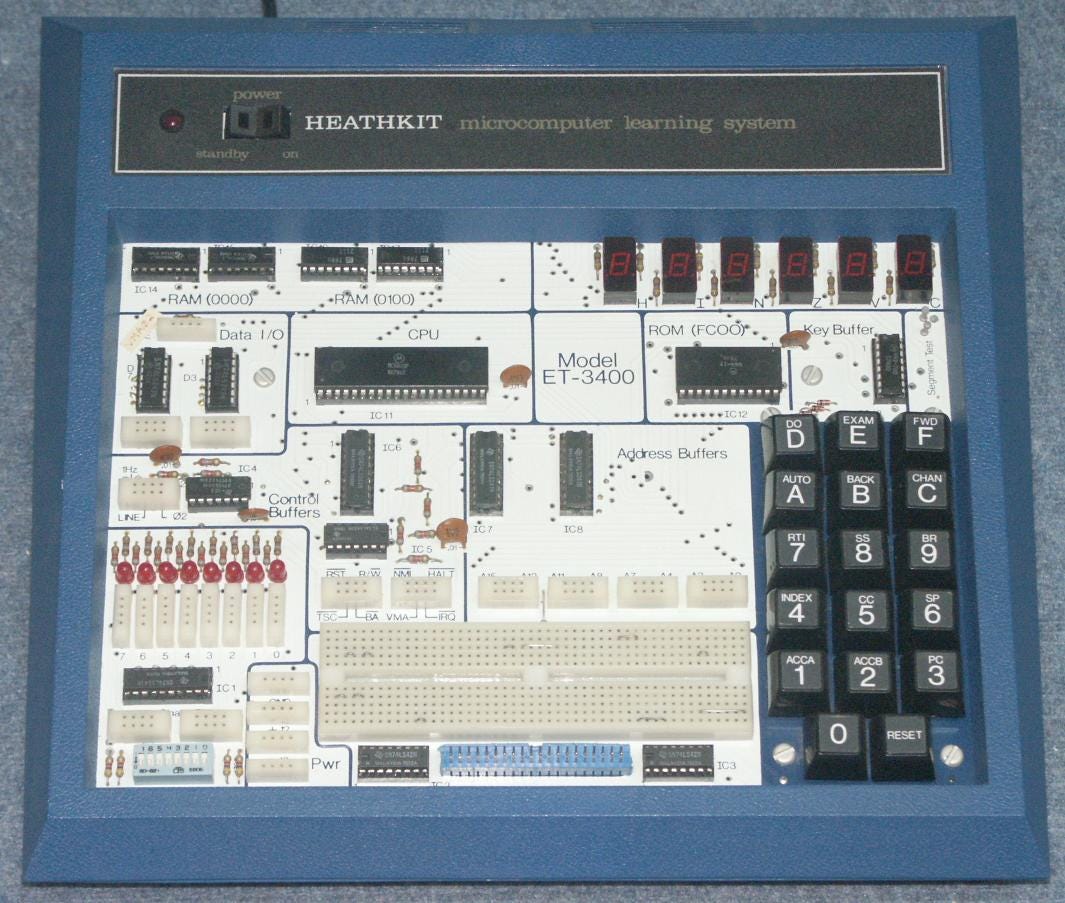
The ET-3400 was released in 1977. This computer was marketed as an educational kit, and it was built around the Motorola 6800, 256 bytes of RAM (expandable to 512k), and a 1K ROM monitor.
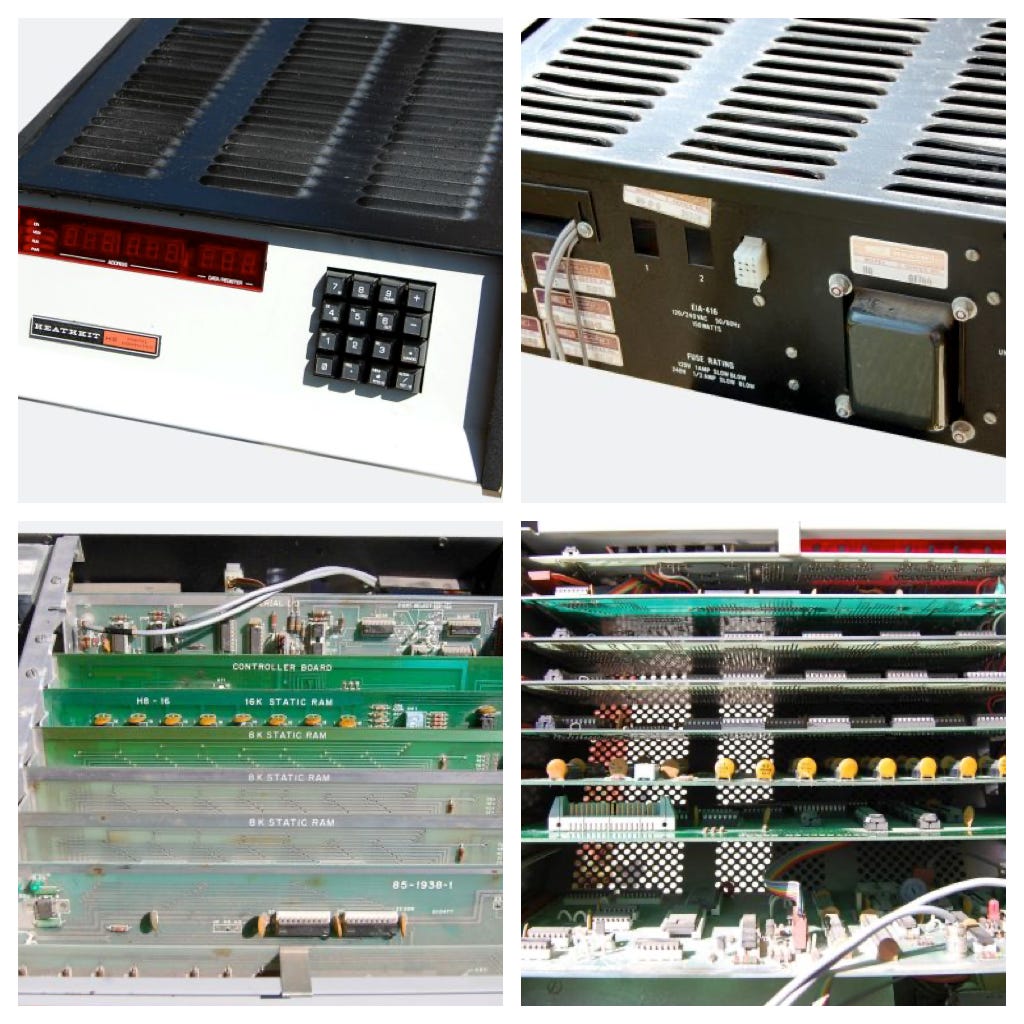
In 1977, Heathkit released the H8. This was a microcomputer offered as a kit for $379 (about $2,095 in 2026) or assembled (as the WH8) for $475. This, however, was for simply the chassis and Intel 8080A at 2MHz (on a CPU card). At minimum, a buyer would want some memory, and a 4K RAM board was another $140. To get any I/O, the buyer would want the serial board which was another $110. Thus, a modest and usable system would set the buyer back about $629 (about $3,476 in 2026). That, of course, is before either a teletype or terminal was added. Heathkit offered the H9 (12 lines, single case), and the H19 was available later.
The H8 was expandable to 64K, and the H17 floppy disk system was made available the year after introduction. There was also the WH67 10MB eight inch hard disk system, and the H47 eight inch floppy disk system. The H8 could run either HDOS (written by Gordon Letwin) or CP/M from Digital Research. All of this makes it sound like a rather standard machine, but it wasn’t. Machines of this era were typically S-100 bus machines, but Heathkit used the 50-pin Benton Harbor Bus of their own design. While the entire computer is built upon the backplane like S-100 machines, this bus is 50-pin rather than 100-pin, and the backplane is mounted on the side of the case. The front panel takes the first slot, the CPU takes the second slot, and this leaves seven slots open for expansion.
The Benton Harbor Bus has sixteen dress lines, eight data lines, five interrupt lines, and system control lines. The bus provides +8V and cards are expected to have their own regulator. This bus was implemented specifically because the H8 engineers felt that the S-100 bus was glitchy, expensive, and unreliable. Had the company used S-100, the H8 would have been physically larger and incurred more support costs. This wasn’t entirely satisfactory to the users of the H8 though as they were locked out of the larger market for S-100 expansion cards.
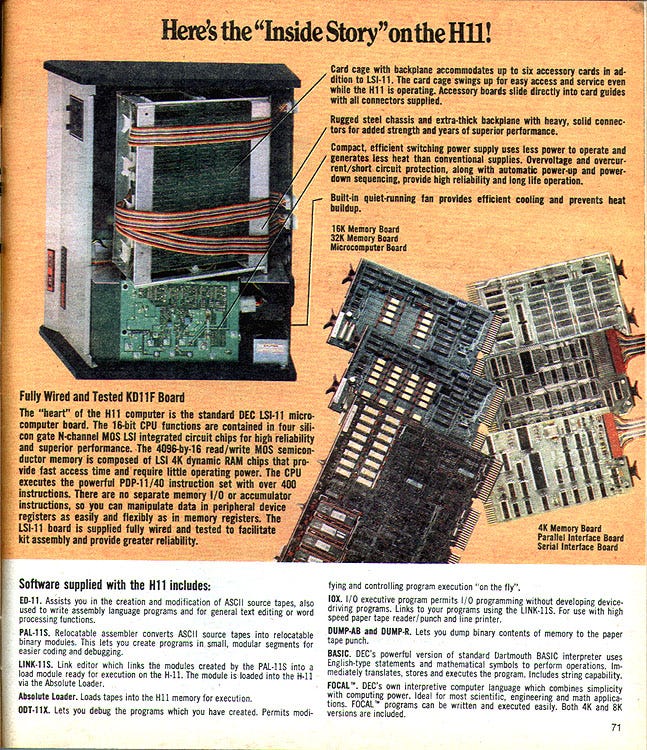
The Heathkit H11 was an interesting machine. It was a kit that built what was, essentially, a DEC PDP-11 implementing the PDP-11/40 instruction set. It was 16bit and built around premade and tested cards. The major exception was that the owner/builder had to handle power, backplane, front-switches, and handle the assembly of the enclosure. Powering this machine was a single-board LSI-11 CPU card at 2.5MHz implementing the Q-BUS standard. The first version was released in 1977 with the H11A following in 1980. The first model, non-A, retailed at $1295 while the second retailed at $1195. The primary difference was that the H11 shipped with a KD11-F (quad width) and the H11A shipped with a KD11-HA (dual width). This machine was also available with an eight inch floppy disk system (maybe based upon the RX-01?) and could run a ported version of the DEC RT-11 OS. That is, this computer could use actual DEC hardware and run some real DEC software, though given the modest specifications, it wasn’t a true replacement. The H11 shipped with a single 4kw memory card, 8kw ROM, a serial card, and a parallel card. The machine had seven Q-Bus slots, and it was expandable to 32kw RAM.
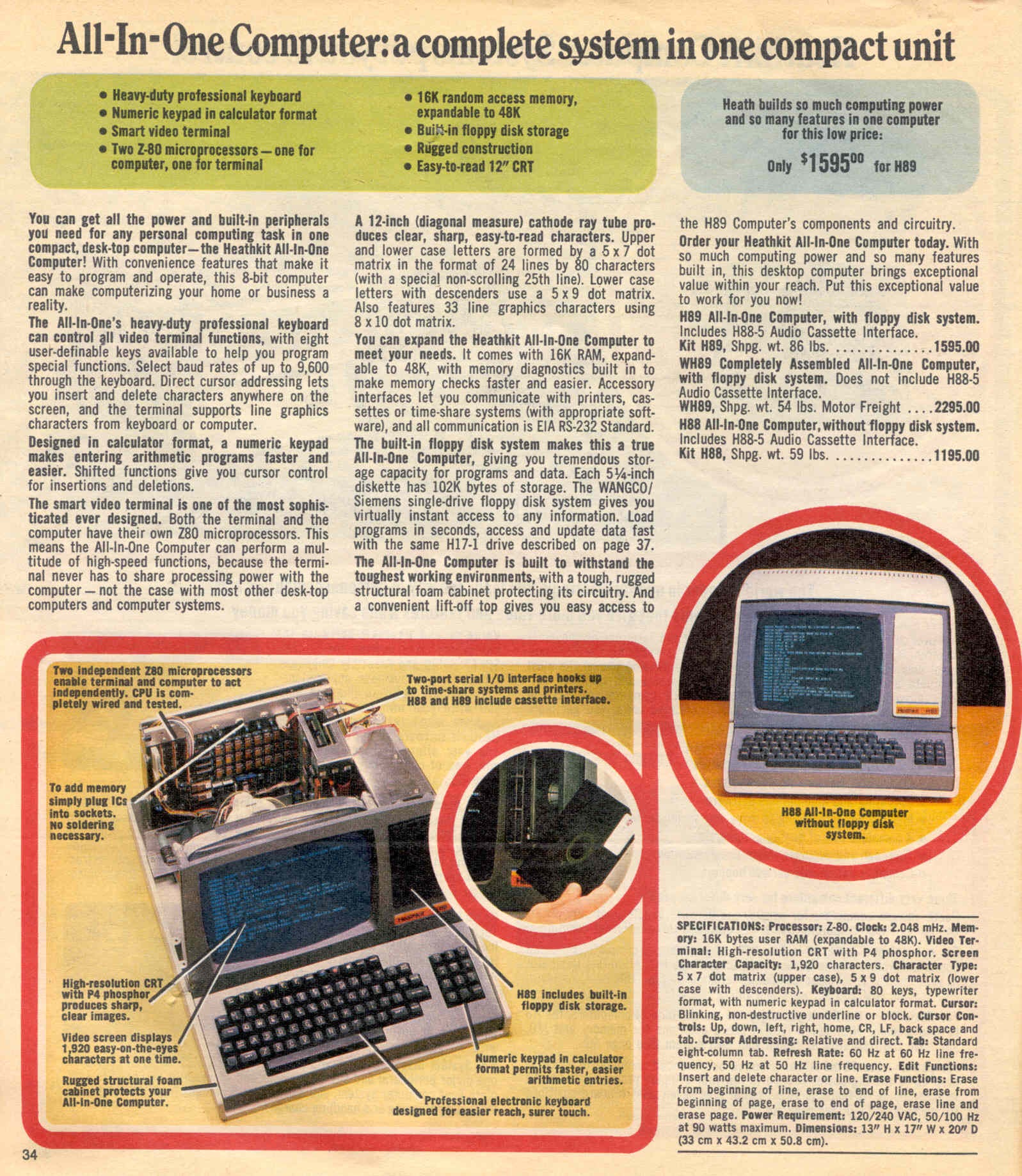
The Heathkit H89 was launched in 1979 for $1695. This was an all-in-one system built around the Zilog Z80 at 2Mhz (with a second Z80 driving the screen which was actually a full-function terminal), 16K or 48K RAM (at time of purchase), a 5.25 inch floppy disk drive (optionally two), a 12 inch monochrome screen, and HDOS (CP/M was available). A number of upgrades were available such as hard disk controllers, RAM upgrades, and even clock upgrades allowing 4MHz operation.
The Heath Company had been acquired by Daystrom in 1955, and then acquired by Schlumberger in 1962 when Schlumberger bought Daystrom. In 1979, Zenith Radio purchased Heath from Schlumberger for $64.5 million. Heath was now Zenith Data Systems. The headquarters were located in St. Jospeh, and the organization was led by Edward J. Roberts who’d been with Zenith since 1971. Heath computers would now take the Zenith name, be sold through Heath’s catalogs, retailed at Heathkit Electronic Centers, and stocked at computer dealers.
After the acquisition, the H89 was rereleased as the Z89 pre-assembled. The kit price dropped to $1500, and the fully assembled price was $2000. This pricing meant that the Z89 was never a major market success (though it did sell well enough to institutional buyers). Zenith continued to invest in ZDS, and by 1980, around 40% of ZDS revenue was coming from microcomputers with computer sales growing by around 60% per year. By 1982, the company employed around a hundred software developers, thirty-five salesmen, and twelve hundred factory workers producing around a hundred fifty computers per day at the Benton Harbor factory. If kits are included, ZDS built about fifty thousand computers per year.
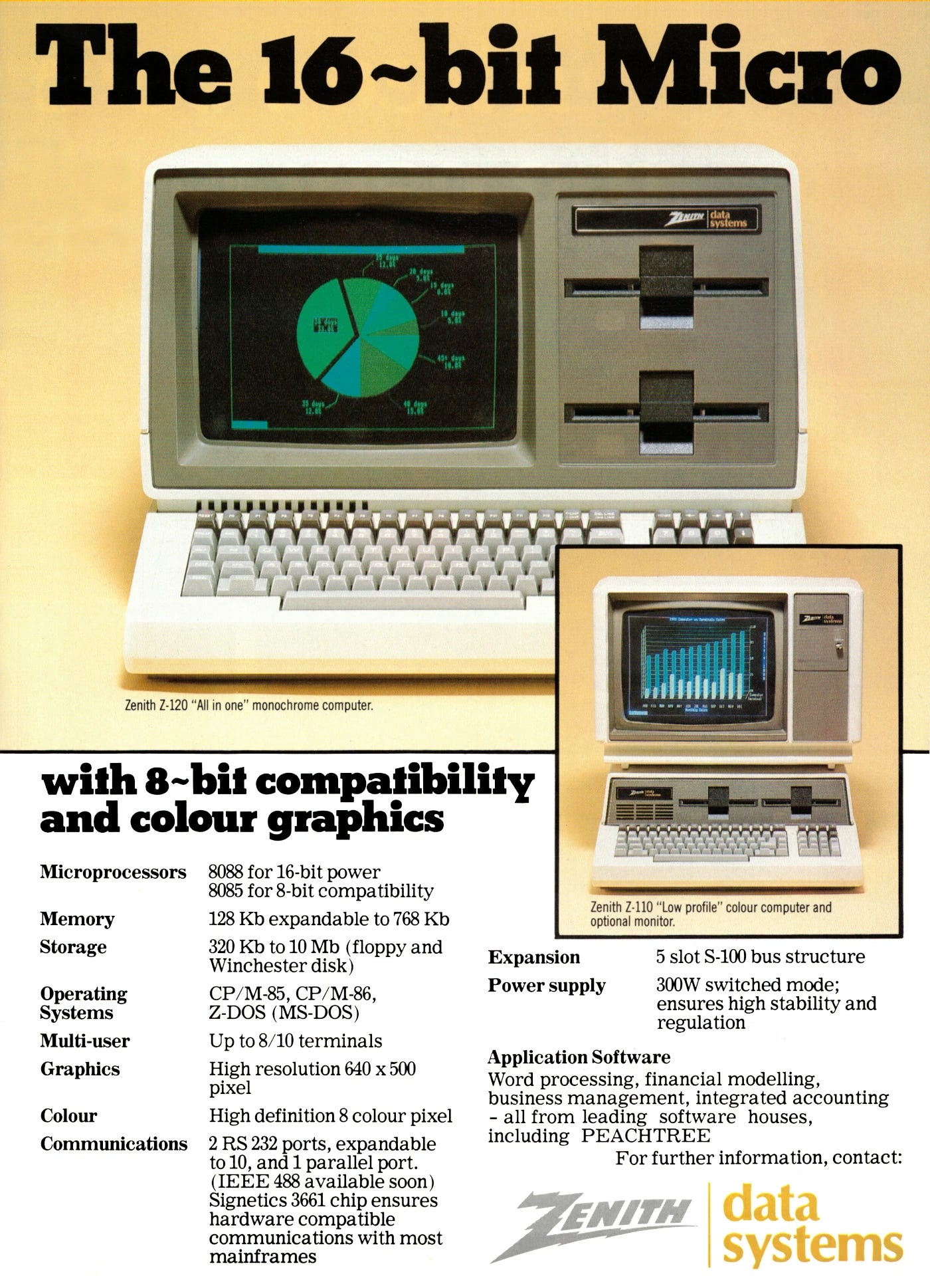
In March of 1981, ZDS began working on a new computer that aimed to correct the perceived failings of the Z-89. It needed a faster processor, richer graphics capabilities, more memory, and better compatibility with the rest of the industry. These improvements were all achieved by the Z-100, the first computer from the company to be designed first as a pre-assembled unit. Yet, the documentation for the system continued HeathKit’s tradition of being thorough beyond compare.
At first glance, the Z-100 doesn’t look too crazy. It came in relatively common office-friendly colors in both its all-in-one and low-profile form factors. Both of these were 19.5 inches wide, the AIO was 13.5 inches tall, and the SFF machine was just 7.5 inches tall. Both form factors housed either two floppy disk drives (320K), or one FDD and one Winchester disk drive (11MB). Both supported up to two external eight inch floppy disk drives (1.2MB).
The tame external appearance is, in this case, deceiving. The first feature that set the Z-100 apart from its contemporaries was its dual processor design. This wasn’t two processors acting as one. This wasn’t one processor serving a non-standard function. This was two processors offering two distinct modes of operation. The Z-100 contained both an 8088 and an 8085, both at 5MHz. The 8085 offered 8bit operation with CP/M while the 8088 offered 16bit operation with MS-DOS. While a reboot was required to change the operating mode, a single machine could run two operating systems, and at least on the Z-100, the disks written on one could be read by the other (also IBM compatible storage format).
Character display was the standard 80 by 25, but the graphics capability was, for the time, quite impressive at 640 by 225 bitmap with eight colors (or eight shades of gray). Further, this machine could simultaneously offer graphics and text, and the VRAM could be expanded.
Two complaints made at the time should be addressed here. While the Z-100 could read the same disks in either CP/M or MS-DOS, most software for CP/M came on eight inch disks or on 5.25 inch disks in a non-standard format, the eight inch disk drive was an added expense, and the Z-100 didn’t support other disk formats. Second, the keyboard was widely praised as being exceptionally well-made. It was durable, offered a delightful typing experience with good travel and feedback, but it lacked an arrow key cluster. The arrow keys were instead clustered at the top right of the numeric keyset.
The Z-100 could be had with as little as 128K RAM or as high as 768K RAM. Expansion was offered via five S-100 bus slots. The machine offered two serial ports, a parallel port, light pen interface, and RGB and composite video out. Those serial ports featured software-adjustable baud (110 to 38400) via a program called Configur. Configur could also designate parity, handshake protocol, and handshake pin. The computer could optionally be fitted with an Intel 8087 coprocessor.
The final note to be made on this machine is that it wasn’t truly PC-DOS compatible out-of-the-box. While many of the most popular programs of the day (Lotus 1-2-3, Wordstar, Multiplan, Peachtext) did have ports, a port was still required unless one opted for something like the Gemini Emulator board.
The Z-100 was not a cheap machine. The 1982 Christmas catalog listed the price: “as low as $3999.” This was for the low-profile unit, two FDDs. The AIO with the built-in monochrome screen was listed at $4099. Unfortunately, I was unable to find official sales numbers, but the Z-100 was undoubtedly successful in certain markets. The US GSA, Army, Navy, Air Force, and UPI had each bought more than five thousand Z-100s by the middle of 1984. In 1986, InfoWorld referred to the Z-120 as the “Air Force’s workhorse microcomputer.” These claims are backed by the later sale of tens of thousands of Z-100 machines as surplus. It’s also known that the Z-100 did well within the educational market. The Clarkson College of Technology issued a Z-100 to each member of the class of 1987 in fall 1983. This was roughly a thousand machines, with faculty systems already on campus and a plan to add roughly another thousand with each entering class until the entire undergraduate body of about four thousand were all outfitted. Students paid about eighteen hundred USD over four years and they kept the computer. Coverage of that program led another seventy-five schools to buy from Zenith Data Systems (this led to still more purchases over the years, but of later models).
These large institutional orders were good for Zenith. ZDS revenue stood at $125 million for 1983, and that figure roughly doubled for 1984. For fiscal 1984, Zenith supplied sixteen percent of the 37,000 microcomputers the US government bought, second only to IBM (though the gulf between the two companies in market share was quite large). Not bad at all considering HeathKit’s troubled history prior to Zenith’s acquisition.
While Zenith had started quite modestly, and shifted into microcomputers successfully with their acquisition of Heath, the company was still finding its footing. They’d successfully migrated from kits to prebuilt machines, from custom designs to industry standards, but the S-100 bus was dying, and the 8bit era was moribund. Still, the company was financially successful, and they were well positioned for the future.
My dear readers, many of you worked at, ran, or even founded the companies I cover here on ARF, and some of you were present at those companies for the time periods I cover. A few of you have been mentioned by name. All corrections to the record are sincerely welcome, and I would love any additional insights, corrections, or feedback. Please feel free to leave a comment.