Woxi — Wolfram Language interpreter in Rust

Woxi

1 min read Original article ↗

Wolfram Language interpreter implemented in Rust.


Examples:

Everything runs locally in your browser. No data is sent anywhere.

Output

Plot of Sin[x], a bar chart, and a number line plot

Bubble chart, a small graph, and a tree form of a polynomial


Other ways to use Woxi

The playground above is one of several Woxi front-ends — the same interpreter powers a full-screen playground, a command-line tool, a Jupyter kernel (also runnable in the browser via JupyterLite), and a native notebook editor.

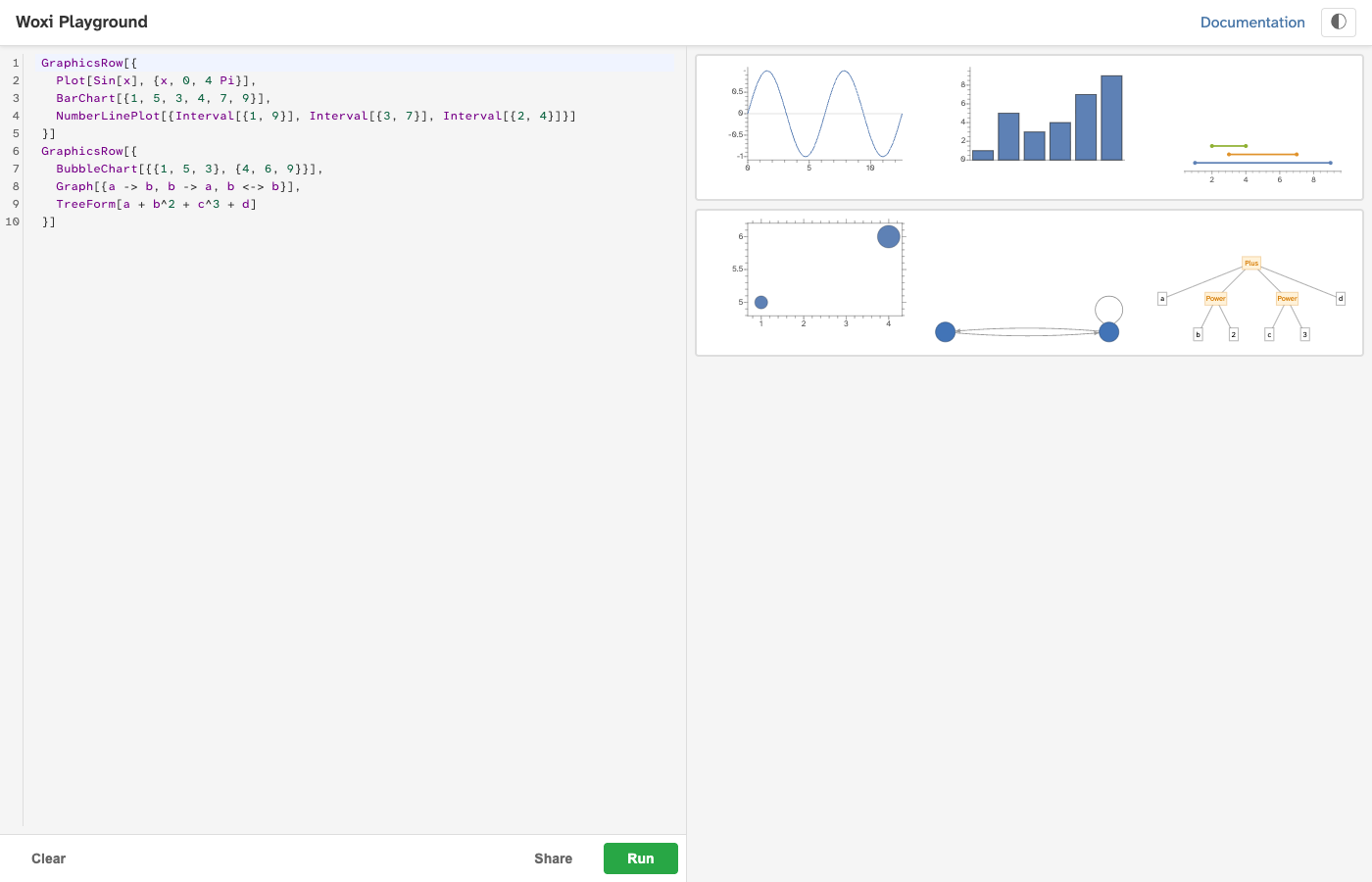
Extended Woxi playground with side-by-side editor and graphics output

Extended playground

Side-by-side editor and output pane with more room to explore. Great for multi-line expressions and experimenting with graphics.

Open the full playground →

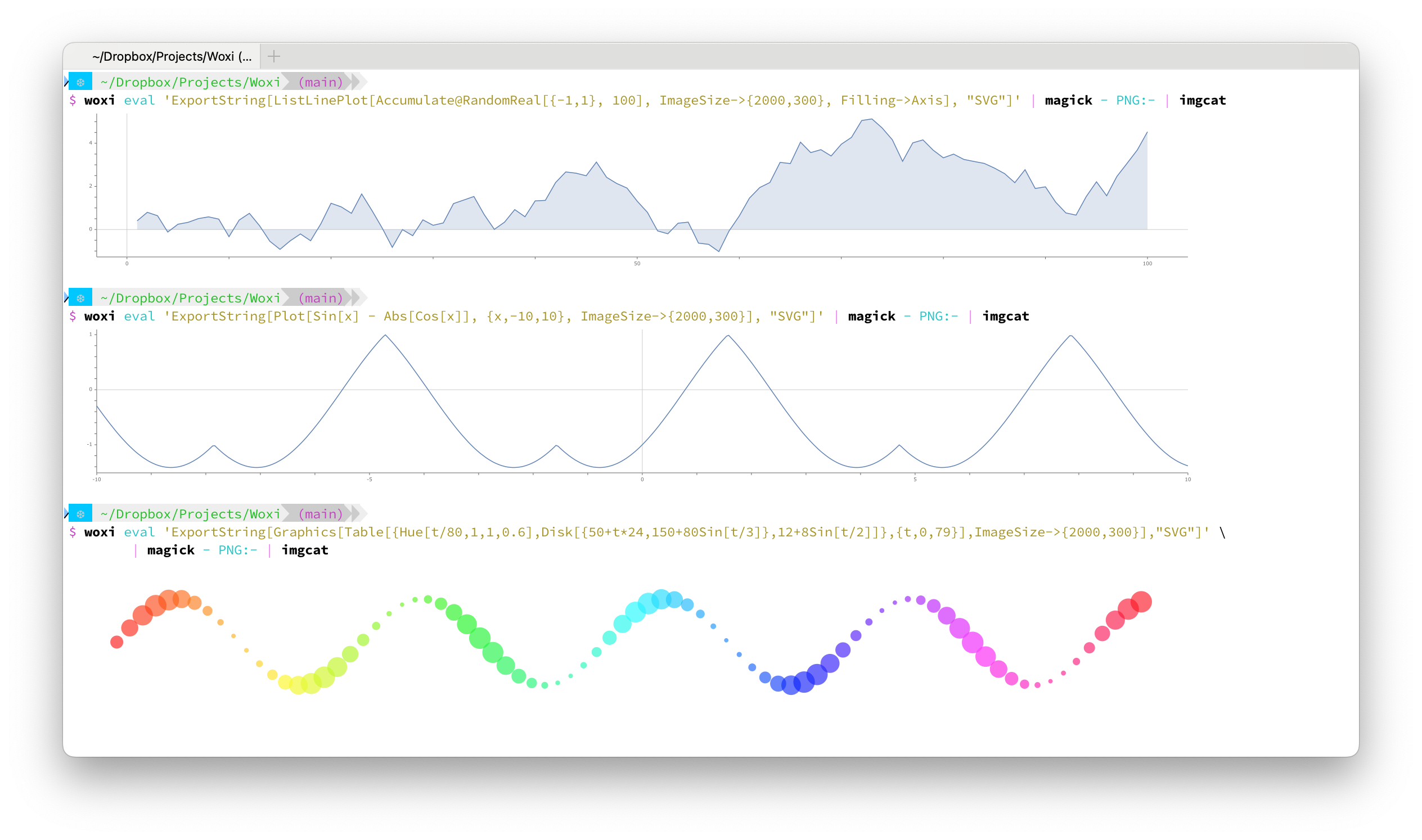
Woxi command-line interpreter in a terminal

Command-line tool

Evaluate expressions with woxi eval, run .wls scripts directly, or use Woxi as a shebang interpreter. Faster to start than wolframscript.

See the scripting guide →

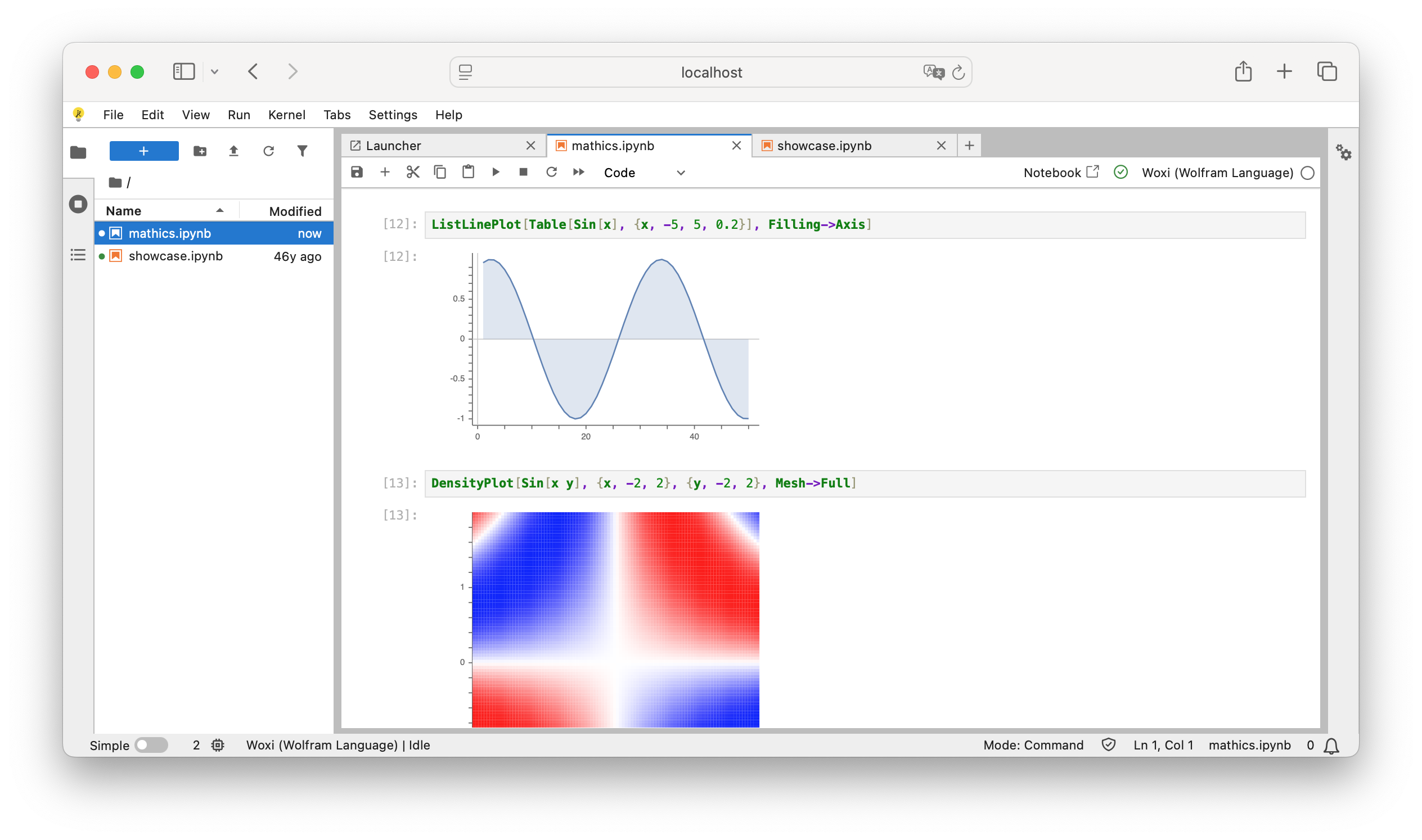
Jupyter notebook running the Woxi kernel

Jupyter & JupyterLite

Woxi ships as a Jupyter kernel. Install it locally with woxi install-kernel, or run the full notebook experience in your browser via the bundled JupyterLite instance — no install required.
Read the Jupyter guide →

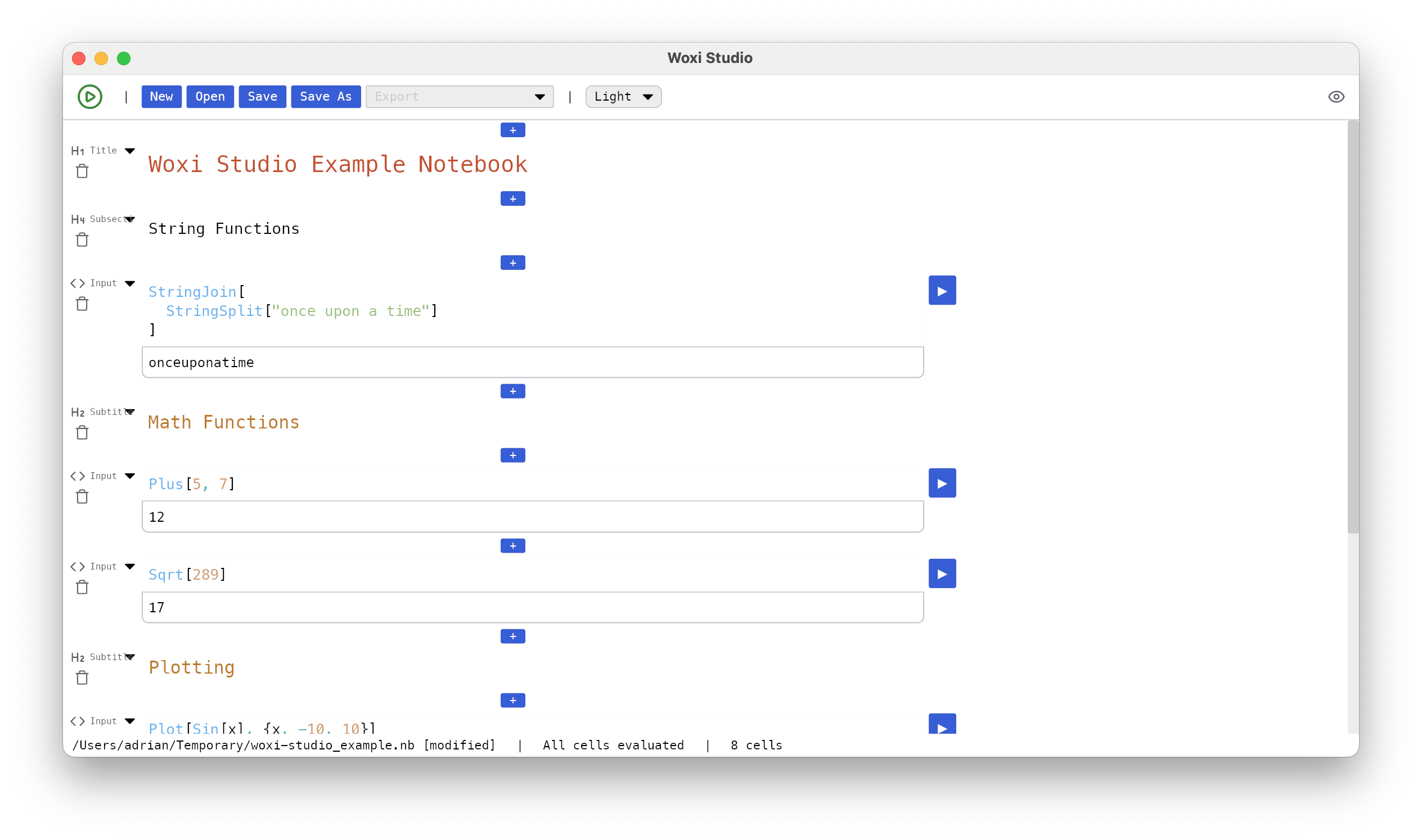
Woxi Studio editing a .nb notebook

Woxi Studio

Native notebook editor for Wolfram Language .nb files. Cell-based editing, inline graphics, and export to .ipynb, Markdown, LaTeX, Typst, and PDF.

Read the documentation →