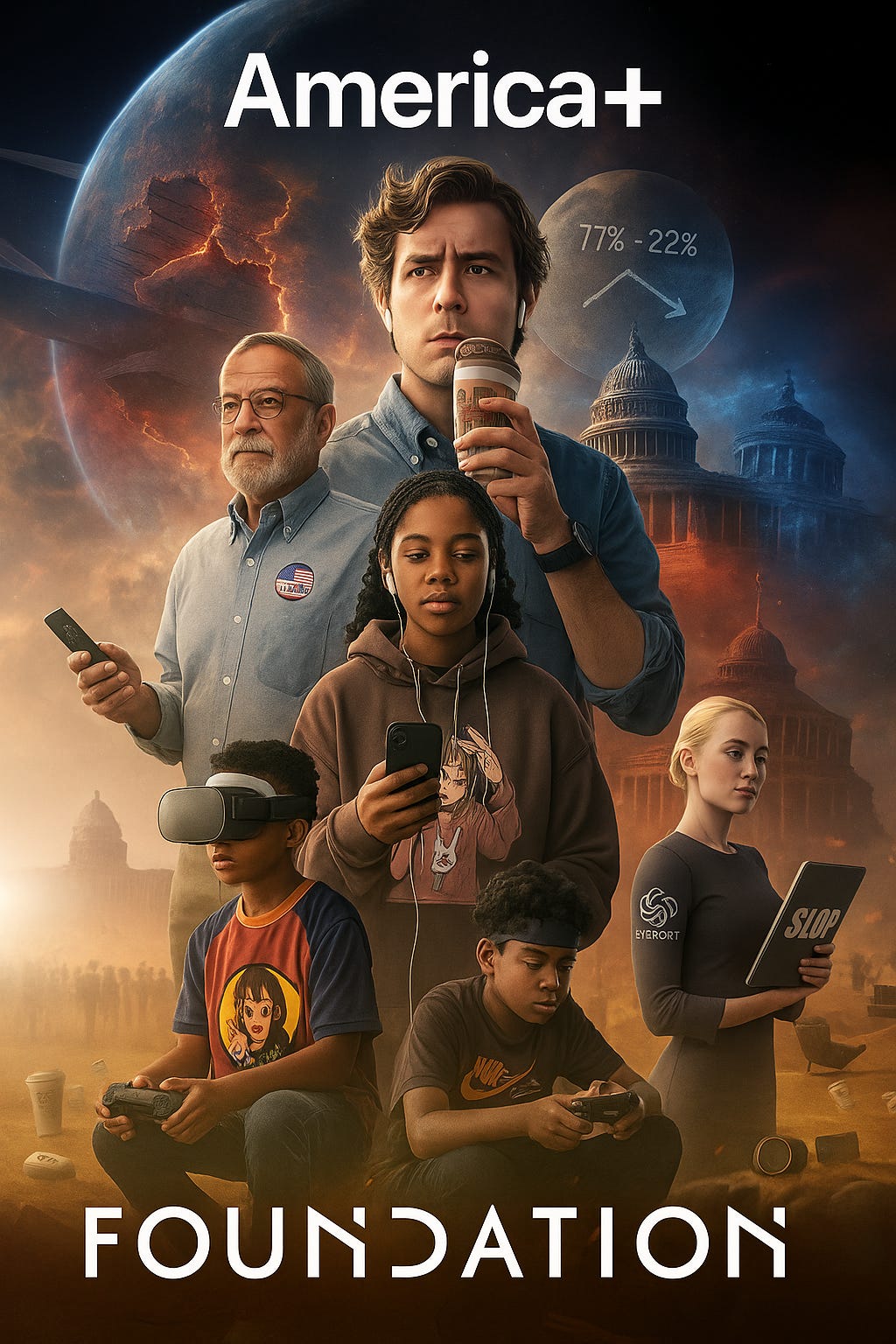
Slop created with: ChatGPT
I was driving my mother home from her doctor’s appointment yesterday when she launched into one of her signature boomer complaints. “You know what the problem is with young people today?” she asked, not waiting for an answer, because boomer complaints don’t actually require audience participation. “Nobody knows how to go without.”
I nodded along. The usual dance we do where she vents and I pretend this is the first time I’m hearing about kids these days and their participation trophies and avocado toast. (For the record: I’m a Millennial, which means I’m old enough to remember life before smartphones but young enough to have crippling student debt and no realistic path to homeownership.) But as I half-listened to her catalog of generational failures (apparently the ability to balance a checkbook is now as rare as polio, and about as necessary), something clicked. What if Mom, in her reflexive grumbling, had stumbled onto something uncomfortable? Not about young people specifically, but about all of us. What if never having to “go without” is precisely what’s breaking American democracy?
There’s this quote that gets passed around conservative circles like some ancient wisdom: “Hard times create strong men. Strong men create good times. Good times create weak men. And weak men create hard times.” It sounds profound. It has that ring of timeless truth, the kind of thing Aristotle might have said if he’d been really into CrossFit and had strong opinions about protein powder.
It sounds profound. It has that ring of timeless truth, the kind of thing Aristotle might have said
if he’d been really into CrossFit and had strong opinions about protein powder.
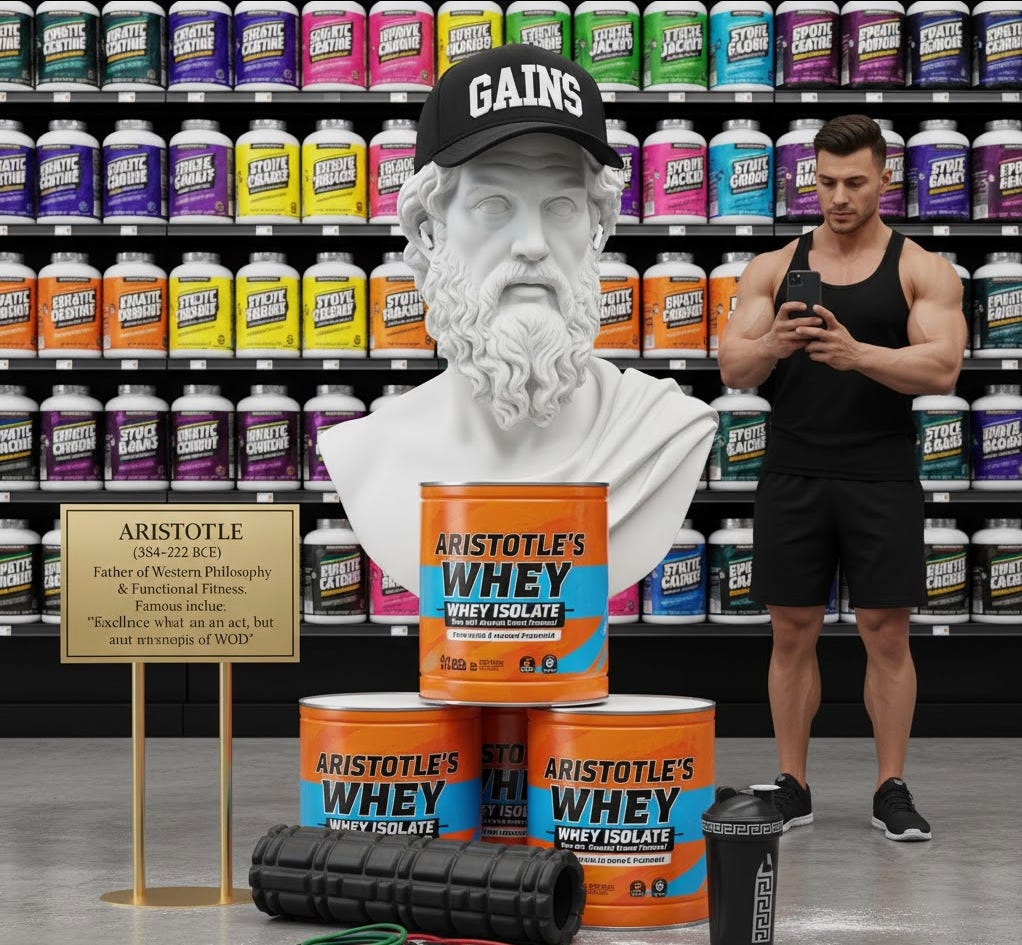
Except Aristotle didn’t say it. Neither did Plato, Marcus Aurelius, or any other dead philosopher we like to imagine agreeing with us. The quote comes from G. Michael Hopf’s 2016 post-apocalyptic novel Those Who Remain, a work of fiction that somehow became treated as fact within a few years.1 (This tells you something about how humans process information, none of it reassuring.) Academic researchers even have a term for this seductive myth: the “Fremen Mirage,” named after the desert-dwelling warriors in Dune who were supposedly hardened into effectiveness by harsh conditions.
The actual historical evidence tells the opposite story. As one Foreign Policy analysis put it bluntly, “By and large, the strong men created by hard times lost, again and again.”2 Early agrarian societies (prosperous, comfortable, hierarchically organized, probably complaining about kids these days) consistently outcompeted the “hardened” nomadic warriors. The Vikings, Mongols, and various other groups of supposedly superior “hard men” kept getting absorbed or defeated by the soft, prosperous civilizations they invaded. Turns out comfort beats toughness when you’re trying to build something that lasts longer than a raiding season.
Turns out comfort beats toughness when you’re trying to build something that lasts longer than a raiding season.
Here’s where the academic research gets interesting and the myth gets something half-right: prosperity does promote moderation and cross-group cooperation, that’s true.3 But prosperity also creates the conditions for extremism, just not in the way the myth suggests. The fiction isn’t wrong that our problems are caused by comfort. It’s wrong about what kind of problems comfort causes, and catastrophically wrong about who actually succeeds when those problems create genuine crisis.
It’s wrong about what kind of problems comfort causes, and catastrophically wrong about who actually succeeds when those problems create genuine crisis.
Yes, good times create dysfunction. But not because comfort creates “weak” people who can’t handle adversity. Comfort creates people whose tribal instincts activate over symbolic conflicts because there are no material pressures forcing cooperation. When times are genuinely hard, requiring actual sacrifice and cooperation, the “hard men” of the myth (the tribal strongmen, the authoritarians, the ones who solve problems through dominance) consistently lose to “soft” societies that compromise and cooperate. The academic research shows this pattern: economic hardship often increases polarization and tribal behavior,[3] but not always. Societies that survive hardship are the ones that maintain cooperation despite the pressure toward tribalism.
So hard times do breed a certain kind of “hard” person, but we’ve fundamentally misunderstood what “hard” means in a functioning society. In an authoritarian system or a primitive tribe, “hard” might mean dominance and toughness. But in a modern democracy facing genuine crisis, “hard” means the ability to compromise when you’d rather fight, to cooperate with people you don’t like, to subordinate your tribal instincts to collective survival. The people who get societies through actual hard times aren’t the mythical strongmen. They’re the pragmatists willing to work with their enemies.
The people who get societies through actual hard times aren’t the mythical strongmen.
They’re the pragmatists willing to work with their enemies.
This is cognitive bias operating at scale. We rationalize our desired conclusion, things were better when life was harder, therefore we should make things harder, despite the evidence. We defend our intuitions even when history contradicts them. (Humans are very good at this particular dysfunction, in case you’re wondering why we keep repeating the same mistakes across millennia.) Which brings us to what actually happens when times get hard.
Let’s look at what happened during America’s actual hard times, the periods of genuine existential threat and material deprivation. You know, back when people actually had to go without.
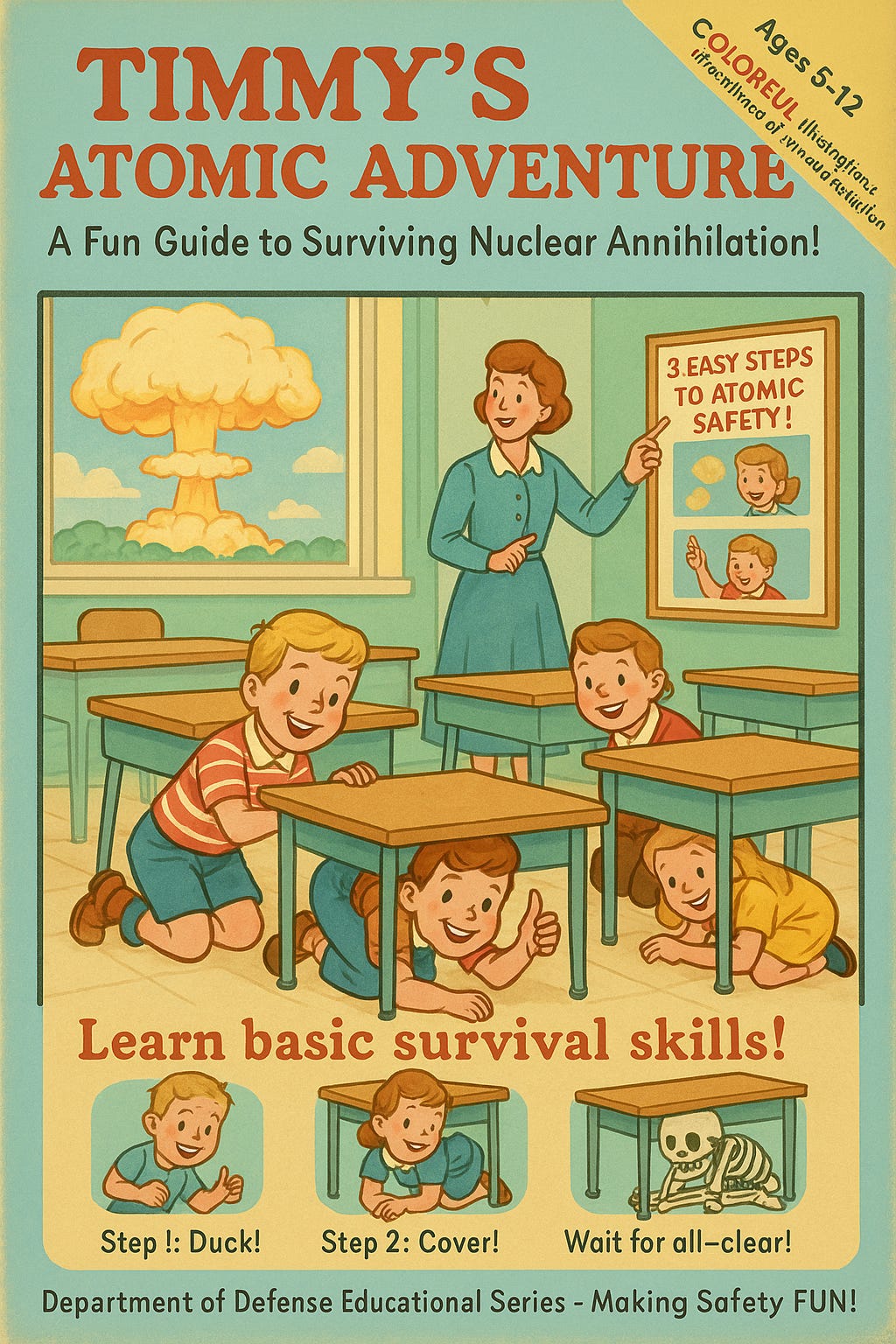
Post-World War II through the Cold War (roughly 1945-1970s): Despite living under the very real threat of nuclear annihilation, and I mean actual “duck and cover” drills where school children practiced surviving atomic bombs under wooden desks — a plan that would have been adorable if it weren’t terrifying, despite fighting wars in Korea and Vietnam, despite profound social upheaval over civil rights, Congress maintained roughly 50% legislative overlap between the parties.4 That’s not a typo. In the 1960s, half of all legislation saw members from both parties voting together. Today? That overlap is effectively 0%.5
Actual “duck and cover” drills where school children practiced surviving atomic bombs under wooden desks
A plan that would have been adorable if it weren’t terrifying
During that supposedly divisive era, the one we remember for protests and riots and assassinations, major legislation passed with overwhelming bipartisan majorities: The Civil Rights Act of 1964. Medicare and Medicaid in 1965. The Kennedy tax cuts. The Highway Act. The Clean Air Act.6 Members of Congress didn’t vote together because they all agreed (they didn’t), and they didn’t vote together because they were all moderates (they weren’t). They voted together because the stakes felt genuinely high and cooperation felt necessary.
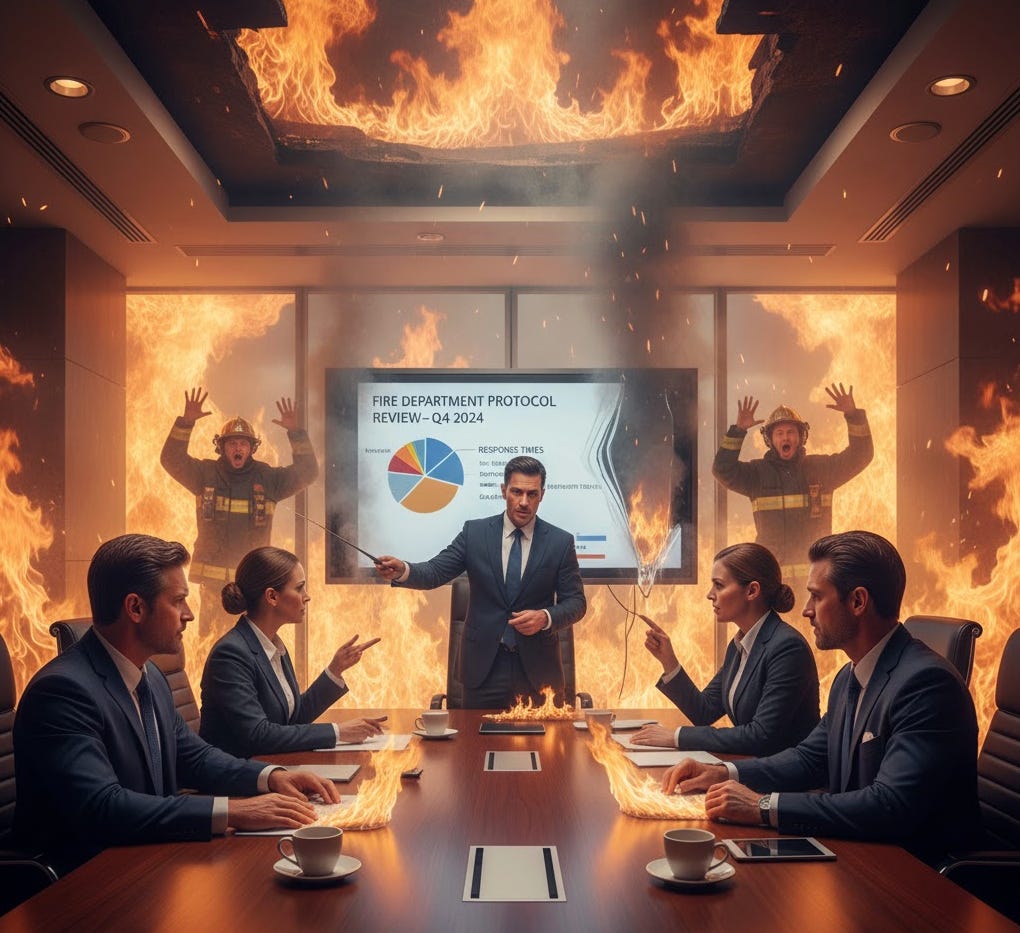
Even the Great Depression, which did produce extremism in some countries (looking at you, 1930s Germany), offers an instructive contrast. In Germany, where “depressed conditions were allowed to persist” (as NBER research delicately notes, using the kind of academic understatement that makes “Holocaust” sound like a minor administrative inconvenience), the economic catastrophe helped enable the Nazi rise to power. But in the United States, rapid government action through the New Deal was “predominantly conservative in impact”, it prevented extremism by demonstrating that the system could respond to crisis.7 When your house is burning down, you don’t argue about fire department protocols. You work together to put out the fire. (You may resume your arguing of protocols later, once everyone is no longer on fire.)
When your house is burning down, you don’t argue about fire department protocols. You work together to put out the fire.
You may resume your arguing of protocols later, once everyone is no longer on fire.
The pattern holds across contexts: material conditions shape political behavior. When resources are scarce and threats are real, cooperation becomes a material necessity, not an ideological choice. This isn’t because hard times create noble character, humans don’t become better people just because things get worse, it’s because failing to cooperate during actual crisis has immediate, visceral consequences. You need your neighbor to help you survive winter, so you don’t call them a fascist or a communist or whatever other ideological slur makes you feel morally superior. You call them when you need help fixing the furnace.
Now consider what’s happened during the longest period of peacetime prosperity in American history. (Spoiler alert: it’s not great.)
Congress is currently more polarized than at any time since the 1870s Reconstruction.8 Let that sink in, we’re more divided now, during relative peace and prosperity, than we were during the era immediately following our bloodiest conflict. The percentage of Americans who identify as consistently liberal or consistently conservative more than doubled from 10% to 21% between 1994 and 2014.9 Members expressing “very unfavorable” opinions of the opposing party hit record highs in 2022. Among Western countries, the United States experienced the largest increase in polarization since the mid-1990s, roughly the same period we stopped worrying about nuclear annihilation and started worrying about whether our coffee was ethically sourced.
This isn’t coincidental. This is what happens when a two-party system meets prosperity. Individual actors make rational choices, appeal to your base, avoid compromise that might anger primary voters, treat the other side as existential threat (even when the actual stakes are “which tax rate” rather than “survival”), that produce collective irrationality. A system that can barely function. It’s an emergent property of the structure: prosperity lowers the perceived stakes, making us feel like we can afford to fight. Meanwhile, the binary choice between two parties provides no institutional outlet for moderation. You’re red team or blue team, and moderates get destroyed in primaries.
During this same prosperous period, institutional trust collapsed. Six decades ago, 77% of Americans trusted their government. Today? 22%.10 That decline didn’t happen during war or depression, it happened during the greatest sustained period of material abundance in human history. We’re less trusting of our government when it provides Medicare and interstate highways than we were when it was drafting teenagers to die in rice paddies. (Make that make sense.)
We’re less trusting of our government when it provides Medicare and interstate highways than we were when it was drafting teenagers to die in rice paddies.
(Make that make sense.)

We’re living in a systems-thinking case study: feedback loops where individual rational behavior creates collective dysfunction. Prosperity enables the luxury of ideological purity, you can afford to refuse compromise when you’re not starving. Lower perceived stakes make compromise seem like weakness rather than necessity. Each side’s radicalization triggers opposing radicalization, which triggers counter-radicalization, which triggers... you get the idea. The cycle continues, because why wouldn’t it?
Here’s where we need to be excruciatingly honest about something, and by “excruciatingly” I mean the kind of honesty that will make everyone angry rather than just half of everyone. While both left and right exhibit maladaptive behaviors born of prosperity, they don’t manifest the same way. And we do nobody any favors by pretending otherwise.
The Right-Wing Violence Asymmetry
Since 2001, approximately 75-80% of deaths from domestic terrorism have been caused by right-wing extremists.11 This isn’t a “both sides” talking point, it’s documented fact from government analyses, from the Center for Strategic and International Studies, from the Anti-Defamation League’s tracking. Since 2020 alone: 2 left-wing terrorism deaths versus more than 40 right-wing deaths.12 In 2024, all 13 extremist murders in the United States were committed by right-wing extremists, 8 by white supremacists (who apparently missed the memo about prosperity reducing tribal violence), 5 by anti-government extremists (who really don’t appreciate what they’ve got).13
This is an evolutionary psychology framework operating in prosperity conditions: outgroup threat responses activating over symbolic rather than material conflicts. Anti-immigrant violence isn’t driven by actual resource scarcity, study after study shows immigrants don’t take jobs or depress wages in any economically meaningful way, it’s tribalism as identity rather than survival strategy. Christian nationalism isn’t a response to actual religious persecution (American Christians are doing fine, thanks), it’s in-group boundary enforcement without genuine existential stakes. The threat isn’t real. The violence is.
Christian nationalism isn’t a response to actual religious persecution (American Christians are doing fine, thanks)
It’s in-group boundary enforcement without genuine existential stakes.
The threat isn’t real. The violence is.
The Left-Wing Absolutism Problem
But the left exhibits its own maladaptive prosperity behavior, not violence (the numbers are clear on this), but an absolutism that fractures rather than builds.
A 2024 Harvard Faculty of Arts and Sciences survey found that 62.4% of faculty cite self-censorship as the greatest threat to academic freedom, not external political pressure (though that exists too), but the internal climate created by their own ideological allies.14 52.3% cite student intolerance as a major threat. 37% say DEI programming stifles free expression. Younger academics are twice as likely as those over 50 to support firing campaigns. PhD students, the next generation of scholars, the future of intellectual inquiry, are three times more likely than faculty to support cancellation. (Nothing says “academic freedom” quite like supporting professional destruction for wrongthink.)
Nothing says ‘academic freedom’ quite like
supporting professional destruction for wrongthink.
Democratic voters now say 2-to-1 they want their party to fight rather than compromise, even at the risk of gridlock.15 Democratic trust in government dropped 21 points between 2022 and 2025, a period when Democrats held the presidency. That’s not distrust of the other party, it’s distrust of government itself, even when your side controls it. When you can’t trust your own team to be pure enough, you’ve got a coalition problem masquerading as principle.
Let me be crystal clear, because apparently everything requires disclaimers now: this is a critique of modes of advocacy, not substance. Trans rights are legitimate. DEI initiatives address real historical inequities. These causes are just. (I’m not hedging here; I mean it.) The issue is how prosperity enables uncompromising advocacy, purity tests, absolutism, intolerance of dissent, refusal to engage with persuadable opponents. It’s coalition maintenance through defection punishment, in-group boundary enforcement without real material stakes. When you don’t need converts to survive, when your prosperity means you can afford ideological purity, you stop trying to persuade and start trying to punish.
When you don’t need converts to survive
when your prosperity means you can afford ideological purity
you stop trying to persuade and start trying to punish.
Both patterns are ancestral tribal behaviors now maladaptive in modern democracy. One side responds to perceived outgroup threat with violence. The other enforces in-group purity through social punishment. Both served survival purposes in ancestral environments, they kept the tribe alive when resources were scarce and enemies were real. Both are dysfunctional in a pluralistic society that requires compromise and persuasion. And both are enabled by prosperity, because only prosperity lets you indulge tribal instincts without immediate material consequences.
Here’s where it gets genuinely strange, and I mean strange enough to make you question whether humans can actually govern themselves during good times.
The youngest generations are actually less polarized than their elders. Gen Z moderates increased from 21% to 27% between 2021 and 2024. Self-identified liberals dropped from 41% to 29%.16 Among Millennials and Gen Z, 52% identify as independents, compared to just 33% of Boomers.17
So the kids are alright? Not exactly. Not even close.
Youth planning to “definitely vote” dropped from 57% to 49% between 2020 and 2024.18 58% believe the country is “off on wrong track”; only 9% say we’re headed in the right direction. Only 13% have high trust in the presidency, and that drops to 7% among independents.19 UC Berkeley researchers describe younger voters as “fatalistic about critical problems,” a fatalism that “extends across right, center, and left.”20 They’re not optimistic moderates finding enlightened middle ground. They’re depressed observers correctly identifying that the system is broken, then rationally concluding there’s nothing they can do about it.
This is the tragic irony operating in real-time: they correctly perceive the dysfunction in binary partisan politics, the red team/blue team nonsense, the purity spirals, the violence masquerading as patriotism, so they withdraw. Their good awareness (seeing through both sides’ self-deceptions) produces a bad outcome (non-participation that enables the extremes). They opt out of civic engagement, which enables the extremes they reject to dominate the process. Prosperity makes this withdrawal possible, in a genuine crisis, non-participation has immediate consequences (like starvation or invasion or societal collapse). But when times are good? You can check out. Nothing existentially bad happens to you personally. Your biggest hardship is deciding which streaming service to keep when you need to cut costs.
Your biggest hardship is deciding which streaming service to keep when you need to cut costs.
They’re less polarized not because they’ve found some enlightened middle path, but because they’ve checked out entirely. It’s rational fatalism in the face of impossible tensions. And their disengagement, born of prosperity that lets them avoid civic functions without immediate personal cost, creates a vacuum that the committed extremes rush to fill. The reasonable people exit, leaving the unreasonable people in charge. (What could go wrong?)
My mother’s boomer complaint, “nobody knows how to go without”, wasn’t quite right about what the problem is, but it was right that there’s a connection between never experiencing true hardship and our current dysfunction.
Generations that lived through the Depression and world war internalized certain lessons viscerally, not intellectually. They understood in their bones, not their heads, their bones, why saving money matters (because you might desperately need it). Why compromise matters (because your survival might depend on cooperation). Why political violence destroys communities (because they’d seen it, watched neighbors turn on neighbors). Why democracy requires participation (because they’d seen what happens when it fails, watched fascism rise from democratic collapse). Why measured reform is preferable to upheaval (because they’d experienced upheaval, lived through the chaos that “burn it down” actually produces).
We, and I mean all of us, right and left, Boomer through Zoomer, largely haven’t internalized those lessons. There are exceptions, people who’ve earned their stripes through terrible experiences. My mother, for instance, has endured things that would break most people. And yes, those experiences changed her. But not in the way the fiction predicts, not into some traditional “hard woman” archetype of dominance and toughness. She’s formidable in other ways: 70 years old, 5’7”, 115 pounds, and still capable of putting the fear of God into her 36 year old, 6’5”, 250 pound son. (My therapist and I are working on this.) What qualifies her as genuinely “hard” isn’t that she became tough or uncompromising. It’s that she learned the right lessons from hardship: save money because you might need it, compromise because getting everything you want isn’t worth losing everything you have, value community because you can’t survive alone. She also hoards moving boxes and lamps, which is less helpful, but on net it’s been positive. The point is: real hardship doesn’t create strongmen. It creates people who understand why cooperation matters.
70 y/o - 5’7” - 115 lb
and still capable of putting the fear of God into her
36 y/o - 6’5” - 250lb son
(My therapist and I are working on this.)

But most of us can’t learn those lessons second-hand. You can’t learn what scarcity teaches without experiencing scarcity. You can’t understand what war teaches without experiencing war. (And no, watching a documentary or sharing a 60 second TikTok you saw in your feed about the atrocities happening in Gaza doesn’t count – you can know intellectually that famine kills people without feeling in your gut what it means to be hungry.) The closest we get to true hardship is however far our phone is from our face. Seeing is not enough. The only reliable method of producing the behavioral constraints necessary for a productive functioning society is experience.
So we get right-wing violence over symbolic rather than material threats. Immigrants aren’t taking your job, but they’re taking your identity, which in prosperity conditions feels equivalent. We get left-wing purity spirals unmoored from practical coalition-building, you don’t need converts when you’re comfortable, you just need to feel morally superior to someone. We get younger generations checking out entirely, why participate when the system is broken and you’re comfortable enough without it? We get a two-party system optimizing for conflict because conflict feels costless when life is fundamentally comfortable.
We get a two-party system optimizing for conflict because conflict feels costless when life is fundamentally comfortable.
“Those who do not remember the past are doomed to repeat it,” yes, but the problem is deeper than memory. The problem is that you can’t really remember what you never experienced. My generation -- Millennials, raised on promises of economic prosperity we’d never see -- has also never experienced a true depression. Gen Z has never experienced a war that required national sacrifice and cooperation, not sharing a TikTok about Gaza or posting a black square on Instagram, actual rationing and drafts and shared sacrifice. We’re testing whether self-governance can survive prosperity, whether democracy can function when the citizens have never personally experienced what happens when it fails.
Here’s the uncomfortable truth my mother’s complaint accidentally illuminated: our best times may be breeding our worst instincts. The prosperity that represents genuine human achievement, longer lives, less poverty, unprecedented material comfort, the ability to complain about coffee sourcing instead of coffee scarcity, creates the conditions for societal dysfunction. Good times don’t create weak people (the myth got that wrong); they create people whose tribal instincts activate over symbolic conflicts because there are no material ones pressing enough to force cooperation.
This is tragic rather than deterministic. We’re not doomed to destroy what we’ve built. (Though we’re certainly trying.) The pattern is observable but not inevitable. Humans created both the prosperity and the polarization, which means humans could address it. We’re capable of learning from history without repeating it. Theoretically.
But that requires something harder than any policy fix: it requires internalizing lessons we can’t actually learn without experiencing the hardships we’ve successfully avoided. It requires choosing cooperation when conflict feels costless. It requires saving when there’s abundance. It requires compromise when you could fight. It requires treating democracy as fragile when it feels durable.
It requires saving when there’s abundance.
It requires compromise when you could fight.
It requires treating democracy as fragile when it feels durable.
I wish it didn’t have to be this way. I’d like to believe there’s a path where we learn without experiencing the pain. But I don’t have that answer, and neither does history. In Isaac Asimov’s Foundation series, the mathematician Hari Seldon develops psychohistory, a science that lets him predict societal trends with mathematical precision. He foresees that the Galactic Empire will fall within five centuries, followed by thirty thousand years of barbarism. The Seldon Plan isn’t a solution to prevent the collapse, it’s a way to lessen the fallout, to reduce those thirty thousand years of darkness to merely one thousand. He couldn’t stop the fall. He could only prepare for it.
I think about that sometimes. About preparing instead of preventing. My hope is that we can internalize what we can from those who know, from the people like my mother who’ve earned their stripes. That we listen to them. That we innovate. That we prepare. This may sound fatalistic, and I suppose it is, the hard times are likely coming, the wheel of history is moving us toward our first genuine crisis in generations. But I’m not saying it has to be cataclysmic. We can soften the blow by acknowledging that things are broken, that our prosperity has made us fragile in ways we don’t want to admit. We’ll have as much agency as we have problems. We can come together. We will have to. Because we know what happens when we don’t. When “hard men” societies meet truly hard times. They fracture. They fail. They fall.
When “hard men” societies meet truly hard times.
They fracture.
They fail.
They fall.
Turns out Mom was onto something, even if she couldn’t articulate exactly what. Whether we’re capable of doing anything about it remains to be seen. The hardship is likely inevitable, but its duration and intensity rest in our collective hands. We have agency over the severity, even if we can’t prevent the crisis entirely. Small changes now, choosing cooperation over conflict, compromise over purity, participation over withdrawal, might soften what’s coming. Or maybe that’s wishful thinking from someone who’s never experienced real hardship. Mom might be right that our comfort has bred dysfunction. But she might have also forgotten that Americans have consistently risen to the moment, time and time again. The question isn’t whether hard times are coming. It’s whether we’ll be the “hard” men who fight each other, or the “soft” society that comes together.