Yegge’s Paradox: An observed gap between extraordinary concentration of token spend and extraordinary productivity
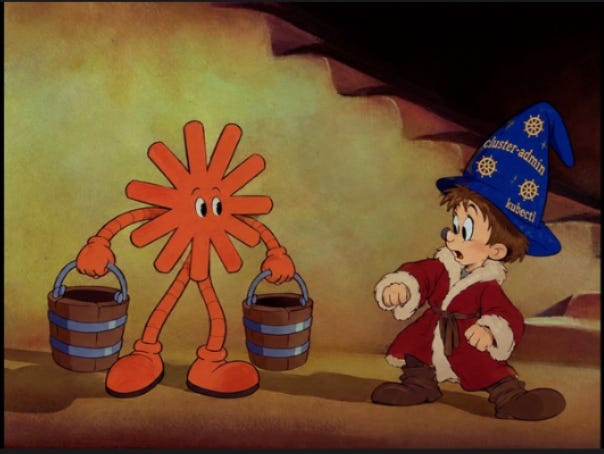
In Gastown (Jan 2026), Steve Yegge came from the future and tried to warn us.
“Repent,” he said. “You will be driven mad by the accelerating drumbeat of the tokens. Your codebase will fall. You will see the best engineers of your generation starving hysterical naked, burning their money and craft at the altar of a tasteless and unworthy god.”
Well, not in those words. It was more mad-max themed. On its own terms:
Gas Town is an industrialized coding factory manned by superintelligent robot chimps, and when they feel like it, they can wreck your shit in an instant.
Great art cannot be summarized, but Gastown is what would happen if 8 months ago you’d taken a child’s drawing of the big truck from Mad Max, prompted Opus 4.8 “this is an architecture diagram. Build Kubernetes for agents,” and let it spend $100,000.
In any case, I am not a textualist - I am an interpretive scholar of Mr. Yegge’s work. I love Gastown. Gastown is the Mother of All Demos of the slop era. It is to AGI as this weird block is to the computer mouse. It’s not The Thing - but I bet we’ll look back and recognize the shape.

As my personal decline into AI psychosis accelerates, the core vision of Gastown et al. calls to me:
Working effectively in Gas Town involves committing to vibe coding. Work becomes fluid, an uncountable substance that you sling around freely, like slopping shiny fish into wooden barrels at the docks. Most work gets done; some work gets lost. Fish fall out of the barrel. Some escape back to sea, or get stepped on. More fish will come. The focus is throughput: creation and correction at the speed of thought.
Sounds great! I’m reckless and agent-pilled. I launch dozens of agents. At first it’s tmux, then it’s slack. Who needs a terminal anymore? I have agents manage other agents. I stop reading the code. I love fish. I’ve made 2,795 github contributions in September, and I haven’t read any of them. “What’s the deal with the fish, Will?” my coworkers ask.
The vision dissolves into sludge. It’s really starting to smell like fish. I up our organization Codex limit. Efficiency declines. The cost of a single PR skyrockets, and every module of the codebase has grown complexity tumors. We hit Yegge’s Paradox.

At this point, a reasonable person would slow down, keep humans in the loop for a while longer, and patiently await better models. I am unreasonable and impatient.
Maddeningly, it’s not a lack of capabilities - I mean just look at twitter. AGI is here. They’re hacking huggingface. They’re making music videos. They’re trading stocks - why can they no longer make a safe change to the billing logic in my app?
I realized that this problem - of isolation and overhead - isn’t new, and it’s not solely the domain of AI. Look at this quote Werner Vogels, the Amazon CTO, gave in a 2006 interview about Amazon’s codebase circa 2001:
Interviewer:
Was that performance scalability, or was it manageability, or facilities?
WV:
The many things that you would like to see happening in a good software environment couldn’t be done anymore; there were many complex pieces of software combined into a single system. It couldn’t evolve anymore. The parts that needed to scale independently were tied into sharing resources with other unknown code paths. There was no isolation and, as a result, no clear ownership.
The man is describing straight slop. Opus 5 levels of brainrot. But produced by humans! 20 years ago you needed massive headcount and tyrannical management to achieve this level of confusion. Today even a small startup, managing agents, faces the same clusterfuck of complexity cancer as early Amazon. What progress!
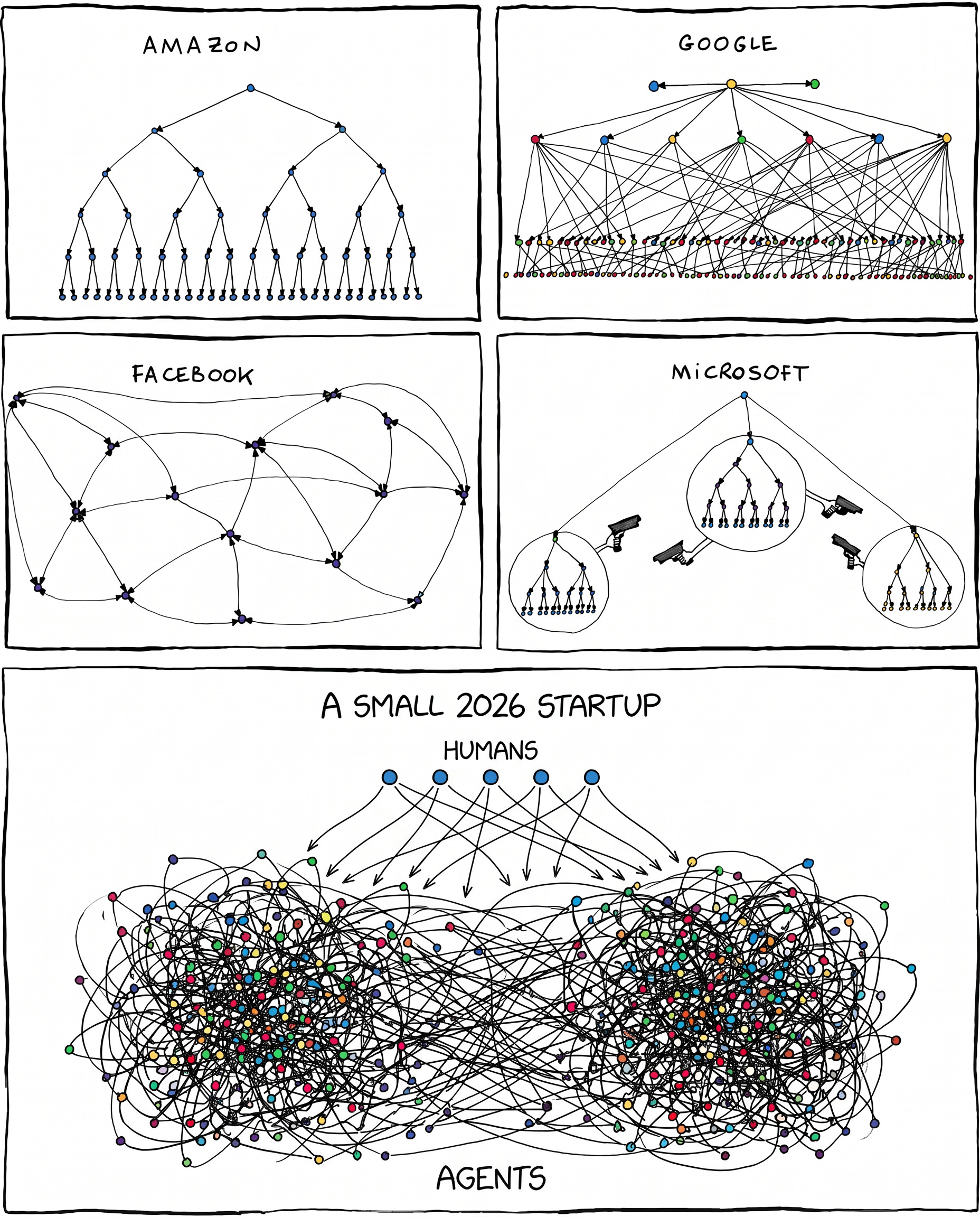
Coincidentally Steve Yegge, long before blessing us with Gastown, was around to chronicle this era as well. Here’s an excerpt from his infamous 2011 Google+ rant about platforms:
I was at Amazon for about six and a half years, and now I’ve been at Google for that long. One thing that struck me immediately about the two companies -- an impression that has been reinforced almost daily -- is that Amazon does everything wrong, and Google does everything right.
[....]
But there’s one thing they do really really well that pretty much makes up for ALL of their political, philosophical and technical screw-ups.
[...]
So one day Jeff Bezos issued a mandate. [...it] went something along these lines:
All teams will henceforth expose their data and functionality through service interfaces.
Teams must communicate with each other through these interfaces.
There will be no other form of interprocess communication allowed: no direct linking, no direct reads of another team’s data store, no shared-memory model, no back-doors whatsoever. The only communication allowed is via service interface calls over the network.
It doesn’t matter what technology they use. HTTP, Corba, Pubsub, custom protocols -- doesn’t matter. Bezos doesn’t care.
All service interfaces, without exception, must be designed from the ground up to be externalizable. That is to say, the team must plan and design to be able to expose the interface to developers in the outside world. No exceptions.
Anyone who doesn’t do this will be fired.
Thank you; have a nice day!
Ha, ha! You 150-odd ex-Amazon folks here will of course realize immediately that #7 was a little joke I threw in, because Bezos most definitely does not give a shit about your day.
And so the solution, sadly, is Microservices. This mandate kicked off the microservices era in tech. Yucky! Not sexy. But! Reflect again on the fact that if there’s an external API you depend on, so long as the API stays up and functional, you don’t care what’s happening behind it - human, agent, chimp, or a depraved combination of all three.

Microservices, and other trendy-at-the-time practices like TDD (Test Driven Development), have a bad rap today because in the human era, over-zealous juniors would adopt them too early. There was no need to split everything into a separate API when you had 20 engineers. And it added duplication. Today your 20 engineers have, collectively, 1000 eager interns, and clear service boundaries become necessary.
On duplication - back when I was a human software engineer (today I am simply 10 claudes in a trenchcoat), I used to love working on data modeling. My favorite framework for thinking about data is normalization and denormalization.
The idea is that centralization and efficiency are often in direct conflict - should you route all your analytical queries to that busy events table, and keep everything in one place? Or should you pre-calculate statistics, and save them separately? The correct answer depends on the facts of the particular case, but it’s a framework that can be applied to human systems as well. As your company scales, should the whole organization have one hiring process? Or should each team handle its own recruiting? The latter may duplicate efforts but increase efficiency and reduce bottlenecks.
I believe denormalization, and formalized API boundaries, are the right tactics for the agent era.
My friend Owen likes to make the analogy that working with coding agents is like telling someone in a different room to build a table. You shout to them -
“is the table done?”
“yeah!”
“ok great, can you put something on it?”
[crashing]
“What happened?”
“The table didn’t have a top! I’m documenting that”
“Bro bro bro”
[…]
“Ok can you slide a chair in?”
“The chair system has hit a blocker - I didn’t have the legs, so I decided to leave them off. As a result, the chair cannot go under the table”
And so on and so forth. The solution is an explicit specification - “Please build a table. It should pass this exact set of table tests - it should be 28 inches tall and have a totally solid top and be able to support a full thanksgiving dinner…” and that’s your table API. But if, while you’re shouting at it about the table, there’s another guy installing carpet, someone else repainting the walls, and the room is on fire… Yegge’s Paradox.
Denormalization is also how I understand one of tech’s favorite books - Seeing Like a State.

Seeing Like a State is a collection of anecdotes about ways that centralization went wrong. For example, Soviet collectivization of agriculture, which caused a horrible unforced famine, or how Le Corbusier built abstractly beautiful cities that were locally unlivable and anti-human.
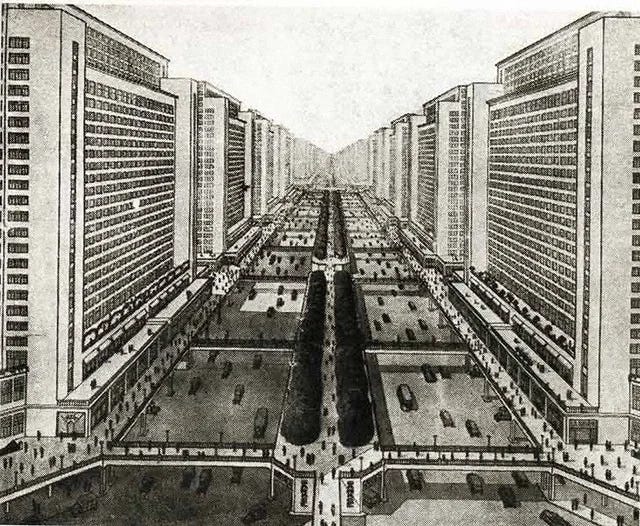
All of the cases in the book are examples of how trends in systems ripple back and forth between humans and technology.
If one takes seriously the idea that AI will diffuse meaningfully into the economy, and if it remains true that models perform better isolated and denormalized than normalized and centralized, I wonder how that trend will affect the economy more broadly, and the shape of human interaction and collaboration.
Will companies become smaller? Will we see a renaissance of single-person indie companies exposing small APIs to each other, paying over x402? Or will we be left out of the loop entirely, as agents build their own cities and firms, which are illegible to us? All I know for sure is that it’s gonna get much, much weirder.
P.S: if you made it to the end, and you haven’t read both Gastown and Steve’s platforms rant, you should go read both in full! They’re hilarious and insightful, and Steve’s a far finer writer than I. S/O Steve for making me laugh so hard I cried the first time I read Gastown.