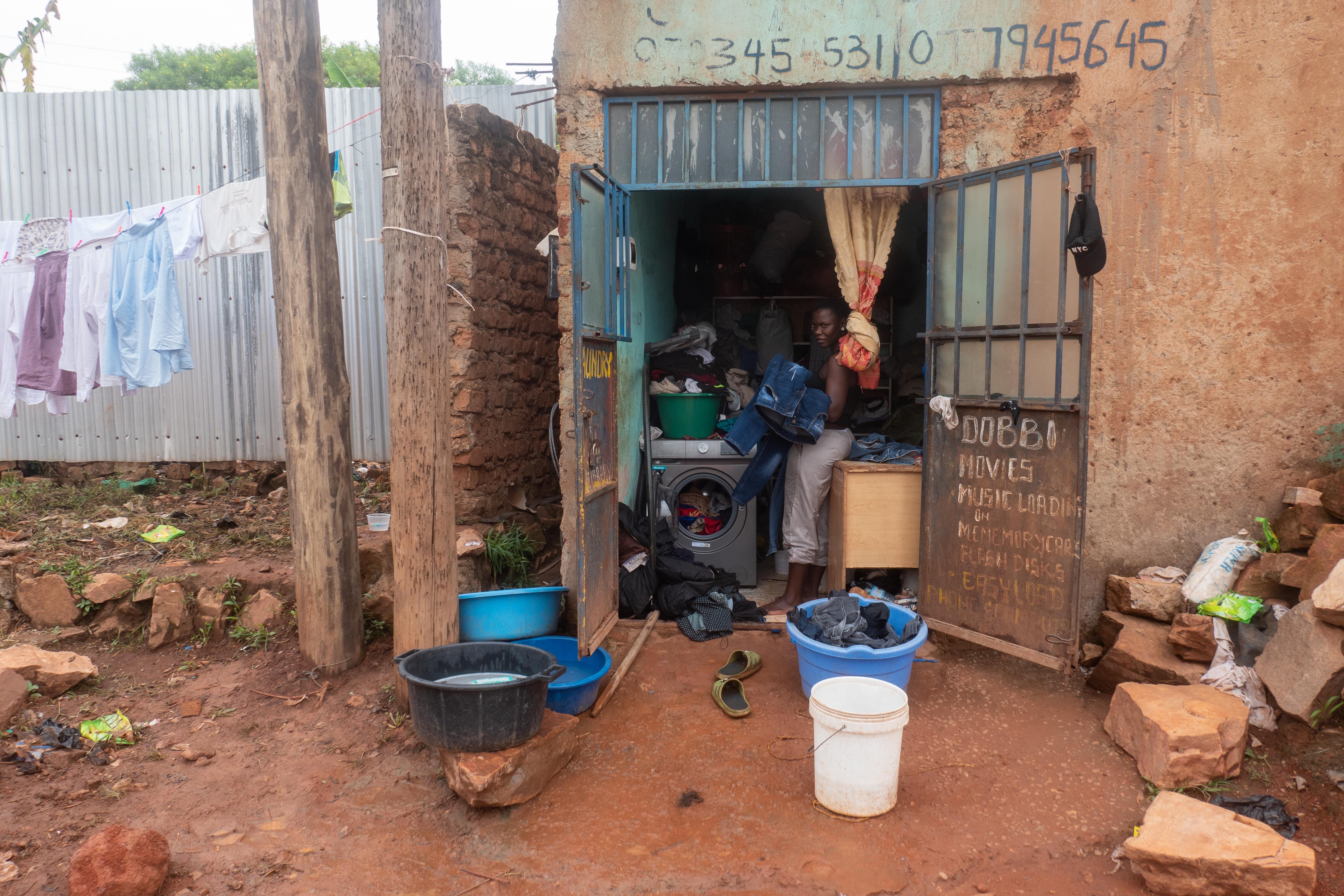
It is easy to read this newsletter and think I don’t like modern life, because I focus most of my walks on the disenfranchised (regions and people), but despite our problems, life is as good as it has ever been. Especially if you play the game of “imagine you’re randomly born anywhere in the world.” At almost every point in the past that would mean an above-average chance you would be birthed into poverty, hardship, pain, want, and violence, and your adult life (assuming you made it to that) would be a struggle to stay alive and satiated.
That includes the past of my childhood, in the 60s and 70s, which while it didn’t come with endemic poverty or want (certainly not for me, although there were pockets of deep want, shotgun shacks without running water, and children who went to school in the same outfit every day because that is all they had), it was much poorer, and certainly less enchanting.
My childhood wasn’t normal (we traveled constantly) but when I was home, in our small Florida town1, it was punctuated with long periods of immense boredom. The only books available were those sanctioned by the few libraries, all far from home, and only movies those that came to our theater (seven miles away), a new one once every two weeks.
We filled in that time by playing, including war, if we found enough neighborhood kids, first with imaginary guns, and then when that got to be too frustrating (I shot you, no you didn’t, yes I did) we moved up to BB guns, then pellets, to settle once and for all the who-shot-who disputes. Injury, like maybe losing an eye, was shrugged off as a risk, one that could be mostly eliminated by wearing heavy clothes and perhaps swim goggles, but those cut down your vision, so everyone agreed to not aim for the head, something we mostly accomplished.
That sounds romantic I know, especially to writers, who imagine they would play less war and read more, and while I did a lot of that because my parents had a great library, most people didn’t, and couldn’t. Instead they filled it in with drugs, fights, absurd made-up dramas, mostly about who liked who, and watching whatever slop the three channels provided, regardless of quality.
Organic childhood play, of zooming around town on bikes, crashing into trees, has its moments, but besides the dangers, like the seven year old neighbor who set himself on fire and only survived after six months in the hospital2, it’s not something I would want to force on a kid as the singular option. We had no other options, and options are good.
And I was near the apogee of wealth as an American, a privilege I saw when traveling. A majority of the world lived in grinding poverty, and even those that didn’t, faced periodic and protracted hardships.
South Korea, which is now a wealthy country, when I visited it in the seventies, was dirt poor. As in kids pooping on the streets poor, and meat only a few meals a month poor, which if you know Korean cuisine, is rather different.
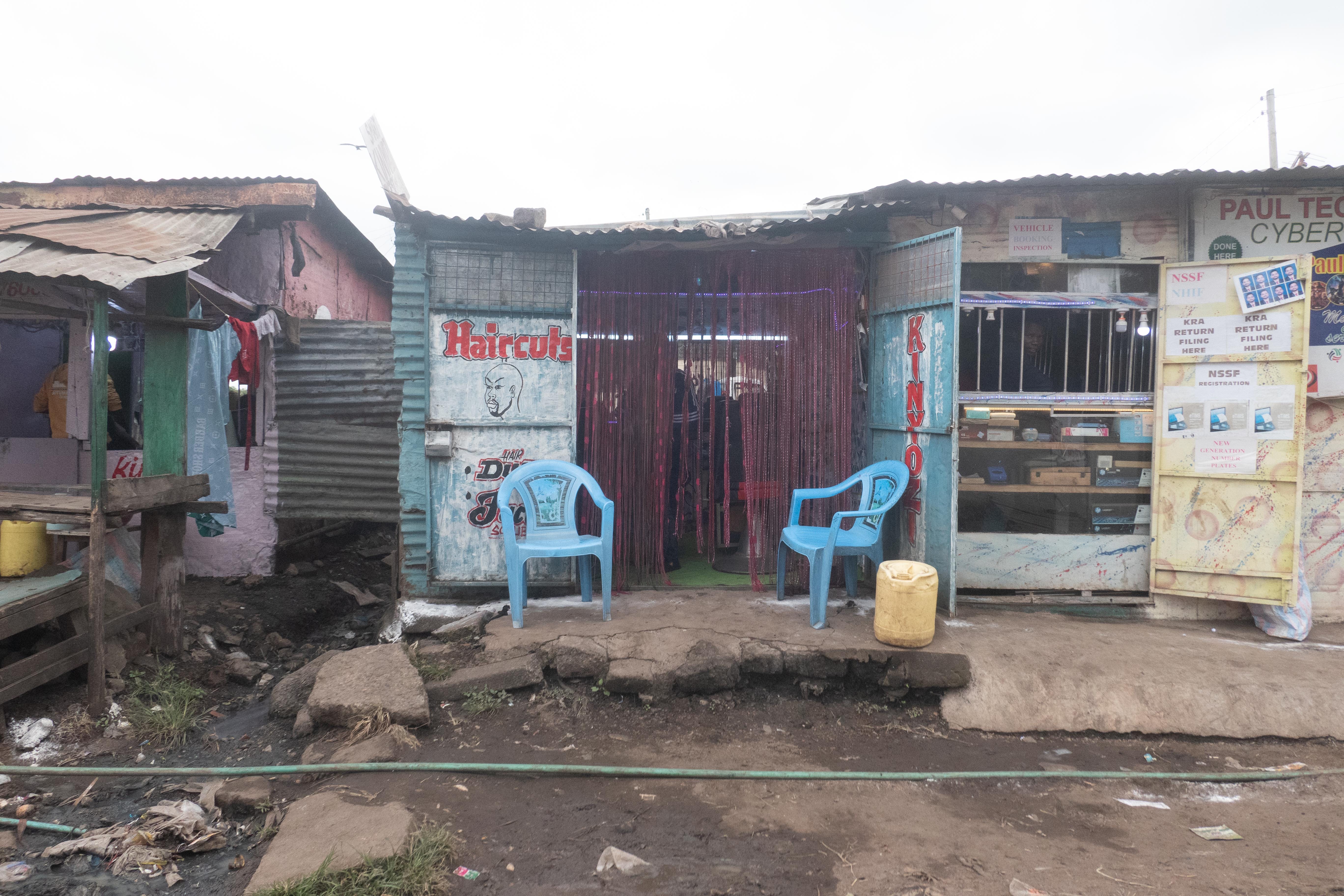
Again, one of the most underappreciated things about the recent past was how common boredom was. When I was twelve we went to visit my brother who was living in rural Philippines, working with the local rice farmers. It made my life in Florida seem enchanting by comparison. Everyone was so bored that Friday night fun was getting drunk and shooting rats with shotguns, or on special occasions, walking into town to go to the cockfights where everyone was drunk and at least ten fistfights would break out, and then a week later someone’s wound would go septic and they had to be driven, with great fanfare, into the local hospital where it would be touch and go.
Again, there was something romantic about that I guess, especially for writers, but give me Netflix and an annoying bespoke IPA instead, especially if that is all there is.
Adulation of the past is a misunderstanding of the past, either because of childhood nostalgia, or out of ignorance. Almost every age looks back and says, “it was better than”, and while that can be true, especially around tragedies like wars, in the long run it keeps getting better.
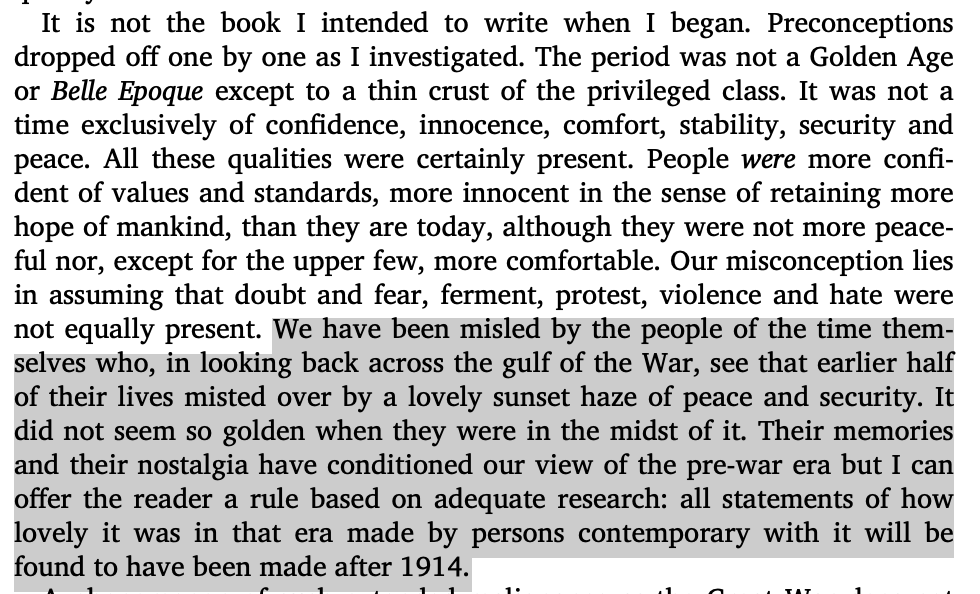
For instance, this is from Barbara Tuchman’s “The Proud Tower3” about the pre WW1 world, and as she writes, the idea that the pre war world was a golden age, was something they believe later in life, not at the time of that golden age.
I especially struggle taking seriously the “modernity sucks” people who lay the blame on technology and seem to idolize the pre-industrial past. Modern technology is wonderful, and our current problems are not because of the machines, but in how we use them.
I was reminded of this with my recent health issue—when a blood test showed I had a risk of prostate cancer, and within two months I was able to walk into a clinic, have a biopsy, and then walk out two hours later, and within a week find out the growths were non-cancerous, and even had they been, my chances of survival were very high.
Modern medicine alone should be reason enough to understand how fortunate we are to be living now, surrounded by technology. At almost any other period of time, having made it to sixty in good health would be a great accomplishment, rather than the normal, and I would be nearing the end of my life, rather than having a decent chance of being here two or more decades4.
That is a lesson I learned early, from my grandmother, who grew up on a Michigan milk farm, loved going into the grocery store and getting Velveeta cheese5, loved her modern conveniences, and would laugh at the “back to nature” hippies as having no idea how hard life was then. Especially as she had lost her husband at the age of thirty-eight, who dropped dead from a blood clot that had gone to his brain, something modern medicine almost certainly would have caught before it killed him.
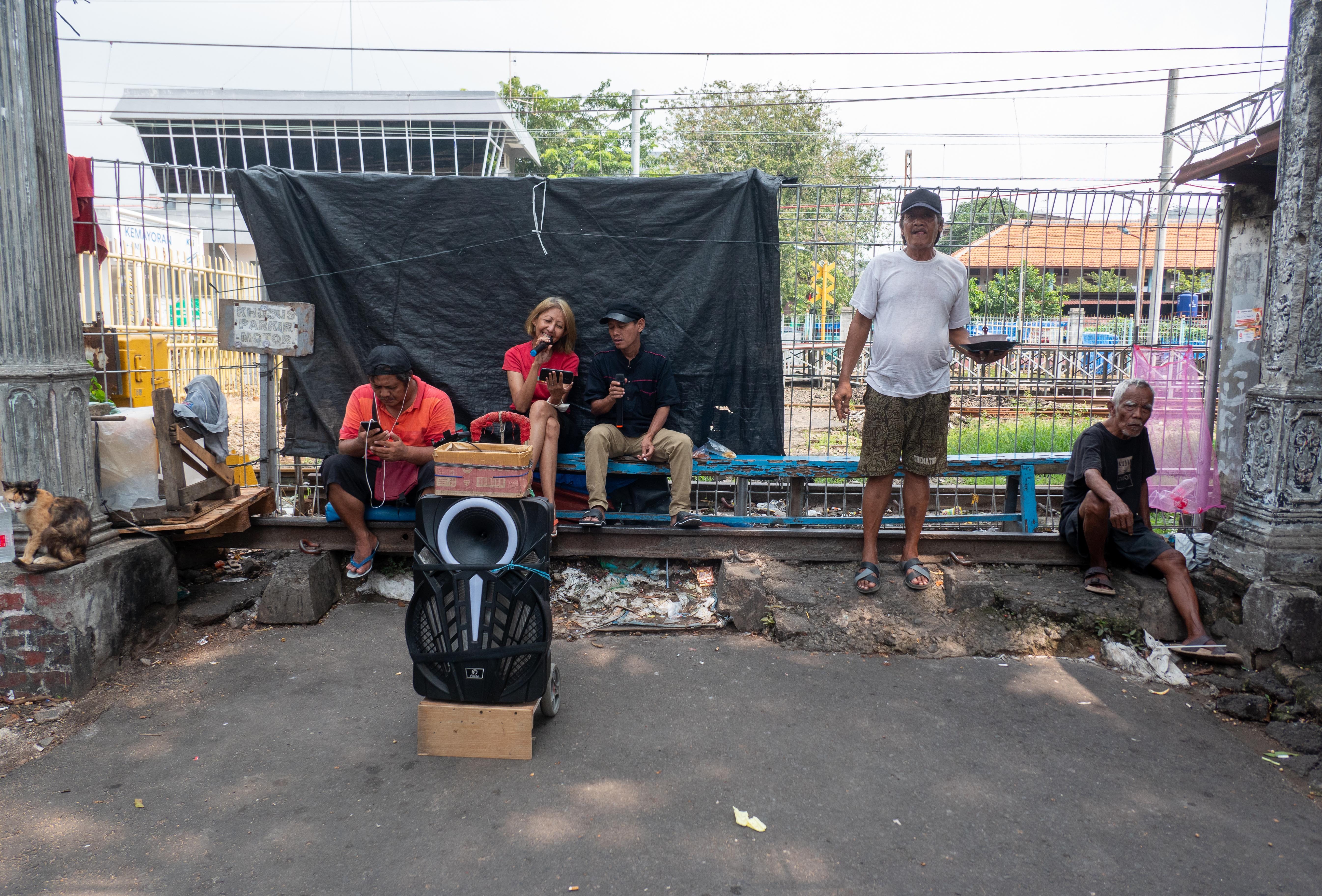
The problem with modern technology isn’t that it exists, but in how we use it, especially in highly individualistic societies such as the US, which is to go off on our own, into even more solitary lives, removed from community. It is an accelerator of an already existing problem. You can see that in Asian societies with a long-standing cultural emphasis on the communal, such as Vietnam, China, and Indonesia, where a thriving social life still exists, despite the phones.
Technology has enriched our lives in so many ways—extending them, lessening pain and suffering, and providing endless diversions—that having to argue that it is in fact a net good seems like an argument that shouldn’t have to be made, yet a “simpler, more rustic, less technologically advanced” lifestyle is one of those images that always has strong appeal, because we romanticize the simple, while forgetting that the simple has never been easy. The romantic appeal of pre-modern life might be about staying busy through constant toil, but actually growing your own food without machines, washing clothes without machines, and keeping your children alive without machines is not easy. Those are immensely hard, painful, and come with a lot of despair.
It’s interesting that the people most bothered by technology in the West, and most drawn to a prior lifestyle, are the highly individualistic and idiosyncratic intellectuals—not the “normies,” who when given the chance to choose overwhelmingly want the lifestyle anti-modern elites believe is so destructive.
Poor people especially understand something that anti-modernist romantics don’t, which is that every choice involves tradeoffs, and the tradeoff between our current problems and past problems isn’t close.
Show a Cambodian peasant, or a farmer in rural Indonesia, the neon lights and indoor plumbing of Phnom Penh or Jakarta, and they will drop their hoe in a second, happily throw away their low-tech supposedly idyllic life, cram onto a bus and move to be simply near them, even if that means living in a shack on the edge of town. That so many of them are drawn to the spectacle, like moths to a flame, is why these cities in the third world are swelling to the world’s largest, engorged with people seeking more glamorous lives.
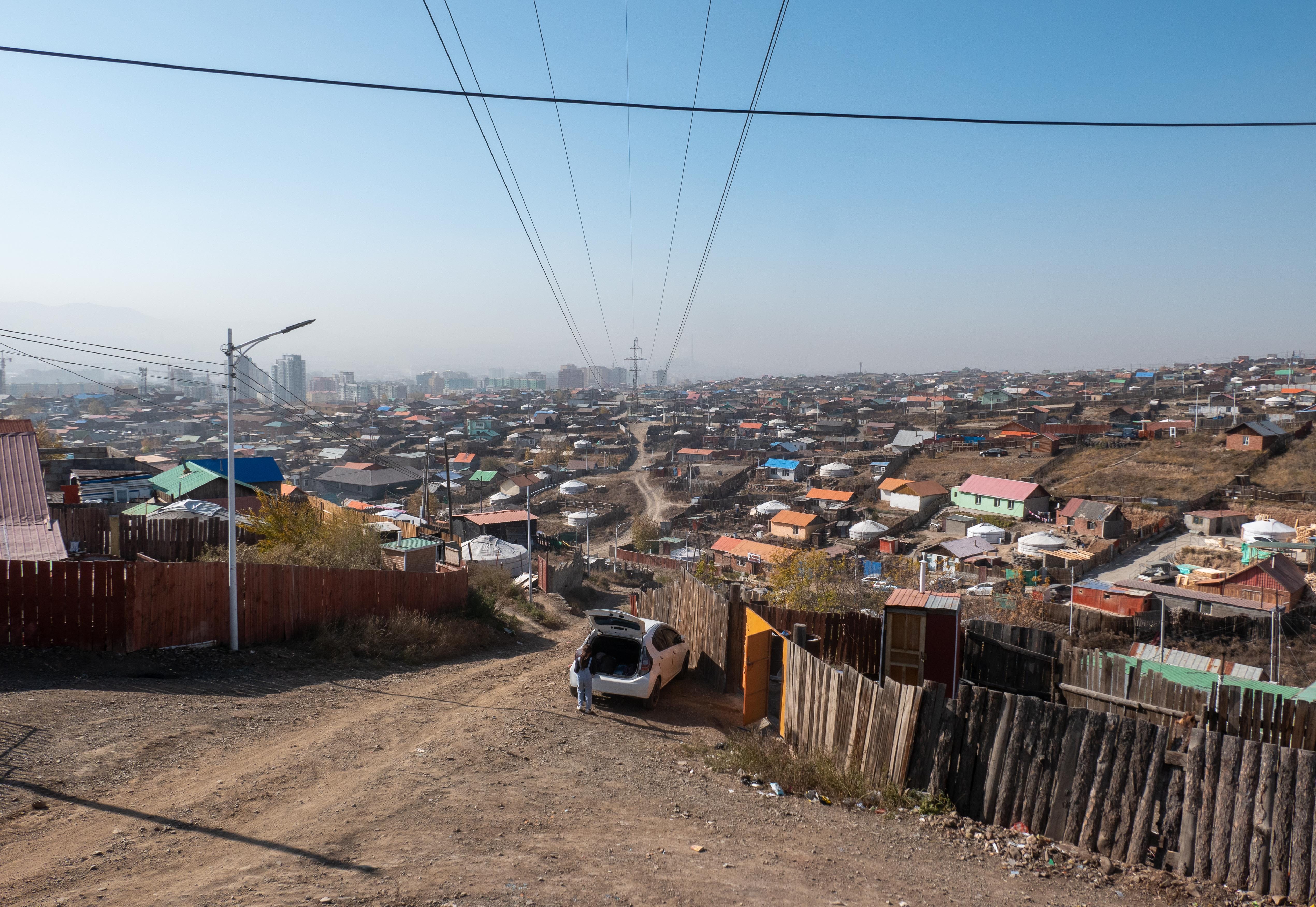
The outskirts of Ulaanbaatar is another example of this. The Ger district, extensive and polluted slums that ring Mongolia’s capital, is where thirty percent of the country lives, having tripled in the last thirty years. Not by force, but because people have shown that they prefer being crammed together, next to hospitals, gaming centers, malls packed with Korean electronics, and the bright lights of the city, to the thousand year old long-standing tradition of being out in the sticks, with your Ger, horses, and a Prius6.
People, when allowed to choose, embrace modernity — because they see it as liberation from the hard, bland, boring life of poverty.
The counterargument is that they have not been allowed to choose, because of globalization, and the forces of a capitalism that’s made their past lifestyle impossible. There is truth to that. Policy crafted to maximize production without regard to communal consequences has not surprisingly resulted in more stuff but also devalued the communal7. This isn't the only reason for the rural exodus, and not, I think, the primary one, but it's certainly a large part of the story.
Economic transitions, from agricultural to industrial, and then from low tech industrial to higher tech industrial, always come with a great deal of turmoil, and displacement, that should and can be better managed, but as to whether it's “worth it”, I come down on the side of yes it is. Which I understand isn’t necessarily the most popular side in the online debate.
All of these issues, of progress versus tradition, were debated in England, during the Industrial Revolution, and occupied most of the country’s politics from 1650 to 1850s, and while that period saw a great deal of displacement, confusion, and pain, it also saw an immense increase in living standards. Today, only a few eccentrics argue that things were better before the Industrial Revolution than after, although in the grand calculation of moral right, it certainly came at a significant cost in human suffering.
Debating those questions will never end, and won’t be settled, but it is all academic because you can’t stop progress, that isn’t how humans work. You can manage it so the transition is less unsettling, and that is where the focus should be, not on denying that in totality it is the correct direction.
That modern life, especially the technology, has enabled governments to expand control of its citizens is another good argument, because as China shows, it is partly true, but as a whole package technology is the enemy of authoritarianism, not its friend, because it allows everyone to be informed. That repressive regimes limit what modern inventions the citizens can have, especially blocking the internet, should be evidence enough, that they see modern life as a threat.
That’s not to say modern life doesn’t come with new problems, and that technology can’t be used for ill, but all of that pales in comparison to what people faced in the past. It’s helpful to remember that every now and then.
We cannot ever eliminate despair, because living, while filled with the good, is also hard. There is no utopia, not here on earth at least, and the fruitless quest to try and achieve it is why humans can’t stop progressing, and why they also won’t stop believing it was better before.
The imperfection of the human condition, and our humble place in the universe, can never be eliminated. Not by more and more machines, and also not by denying the additional good they do bring, but only by an acceptance of our limitations.
In that way I suppose I side more with the nostalgics than the full-on modernists, who at least grasp most of that, but then fail to recognize that even a fallen person seeks and needs material comfort.
We might never be able to achieve perfection, but we might as well keep aiming for it, and that means continuing to try and move forward, rather than back, because humans, and living, is fundamentally good.
PS: I will be in Washington DC this weekend for personal business. After that, I will get back to traveling and more traditional posts. Although for the first trip, I’ll more be busing the US, which as anyone who has gotten around this country by public transport knows, that still means a lot of walking!
Until next week, be good!