'Modern Visual Basic' Mercury Language Debuts

RemObjects has debuted the Mercury programming language, described as a modern Visual Basic "with a future" for all platforms.
The "with a future" description refers to Microsoft's 2020 announcement that "We Do Not Plan to Evolve Visual Basic as a Language" as the company was shifting from the old, proprietary, Windows-only .NET Framework to the new open source, cross-platform .NET Core (now just .NET 5, .NET 6 and so on). Visual Basic is supported in .NET 5, but it's a dead-end street.
Several efforts have sprung up to keep the hallowed Visual Basic language alive in one form or another for a loyal, die-hard developer following, including Mercury, which is supported by another RemObjects offering, Elements, a tool chain/development environment that last week graduated to version 11. Unlike some of those other efforts, Mercury doesn't come free -- it comes with a $49 per developer per month subscription or a one-year $599 purchase or bundled with Elements in multiple pricing tiers.
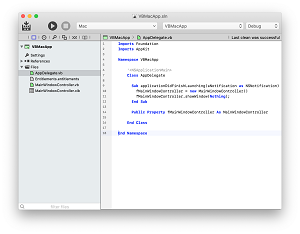
Last week's Mercury debut came after more than a year of development and beta testing.
"The goal of Mercury is to breathe a new lease of life into the Visual Basic.NET language -- giving it a future beyond the point where Microsoft has stopped its development, bring to it new features and support for modern (current and future) .NET platforms and platform features, and to also take it beyond just the .NET platform to all the platforms supported by Elements," the company said in a blog post last week.
Those platforms include:
- .NET, .NET Core, Mono and ASP.NET Core
- The Java VM and any device that runs Java code.
- Android, both the Java-based SDK and the CPU-native NDK
- iOS, macOS, tvOS and watchOS (Cocoa, CPU-native)
- Windows (CPU-native)
- Linux (CPU-native)
- WebAssembly, for web browsers and Node.js
VB.NET projects can easily be converted to Mercury, the company said, and coding can continue in Visual Studio or proprietary IDEs for Windows and Mac.
About the Author
David Ramel is an editor and writer at Converge 360.
Featured
-

Microsoft Agent Framework Makeover: Claws, Loops and Harnesses
Microsoft's newly released Agent Framework Harness packages the loops, planning, memory, context management and safety controls that developers previously had to assemble around AI models themselves.
-

Visual Studio 2026 Gives Copilot Built-In Skills -- and Makes Them Prove Their Worth
Microsoft is moving Agent Skills beyond bring-your-own instructions by shipping expert-authored workflows with the IDE, while keeping them off by default until testing shows their benefits justify the additional token use.
-

Copilot AI Billing Shock Met with Meters, Caps and Token-Saving Tools
GitHub is layering spending limits, expanded credit allowances and increasingly granular usage reporting onto Copilot, while Microsoft is reworking Visual Studio and VS Code to expose -- and reduce -- the cost of agentic development.
-

The AI-Powered Software Development Lifecycle
René van Osnabrugge makes the case that AI's biggest opportunity in software development is not faster coding -- it's reducing the friction everywhere else in the SDLC.
Please type the letters/numbers you see above.