Previously: Growing up in “404 Not Found”: Life in a Secret Chinese Nuclear City That Was Never on the Map
Welfare in 404 was excellent. We almost never had to buy rice, flour, or oil; watermelon and Hami melon were handed out by the sackful. When my uncle’s family received fish, they would bring a few to our house, and when our family received chicken, we would send some back in return. Neighbors and residents from different floors also exchanged goods based on mutual trust and social ties. In 404, basic necessities cost almost nothing, the wealth gap among the plant workers was very small.
There were no hidden worries about life in 404, so most of our family’s money was used to buy “toys.” In 1992, my parents’ combined salary was 500 yuan, yet they spent 3,500 yuan to buy a VCR. In 1997, a television with a “picture-in-picture” function cost 7,400 yuan. The wealthiest person in the entire plant area was a scavenger; in the 1990s, he was already worth over a hundred thousand yuan.He knew how to do business and made a fortune starting from collecting scrap; he eventually bought trucks to haul coal, and everyone called him the “King of Trash.”
Later, when I read descriptions of communism in political textbooks, I felt that 404 was pretty much exactly that.
People in the plant area loved to eat and frequently went out to restaurants. After finishing their meals, they would scuffle at the counter, shoving each other out of the way to settle the bill. Because everyone treated each other to meals, I ate at the hotpot restaurant in front of the primary school 17 times during the first month it opened.
Near my father’s workplace, there was a small potsticker shop called “Baishun Chicken” (Hundred Prosperities Chicken). The wooden chopping block in the shop was twenty centimeters thick; because they chopped filling all day long and the knife fell so densely, a pit ten centimeters deep had been carved into the middle of the board.
Baishun Chicken was originally a hotpot restaurant located in the middle of the free market, and business was extraordinarily bustling. In the dead of winter, the heat in the shop was overwhelming, and everyone ate hotpot in short sleeves. Especially during the Lunar New Year period, there were several times more people than usual, with swarms of people squeezing into the shop. It was on one such New Year’s evening that the ground in front of the hotpot restaurant collapsed; someone fell into a two-meter-deep pit and was seriously injured.
This incident made it into the plant newspaper. My mother clicked her tongue in wonder, saying that the people of 404 loved eating so much they had literally stomped the ground into a collapse.
Scaffolding was erected in front of Baishun Chicken, surrounded by green netting. With the reopening nowhere in sight, an auntie from the shop came out and opened this potsticker shop of the same name.
The plant area was small and life was leisurely; the most lively events were the sports activities organized by the various units. In my memory, the sports meets never stopped; they were held from the beginning of the year to the end, and everyone seemed to be preparing for a sports competition at any given moment. Consequently, most people of my parents’ generation were skilled athletes. The floodlit stadium was brilliantly lit at night; while my parents competed on the field, we children would gather by the rostrum to trade Water Margin collector cards.
I have a hazy memory that a circus once performed at the stadium. Swings were set up high in the arena, and performers fastened with red silk performed as trapezes. Snake charmers put tiny snakes into their mouths, and the snakes would crawl out of their nostrils.
Aside from sports competitions, the main leisure activity for people in the plant was taking a stroll after dinner. Everyone walked off their meals on the same street, and when they ran into acquaintances, they would stand in the road and chat. I truly disliked tagging along with my parents; the streets were full of people they knew, and a path of a few hundred meters often took half an hour to walk.
Every evening, it was exceptionally lively in front of the Workers’ Club. Adults gathered in groups of three or five to chat under the statue of Chairman Mao. Children would climb onto the base of the statue and walk along the narrow ledge, circling the Chairman.
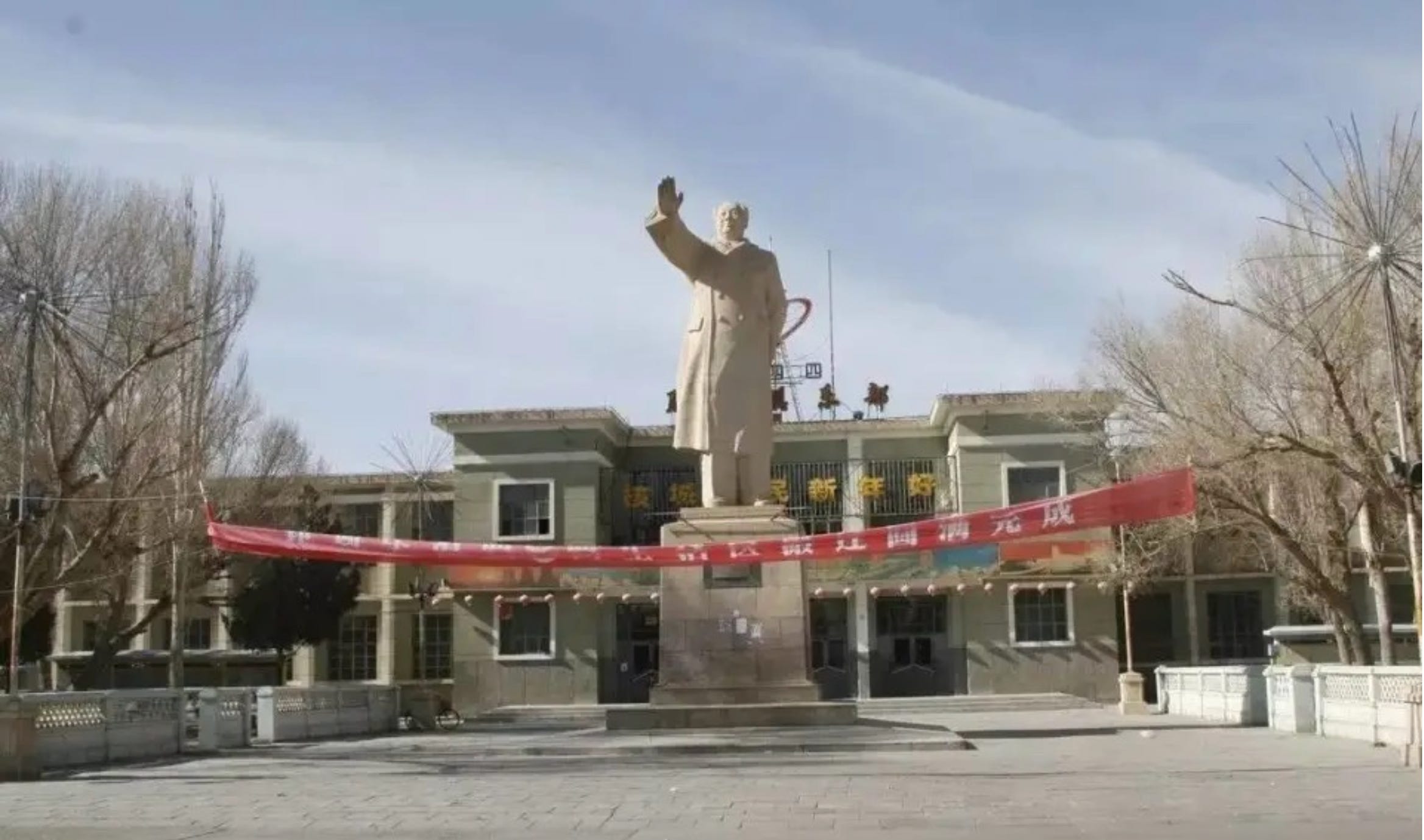
Later, I saw many Chairman Mao statues in various places, but the one at 404 was the most “utilized.”
Diagonally across from the Workers’ Club was the Xinhua Bookstore; in the early years, it had subscribed to books in eight languages. On the second floor of the bookstore was a barbershop, where the hair piled on the floor was over half a person high. The adults said the hair was taken to be made into soy sauce. I never knew if it was actually true.
The aunties inside wore white coats, just like doctors. Many parrots were kept in the shop, all locked in cages and placed on the floor; you had to bypass the piles of hair to see them.
Once, the older girl from downstairs showed me the braid she had cut off. The hair was tied with a ribbon and placed in an exquisite box. I found it very singular, so when I got home, I took a “Dada” bubble gum box and cut my hair in front of the mirror. My hair wasn’t very long, so I only cut half a box of fragments, which couldn’t be tied with a ribbon at all. When my mother came home and found out, she dragged me into the barbershop. The auntie pointed at me and laughed out loud, saying my hair looked like it had been gnawed by a dog.
I couldn’t explain the situation, and my hair looked very ugly, so I just pouted and cried. I have long hair now, but I still detest talkative barbers.
The 404 plant possessed a complete set of administrative organs, including a Finance Bureau, a Land Bureau, a television station, a newspaper, and even a Higher Education Admissions Office. The plant area also had its own public security and judicial system; in addition to a detention center of two or three rooms, there was a Public Security Bureau and an Intermediate People’s Court.
Behind my primary school were the single-story houses on the hill, and further back was the “Back Mountain”—that was where 404’s execution ground was located.
There was a middle school kid in the plant who owed money for table time to an old man at the billiards hall. The old man cornered him at school, threatening that if he didn’t pay, he wouldn’t let him continue his studies. If the old man told the teacher, the entire plant would find out about it. The kid went to the old man’s house and hacked him to death with an axe.
The debt was only 5 yuan.
After the deed was done, he found his classmates, telling them he was going to leave and saying see you.
He headed to the railway tracks to escape by hopping a train, but was caught.
The trial was swift. The judge shouted, ‘Death penalty, execute immediately.’ A tall placard was stuck into the back of his collar, looming over his head. His name was written on it, crossed out with a large red ‘X’.
He was taken to the Back Mountain and executed by firing squad. To mask the scent of blood, they sprinkled sorghum wine on the ground. The smell of the wine drifted far across the Gobi Desert.
On the way to my grandmother’s house, there was a large transformer with a sign hanging on it: “High Voltage Danger, Do Not Climb.” Yet, back then, someone climbed it anyway.
Fights were common in 404. Once, a man beat his opponent unconscious. The police thought the victim was dead and arrested the attacker. In the plant, if you caused a loss of life, death was the only certainty. During the escort, he suddenly broke free; in his desperation, he climbed onto the transformer. His hands touched the current, and both his arms were blasted through. He underwent an amputation. When the man who was “beaten to death” woke up from his faint, the police realized it was a misjudgment.
The government organs were negligent in this matter, so the assault was no longer pursued, and they promised to help him find a wife.
The government arranged to find a woman from the surrounding countryside, saying that if she agreed to the marriage, she would be given an urban household registration (hukou户口, a golden ticket for rural people at the time). The woman agreed. After entering the plant, she opened a small bar that also sold ice cream. She raised several children and bought houses for them.
The arcade hall has been running till now, named “The Big World.”
During junior high, a few of my close friends and I enrolled in the Mathematics Olympiad. Ostensibly, it was for academic purposes, but really, it was just an excuse to hang out. After class, we would go to the Beef Noodle House at the open market, copy each other’s homework, and then buy ice cream from “The Big World” to take to the zoo.
I don’t know where the owner learned the recipe, but the ice cream was always soft and fluffy — a scoop of chocolate and a scoop of vanilla swirling together perfectly. It tasted amazing. Every time we ate it, we would slap our thighs in high praise.
Having been away from the factory area for a long time, I am no longer certain about many things and beliefs, but I am still absolutely sure that “The Big World” ice cream is the most delicious ice cream in the world.
Further south “The Big World” was the Nuclear City Zoo.
In the beginning, the zoo was impressive. My eldest uncle was the one responsible for stocking it; he traveled across the country to handpick and transport these animals back to 404. It housed yaks from Qinghai, spotted deer from the Northeast, and exotic birds like peacocks. The largest cage held monkeys brought from Guangxi; they would climb on a hanging cableway, making a loud ruckus. There was even a funhouse with distorted mirrors and amusement machines, though those were closed year-round — it wasn’t ‘cost-effective’ to staff them.
But over time, the zoo began to devolve. The rare birds disappeared one by one. The peacock cage was filled with guinea fowl, then black chickens, and finally, it held only a few domestic hens, identical to the ones in my grandmother’s backyard. The spotted deer was replaced by a lonely sheep. After eating hay for several years, even the sheep vanished without a trace.
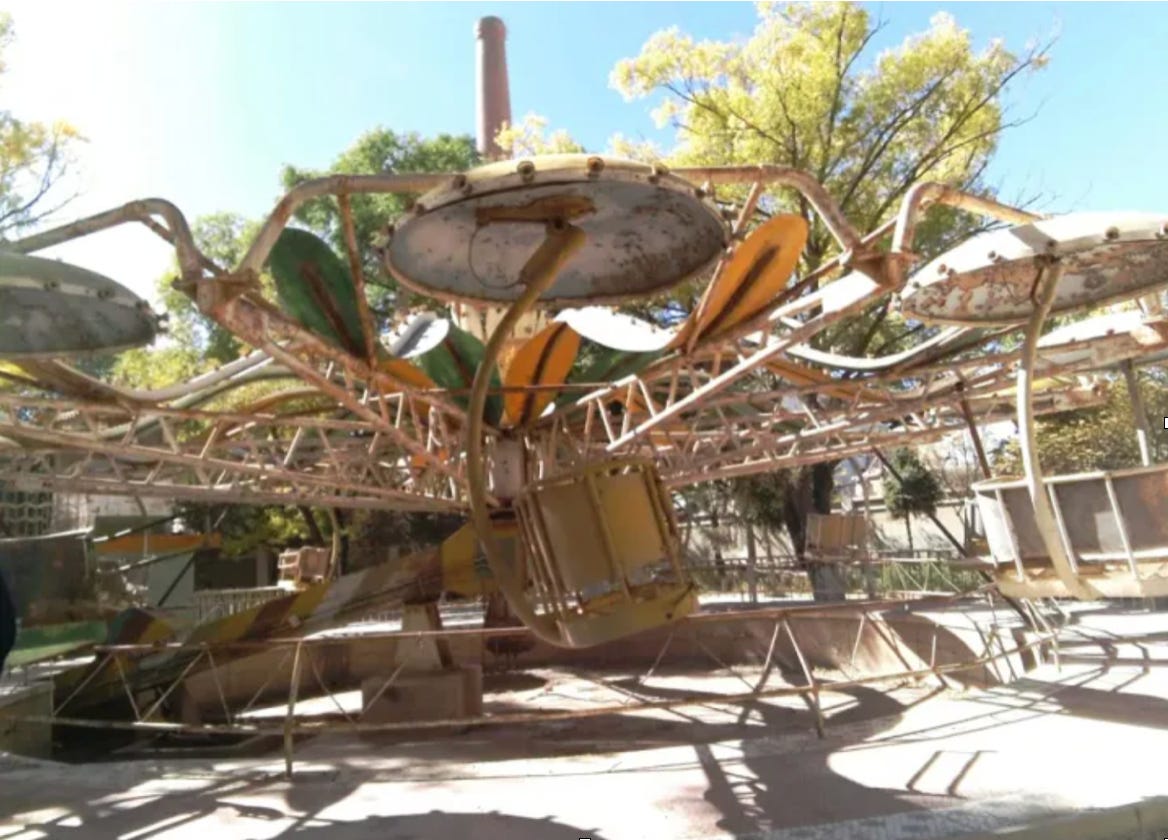
When I was a child, there used to be a black bear in the zoo, pacing back and forth in its cage all day long.
Then came the accident involving a little girl named Yanzi (meaning ‘Swallow’). She had gotten too close to the railings. The bear licked her leg through the bars.
A bear’s tongue is covered in backward-facing barbs. That lick tearing off a chunk of flesh and severing her tendons instantly.
Yanzi ended up in a wheelchair, never able to stand again.
I used to see her often on the streets when I was a child. She looked tiny, huddled in her wheelchair, as if time had stopped for her and she never grew up.
The bear was killed.
Why would a bear be killed? Wasn’t it just an animal? I didn’t quite understand it. After hearing my mother talk about it, I conjured a scene in my mind: the bear, with its paws tied behind its back, walking with its head bowed past the zoo, past the club, circling the primary school and my grandmother’s house, before being pushed toward the Back Mountain. The guards plucked the plaque from the back of its neck and shot it dead. Just like that boy who owed money.
By the time I reached junior high, the monkey cage at the zoo was empty. For years, no new monkeys were introduced, so the existing ones bred with their close relatives. One by one, they went insane.
I remember seeing the last old monkey, huddled in the cage, foaming at the mouth,its eyes a blood-red.
After the zoo was abandoned, the ground beneath the factory area began to collapse due to the air-defense tunnels beneath. First it was the free market, then the nearby athletic field.
Around that time, the higher authorities made a decision: “production and living must be separated,” and so the entire plant began to relocate. The workers and their families voted on whether to move to Jiuquan or Jiayuguan( the western end of the Great Wall ). When the Mining Area TV broadcast this news, I stood by the television and told my parents, “If we move, let’s just move; as long as we don’t go to Jiuquan. Jiuquan is provincial.”
In 2006, eighty military trucks began the move, making three trips every day. Over the course of half a year, we moved into Jiayuguan one after another. American satellites detected this unusual activity and thought some kind of military operation was underway.
That was the first time the secretive 404 appeared on the CCTV Evening News. An older woman said to the camera, “I’ve never lived in such a big house,” and then covered her mouth and laughed. My friends and I said she was an embarrassment; which single-story house in 404 wasn’t over a hundred square meters?
During the first year in Jiayuguan, the property management hadn’t caught up yet; in the entire plant community, that woman from the news was the only one who paid the heating fee. People around her called her a fool, so she went to ask for a refund. She was unsuccessful, and because of this, she didn’t leave her house for several days.
As the 404 relocation finished, housing prices in Jiayuguan doubled within a few months, and many restaurants on the brink of closing were brought back to life.
Compared to 404, Jiayuguan was already considered a bustling big city. A group of kids from the plant let loose their long-repressed temperaments, perming their hair so it stood straight up, cutting school, and frequenting internet cafes and various entertainment venues.
The kid living across from my grandmother’s house joined a gang, following thugs and staying away from school and home for over ten days straight. His parents caught him and locked him in the house with iron chains. Later, he still managed to escape on the pretext of participating in an essay competition.
His mother’s spirits were low, and she moped at home all day. Someone advised her to play some mahjong to clear her head. She went, but people around her would point and whisper, saying she still had the mood to play mahjong when her son had turned out like that.
Arriving in a new place, both the adults and children of 404 felt somewhat at a loss. Most of my close classmates entered Jiuquan Steel No. 3 Middle School; I and another classmate entered the City No. 1 Middle School. At night, the two of us would walk through the campus in our flip-flops. He said, “If we were in 404, we’d definitely be looked down upon for dressing like this.”
“Here, dressing like this can still make us look down on others,” he added.
We were completely unadapted to the new life. Soon, my grades plummeted, and my remaining pride turned into paranoia. Coupled with the feeling of living under someone else’s roof, I nearly fell into depression during my first year of high school.
After graduating high school, I chose to go to a university in another province, and after graduation, I came to work in Beijing.
In October 2015, my father and I visited 404 again. At the entrance of the plant area, several armed police officers in camouflage stood guard, holding rifles and inspecting everyone’s identification. I hadn’t changed my ID card, so I was still counted as a person of 404.
After entering the plant, we walked from south to north. After a gap of eight years, the zoo had been taken over by vast patches of weeds, and warning signs for collapses stood beside the animal cages. Outside the zoo were several residential buildings; the window glass was covered in dirt, and many panes were broken.
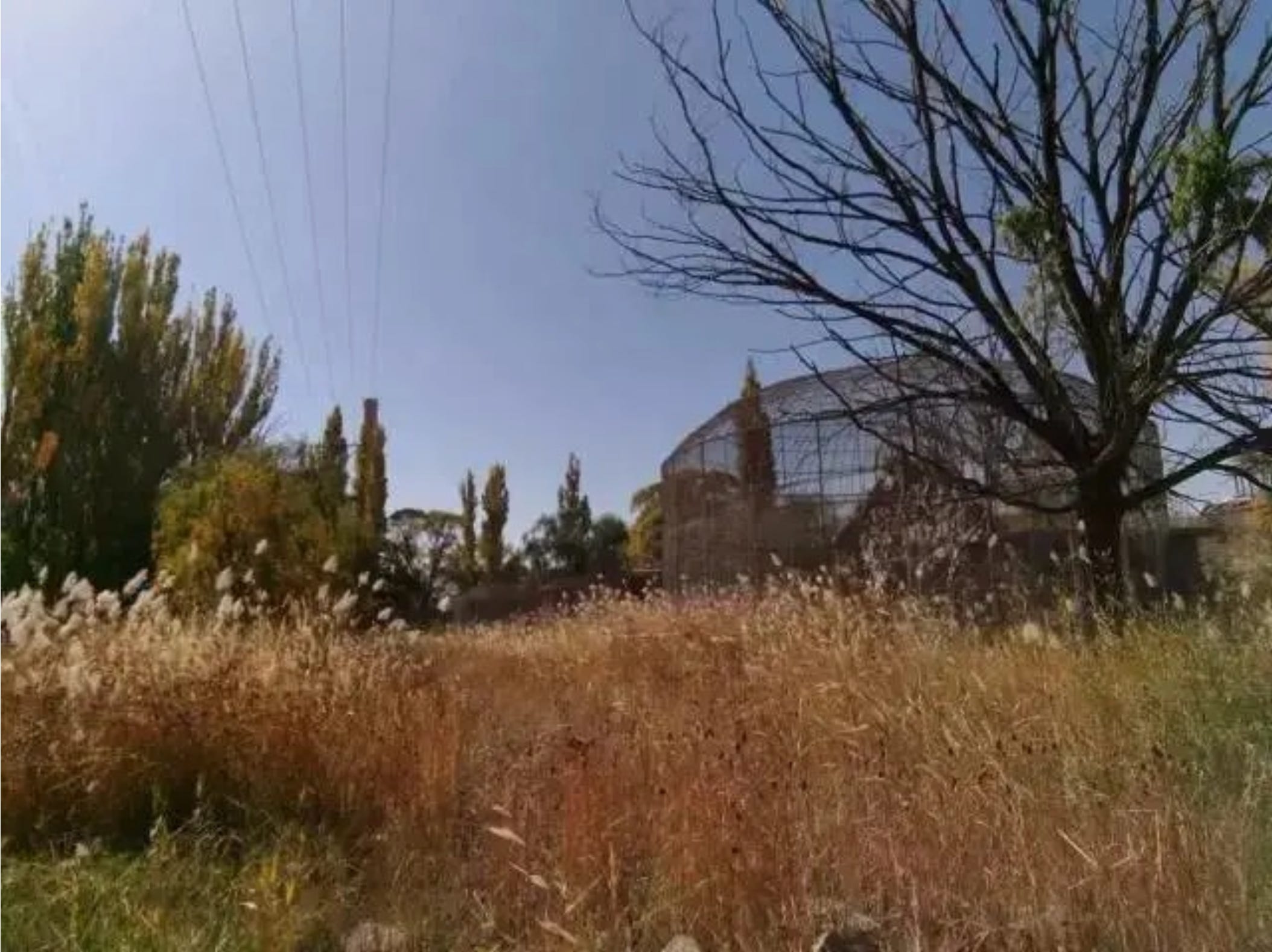
My father and I picked up stones from the roadside and threw them at the windows; the glass was smashed with holes, making dull thuds. My father shouted with excitement. We threw stones for a long time, stopping only when our arms were sore and weak.
The free market had been sealed off. The main street I had walked countless times was painted with white lines, making it look like a highway. The Red Building, the club, and the Pioneer Square had also been repainted; twenty-odd years later, they looked newer than when I first saw them.
I passed the once-grand plant hospital, which had been built under the supervision of Soviet experts. Behind the hospital was a Patriotic Education Base, its gates usually tightly shut. I had gone in once when my primary school organized a patriotic education trip; inside, it introduced the history of the 404 plant’s construction, with many documents and old objects. I didn’t understand why we had to look at those things back then; I only remember that the expressions of the people in the black-and-white photos were like the heroes in old movies. That generation truly gave their entire lives without asking for anything in return, and they were genuinely proud of it.
Later, an old man entered the education base for some reason and saw a photo of himself from the time the plant was built. “This is me! This person is me!” he cried out with tears in his eyes. At seventy years old, it was the first time he had seen that photo of himself.
Unlike him, I seemed to have left no mark on this place. I once climbed the base of Chairman Mao’s statue and ran up and down the arched bridge in the zoo. But standing there now, those memories felt like hallucinations. I began to doubt if I had really done those things.
Passing the hospital and the communication building, I stood under the locust tree where I used to play. I looked up at my old home. The windows were broken. The entrance to my unit had been walled up with solid brick.
My 404 really can’t be found anymore.
Stay tuned if you’re interested!