The End of Lazy SaaS: Same Game, Harder Rules
There is a lot of noise right now about “the end of SaaS”. Everyone is looking to AI as the great disruptor, but it’s really an evolution of digital products - the same way the cloud brought multi-tenant software to the masses rather than heavy appliance-based solutions. But if you look back at the SaaS analysis I was doing ten years ago, the fundamentals of what makes a company truly valuable haven’t actually changed.
What has changed is the margin for error.
The game is still the same, but the difficulty setting just got cranked up. The market is becoming sharper and tougher. The era of mediocre businesses slipping through the cracks and maintaining market share simply because they exist? That’s over.
And frankly, that is a good thing. Too many products got too lazy for too long.
When we strip away the hype, the most valuable companies (the ones that survive this disruption) are the ones that do two specific things:
They are the System of Record:
They define how the data is stored. They own the database.
They Define the Work Methodology:
They define how the work actually gets done.
There is a massive difference between a tool you use for five minutes and a platform that dictates your workflow.
As I often tell companies: “Be someone’s Salesforce.” Meaning… the tool that an individual contributor is inside ALL DAY.
Here is a contrarian indicator I’ve watched for years: The Inverse Proportion of Usability.
If you see a specific piece of software listed as a “skill” on a resume, it usually implies the product is difficult to use. It has a steep learning curve. Intuition tells us this is bad product design.
Business reality tells us this is a massive moat.
If a product is hard enough to use that you have to be “trained” in it, it means that product has successfully defined the methodology of the industry. It means the switching costs are astronomical. That is the “rarefied air” of enterprise value. It’s not just about UI; it’s about deep, structural lock-in.
For a long time, companies could get away with loose retention and weak expansion if their top-of-funnel was loud enough. That window has closed.
We are seeing a return to rigor across three layers:
The Numbers: High retention and aggressive expansion are no longer “nice to haves,” they are survival metrics, even at massive scale.
The Relationship: Do you have genuine lock-in with the customer, or are you just a vendor? Do you provide the relationship and insights that will weather the storm?
The Tech: Does your product sit on top of the data, or does it define the data?
The disruption we are seeing isn’t destroying SaaS; it’s purifying it. It’s forcing a cleanup of the ecosystem. The companies that are merely “nice-to-have” features are going to evaporate. The ones that serve as the fundamental nervous system of their customers will not only survive, they’ll get stronger.
The market is demanding we stop building lazy products. It’s time to get sharp.
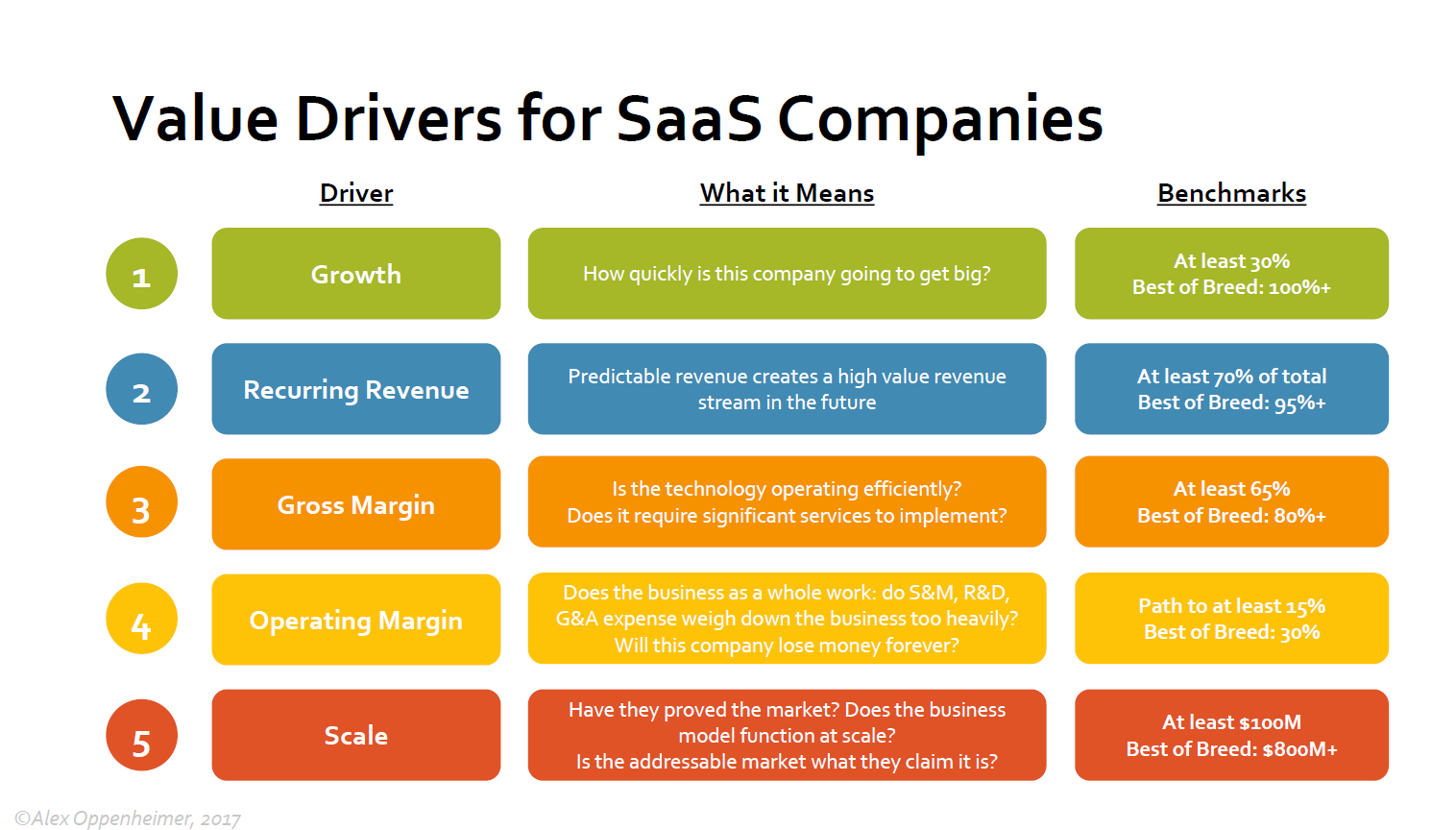
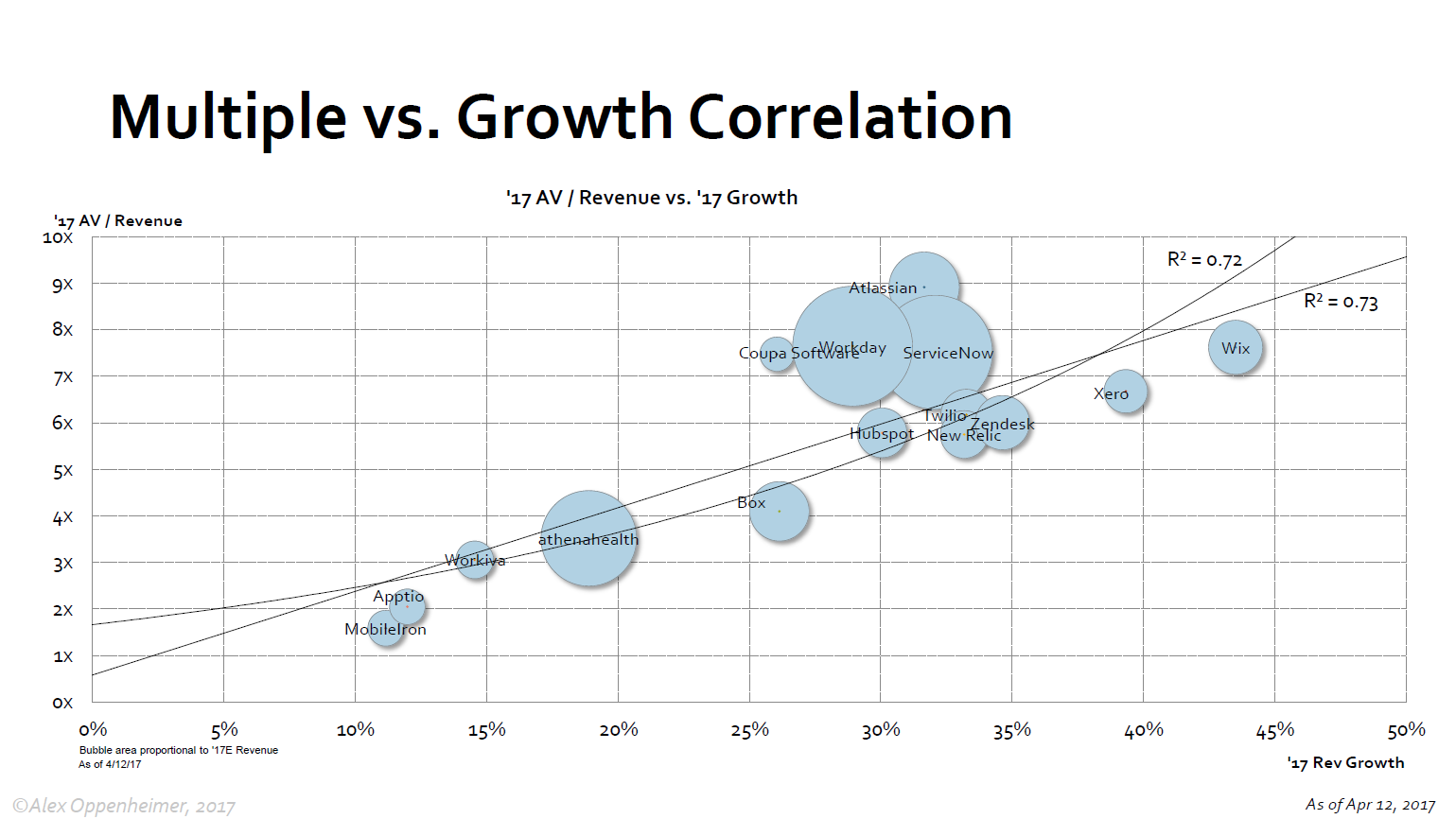
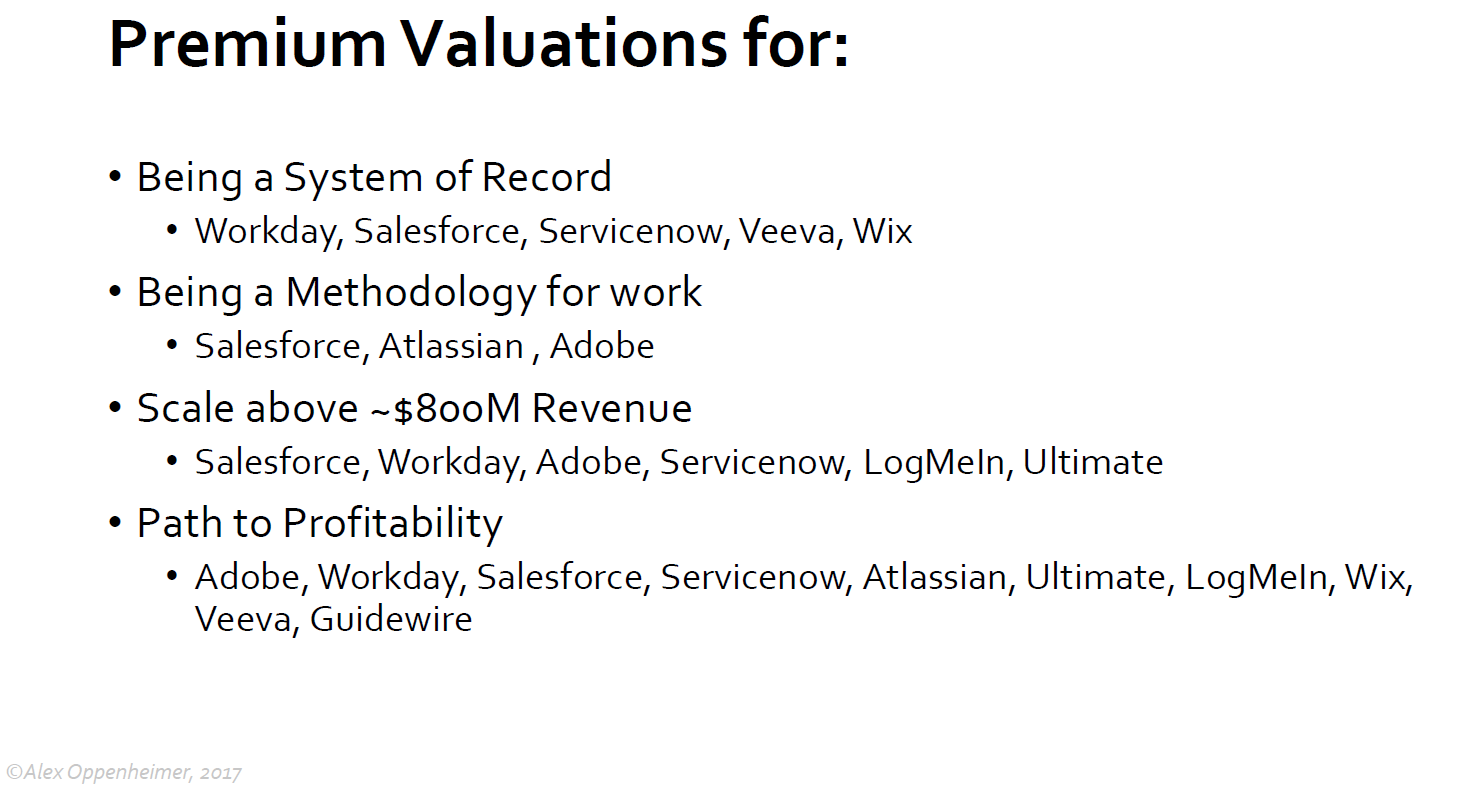
Bonus: These are slides from a presentation I put together in 2017… let me know if you think anything has fundamentally changed (besides the names and valuations).

RallyUp turns your biggest cost center into a revenue-generating engine by empowering employees to become micro-influencers by leveraging employee- generated content (EGC). We are excited to invest in Alec Kremins at the early stage as he builds RallyUp in this emerging category, which we believe can become a massive new distribution channel for companies.

Mixus is the trust layer for High-Stakes AI. Founded by Shai and Elliot, Mixus provides the path to leveraging AI in high-stakes environments by building trusted AI agents for high-stakes work. Just as Stripe unlocked payments and AWS unlocked the cloud, Mixus acts as the essential “trust layer” required for safe, enterprise-scale AI deployment. They allow companies to push AI usage to its operational limit by intelligently keeping a human in the loop right where the work already happens: your inbox. Mixus turns email into a controlled execution layer where the AI agent does the work, and a human approves the output before execution - meaning zero workflow changes for the user.
We’re open to any questions to cover in future episodes, just fill out the Q&A form.
Remember to subscribe via Spotify or Apple Podcasts.
Your Business Model Probably Sucks - Part 1
Your Business Model Probably Sucks - Part 2
Living in Sprints: Navigating the Eras of a Founder’s Life with Todd Saunders
How Bad Finance Kills Good Companies with Ariel Menche of Raftel Strategy
Verissimo Ventures is a Pre-seed and Seed Venture Fund based in Israel and the US. We take a fundamentals-driven approach to early-stage investing. We work closely with founders to help them build the strongest, most fundamentally sound businesses with potential for explosive growth and a meaningful impact on the market.
We were founded in 2020 and are currently investing out of our third fund.