Updated December 8, 2025 01:40PM
This is a giving time of year and for a lot of parents, especially parents who read Velo, that is going to mean bike shopping. What does that mean though? Are we talking about going to a big box store, a bike shop, or maybe something even more specialty? The answer comes down to a basic question: Are quality kids’ bikes worth it? As a parent and a cyclist, the answer for me is a simple yes — but let’s talk about the why and the how.
Kids’ bikes aren’t just small
The first time I really started to understand kids’ bikes I sat down at the Portland, Oregon headquarters of Isla Bikes with founder Isla Rowntree. At the time Islabikes was, arguably, the best kids’ bike you could buy in the US and I was there to talk about what made them special.
Rowentree talked about a focus on how children are not just small adults. The dimensions aren’t a matter of just being smaller. An example she gave at the time was that a child sized hand isn’t a smaller adult hand. It is smaller, of course, but the finger length as it relates to palm size isn’t the same as an adult.
Paying attention to these details is what makes a good kids’ bike and that, in turn, means easier learning. Some of the examples Rowentree gave for this are that when children have a wide Q factor (the distance between the crank arms on a bike), it causes them to push slightly outwards as they pedal. That angled pushing then causes the bike to weave slightly and that leads to instability.
High quality kids’ bikes will have a narrower Q-factor but Rowentree also pointed out how pedal design affects learning. According to her, most children’s pedals are overly square. That shape makes it common for children to push with the pedal flipped up on its edge. Islabikes went to a different shape to fix it.
Right size means safe
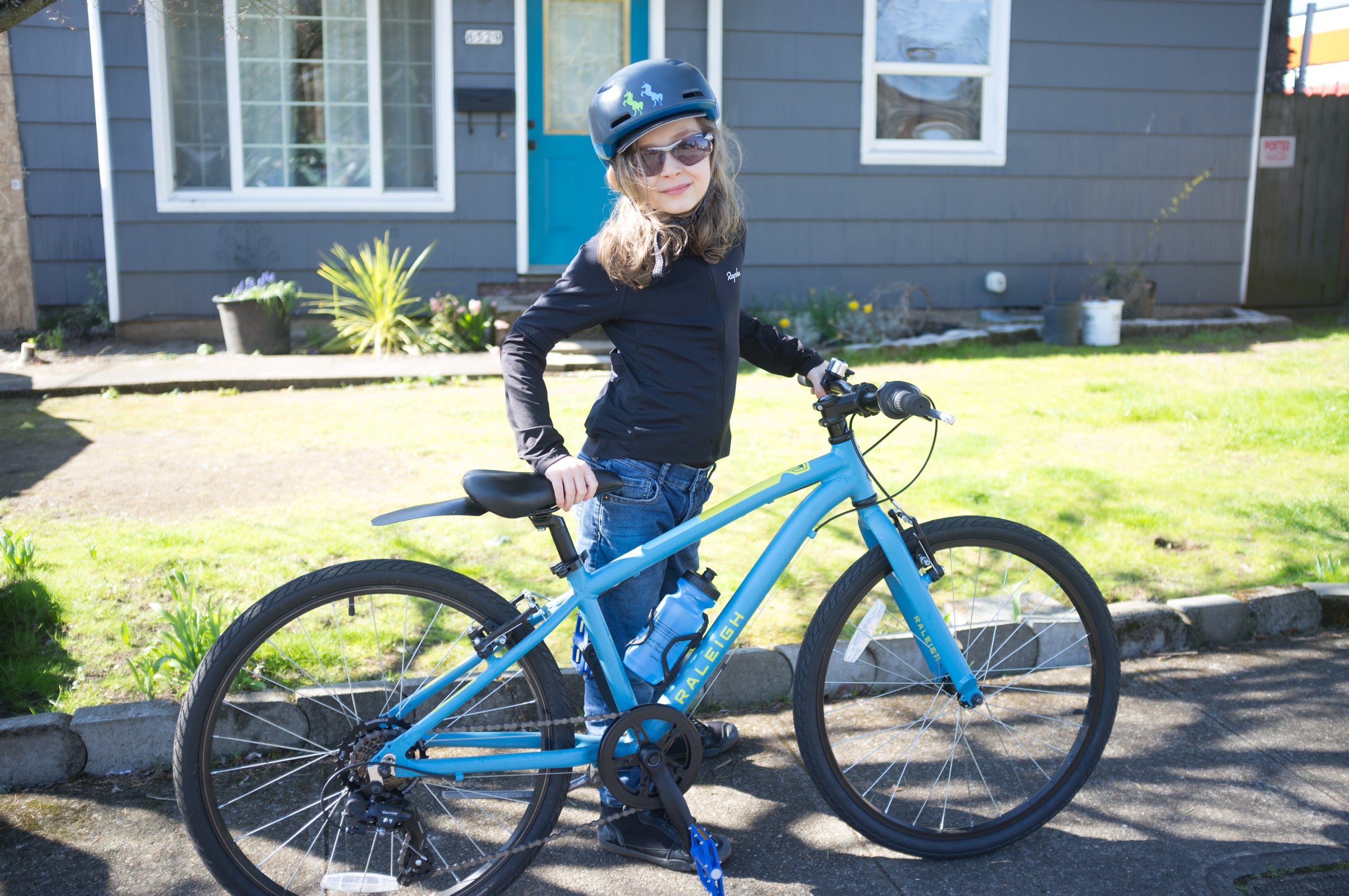
Paying attention to details and getting the sizing right on a bike does mean a child is more comfortable and learning is easier, but it also means a bike is safer. There’s the obvious idea that a wide Q-factor and a wobbly bike means more likelihood of a crash, but you can even go deeper.
Brakes are an easy place to explore this. When the brake lever is angled correctly it means a child is more likely to have their hand in the right place. When you then combine that with handlebars that are the right diameter and brake levers that have the right reach it means a child can generate the correct force for safe braking.
Depending on your experience, you might also be thinking it’s odd to have brake levers on a kids’ bike. Kids’ bikes typically have coaster brakes, right? Some do, but it’s both safer and easier to learn when they don’t.
The basic premise is all about keeping a single control reserved for a single action. When learning to ride a bike, it’s hard enough to remember to keep pedaling forward to stay upright. If you also mix in pedaling backwards to brake it can be difficult to remember what does what. This confusion can lead to forgetting how to brake when it really matters. Using hand brakes fixes this but those brakes need to be high-quality as well.
Outside of brakes, another safety detail that Rowntree shared is about the handlebars. When it was brought to the attention of Islabikes that one of the most common injuries children get from their bikes is penetration of the bar ends into the abdomen, Islabikes added a plug to the end of the bars. The bikes already met all the required safety standards, but it was an important detail and it’s not unique to Islabikes.
Islabikes is no longer available in the US but you can find similar details on other high-quality brands. When asked, Early Rider said that the bars on the smaller 14-inch and 16-inch bikes have a smaller diameter than standard, “so they’re easier for smaller hands to hold and more comfortable to ride with.” Prevelo bikes meanwhile uses an integrated one-piece bar and stem with recessed bolts to minimize snagging and a rounded profile in case of knees hitting it.
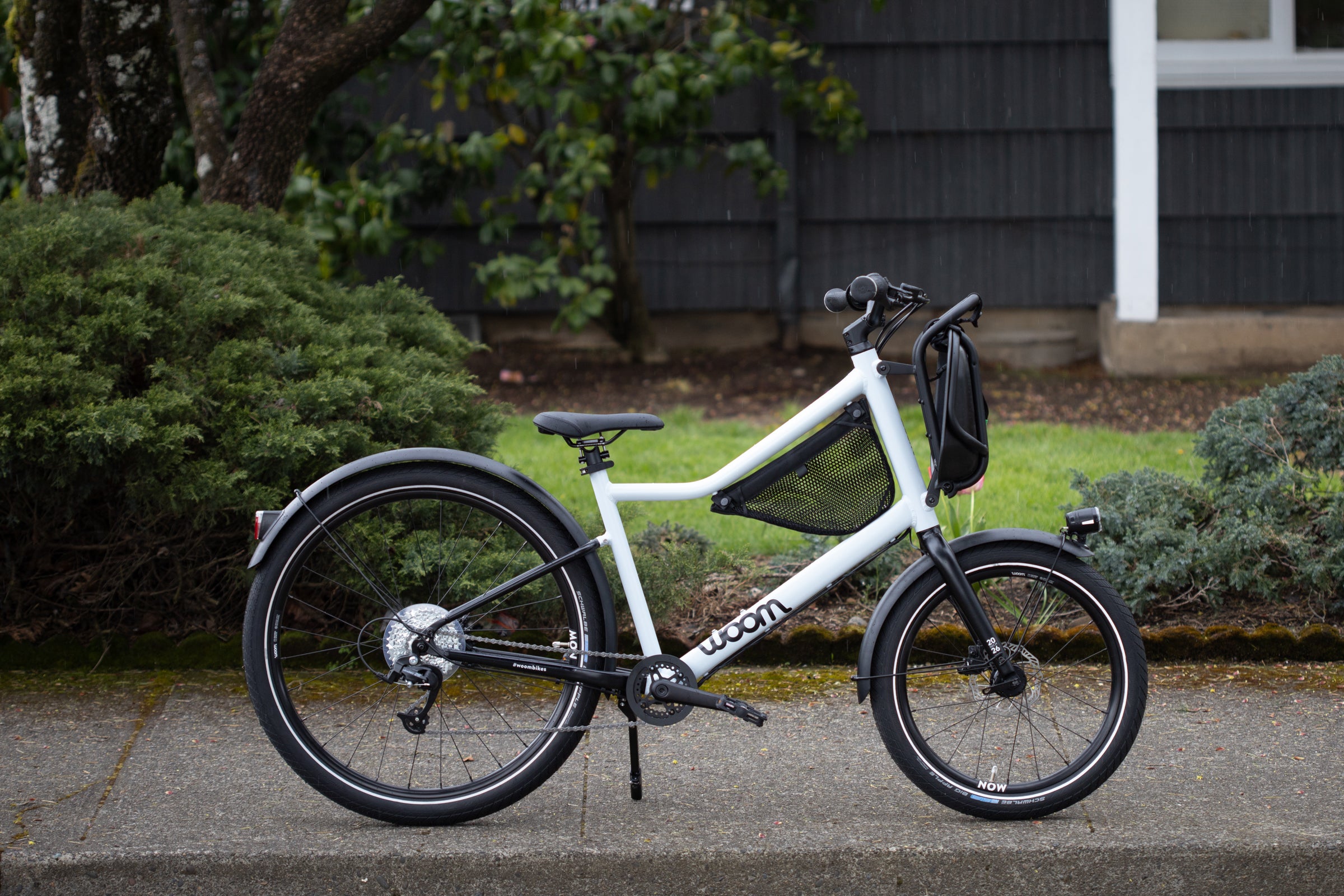
In my own life, my boy moved from Islabikes to Woom as he outgrew his smaller Islabikes model. Woom bikes use an oversized bar end that can’t be punctured by the metal underneath and have a lock on design so they don’t come loose. Woom bikes also focus heavily on another important consideration for a high-quality kids’ bike.
Weight matters more for kids
When we talk about the new lightest bike you can buy in our Velo Bike Reviews, one thing that often hits the comments is that it doesn’t matter. Shaving 100 grams from one bike to the next doesn’t matter for a 200lb/90kg person. Of course we can argue that all day long but the reality is that we are talking about the weight of two Skratch bars. You can decide if that matters, but as a percentage of rider weight it’s only about .1%.
Just like sizing, the weight relationship changes as you shrink the rider. A 16” wheel Huffy bike you can buy at a big box store weighs 18 lbs. That bike is sold for riders in the 4-6 year old range and that corresponds to an average weight (50th percentile for a 5-year old in the US) of roughly 41 lbs. That makes that cheap bike about 44% of the child’s weight. That would be similar to a 200lb rider having a 90lb bike. Not much fun.
Now if we look at the same three brands I referenced above, Woom says that the company has managed to shave 40% of the weight compared to an unnamed conventional kids’ bike. The same 16” bike from Woom weighs in at 13lbs. Prevelo does even better with a 12.1 lb bike in the same size and Early Rider has a belt drive 16” wheel bike that manages 12.6lbs.
You can take your pick of those options but the equation is the same, those bikes are drastically lighter as compared to a rider. Just like an adult bike that means it’s a better ride but one other unique detail for child cyclists is that, especially for really little kids, they often pick them up off the ground. It’s a whole lot easier to pick up a lighter bike.

Good bikes have high-resale
So far this discussion has been about what it means for a child to have a high-quality bike. I’ve made the case that having a bike that fits is safer and easier to learn with but this doesn’t exist in a vacuum. A parent has to spend real money and it’s a big jump. That Huffy I referenced earlier costs under $100 while something from Woom, Prevelo, or Early Rider is going to be priced closer to $450-$500.
Fortunately that is not the whole story. If you are looking for a quality kids’ bike you don’t have to buy new. A quick search on my local Facebook marketplace shows multiple Islabikes available in the $200 range. Those bikes haven’t been available as new since 2018, so that’s seven years later they are still selling for that price! Given that a child’s bike lasts through roughly two years of growth we can guess that bike has been with three different kids. Go ahead and buy it for $200 and resell it two years later for the same price.
Again it’s not just Islabikes either. There’s a Woom Bikes buy/sell/trade on Facebook with 48,000 members. A Woom 3 is the 16” size that sells for $500 new and the current top post in that group has it priced at $325 for an older model (not the current Woom 3 Go). Directly below that post you’ll also find two “ISO” posts willing to drive up to three hours for any type or color of that size bike. Buy new or buy used, you are not going to have an issue selling it when your child is done.
Of course over time there are things that might need repaired and this is another reason to stick to a quality kids’ bike. As you buy and sell used bikes with good resale, if you need parts they’ll be available. Nearly everything on these bikes is proprietary because of the need to size it correctly. If it’s a big box store bike that could be the death of a bike. A good quality brand will have parts and accessories you can order with ease.
Invest in a quality kids’ bike and you not only set your child up for success but you can essentially rent the bike with a vibrant resale market and long term viability.
The “Fit” Factor: How to Ensure You Buy the Right Size
Hopefully at this point I’ve made a good case as to the reasons why it’s worth buying a quality kids’ bike, but when it comes time to actually pick the bike, there’s one more reason. A good quality bike brand will have lots of size choices.
An obvious basic fact is that children grow and bikes don’t. The resale value is important because no matter what bike you buy, you will be replacing it. I mentioned above that you can expect a bike for a child to last about two years. You could replace it every year but for most people a new bike will be a little big initially and when it’s time to resell it will be a little small. In the middle there’s a short window of perfect fitment.
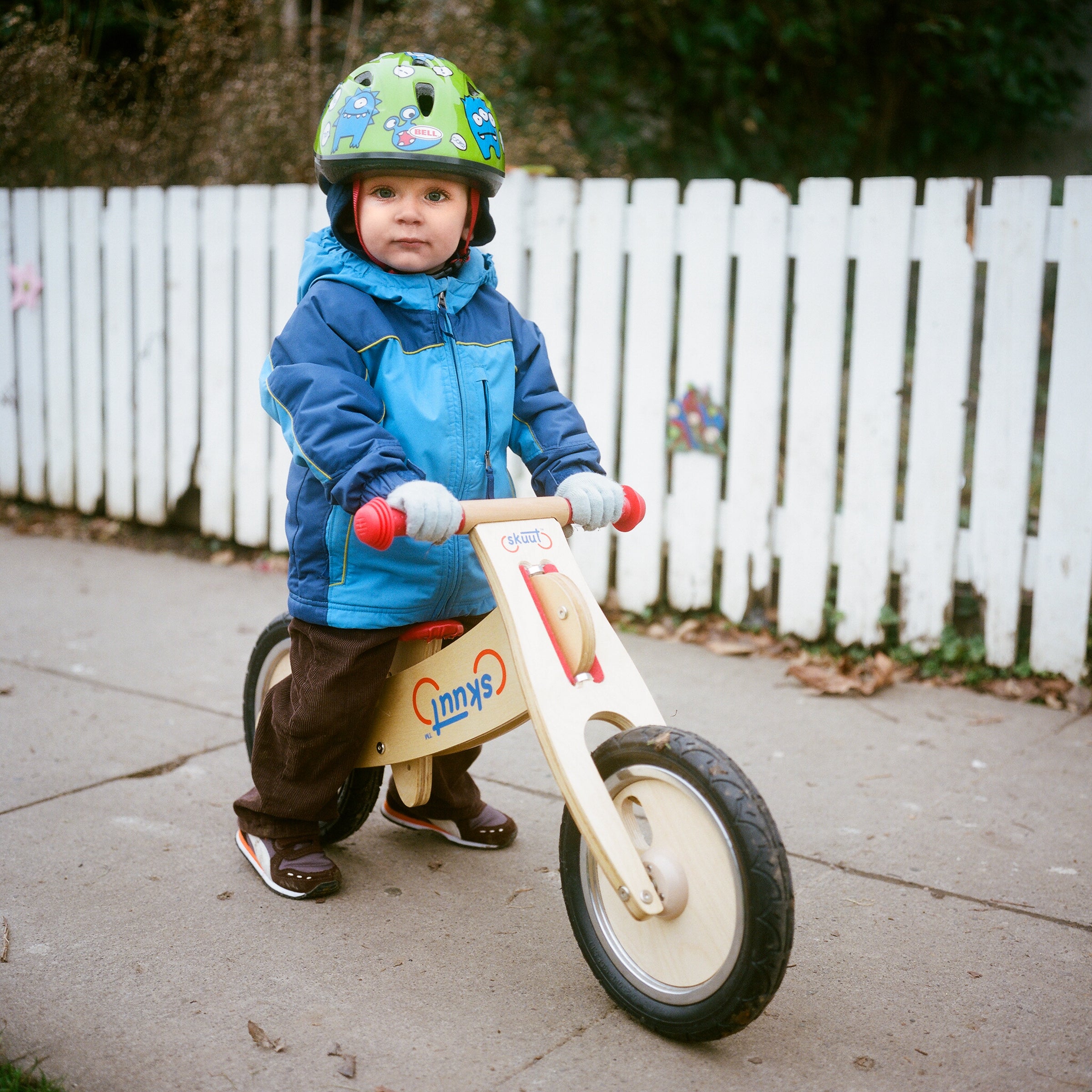
To make sure you can manage that juggling act of a perfect size, you need options. Cheap bikes are often built around rigid wheel sizes and that’s it. That rigidness can force kids, and parents, to make huge jumps. A kiddo might be graduating from a 12″ bike but still not be ready for a 16” bike. What’s needed is a 14” wheel but cheaper brands won’t offer it.
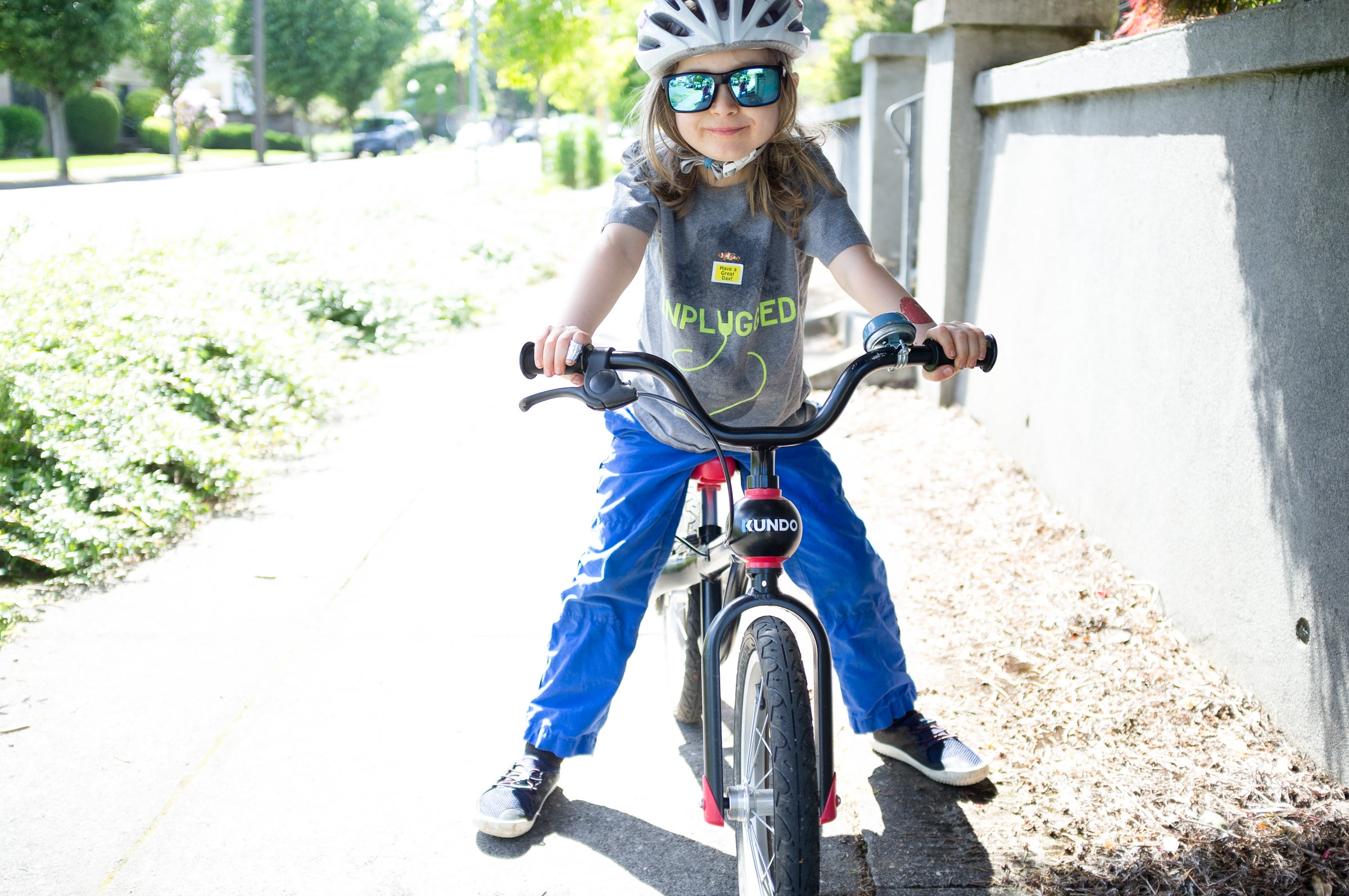
In the smallest sizes the solution is sometimes training wheels. Don’t fall for that trick, training wheels are outdated and make later transitions harder. Instead start kids on a balance bike with no pedals and don’t be afraid to leave them there a little longer. The balance bike teaches balance without forcing a child to learn the mechanics of moving forward. When you eventually move to a pedal bike, and there are brands with conversion options, little ones should be zipping around completely comfortable with pulling their feet up and coasting. Next just add pedaling.