I am a connoisseur of burnout. In my four decades on this earth, I’ve tasted many of its varieties — some subtle, some gross. There are Emmett Shear’s core three — permanent on-call, broken steering, and mission doubt — but many others too: burnout from constantly shifting goals, burnout from ruinous empathy that pulls you in a dozen directions at once, burnout from fake emergencies generated by leaders who don’t manage time well.
My first major episode occurred at the end of college. I’d worked myself to the bone for four years, earning two degrees while often working two jobs. In my last final, I basically just needed to finish the exam to get an A in the class, but a few pages from the end my brain simply refused to continue. My pen stopped moving and the questions became a jumble. I handed in the test, took the B, and deferred law school for a year to play World of Warcraft and drink.
As a law firm associate, I burned out again — partly from the hours, which were as bad as people say, but more so from the feeling that what I was doing didn’t matter: I was mostly engaged in a battle to move a few digits from one corporation’s balance sheet to another’s, and if I didn’t do it, there were a million people in line who could do it about as well. This time I “recovered” by becoming a professional gambler.
By the time I got to my mid-30s, I thought I was wise to burnout and could avoid it simply by working on things I really cared about. If only! It would be great if burnout could only strike when you’re making stupid mistakes. But at Alvea, the pandemic medicine startup I cofounded in 2021, I felt pride, a sense of purpose, and camaraderie with my team. So it was confusing and distressing when I felt myself being stalked by burnout once again.
Maybe I needed more control over my work? I diagnosed myself with broken-steering burnout and, after we wound down Alvea, spent a long time picking my next project. I ended up as CEO at Astera, where I helped design the mission, built a team I adored, and was given wide latitude by the board. Surely, it should be impossible to burn out in circumstances like these? Well.
The last couple episodes I caught early enough that, without my long and costly prior education, I might not have identified them as burnout at all, just “having a stressful time at work.” But as a connoisseur of burnout, I know better. With repeated exposures, you learn to recognize the warning signs earlier and earlier, which makes the required intervention less disruptive, and the costs you incur in the meantime less severe.
This is important, because unaddressed burnout can be catastrophic. People who experience it for the first time are often surprised by how bad it is, by how much of your life it can eat.
They may know burnout as a close cousin of stress or exhaustion, and therefore expect it to be similar, if maybe more intense. But burnout is importantly different from ordinary stress or fatigue. Stress and fatigue are temporary — remove the stressor, rest, and they pass. Moreover, they aren’t always bad; the optimal amount of stress isn’t zero. Hard workouts might leave you wrecked, but they lead to a pleasant rest, and a natural process of recovery that will leave you stronger. Burnout, by contrast, is like a tendon tear: It doesn’t heal on its own, and it only leaves you weaker.
If burnout isn’t stress, what the hell is it?
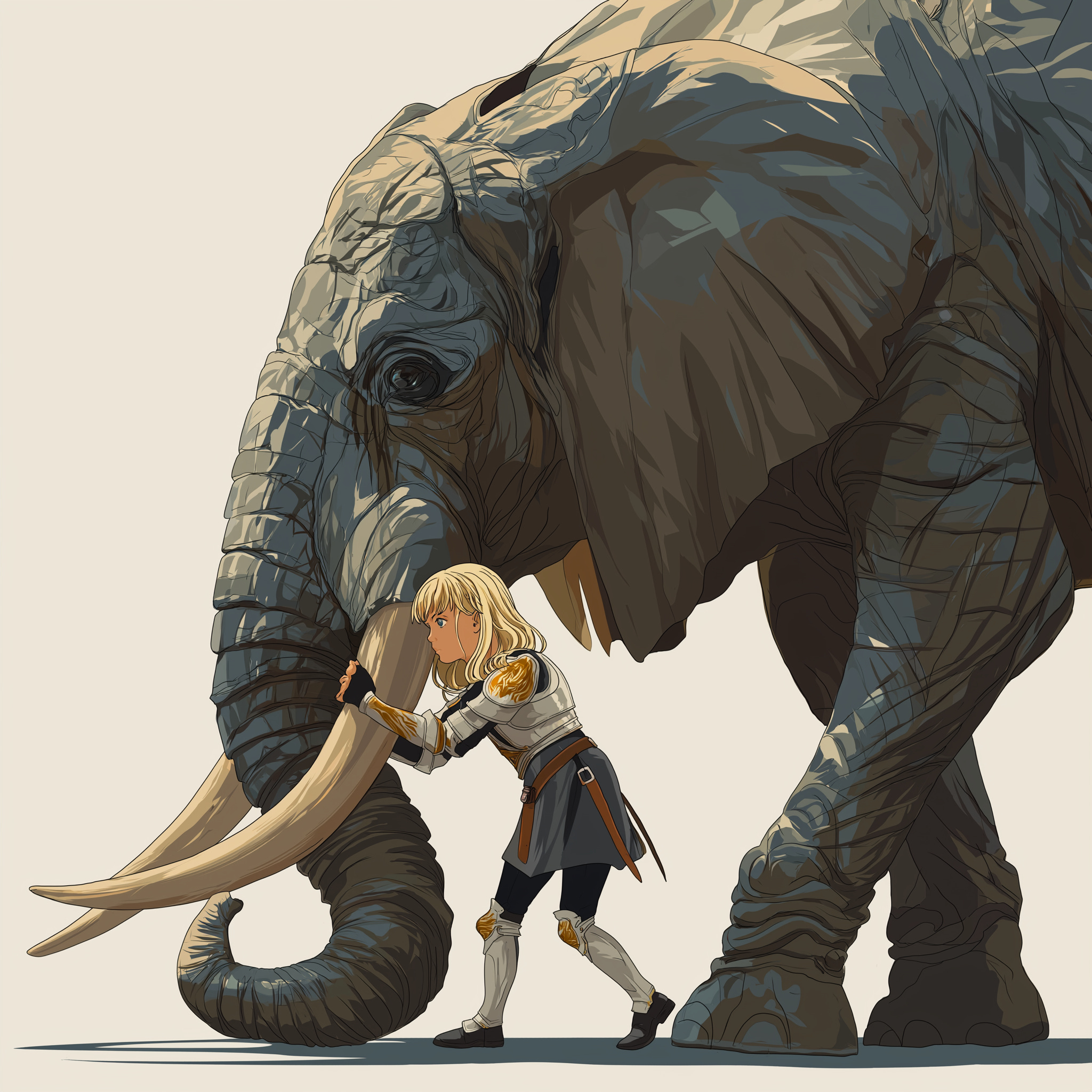
One of my favorite lenses for thinking about motivation is the “elephant and rider” framework developed by Jonathan Haidt. The elephant is the part of us that is instinctive and emotional. It lurches powerfully in the direction of everything that makes life pleasant — novelty, belonging, calories, pleasure. The elephant controls what we crave, what we fear, what we find ourselves doing without effort.
Meanwhile, the rider is the rational voice that engages in long-term planning and explains our behavior to others; it thinks in “shoulds” and “oughts.” It’s the part that’s responsible for restraint, the part that makes what we think of as “conscious choices,” and the part that offers rational justifications for our behavior when we’re questioned (whether or not the behavior is rational at all). Sometimes, the rider is our PR department.
Quite obviously, both parts of the human psyche are necessary. The elephant charges into battle; the rider brokers complicated peace agreements. The elephant savors and delights; the rider, ideally, steers a wise course through the world that will allow us both meaning and pleasure.
It’s easy to extend this framework to explain burnout. You can think of the rider and the elephant as having agreed to a sacred pact: In exchange for doing what the rider asks, the elephant is promised certain rewards. When things are going well, the needs of both rider and elephant are satisfied, even if the balance isn’t exactly even day-to-day.
Burnout results when the rider asks the elephant, over and over again, to commit a tremendous amount of energy to a task, but then fails to provide the reward the elephant is expecting. As a result, the link between effort and reward breaks for the elephant, with catastrophic consequences for the rider.
The rider might think, “If we grind away at this startup, we’ll get rich and change the world and be loved forever.” But if some elephant-understandable reward isn’t experienced after a certain amount of time, the elephant gets pissed off, and then despondent.
How long it takes varies by person: Some can focus on unrewarding work for years, totally disconnecting from their emotions in service of their “rational” agenda — an ability that’s both a blessing and a curse. But everyone has a limit, and when they hit it, the elephant goes on strike. The rider can scream at the burned-out elephant: “DO SOMETHING!” and the elephant will just lie there.
This is not purely metaphorical. Part of the startling experience of burnout is a split in personality: The voice in your head can yell and yell about what’s supposed to be happening, while the body lies passive, without generating any propulsive energy whatsoever.
The elephant-rider relationship has several important features:
First, the elephant is the boss. As anyone who has struggled with addiction, lust, or hatred will tell you, the elephant has more control over motivation. The rider can influence the elephant, sure — otherwise, human beings would never eat kale or serve jury duty. But the rider has limited sway when their desires conflict with the elephant’s. The strength, skill, and energy of the rider might matter at the margin, might coax a little more performance out of a reluctant pachyderm, but in the end they just aren’t all that important.
Second, the elephant wants what it wants. Different elephants may want different things — some like fruit, or tree bark, or peanuts. But unlike a human, you can’t convince an elephant it’s motivated by something it isn’t. You can try to tell yourself that making enough money makes up for losing the self-determination you cherish, or that recognition isn’t important to you as long as the work gets done, but your elephant will keep you honest. More generally, the elephant is immune to reason — you cannot approach the elephant in good faith and attempt to negotiate with it or persuade it to feel or behave differently.
Finally, the elephant never forgets. If the rider habitually demands performance out of the elephant but fails to reward it appropriately, the elephant will learn that doing what the rider wants doesn’t get it what it wants. Once that lesson has been learned, it’s very difficult to unlearn, even if the rider begins earnestly trying to repair the relationship.
In extreme cases, people sometimes develop an instinctive repulsion to any work that looks even halfway like what burned them out. After I burned out from my law firm, I rejected out of hand any suggestion that I might enjoy a different kind of law — government work or immigration or an in-house gig. Only a decade later did I get enough contact with the law again to remember that I had actually enjoyed the puzzle of it at one point.
If you happen to catch yourself on the way to burnout, what should you do?
First, make sure you have internalized that, even if it feels like a slow burn, it’s actually an emergency. It will always get worse if not addressed, and the cost compounds; the level of intervention required to address it grows steeply over time. Twice, I’ve lost over a year to neglected burnout, and I’ve known people who never recovered from it. If you’re burning out, whatever else you have going on isn’t as important as dealing with it.
This is scary, but should also be empowering: If your whole productive life is potentially at stake, it should really free you up to take radical action. You might not want to ask for help or embarrassing concessions — but would you rather do something a little bit cringe, or roll the dice on a permanently muted life?
In fact, I’d go further: Radical action to address burnout isn’t just allowed, it’s important. Really try to take the logic of the metaphor seriously. You’re dealing with an animal you’ve misled with false promises, and trust between you has deteriorated as a result. To arrest this process, an immediate and costly signal of loyalty is most effective. You are trying to say, in a way that will actually ring true, “I’m sorry I wasn’t listening before, but I really am now!”
The critical move is to figure out what kind of food (rest, credit, autonomy, money) your elephant wants more than anything, and drop everything to give that to it — right away. That might mean taking time off, perhaps abruptly. It might mean asking for more money, or a change in responsibilities. It might mean explicitly seeking credit where you didn’t before.
Remember: You can’t lie to your elephant about what food it likes — so this may require a higher level of honesty with yourself than you are accustomed to. If, say, your elephant runs on getting credit but you treat it like it runs on relaxation, you’ll find it’s consistently unsatisfied by your well-meaning solutions. You’ll always feel like mental health is just on the other side of a great vacation, but no matter how much time you take off, the unease won’t go away.
When I started burning out in the fall, it was because I was trying to write a book and weekly posts on top of my full-time job leading Astera. I was trying to feed my elephant something it ultimately can’t live on (public recognition) when what it needed was rest. So, as soon as I started feeling all my yeses turn into nos, I knew what I had to do: Stop. Right away.
I took a few days off from work, a month off from the book, and what ultimately turned into four months off from Substack. I told everyone, from coworkers to friends, that I was burned out, and turned down projects, professional appearances, and parties, with few exceptions. The cost of doing all this felt high in the moment — how will I ever have a successful book launch, if I don’t energetically cannibalize myself for it? — but the rest that I claimed has restored my sense of proportion.
Ultimately, you can’t go anywhere without your elephant. Sure, the rider can imagine it controls everything — that it’s capable of endless achievement, that it will never rest again, that it doesn’t possess humiliatingly normal needs. The rider, gifted with imagination, can pretend it is an infinite being, right up until the moment the elephant stops playing along.
April 2026 Update: I wrote a book, You Can Just Do Things, that’s a practical guide to developing personal agency from someone who learned it later in life. It’s now available for purchase.