👋 Welcome to Upekkha, a newsletter to share helpful tips and resources to help meditators improve their Dhamma practice.
नमो तस्स भगवतो अरहतो सम्मासम्बुद्धस्स
Homage to the Blessed One, the Worthy One, the Perfectly Enlightened One
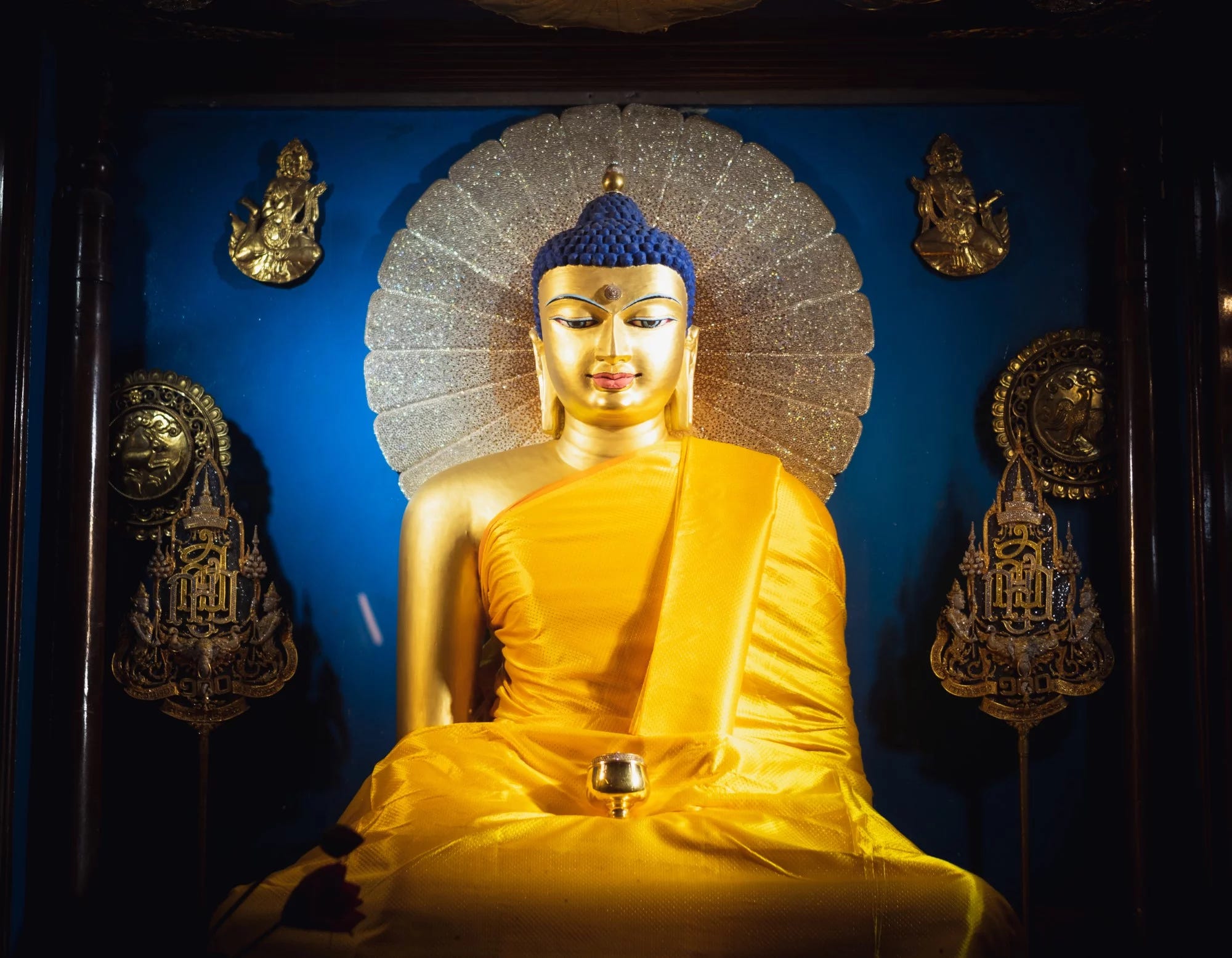
The current state of the world is dominated by consumerism, where companies continually seek ways to sell their products to us. Unfortunately, it is in their favor if people’s minds are more irrational than rational when making their purchase decisions. Hence, various marketing strategies are employed to exploit people’s biases and psychological weaknesses against them. Ultimately, leading to an increase in the kilesa (negativities/defilements) of people’s minds by making addictive products, sexualized marketing, and trying to make people believe they need something that they really don’t.
As meditators, this is bad news, as the improvement of our Dhamma practice is to reduce our kilesa rather than increase them. As fewer kilesa arise in our minds, the more comfortable our practice, our relationship with others, and the quality of our life.
Hence, indriyasaṃvara (sense restraint) in daily life is an important part of protecting our Dhamma practice. If we let our senses open to everything, there is a high chance that our senses get in contact with an object that give rise to kilesa in the mind, make our mind coarse, and disturb our peace and meditation practice.
[SN 17.3]
At Sāvatthī.
“Possessions, honor, and popularity are grim …
Once upon a time in a certain lake there was a large family of turtles that had lived there for a long time. Then one of the turtles said to another, ‘My dear turtle, don’t you go to that place.’
But that turtle did go to that place, and a hunter pierced her with a harpoon.
Then that turtle went back to the other turtle. When the other turtle saw her coming off in the distance, he said, ‘My dear turtle, I hope you didn’t go to that place!’
‘I did.’
‘But my dear turtle, I hope you’re not hurt or injured!’
‘I’m not hurt or injured. But this cord keeps dragging behind me.’
‘Indeed, my dear turtle, you’re hurt and injured! Your father and grandfather met with tragedy and disaster because of such a cord. Go now, you are no longer one of us.’
‘Hunter’ is a term for Māra the Wicked.
‘Harpoon’ is a term for possessions, honor, and popularity.
‘Cord’ is a term for greed and relishing.
Whoever enjoys and likes arisen possessions, honor, and popularity is called a mendicant who has been pierced with a harpoon. They’ve met with tragedy and disaster, and the Wicked One can do with them what he wants.
So grim are possessions, honor, and popularity. …”

If you live in a city like mine, many strategies and habits come in handy. I will share what has worked for me below.
Our minds want pleasure and happiness; there is no denying it. Hence, it’s normal for our minds to gravitate towards sensual pleasures, such as easily accessible platforms like Instagram, Youtube and Netflix. The content is so engaging that people find it difficult to look away and eagerly await for the next video.
While most people have tried to reduce their screen time, it is rare to find anyone who has been successful in doing so, as it’s so much quicker and more accessible. Hence, the first to reduce to screen time is to make such habits difficult in the first place. This can start by uninstalling the apps on your phone, so you require more effort to access the content through a desktop or a laptop.
If you do make the decision to put away with your social media and entertainment apps, your mind would still seek happiness by default. Hence, developing habits that promote better happiness, such as meditation, reading books, exercise, art, and social work, will help replace older, unhealthy habits and improve the overall quality of life.
If you have already attained jhana concentration, regularly practicing jhana can be a great approach for the mind to get the happiness it seeks, and let go of the happiness it seeks in the sensuality.
To attain jhana concentration, you can try out a retreat at Theravada traditions such as Pa Auk, Na Uyana, Ajhan Bhram, Beth Upton, etc.
Restraining where you look prevents you from seeing something that can give rise to unwholesome states in the mind. Being mindful of what you are doing really helps here. If you are walking towards a destination, most of what’s happening around you is really not beneficial to you reaching your destination; hence, it’s better to look at the path in front of you for most of your journey rather than people, buildings, advertisements, etc. The same goes for driving on the roads.
Avoiding extreme tastes, such as spicy, while eating food helps keep the mind subtle and refined for our meditation practice. When we eat food that is simpler in taste, our mind is calmer during meditation.
Would love to know what has been working in your journey to improve indriyasaṃvara feel free to comment.