The most inspiring stories are those where heroes defy the odds, where they fight against a much larger, stronger enemy. That’s why David vs Goliath myth is so powerful and still lives in other stories we tell about.
Ukraine and Eastern Europe - regions where my fund F1V operates - have lots of such companies. They are something I would like to call an “Underdog” - a less powerful player with a disadvantaged position/geography/access, who still manages to succeed.
A startup building here has a ton of these disadvantages.
Most important one - access to customers/markets. Eastern Europe’s GDP is ±8% of US GDP, and 4x smaller in GDP per capita as well. The market (let’s say TAM) for any consumer or enterprise businesses is many times smaller - it’s impossible to scale when your ceiling is $5-10m ARR. And if you plan to build a global business and sell to enterprises on the Tier-1 markets (US, UK, Western Europe), you usually need to be present there, meeting face to face, networking, and moving things through these long sales cycles. 2025, but still hard to do that from an office 7000 km away.
There is also a lack of venture capital to build such risky businesses as startups. There are ±20 active VCs in Ukraine ±200 active VCs in Eastern Europe. To compare, the US has 3400 VC firms, but it also has 1000x more capital. Raising your first capital there is infinitely easier than here.
And there are many more things that make building a company from CEE super hard.
But not impossible.
There are a lot of talented CEE entrepreneurs who know how to build in a super lean way. They went through wars, economic crises, government failures, and other hardships. They are resilient, and this is something I am inspired by.
That’s why I wanted to start writing a series of articles about Underdogs - companies and founders from Eastern Europe who succeeded.
Recently, I learned one of such inspiring stories - when my friend shared with me Drizzle ORM, a tool built by a team of Ukrainians from Dnipro. I instantly decided to reach out and speak with them to learn their story.
It’s simply exciting how they managed to build a great product, widely used and loved by developers all over the world (from Dnipro, far away from Silicon Valley!), with 30,900 stars on GitHub, and 2.4 million weekly downloads.
So I wrote a complete story covering everything I could find about Drizzle. A lot of words, so please enjoy!
Drizzle Team (the company behind Drizzle ORM) was founded by Andrii Sherman (Twitter, LinkedIn), Alex Blokh (Twitter, LinkedIn), and Dan Kochetov (Twitter).
Before Drizzle, they were working in Lambda Team (LinkedIn), an IT service and consulting company owned and run by Alex Blokh since 2017, located in Dripro in eastern Ukraine. They were a small agency working on software development & AWS Cloud solutions for businesses. At its height, they had 55 people in the agency.

Drizzle founders: Dan, Alex, and Andrii, 2023
Drizzle ORM started as an internal solution to a specific problem. In 2021 they had a Java project that needed an ORM - a library that simplifies database operations like retrieving, updating, and deleting data. None of the existing libraries fit their needs, so they built a lightweight one for that project. When Andrii switched to JavaScript and TypeScript, he ported the library and forgot about it.
Until Prisma broke everything.
The agency’s next project was a fintech product connecting startups and banks in England, built with TypeScript. They used Prisma - it was easy to set up and was gaining popularity. The project went smoothly until right before launch, when they ran a load test. At just 100 concurrent users, everything hung. They searched for bugs. Found none. Removed Prisma. Everything worked. The issue: Prisma was making 6, 10, sometimes 15 database roundtrips per request instead of one. Under load, the backend couldn’t keep up.
Andrii pulled out his old library. They integrated it, added the needed functions, and everything ran fast. More importantly, when errors appeared, he could fix them immediately and push a new version.
“We didn’t have to wait for some developer from Illinois who would take his time, then come and fix the bug.”
The agency used it on their next TypeScript project as well. They continued developing Drizzle, and by the end of 2021, they had a working core product. They published Drizzle ORM as open-source on GitHub, added a migration library, and began defining best practices.
Then came a long pause after the war started. But by the end of 2022, then continued working on Drizzle again.
By January 3, 2023, after using Drizzle internally for 20 months, the founders decided to “come out of the closet” - they created a Twitter account, made a logo, and released their work publicly.
They slowly approached 700 stars, which is a great achievement for the OSS project, and felt completely surreal for founders.
Then came the pivotal moment in their development. They found a talented engineer from America who was criticizing Prisma on Twitch.
“It was difficult to install in an open source project, he didn’t like how it worked. I watched that two-hour stream and wrote down all the problems he had with Prisma. I analyzed how we solve them in Drizzle. And then I wrote him a big Twitter thread: “Hi! Saw your stream - here’s how we in Drizzle solve the problems you encountered. If you need anything, write to us.“ - Alex Blokh shared.
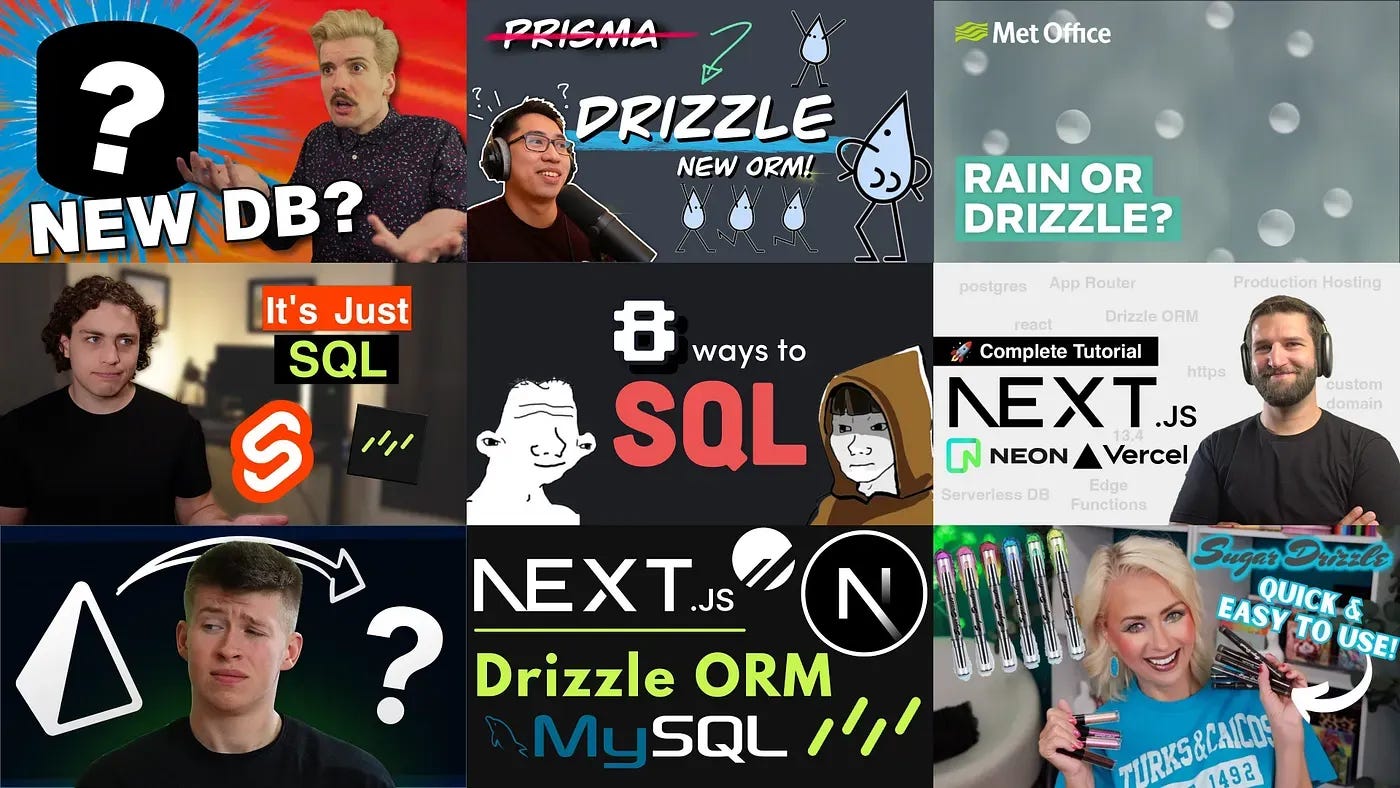
This engineer read it, tried Drizzle and loved it. Then he made a video for his YouTube channel, “The Prisma killer is finally here” (published Mar-6), which gained 40k views.
After that other YouTubers followed as well.
“Theo have shared his production experience with Drizzle at Ping. Fireship mentioned us as a new kid in town. Marius Espejo, Josh, Ben Davis and Dave Gray are exploring Drizzle and our new Drizzle Studio. Justin made a mind blowing 6hrs long, ground top complete NextJS+Neon+Vercel+Drizzle tutorial. Sébastien Chopin talked about NuxtJS on the edge and featured DrizzleORM.” - Alex Blokh on his Medium
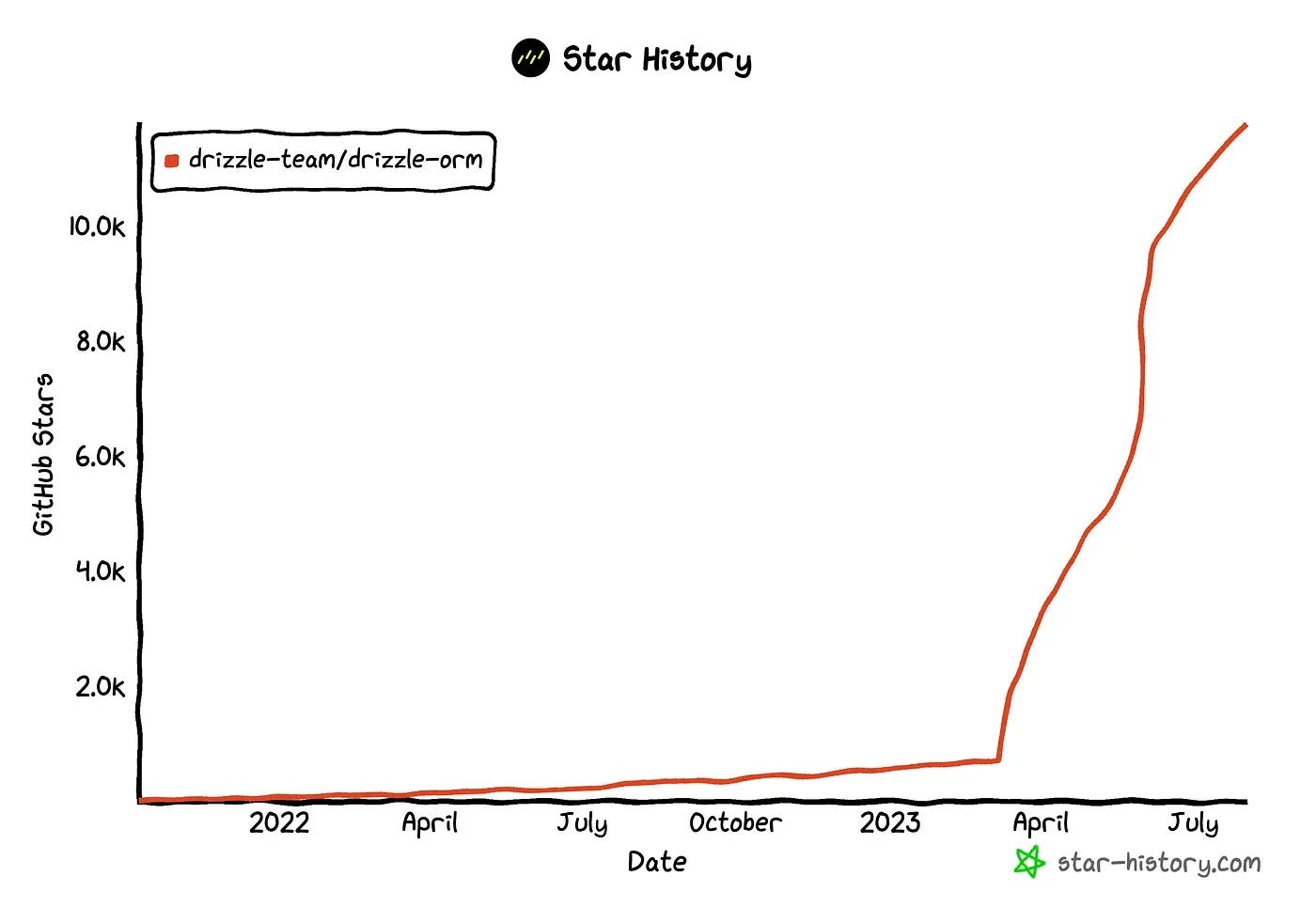
In a few months, Drizzle hit 11k stars on GitHub.
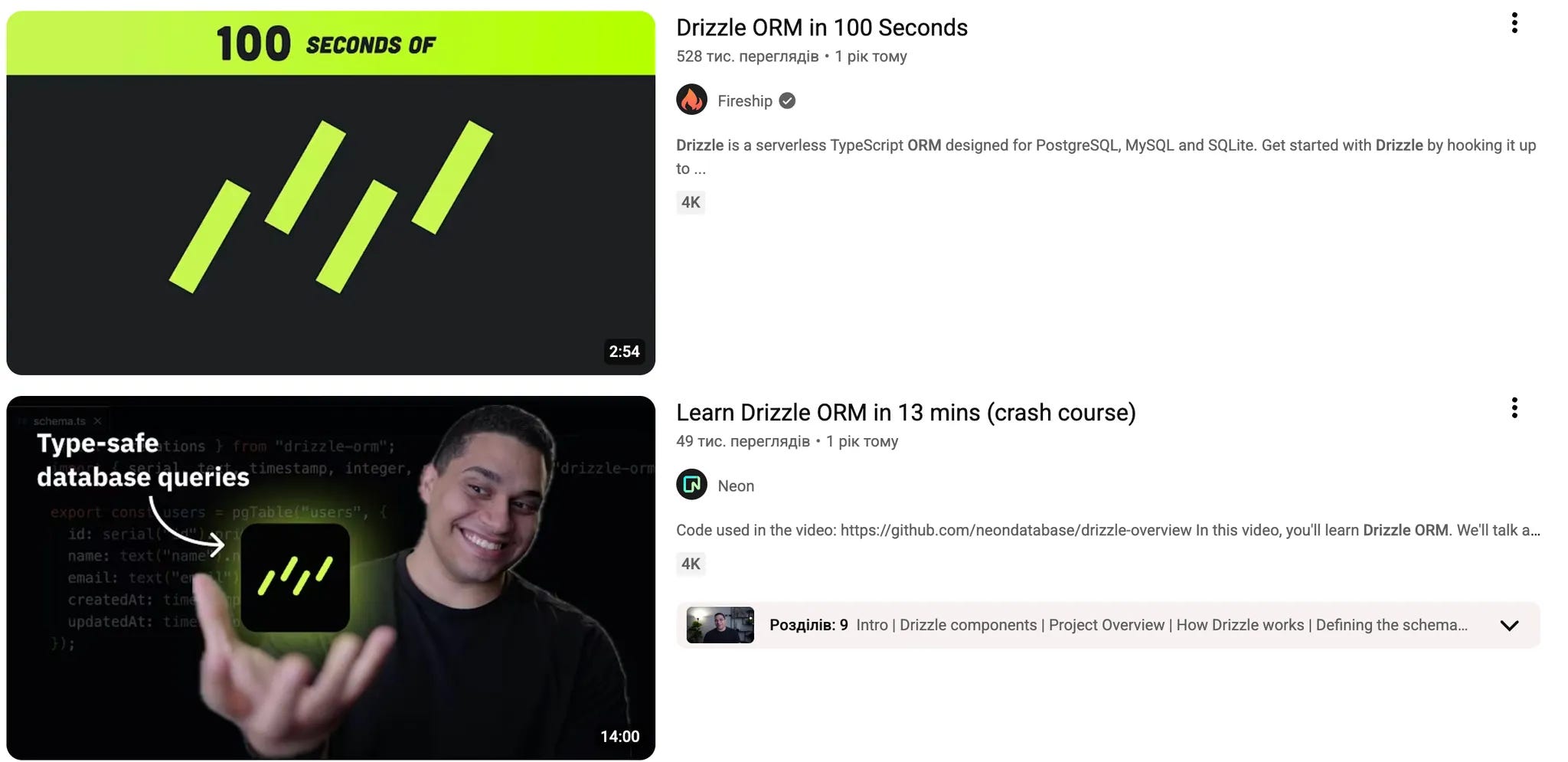
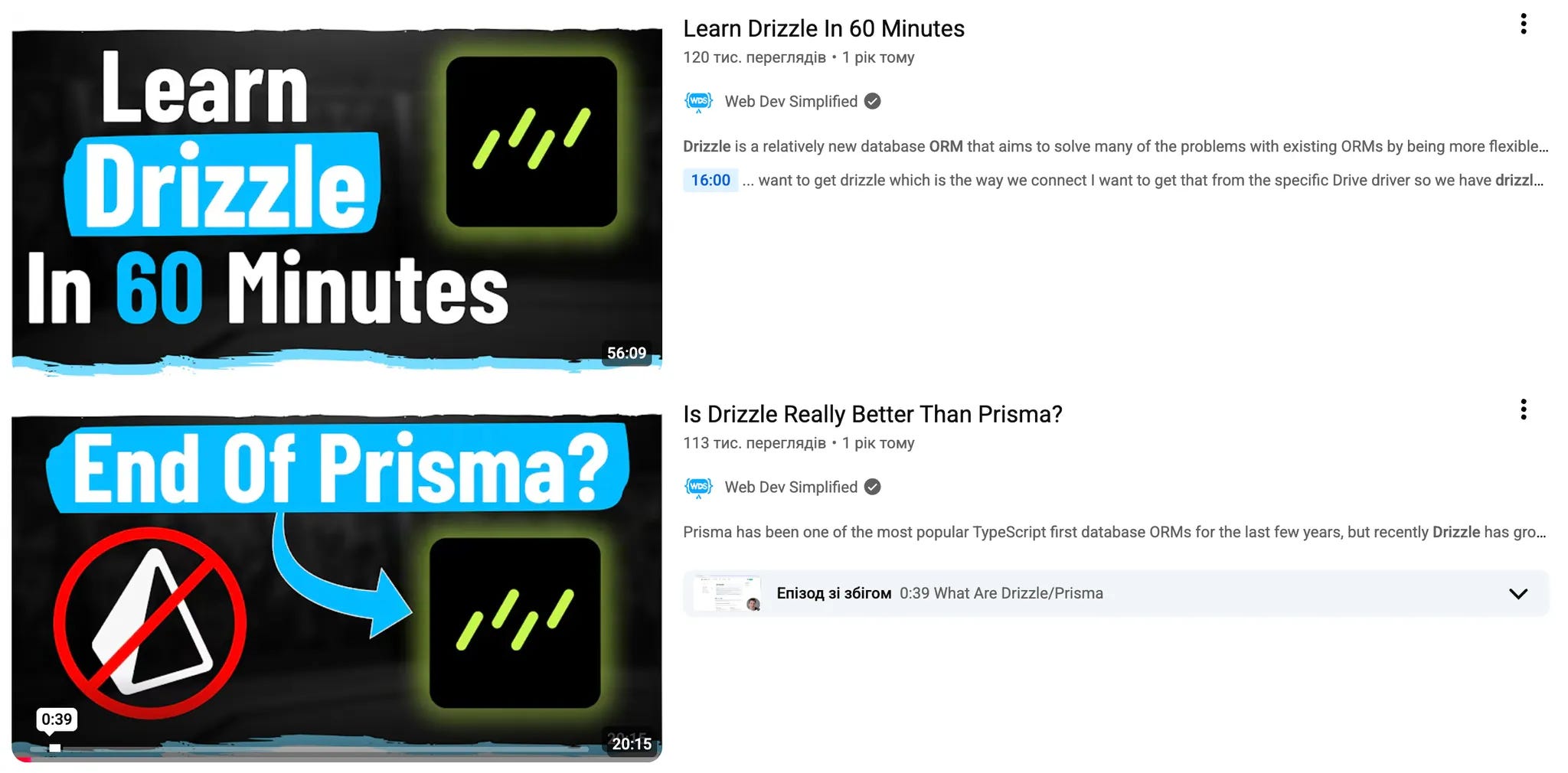
YouTube continued to be the growth driver for Drizzle. YouTube channel Fireship with 4 million subscribers published a video “Drizzle ORM in 100 Seconds” which got 500k views. Neon (database company sold to Databricks for $1B in 2025) also made a crash course about Drizzle for their users. Web Dev Simplified (1.7 million subscribers) published two videos each having 100k+ viewers.
Another strategically important moment came in March 2024 when Astro launched Astro DB powered by Drizzle ORM. For context, Astro is the web framework for content-driven websites, it has 53k GitHub stars and 800k weekly downloads.
The Astro team chose Drizzle as their built-in database layer, stating: “We selected Drizzle because it is a type-safe ORM that lets you get as close to the metal as you want, and is also pluggable.” Astro. This validation exposed Drizzle to the entire Astro ecosystem.
YouTube became the major growth channel, since it’s the platform where developer learn and watch their favourite creators.
I don’t want to spend much time on product details, but it’s worth telling a bit about ORMs. Here is how Prisma describes ORM (sorry Drizzle):
“An ORM, or Object Relational Mapper, is a piece of software designed to translate between the data representations used by databases and those used in object-oriented programming. Basically, these two ways of working with data don’t naturally fit together, so an ORM attempts to bridge the gap between the two systems’ data designs.
From a developer’s perspective, an ORM allows you to work with database-backed data using the same object-oriented structures and mechanisms you’d use for any type of internal data. The promise of ORMs is that you won’t need to rely on special techniques or necessarily learn a new querying language like SQL to be productive with your data.”
So basically ORMs allow developers to simplify database operations, and work with familiar language constructs (objects and methods), leading to quicker development cycles and more readable, maintainable code. Instead of writing SQL (”SELECT id, name, email, country, phone_number FROM users WHERE id = 20”), you interact with database data as objects.
There is one big player on the market, which we mentioned - Prisma.
Prisma was founded in 2016 in Germany, and by the time Drizzle launched, they had raised $61m over 5 rounds (still the same amount in 2025). Investors include Kleiner Perkins (one of the oldest and most famous VC firms), Amplify Partners (DevOps-focused VC, invested in DataDog, Runway, dlt labs), Altimeter Capital (another super famous investment firm, backed GitLab, Snowflake, MongoDB).
Now Prisma has 170+ employees, 44000 GitHub stars, 5,600,000 weekly downloads, and as of Dec 2024, they reported 400,000 monthly active developers and 547,000 repositories.
What is interesting is that in a May-2022 TechCrunch article about Prisma raising $40m Series B, Prisma CEO Søren Bramer Schmidt shared that the idea came when he was building this as an internal tool at his previous company, Trustpilot. Very similar to how Drizzle started.
Other ORMs or SQL query builders are mostly open-source and non-commercial projects, which haven’t tried to raise VC money or go typical startup path:
TypeORM launched in 2016 as a TypeScript-focused alternative. The project has 35,800 GitHub stars and 2.52M weekly downloads. TypeORM is fully bootstrapped without venture capital, maintained through community contributions.
Sequelize represents the original JavaScript ORM with nearly 10 years of development history. It maintains 30,200 GitHub stars and 2M weekly downloads. The project is fully bootstrapped, operating on donations.
Knex.js is an established SQL query builder with over 10 years of development. The project has 19,900 GitHub stars and 2.5M weekly downloads, ranking as the third most popular SQL library. Knex operates without funding as a pure community project.
Kysely is another SQL query builder for TypeScript, which may be used instead of Drizzle. The project has achieved 13,200 GitHub stars and 1.2M weekly downloads without venture capital funding.
In the same TechCrunch article from May-2022 Prisma CEO shared that at that moment their biggest competition was internal tooling - companies like Google, Twitter building the same product for internal use. The market gap here is for smaller companies, which don’t have additional resources to do that in-house.
Drizzle stood out and gained traction by being a faster, more efficient product - something developers care deeply about when every millisecond of performance matters.
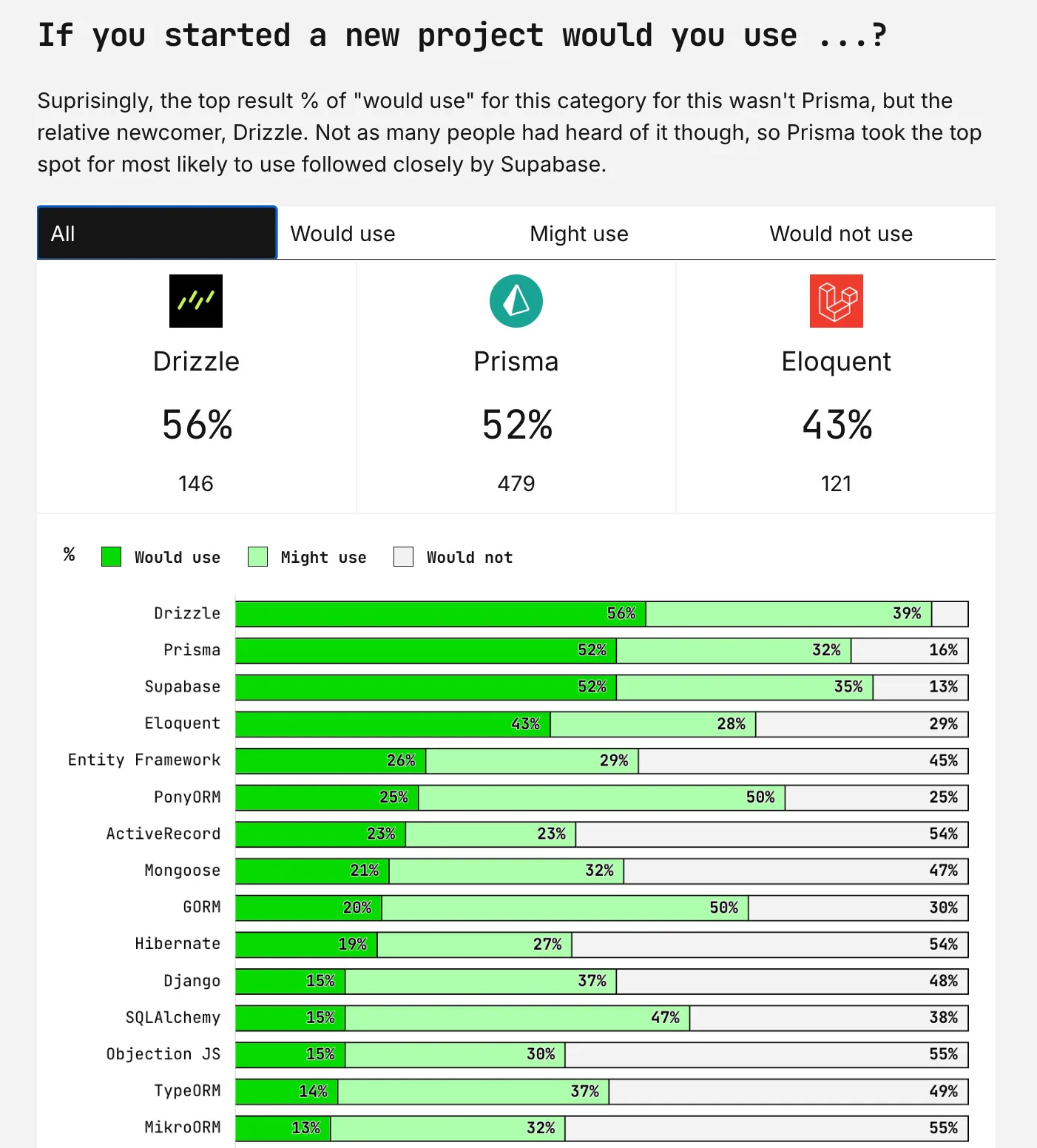
State of Databases - 2023 survey of developers about their tech stack preferences, showed that Drizzle is the most “would use” product in the category.
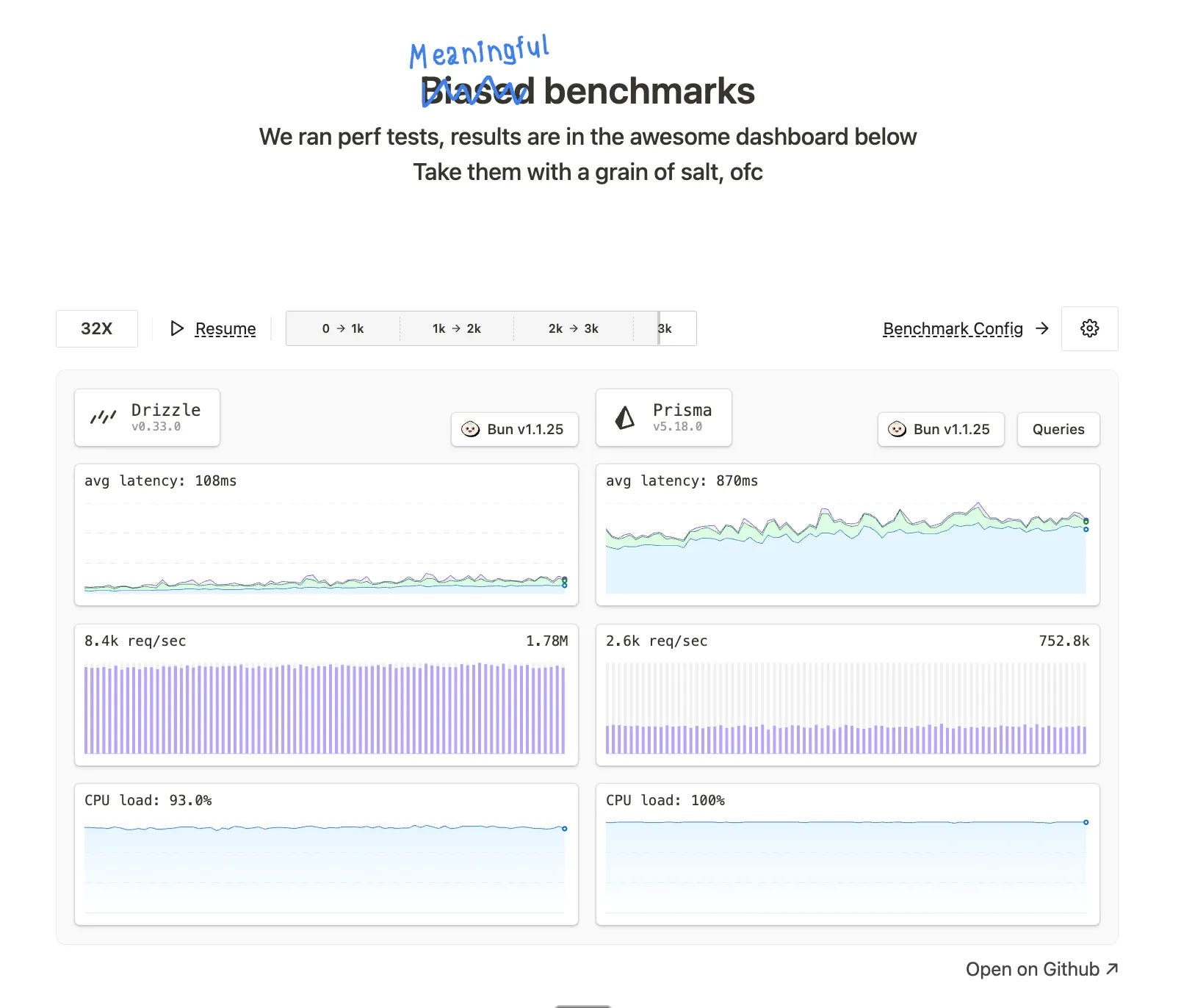
Drizzle also runs faster on benchmarks; here is an example from Drizzle vs Prisma bench on their website.
They still haven’t released the “v1.0” version, estimating they’re about 75% to where they want to be.
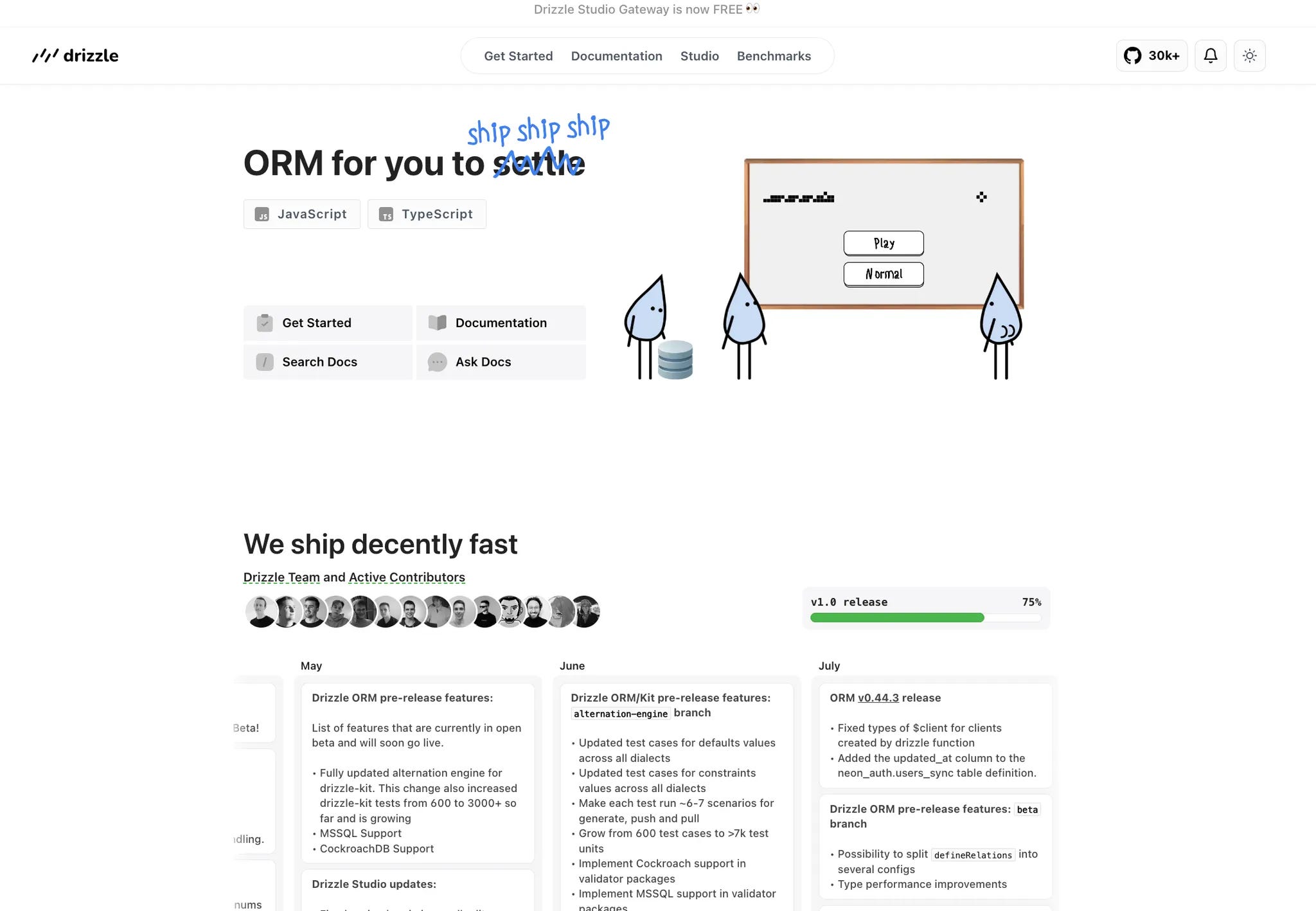
At the start, Drizzle was copying Prisma features, but now Prisma is copying them. Now Drizzle is the default solution for JS/TS developers, it’s catching up on all metrics, and is in a great position to beat Prisma.
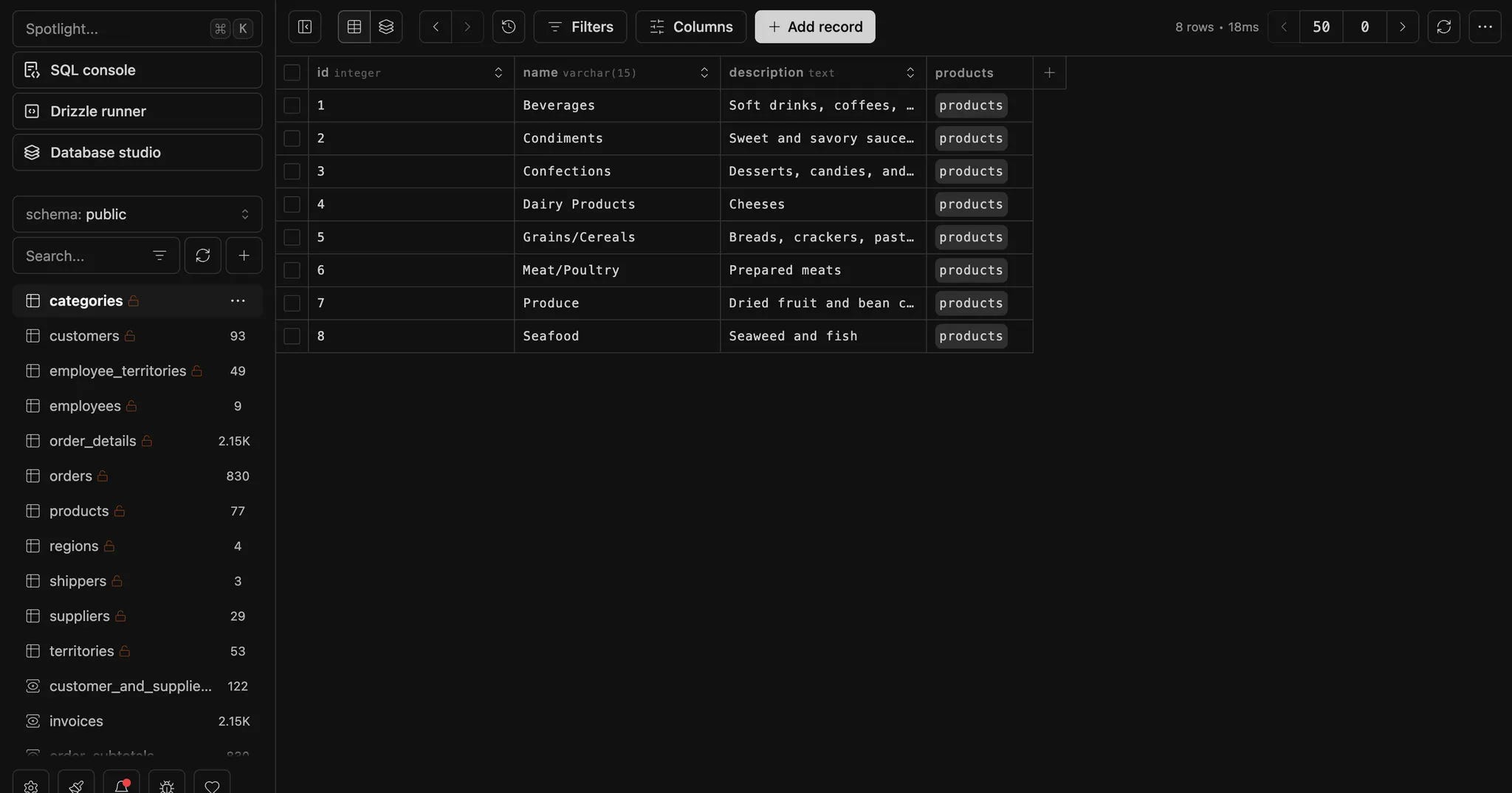
Drizzle Studio is their closed-source, UI-based database management tool that works with the open-source Drizzle ORM. Currently, they sell it as an embeddable component to companies needing database UI. The goal is to establish it as the standard for viewing databases.
While YouTube gave Drizzle the first virality and 11k stars in 4 months, Twitter became the second major growth channel. After YouTube videos on Drizzle in Mar-Jul 2023, many developers started writing about Drizzle on Twitter. While most praised the product, some people wrote negative and critical posts and comments.
And here is what Drizzle cracked. Developers are a specific segment of users, very different from Fortune-500 executives. Drizzle understood developer culture and spoke the language of the community they served - controversy, humor, and irony.
Instead of those typical boring “customer testimonials”, they collected negative tweets on the product, and put them on the website as a joke - “Wall of Hate”.
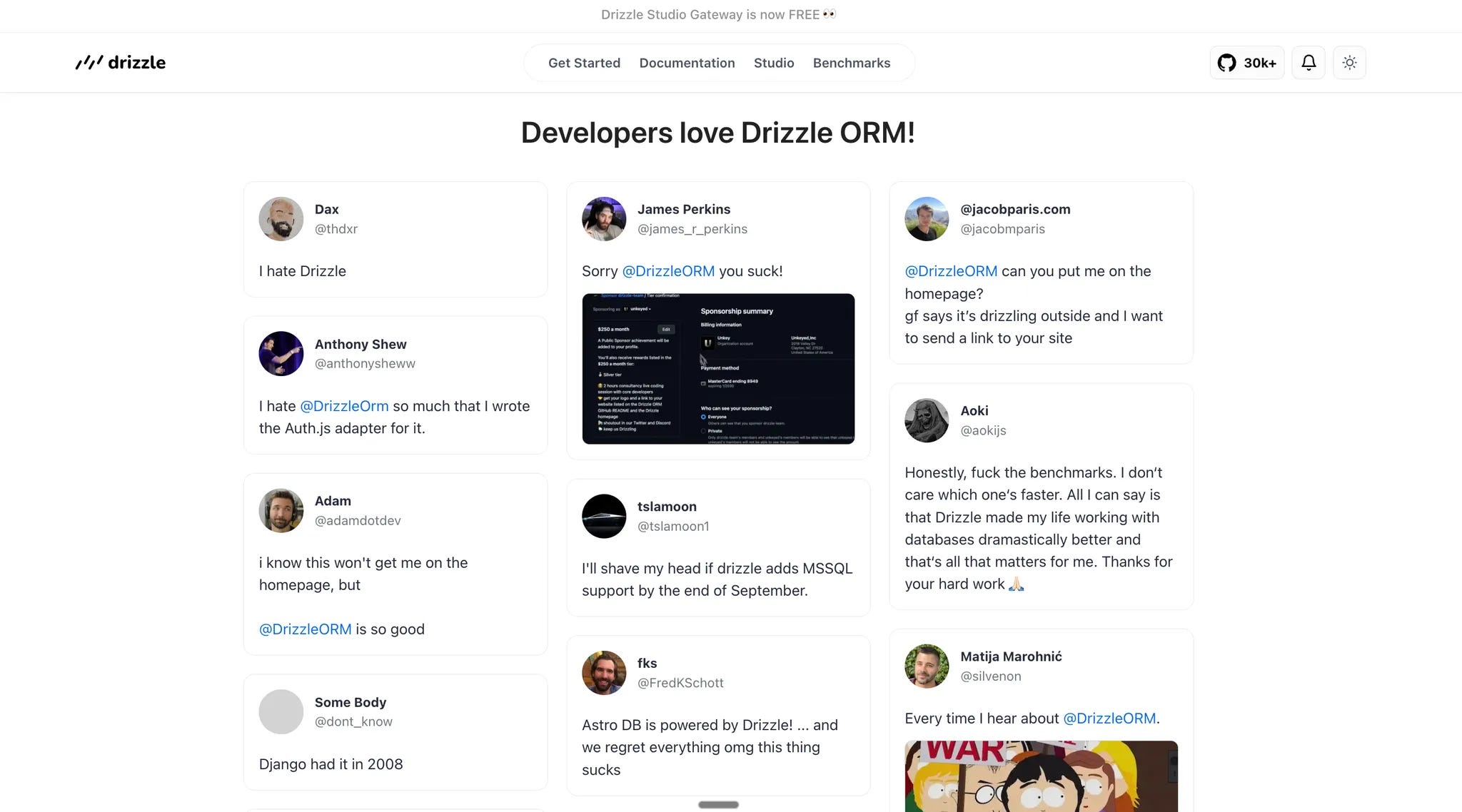
Unintentionally, it became a growth hack - people started posting about it on Twitter and sharing it with everyone. It became a trend that gained Drizzle even more popularity.
“People wrote to us: “DRIZZLE AWFUL”, “I HATE DRIZZLE”, “DRIZZLE SUCKS”—and this trend continues to this day. People are delighted: “I made it into the reviews!” It’s very funny because it’s precisely thanks to these “negative” reviews that many people decided to try Drizzle.
The advertising campaign worked wonderfully. Many new Drizzle users appeared: both those who like the product and haters who write bad reviews just because, without any arguments. There is, of course, also substantiated criticism—we take those comments into account and fix the bugs.
This trend also helped us change our mindset a bit and take the flood of attention more easily. Yes, you can’t escape negativity. But thanks to Drizzle-hate, I could consider messages from haters as attempts to jump on the trend, rather than taking them to heart. To this day we’ve kept the testimonials wall and update the reviews from time to time.
At that point our recognition grew and we understood that we needed to go full-time. There wasn’t enough time after the main job anymore, and the project kept gaining momentum.” - Andrii Sherman shared in DOU interview.
From there on, Drizzle Twitter account followed the same tone of voice, which spoke directly to developers in memes. More like a bro than a typical corporate account.
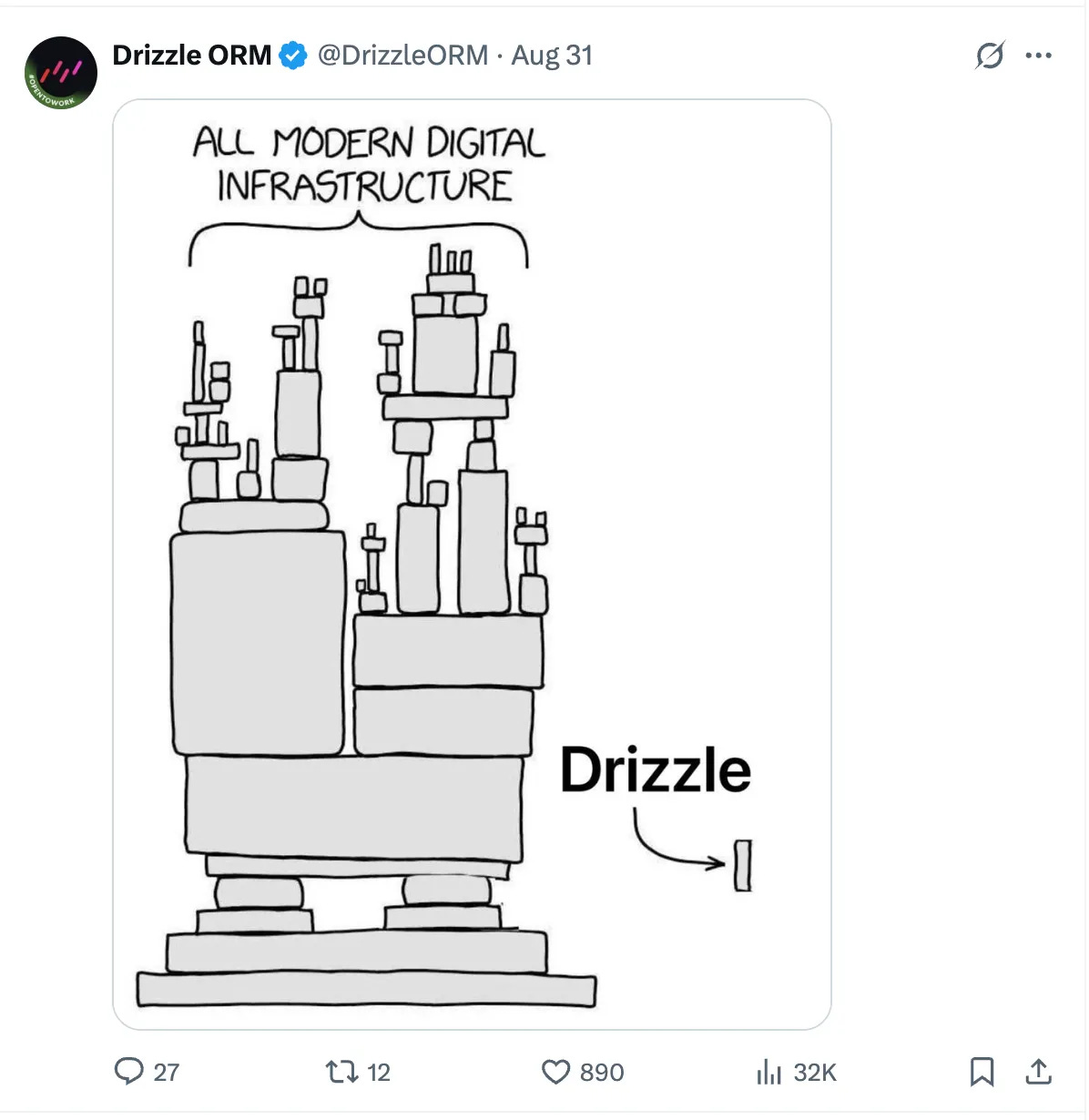
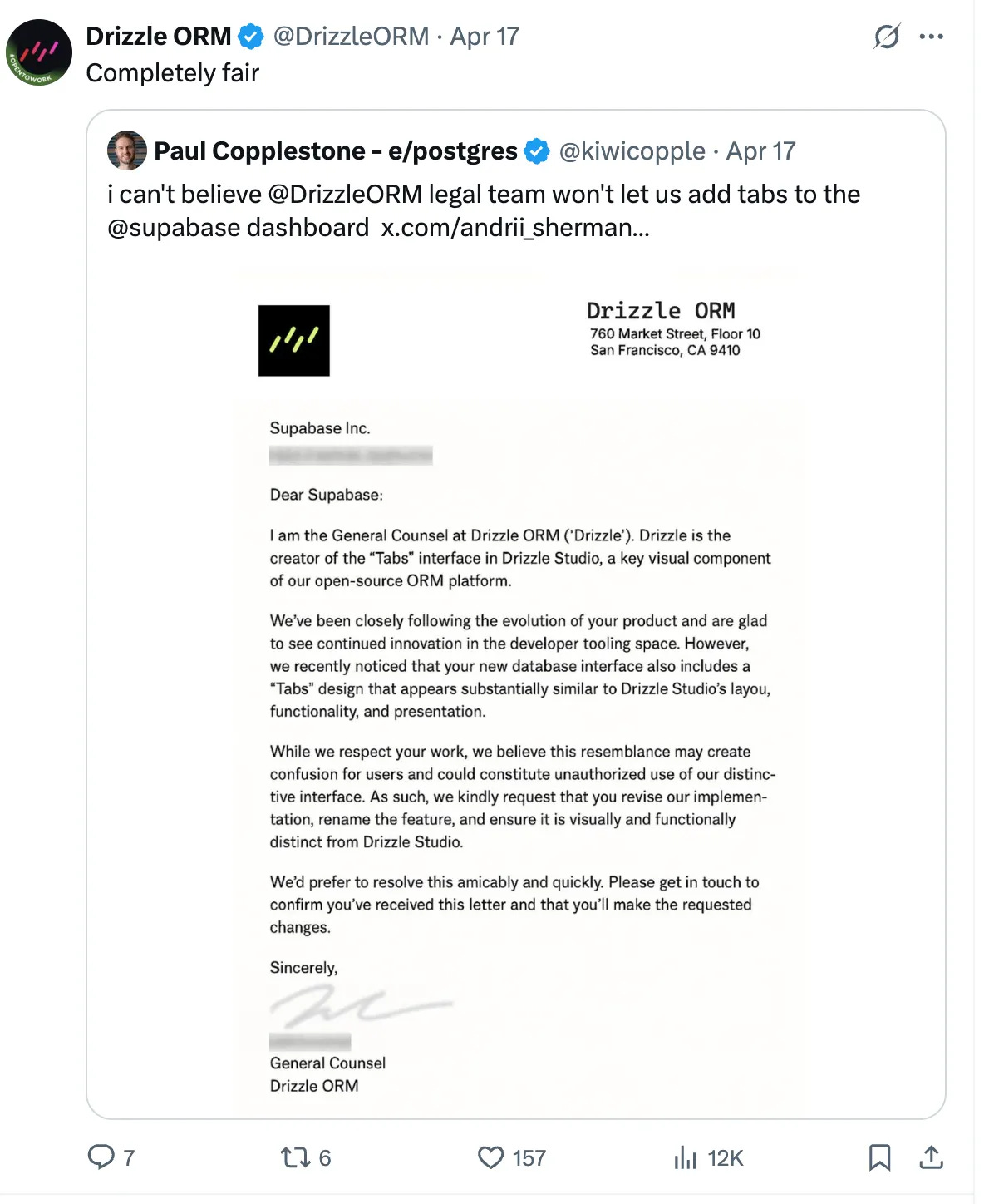
Parody on Figma sending a cease-and-desist letter to Lovable over the term ‘Dev Mode’
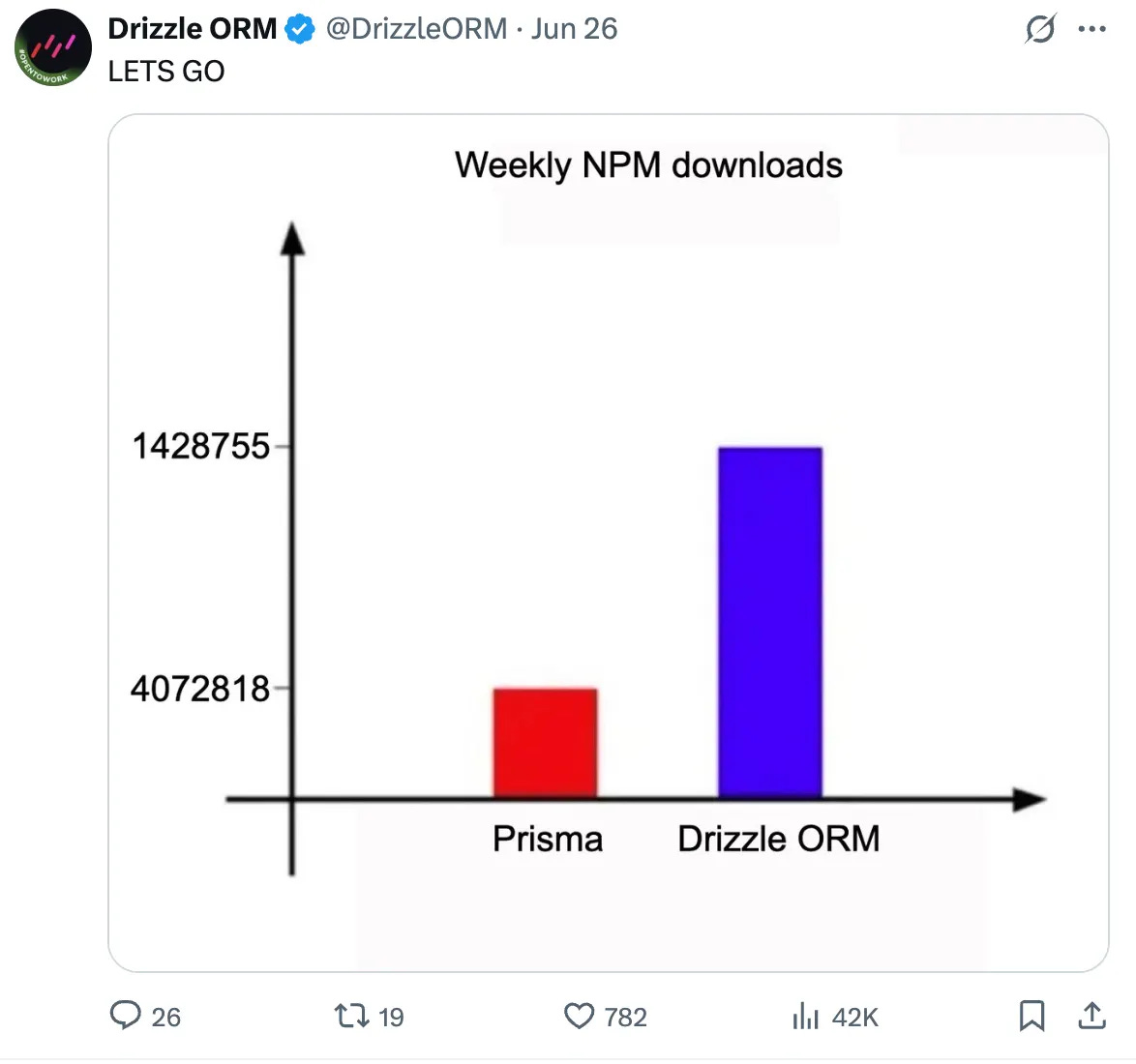
This is what inspired OpenAI for their accuracy charts
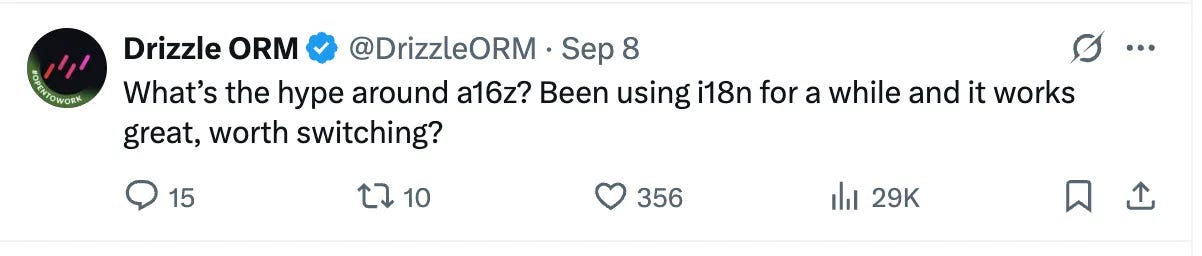
@a16z, what do you folks think?
There are many more posts like this on their Twitter page. That’s a great example of how to build a brand on social media, definitely recommend other Eastern European founders to check out: https://x.com/DrizzleORM.
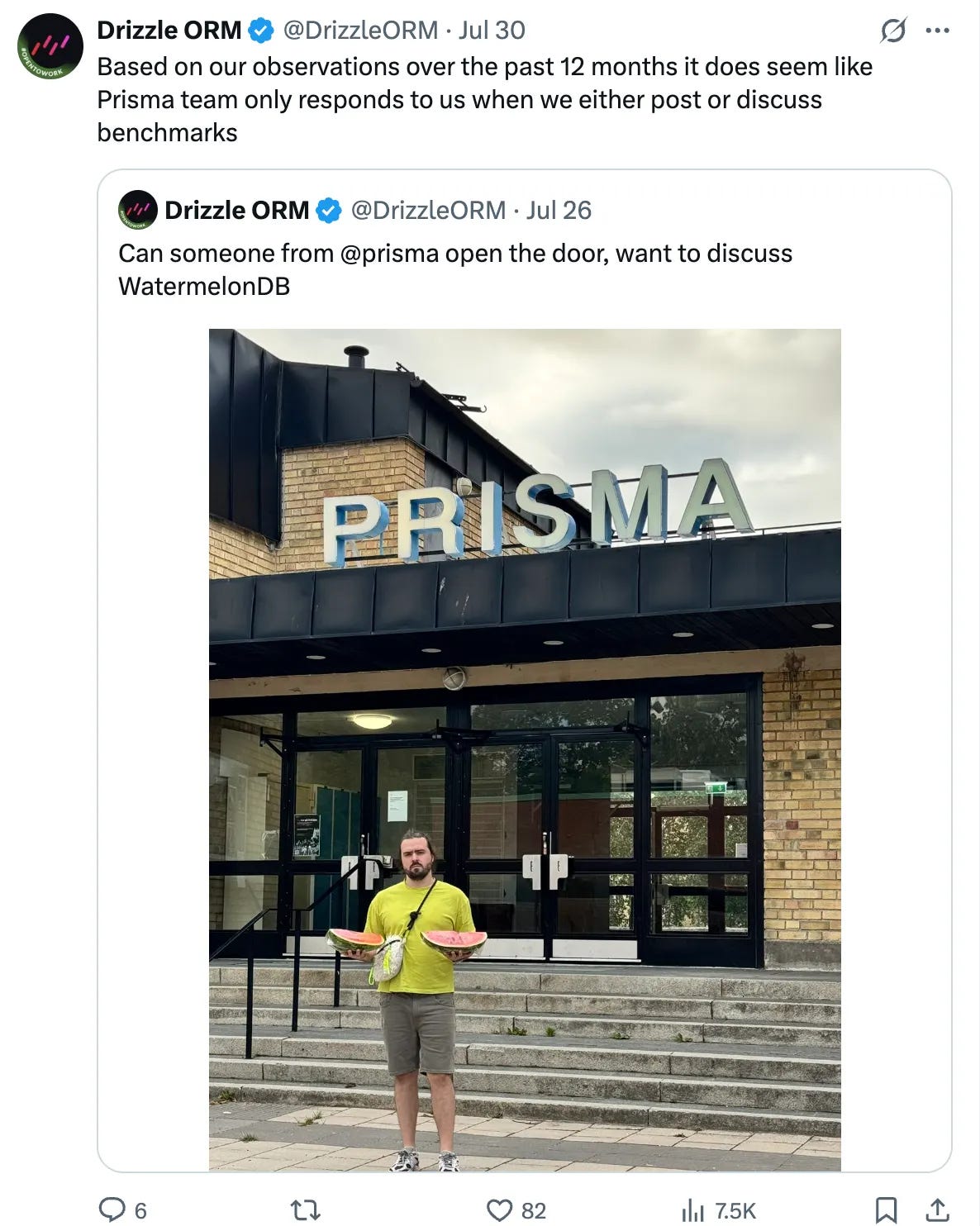
They also made trolling Prisma a central part of how they communicated with their user base.
“We allow ourselves what an enterprise company cannot.”
In parallel, we didn’t stop paying attention to Prisma. This is a serious enterprise company with investors who monitor everything, and therefore, it can’t afford to joke around on Twitter. And we came to the market to show that no less serious work can be done by three people while not denying ourselves some fun.
So on February 14, 2024, we sent them a gift—Drizzle merch, and also signed a valentine: “From Drizzle with love”. A Nova Poshta courier delivered the package to Prisma’s office, but they didn’t react to it at all.
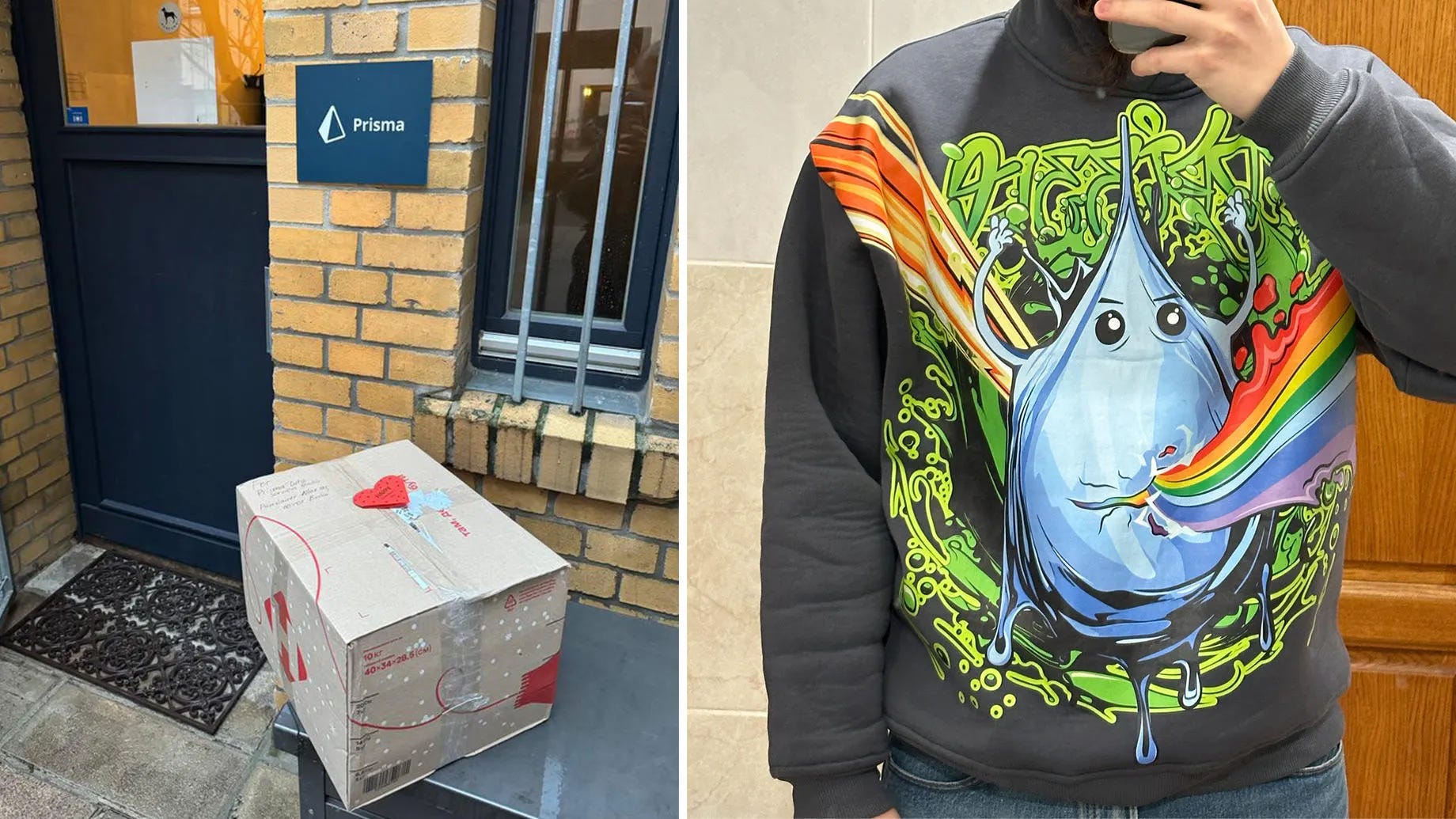
The package at Prisma’s office door and the gift itself
The punch line of the gift is in the wordplay and logos: they have a prism on their logo that refracts light. But the smallest and most natural version of a prism is a water droplet (drizzle), which produces a rainbow. That is, we are the real prism, not them. This game is now about us competing with Prisma to the end. And we continue to allow ourselves a lot of liberties with jokes — Andrii Sherman in DOU interview.
Since the public launch in early 2023, Drizzle has achieved exceptional results, especially when we compare them to Prisma, which had $61m more VC funding ($61m vs $0 to be precise):
1) 2.4 million weekly npm downloads:
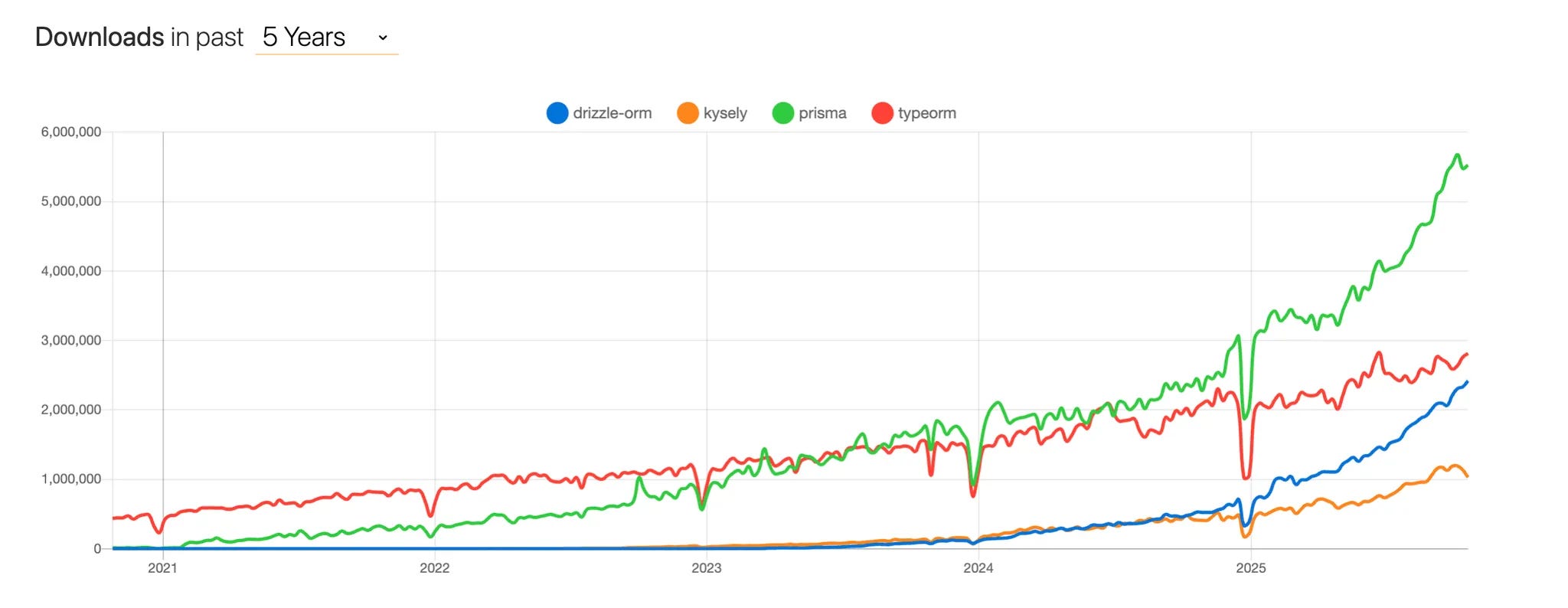
Downloads by tool, week ending Oct-19:
Drizzle: 2,419,351 downloads
Kysely: 1,028,782 downloads
Prisma: 5,525,360 downloads
Typeorm: 2,812,842 downloads
At the start of 2025, Drizzle had 11% market share of ORMs (measured in npm downloads), now it’s 17% as of Sep 2025.
2) 30,900 GitHub stars:
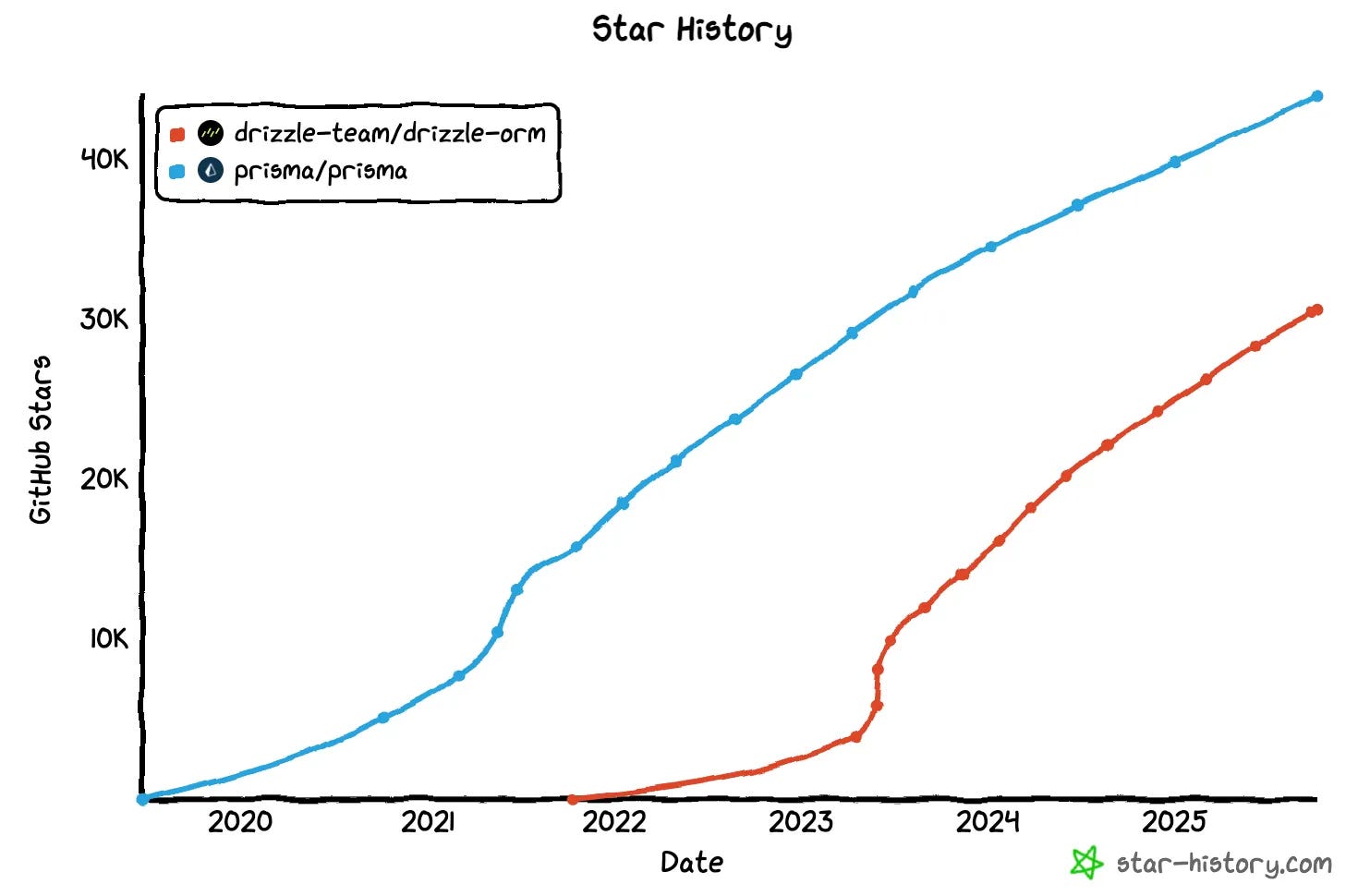
Star history: Drizzle follows the identical growth pace as Prisma
3) Drizzle web traffic and Twitter follower count are also growing:
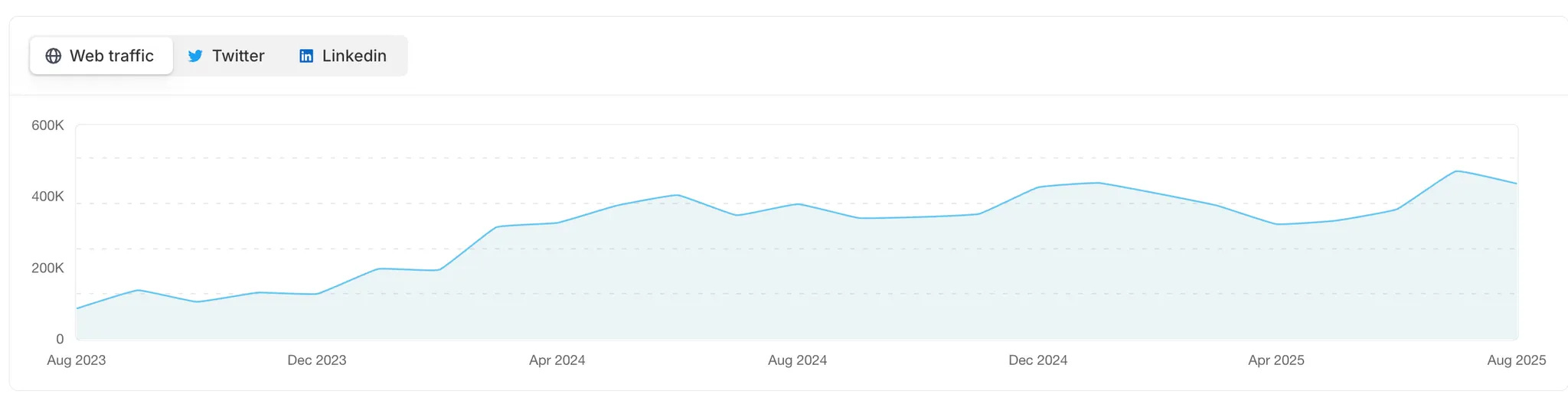
Now the Twitter account has 42.9k followers.
4) They expanded from a team of 3 part-time people to a team of 21 full-time developers.
All of this – achieved without any VC funding! Mindblowing, right? It’s not that VCs didn’t show interest; they did, but the team chose to decline their offers, opting instead to focus on bootstrapping and self-sustained growth.
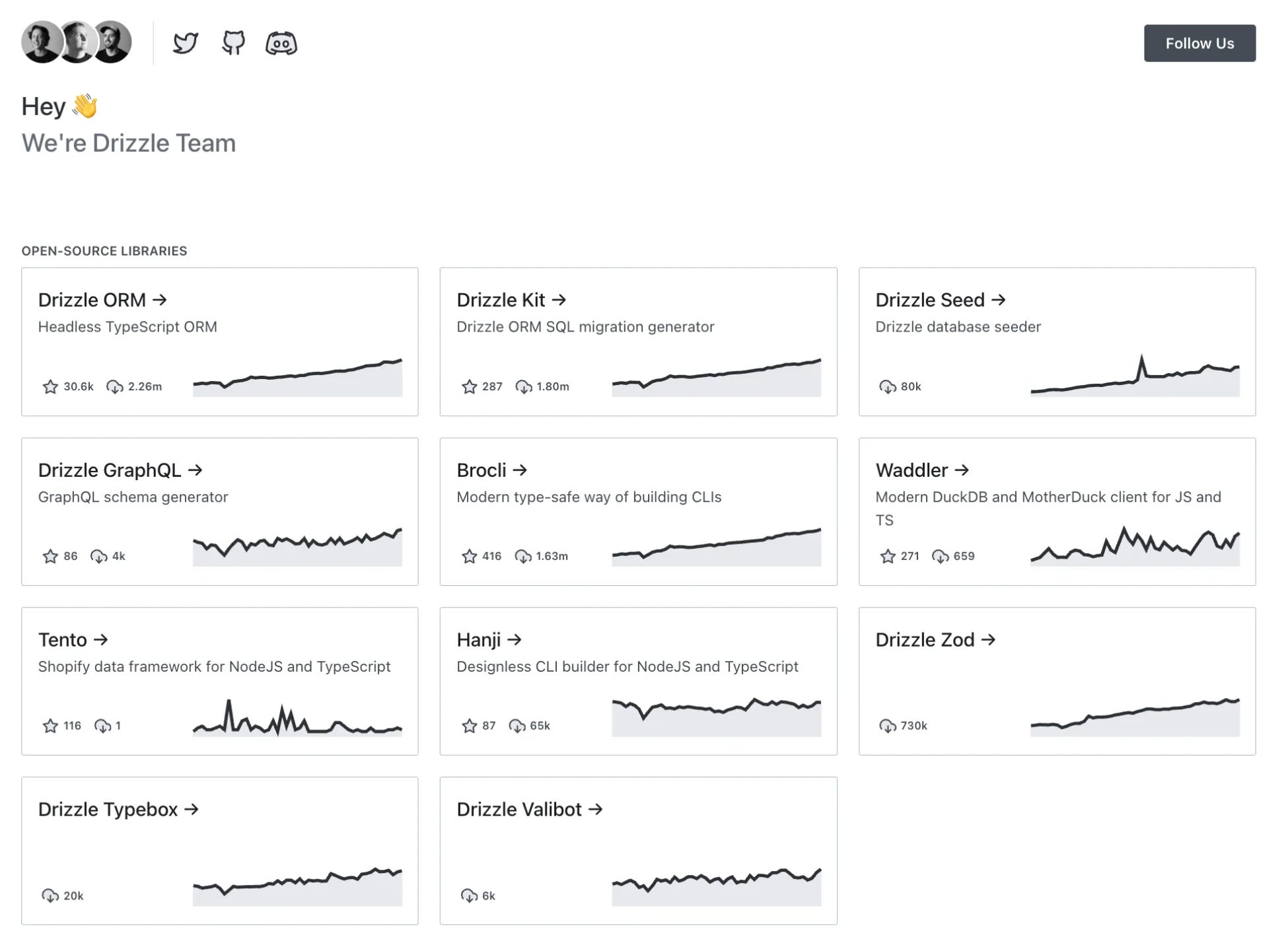
Three years after launching their first library, Drizzle Team reached profitability in 2024. What started as an internal tool for an outsourcing agency has evolved into an ecosystem of ten open-source libraries used by companies like Replit, Sentry, Databricks, Deco.cx, Figma and many others.
The bootstrapped company now has 21 employees, all based in Ukraine, registered as an LLC in Dnipro through Diia City. Andrii is very passionate about building Drizzle as a Ukrainian company.
The team is made up of childhood friends and former colleagues from the agency. Both founders now draw salaries - a milestone they reached only in 2024, three years into the journey.
“Currently on the Drizzle Team website there are main open-source projects we’re working on: Drizzle ORM, Drizzle Kit, Drizzle Seed, Tento, Brocli, and many others. These are all open-source libraries for various needs that we developed for ourselves and then shared with others - you can either add something of your own or just use them.”
Beyond Drizzle ORM and open-source libraries, the team is building a suite of products around a simple idea: quality tools should be accessible. Their first experiment is One Dollar Stats - unlimited web analytics for $1 per month. The same features other services charge $30, $50, or $70 for.
“Our plans for products: establish the closed source solution Drizzle Studio as the standard for viewing databases. And also release a separate Desktop application for macOS, Windows, etc. Develop One Dollar Stats as part of another, larger product that hasn’t been released yet, because it needs to have many components. We want to also make One Dollar Database, One Dollar Events, One Dollar <something>. And we’ll have a set of different products—each for one dollar. And eventually we plan to combine them all into one product for a dollar. This won’t happen soon, but we’re actively working on it.”
Operating from Ukraine comes with practical complications.
Since Russia’s full-scale invasion in February 2022, the team has worked through conditions that would have stopped most projects. By 2024, Ukraine had lost a huge share of its power generation capacity due to Russian ballistic attacks. Some days the team had 14-16 hours without electricity, only 8 hours with power. Summer temperatures hit 40°C with no air conditioning during outages.
They run Starlink internet with power stations and battery banks - two car accumulators that charge when electricity is available, then power laptops and internet during the 16-hour outages. Rockets hitting near their locations force them into shelters regularly.
“When the rocket hits right near you and your door is open and windows are shaking... It’s really hard. It also happens at night. So you want to sleep, you want to recharge yourself, but you can’t because you need to go to the shelter.” Andrii shared.
Another challenge - some American companies can’t pay Ukrainian entities due to corporate policies. They have to come up with workarounds to use Drizzle.
Every founder is used to Stripe, but Stripe does not support payments in Ukraine. Drizzle had to adapt here by using Paddle - a great alternative for businesses from CEE.
There are several learnings that other founders from Ukraine and Eastern Europe should take from this story:
1) Speak the language of your users. Be present where your users are. Twitter and YouTube are platforms where developers discuss and showcase new products. If you are building in this category, it’s a must to be present there. Build a founder brand. Andrii has 8000 followers on Twitter, some posts having 50k-100k views.
2) Build in public, show the product. Drizzle was open about their journey, it made people want to support them. Challenges, features they are working on, etc. Many Eastern Europeans underestimate this - probably because of our mentality. Record with Screen Studio, show how it works, gather feedback in public and iterate.
3) Developers are super fast in adopting new products if they satisfy a real need. Drizzle went from 700 stars to 11k stars in just 4 months after solving Prisma’s performance issues. No long sales cycles or enterprise procurement - when a load test fails with your current tool and works immediately with the alternative, developers switch that day. Focus on building something genuinely better on the metrics users care about (in this case, performance, developer experience, speed), and adoption will follow faster than in any other market.
4) Community-led growth beats traditional marketing for developer tools. Drizzle didn’t pay for ads; they focused on getting influential developers in the community to try Drizzle and share their genuine experiences. The compounding effect of creator content plus Twitter memes kept the community active and drove millions of downloads organically.
What’s even more important here - community adoption drives enterprise adoption as well. In the last 2 years as a VC, I’ve evaluated many products in this space. Since I’m non-technical, every time I evaluate these products, I show them to technical people in our network: CTOs, Engineering Managers. What do you think of it? Would you use it? Many times I heard one repeating answer: “Description looks cool, but I want to see some community adoption first, and then test it internally.” When engineering leaders see that a product has strong community adoption, they become willing to test it.
5) Fight big players with asymmetry in marketing. Do something your competitors can’t, something “not normal”, and don’t be boring! Drizzle sent Valentine’s Day merch to Prisma’s office, created a “Wall of Hate” from negative tweets, and posted satirical cease-and-desist letters that went viral. Big enterprise companies usually can’t take these risks - small bootstrapped teams can be provocative, funny, and memorable in ways that cut through the noise.
https://dou.ua/lenta/interviews/drizzle-developer-interview/
https://drizzle.team/
https://orm.drizzle.team/
https://www.prisma.io/
My short conversation with Andrii
That’s it for today, tnx for reading!