Ben Hine was 4 years old when his parents split. In his recollection, he remembers that his dad left for work one day and his uncle arrived in a van to pick up Ben and his mother, along with the family’s belongings. His mother left a note in the empty house saying that their son would no longer be a part of his father’s life. It was a month before he saw his dad again, he told Undark.
The details of that day are obscured by trauma, Hine said, but he remembered how his mother’s family denigrated his dad, “the picture they painted of him, paired with the positive memories that I had, and the discord and the issues that caused.”
Hine went on to become a psychology researcher and, in 2019, came across the topic of parental alienation by chance while studying male victims of domestic violence. Some of the men told Hine that former partners had turned their children against them. Like many children in such cases, he said, he had not thought of himself as a child that had been alienated from his dad. But when the fathers he was studying described the weaponization of their children, he saw his own experience in a new light: “Through that I kind of realized that I was the type of child that they were talking about.”

Ben Hine, a professor of applied psychology whose parents split when he was 4, came across the topic of parental alienation during his own study of male victims of domestic violence. “Through that I kind of realized that I was the type of child that they were talking about,” Hine said.
Visual: Courtesy of Ben Hine
Hine, now 36 and a professor of applied psychology at the University of West London, has become a leading exponent of parental alienation, with a book on the subject coming out in May. He reflects on his own experience as part of his research practice, he said. “As a survivor of that abuse when I was younger, I would always make a very clear point that that does not take away at all from the objectivity of the science that I then do.”
Such explanations may feel obligatory in this hotly disputed field.
Parental alienation is generally defined as occurring when one parent influences a child to reject the other without any justification. It is not meant to apply if the other parent has been cruel or abusive. But legal experts, women’s rights advocates, and an array of organizations including the European Parliament have taken a stand against the concept’s academic and legal legitimacy, arguing that it has no scientific foundation and that, too often, abusive men deploy the term in court as a counterclaim in custody battles if their former partner alleges abuse. In a worst-case scenario, a flawed verdict may place a child in a dangerous situation, opponents of the concept say — back in the custody of a parent who has abused them.
But the consequences of parental alienation on children are extensive too, say experts who work in the field, which has grown significantly over the past decade. A literature review published in 2022 described anxiety, depression, post-traumatic stress symptoms, substance abuse, and problems in identity development and with peers and romantic partners. Another review, published online in 2021, found that, as adults, such children were at risk of low self-esteem, feelings of abandonment and guilt, alcohol and drug abuse, and a higher likelihood of experiencing divorce.
Parental alienation is generally defined as occurring when one parent influences a child to reject the other without any justification. It is not meant to apply if the other parent has been cruel or abusive.
Experts who say the concept is ill-defined and has no scientific basis argue that such studies are flawed. According to the latter camp, these parental separations are complicated and there are no scientifically validated approaches for determining whether a child’s reluctance to see one parent arises from abuse and is justified, or stems from alienation and is illegitimate. In a 2024 statement signed by more than a hundred academics and activists, the authors said that although research on parental alienation had been going on for several decades, the term “still lacks a universal clinical and scientific definition” and could be considered a pseudoscience.
To these scholars, parental alienation becomes most useful as a legal strategy in court, enabling a man accused of abuse to counterclaim that his former partner is trying to damage the children’s relationship with him. Joan Meier, one of the statement’s co-authors and a professor of clinical law at George Washington University Law School who has worked with victims of domestic violence, told Undark that parental alienation does probably occur in some families experiencing high-conflict separation. “I’m not questioning that it could happen,” she said. “What I question is all of the quasi-pseudo-scientific claims about how devastating and destructive it is, and how it works, and how we can identify it. None of that, to me, has any scientific validity.”
In the early 1980s, Richard Gardner, a psychiatrist based in the New York metropolitan area, began to perceive what seemed like a pattern occurring in high-conflict child custody cases: Children, he said, influenced by their favored parent, would start to dislike and disparage the other parent. He published a book on the subject in 1987 and termed the pattern “parental alienation syndrome” — a condition in which children turn against a parent as a result of the other parent’s influence — drawing on his observations of familial separations. Occasionally, fathers could be the perpetrators, but most often, he said, mothers were to blame.
The sanctions Gardner proposed for the offending parent ranged from a reduction in alimony payments to short periods of house arrest and actual imprisonment — mirroring, he said, the penalties facing men who fell behind on alimony. In severe cases, he suggested that children spend a short stint at a psychiatric institution. Those extreme scenarios may also warrant permanent transfer to the father’s custody, which, Gardner wrote, may be the child’s “only hope” of protection from the “mother’s severe psychopathology.”
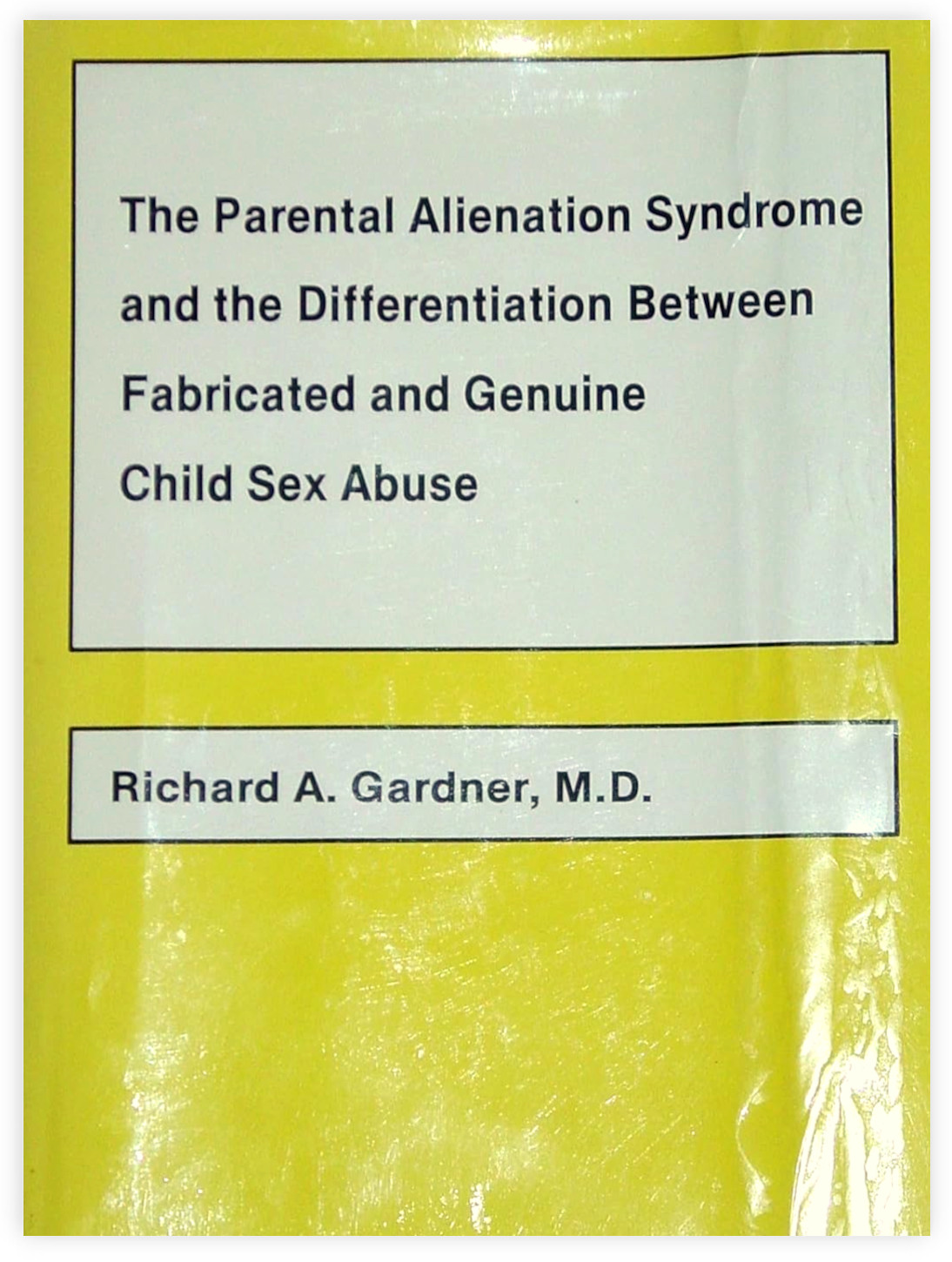
In a 1987 book, psychiatrist Richard Gardner published the term “parental alienation syndrome.” Since then, it has evolved from a syndrome (known as PAS) to a disorder (PAD) to a type of behavior (PAB).
At the time, critics unpicked Gardner’s parental alienation syndrome, or PAS, according to a 2022 paper by Meier. Because there was no scientific proof of the syndrome and because some of Gardner’s explanations were outrageous, she wrote, “PAS has been widely discredited as lacking scientific credibility.”
In 2001, Carol S. Bruch, then a professor of law at the University of California, Davis, wrote that Gardner greatly overestimated how often parental alienation occurred. Gardner overstated his connection in academia, she added, and received referrals from fathers’ organizations. “Children’s reluctance or refusal to visit noncustodial parents can probably be better explained without resorting to Gardner’s theory,” she wrote.
To Hine, Gardner’s name can be a distraction. People raise his name “as a kind of grenade to blow up the debate that we are now in,” he said. “And so I try to as much as possible not engage with it, because I don’t think it’s productive, and I don’t think it represents where we are now as a discipline.”
Either way, the concept took hold. Since then, it has evolved from a syndrome (known as PAS) to a disorder (PAD) to a type of behavior (PAB). Parental alienation refers to the dynamic resulting from alienating behaviors, and the concept remains influential in some family courts in the U.S. (where judicial systems don’t recognize a distinct syndrome), as well as Europe and Brazil.
The consequences of parental alienation on children are extensive too, say experts who work in the field.
The number of publications on parental alienation has also proliferated: A 2022 literature review stated that nearly 40 percent of the total research output on alienation appeared since 2016. According to the authors, the field meets three criteria showing it is a maturing scientific field: an expanding research base, a move towards quantitative studies, and studies that test the original hypotheses.
In order to determine that a child has been alienated from their parent, a clinician must interview the child and both parents, as well as observe parent-child interactions. A clinician might also gather documentation — about missed visits for example — and review school or medical records (although attorneys could also contest their release).
In families with long-standing conflict, identifying parental alienation is a matter of degree, Michael Oberschneider, a clinical psychologist who in his practice has helped families going through divorces, wrote by email. Parents going through high-conflict separations often denigrate their former partner in front of the children. “It becomes a more serious concern,” he wrote, “and something resembling parental alienation, when this behavior is pervasive and the child begins to internalize these negative views, resulting in a compromised relationship with the other parent.”

SIGN UP FOR NEWSLETTER JOURNEYS: Dive deeper into pressing issues with Undark’s limited run newsletters. Each week for four weeks, you’ll receive a hand-picked excerpt from our archive related to your subject area of interest. Pick your journeys here.
Several frameworks exist to help clinicians evaluate parental alienation, Oberschneider wrote. One of the most prominent is a model which lays out five factors for a diagnosis: A child must reject a relationship with one parent (factor 1) with whom they previously had a good relationship (factor 2). Ruling out abuse or neglect is essential (factor 3). The favored parent must also engage in alienating behaviors that persuade the child to reject the other parent (factor 4), while the child shows signs of alienation, like claiming to have no positive memories about the rejected parent (factor 5).
The theory has strengths and weaknesses, Oberschneider wrote. It gives clinicians a stepwise approach to assess alienation and communicate it in court; but it “could be used to dismiss legitimate claims of abuse or to pathologize children’s justified preferences,” he added. And “while widely cited, the model’s reliability and validity are still debated and require further research.”
“What I question is all of the quasi-pseudo-scientific claims about how devastating and destructive it is, and how it works, and how we can identify it. None of that, to me, has any scientific validity.”
Critics say these criteria are hard, even impossible to measure or verify. In a presentation she shared with Undark, Jean Mercer, a professor emerita of psychology at Stockton University, stated that the five-factor model “is based on speculation and retrospective research and has never been shown to discriminate between children who reject a parent because of PA and those who have other reasons for rejection.”
Still, a camp of researchers defends parental alienation as a concept worthy of study. In 2024, Jennifer Harman, a social psychologist and leading figure in parental alienation research, co-authored a paper responding to 14 arguments against parental alienation theory. She and her co-author noted that, by then, more than a thousand articles and books had been written about the subject. They also said that alienation could have a long-term impact on children. When one parent demonizes the other, the effect is profound, Harman, an associate professor at Colorado State University, told Undark: “The child hates half of themselves as a consequence. They have low self-esteem, they don’t trust their feelings, they don’t trust their memories, and all they feel is hatred and anger and loss that they cannot grieve.”
At least two countries have formally recognized the concept of parental alienation: In 2010, Brazil introduced a law against it, and Denmark did the same in recent years, in both cases allowing parents who try to distance children from their former partner to be penalized. But the United Nations and professional organizations in the U.S. and U.K. have taken a stance against it. A report published in 2023 by the UN’s special rapporteur on violence against women and girls said parental alienation “and similar pseudo-concepts” are deployed by abusers to undermine women’s allegations of domestic violence. The American Psychiatric Association, American Psychological Association, and American Medical Association deny the validity of parental alienation syndrome, because of a lack of clear diagnostic criteria or empirical evidence. (The APA’s dictionary entry notes, however, that the broader idea of parental alienation is often viewed as a real and problematic dynamic within families.) Guidance from the Family Justice Council, an advisory body of the U.K.’s family justice system, said the syndrome “has no evidential basis” and that alienating behaviors that affect a child’s relationship with a parent are rare.
Women’s rights advocates have lambasted the concept of parental alienation because they say men use it to undermine women’s valid claims of abuse in court. And there is evidence that it can be an effective strategy: A 2020 study that received funding from the Department of Justice and looked at more than 4,000 cases over a 10-year period found that courts believed women’s abuse claims in about 40 percent of cases in the absence of alienation allegations; when a man alleged alienation, that figure fell to 23 percent. Such claims also roughly doubled the likelihood that a woman would lose custody, said Meier, the study’s lead author. A 2018 report authored by Linda Neilson, a lawyer and professor emerita of sociology at the University of New Brunswick, reviewed 357 parental alienation cases in Canada and found that about 40 percent also involved domestic violence or child abuse allegations. In 40 cases, the court ruled against the parent who said domestic violence had occurred; and in 39 of those, the child was removed from that parent and sent to the alleged perpetrator.
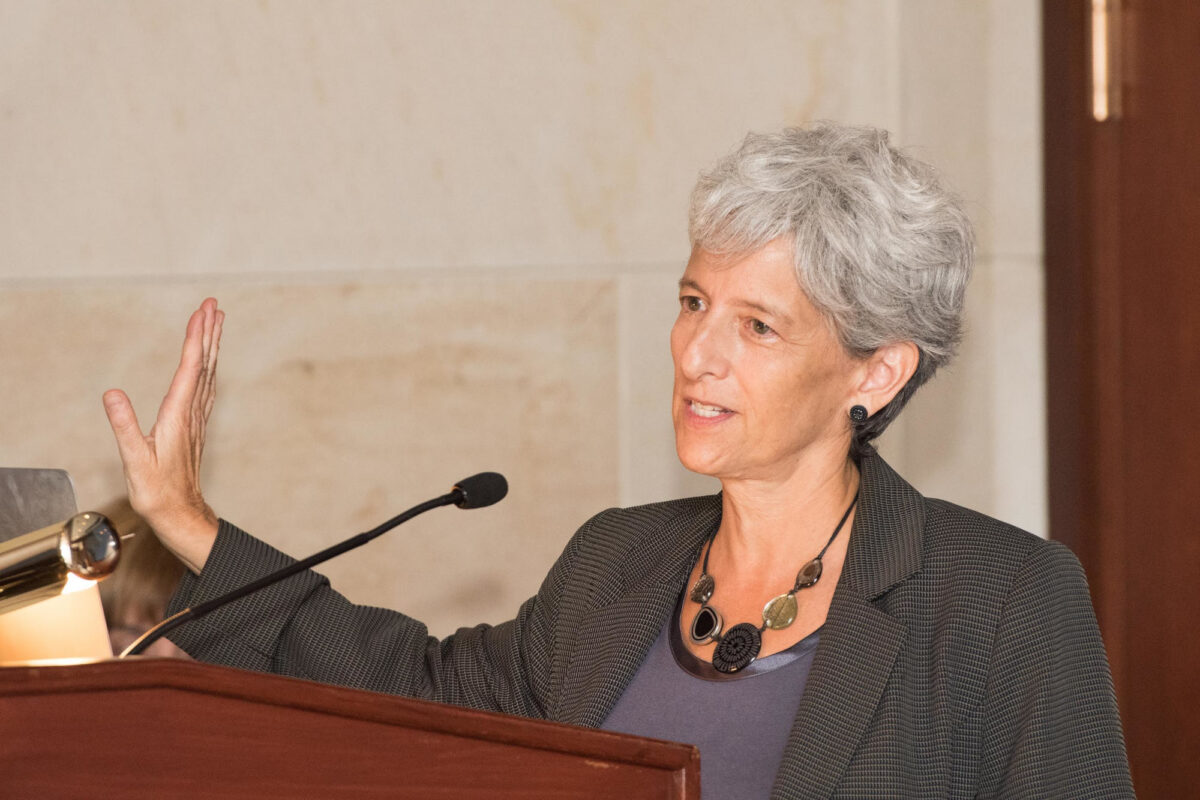
Joan Meier, professor of clinical law, co-authored a 2024 statement that criticized parental alienation as being ill-defined and possibly a pseudoscience. Meier and colleagues have proposed a new term for behavior that attempts to alienate a child from their parent: Child and Mother Sabotage.
Visual: Courtesy of Joan Meier
When it is falsely alleged in court, the results can be profound, said Mercer. Last year, Mercer published a book that details parental alienation cases called, “Someone Said Parental Alienation: About Divorcing Families Whose Children Avoided One Parent.” In the introduction, she explained that in a contentious divorce, even just the mention of parental alienation can trigger a damaging process for children and families.
A mother may not have the means to contest the accusation and must “give in to whatever it is that that’s being asked of her,” she said. “I see people who have lost everything, who’ve sold their houses to pay for representation.”
Hine, the London-based applied psychology professor, acknowledged that false alienation claims occur, but said these events should not undermine the entire academic field. Instead, he said, they demonstrate how important education is: “If there was a broader and more positive and more inclusive and more productive conversation around the phenomenon, we could be going into courts, educating judges and lawyers to make sure that they root out false allegations, as well as recognizing when this very damaging form of abuse is occurring.”
Still, opponents of the alienation concept say it wields a dysfunctional grip on the legal system. In the U.K., there is rising scrutiny over the qualifications of psychological experts; in the past, people who may not have had appropriate qualifications for a case have still been allowed as expert witnesses. In the U.S., courts sometimes mandate family reunification programs, which aim to mend relationships between a child and an estranged parent, and can sometimes involve separating a child from their preferred parent. But Mercer said such programs have no psychological grounding and the evidence that they work is flawed.
“I see people who have lost everything, who’ve sold their houses to pay for representation.”
But again, there is dispute: Those who work in the alienation field say the programs can be effective. And courts only mandate the programs in the most extreme cases, according to Hine. He also argues that the transfer of custody — from the parent who allegedly influenced their child to the other — may, in the most difficult cases, be warranted. “This is the false narrative, that children are being yanked willy-nilly based on a flagrant claim and transferred,” Hine said. “It doesn’t happen. There has to have been extensive, wide ranging evidence for extreme alienation in order for that to be ordered.”
Those, like Hine, who believe alienation is a valid phenomenon, are adamant that it should not apply if real abuse by the rejected parent has occurred. But in practice, opponents say that abuse, especially sexual abuse, can be hard to prove. In the worst cases, researchers of domestic violence say that forcing children to return to spend time with abusive fathers has even led to children’s deaths. Mercer is part of a group doing research on a topic they call Family Court-associated filicides — rare “cases where a child did not want to be in contact with a parent, said they were afraid of the parent, were ordered to visit the parent by the court,” she explained, but were killed at the hands of their parent.
A complicating factor in the debate is that, although women’s rights advocates say that most people who allege their former partner has worked to alienate their children from them are men, some women say they can also be the targets of these psychological tactics. This was the experience of Virginia E. Griffin, who has training as a school psychologist and whose relationship with her former husband ended, she said, after episodes of domestic abuse.
“When I left my husband, he told me that I would never see the children again,” said Griffin, who has two daughters and a son.
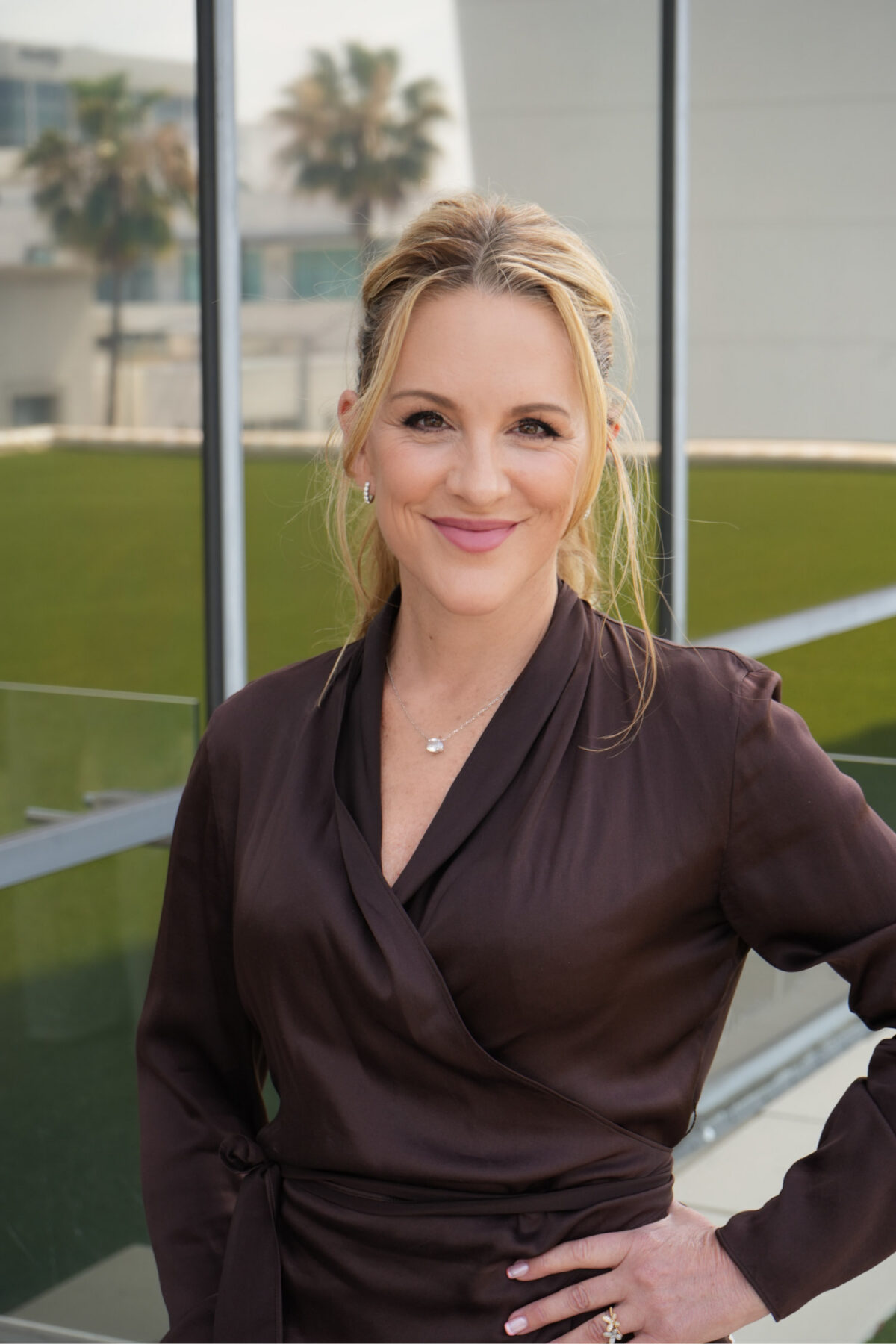
Virginia E. Griffin is a California lawyer supporting families that have experienced alienation, which she personally experienced when separating from her former husband. Griffin has contacts on both sides of the debate, and thinks the term “parental alienation” should be replaced by new language.
Visual: Courtesy of Virginia E. Griffin
Griffin is now a lawyer and works in California supporting families that have experienced alienation, including mothers. A few years ago, she lobbied the California senate to recognize parental alienation as a form of abuse. Working in the legal system, she said those in the field do not always practice as ethically as they should, in part because they may be propelled by their desire to win a case, or because they become too enmeshed with their client to wrongly allege parental alienation has occurred. “I see way too many children whose lives have been hindered, handicapped and hampered and damaged or ruined as a result of parents who are unable to resolve conflict, move on with their lives post-separation or divorce, and the lawyers who continue to fan the flames of conflict,” she said.
Unusually, Griffin has contacts both among those who support the alienation concept and scholars who do not. She said the term parental alienation was antiquated and should be replaced by new language. But mostly, she wished the two sides could get along: “The problem is so insidious and it’s so harmful to children that my main message is the fighting inside among the communities needs to stop.”
With stakes so high, scholars can find themselves caught up in a culture war. When Denise Hines, now a professor of social work at George Mason University, initially expressed an interest in researching parental alienation and related areas, her post-doc adviser told her to wait until she’d gotten tenure.
But Hines (who is of no relation to Ben Hine) said parental alienation was a natural follow-up to her research on male abuse victims. These men “sometimes were very reluctant to leave an abusive relationship because of threats that they would never see their kids again, made by their abuser,” said Hines, who co-authored an article with Harman in 2018. “And so they would stay and put up with it in order to have a relationship with their children.”
So far, Hines has largely avoided backlash against her research, she said. But Harman, the Colorado-based social psychologist, said her work has taken a considerable toll. She did her doctorate on interpersonal relationships, and her research has focused on relationship dynamics, power, and problems in public health, including domestic violence. In recent years, she has published extensively on parental alienation and publicly spoken on the subject. But, Harman told Undark, she’s been stalked and heckled at conferences and faced backlash in other avenues. “It came from every direction,” she said. Emails were sent “to the chair of my department, to the dean of my college, probably other people,” she added, “saying I’m protecting molesters, child abusers, pedophiles, because of the research I do.”
“The problem is so insidious and it’s so harmful to children that my main message is the fighting inside among the communities needs to stop.”
Harman plans to retire later this year following an ongoing battle with advanced breast cancer. But she persisted working in this area for as long as she has, she said, because of the positive responses she received from experts, who welcomed her findings, and from parents, some of whom had not seen their children in years. “There was something about doing research in this area that felt so rewarding, because it had immediate impact,” she said.
Both men and women have written to thank her, Harman said: “This isn’t a gender thing,” said Harman, adding that she had initially thought men would be the likelier victims of alienating behaviors but found that men and women suffered equally. “I had to change my own belief system because my research gave me evidence that contradicted it. Because I’m approaching this as a scientist as objectively as I can.”

Jennifer Harman, a social psychologist and leading figure in parental alienation research, has argued intensely for the field’s rigor. Harman has experienced backlash due to her work, but has also received thanks from men and women alike, she said.
Visual: John Eisele/Colorado State University
Harman has argued intensely for the field’s rigor and described herself as standing “on the shoulders of the scientists before me.” In a literature review published in 2022, she and her co-authors said they identified a variety of research tools and a range of methodological approaches across studies on parental alienation, which they said, proved that the field was robust and evolving. “Thus, as a field of study,” they wrote, “PA is not methodologically flawed.”
But women’s rights advocates disagree with those findings. Mercer has co-written a paper providing information for lawyers who may be defending clients against such allegations in court, and she has supported about 150 people who she says have been falsely accused of brainwashing a child against the other parent following a separation. She said that on the cases she has worked on, fathers are alleged to have tried to alienate children from their former spouse in about one in 10 cases. Mothers are alleged to have done so in the other 90 percent. Data from Canada appears to back this up. In a 2023 brief of cases by Neilson, which featured both accusations of alienation and of family violence, men made 81 of the alienation claims, women made 16.
Women are also much less likely to win an alienation claim in court, said Meier, the George Washington University law professor, because of gender norms: Men seeking custody are typically viewed as good fathers trying to win back their kids. “It is a misogynist theory,” Meier said.
The ongoing debate between researchers who study parental alienation and those for whom it is a flawed concept is not likely to resolve anytime soon. The five-factor model for identifying parental alienation risks oversimplifying complicated situations, and there are many reasons why a child might not want to see a parent, those opposed to the alienation concept say. The factors are not objective, Meier said, describing them as “bullshit.”
Parental alienation does not stand up to scrutiny in part because the researchers have not identified it clearly, Mercer told Undark. Rather than pseudoscience, “PA is more easily described in terms of missing science,” she wrote by email. In a later conversation, she noted that the problem she sees “is simply that the people who are advocating this viewpoint have not done the things that we would expect to do in a scientific investigation.” “Can you tell the difference between when it’s there and when it’s not there?”
Researchers of domestic violence pointed out that most studies on parental alienation are retrospective, asking adults about their experiences growing up. The design of these studies tends to be flawed, acknowledged Michael Saini, a chair in law and social work at the University of Toronto. When the spotlight is turned on the experiences of children, it shows that high levels of parental conflict, child abuse, and violence in the home do harm to children, while the effects of parental alienation are not firmly established, said Neilson.
Parental alienation does not stand up to scrutiny in part because the researchers have not identified it clearly, Mercer told Undark.
The critique of study design is one that alienation researchers dispute. It is hard to study children as they experience alienation because they may not realize what is happening until later, said Hine. “There’s been some wonderful studies on children who are now adults, who are retrospectively looking at their experiences and making sense of them and talking about their experiences.”
Domestic violence experts who oppose the parental alienation concept acknowledge that attempts to alienate a child from their parent can manifest in intimate relationships as a form of coercive control — but in those cases, they say men, rather than women, are more likely to be perpetrators.
Meier and others who work to combat domestic violence are also reluctant to adopt the language of the field. Meier and colleagues have proposed a new term for this type of behavior: Child and Mother Sabotage. “It’s always been a hallmark of what battering men do,” Meier said. “They try to turn the children against the mother. It’s part and parcel of coercive control and abuse.”
Virginia Griffin, the California-based lawyer, says that parental alienating behaviors occurred in her family, but she views what happened as Child and Maternal Sabotage because, she wrote by email “Parental alienation is not well defined or agreed-upon by experts.”
For Meier, it is hard to see a middle path. “If you’re dealing with truth and denial, the middle ground is not where you want to be,” she told Undark.
Some researchers have tried. Saini said he doesn’t hold a position on whether parental alienation exists or not, but he thinks the topic has splintered into false binaries. Scholars studying alienation impose that lens on the research, he suggested, while “if you’re coming at this from a family violence perspective, everything you see is going to be within the family violence lens.”
Saini’s team is developing a tool to explore strained parent-child relationships in a broader context, he said. The Association of Family and Conciliation Courts in the U.S. has held what Saini called “peace talks” bringing together those on different sides of this debate, he said. “There are court cases that come up that create, you know, further tension in the field,” Saini added. “And so I don’t think it’s getting worse. I don’t think it’s necessarily getting better either.”
The debate has led some lawyers to avoid the term. Today, Hine said, lawyers are likely instead to use terms like psychological and emotional abuse or coercive control, which he thinks is a shame. “I don’t think, at the moment, people feel empowered to bring it as a named phenomenon.”
“If you’re coming at this from a family violence perspective, everything you see is going to be within the family violence lens.”
In the U.S., the extent to which courts accept the idea of parental alienation varies by state. Meier said she has a feeling that lawyers and others in the legal system are moving away from the parental alienation term. “When we bring up alienation, they dodge it and they say something else,” she observed.
As it is, only a tiny percentage of couples end up in family court battling for custody and drawing on this contested concept. With the right support, that number could fall further, said Hine, who has developed an app to support those who are struggling with separations.
After his parents separated, there was such discord that when his mother was terminally ill, his father didn’t want to see her, and Hine sat at her hospital bedside without him. The experience left him with longstanding mental health struggles, he told Undark.
“I know that it’s incredibly emotive, and I know that it’s incredibly complicated, but so are other forms of violence, and we don’t seem to have as much of a problem engaging with them,” he said. “So that’s my kind of rallying call, is to say we need to overcome the discomfort, we need to overcome politicization as well, and we need to work together to combat what is a safeguarding issue for children.”
Get Our Newsletter
Sent Weekly
For Griffin, the heartache also remains. Eight years on, while she has a relationship with her son, she has not had contact with her daughters, now in their 20s.
“They will come to realization when they come to realization,” she said. “I am not going to rush the process that they need to go through in order to understand who they are as women.”
In the meantime, she’s helping others by supporting parents whose children have been influenced against them in court. “My goal in life was to raise happy, healthy children, and as a mother, I did the best I could with what I had,” she said. “And now I’m protecting other children so that they can be happy and healthy.”