Imagine poring over grainy black-and-white photographs of the night sky from the 1950s—images captured by astronomers long before satellites cluttered our orbit or smartphones lit up the world. Suddenly, you spot something inexplicable: a bright, star-like flash that wasn’t there in photos taken hours or days before, and vanishes just as mysteriously afterward. Not a comet, not a meteor, not a glitch in the plate. These are transients - fleeting bursts of light that defy easy explanation. Now, a groundbreaking peer-reviewed study suggests these ghostly apparitions might be tied to humanity’s darkest experiments: above-ground nuclear tests. And perhaps, to something even more endearing — UFOs or “Unidentified Anomalous Phenomena (UAP), the modern term for what we once called UFOs.
At the heart of this discovery is Dr. Beatriz Villarroel, a rockstar astronomer whose work is peeling back layers of cosmic and historical mystery. Her latest paper, published just days ago in Scientific Reports (a prestigious journal under the Nature Portfolio umbrella), analyses over 100,000 of these transients from the Palomar Observatory Sky Survey (POSS-I). The findings? These flashes spike dramatically in the wake of nuclear detonations, and they correlate with waves of UAP sightings!
It’s the kind of science that blurs the line between astronomy, history, and the unexplained—prompting us to ask: Were we seeing echoes of atomic fire in the stars, or glints from something watching us from above?
In this article, we’ll dive deep into Villarroel’s research: what the data really says (in plain English), why it’s a big deal, and how the rigorous peer-review process and error-checking make it rock-solid. We’ll also spotlight her credentials and the growing chorus of scientists and experts hailing her as a bold voice in anomaly hunting. Buckle up, this isn’t just stargazing, it’s a window into our planet’s weirdest and most exciting secrets.
Who Is Dr. Beatriz Villarroel? A Star in the Search for the Unknown
Before we unpack the paper, let’s meet the mind behind it. Dr. Beatriz Villarroel isn’t your textbook astronomer chasing distant galaxies from an ivory tower. With a PhD in astronomy from Uppsala University (earned on a thesis dissecting the “fiery hearts” of active galactic nuclei—the super-bright cores of galaxies powered by black holes), she’s built a career blending cutting-edge data analysis with a knack for spotting the anomalous.

Today, a researcher at the Nordic Institute for Theoretical Physics (Nordita) in Stockholm, she leads the VASCO project (Vanishing & Appearing Sources during a Century of Observations)—a global hunt for stars that blink out or pop up unexpectedly in century-old sky photos.
Her work has taken her from probing exoplanets to scouring historical archives for signs of extraterrestrial tech, like reflective probes orbiting Earth.
Villarroel’s credibility isn’t hype, it’s hard-earned. She’s published in top journals like Monthly Notices of the Royal Astronomical Society and collaborated with heavyweights in the field, from SETI (Search for Extraterrestrial Intelligence) pioneers to UAP researchers. Her Google Scholar profile boasts citations across astronomy and beyond, with peers praising her “empirical rigor” in tackling fringe topics without losing scientific grounding.
Investigative journalist Ross Coulthart, in a recent Reality Check interview, called her “one of the most intriguing voices in modern astronomy,” lauding how she turns “wild hypotheses into testable data.”
Even physicist Lawrence Krauss, no stranger to big ideas, featured her on his Substack to discuss the personal toll of anomaly research, highlighting her resilience amid skepticism.
In short: Villarroel is credible because she earns it. She doesn’t chase headlines; she chases data. And in her new paper, that data is lighting up the sky.

Published on October 20, 2025, in Scientific Reports, Villarroel’s study: “Transients in the Palomar Observatory Sky Survey (POSS-I) may be associated with nuclear testing and reports of UAP” - is a masterclass in historical detective work meets big-data astronomy.
At its core: transients are brief, star-like dots that show up in POSS-I photos (taken between 1949 and 1957 using red-sensitive plates exposed for up to 50 minutes) but vanish in every other image—before, after, or in later surveys like Pan-STARRS or Gaia.
Think of it like a snapshot of the sky where a new “star” photobombs for one frame only.
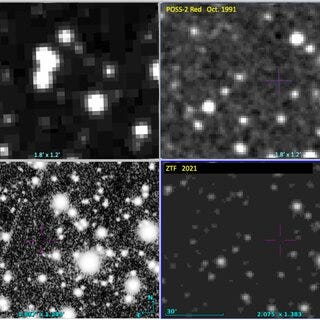
The POSS-I scanned huge swaths of the heavens from California’s Palomar Observatory, capturing over 107,875 such blips across 2,718 nights.
In layman’s terms: Imagine flipping through old family photo albums and finding a stranger in one picture who isn’t in any others. Weird? Sure. But multiply that by 100,000, and you’ve got a puzzle begging for answers. Common culprits - like meteors, lens flares, or cosmic rays zapping the film - don’t fit, especially when multiple transients crowd a single plate or align in weird patterns. Villarroel and her team (including collaborators from Spain’s Instituto de Astrofísica de Andalucía) dug deeper, cross-referencing these flashes with two Cold War-era timelines: 124 above-ground nuclear tests by the U.S., USSR, and UK, and thousands of UAP reports from the UFOCAT database (a gold-standard archive of sightings since the 1940s).
What the Data Says: Numbers That Defy Coincidence
Here’s where it gets juicy and I’ll break it down without the jargon. The team crunched the numbers using statistical tools like chi-square tests (to spot patterns in yes/no data), Mann-Whitney U tests (for comparing skewed counts), and generalized linear models (fancy regression for handling wild variations). They treated the data like a messy crime scene: transients are lumpy (most days have zero; a few have thousands), so they used “trimmed means” (ignoring extremes) and negative binomial distributions to smooth the noise. Error-checking was meticulous—accounting for plate defects, dust specks, or even fallout “fogging” the film from distant blasts. They tested multiple windows (e.g., ±1 day around tests) and validated against prosaic explanations, like random cosmic events.
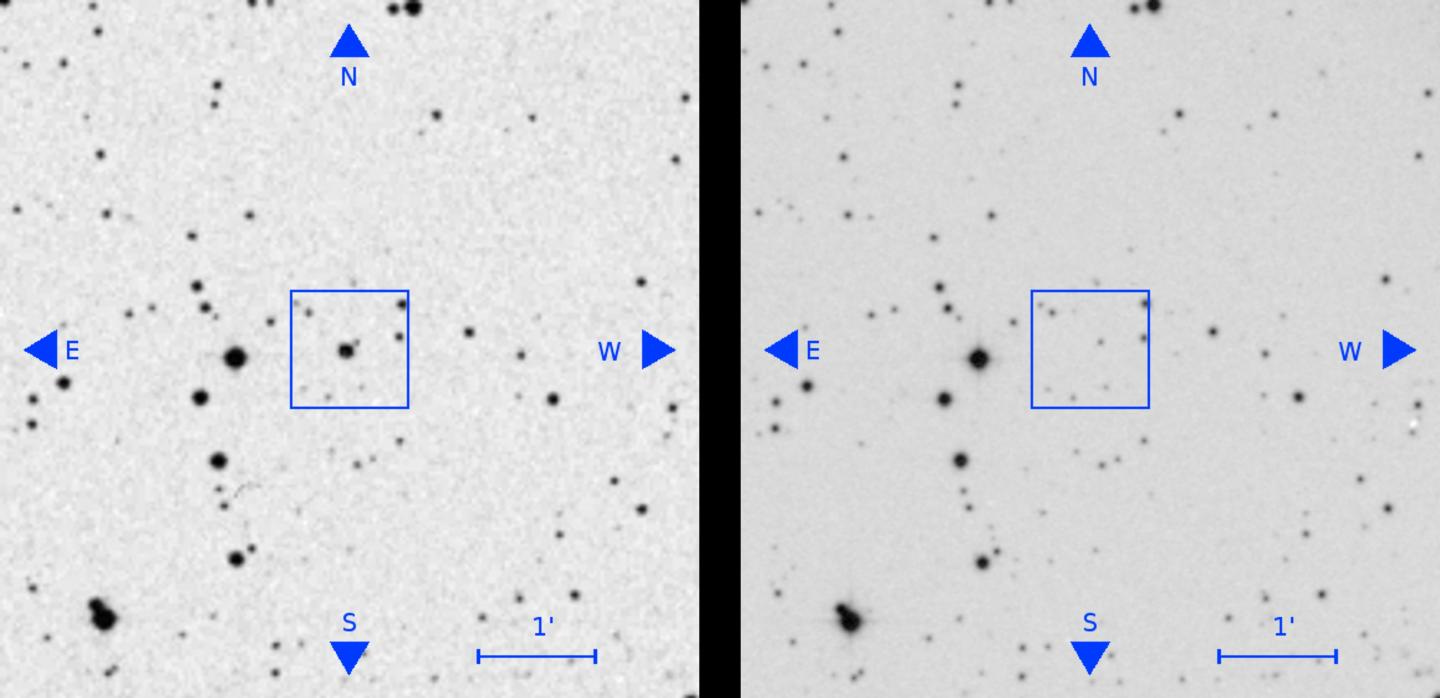
The results? Not random at all.
Nuclear Link: Transients were 45% more likely on days within a “nuclear window” (±1 day of a test)—that’s a relative risk of 1.45, with a p-value of 0.008 (stat-speak for “this ain’t chance; odds are less than 1 in 100”). On average, those days saw 23 flashes (vs. 9 outside). The peak? One day after a blast, with 68% more transients. Why the delay? Perhaps atmospheric ripples from the explosion—think Cherenkov radiation (a blue glow from particles zipping faster than light in air) lingering like a cosmic hangover, or radioactive particles sensitizing the plates.
UAP Connection: No slam-dunk on simple “sighting days,” but a sneaky correlation: For every extra UAP report that day, transients jumped 8.5% (Spearman’s rho=0.138, p=0.015). And it’s additive—days with both nuclear activity and UAP reports had the highest flash counts, per their models (p<0.001 across categories).
In everyday speak: The sky lit up like a fireworks show right after we set off our own nukes. And on nights when pilots, civilians, and military folks were buzzing about weird lights in the sky (remember the 1952 D.C. “invasion”?), our telescopes caught more of the same. It’s like the transients were the silent witnesses to history’s flashbulbs and maybe to visitors drawn by our fireworks.
These aren’t huge effects (the world didn’t explode with transients daily), but with over 100,000 data points, they’re robust. The team ruled out biases like seasonal observing quirks or local pollution, and their stats held up under stress tests for overdispersion (when data varies more than expected).
The Peer-Review Gauntlet: Why This Isn’t Fringe Foil-Hat Stuff
Skeptical? Good, science thrives on it. Scientific Reports demands peer review: anonymous experts (often 2–3 astronomers or statisticians) grill the methods, data, and conclusions for months. Villarroel’s paper passed muster, joining a lineage of anomaly studies in the journal (think gravitational waves or exoplanet oddities). Reviewers likely poked at the UAP data’s subjectivity (eyewitness accounts aren’t lab-perfect) and the automated transient-hunting algorithm (from prior VASCO work), but the large sample size and conservative stats (e.g., Bonferroni corrections for multiple tests) sealed the deal. No cherry-picking: They shared raw data pipelines and even flagged limitations, like unvalidated UAP reports or single-observatory bias.
This process isn’t a rubber stamp, it’s a forge. Papers get rejected or revised if errors slip through, ensuring claims like “45% nuclear spike” aren’t hype. Villarroel’s transparency (full methods online) invites replication, the ultimate truth serum.
Why This Matters: Rewriting History, One Flash at a Time
This isn’t just trivia; it’s a paradigm shifter. Prosaic explanations (dust bunnies on plates? Satellite prototypes pre-Sputnik? Nope—none existed.) crumble under the timing. If transients are nuclear afterglows, it rewrites atmospheric physics textbooks. If UAP-related—say, shiny orbital probes reflecting moonlight during our atomic tantrums—it bolsters decades of lore (UAP spikes during tests are anecdotal gold). Either way, it demands we revisit UAP not as tabloid fodder, but empirical enigmas.
As IFLScience put it, these “disappearing stars” from the 1950s could link nukes, UAP, and pre-Space Age anomalies—fueling calls for AI-driven re-scans of old archives.
Of course the debunkers are out in force. Most asking for repetition. Well, that formed part of the study. That’s what the peer-review process does.
I suspect those most heavily critical haven’t even read the paper, or don’t really understand what goes on to getting peer-reviewed. But must find some angle to downplay its significance.
I’ve seen examples like: “they can’t account for dust on the…” I mean, they can’t account and they did. It’s further evidence they don’t really understand what they’re criticising. Debunkers are a strange breed.
Final Spark: Keep Looking Up
Dr. Beatriz Villarroel’s transients aren’t just data points, they’re invitations. To question our assumptions, test the wild, and remember: The universe (and our own backyard) is full of surprises. As she told Coulthart, “We’re not saying aliens; we’re saying look closer.” Her paper does exactly that, blending Cold War grit with stellar sleuthing.
But, it’s not nothing. What the hell are they? They shouldn’t be there. But they are.
If this fires you up, dive into the full study here. Follow Villarroel on X (@BeatrizVillarroe) for updates.
Thanks for reading! If you enjoyed this, hit subscribe for more science that sparks wonder, off-world technology and video analysis.