It’s been a hot summer. Really hot. I had to spend a couple days in the Harvard student center because my apartment was unlivable in 100+ degree heat. Europe had a bunch of old people die from heat deaths. Everyone was miserable.
I don’t think this is a sustainable set of affairs. The summers are going to keep getting hotter because we keep adding more greenhouse gases, and people are going to keep dying. Air conditioning all indoor spaces is going to be crazy expensive, and it’s not a solution for outdoor workers (or wildlife), anyways. Also, as a person who occasionally likes to go for walks outdoors, having the outdoors be the same temperature as hell sucks.
To fix this, we’re going to have to cool the world through sulfate cooling. In this blog post, I explain how sulfate cooling works, working through the math, physics, and economics. This brings me to the headline results:
With our current tech, sulfate cooling the Earth back to the temperature of 1980 is possible and affordable if we are willing to build two Heathrow-sized airports in Alaska and the tip of South America. It would cost ~$20B/year, plus ~$25B startup costs.
Sulfate cooling the Earth back to the temperature of 1980 is also possible and affordable for any single country that’s able to build a plane that’s slightly more advanced than what we have now and launch it from the tropics. It would cost about $5B/year, plus ~$xB research and development costs.
Before I start, though, I do have to give a heads up that this is not original research. There’s been a lot of research done on this already, and there are two startups and an ARIA research programme built around this idea already. I’ve put some links for further reading at the end of the post. This is more my attempt to work through the science and math for myself and for you, building up from first principles instead of relying on black-box models.
Also, subtle foreshadowing: if I can do this math, so can China, India, or any other country that’s suffered from heat and is pessimistic about the future of climate change.
In terms of how, let’s start with a bit of intuition first. This will put the numbers later in better context. Let’s start with why the Earth is warm at all.
For the most part, the Earth is warm because of the sun. The sun shoots rays at the Earth: ~5% ultraviolet, ~40% visible, ~55% near-infrared. When those rays hit the Earth, the Earth absorbs them. This causes energy increases in whatever atoms are hit by the photons in the rays. These energy increases then dissipate out through all the surrounding atoms, and are re-emitted as infrared rays, or heat.
When the heat comes out of the Earth, it encounters the greenhouse gas blanket of mostly water vapor and CO₂ that surrounds the Earth. This blanket is transparent to visible light and UV, but not to infrared. So, it help keeps the infrared coming from the Earth in, and partially keeps the near-infrared coming from the Sun out.
Over the past couple hundred years, we’ve been adding to the density of the blanket by emitting greenhouse gases. This is why the Earth is so hot now. All of our attempts to reverse global warming have been trying to stop adding to the density of the blanket, or to remove density from the blanket.
But, as our intuition suggests, thinning the blanket isn’t the only option. We can also reduce the amount of energy from the sun that hits the Earth, either by blocking rays or reflecting them. Sulfate cooling is a form of blocking shade by using sulfate particles, which you likely know better as ⅓ of smog1. It occludes the sun.
So, sulfate is a shade. You can put a layer of sulfate anywhere between you and the sun and it will shade you. It’s not a perfect shade, like an umbrella, but more like, well, smog or fog. It lets most sun through, but not all of it. For the amount of sulfate we’re talking about, we’d end up reflecting back about 1% of sun energy. Less sun coming in means that less energy hits the Earth, so it’s less hot on the ground and on your skin.
There are three tricky things about using sulfate as an effective shade that are all related2:
In order for sulfate to be an effective shade, it has to stay in the air and not drift down.
Sulfate particles are great as shade but it’s not great to breathe small particles into your lungs.
In order for sulfate to be an effective shade, it has to shade the important parts of your country. If it all blows out to sea and none is left over your country, it’s ineffective.
All of these are basically solved by emitting sulfate really high up, above every cloud and weather system. Once sulfate is up there, it can no longer be rained out, and the atmosphere there is very still, so the very light sulfate particles just hang suspended.
Sulfate that’s emitted that high up can only be returned to the Earth in the same place that air in the stratosphere generally returns to the Earth, in the poles. If the sulfate is emitted as far away as practically possible, namely the tropics (the place where air escapes the Earth into the stratosphere), the sulfate can take a leisurely 1-2 year journey before it returns to the Earth. This is our best solution to the first issue.
When sulfate returns to the Earth from the stratosphere, it mixes with water droplets in the troposphere. This forms sulfuric acid in the water, or “acid rain”, which falls back down to Earth wherever the water droplets get blown, statistically mostly on the ocean surface. The concentration of the acid depends on how much sulfate is falling back down to Earth, but the science I’ll walk through later suggests this concentration won’t be a big deal compared to the acid rain that exists in certain cities now. Regardless, the sulfate particles will not end up in people’s lungs, which solves the second issue.
The third issue, as you might have guessed already, cannot be solved. The whole solution of “inject sulfate in the stratosphere in the tropics, and wait 1-2 years for it to fall back to Earth in the poles” means that sulfate ends up everywhere. It’s not a straight path, either, because the Earth rotates and so does its atmosphere. Any local sulfate solution ends up spreading across the local hemisphere and largely to the other hemisphere as well.
So, we have to emit enough sulfate that it cools the Earth enough that it’s worth it. The Earth is about 1 degree Celsius warmer on average than it was in 1980, although, as this summer teaches us, the average does not cover the extremes. Let’s figure out how much sulfate we’d need to emit to get back down 1 degree cooler.
The Earth absorbs 1361 W/m² from the sun, and about ~1000 W/m² of the sun’s energy gets down to surface level. If we look at only the sunny side of the Earth, there’s about 1.28 × 10¹⁴ m² Earth to absorb that sun. Then, if we subtract out the ~30% of Earth that’s reflective (clouds, ice, deserts) we get 1.22 × 10¹⁷ Watts absorbed total from the sun, or 3.9 × 10²⁴ Joules/year.
If the Earth was a black box with no atmosphere, it would follow the Stefan-Boltzmann law: all energy absorbed becomes energy radiated back out with the equation Power = constant × area × Temperature⁴. Solving this, it gives us an effective temperature for the Earth of 255 K, or -18C. Our measured average surface temperature is 288K, or 15 degrees C3, giving us a blanket effect of 33 degrees K.
If we differentiate our Stephan-Bolzmann law we can get how much watts we need for 1 degree extra in temperature. dF/dT = 4σT³ = 4 × 5.67 × 10⁻⁸ × 255³ = 3.8 W/m² per Kelvin. So, naively, you might think that we have to remove that much watts/m² to go back down a degree. However, there’s a feedback effect: the warmer the atmosphere is, the more the greenhouse effect (mostly through an increase in capacity to hold water vapor, itself a thermal blanket), and the cooler the atmosphere, the less the greenhouse effect. If we take that into account, we end up with having to remove only 2 W/m²4 to go down 1 Kelvin.
We can measure the amount that a given particle of sulfuric acid can scatter light empirically in the lab. A droplet can scatter about 2.5x its own shadow, and each droplet is about 8 × 10⁻¹³ m² large. Scattering is random, but about 10% is sent directly up, back into space. So, of the 1361 W/m² sent from the sun to the Earth, each droplet can reflect 2.5 × 0.1 × 8 × 10⁻¹³ m² × 1361 W/m² = 2.7 × 10⁻¹⁰ W.
If this sulfate layer was a flat layer at noon, we’d therefore need ~1010 particles/m² to get our 2 W/m² reduction. Particles in a column scatter light at each other and the average W/m² is only about ¼ of noon, so we end up needing a bit more, or 4 × 10¹⁰ droplets per m². We have about 5 × 10¹⁴ square meters of Earth to cover, so we need 2 × 1025 droplets total. Converting that to weight, we get about 1.8 × 10¹⁰ kg of sulfuric acid necessary to be in the air at any given time. If we put up SO₂ instead, which can react with water to form sulfuric acid and contains more sulfate per unit weight, and we assume our 1 year residence time, we can halve that, and only need to put 9 × 10⁹ kg of SO₂ in the air per year.
For context, the Waad Al Shamaal plant in Saudi Arabia makes about 1.5 × 10⁷ kg of sulfuric acid a day, producing about 1 × 10⁷ kg of SO₂ a day. It would take 900 days for that plant to produce enough SO₂, or, if we had 2 of them, 450 days. Given that plant cost 370 million EUR to build, and was not built specifically to maximize SO₂ production, let’s call it a ~600 million EUR capex to build the requisite factories. Like our image of Victorian factory smokestacks suggests, SO₂ production is exothermic, so this factory would produce steam and be energy positive for the grid.
As you might guess, this isn’t a huge amount of yearly SO₂ to produce. In fact, the world produces ~70 × 10⁹ kg of SO₂ right now as pollution, mostly from burning coal, and 85 × 10⁹ kg sulfur as a commodity, from removing sulfur from coal and gas. This would fit in comfortably within that budget, and cost about $2.5 B/year at today’s prices.
So, this amount of sulfur isn’t a problem. The hard part is getting it up there. 20 km, which is the height of the stratosphere above the tropics, is really high up in the atmosphere to be delivering millions of tonnes of anything. Only a couple expensive military surveillance aircraft, like the RB-57F, have ever flown that high, and getting a big, heavy dispersal plane up that high wouldn’t be possible with current planes. Alternatives aren’t obvious, either. Rockets and rocket fuel are expensive; artillery guns aren’t used to such heavy payloads; balloons need steady launch conditions.
An alternative would be to target release of SO₂ where the stratosphere isn’t so high and it dips towards the tropopause: the poles (i.e. putting the SO₂ closer to where it would exit anyways). The downside to this would be that the SO₂ exits more quickly, requiring more of it per year, and it covers less of the Earth, so it’s more of a pole-specific shade than a global shade.
Specifically, if we inject at about 60 degrees north and 60 degrees south (Alaska and between South America and Antarctica, respectively), we can fly unmodified 777s directly to the point at which we’d need to release sulfate. The residence time of the SO₂ would then be about 3 months, so multiply all the figures above by ~4 (27 × 10⁹ kg/year, 2.4 B EUR capex, $10B/year sulfur). Each 777 can carry about 100 tons, so we’d need about 270,000 flights/year. For context, about 200,000 flights go out of Boston Logan every year, and 240,000 out of Heathrow. So, we’d need two good sized airports to handle this, preferably with our sulfur plants nearby. Relatedly, we’d also be causing two airports’ worth of greenhouse gas emissions.
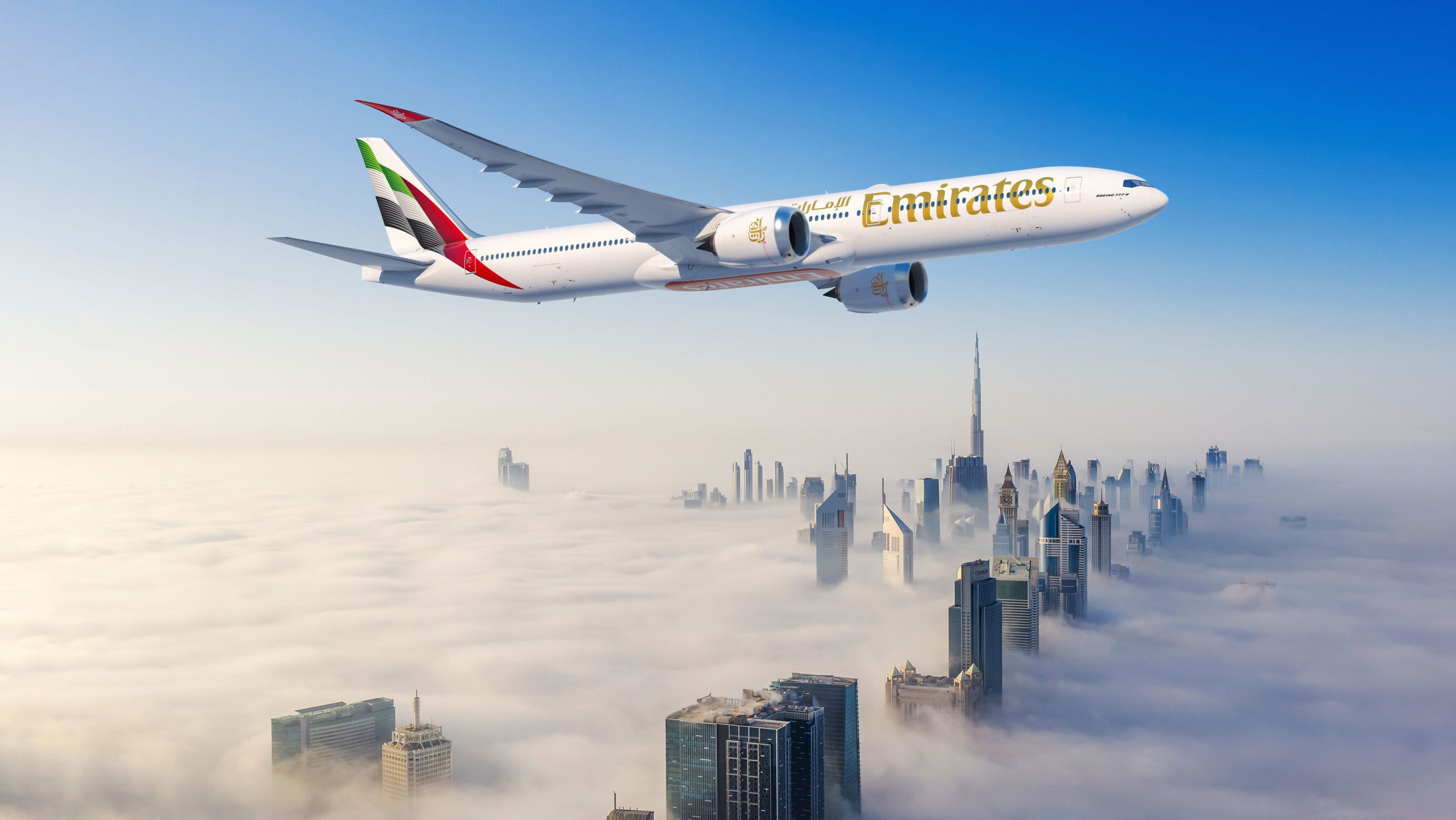
We can roughly estimate the cost of these flights given FAA data. The FAA estimates total cost per hour of flying a plane at ~$28,000/hr. If we assume a 2 hour flight to get up and back, and that we can get down to $20,000/hr with a specially built plane and skeleton crew, let’s say total cost of flights would be 270,000 × $40,000 = $11 B/year. If we assume we’d want 200 planes, so each plane makes 2700 flights/year or ~7 flights a day of basically non-stop flying and turnarounds, getting an entirely new fleet of planes would be 200 × $200 million = $40 billion. Used planes would be closer to $100 million, so $20 billion total. This fleet would be roughly twice the size of FedEx’s 777 fleet.
The downside here is that the cooling would be concentrated towards the poles, a region which spends half the time in the dark anyways. The stratospheric injection would spread, of course, and cities like London (51.5 degrees North) would benefit partially from that, while the entire globe would benefit from cooler oceans and cooler winds from the poles. But still, it’s not as immediately appealing as shading the hot cities, although it is more technically feasible.
Let’s start with the one mentioned before: acid rain. As I mentioned, we already put a ton of SO₂ in the air in cities that burn coal, which gets immediately rained out on that city. This program would put less SO₂ in the air and spread it out more, so the rain would be less acidic than the rain in coal-burning cities today.
The second risk that arises is ozone depletion. Sulfuric acid does not deplete ozone directly. However, it provides a tiny acidic reservoir that chlorine containing molecules, namely HCl and ClONO₂, can dissolve into. When these react together, they can produce chlorine gas, which depletes the ozone. The biggest problem with ozone depletion is that it lets in UV-B light, which causes cancer.
Now, to be clear, this ozone depletion will not be as big a problem as it was when we were directly releasing chlorine into the atmosphere in the 70s and 80s. And, anyhow, the ozone depletion will be mostly over the poles, where not many people live anyways. So, this isn’t a huge problem, but it’s definitely a problem.
The third risk is that removing energy reaching the surface will likely reduce precipitation. Some amount of sunlight’s energy goes directly into making water evaporate. So, reducing heat back 1 degree Celsius puts evaporation not just at the same rate as it was 1 degree Celsius ago, but even further. Granted, it’s not a lot further: we are reducing sunlight by 2 W/m², which isn’t a ton, and, in our most realistic situation, we are doing that only in the poles. But it’s still a risk. See the Pinatubo section below for what’s most likely to happen.
The biggest risk comes with asymmetry in sulfate cooling, especially if we stick with the polar cooling. There’s a temptation to do sulfate cooling only in the north, and not in the south. It’s a lot easier to build a medium-sized airport and sulfate factory in Alaska than at the tip of South America, especially given that the tip of South America is still only at 50S.
However, if we only cool one hemisphere, then there will be a heat imbalance. As you remember from physics class, heat needs to balance. It will transfer from the warm hemisphere to the cool hemisphere. This means air will flow from the upper atmosphere of the warm hemisphere to the upper atmosphere of the cool hemisphere. But then we have a mass imbalance, so the lower atmosphere of the cool hemisphere will flow to the lower atmosphere of the warm hemisphere.
Rain forms where air rises. So, the rain will shift from the cooler atmosphere to the warmer atmosphere. This will, understandably, anger a lot of people who’ve built their agriculture around where the rain is right now. This, actually, has already happened once in the 70s, when the Sahel dried out due to American and European coal causing local sulfate cooling.
A risk that’s harder to quantify is stratospheric heating. Sulfate absorbs some amount of heat, so putting a bunch of sulfate in the stratosphere would make the stratosphere heat up. To be frank, I don’t really trust the modeling here on the effects, as the models I’ve seen predict very different things, so all I’ll say is that this would have some effect on climate and weather. It’s worth noting that for this reason, along with the ozone issue, a lot of work has been done on non-sulfate cooling particles, especially calcite. ARIA and Stardust, the Israeli startup, are both testing non-sulfate cooling particles now.
Yes, it does. Nothing’s stopping us from pursuing both this and carbon reduction. But, practically speaking, doing this allows us to ignore the most immediately bad effects of global warming. We are treating the main symptom, not the cause.
I find it hard to care, though. Maybe this is the American in me, but I take a Tylenol when I have a fever and CBD when I am stressed. I treat the symptom instead of the cause all the time.
And, more importantly, I don’t think the other effects of global warming are particularly bad. It’s not obvious that ocean acidification is nearly as bad as temperature shocks for ocean creatures. Mollusks seem to adapt pretty well to pH decreases, as do corals. It’s still questionable if pteropods (sea snails and slugs) adapt as well, but my money’s on yes.
Similarly, I’m not really worried about termination shock. It’s true that, if we ever stop emitting sulfate, we’ll be faced with an atmosphere that’s high in greenhouse gases and therefore primed to warm. So, warming will start up again. Similarly, if we keep adding greenhouse gases, we will need more and more sulfate cooling to stay the same temperature.
But warming will happen anyways if we don’t do sulfate cooling. And, besides, why would we stop emitting sulfate? A war might stop sulfate cooling efforts for a year or two, but not for much longer. You might as well say, “Don’t air-condition your house in the summer. If you ever stop air-conditioning, your house will warm up again.”
There are two main pieces of empirical evidence that support the math above.
The first is the Pinatubo eruption of June 1991, the second largest volcano eruption of the 20th century. It sent about 15-20 Tg (15 × 10⁹ kg) SO₂ 25 km into the stratosphere from the tropical Philippines, which is exactly what the proposal above wants to do artificially, except it happened all at once instead of gradually.
The results were exactly what our model predicts.
Sunlight forcing at the top of the atmosphere decreased by 3-4 W/m², then slowly returned to normal
The global surface temperature decreased by 0.5 K in 1992, then was back to normal by 1994 (note that a pulse delivers less cooling than continual deployment)
Rainfall decreased globally in record amounts, especially in the wettest areas, although the mean decrease was only ~0.05 mm/day
Global ozone coverage dropped a few percent
Aerosols lasted in the atmosphere an average of 12 months5
The tropical lower stratosphere temperature warmed 2 to 3 K
The second is the 2020 decision of the International Maritime Organization to clean up marine fuel by cutting allowable sulfur content from 3.5% to 0.5%. This cut about 8 Tg SO₂/year from ship exhaust. Now, these ships were emitting SO₂ into the lower atmosphere instead of the stratosphere, so these SO₂ particles were not long lived, lasting only a few days. Still, they acted as a shade, “brightening” low clouds (i.e. turning them more reflective).
The results of this cut were an increase in sunlight hitting the Earth’s surface by about 0.1 W/m² and an increase in surface temperatures of about 0.1 K by 2023. Any effects on rainfall were swamped by the bigger climate events going on then.
If there’s one thing I want you to take from this post, it’s that sulfate cooling is doable. We can go back to the global temperature in 1980.
Assuming we are ok with cooling being concentrated towards the poles, we’d need about $10B/year for the sulfates, $11B/year for delivery, and $20-40B for the planes. This means acquiring a lot of sulfate and a lot of planes, but not an impossible amount of either. We’d also need to massively expand two airports, one in Alaska and one in South America.
An individual country could also singlehandedly carry out sulfate cooling targeted towards the tropics if it really wanted to for $2.5B/year of sulfates, but it would need a fleet of planes that are as big as 777s and fly as high as a military jet. This plane would need to be built. This limits the countries that are capable of this to those who have built high-altitude planes before: Russia, USA, France, China, and maybe the UK.
A lot longer list of countries could launch a couple high altitude balloons and check the feasibility of this. My prediction is that this will happen soon. A lot of countries got hit hard by this last summer’s heat wave, including China. A lot of people died, and a lot of productivity was lost. The Chinese government can do this math as well as I can, and they do own airbases in the tropics.
Sulfate cooling, or something similar, is coming soon.
Crutzen 2006, which reopened the stratospheric aerosol injection debate (it was originally started by Soviet scientists in the 70s). https://doi.org/10.1007/s10584-006-9101-y
Smith and Wagner 2018, which works through the math on costing: https://iopscience.iop.org/article/10.1088/1748-9326/aae98d
Duffey et. al 2026, which explains the “inject at the poles” option and works through the modeling: https://esd.copernicus.org/articles/17/353/2026/
ARIA, Exploring Climate Cooling (£56.8m, 22 funded projects): https://aria.org.uk/opportunity-spaces/future-proofing-our-climate-and-weather/exploring-climate-cooling
Funded project list: https://aria.org.uk/opportunity-spaces/future-proofing-our-climate-and-weather/exploring-climate-cooling/funded-projects/
Stardust Solutions, the biggest, best-funded startup working on stratospheric aerosol injections ($75 million raised, almost ran outdoor trials in April 2026 and then pulled back). Note their stratospheric aerosol injections are explicitly non-sulfate to avoid the ozone and stratospheric warming risks above: https://stardustsrt.com/
Make Sunsets, which, as far as I can tell, is just a 2 person crew launching weather balloons with sulfur dioxide: https://makesunsets.com. Their biggest accomplishment was getting the Mexican government to ban geoengineering: https://time.com/6248654/mexico-geoengineering-ban-make-sunsets/
Solar Geoengineering Non-Use Agreement, 645 academics and 2000 organizations calling to ban stratospheric aerosol injection: https://www.solargeoeng.org/
EU foreign ministers’ statement, May 2026, saying they are against stratospheric aerosol injection but still open to research: https://www.climatechangenews.com/2026/05/08/eu-warns-on-solar-geoengineering-but-research-debate-grinds-on/
Find this interesting? Share it!