Like many men, I spend hours of my life every week with Dominic Sandbrook. The guy’s disembodied voice floats freely in my head, gently chiding my worldview, informing me that all sorts of nice liberal preconceptions I had about things like the Inca Empire or Horatio Nelson are wrong, the firm but kindly historian-uncle-lecturer I never had. He’s everywhere. I can hear hints of that gently soaped Midlands accent even now.
If you don’t know him, Sandbrook is a British popular historian, one of the two satraps who host The Rest is History, the jewel in the crown of shahanshah Gary Lineker’s sprawling podcast empire.1 The pod is one of the most downloaded in the UK, partly due to the fact that Sandbrook and his co-host Tom Holland form a very convenient double act: Sandbrook the shire Tory, skeptical and broadly unsentimental, impressed by tradition and duty, Holland a more willowy, Whiggish progressive who attends church despite his open atheism. Also, one is tall and one is short.
Sandbrook and Holland both had decades-long careers writing heavy-duty books before they stumbled onto podcasting fame. So, as well as listening to The Rest is History like any good British man marching briskly into his thirties, and to avoid accusations of historical dilettantism, I’ve been reading Sandbrook’s 800-page doorstopper sociopolitical tome on the second half of the 1960s, White Heat. And, in among the Marcia Williams and “East of Suez” of it all, there are a handful of excellent chapters on pop culture – namely the heavy hitters of the 1960s, the Beatles and the Stones and Mary Quant and Twiggy and so on.
The very best bits are about the Beatles.
From the get-go, Sandbrook writes, the Beatles were huge. As in, huge in a way that didn’t really exist before them. Cliff Richard was very popular, yes, but the Beatles blew him out of the water as early as 1963, on whose Christmas Day they held the top two spots each in the British singles and albums charts, with three more singles in the top thirty.
Impressive, sure, but nothing compared to what followed: “I Want to Hold Your Hand” was released in the USA on Boxing Day, and sold 250,000 copies within three days. By 10 January, it had sold a million copies in the States, and on 9 February, when the band appeared on The Ed Sullivan Show, 73 million Americans watched them play. For three weeks in the spring of 1964, two-thirds of all records sold in the United States were by the Beatles. By April, they held numbers 1-5 simultaneously in the Billboard Hot 100, as well as numbers 31, 41, 46, 58, 65, 68 and 79. In Canada they occupied nine of the top ten singles slots.
There could hardly have been a better time for a band to break through. The British market for records was booming in the 1960s: that newly defined demographic, the “teen-ager”, was spending a billion pounds annually on some fifty million records. In 1964, the British public bought an all-time high of one hundred million records. Nor was it only kids who enjoyed the Beatles. Thus spake the Daily Mirror after a triumphant autumn 1963 appearance at the Royal Variety Performance:
Fact is that Beatle People are everywhere. From Wapping to Windsor. Aged seven to seventy. And it’s plain to see why these four cheeky, energetic lads from Liverpool go down so big. […] Youngsters like the Beatles are doing a good turn for show business – and the rest of us – with their new sounds, new looks. Good luck Beatles!
In June 1965 they were awarded MBEs by the Queen.
And yet.
Everyone knows the story. In the run-up to the release of Rubber Soul later in 1965, it was increasingly clear that John, Paul, George and Ringo were restless (okay – probably not Ringo). More ambitious. Less happy to keep churning out with what Sandbrook calls “sentimental and good-humoured” songs – albeit masterpieces of songwriting – about “innocent, idealised love affairs”.
McCartney, in particular, was increasingly interested in the experimental and bohemian influences he’d been introduced to by the upper-middle-class family and circle of his then-girlfriend Jane Asher, with whom he was living in Wimpole Street. Jane and her brother Peter played Vivaldi to McCartney, for example, who then decided to include an arrangement inspired by the composer on “Eleanor Rigby”, while the trumpet part in “Penny Lane” was written after he watched a performance of Bach’s Brandenburg Concertos on TV. McCartney also became fascinated by Karlheinz Stockhausen, the German pioneer of electronic music, and by John Cage.
Harrison and Lennon, meanwhile, took to smoking weed after Bob Dylan introduced them to the drug in New York in the summer of 1964 – before that, they had indulged in the popular, much more British combination of amphetamines and booze. They expanded their experiments to encompass LSD in early 1965, after having their drinks spiked at a dinner party with, of all people, their dentist.2
The Beatles poured this heady melange of intellectual and chemical influences into Rubber Soul, which went immediately to the top of the charts. It was hugely well received by critics, who noted its variety, theatricality and whimsy. “To many listeners,” Sandbrook writes, “what was really striking about the Beatles’ music after 1965 was its sheer imagination.” George Martin said that Rubber Soul presented “a new Beatles” to the world, and the first attempt by the band to produce albums that could be seen as “art in their own right”.
Part of this was a deliberate attempt to lightly alienate their fans. Trying to escape the insane levels of fame they’d achieved – hotel maids held at knifepoint by fans demanding the lads’ room numbers, fans breaking police cordons to storm airports and climb onto the wings of their plane, et cetera – the Beatles had fled to the recording studio, where they would often stay 14 hours a day, if only for the peace and quiet. “And as the Beatles gradually retreated within the walls of the studio,” Sandbrook writes, “so their music increasingly began to reflect their own artistic aspirations rather than the expectations of the singles market.”
After Rubber Soul, the band took three months off. They returned to the studio in April 1966. Five months later, a week after England won the World Cup, the Beatles released Revolver. This time, McCartney had been particularly motivated to try to match the creativity – if not the abysmal commercial performance – of the Beach Boys’ Pet Sounds, which came out while they were recording. And again, each band member brought his own unique influences to the sessions. The highlight of the album was and remains the last track, the jangly headtrip “Tomorrow Never Knows”, which happily synthesizes McCartney’s interest in tape loops with Lennon’s experiences with acid.
In Revolution in the Head, his 1994 retrospective of the Beatles’ 1960s output, music critic Ian Macdonald called the song “a riveting blend of anarchy and awe, its loops crisscrossing in a random pattern of colliding circles”. Both McCartney and Lennon, tellingly, announced in separate interviews that their now numerous imitators would “never be able to copy this.”
(In 2012, the creators of Mad Men paid $250,000 to include “Tomorrow Never Knows” in an episode of the show set in October 1966.)
The album was a huge critical success (which once again went to number one), but by this point the Beatles were exhausted, touring incessantly, and increasingly jaded with the promotional requirements of making music. After John Lennon’s famous comments about how Christianity was about to “vanish and sink” and his declaration that the Beatles “were more famous than Jesus now”, the group took a huge amount of flak. The Ku Klux Klan protested their gigs and burned their records. Imelda Marcos, insulted that they neglected to meet her for lunch after a show in front of 80,000 Filipinos, revoked their security, leading to the band being mobbed by local fans.
Sandbrook quotes a promoter who worked with the Beatles on the US leg of their 1966 tour: “They were tired of their own music and they were tired of each other.” Following a final, disastrous gig at Candlestick Park in San Francisco – cold and windy weather, terrible sound quality that the Beatles couldn’t even hear over the screaming of their fans – they were hustled into an armoured car, driven to the airport, and flown back to England.
A worn-out Harrison announced: “That’s it. I’m finished. I’m not a Beatle any more.”
Reader: he was still a Beatle. But the band took another understandable break, in which the four members reflected on what they wanted to do next (McCartney drove through rural France in disguise, and went on safari in Kenya). As they had done after Rubber Soul, the four men, now aged between 23 and 26, came back all the more determined to do what they wanted, not their fans.
Harrison, who loved Indian music and who had just spent six weeks learning to play the sitar in what was then called Bombay, told the Daily Mirror in an interview in November 1966: “We’ve had four years doing what everyone else wanted us to do. Now we’re doing what we want to do. But whatever it is, it has got to be real and progressive. Everything we’ve done so far has been rubbish as I see it today.”
When Lennon, McCartney, Harrison and Starr assembled two weeks later at Abbey Road, they knew they wanted to make a record that would be literally impossible to take on tour – a record which had sounds on it that couldn’t be recreated on stage.
McCartney had had an idea, dreamed up on the flight back from his safari: why not adopt alter egos for the next record? If the four had been feeling bereft of inspiration, or at least burned out, then what better way to change things up in the studio? Lennon was sceptical, by all accounts, but the band agreed to try it, and started work on a ground-breaking concept album which borrowed as heavily from Edwardian music halls and British marching bands as it did psychedelia or synthetic drugs. As recording progressed through spring 1967, George Martin began to worry that the music was “a little over the top, and a little bit, maybe, pretentious. There was a slight niggle of worry. I thought, ‘Is the public ready for this?’”
Peter Blake’s ensemble cover of Sgt Pepper’s Lonely Hearts Club Band – for that’s what the developing concept would eventually become – is a perfect illustration of the variety of intellectual and artistic ingredients that each Beatle was consuming. Blake invited the band members each to pick a number of famous figures they would like to include on the cover. McCartney chose Stockhausen, Aldous Huxley and Fred Astaire, among others. Harrison named a load of obscure Indian holy men. Lennon, ever the bore, chose Hitler and Christ, before being persuaded not to,3 but still got Edgar Allen Poe, the Marquis de Sade, and Oscar Wilde. Ringo famously said he’d be happy to go along with whomever the others chose.
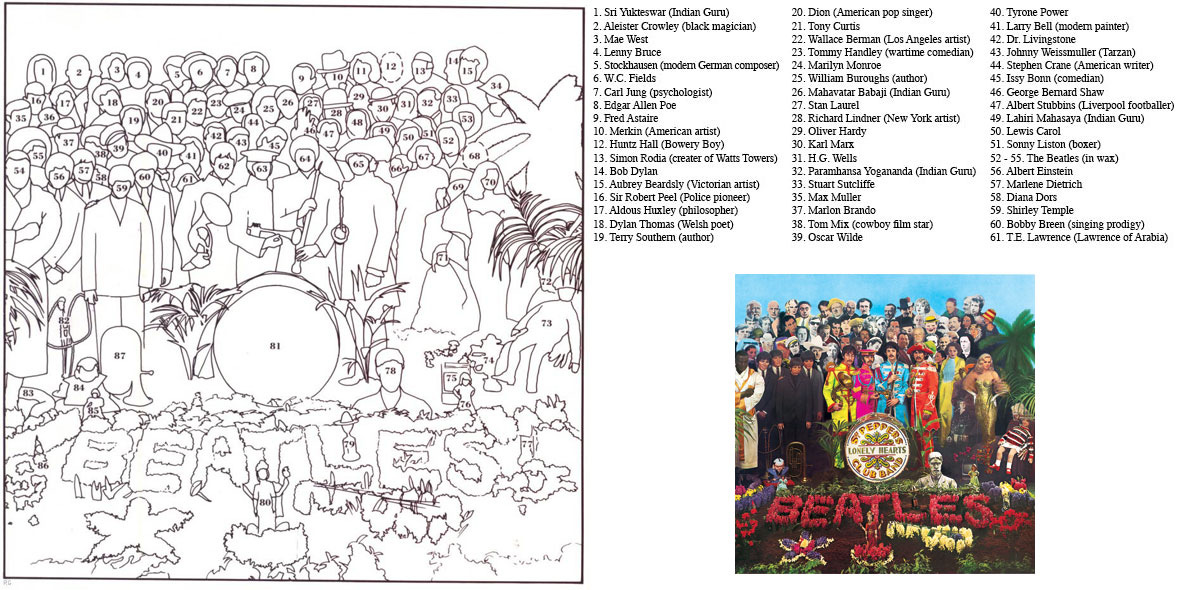
The music – you’ve heard it – was both parochial and cosmic, hallucinogenic and pastoral, extending, per Ian MacDonald, “possibilities for pop which, given sufficient invention, could result in unprecedented sound-images”. An educated commentator writing for Newsweek compared it to The Waste Land, while progressive theatre critic Kenneth Tynan called it “a decisive moment in the history of western civilization.”4
But for Beatles fans, it was too much. “As the Beatles extended their range,” Sandbrook writes, “…they were beginning to move away from the mass audience that had supported them since 1963.” This wasn’t a case of uptight aunts in florals writing angrily to the Telegraph, nor of conservative curates expressing their alarm at the sexual debauchery which would inevitably accompany the rise of the miniskirt. Readers of the NME wrote in their droves to the magazine to complain about the new sound – and look – the Beatles had adopted.
“Strawberry Fields Forever” was, one reader from Belfast announced, “pseudo-intellectual, electronic claptrap.” Another observed how it was impossible to compare their older, pre-’65 music to “the way-out rubbish on the Sgt. Pepper disc”, while a third called the single “Hello Goodbye/I am the Walrus” “the biggest load of rubbish I have ever heard. If this is progressive, then the pop scene must be going backwards…No doubt the Beatles’ reputation will carry this one up the chart, but it is sickening to see Lennon and McCartney wasting their time on this drivel.”5
When Magical Mystery Tour aired on the BBC on Boxing Day in 1967, it received what Sandbrook calls “a staggeringly hostile reception”. It was “piffle”, announced the Mirror. “Rubbish,” said the Express. “Appalling,” decreed the Mail. Viewers phoned the BBC switchboard to complain, and one contemporary critic noted that the Beatles took “a hammering” like none other before.
To Sandbrook, the hatred that Magical Mystery Tour inspired and the bafflement among many at Sgt Pepper’s Lonely Hearts Club Band illustrates how, “for all their successes, the Beatles were never universally or unconditionally popular. Plenty of people hated them; millions more, probably a majority, were generally indifferent to them and their music.”
The band’s sales were impressive in the mid-1960s, certainly, but by 1975 they were handily outsold by a menace which continues to plague the charts to this day: the official cast recordings of musical soundtracks. The most popular Beatles album, their Merseybeat 1963 debut Please Please Me, spent 43 weeks in the British Top Ten. By comparison, the soundtrack to the relatively minor American musical South Pacific spent 46 weeks in the charts – at number one. By 1975, The Sound of Music soundtrack had sold 17 million copies in Britain. Abbey Road sold nine million. In the long term, The Sound of Music outsold the Beatles’ two best-selling albums combined.
And, infamously, Engelbert Humperdinck beat “Penny Lane/Strawberry Fields Forever” to number one with the fabulously milquetoast and mopey ballad “Release Me” – the sort of song which these days is only used ironically, perhaps slightly distorted, in horror films. No matter that “Strawberry Fields Forever” had taken 55 hours of studio time to record on its own. The people wanted crooners.
“The obvious implication of all this,” Sandbrook writes, “is that popular tastes in the sixties were at once more diverse and more conservative than is often imagined.” Together, these stories and statistics combine to prove what is probably Sandbrook’s favourite point: that most people in the Western world led – and still lead – quite culturally conservative lives.
To return to The Sound of Music:
“The success of the Sound of Music (says Sandbrook) reinforces the point that there was much more to British cultural life in the sixties than soft drugs and long hair. It appealed to middle-aged and elderly listeners as well as to teenagers and children, and it projected a familiar, even conservative vision of the world, based on romantic love and family life…These are not values appreciated by most people who write about popular music.
This is especially interesting in the context of the Beatles, because they had two distinct phases: the Please Please Me through to Help! era, from 1963 to 19656, and then Rubber Soul or Revolver onwards until they broke up. And, basically, most people loved them at the beginning and then really did not understand the later stuff, the moment their music became even remotely challenging.
The Beatles themselves found this hugely frustrating. In hindsight, it seems like a story many versions of which we’ve seen since – artists whose initial popularity is predicated on easy, accessible work, who feel trapped and suffocated when they try to embrace more expressive, experimental forms. Twenty-five years later, Radiohead would write “My Iron Lung” about the same phenomenon, after the success of “Creep” prompted record execs to ask them to write something that would be similarly commercial successful for their second record; “Creep” was their iron lung, keeping them alive financially but restricting them creatively. But the Beatles had no real precursors.
If you haven’t clocked yet, this whole piece is really just an excuse for me to quote some funny people who hated the Beatles in the 1960s, dressed up in a wrapper of vague cultural commentary. But it’s worth noting that the gulf between avant-garde taste and that of the public wasn’t restricted to the Fab Four. White Heat is chock-full of examples.
Publishing is one. Several countercultural newspapers and magazines published at the time, including the radical International Times, managed impressive circulations in the late 1960s. The IT itself sold a muscular 40,000 copies a fortnight – astonishing for a magazine filled with “solemn articles on drugs, sexual liberation and avant-garde theatre”. But a year later, after two office coups, each of which replaced the incumbent editorship with ever-more-extreme contributors, “any pretence of coherent organization had completely disappeared.” Writers were paid haphazardly in drugs, or often not paid at all. By 1973, the magazine had totally folded, as had Tariq Ali’s socialist Black Dwarf, an offshoot of the same magazine called Idiot International and the UK edition of Rolling Stone, which had first rebranded as Friends, then – gallingly – Frendz. One editor of the latter later recalled “four years of appalling messes, typographical horrors, pages that were so dense they were illegible.” Far from being the revolutionary, vanguard publications that would dispel the false consciousness of the British working classes, these magazines were dilettantish, self-absorbed and impenetrable to anyone who lived outside west London, let alone the M25.
Likewise, the theatre. If the 1960s is remembered as a time of radical experimentation, actual contemporary theatregoers were often left cold by the self-indulgence they felt they saw on the boards. In 1966, the Royal Shakespeare Company put on a production called US – get it? – which told the story of the Vietnam War through the eyes of a British journalist who went to cover it.7 In the final scene, a young Glenda Jackson turned to the audience, “accusing them,” per Sandbrook, “of moral cowardice and calling for the bloodshed to be brought home so that napalm would fall on suburban English lawns.” (Sound familiar?) The reviews were excoriating: critic Hilary Spurling “spoke for many” when she called the play “hysterical clowning, self-righteous belligerence and mawkish attempts at solemnity”.
Most people in 1960s Britain hated drugs and drug-takers. After the famous Redlands raid in which Keith Richards, Mick Jagger and their associate Robert Fraser were arrested and charged with drug possession, Gallup polled the public on the trio’s respective sentences of several months’ imprisonment. To the shock of the Stones and their entourage, opinion was almost entirely against them. Eighty-eight per cent of the public believed that dealing soft drugs should be a criminal offence, and 77 per cent thought that smoking cannabis should be a crime. Only one in four young people thought Jagger’s sentence of three months in prison and a £100 fine for possession of amphetamines was too harsh. The rest felt it was perfectly reasonable. Drugs were associated with societal change, with the growing cultural and spending power of teenagers, with the “permissive society” in general, and with non-white immigration to Britain – cultural developments that most people in the country were deeply suspicious of, at best, if they didn’t passionately oppose them.
Perhaps unsurprisingly, direct political action by students found even less sympathy among the general public.8 When students occupied university buildings in sit-ins at the LSE – Mick Jagger’s alma mater – and the universities of Hull, Essex and Leicester among others, a Gallup poll found that only 15 per cent of working-class respondents were sympathetic to them. The Telegraph called the students “pretentious adolescents, generally of small ability”, while the north London local Wood Green, Southgate and Palmers Green Weekly Herald was prompted by a sit-in at the nearby Hornsey College of Art in summer 1968 to announce:
“[A] bunch of crackpots, here in Haringay, or in Grosvenor Square [where the American embassy was located], or Berlin, or Mexico, can never overthrow an established system.
[…]
The system is ours. We the ordinary people, the nine-to-five, Monday to Friday, semi-detached, suburban wage-earners, we are the system. We are not victims of it. We are not slaves to it. We are it, and we like it.”
Ultimately, the outcome of many of these student protests was moot. University authorities quickly learned to wait until the holidays, when the students would inevitably lose interest and drift back home to the comfort of their parents’ homes. The non-university-educated were even less politically interested. Says Sandbrook: “The vast majority of young people did not make war on anybody; instead, they spent their days at work and their evenings watching television. Hippies, radicals and drop-outs were never more than a tiny minority.”
So – why do so many of us assume in hindsight that we would have been the types to embrace the Vedic experimentalism of Sgt Pepper over the peppy skiffle-pop of Please Please Me or A Hard Day’s Night? More pertinently, can you even really look back and transpose your own taste or beliefs onto an earlier decade?
All this leads me to state the Sandbrookian Thesis, if I might be so bold: that the avant-garde of a certain era is retroactively legitimised and, in the process, made unthreatening.
In 1968, The Jungle Book and Oliver! outperformed Lindsay Anderson’s If… Nearly everyone ever polled preferred the idea of living in a little cottage to one of Ernö Goldfinger’s brutalist creations. John Betjeman, with his nostalgic reveries on countryside churches and teddy bears and his campaign to save imperious Victorian buildings from rapacious modernism, was the most popular poet in Britain (in the eyes of many, he was likely the only poet in Britain).
Even in outlets and intellectual spaces considered chic today, it’s hard to avoid the conclusion that the majority of people in the western world in the 1960s were not interested in the cutting edge of culture or politics, even a little. If Joan Didion could find herself disillusioned with Haight-Ashbury in Slouching Towards Bethlehem, what chance would you have stood, grappling with The Velvet Underground & Nico, in a drab little commuter town in the Britain of Mary Whitehouse?
An odd phenomenon has taken place, then, over the last sixty-odd years. Despite a majority of people at the time despising drug-taking, political radicalism and smelly hippies, and most being left likewise cold by theatrical and musical experimentation, in 2026 we’ve somehow managed to elevate the counterculture of the 1960s to an alternative canon. We assume that listening to psychedelic records was the norm, the acid-spiked cultural waters in which all those dope-addled fish were swimming. So much so that today, declaring Sgt Pepper’s Lonely Hearts Club Band the greatest album of all time would be seen as a sign of conservatism, not radicalism.
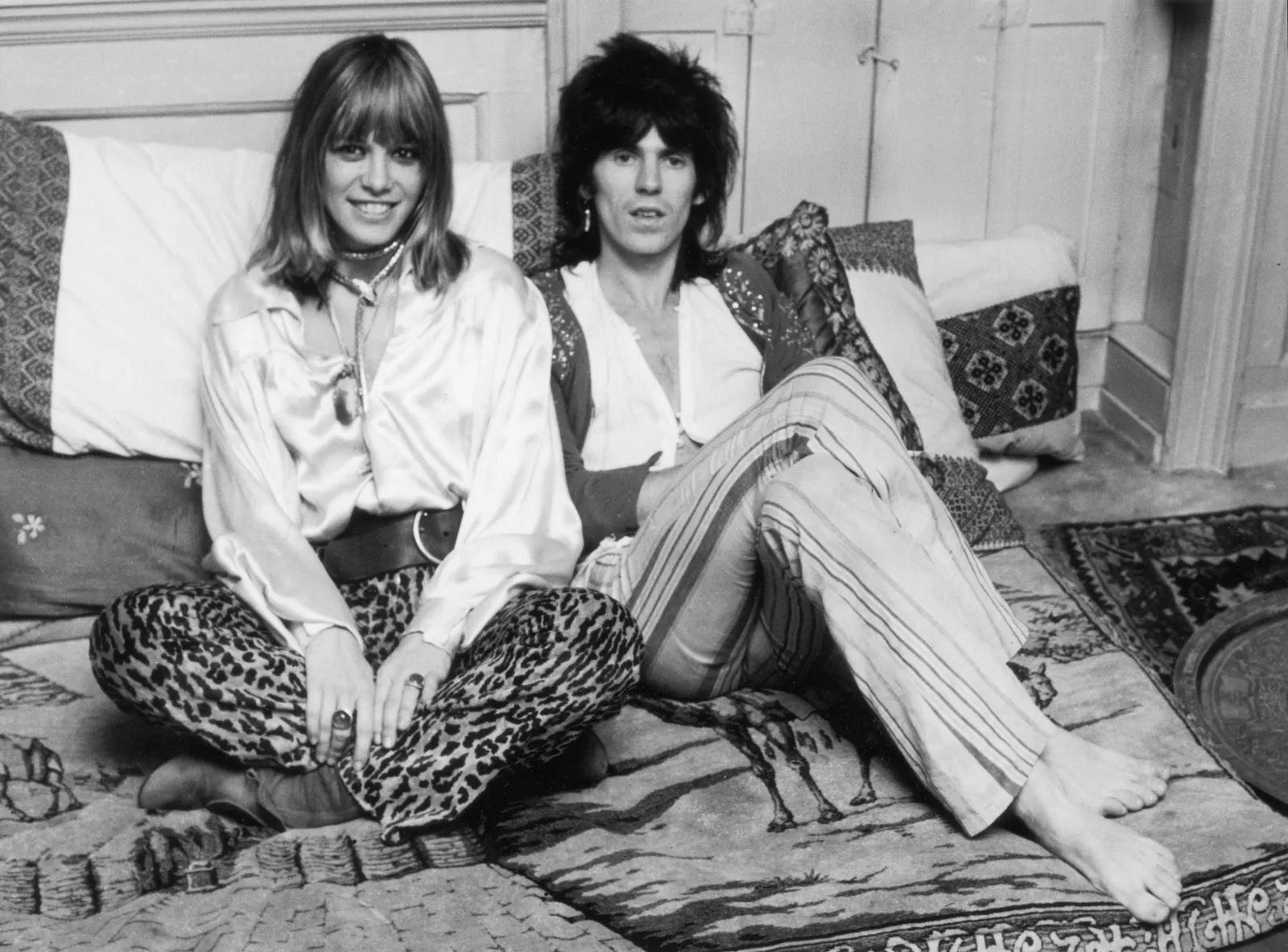
Someone says “Think of the 1960s” and you immediately think of this:
And probably not this:
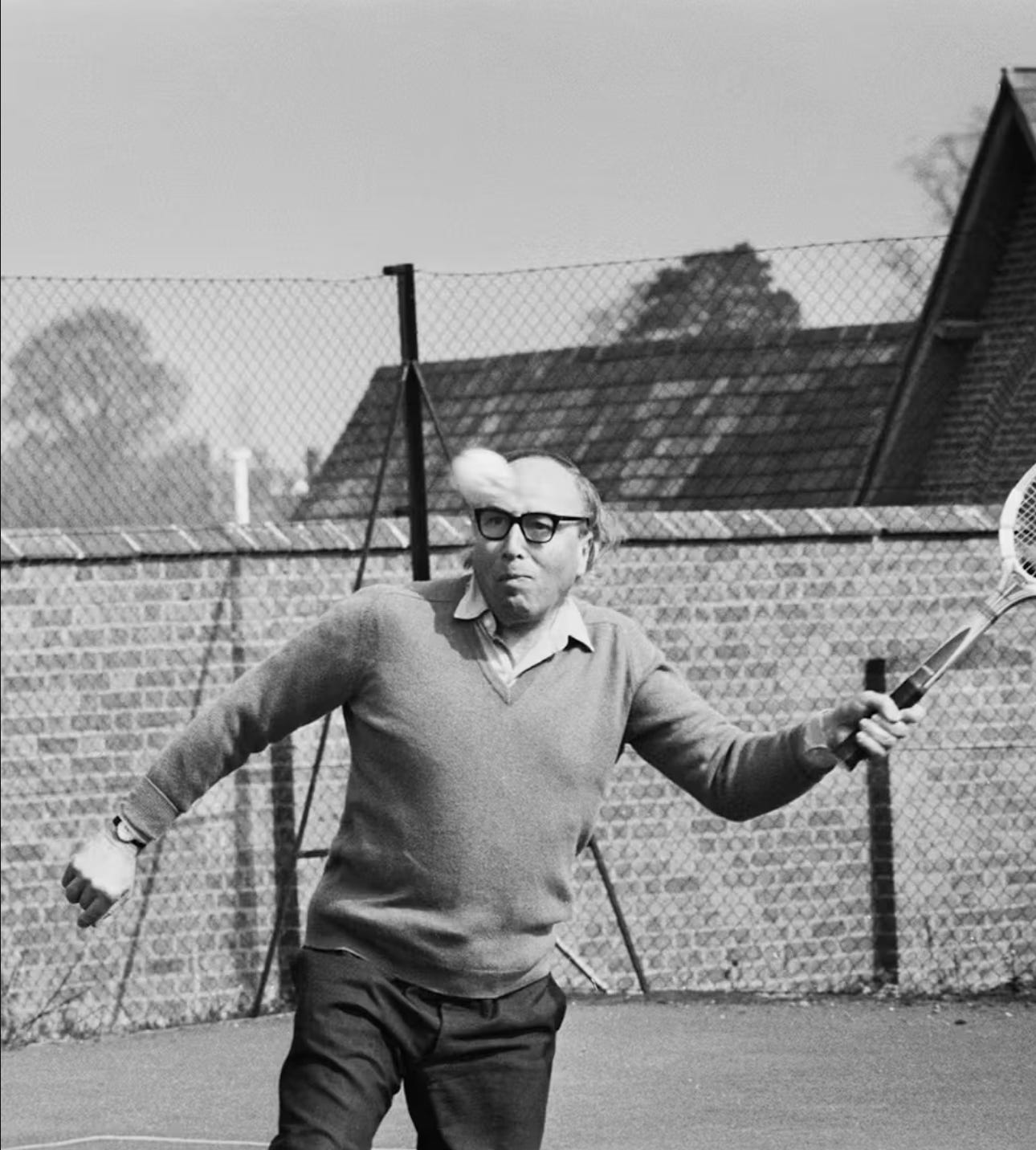
It’s not hard to see why that is – sex and drugs and Anita Pallenberg are all much more exciting to most people than the day-to-day drudge and reality of The Black and White Minstrel Show and Roy Jenkins. Nobody need pose the question “Why are we interested in the tearaway, rock’n’roll lives of the Rolling Stones?” That’s not really what I want to interrogate here.
What’s more interesting, to me, is to wonder who and what our modern-day stand-ins are for the avant-garde. Who are our post-1965 Beatles? Who, if anyone, is pushing music, art, writing in ways that in 60 years will be regarded as ahead of their time?
By “our Beatles” I mean a group or artist with genuine cut-through that is also extremely, radically new. Popular and experimental in a way that changes a whole paradigm.
The fame requirement isn’t hard to address: the only artist who is remotely close to the Beatles’ fame and reach right now is Taylor Swift. In 2022, she became the first artist ever to occupy all the top ten spots on the Billboard Top 100.9 Two years later, she managed to take the entire top 14. Eight of Swift’s albums have each sold over a million copies in a single week. These numbers are, like for like, more impressive than the Beatles’.
But.. has Swift revolutionised music? Has she ever made two albums that sounded as different as Help! and Revolver sound to one another? Swift has revolutionised fandom, certainly, and probably indelibly changed music marketing and public image management – but there’s a problem when it comes to the actual music. It’s utterly middlebrow, yes, but the issue goes deeper: I’m not sure it could ever be anything but. I think that all of us are so exposed to every possible influence in the world nowadays that it’s essentially impossible to experience something as new as the Beatles would have sounded to a Kidderminster housewife in 1966. For a teenager in the 1960s, to listen to Revolver would have been as if to taste sugar for the first time; in 2026, our diet is only sugar, and from an early age.
Mark Fisher wrote that the last genuinely new band was Kraftwerk. Writing around 2008, Fisher’s gist was that there hadn’t been anyone who made, basically, noises in a specific shape that would be unrecognisable to us since then:
“Imagine any record released in the past couple of years being beamed back in time to, say, 1995 and played on the radio. It’s hard to think that it will produce any jolt in the listeners. On the contrary, what would be likely to shock our 1995 audience would be the very recognisability of the sounds: would music really have changed so little in the next 17 years? Contrast this with the rapid turnover of styles between the 1960s and the 90s: play a jungle record from 1993 to someone in 1989 and it would have sounded like something so new that it would have challenged them to rethink what music was, or could be.”
The post-’63 music of the Beatles would have genuinely jolted someone listening in 1948. That’s the jump from Anne Shelton or Dorothy Squires to the Stones or Manfred Mann. But Fisher’s challenge posed 17 years as its benchmark: can you name a single musical artist working today whose sound would be alien to anyone in 2009?
In fact: can we take that argument to a further extreme? I saw someone on here say Gen Z have no vernacular cultural forms of their own. They can only imitate. Someone else noted that they don’t watch new TV, but overwhelmingly prefer “library” shows – Parks and Rec, New Girl, The Sopranos, et cetera. All the new music now is interpolative – not remixed, sampled, chopped or screwed, but just the same songs re-released, over and over.
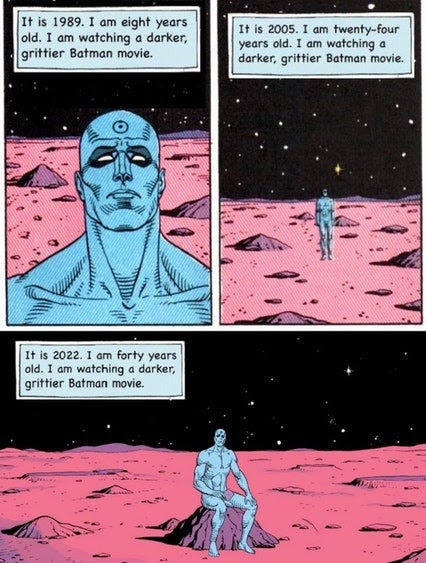
Before we venture too far into generation-bashing, I think it’s worth saying that this isn’t really anyone’s fault. Nor did millennials ourselves necessarily generate any sort of world-changing new musical forms (Dubstep? Grime? I don’t think so). Nor does any of this have to matter in and of itself, although I think it does, whilst also representing an inevitable endpoint of globalisation and communication technology.
What’s maybe more interesting is that this sort of cultural reconstituting, in which old cultural potatoes are mashed and fried and served up as chips10, was sort of true of the Beatles, too – albeit in a different way. As we’ve seen (at exhaustive length!) they borrowed liberally from Edwardian music-hall traditions and Indian music and American blues alike. Sandbrook himself characterises the band, along with 1967’s 26-part adaptation of The Forsyte Saga and John Fowles’s 1969 novel The French Lieutenant’s Woman, as an expression of a self-aware “nostalgic tendency” in British culture which gathered strength in the late 1960s. But the Beatles were also restricted by the media available to them. Harrison had to fly to India for six weeks to learn the sitar. Most normal people had no clue where to begin getting hold of LSD, if they had even wanted to. The fact that the Beatles’ cultural influences were scarce meant their output was highly distinct.
One of the other salient points is, of course, the fact that the counterculture and avant-garde of the 1960s became so crystallised at the pinnacle of our pop culture because the baby boomers who grew up with it basically never let it go. The teenagers of 1967 are drawing their pensions today (lucky bastards, getting pensions), and many of their heroes are still going strong. Paul McCartney – that’s Sir Paul McCartney, of course – played to 100,000 people at Glastonbury in 2022, for Christ’s sake. And yeah, Seventeen might have played two years later, but K-Pop’s hardly keeping British or American parents up at night with worry.
Are we stagnant? Can one do anything new in 2026? And if someone genuinely is changing an art form beyond recognition: do you hate them for it? Answers on the back of a postcard, please.