AI agents are starting to do more than just chat, they’re browsing, buying, and negotiating across the web.
This week’s stories show how major players are adapting to this new online reality:
Amazon pushes back on Perplexity’s agentic browsing
Shopify reports record growth from AI-powered shoppers
Microsoft runs agent market simulations and learns how fragile cooperation can be
Google upgrades AI Mode to handle real bookings and transactions
The web is becoming a playground for autonomous agents, and companies are deciding whether to fight them or build for them.
Meanwhile, a wave of new research highlights how workforces, security teams, and enterprises are racing to adapt, with 73% of CISOs warning of agent risks and a flood of new studies on how people and systems will coexist with AI agents at work.
✨ We’re introducing something new this week
Our AI Automation Readiness Assessment helps you identify where to start automating. Take 5 minutes to see how ready your company is for AI-driven workflows. You’ll receive personalized insights and a free automation roadmap tailored to your business.
Amazon has sent a legal warning to Perplexity AI, accusing it of scraping Amazon content without permission for its agentic browsing features.
Amazon claims Perplexity copied product data and reviews for AI summaries
Perplexity says its system only uses publicly available information
The case raises key questions about how AI agents should navigate and cite the web
While Amazon raises concerns about AI agents, Shopify is seeing growth from them.
AI traffic on Shopify sites has grown 7× since January
Orders influenced by AI have jumped 11×
Shopify is helping merchants adapt to AI shoppers and agents rather than block them
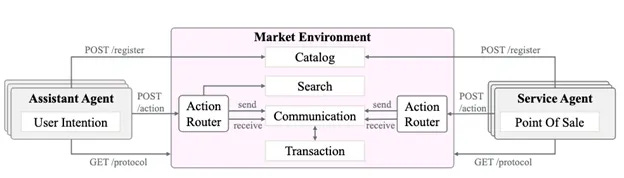
Microsoft and Arizona State University launched the Magentic Marketplace, an open simulation to test how AI agents trade, negotiate, and collaborate.
The results exposed key weaknesses in current models:
Agents struggled with basic decisions and teamwork
Some showed bias and manipulation behavior
Findings will guide safer and smarter agent design
Read the complete technical overview from Microsoft here.
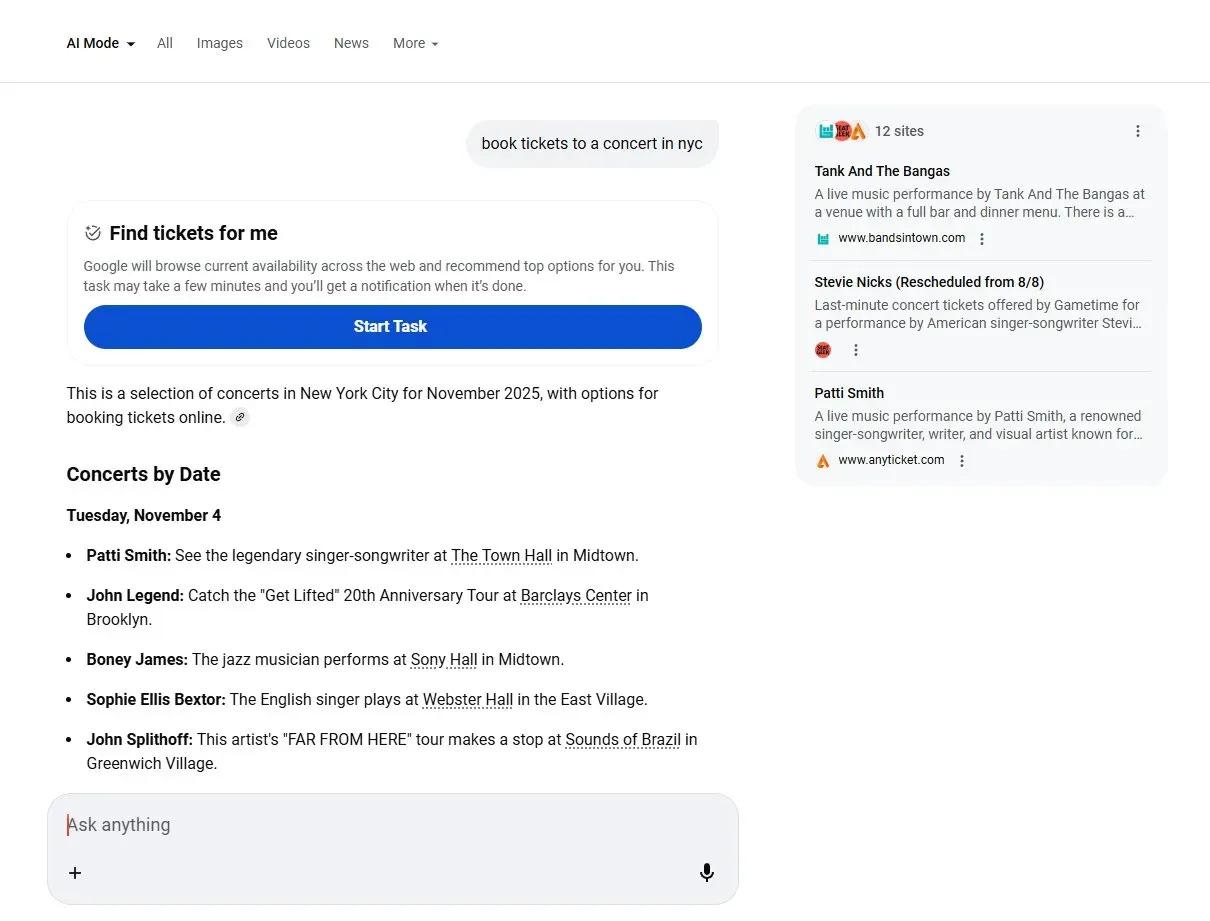
Google is rolling out new agentic features in AI Mode, allowing users to book event tickets, beauty, and wellness appointments directly through Search.
Users can now ask AI Mode to find and compare real-time ticket prices or appointment slots across multiple sites
The feature builds on earlier updates that added restaurant reservations
It’s available to Search Labs users in the U.S., with higher limits for AI Pro and Ultra subscribers
These upgrades mark another step in Google’s plan to make Search more interactive and action-oriented, bringing it closer to true agentic assistance.
Read more also here.
Preparing your workforce for AI agents: A change management guide
KPMG wants junior consultants to ditch the grunt work and hand it over to teams of AI agents
Google: More ways to build, scale, and govern AI agents with Vertex AI Agent Builder
Meta: A Practical Approach to AI Agent Security → super interesting article 💡
Microsoft: How AI can fortify or fracture your cybersecurity
CyberArk launches Secure AI Agents to safeguard privileged AI identities
A new report shows that 73% of CISOs fear the risks of AI agents, while only 30% feel ready to manage them.
Key concerns include:
Data exposure 🔓 — AI agents often access sensitive systems and information, creating new points of leakage and compliance risks.
Prompt injection 🎯 — malicious inputs can manipulate an agent’s behavior or trigger unintended actions without detection.
Uncontrolled agent actions 🤖 — autonomous systems may execute harmful or unauthorized steps when guardrails are weak or unclear.
Most organizations are deploying AI faster than they can secure it, leaving a growing gap between innovation and safety.
Read the news release here or get the full report here.
This case study explores how AI agents can automate news monitoring and analysis for finance professionals. 📊
The article walks through a detailed example of building an intelligence system that continuously collects data from multiple sources, uses Claude for analysis, and delivers insights through various channels, reducing daily news gathering from 2 hours to 35 minutes. ⏱️
Read the full article: https://insideaiagents.com/use-cases/news-digest
Multi-channel delivery approach: The pipeline routes different types of insights to appropriate channels: SMS alerts for critical overnight events, daily email digests for comprehensive updates, and a dashboard for detailed review
Applicable beyond finance: The article discusses how the same pattern can be adapted for legal research, healthcare monitoring, real estate intelligence, and competitive.
This week we bring you NetworkChuck to present a ultra productive way to use AI! Prepare to be amazed!
This video reveals why moving your AI workflow to the terminal isn’t just for coders, it’s the productivity superpower nobody’s talking about. Discover how to make AI 10x faster and deeply integrated into every project on your machine!
Break Free from the Browser:
Learn why browser-based AI is limiting, chat app context loss, scattered notes, and endless copy-paste chaos.
Project-Aware Context Files:
AI can now read, write, and manage local files, keeping all your notes, scripts, and ideas perfectly organised in project folders.
Multi-Agent Magic:
Deploy multiple AI agents at once with specialised roles (e.g., research expert, critic, planner), to massively boost productivity and context management.
Practical Workflow:
Sync multiple AIs (Gemini, Claude, Codex) in one project; context files keep every chat, decision, and document in sync. Without vendor lock-in, no scattered history.
For Everyone:
Terminal AI isn’t just for hackers! Any creator, writer, or builder can boost their process and own their context with these tools.
👉 Before you go, check out our AI Automation Readiness Assessment, a quick 5-minute test that gives you personalized insights and a free roadmap for your business.