WORLD / MAY 2026
The Most Accurately Predicted Genocide in History
There was satellite imagery, survivor testimony, and mass graves. Still, the world looked away from Sudan
WORDS AND PHOTOS BY MICHELLE SHEPHARD
Published 6:30, MARCH 4, 2026
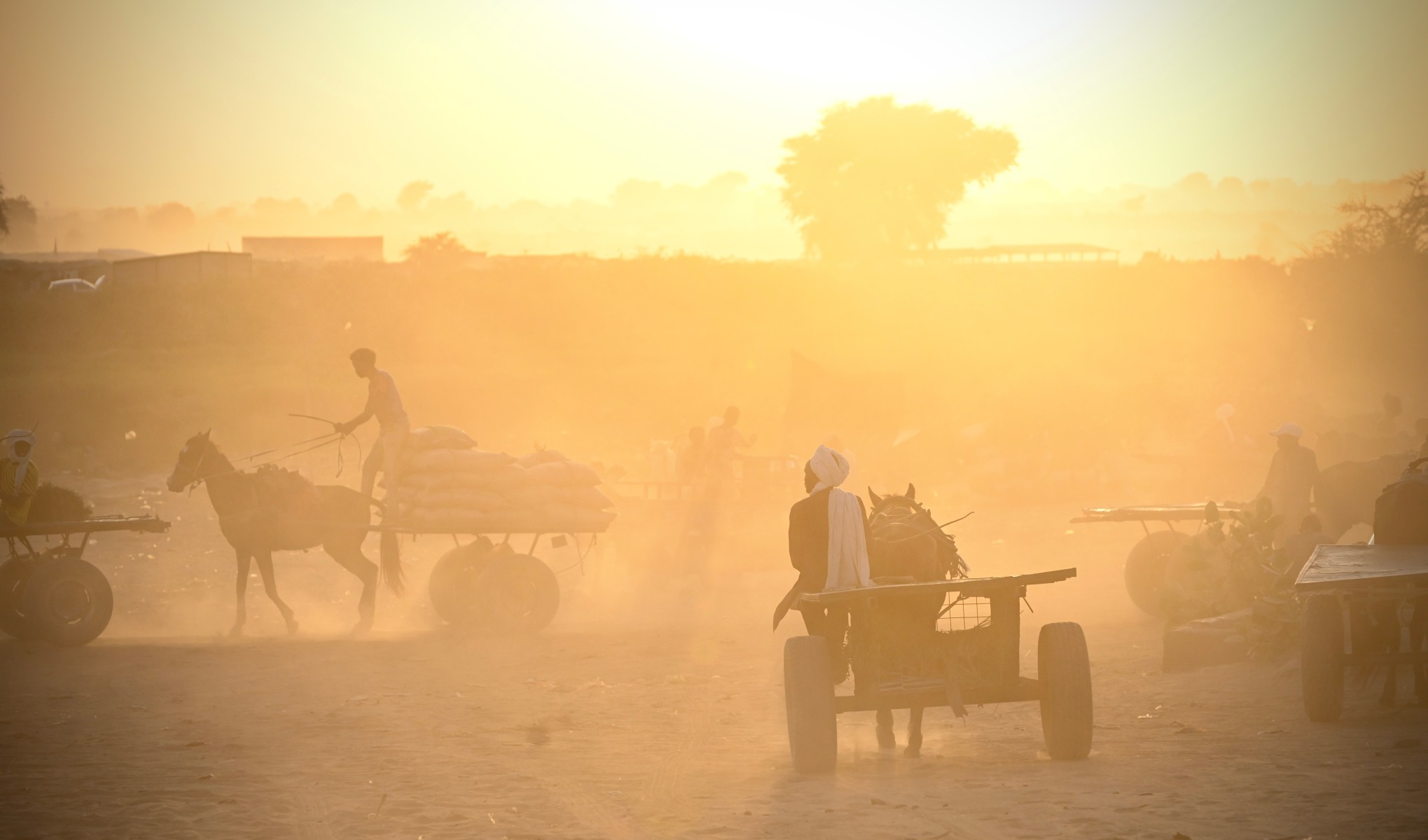
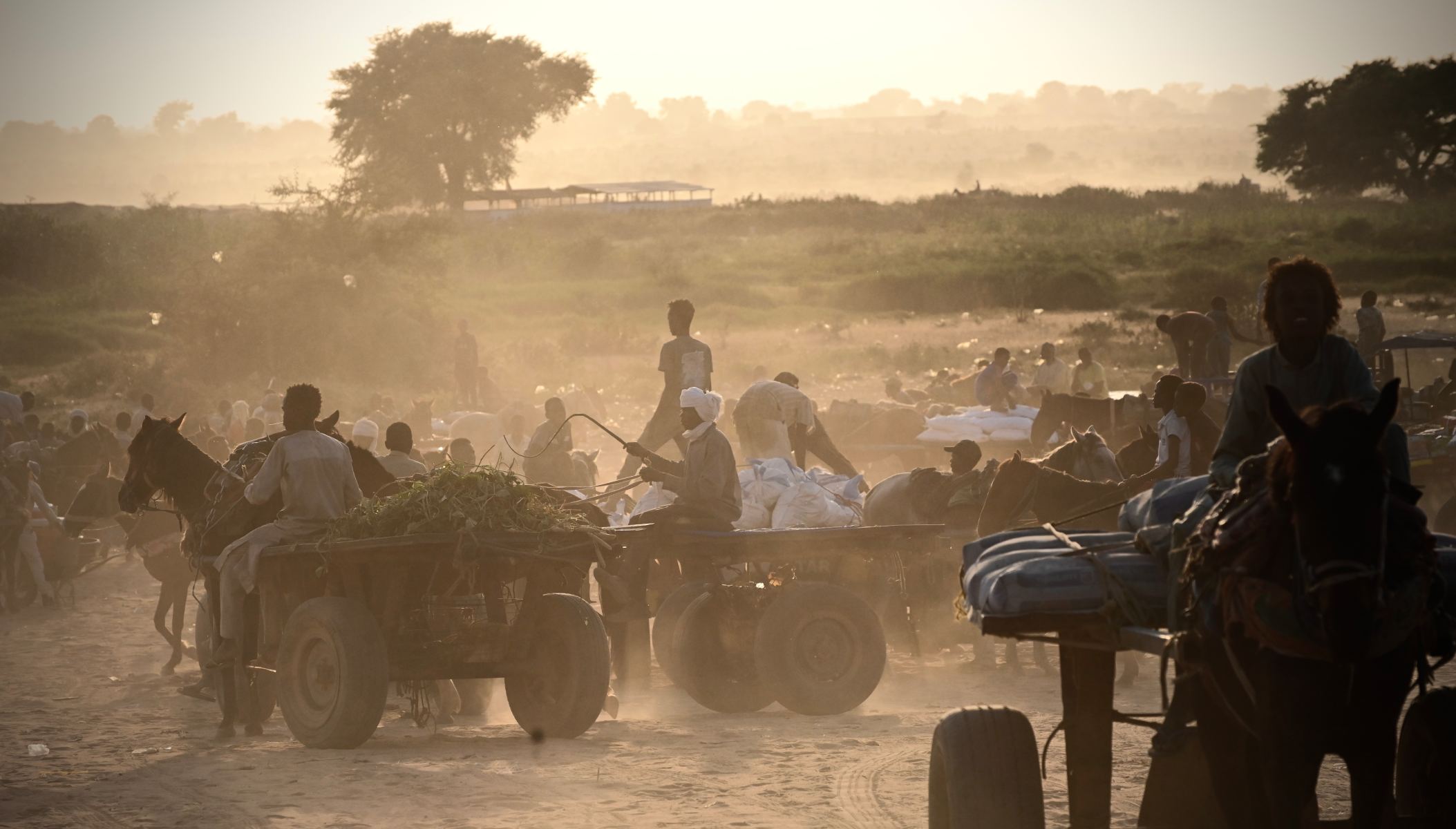
We sit cross-legged on woven plastic carpets. As the punishing sun creeps toward the horizon, the sky softens into a palette of yellows and pinks, and this makeshift refugee camp in Adré, Chad, appears almost bucolic. The border with Sudan is just five kilometres away, and yet the violence unfolding there feels distant.
Isra Aldine was in high school in April 2023, living in El Fasher, the capital of Sudan’s North Darfur state, when the war broke out. President Omar al-Bashir had been overthrown four years earlier, after months of mass protests, ending decades of authoritarian rule. The unrest ebbed, but the lull was short-lived. Fighting erupted between Sudan’s paramilitary force, the Rapid Support Forces (RSF), and the Sudanese Armed Forces (SAF). Both groups helped push al-Bashir aside—but neither trusted the other, and each expected to dominate the post-Bashir order.
The fighting drew in foreign weapons and money. Outside powers jockeyed to back a victor, secure a foothold in Sudan, and profit from its natural wealth. The country matters globally not just because of its size but because it sits on the Red Sea, a major trade route, and holds immense reserves of gold, oil, and agricultural land.
As the front lines shifted toward El Fasher, Aldine fled with her family about fifteen kilometres south, to a camp known as Zamzam for internally displaced people, or IDP. To call it a “camp” is a misnomer—by then, Zamzam was a sprawling, besieged city of more than 500,000. The SAF was in control of the area but was surrounded by the RSF, their warring rival. The RSF blocked medical supplies and food from entering the camp to further weaken SAF soldiers and the trapped civilians. Parents were forced to feed their children ambaz, a type of animal feed, until that also became scarce.
On April 11, 2025, the RSF launched a three-day frenzied assault to capture Zamzam. Controlling the territory was vital for their goal to take over Darfur, where much of the country’s wealth is centred.
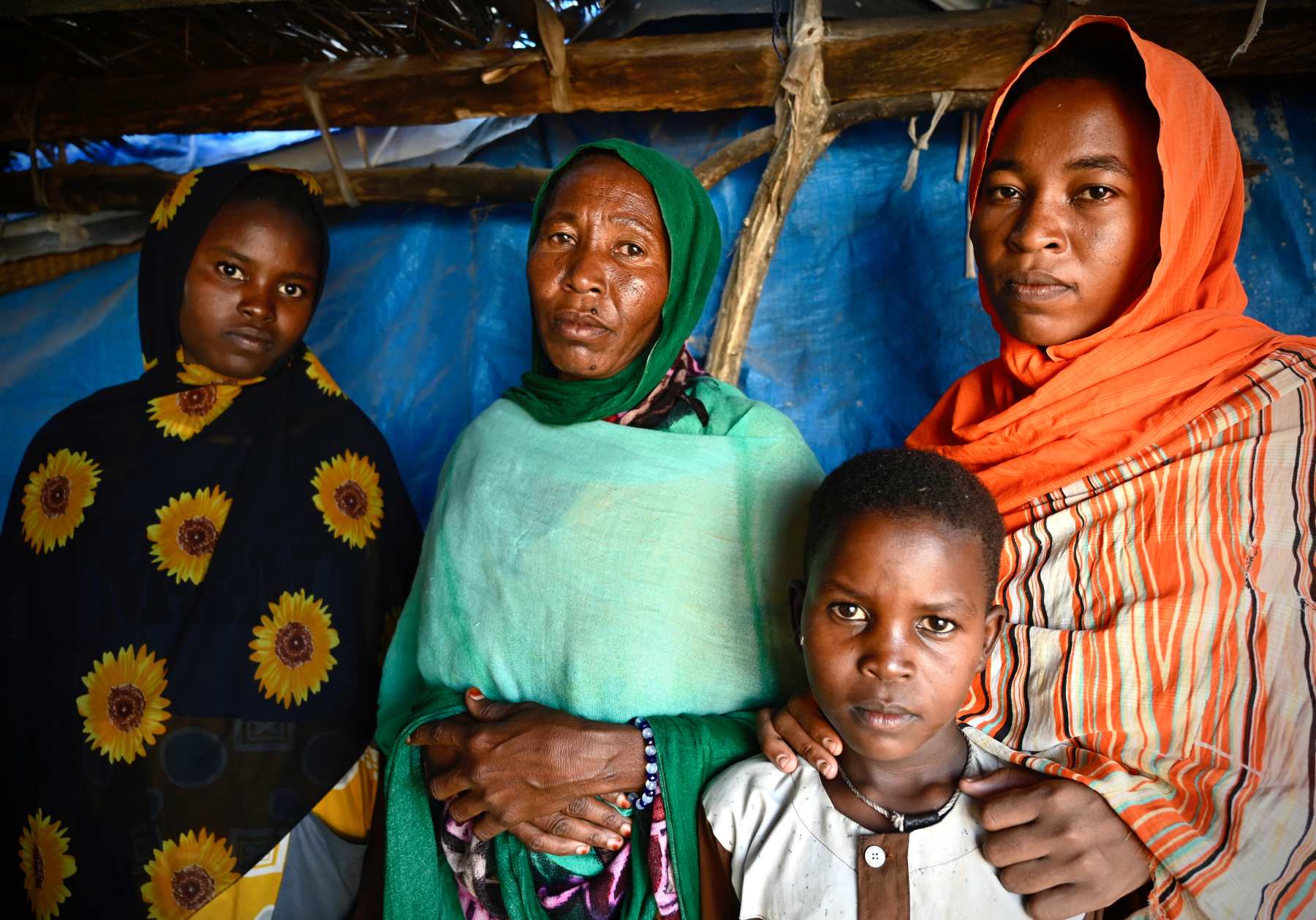
“They would line people up in front of us and rape, flog, and shoot them in the middle of the street,” Aldine tells me, talking quickly as others in the shelter interrupt to add details. “We saw unimaginable things in this war.” She and her family grabbed what they could and fled. Families, including hers, were ripped apart as they tried to escape, many children separated from their parents. She was with her father and sister when they were stopped by the RSF. “They thought my father looked similar to one of the military’s soldiers, pulled him out of the tuk-tuk, and killed him right in front of us.”
The RSF fighters then mounted their “technicals”—4×4 pickup trucks that have been fitted with mounted machine guns. They took position and told the women to run. Then, they began firing. “They were shooting nonstop. Those who couldn’t escape fell dead.” Everyone in the shelter pauses as Aldine says these words. Sitting beside her is her mother, Fatima; her younger sister; and her eight-year-old brother, Abdulnasir, who escaped separately with other relatives. He stares stonily, his arm barely touching his big sister’s. Aldine will later tell me that it’s at night, as he tries to sleep, that he cries and screams.
Surviving members of Aldine’s family made it out of Zamzam to the next IDP camp in Tawila, about sixty kilometres away, where they reunited. From there, they crossed into Adré. “We spent four days unsheltered on the road, thirsty and hungry, until we got here.”
Adré was never supposed to be an official camp, but once exhausted refugees made it across the border, they stopped and set up shelters. It’s now home to over 235,000. But this is just one camp of many in Chad, a country with a struggling economy and fragile infrastructure, where more than 1.2 million Sudanese civilians now live. And Chad is itself just one of Sudan’s neighbours, sheltering its share of the millions more displaced by the war. As the conflict enters its third year, there is still no confirmed death toll. Estimates vary widely, though a former US envoy to Sudan told the New York Times he believes the number may exceed 400,000, making it the deadliest war in the world right now.
Statistics here are so overwhelming they can feel meaningless. And in a way, they are. Today’s war, if discussed at all, is often lamented as “forgotten” or “overlooked.” The United Nations’ top relief official, Tom Fletcher, categorized the lack of action as “resignation” and a “crisis of apathy.” But for those who, in the past three years, have been warning about and predicting exactly what has unfolded—the reality is far more sinister.
Sudan is a tragic example of a war that can be manipulated when independent media is scarce on the ground, when there are few consequences for war crimes, and when lucrative trade and security deals mean more than civilian lives. The war in Sudan has not been forgotten. It has been ignored.
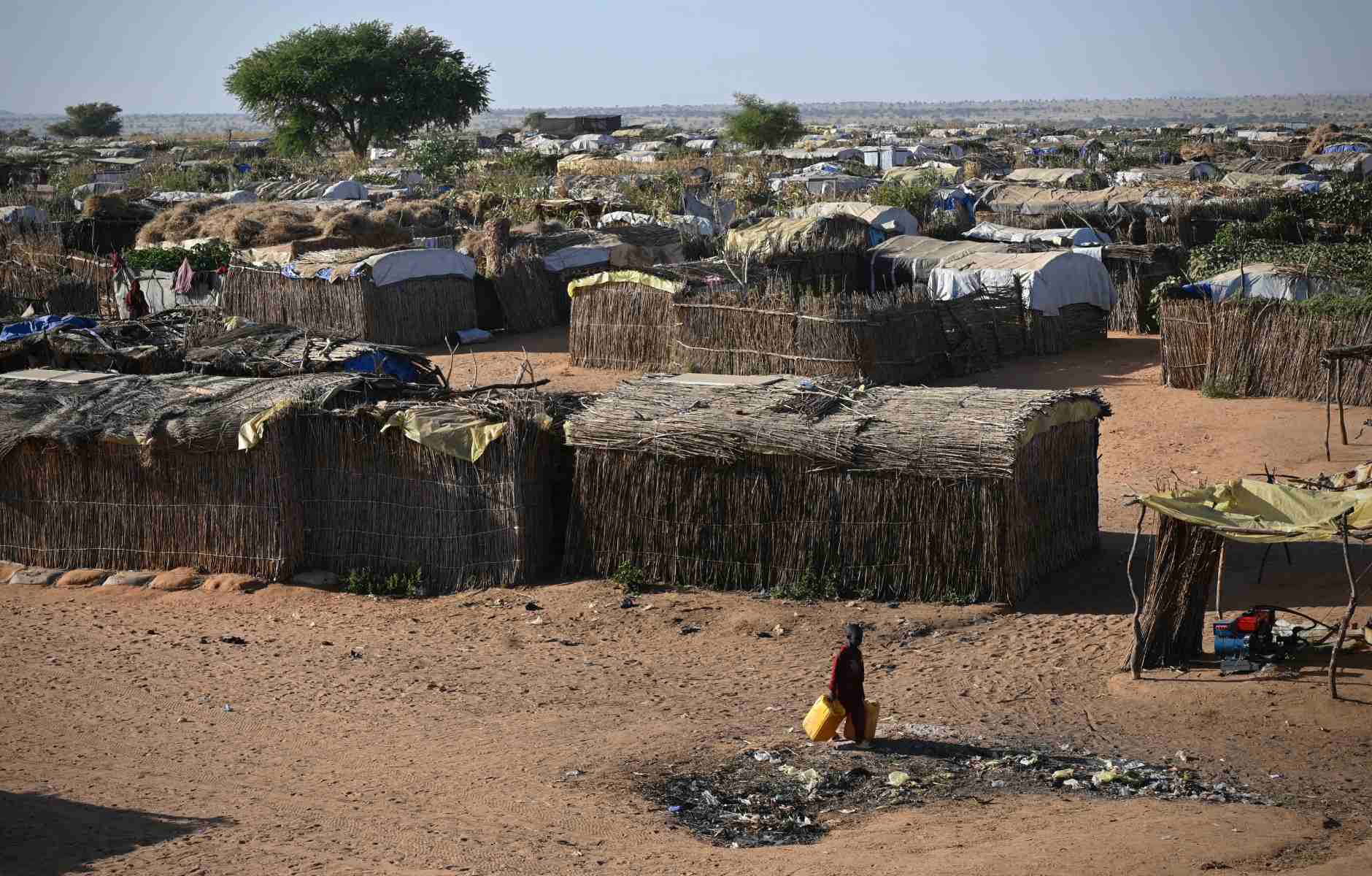
Since fighting began between the SAF and the RSF, food systems have collapsed: farms have been abandoned, markets destroyed, and supply routes cut by checkpoints and looting. Inflation has made basic staples unaffordable, as banks close and salaries go unpaid across many areas. Aid deliveries are routinely blocked or delayed, leaving millions beyond the reach of humanitarian assistance. The Integrated Food Security Phase Classification, the global authority on famine, uses a five-level scale to measure hunger. According to the IPC’s recent estimates, roughly 375,000 Sudanese are at phase five, or already starving. Another 6 million are at phase four, a food “emergency.” Almost half the country, some 14 million people, is at phase three—in crisis.
One reason the famine has drawn so little attention is that mass starvation kills slowly, unfolding in ways that rarely break through a crisis-driven, twenty-four-hour news cycle. Even if images of children wasting away were widely broadcast, it is hard to imagine them galvanizing a response. Such messaging—sometimes called “famine porn”—often backfires: it strips away political context and reinforces the idea that hunger in Africa is inevitable rather than a preventable, man-made strategy of war. Moral clarity seems to come more easily elsewhere. Gaza and Israel present positions to take; Ukraine offers a ready-made story of a smaller nation facing a clear aggressor, embedded in a familiar NATO-era political narrative and unfolding in a Western, white-majority country. Sudan’s catastrophe, by contrast, is a strategically peripheral, politically messy conflict between Africans—and, as a result, holds far less urgency in Western capitals or newsrooms.
The war’s complexity is the product of a history that resists simple narratives—a knotty story of colonization, discrimination, and exploitation. Sudan is home to both African and Arab communities, a divide hardened under British colonial rule, which favoured Arab groups and governed through them. After independence in 1956, political power and economic wealth remained concentrated among elites in central Sudan, while peripheral regions like Darfur were left impoverished and ignored.
That imbalance turned violent. Years of intolerance toward ethnic groups boiled over into an armed rebellion against the capital, Khartoum, in 2003. Al-Bashir responded brutally, unleashing a militia known as the Janjaweed—roughly translated as “devils on horseback.” Their campaign of village burnings, mass killings, and terror left an estimated 300,000 people dead. It marked the start of Sudan’s first genocide—and the origins of today’s war. The Janjaweed did not disappear; they were absorbed and renamed by the state as the RSF, now once again at the centre of atrocities in Darfur.
Both the SAF and RSF are accused of arbitrary detention, torture, sexual violence, and the recruitment of child soldiers. But there is overwhelming and consistent evidence of a second genocide taking place at the hands of the RSF: neighbourhoods surrounded, homes burned, mass rapes of women, men separated and executed. In November 2025, prosecutors with the International Criminal Court opened a war-crimes investigation.
Someone with first-hand knowledge of that suffering is Abdallah Ahmed Abdurahman, who is my Arabic translator on this reporting trip. From West Darfur, and among the first wave of refugees to reach Adré, he volunteered with Médecins Sans Frontières (MSF)—or Doctors Without Borders—when he first arrived and is now employed as a community health educator.
Abdurahman’s family had decided to split up to flee Sudan in smaller groups; they travelled at night when the roads were considered safer. Abdurahman came with an older brother and his mother, arriving at Adré one morning in June 2023, just before the sun came up.
Three of his other brothers took a different route, where they came under fire from RSF forces. All three were shot but kept going.
Further down the road, they were shot again, and this time, his twenty-five-year-old brother, Hamid Ahmed Abdurahman, was hit near his neck. The bleeding was too severe to save him, and they left him where he died on the road.
After saying goodbye to Aldine and her family, Abdurahman and I visit another shelter. He introduces us to Ali Abkhar Zkharia, who walks with the help of crutches. Two little girls—his nieces—are fast asleep on their stomachs on a mat. One of them snores. They remain asleep for our entire visit. We position ourselves gently on the ground around them. Zkharia sits on a blue plastic chair.
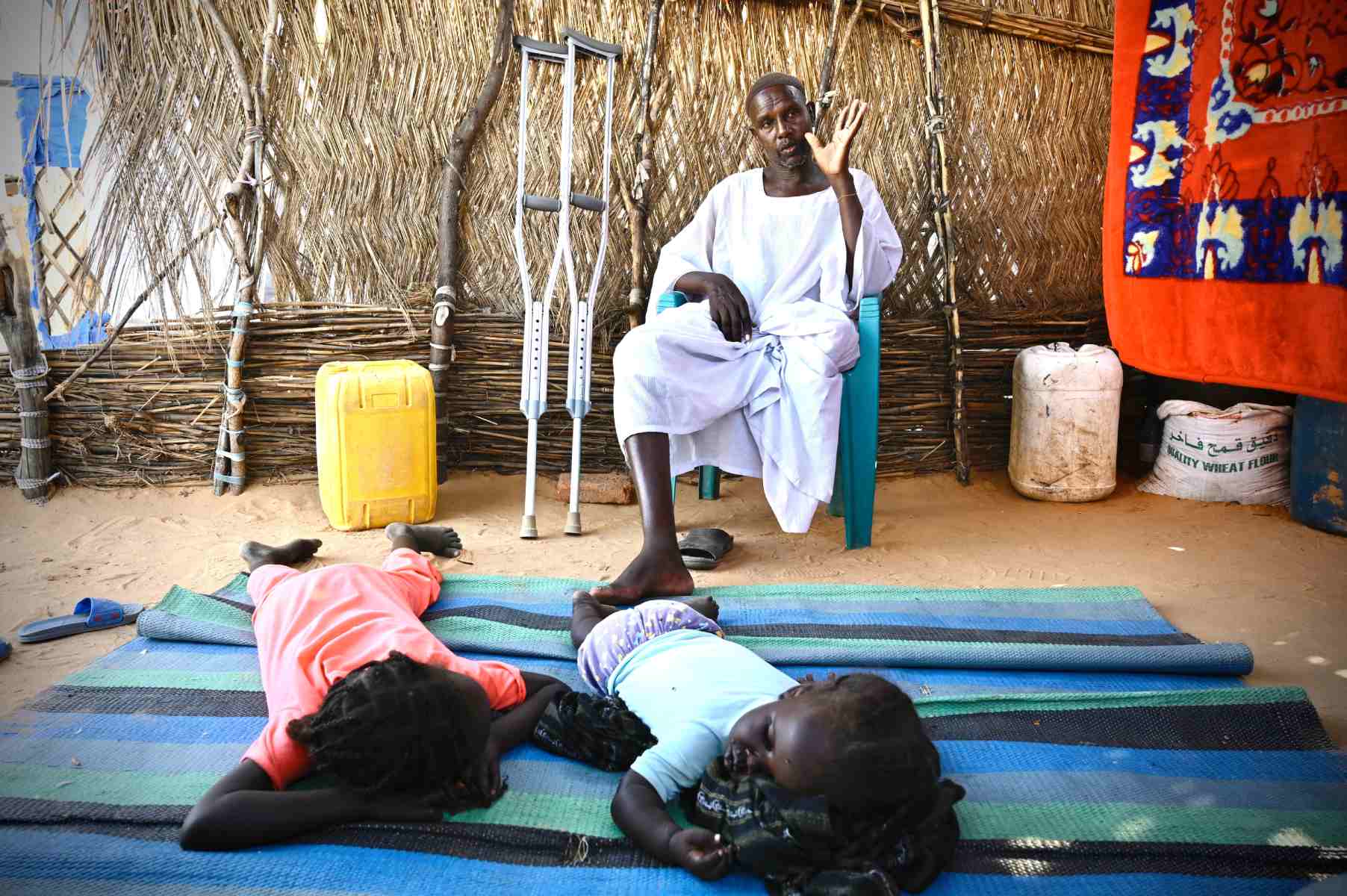
He is one of the few men in this camp, as men and boys are often rounded up and executed or taken for ransom when a town is overrun. Others are targeted on the road as they flee, like Abdurahman’s brother or Aldine’s father.
Zkharia and his extended family were also living in Zamzam when the RSF attacked in April 2025. He describes the days of fighting as chaos, with explosives coming from all directions. “Our everyday reality comprised of murder, famine, looting, theft, and rape.”
RSF fighters, in a final assault, killed his wife and three of his daughters and gravely injured Zkharia, who would later have his leg amputated. “We tried to leave for Chad, but we were stuck for a while and couldn’t move. We couldn’t find a way out,” he tells us.
He finally found a cart and donkey that could transport his surviving children. “The RSF was taking everything away. If you had money, they would take it. If you had a phone, they would take it. They took the clothes off people’s backs. Even the donkeys pulling our carts were taken away from the cart drivers. They made us get off and left us on the street.”
As we talk, three of his surviving children join us at his feet.
“I was responsible for all of them,” Zkharia says. “I used to provide for them so they could eat, but now I am handicapped and unable to work. I don’t have anyone to help me.” His eldest, Mirage, twelve, sits beside her little sister, Rouwa. Her brother, Radwan, is behind them. They are both eight, twins, their legs and backs scarred from the bombings. All three faces are set in hard expressions. Their features remain unchanged when we talk to them or I show them photos I’ve taken of them.
Mirage is wearing a loose hijab covering her head, a turquoise cotton T-shirt with a large white bow on the front, and matching pants. Her left sleeve hangs limp where her arm once was.
A doctor takes a break from her shift at an MSF camp hospital to talk to us. She’s still wearing her white lab coat as we sit inside a little office, where a fan hums in the corner. Somewhere in the distance, a donkey brays. She tells me her name, but we later agree to use a pseudonym for her safety. She chooses “Jude.”
Before the war broke out on April 15, 2023, Jude, her husband, also a doctor, and their three young children were living what she describes as an idyllic life in the West Darfur city of El Geneina. She is Masalit, which is a non-Arab, primarily Muslim ethnic group indigenous to Darfur and eastern Chad. Masalit identity has long been persecuted, bound up with Darfur’s history of racial hierarchy. During previous rounds of violence, Masalit neighbourhoods were often the first to be overrun and razed.
Jude says her father recognized the danger of staying in Darfur at the start of the 2003 genocide, when the Masalit and other African ethnic groups were targeted, and moved their family to Khartoum, more than 1,000 kilometres east. When a semblance of peace returned to Darfur, so did Jude. She went to medical school, married, had three children, and began working as a doctor.
In 2019, when al-Bashir was overthrown, she says, there was uncertainty but also hope for a different future. That hope was dashed when the country’s two most powerful generals—RSF commander Mohamed Hamdan Dagalo, widely known as “Hemedti,” and General Abdel Fattah al-Burhan, who heads the SAF—turned on each other. Al-Burhan, the de facto leader of Sudan, wanted to absorb the RSF into the troops under his command; Hemedti resisted, seeking to keep his paramilitary force independent and influential. Negotiations faltered, and warfare broke out in Khartoum.
Just over a week later, the RSF pushed through to West Darfur, reaching El Geneina. “The situation was very bad,” Jude tells me, describing how food quickly became scarce and the roads dangerous and no one could get money. Families tried to shelter in their homes. Her husband had volunteered as a doctor at a clinic on the outskirts of the town, and she constantly worried he would be killed, as hospitals and doctors are often targeted.
One day, she went to a relative’s home in search of sorghum, hoping to feed her children with the grain and sell what remained at the market to buy other groceries. “I went to open the door of a room. Two of the Janjaweed are in the room,” she says, referring to the term still used for the RSF. “They’re looking, ‘Who are you and what are you doing here?’” she says.
Jude explained that she had come for the sorghum. The fighters accused her of hiding weapons. One stood with his gun pointed at her, calmly weighing whether to kill her. “I completely collapsed,” she recalls. The fighters eventually let her go.
Days later came another close call. She was driving with a friend, on her way to visit a cousin. “My friend has light skin, and me, I’m dark,” she explains. A fighter stopped the car and asked about their ethnicity. “I didn’t speak, because I knew if I said I was Masalit, he would shoot me.”
Her friend lied for her, and the RSF waved them through. That was the moment she understood this was no longer a contest for territory or power. It was the start of another ethnic cleansing. She fled again, just as her family had two decades earlier. Relatives abroad scraped together enough money to hire a driver to take them across the border to Adré.
All over Sudan, the front lines are not only trenches or barracks but roadblocks: checkpoints where armed men stop cars; demand identity papers; question accents, family names, and skin colour; and make snap judgments about who belongs and who doesn’t. Survival hinges on performance—on the right answer, the right intermediary, the right story. At each checkpoint, the driver lied about their ethnicity, as Jude quietly prayed with her children in the back.
When they arrived, the driver simply said, “Madame, we are in Adré.” And for the second time in those harrowing weeks after the war began, she collapsed.
Nathaniel Raymond has not met Jude or her neighbours in the town of El Geneina. But from hundreds of miles above, he has documented the atrocities they endured.
Raymond is the executive director of the Yale Humanitarian Research Lab, which uses open-source information and remote sensing data, including satellite images, to document humanitarian crises. In Ukraine, the lab has documented the forced transfer and detention of Ukrainian children in Russia and its controlled territories for Russia’s “re-education” program. The lab’s research is designed to support early warning systems, humanitarian and security assessments, and legal accountability for atrocities.
When the war in Sudan began, Yale was contracted by the US state department to provide real-time reports to the American government during ceasefire negotiations. The narrative at the time, as the US worked with Saudi Arabia for a cessation in fighting, was that the RSF and SAF were both responsible—or “equally culpable belligerents.”
But as Raymond and his team gathered evidence of the RSF targeting the Masalit in El Geneina, their assessment changed. Three months after the fighting began, in July 2023, Yale sent around a draft report inside the US government—one shared with the National Security Council and National Intelligence Council—that documented the ethnic cleansing. Yale had access not only to satellite images but also to corroborating on-the-ground photographs that showed entire districts in West Darfur erased after RSF incursions, along with freshly dug mass graves. “The RSF used the ‘civil conflict’ as cover for action to finish the first Darfur genocide,” Raymond tells me. “And they”—meaning his bosses—“didn’t want to hear it.”
The first genocide ended after an international outcry. In the mid-2000s, a “Save Darfur” campaign rallied not just the power of Hollywood’s red carpet but also donors and lobbyists, faith-based communities, and ultimately the US government. The conflict and underlying ethnic tensions, however, were never fully resolved. And now, two decades later, Washington was no longer an external arbiter—but a stakeholder.
The Yale report, which accused the RSF and its backers of ethnic cleansing, landed at a politically awkward moment. The Joe Biden administration was negotiating a “major defence partnership” with the United Arab Emirates, a key Gulf ally. According to Raymond, his team came under pressure to strip out legal sections suggesting the US government make a declaration of mass atrocities, which would have forced Washington to confront Abu Dhabi’s role in sustaining the RSF even as talks continued.
That role ran through the RSF commander, Hemedti. Once a member of al-Bashir’s notorious Janjaweed, Hemedti had been deemed too junior by the International Criminal Court to face prosecution, and he was able to recast himself as a politician and businessman, taking over Darfur’s largest local gold mine. He built international partnerships, including one with Russia’s Wagner Group, trading gold for training. Most critically, he forged an alliance with the UAE, deploying RSF fighters to Yemen in support of Emirati operations. In return, the UAE helped elevate Hemedti into a billionaire power broker—and entangling Washington’s Sudan policy with its strategic ties to Abu Dhabi.
By February 2024, the RSF surrounded El Fasher, just as the Yale team had warned, and began what would end up being a 500-day siege of the city. Raymond and his team quit the US state department. “We were being gagged, and so we had to go, we had to get free.”
It wasn’t just the American government flouting the “never again” promise of the 1990s after the genocides in Rwanda and Bosnia. Raymond’s assessment was shared with the United Nations, throughout Europe, and beyond.
In September 2024, the Biden administration signed its partnership with the UAE. Then, in early January 2025, two weeks before Biden left office, the administration finally declared a genocide in Sudan. The killings continued. El Fasher’s population of approximately 400,000—over half of the residents had already scattered by then—continued to starve. Raymond’s team continued to document from above, watching as the RSF built a fifty-seven-kilometre-long wall around El Fasher in the fall of 2025, essentially sealing the city. Raymond kept trying to raise the alarm, no longer hampered by needing government sign-off to go public.
A resistance committee of El Fasher residents and activists issued a statement begging for help. “We write, we scream, we plead; but it seems our words fall into a void,” the statement said, according to a BBC report. “There are no aid planes, no humanitarian airlifts, no real international movement and no ground efforts to break the siege.”
On October 26, 2025, the RSF finally overtook El Fasher in a killing spree. Its forces were now in control of all of Darfur. The total death toll is still unknown, but more than 150,000 El Fasher residents are unaccounted for. One week later, the UN Human Rights Council’s independent fact-finding mission shifted its focus to El Fasher, where survivor testimony led investigators to describe the city as a “crime scene.” On February 19, they declared that the massacre bears “the hallmarks of genocide.”
“It’s very simple,” Raymond says. “In this case, a decision was made—and I was present for some of it—by the United States, the European Union, and the United Kingdom, that the diplomatic, economic, and security relationship with the United Arab Emirates matters more than the lives of these people in Darfur.”
For Raymond, there was no mystery about what was coming. “It was a choice. It was a choice that was made at the start of the civil war. It was the most accurately predicted massacre in human history. We had two and a half years to stop it. We had the full weight and the full capability of US-intelligence-level collection tools,” Raymond tells me. “We knew everything.”
Reporting on the war in Sudan is logistically difficult, which is why the satellite images and testimonies from survivors have been so critical. Most Sudanese journalists have been killed, have fled, or are in hiding. Agence France-Presse’s correspondent, Abdelmoneim Abu Idris Ali, reported about the siege in El Fasher by phone from another Sudanese city. Over spotty phone calls, he would get reports from the ground. In the massacre, all his long-time contacts—doctors, activists, and civilians—were killed.
A small core of international journalists who cover the conflict often do so from the Chad border, talking to survivors, as I did. Aside from the dangers, one of the obstacles to reporting inside Sudan is the expense. This reporting trip was supported in part by MSF, which provided me with accommodation, security and transport within the camp, and help with translation while in Chad—costs that can otherwise reach into the thousands in conflict zones.
Those pressures are hardly unique to Sudan. Wars in Ukraine and Gaza have shown how costly and dangerous conflict reporting has become, with journalists increasingly targeted, surveilled, or barred outright. The result is a hollowing out of sustained war coverage. Many outlets no longer have the resources to stay with a story over months or years, and even when they do, their reporting struggles to break through, quickly submerged by a relentless, attention-fragmenting news cycle.
Media blackouts have also kept Sudan out of the news cycle. Both the RSF and SAF have cut access to phones, the internet, and satellite networks for residents trying to document the mayhem. “In the last seventy-two hours in the siege of El Fasher, their entire communications grid crashed, including Starlink,” Raymond tells me. “They turned off everyone’s comms. Which is really hard to do.”
This expertise is due to outside support. Both Reuters and Raymond’s team have reported the presence of at least three Chinese-manufactured CH95 drones, which are not only capable of firing precision weapons and flying for twenty-four hours at a time but can also electronically jam communications. A US state department report, leaked to the Wall Street Journal, stated that these Chinese drones were being supplied to the RSF by the UAE.
The most harrowing evidence of what happened in El Fasher comes from videos posted online by RSF fighters themselves. In one scene, a fighter by the name of Abu Lulu filmed the casual execution of a man begging for his life, set against the backdrop of burning vehicles and strewn bodies.
Canada’s foreign affairs minister, Anita Anand, issued a brief social media statement on October 28, 2025, expressing horror and urging “all parties” to uphold the law, stop harming civilians, and let aid reach people without delay. She did not mention the RSF by name, nor the UAE.
Less than a month later, Prime Minister Mark Carney travelled to Abu Dhabi as part of a mission to help diversify Canada’s economic partners in the wake of President Donald Trump’s tariffs. It was the first time a Canadian prime minister had visited the UAE since 1983. He came away with a $70 billion investment agreement.
“We’re building big things,” he wrote on social media following the visit. “And the UAE wants to build with us.”
The International Crisis Group, an independent think tank, offered the faintest of optimism in their analysis at the end of 2025. They blamed the El Fasher bloodshed on years of “international dereliction,” especially by the US, which had prioritized Ukraine and Gaza—but added that “perhaps that is changing.”
The ICG cited reports that Trump was “appalled” by the online videos. It also noted unusually blunt remarks by Secretary of State Marco Rubio on November 12, after the El Fasher attack, condemning the RSF’s “horrifying atrocities” and signalling increased US involvement. An international group known as the Quad, involving the US, Saudi Arabia, Egypt, and the UAE, is negotiating a ceasefire. Any truce would undoubtedly require buy-in from these countries, in addition to the rivalling RSF and SAF generals.
Jude knows about the complexities of the conflict and how other countries are exploiting her homeland’s civil war for their own gains. Russia and Turkey have been accused of playing both sides of Sudan’s civil war to maximize leverage over future port access, trading routes, and post-war reconstruction contracts. Egypt, Saudi Arabia, Eritrea, Ethiopia, China, and Ukraine are also helping to shape the conflict.
I ask Jude if she would like to offer any comments to the international community. “I know we are living in a world where the strongest get what they want,” she says. “But we are all in this world with different colours, with different beliefs, with different cultures. We are human beings. Let us be human.”
I also ask Raymond how his team deals with the frustration, despair, and cynicism as their warnings are ignored. He tells me about an interaction with one young member of his team months before the El Fasher massacre. “I love him, because he was the most innocent out of all of us. He’d never done this before.” He asked Raymond, “How do we fix this?”
“And I looked him in the eye, and I said, ‘We’re not going to fix it. We’re going to try and we’re going to fail. We’re going to be heroic. It’s not going to matter, and everyone’s going to die. You will talk to people on the phone who are going to be dead in six to eight months, okay? And you need to be in a mental place where you realize this is how it’s going to go down. And you have to function despite that. Santa’s dead, God is dead, no one’s coming. Okay? And then, once you do that, we can go to work.”
Listen to Michelle Shephard’s conversation with host Nathan Whitlock on the podcast What Happened Next, produced in partnership with The Walrus, here.

Michelle Shephard is an award-winning journalist, author, filmmaker, and podcast host and producer and has covered issues of terrorism and civil rights since the 9/11 attacks.