[Editor’s note: This story contains a text description and screenshots showing non-consensual sexual images.]
The extent of Canada’s problem with far-right extremism stared me in the face on an ordinary Wednesday night.
I turned to leave a small music venue where my boyfriend had just wrapped up performing. That’s when I saw two men were standing between me and the exit, staring intensely.
I recognized them: they were Shawn Beauvais-MacDonald and Giulio Zardo, two members of the white nationalist active club that I had just unmasked in a piece published with The Tyee the day before. In social media posts, Beauvais-MacDonald has openly called himself a Nazi. He’s loud and proud about his hateful views, regularly posting videos from public places in T-shirts adorned with images of Adolf Hitler and other Nazi-era imagery.
In the photos I took of Beauvais-MacDonald that night, you can see that he’s wearing a pin with the Totenkopf skull — a symbol associated with neo-Nazis.
Active clubs are a growing problem in Canada.
These groups of white nationalists “focus on physical recruitment and combat training in preparation for eventual violent confrontation,” according to an internal government report, first reported by CBC News. The Tyee has also obtained a copy of this Public Safety Canada report.
“Compared to other countries, Canada appears to have a disproportionate number of Active Clubs, with more than 30 of the nearly 200 known global chapters existing in Canada,” the report notes.
Beauvais-MacDonald and Zardo are members of the Frontenac Active Club, a group that Montréal Antifasciste has done essential and extensive research on to expose in their home city.
My recent reporting revealed that Frontenac Active Club had been training at a Montreal gym, unbeknownst to the business’s owners. With the help of Elizabeth Simons from the Canadian Anti-Hate Network, I also identified Zardo, a then-coach at the gym, as a member of Frontenac Active Club. The former Olympian had given the group access to the facility outside of normal business hours. According to the owners of the gym, Zardo hid the true nature of the club from them.
After we published the investigation, the gym’s owners took swift action to address the issue, ensuring Frontenac Active Club no longer had access to their facility. They also fired Zardo.
In response, Beauvais-MacDonald did more than show up to intimidate me for my reporting. He also launched what he dubbed a “wrongful termination fund” for Zardo on GiveSendGo, a crowdfunding website with more lax rules than GoFundMe.
The campaign has raised more than $27,000.
The fallout from my reporting makes it clear that these groups not only are emboldened, but have sufficient support to raise thousands of dollars — despite being unmasked for explicit white nationalist organizing.
Despite the concerning signs of growing support, these organized white nationalists are still very much afraid of being unmasked.
Harassment and intimidation
On Wednesday night, the men’s intent was blatant.
They walked in after the music had ended and silently stared me down until I acknowledged them. Once I asked what they wanted, they immediately pressed me about the article I had published with The Tyee.
Beauvais-MacDonald did all the talking, asking me when my next article would come out and whether I was working with “the feds.” He also name-dropped a gym I used to attend, suggesting they’d show up there as well to intimidate me. After the interaction, they immediately left.
The impact of a moment like this is hard to explain to anyone who hasn’t lived through years of harassment and intimidation.
I had been worried they’d show up that night, so I had hired security with my own money (The Tyee immediately offered to reimburse me when I told them).
In the moments before Zardo and Beauvais-MacDonald arrived, I had told my partner I thought I should send the security guard home early. I was worried I had overreacted. He told me not to do that, and I’m glad he did — because it turns out I needed the security just minutes later.
That realization shattered my trust in my own instincts.
While I stayed firm in the face of the attempted intimidation, standing tall and looking down on them, the minute they left I started shaking. It suddenly hit me — this interaction could have gone so much worse.
My security guard had to ensure Beauvais-MacDonald and Zardo weren’t waiting outside, and had to follow in his own car to ensure I wasn’t followed home. I was at a Montreal police station until the early hours of the morning to report the incident.
In the days since, members of affiliated active clubs have claimed to know my home address and threatened to share it, raising concerns that I might have to uproot my life and move. They’ve made sexualized cartoons of me and shared edited sexual images of my face, a uniquely violating experience. They’ve made deepfake videos of people I love.
My partner is unsure whether he can safely continue to pursue his music career, his lifelong passion and dream, knowing this is the second time someone has shown up to one of his events to harass me for my journalism.
On a personal level, moments like these also make me want to close myself off to the world. I built an incredible community at a local gym, then had to suddenly and permanently close myself off from it because these men threatened to show up there. I tried to go out with friends, but they showed up with the sole intent to intimidate me. If I hadn’t been there, neo-Nazis wouldn’t have been there.
My presence puts the people around me, particularly vulnerable people, at risk.
This reporting comes with a cost. There’s no doubt about it. But that cost highlights exactly why this work is so important.
These men want to come out of the dark corners of the internet. They want to live in a world where they can espouse their hate, consequence-free. Where they can elect politicians who share their beliefs, push for policies that codify hate and make the world crueller.
Unmasking their identities now ensures these men can’t conspire in the shadows to create a future where they no longer feel they must hide who they are.
That’s why I won’t stop.
It’s also why I’m laying bare my personal experience in this piece. Despite the embarrassing amount of vulnerability it requires, the painful feeling of self-indulgence, I think it’s imperative that people understand the cost of doing this kind of journalism. It’s also important that institutions learn from this.
Why I do this journalism: it works
Unmasking members of these groups is effective.
As he ranted and raved about the recent investigation, Alex Vriend — vice-president of the prominent active club Second Sons Canada — let slip that these moments disrupt the white nationalist movement. (Vriend appears in several of the gym training photos, along with members of Frontenac Active Club, that I reported on.)
“The real threat that we face is social pressure and ostracization, and that's the weapon that they use,” he told other listeners of an X Spaces call on March 5. “It's about pressuring you into stopping what you're doing, especially if you're effective.”
Vriend went on to describe journalists reporting on what these men say and do as “a form of terrorism.”
“The definition of terrorism is the use of violence or destruction to achieve a political aim. In this case, they're not using violence or destruction, they're using like psychological warfare and harassment,” Vriend said.
“So it's like, it's a very fake, gay, feminine kind of terrorism. But it has the same intention, which is to discourage people or punish people for political associations and ideological beliefs.”
In this case, those “ideological beliefs” include — in Vriend’s own words on a 2024 livestream, which he defended online in the last week — that if saying the N-word is “too much for you,” then he “seriously doubt[s] your ability to have the intestinal fortitude to stomach what needs to happen, because what needs to happen is very aggressive and extreme.”
“If hearing people talk in a very aggressive and offensive way is too much for you, are you really gonna be able to stomach like men, women and children being loaded onto fucking boats at gunpoint so they can be sent back to India?”
In another example, when asked “Are you going to suggest deporting the Jews?” Vriend has said, “I think we do all the time.”
Yes, apparently having those beliefs made public and facing the social consequences of holding them is, according to Vriend, tantamount to “terrorism.”
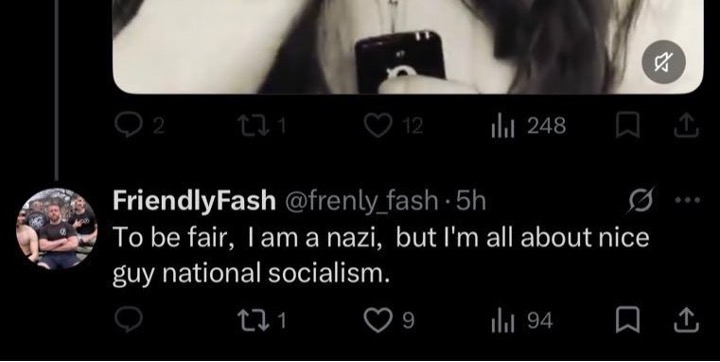
Perhaps that explains the panic that underscored his effort to discredit me, rather than the story itself. The latter would have proven difficult to do, particularly given Beauvais-Macdonald was active on X after the article’s release, telling users, “I am a Nazi.”
Instead, Vriend got busy telling the world that I am a “moron” being used by intelligence agencies. There was clearly a conspiracy at hand, he lamented, to... do journalism, I guess?
“If anybody thinks that it's a coincidence that on the same day CBC and The Tyee released these articles, like, I don't, I've got a fucking cow to sell you, I guess. Like that's not a random occurrence. Okay. This is clearly coordinated,” he said, referring to the CBC article on active clubs and my investigation in The Tyee, which were published the same week.
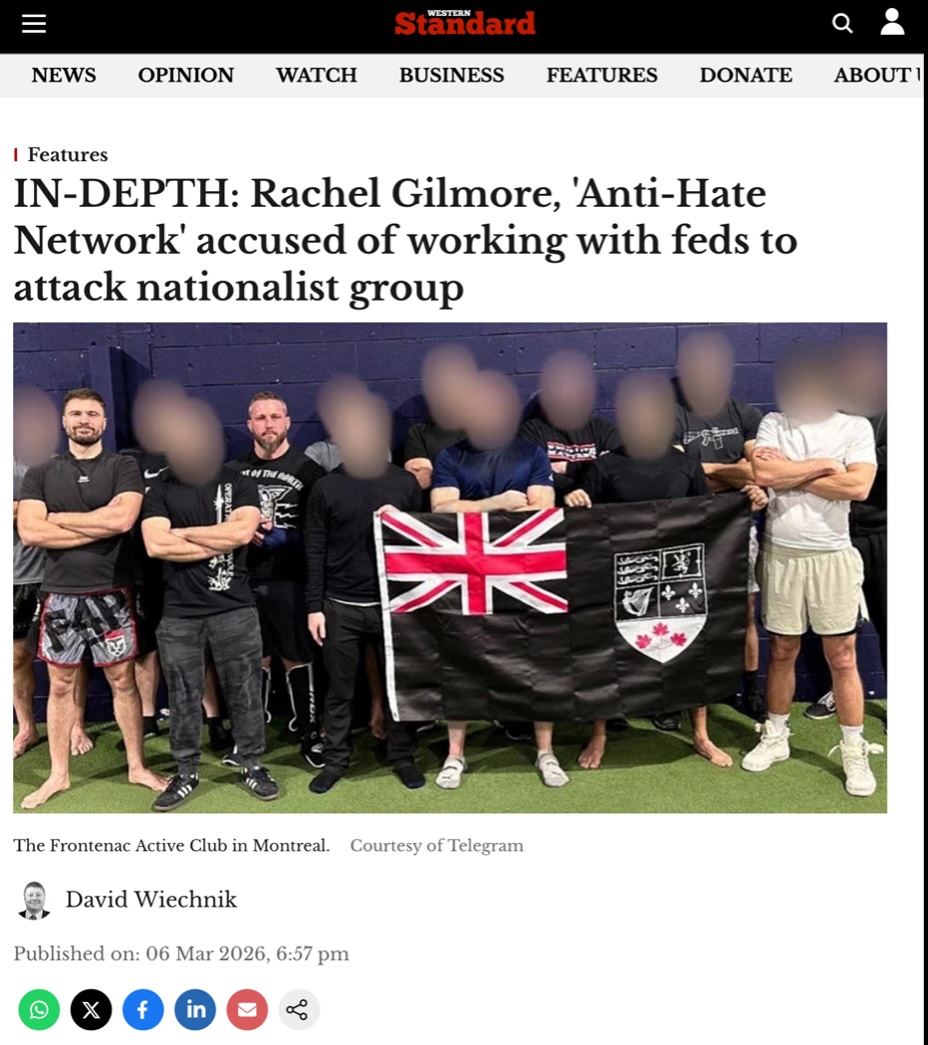
His claims were breathlessly echoed by the Western Standard, a right-wing news site that published an interview with Vriend. The Western Standard’s article didn’t include any information about Vriend’s admitted white nationalism, racist remarks about South Asians and rampant antisemitism. The Western Standard article even left out the “white” part of “white nationalism,” describing active clubs as “nationalist” in its headline.
I can confirm I had no prior knowledge that CBC News was going to publish that piece — but after it was published, I quickly worked my sources to obtain my own copy of that internal government report so I could match the story.
The active club members appeared to be particularly fixated on the fact that The Tyee article started with a tip from a government source, a common occurrence in journalism.
The Tyee independently verified the tip and reported discoveries that went far beyond that initial tidbit of information, including unmasking Zardo’s identity, Beauvais-MacDonald’s involvement, reaching out to the gym to let them know about the information I’d uncovered, and much more. And all of this work was checked and double-checked by no fewer than three experienced editors at The Tyee, as well as their media lawyer.
Still, in a further attempt to diminish my capabilities rather than the contents of the reporting itself, Vriend tried to falsely credit the entirety of the investigation to this single government tip.
“The weeks of painstaking research that she's talking about, were probably her verifying, you know, the information that she was already given,” he said.
“It sounds like she was basically given what she needs to actually do the work and then she just had to verify it.”
The Second Sons Canada social media account went on to create a video with a cartoon likeness of me with a substance dripping from my chin. The video, which they posted across social media platforms, shows an animated male government agent having intercourse with me.
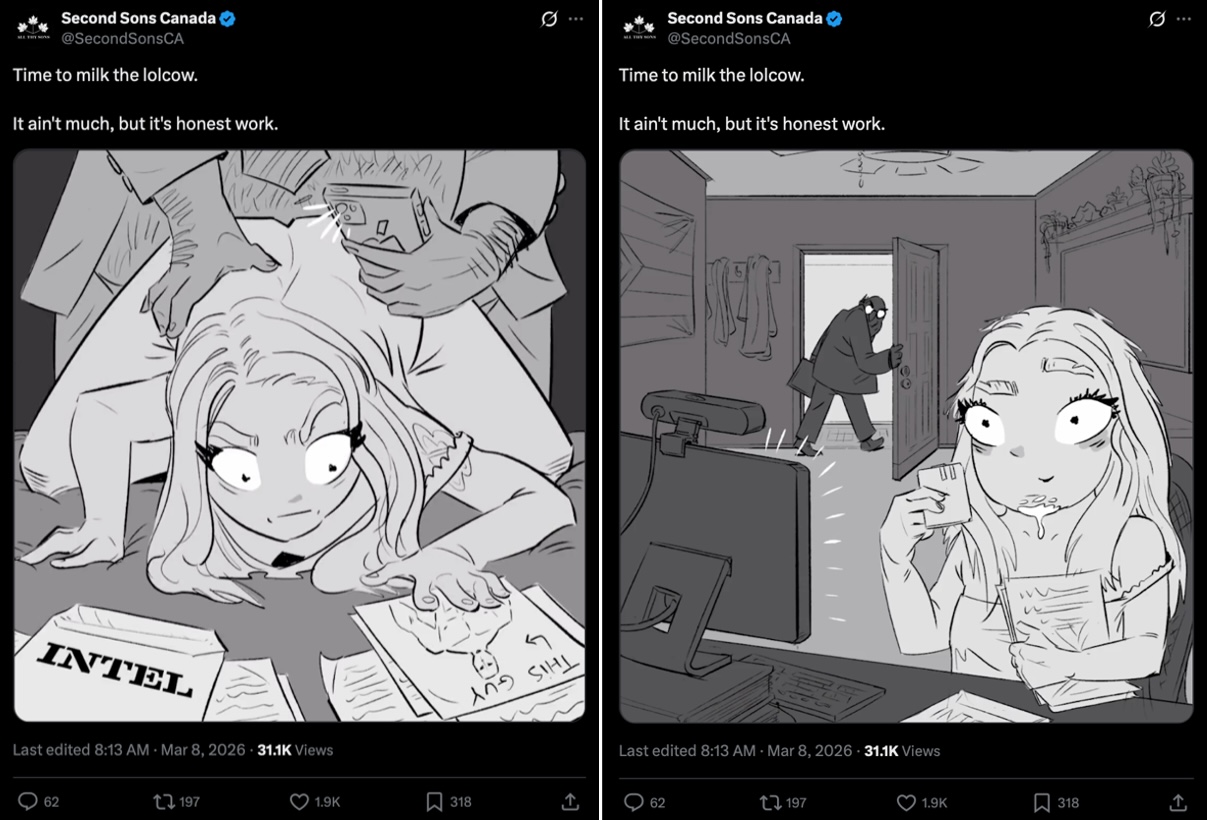
That was just one of many images these groups and their supporters shared to sexualize and attack me, rather than try to contradict my work.
[Editor’s note: While these images are distressing, the author of this story told The Tyee the public interest in making readers aware of the scale of harassment outweighs her personal discomfort with the non-consensual images. We have published the images with her consent.]
Discrediting the journalist, not the journalism
Here’s an important thing to know about these personal attacks.
They’re building on the groundwork of long-standing efforts, largely from right-wing voices, to discredit me and paint me as an “unserious” influencer rather than a trained journalist.
When hordes of X accounts portray corrections or updates to a story I’ve issued as evidence of my poor professional capabilities, despite them being well within the norm of any responsible journalist, it makes me more vulnerable.
When those same voices relentlessly repeat the falsehood that I’ve been fired multiple times, when I’ve only ever been laid off with full severance (a common practice in my industry), it makes me more vulnerable.
When institutions like CTV suddenly never book me again following bad-faith campaigns to disparage my work, citing a “distraction,” it makes me more vulnerable.
When Conservative MPs frame my words of concern about far-right threats as me being “twisted,” or their staff baselessly characterize me as a disgraced disinformation peddler, it makes me more vulnerable.
Now, as I face real neo-Nazis showing up to intimidate me in person, large social media accounts are characterizing me as someone who deserved it.
If one of us can be discredited and have harassment against us justified because we pissed off too many people with our work, that is an attack on all of us as journalists.
The battle in the court of public opinion
These attacks swirled through my mind as I waited for press freedom organizations and professional associations to say something after the intimidation, which had been widely shared on several social media platforms.
But as the silence drew out, I worried. Had the attacks finally worked? Had they beaten down my reputation sufficiently that I was now an imperfect victim, unworthy of professional protection?
I made a video asking that question, and immediately, several press freedom and journalistic institutions reached out, including the Canadian Association of Journalists.
“Public service journalism is a critical component of building robust and resilient democratic societies,” said Brent Jolly, the association’s president.
“What happened to Rachel was an abhorrent act of intimidation. Threatening any journalist for reporting fearlessly, and in the public’s interest, is a threat to freedom itself.”
Even some vocal right-wing voices spoke out about the incident.
“The guys who confronted her literally had SS Death Head patches on their coats,” wrote Wyatt Claypool, the communications director for OneBC, a far-right provincial party.
“I’m no Gilmore fan but she isn’t lying about these particular people being neo-Nazis.”
Still, Claypool couldn’t resist referencing the widely believed, false smears about my work.
“Gilmore will go from calling out actual Nazis to claiming a regular conservative guy is a fascist,” he wrote, even though I’ve never done that.
“This is why nobody takes her seriously even when she’s trying to call out genuinely awful people.”
Challenging white nationalist narratives
Highly public moments like this are key for these white nationalist groups, who have been open about their desire to shift what’s seen as acceptable discourse in our society.
Speaking in another X Space on Dec. 3, Vriend displayed all the strategic prowess of a villain in a bad movie, monologuing about the group’s key weakness to anyone listening.
“In my experience, the much more threatening element is actually non-state actors. So it’s the [Canadian Anti-Hate Network], the CBC, random Antifa... they will do much more damage to your life for being part of an organization like this than the police will,” he explained.
“And the reason for that is because you're not doing anything illegal. So it's only social pressures or cultural pressures that really do a lot of damage to people who take part in this.”
His comments suggest the inverse is also true: that if social or cultural pressures change, these men become less vulnerable to facing consequences for their beliefs.
That’s why it’s so dangerous when the media industry backs away from journalists working on this beat after they face years of baseless attacks and smears, raising the professional and personal cost of reporting on this beat.
It’s also why it’s so dangerous when influencers and news outlets don’t put these groups in proper context — something that also played out in the wake of my active club investigation.
Mario Zelaya, a prominent right-wing influencer, was invited to the Conservative party convention in late January. He’s also boasted about the personal phone call he received from Conservative Leader Pierre Poilievre after the last federal election “simply to say thank you for educating Canadians.”
Zelaya shared a video I made in the wake of harassment for this reporting, after the two white nationalists had shown up to intimidate me in person for my work.
“Rachel Gilmore, crumbles under the weight of her own actions,” he wrote. “Earlier this week, she labelled 2 men as Neo-Nazis & made a video. She said having them ‘intimidate’ her caused her to ‘crack.’”
Beauvais-MacDonald posted on social media since I published the investigation, saying, “I am a Nazi.” The two men are members of a white nationalist active club.
To characterize an attempt to intimidate a journalist for reporting those realities as “the weight of [my] own actions” is victim blaming. Worse, diminishing a self-described Nazi as being “labelled” as such by a journalist, with no further context, could leave a reader with the suggestion it might be a false label.
In addition to this, the Western Standard piece — which echoed the conspiracy from Vriend about some co-ordinated effort to, um, do journalism — attempted to diminish the reporting itself, and failed to provide crucial context about what Vriend has stated as his own beliefs.
By neglecting to include any context about Vriend’s own extreme and racist statements, the right-wing news site effectively laundered the purpose of his organization, Second Sons Canada.
“No active clubs advocate for the use of violence. The whole point of them is to provide productive outlets for the dissatisfaction that men have with the current state of society, and we do not engage in violent behaviour because that doesn’t benefit us,” Vriend told the Western Standard.
In fact, Vriend has previously stated that when the movement is “done taking back our own countries [from people of Indian descent],” he would like to travel to India “to finish the job the British should have done,” as Indians “don’t deserve to exist.”
These softened narratives add up, and they risk downplaying these groups in the eyes of the public or, worse, in the perception of potential recruits.
That’s why reporting the truth of what they say and do is so important — and why these men fight so hard to stop that from happening.
But I won’t stop. ![[Tyee]](https://thetyee.ca/design-article.thetyee.ca/ui/img/yellowblob.png)