
I recently reread “The Curse of Xanadu” by Gary Wolf, published in Wired in June 1995. Gary is a friend, and he wrote the piece when we were both editors at the magazine. To me, it is one of the great pieces of tech journalism. I’ve read it several times over the years, and it gets better with age.
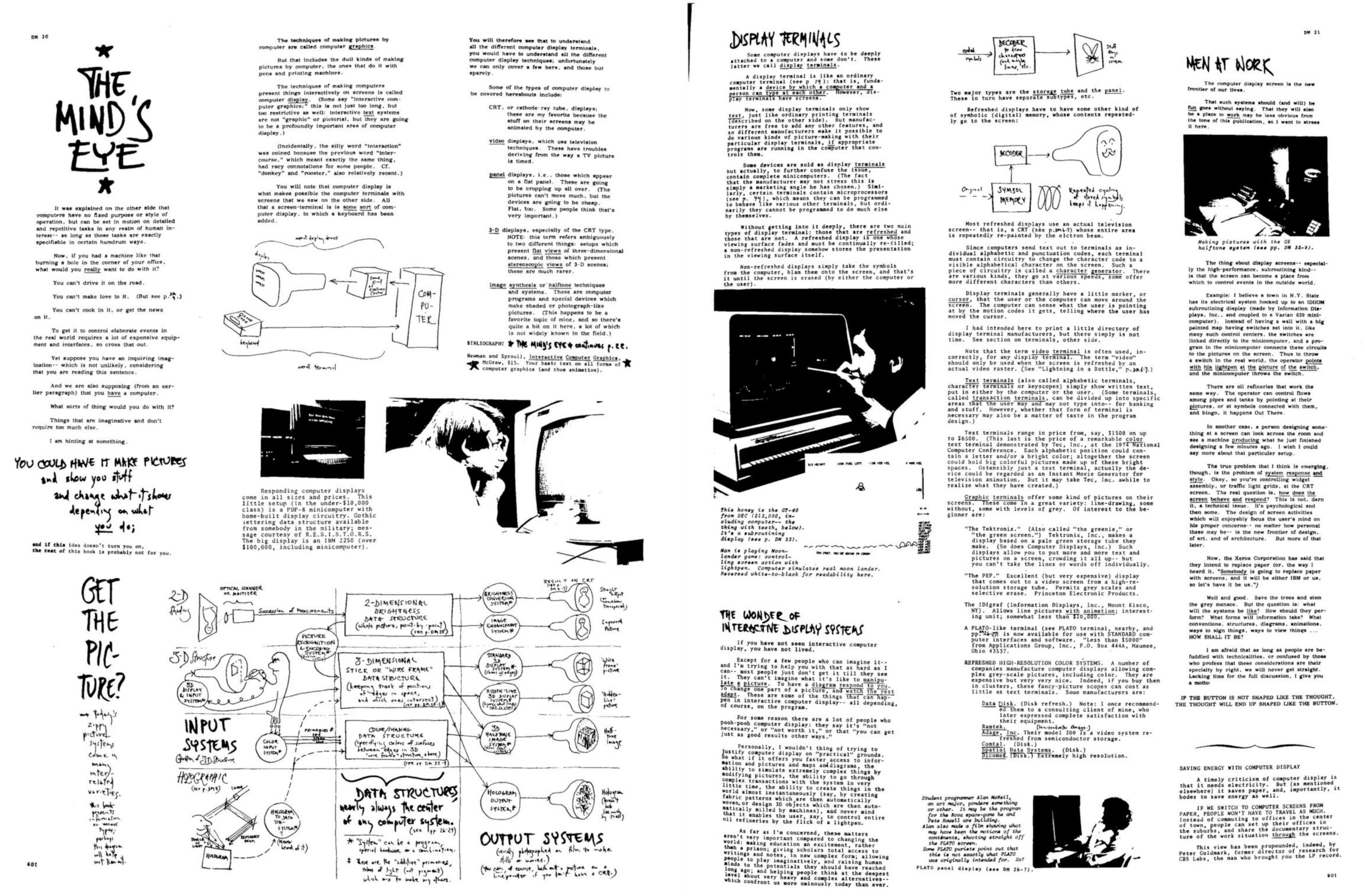
Gary’s article tells the story of Ted Nelson, one of the most interesting and frustrating figures in the history of computing. Born in 1937, Nelson is the son of director Ralph Nelson and Oscar-winning actress Celeste Holm. He coined the words “hypertext” and “hypermedia” in 1965. In 1974, Nelson self-published Computer Lib/Dream Machines, an oversized, hand-scrawled book modeled on Stewart Brand’s Whole Earth Catalog, which argued that ordinary people could and must understand computers. Steven Levy called it “the bible of the hacker dream.” It came out just before the Altair kit appeared, making it one of the first major books about personal computing.
Nelson is also a genuine eccentric. Gary describes him stuffing his many-pocketed clothes with recording devices and notebooks, clipping whatever didn’t fit to his belt. He lived on a houseboat in Sausalito. He called his ADHD “hummingbird mind,” dismissing the clinical term as something invented by “regularity chauvinists.” He developed his life philosophy in seventh grade: “most people are fools, most authority is malignant, God does not exist, and everything is wrong.”
In 1960, Nelson started work on Project Xanadu, a universal hypertext library he named after the palace in Coleridge’s “Kubla Khan.” Xanadu was going to be the system that connected all human knowledge. And the tragedy is that it had several features the World Wide Web still doesn’t have, more than 30 years later. Xanadu had two-way links, so if someone linked to your document, you’d know about it and could follow the link back. It had “transclusion,” which let you embed a live excerpt from someone else’s document that stayed connected to the source, so attribution was automatic. It had built-in micropayments: reading a page would send a tiny fee to the author. No broken links, because the system managed them. Version tracking for every document. Nelson’s team explicitly rejected the Web’s model, saying it “trivialises our original hypertext model with one-way ever-breaking links.”