Written between January 2025 and 2026. An autofictional account.
I remember the moment the green light washed over us. Standing in the crowd at the Paramount Theatre, watching that lime banner descend: “brat” in austere Arial font. The choice was deliberate: Pantone 3507C, selected after examining 500 shades, meant to provoke discomfort. The text, neither small and tasteful nor large and loud, achieved what the designer called an “opinion-less” aesthetic.
But in that moment, before everything that would follow, before the campaign co-option and the hollow summer of 2024 that stretched ahead, there was just the sensation of being part of something. The crowd’s energy, the shared recognition, the feeling that we were witnessing the birth of a new cultural marker.
The color filled the space, reflecting off sweat-slicked bodies. Charli knew what she was doing (or thought she did). In interviews she’d explained wanting to “trigger the idea of something being wrong.” To question our expectations of pop culture. But there’s a difference between triggering discomfort and understanding what that discomfort might unleash.
I took photos that night, like everyone did. It wasn’t until later, scrolling through my camera roll, that another image surfaced in my mind. Another banner, another crowd, another aesthetic strategy of mass coordination. As someone who has walked through the lands of terror, the visual rhyme was impossible to ignore.
But I’m getting ahead of myself. Let me stay with that first night, with what it meant to be there before we knew what summer would bring...
Before the word “brat” became a political signal, before Kamala’s team stripped it for parts, before the nihilism revealed itself, there was this: a crowd of bodies moving together, awash in that sickly green light. The bass vibrating through collective flesh. A sense of recognition passing between us—queer kids, club rats, terminally online millennials who’d followed Charli from “I Love It” through hyperpop to whatever this new iteration promised to be.
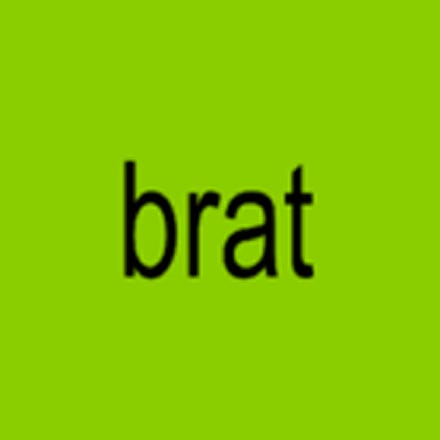
The font choice haunted me even then. Arial—the system default, the no-choice choice. The designer would later reveal they’d considered various Swiss typefaces, wanting to transcend Helvetica. But Arial carries its own history: Monotype’s deliberate clone of Helvetica, loaded onto every Windows machine for a spell, the corporate appropriation of modernist clarity. Even here, in this moment of supposed transgression, we were swimming in layers of reproduction and simulation.
Standing there in the Paramount, I couldn’t help but analyze the infrastructure of the moment: the way the lighting rigs shaped our attention, how the sound system moved our bodies, how the merch tables channeled our desire into transaction.
The crowd pressed closer as the banner descended further. I whispered to someone next to me “it’s giving fascist...” and they laughed, unsure. That’s the thing about aesthetic strategies, they carry histories we might not want to acknowledge, patterns we’d rather not see. Fred Turner wrote about how mid-century American artists developed new techniques specifically to counter fascist spectacle. But those techniques, divorced from their original context and intent, can drift into unexpected territories.
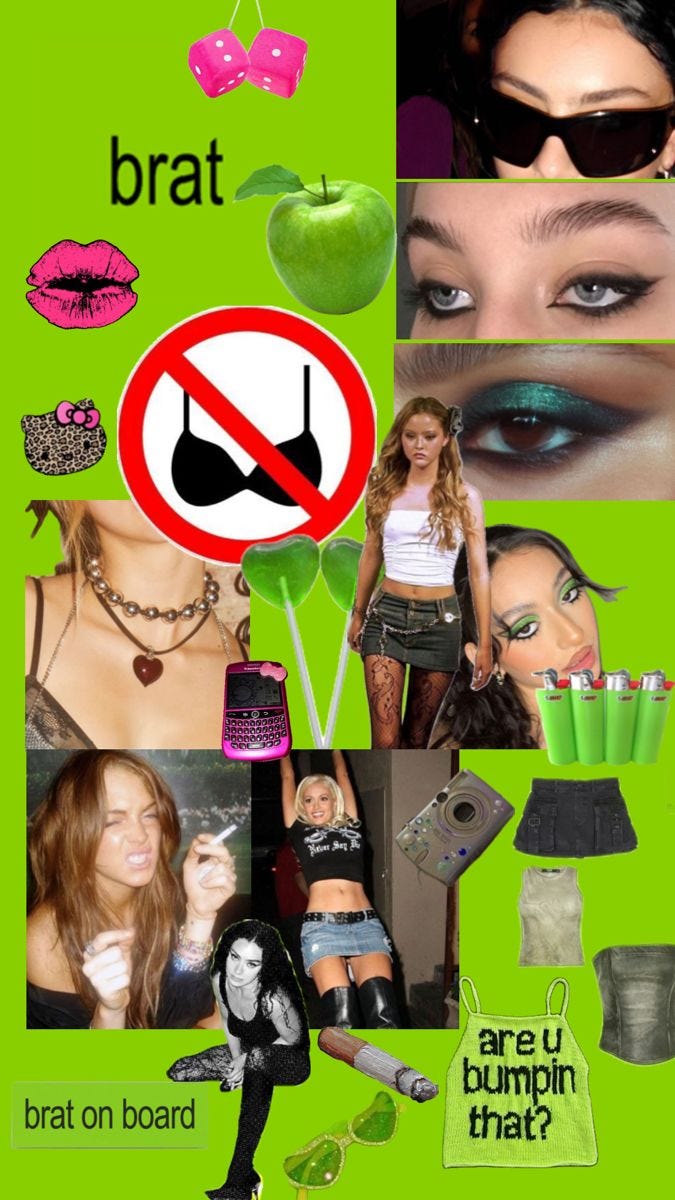
I checked my phone, scrolled through the flood of Instagram stories already accumulating. The green square was multiplying, replicating across networks, each reproduction carrying less and less of whatever meaning it might have originally held. Everyone wanted to be part of something. Everyone wanted to show they were there.
But where were we, really? And what were we becoming part of?
The green squares spread across my feed with an eerie familiarity. We’d been here before, summer 2020, when Instagram turned solid black in what was meant to be solidarity but became, for many, an empty gesture of performative allyship. Now here we were again, four years later, watching another color sweep across social media, another minimal square carrying maximum symbolic weight.
But where the black squares at least gestured toward political engagement, however superficial, the green squares of Brat summer seemed to revel in their own emptiness. The designer’s “opinion-less” aesthetic became a perfect vehicle for an era of political exhaustion. After years of crisis, of protest, of trying to make our online performances match our offline convictions, here was an aesthetic that promised release from meaning itself.
I watched friends who had once posted earnest black squares now embrace the green void. The shift felt significant: from performative care to performed carelessness. From “silence is violence” to what? Silence is relief? Silence is surrender? The green square offered absolution from the burden of having to mean anything at all.
There’s something almost unbearable about watching it happen again. The way our networks—the very ones we used to coordinate mutual aid, to share protest tactics, to keep each other alive through pandemic and uprising—become channels for the spread of meaninglessness. I don't say this because I was above it. I streamed Brat on repeat in 2024. I felt the pull. The relief of surrendering to pure aesthetic experience, pure sensation without responsibility.
But I carry other sensations too. The weight in my chest walking through Auschwitz. The way certain images imprint themselves on your body, become part of how you move through the world. The visceral understanding that aesthetic strategies aren’t neutral, that ways of coordinating bodies in space have histories, have consequences.
Now it’s 2026 and Brown Coats are patrolling our streets, heedlessly seizing and annihilating bodies. Charli was undeniably tapped into (and shaping) the cultural undercurrents of the politically decisive summer of 2024, but was she also prescient? History echoes forwards and backwards, even if unintended.
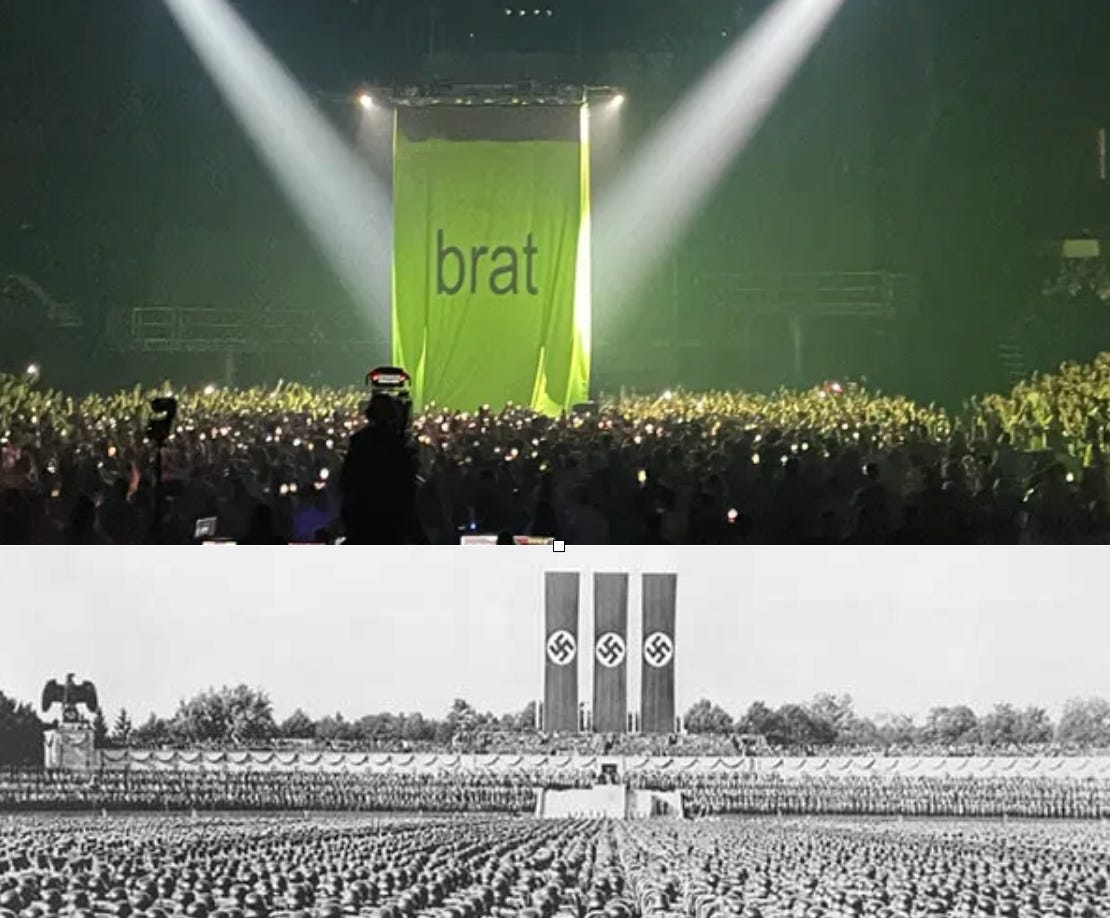
To be clear, the visual juxtaposition is not to suggest Charli’s politics, but rather how aesthetic form echoes across history. Here was Brat summer, revealing something: our capacity for collective amnesia, for turning political exhaustion into party culture, for finding freedom in forgetting. All during the most decisive political summer of our generation.
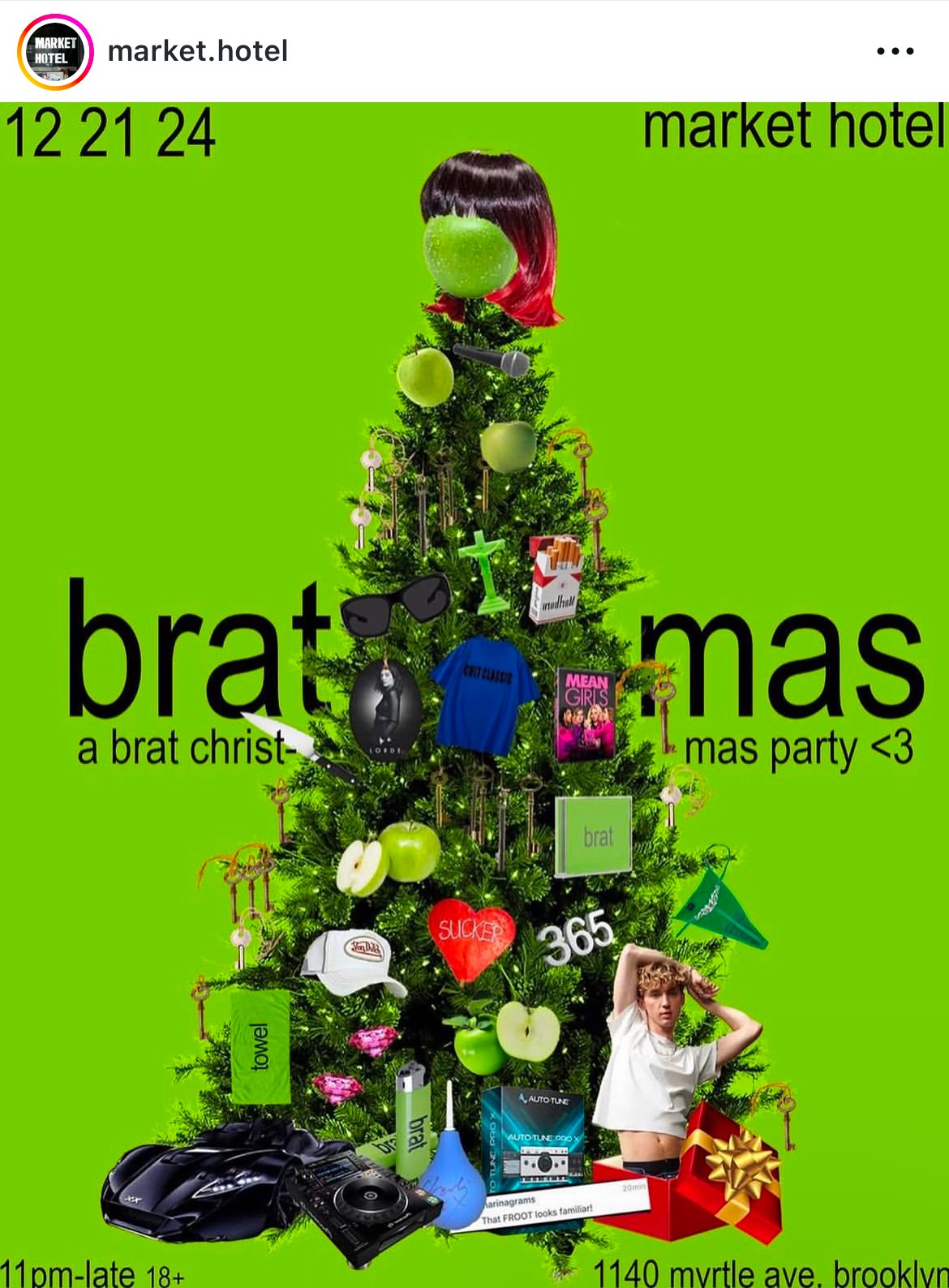
I watched my queer friends embrace the bratty aesthetic with an enthusiasm that low key broke my heart. We who had once built networks of survival, who had learned to care for each other when no one else would… Now we were letting that energy be channeled into what? A summer of green squares and empty gestures? The aesthetics of resistance without the practice of it?
The footage is still online: Charli at Boiler Room, jaw swinging, premiering snippets of what would become Brat. A moment of unvarnished reality cutting through the careful curation. Not that it was ever really hidden. The coke references pepper her lyrics, the after-parties are iconic, she’s made her chemical play part of her brand. are u bumpin’ that? An aesthetic machine: the “brat” persona.
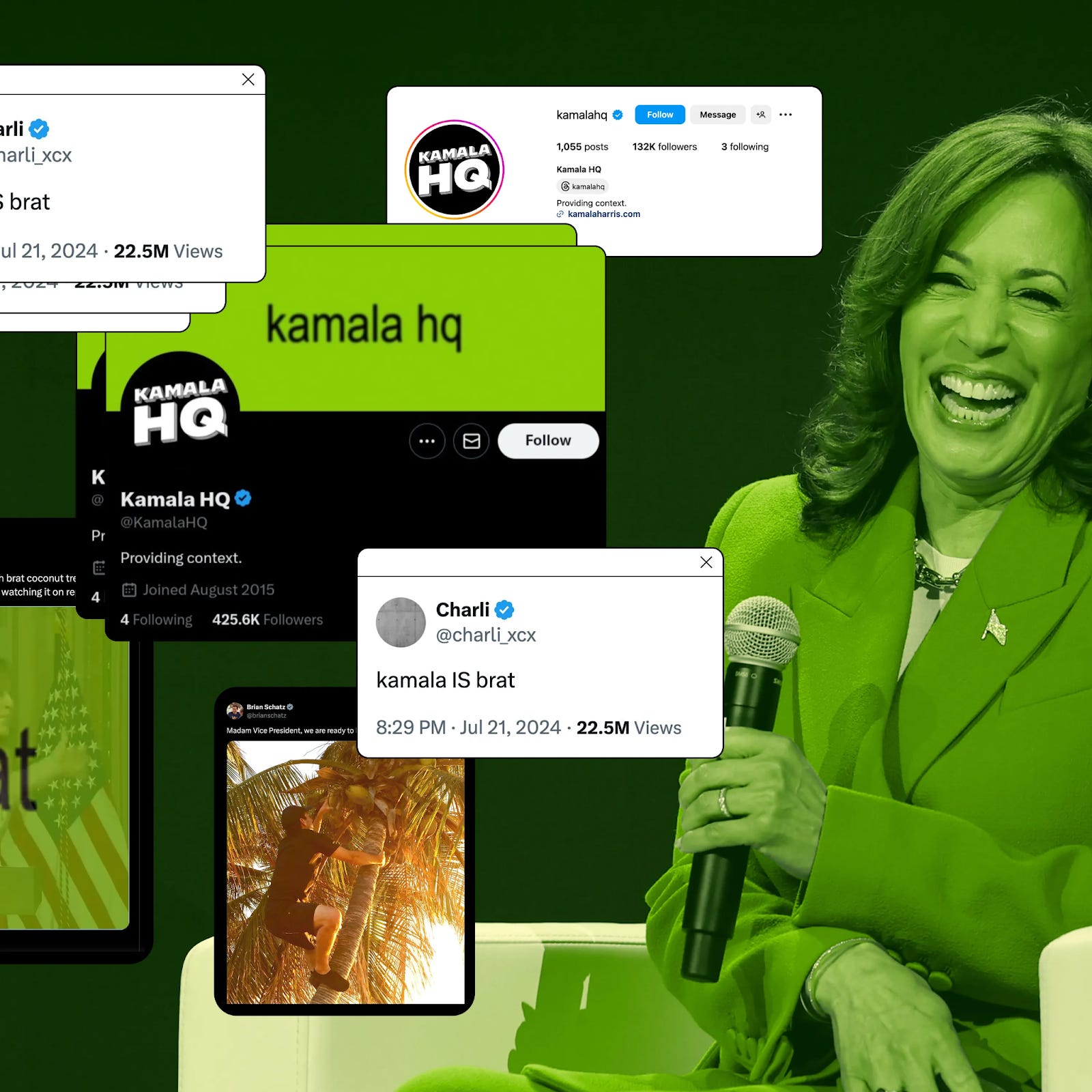
Which makes the Kamala campaign’s embrace all the more bewildering. Did no one on Harris’s team watch the Boiler Room set? Did they not see how the nihilism wasn’t just aesthetic but embodied? Or did they see and simply not care… assuming their target audience wouldn’t care either? There’s something revealing in that calculation: banking on voter apathy, on the assumption that style matters more than substance.
Really? Who was that gesture for? And who did it alienate?
Perhaps Momala’s millennial staffers thought they were leaning into something transgressive, edgy. A way to shed Kamala’s “cop” image, to signal some kind of countercultural credibility. But they missed the point entirely. Charli’s escapism is not just transgressive, it’s a symptom. A very particular kind of dissociative checking out, a way of managing (or not managing) the same political exhaustion that would eventually help sink the campaign.
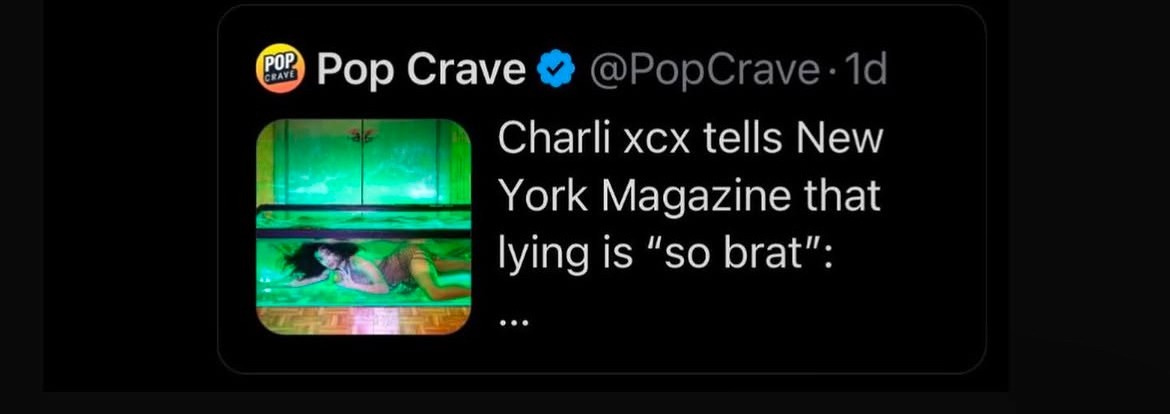
It’s January 2026 now. Brat Summer is mostly a memory. But the escapism and political paralysis of a generation? That seemed to stick around. The White House is threatening to invoke the insurrection act, sic unaccountable troopers onto California and New York, next. Some analysts are warning of a trans genocide on the horizon. What is the role of artists we cherish in this extremely difficult and uncertain moment?
In times like these I look to my heroes. Artists who use their voice and talent to directly intervene in impossible political moments. Nigerian multi-instrumentalist and political activist Fela Kuti immediately comes to mind.
Wikipedia tells of his story and activism succinctly:
[Kuti] shot to stardom in Nigeria during the 1970s, during which [he] was an outspoken critic and target of Nigeria’s military juntas. In 1970, he founded the Kalakuta Republic commune, which declared itself independent from military rule. The commune was destroyed in a 1978 army raid that injured Kuti and his mother, the latter fatally. He was jailed by the government of Muhammadu Buhari in 1984, but released after 20 months.
But really? You have to listen:
If you fight am, unless you wan die (water, you no get enemy)
I say water no get enemy (water, you no get enemy)
If you fight am, unless you wan die (water, you no get enemy)
Them go be:
Friend friend to journalist
Friend friend to Commissioner
Friend friend to Permanent Secretary
Friend friend to Minister
Friend friend to Head of StateThen start start to steal money
Start start them corruption
Start start them inflation
Start start them oppression
Start start them confusion
Start start them oppression
Start start to steal money
Start start to steal money
Listen. We need more Felas.