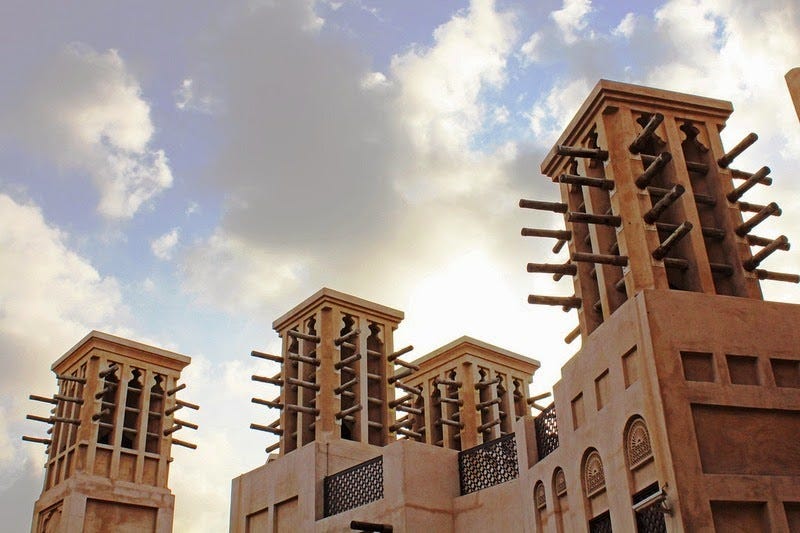
With the United States and Israel waging a vile imperialist war against Iran, I wanted to take a moment to highlight some of the brilliant low-tech innovation that makes Iranian engineering so impressive.
I’ll just touch on three items items here, but rest assured, a thorough accounting of this subject could easily fill a library. Iran’s history of low-tech innovation is so deep and so valuable--with so many important contemporary applications--that it deserves far more discussion than I can give it. But hopefully this sparks your curiosity and sends you down the rabbit hole.
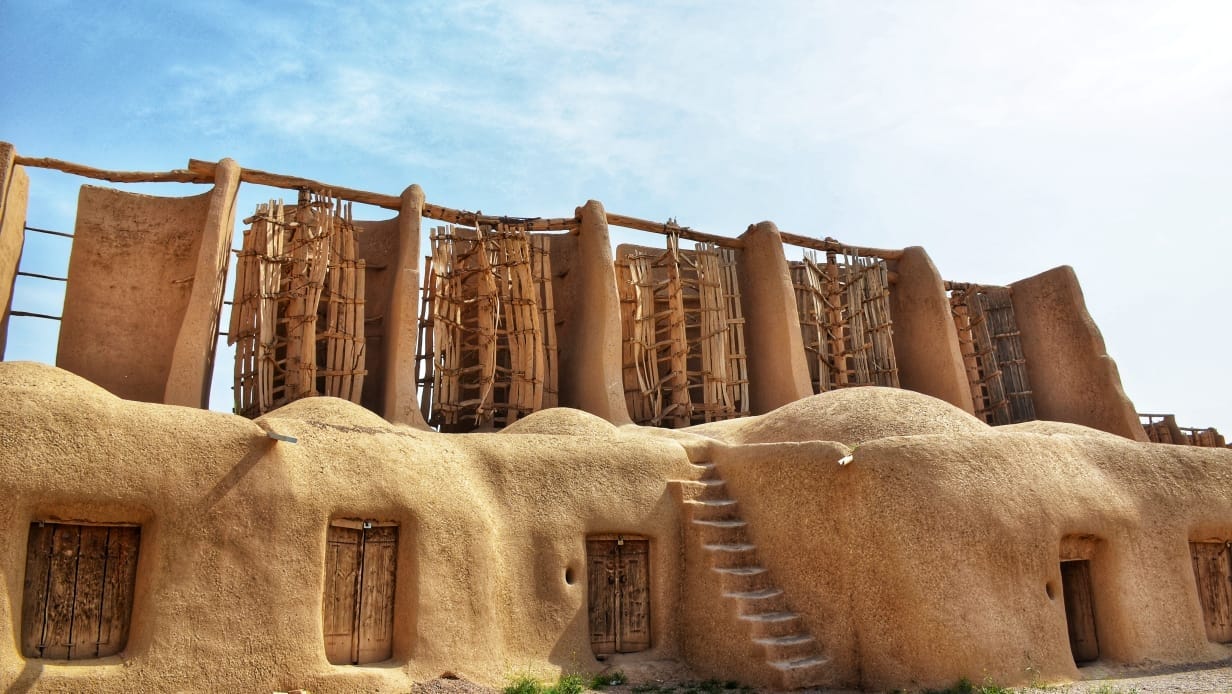
These vertical axis windmills have been grinding grain in the northeast of Iran for over a 1,000 years (and before that, the design was used to pump water, perhaps via a screw pump). They represent multiple layers of low-tech genius:
The vertical axis orientation means that gears aren’t required to convert the turbine’s motion into usable mechanical energy. Thus: fewer moving parts, less wear and tear, more direct energy transfer.
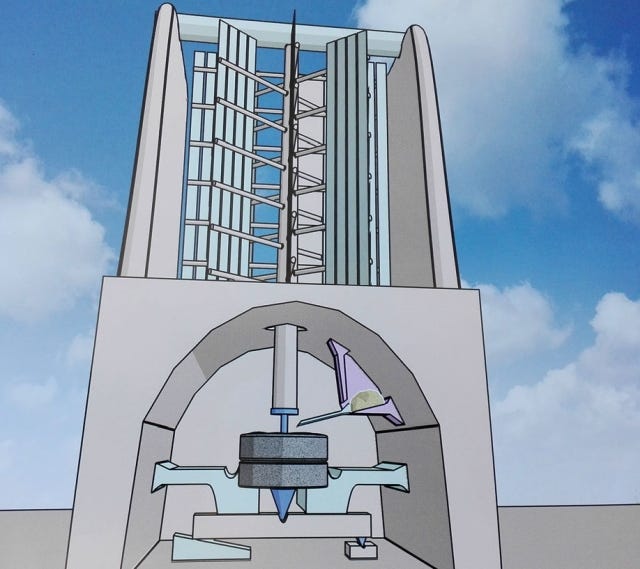
The entire structure is made from cob (clay, sand, and straw) and wood. Everything is found on site. This means that it’s easily repaired, doesn’t rely on long-distance supply chains, needs no high-energy inputs, and can melt back into the Earth without harm, if needed.
The design of the structure around the windmills acts as a funnel, directing the winds into the turbine blades. The sculptural quality of cob makes the smooth surfaces possible, minimizing drag and maximizing airflow.
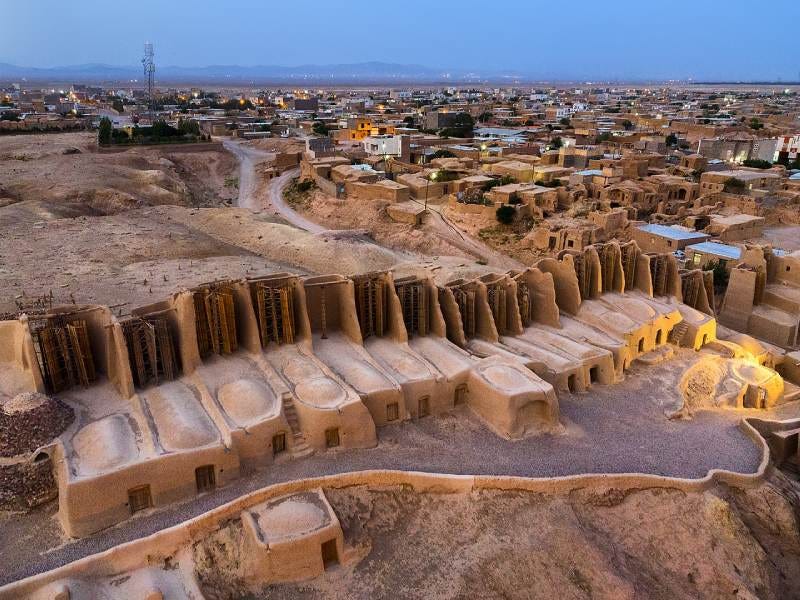
Lastly, the Nashtifan windmills are an example of magnificent passive design: built in a long line at the top of a hill overlooking the village, they serve as a functional windbreak, protecting the village by slowing the wind while converting it into usable mechanical energy. If you were to plant trees as a windbreak, they would be arranged in exactly the same manner as the Nashtifan windmills.
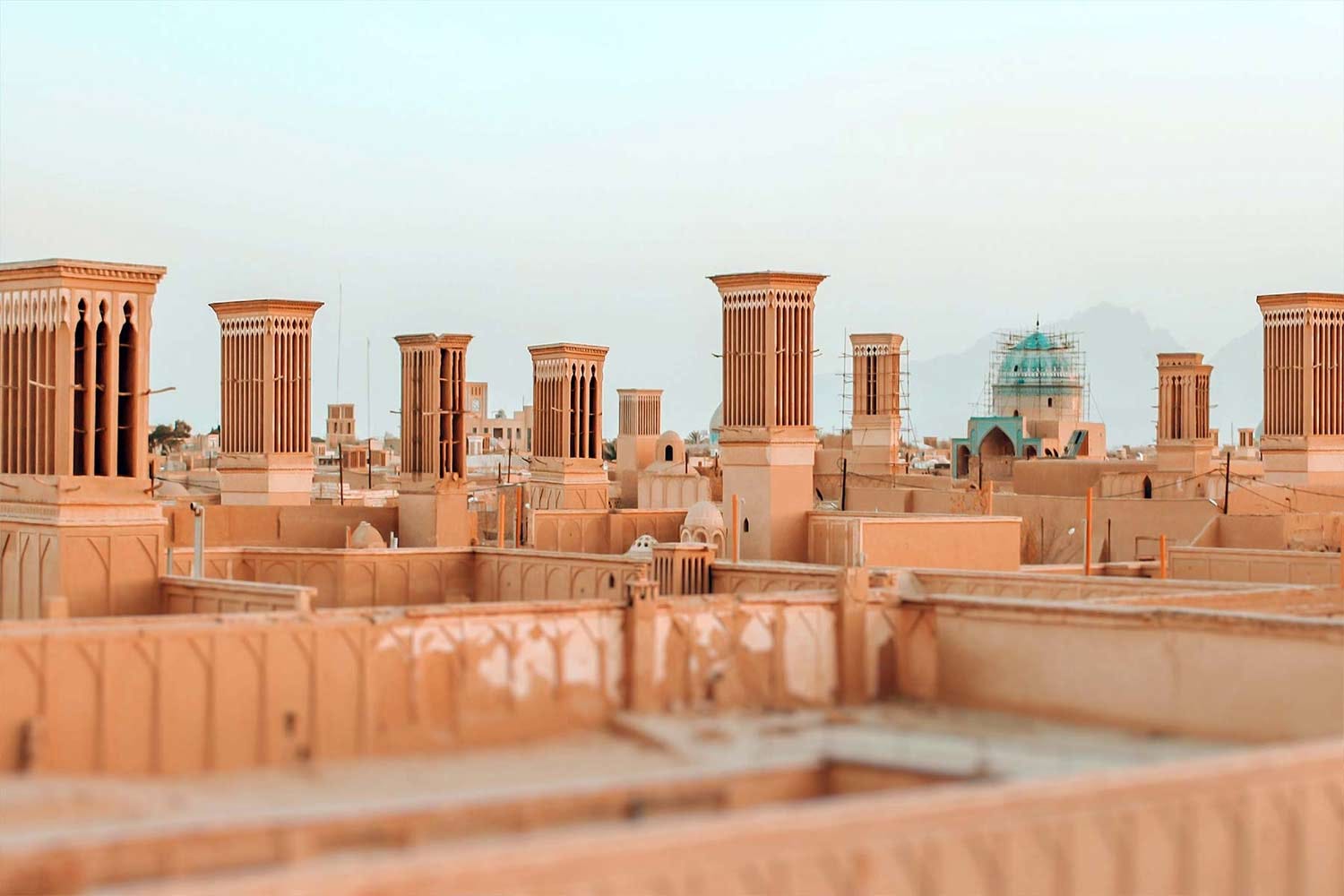
There are few more pressing technological needs than finding ways to stay cool on a warming planet. Fortunately, Iran has been solving this problem for millennia, utilizing a whole host of marvelous solutions.
One of the most visible are windcatchers: passive cooling towers that can lower indoor temperatures by 18-27°F, even when it’s over 100°F outside. That’s up to 9.6 kW of cooling power (25-30 solar panels worth)!
They do this by directing upper level winds down a chimney-like structure, allowing it to flow through the building below. The structure itself further cools the air due to the high thermal mass of its cob or adobe construction, which acts as a cold thermal battery, allowing it to exchange heat during the day.
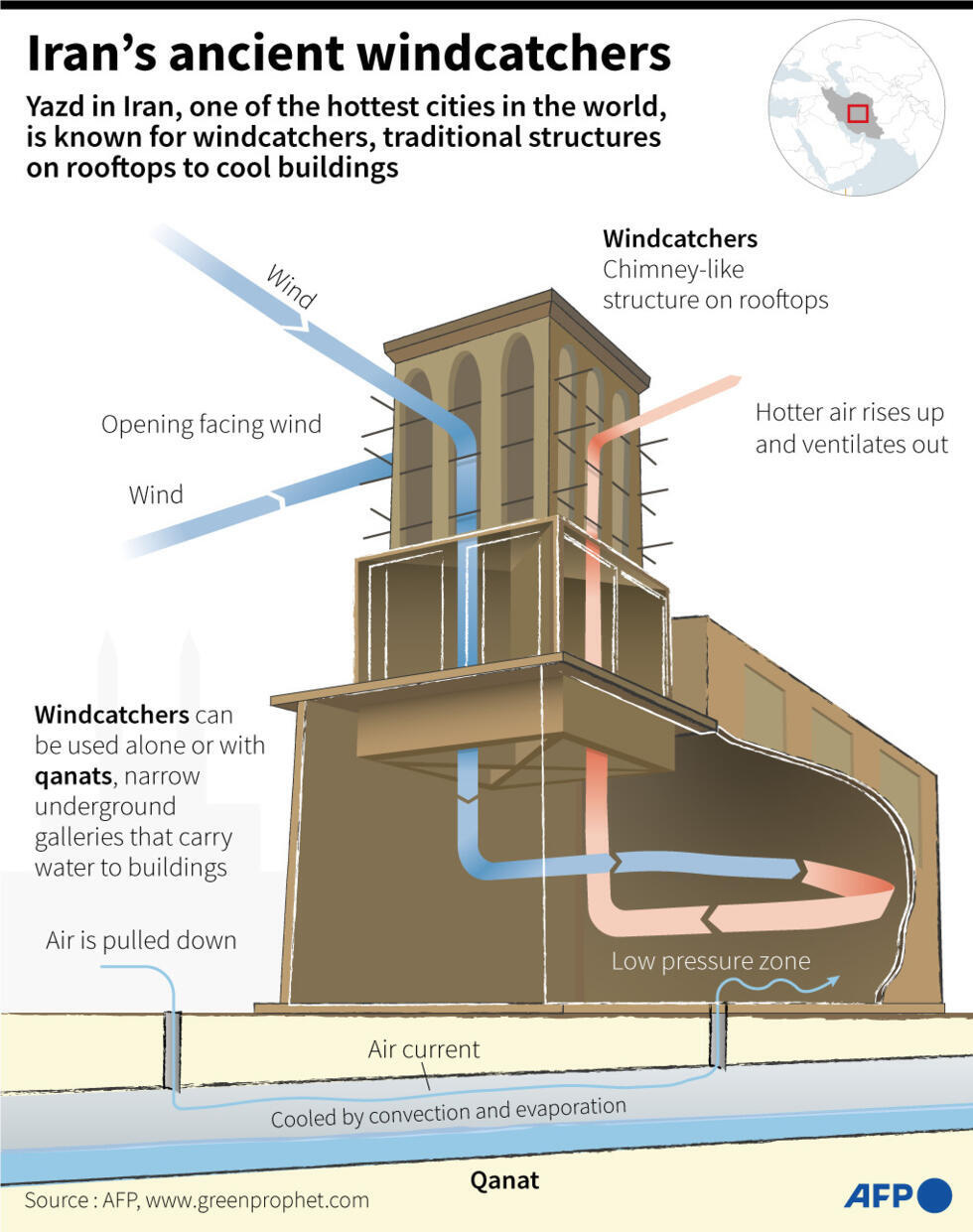
And to add another layer of genius, the down vent is often located over a body of water, such as a courtyard fountain or a qanat (underground aqueduct), creating an evaporative cooling effect. These innovations combined create a totally passive, zero input air conditioner in a broiling hot climate.
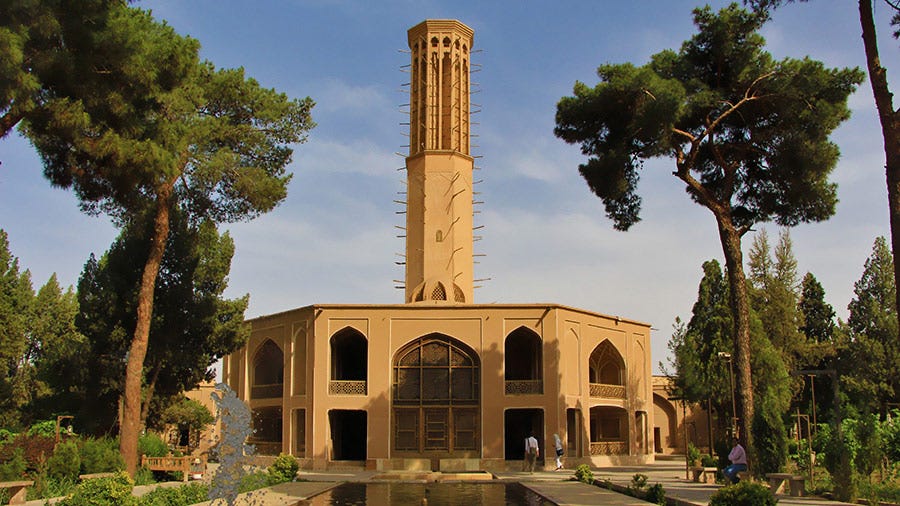
But what if the wind isn’t blowing? They still provide a cooling benefit by venting warm air upwards, creating suction via the temperature differential between the top of the windcatcher and the building below. This is called a solar chimney, and it allows the windcatcher to move air in both directions, all without a fan!
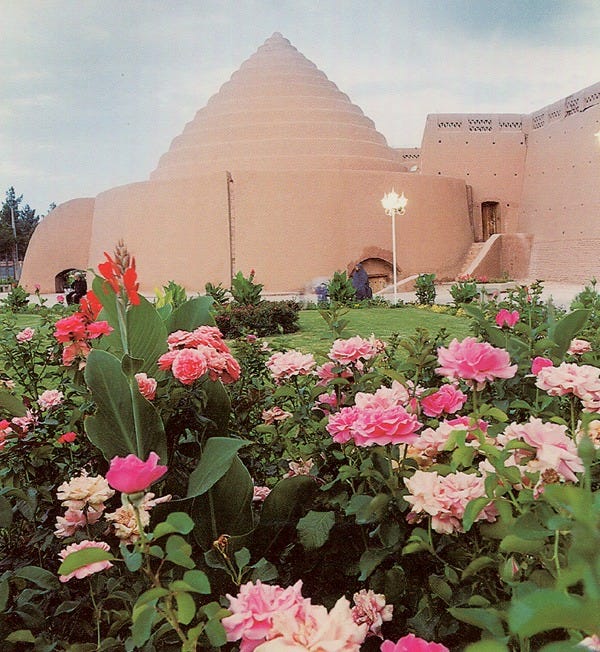
Similar principles used to make the windcatcher such an efficient marvel are applied here for refrigeration and even ice-making in the scorching desert.
A large dome tapering into a small conical opening functions as a solar chimney, cooling the interior space via a convection current created by openings at the bottom of the structure.
As with the windcatcher, the cooling power of those openings is often enhanced either by locating them above a qanat (to get a sense of how powerful this can be, go sit by a cool, shady stream on a hot day) or next to a small body of water, thus taking advantage of evaporative cooling.
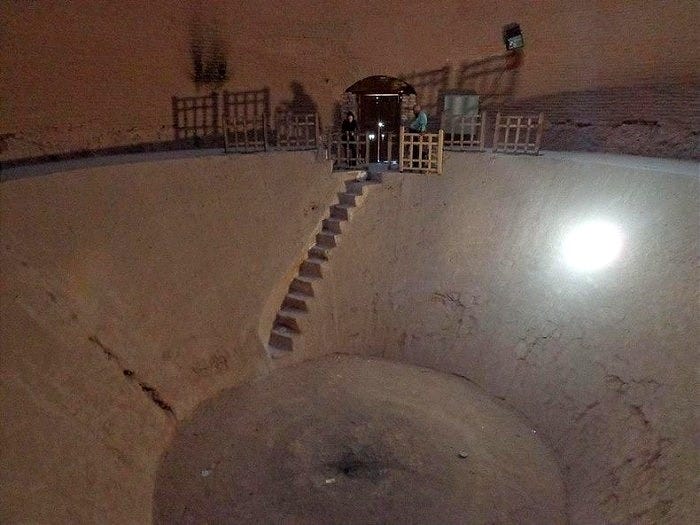
The chilled air flows into the structure over a pit dug in the center of the dome. At a depth of 10-30 feet, the ground maintains a constant temperature of 50-60°F (the same phenomenon exploited by ground source heat pumps), while providing near perfect insulation.
The aboveground structure itself helps too: it’s 6ft+ thick earthen walls are a massive thermal battery that cool off at night and slowly exchange their energy during the heat of the day. All of these functions together mean that the pit--sometimes a huge area the size of a 9,000 sq ft warehouse with 20 ft ceilings--gets so cold that it can store ice year round and even manufacture it.
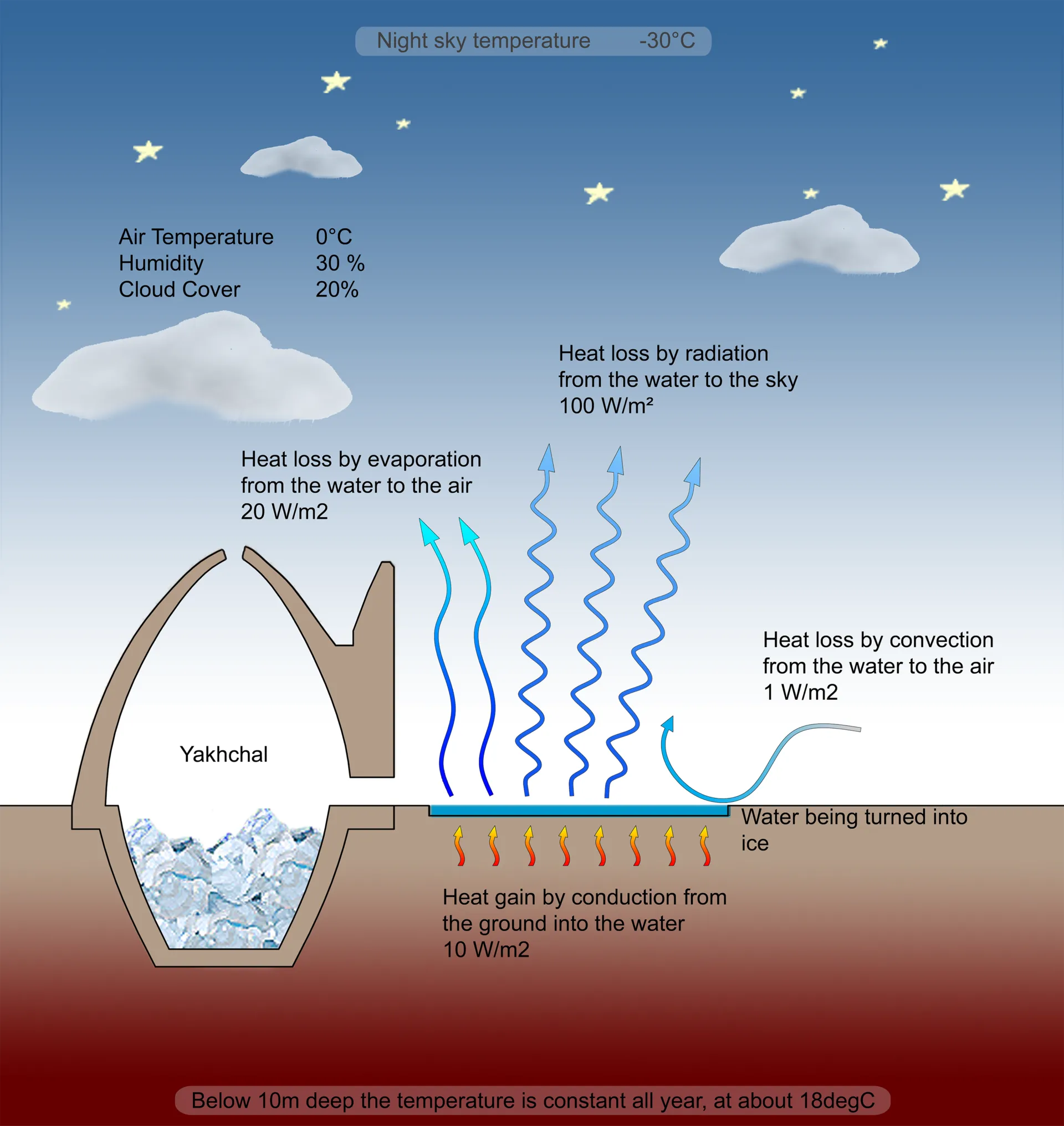
It’s hard to overstate the genius at work here. Yakhchal are large-scale cold storage facilities in the high desert that requires not a single watt of electricity nor drop of fossil fuel. This is precisely the kind of passive, low-tech design we desperately need today.