When I first started Duolingo, I was absolutely amazed. You can learn a language like this? It was so much fun! Then streaks, friends, leaderboards were introduced and 1400 days later (humble brag here), I’m realising that despite my impressive streak, my language skills are not much better than when I first started.
The gamified version of learning, of which Duolingo is an emblem of, is fundamental to the Zeitgeist. Points, badges, streaks and dashboards have moved beyond leisure and into every corner of life: school, work, health, even rest. Duolingo gamified language learning and ended up creating an experience where the actual learning gets swallowed up by the points and the tiers – isn’t this what’s happening in virtually every area of our lives? From education to work, from dating to personal productivity, from wellness to job applications - the list could go on and on and on, but long story short: gamification is everywhere and every company is pushing it, no holds barred.
So, follow me, as I guide you through the scary tale of how the deeply human instinct of play has become the latest thing to be hijacked by a system that only serves itself and how it has fundamentally transformed our lives.
We have all heard about the Homo Sapiens (the wise human), but some philosophers argue that we are in fact Homo Ludens (or at least we should aspire to be) – the playing human. One of my all-time favourite opening lines from any text comes from the essay The Abolition of Work by Bob Black:
“Work is the source of nearly all the misery in the world.”
He finishes his essay with an optimistic image of the workers, liberated from their labour, becoming free to engage in more play-like activities:
“Life will become a game, or rather many games, but not—as it is now—a zero sum game.”
Humans have an inherent desire for play – just put two children down and within five minutes, they will be chasing each other around, making up rules, imagining that the floor is lava, or whatever brilliant nonsense they come up with. Or try playing Catan or Monopoly with your pals and you will lose yourself in it (and potentially lose your friendships too). This desire to play, this nature of us as Homo Ludens, is fundamental to us. Hence why it is something that’s perfect for those who want to profit from hijacking human nature. Today’s gamification doesn’t arise from joy but rather it's engineered from the top down to manipulate attention, extract behaviour, and create docile, self-managed consumer-subjects.
This signals what Foucault would have called internalised surveillance, and what Byung Chul-Han called (in Psychopolitics), the problem with the achievement-subjects. I wrote about this in my article about productivity: while in a factory during the industrial revolutions you would have an overlooker to monitor your performance, now this is turned inwards, we monitor ourselves. As Han put it:
“Today, everyone is an auto-exploiting labourer in his or her own enterprise. People are now master and slave in one.”
This turn from a disciplinary society towards a more self-disciplinary society is also recognisable in how gamification took over everything. There has been a long process from awarding those who a given society deemed worthy and arguably entire societies were centred around the collection of such things, such as honour, renown, fame. These often came with certain perks such as a parade through the city of Rome, privileges where you can wear a certain type of robe, or other perks – a good apartment in a good neighbourhood. These social markers, to some extent, appealed to our desire for an ordered universe (see my article about this here) and these markers signalled our progression on the social ladder.
Hell, the Romans to some extent gamified their entire political structure when they established the cursus honorum, which was the ladder of political offices that one could take, with each ‘level’ bringing different perks and being tied to a specific age. Later, in the Soviet Union, one of my all-time favourite productivity movements prospered, the Stakhanovite movement. This was based on a guy called Stakhanov, who in 1935, mined 102 tons of coal in less than 6 hours which was 14 times his shift quota. The movement took his example and promoted him as the ideal Soviet worker and if you managed to match his achievements (working many, many times more than necessary, just for the glory of the Soviet Union), you received a beautiful badge (and not much else unfortunately.) For one of Stalin’s birthdays in 1948, one of coal factory brigades in Hungary decided to overachieve their quota by something like 500% and then sent a letter describing their achievement to Stalin as a gift. I’m sure he loved it. Anyways, various markers of prestige and achievement have always been parts of human societies – so, what’s wrong today, why is what’s happening now problematic?
My childlike wonder with Duolingo is not unique and in fact, many teachers are now being told that EdTech is what’s going to ‘save’ education in a time when attention spans seem to be falling off a cliff. EdTech sells itself as “fun learning,” but in fact, it risks destroying the very capacity for deep learning. Gamification trains kids to chase dopamine over depth and participation over understanding.
Jonathan Haidt, author of The Anxious Generation, discusses this issue in a podcast. He essentially warns against the danger of EdTech, focusing on how these gamified teaching apps interact with our brain chemistry. Essentially, what these apps (and most apps in general) do, is that they hijack our craving for dopamine (chemicals that make you go “mhhh that’s good”). They give you colourful little badges, a sense of progress, little stars, etc. Maybe even a capybara sticker. Feedback is instant and games surf our dopamine craving waves before we even know what hit us. The problem is, as Anna Lembke warns in her amazing book, Dopamine Nation, is that our brain aims for homeostasis. If we get lots of dopamine, eventually, we become more resistant to it. We then need to increase our input of dopamine not even to feel great but to just not feel like absolute shit. The same as with all other addictive substances too. – While the first cigarette or coffee might be absolutely amazing, with time, you get anxious if you can’t go out for a smoke or you struggle to feel awake if you didn’t have your cup of coffee in the morning.
Turning education into a series of games, each designed in a way to hijack our craving for dopamine, we are reforming our educational structures into places where we create little dopamine addicts. Ted Gioia in his article, What’s Happening to Students? also picks up on this issue, quoting a teacher:
“They live on their phones. And they’re just fed a constant stream of dopamine from the minute their eyes wake up in the morning until they go to sleep at night.
Because they are in a constant state of dopamine withdrawal at school, they behave like addicts. They’re super emotional. The smallest things set them off.”
In the same article, he draws attention to the fact that marginalised communities are harder hit by a decreased ability to learn new things and concentrate and very much what schools are supposed to help them do. Haidt also argues (I highly recommend you subscribe to his Substack, After Babel, if you are interested in this issue) that social media addiction is something that will predominantly affect poorer communities, while more affluent families will be able to afford the luxury to be more offline. This will also mean that while poorer kids will have to do with gamified education, turning into dopamine addicts from a very young age, richer kids will have private tutors who will have sufficient time and energy to nurture their students in a way that’s beneficial for them long-term.
As the educator quoted above argued, being in a constant state of dopamine withdrawal also impacts the kids’ mental health. They essentially burn out even before they start working in the soul-crushing system that is capitalism. The gamification of education also replaces the hard work-worthy reward of previous systems with a cheapened, plastic version (as capitalism so often does).
Also, gamified EdTech apps are often easy to “trick” and kids are brilliant at this. Especially in school, it’s very important to ask ourselves… what is our goal and what is the incentive structure? EdTech’s big problem is the incentive structure (and their goal). Their goal is to keep you engaged and their incentives are just way too easy to cheat. That’s why you can end up having a 1000-day-long Duolingo streak and still only be able to say in Portuguese that your horse has blue hair but loves croissants. Instead of actually learning the language, you focus on getting more points, sustaining your streak and progressing on the leaderboard.
If you know someone who would benefit from reading this - why not send it to them?
But learning is supposed to be difficult. In one of the ancient Norse myths, Odin gives one of his eyes for wisdom and knowledge and in a previous article I wrote how genuinely new knowledge is never meant to be comfortable and learning is supposed to be difficult.
If gamified education takes over, the whole point of education shifts, unnoticed but in a profound way. It changes from something that is supposed to introduce the world, induce curiosity, nurture independence and critical thinking into a sedative, where we pump the children full of fake rewards and cheap dopamine, so that they don’t turn to TikTok and we can pretend that everything is okay.
A type of gamification such as leaderboards, streaks, colourful badges has been increasingly overtaking workplaces too. In this, gamification only marks the latest iteration of managerial techniques designed to extract maximum value from their labourers. What in the cotton fields was the whip of the overseer, became the similarly brutal force of the foremen in the factory, only to be transformed into more structural forms of control. The latest iteration was the new-managerialism - here’s a pingpong table and a beer, we are a family, let’s do some overtime, can I get a Blackrock on three!? - which is now being replaced with gamification – yet another veneer, which is attempting to mask the profound alienation of modern labour.
We also witness the proliferation of bullshit jobs (David Graeber’s names for jobs that don’t really matter and the workers know so) for white-collar workers. For this group, gamification serves as a mask to hide the pointlessness of what they’re doing. They are offered a simulacrum of meaning instead of actually contributing to anything that moves the world forward. Instead of doing something meaningful, you receive a virtual trophy for outperforming your colleagues by 10%. In one of my previous jobs, we were encouraged to log onto the company social media site and post (they had their own intranet, it was unsurprisingly insanely boring).
Of course, as per usual, the ‘plight’ of white-collar workers is minimal to what manual labourers experience. Amazon has been rolling out a program called “FC Games” in its warehouses, and it includes as many as six arcade-style mini-games that can be played only by completing warehouse tasks in the workplace. Workers can win in-game badges and the company aims to increase productivity. Others, primarily those working in the gig economy like food-delivery, and ridesharing are similarly trapped in this nightmare, where their livelihood depends on something that looks like a game. If it wasn’t real, I’d surely try to sell it as a Black Mirror episode. For those working in the gig economy, this gamification reinforces the issue of auto-exploitation or what some call being your own boss. However, in the gig economy, the only freedom you can allow yourself is further and further tightening the belt, while the companies bear none of the responsibilities that normal employers would be bound to have. Gamification also intensifies competition and fractures solidarity. It literally brings game theory to life and in game theory, if you don’t cooperate, then the next best strategy is to be the biggest asshole. As gamification fragments and fractures the possibility for self-organising and unionising (in one word: solidarity), everyone tries to game the system and make the best of it: for themselves.
What is shared in the gamification of labour practices is that these are managerial tactics. Streaks, leaderboards, and KPIs serve management more than workers, rebranding surveillance as motivation. The rewards given are not substantive or transformative – they are only reflections of meaningful rewards. These are essentially equivalents of the Stakhanovite medals. However, gamification does not stop at the gates of offices, or the gates of schools. They are processes that pervade every single aspect of our lives.
Even our private lives of sleep, nutrition, movement, emotions are being gamified. The result is not self-mastery but obsessive quantification, turning care into productivity and aliveness into stats. While this process can be observed in many aspects of our private lives, I think that what best captures it is how we turned our health into pure numbers.
“YOU HAVE CLOSED THE RING!” – goes your iPhone, as you have completed your daily goal of 10,000 steps. You breathe a sigh of relief and people on the street have started to look at you weird, as you were pacing around your block in a desperate attempt to get your steps in. This is just one example but for the most extreme one, we probably have to look at Bryan Johnson, the millionaire who ‘wants to not die’ and for this, does all kinds of weird shit, including tracking his erections at night and getting blood transfusions from his son. He also launched a ‘religion’ which you can join by downloading his app (obviously). One journalist tried it and, well, for a week, he tries to hit the goals set by the app, but something always comes up, until:
‘I record a perfect night’s sleep, and an evening dog walk sends me sailing past the minimum steps and calories for the day. The Don’t Die app rewards me with a big, gold tick. A perfect day!’
Interestingly, this ‘wellness culture’ is associated with an increase in anxiety about our health. If everything is a number and everything is constantly optimised, the individualised responsibility and the approach to the self as a never-ending project creates a mental pressure that piles onto the already existing pressures in our daily lives. Counting our steps, calories, workouts, sweat drops and banana-bites is fucking exhausting and might actually cause a backlash when it comes to our overall well-being.
As Han put it,
“We are no longer driven by rules from above, but by self-imposed mandates to perform and improve.”
With this constant pushing of the self, we reach burnout territory. What remains, that is not gamified and datafied in our lives? Sleep, meditation, mindfulness? Even this is being gamified and measured – put your smartwatch on, so you can obsessively look at how you had an 85% sleep last night. Tune in to your Headspace every day to extend your streak, and I hope you gave your bank details to the meditation app, otherwise your subscription will not be extended.
Somehow, we are both self-imposing these self-improvements but externalising them through apps. With this, our entire life is being played out as one big game, with endless self-optimisation. What does a life without leisure leave us though?
Due to the constraints of this article, this is going to be a very quick aside: gamification eats everything up. Gamification expands to fill every gap, robbing us not only of time but of non-instrumental time - the kind required for thought, leisure, and imagination. In trying to "optimise" every moment, we eliminate the conditions under which anything new can emerge. Josef Pieper writes about the importance of leisure (Leisure: The Basis of Culture), while Byung Chul-Han also underlines the importance of boredom and stillness in living a full life. Gamification, in this ever-expanding form, is nothing less than the annihilation of contemplation. As no time can remain “idle” so now you're earning points for walking, sleeping and meditating and we are liquidating our most precious reserves of creativity, peace and imagination.
As everything becomes gamified, we are facing a danger that is bigger than we can ever imagine. We are increasingly exposed to the danger of forgetting how to play. The way gamification works is that it replaces intrinsic joy with external reward. As more and more aspects of our lives function according to this logic, our own mental framework begins to shift.
Children get hooked on dopamine and that means that they cannot get into studying for studying’s sake. This means that we are increasingly at risk of applying the (capitalist) gamified logic that we have picked up from school, work, and wellness culture to an ever-increasing number of things.
Play, in its purest sense, has no sense. Its rules are arbitrary and made up as you go along. It’s something that you negotiate with your playmates. It uses imagination and is constantly in flux. It is, in its truest sense, an expression of human freedom. Contrast that with the leaderboards of Duolingo, with the streak system of Tinder (again, the fuck?) in which one feels real? Which one is more of a game?
The gamified version of life is lacking slow, deliberate, sacred time. When the external reward replaces the intrinsic enjoyment of the activity itself, motivation can quickly run out and we end up mistaking the signifier with the signified. We do our Duolingo lesson to maximise our points and not to maximise our capacity to speak French. We read books not in order to experience a life-changing literary miracle but to hit our yearly goal on Goodreads. In effect, we are consuming Zizek’s meatless meat which is simulation with no substance, entertainment with no catharsis, play without play. Only with this logic such monstrosities as watching movies at 1,5 speed make sense. You are not interested in engaging with it as a piece of art but rather only interested in getting to the end of it. Absolute outrage. From my side, Facebook can keep their bleeding “top fan” badge, they can fuck right off, I just want to enjoy things as they come.
So, if gamification has seeped into every crevice of modern life, hijacking our instincts, turning play into labour and life into an endless dashboard, how do we then fight back?
The answer is deceptively simple but profoundly difficult: we reclaim play by reclaiming attention.
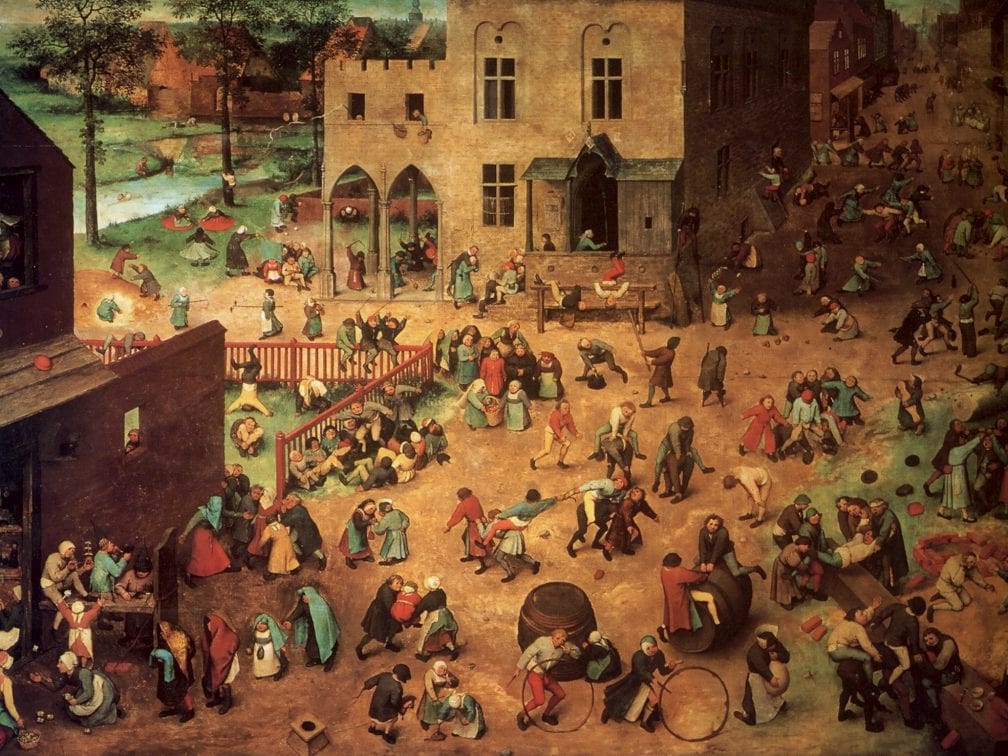
Real play - the kind Bob Black dreamed of, the kind the Homo Ludens thrives on - play that is voluntary, not coerced. It's spontaneous, creative and sometimes purposeless except for the joy it brings. It's not measured in points, streaks, XP badges, or social media engagement. True play happens for its own sake and requires an ingredient that's become increasingly rare: attention freely given.
In a world where every second of our focus is up for grabs, choosing where to place our attention becomes a radical act. If play has been weaponised against us, then careful, intentional engagement without scoreboard metrics - is our way back.
This means letting go of the illusion of constant optimisation. It means daring to learn something new without tracking your progress on an app. It means allowing boredom instead of instantly reaching for a dopamine hit. It means going for a walk without counting your steps, reading a book without logging it, cooking a meal without photographing it.
It also means protecting spaces where real play can emerge: spaces where goals are flexible, rules are negotiable, and outcomes are secondary to the experience itself. Spaces where imagination, rather than gamified incentives, lead the way.
The resistance lies in intentional uselessness: in doing things because they’re delightful, challenging, absurd, or beautiful and not because they earn us a badge or move us up a leaderboard.
Like art, play is also utterly useless. And maybe, that's precisely why it is the most profoundly human thing that we have.