
Hacker News
I used sound waves to make espresso. It could cut coffee‑brewing energy use by ¾

Researchers at UNSW have created an “ultrasonic espresso” that extracts coffee flavor, oils and caffeine using high‑frequency sound waves instead of hot water, cutting brewing energy use by up to 75%. The technique employs a transducer that induces acoustic cavitation in room‑temperature water, rapidly breaking down coffee particles to achieve espresso‑strength brew in under three minutes. Taste tests with about 100 regular coffee drinkers found the ultrasonic espresso indistinguishable from traditional espresso and even preferred over ultrasound‑brewed filter coffee. While the energy savings are modest for households, they could dramatically reduce power consumption and processing time for industrial ready‑to‑drink coffee production. The technology is patented by UNSW, and the study is detailed in the Journal of Food Engineering.
Iran requires insurance on ships using Strait of Hormuz, fees likely to follow

Iran’s Persian Gulf Strait Authority has mandated that all vessels transiting the Strait of Hormuz obtain Iran‑approved insurance, offered free for a 60‑day period but with the right to levy fees thereafter. The policy, detailed in a terms‑and‑conditions document submitted to the International Maritime Organization, also requires ships to use a designated northern route near Larak Island and warns of penalties, revocation of permits, or legal action for non‑compliance. The move challenges a recent US‑Iran memorandum guaranteeing toll‑free passage for 60 days and has drawn criticism from tanker owners, Middle‑East Gulf states, the IMO, and US officials, who caution that any future fees could set a dangerous precedent for strategic waterways.
Project Valhalla, Explained: How a Decade of Work Arrives in JDK 28
Project Valhalla reaches a major milestone as JEP 401 “Value Classes and Objects” is merged into the main OpenJDK repository and slated for a preview release in JDK 28. The new value modifier lets developers declare classes without identity, enabling the JVM to store instances densely via scalarization and heap‑flattening, dramatically improving memory locality and performance while preserving ordinary class syntax. In this preview, existing value‑based classes such as the primitive wrappers become value classes, == is redefined to compare field‑by‑field, and synchronization on value objects throws an IdentityException. Nullability remains optional and will be addressed in future JEPs. Specialized generics and full non‑null restrictions are not included in JDK 28, but the groundwork is laid for future releases to eliminate type‑erasure overhead and further boost performance for data‑intensive Java applications.
Google workspace threatening to block Firefox access
Google Workspace is beginning to display warnings to users of Firefox, urging them to switch to Chrome to maintain access to their Business Plus accounts. While Firefox still functions for now, the notice indicates that future access may be blocked unless devices meet the organization’s security requirements, prompting users to download Chrome and sign in. The author, concerned about cross‑browser compatibility for their team, reports that support responses have been unhelpful.
How do flocking birds and schools of fish move?
New York University mathematicians have shown that the coordinated movement of flocking birds and schools of fish resembles a soft crystalline material, where each animal acts like an “atom” arranged in a regular, lattice‑like pattern held together by flexible, spring‑like bonds. Using a mathematical model and experiments with mechanized flappers that mimic bird wings, the researchers demonstrated that these groups maintain columnar formations by responding to aerodynamic and hydrodynamic flows, akin to the fragile but responsive nature of soft crystals. The findings, published in Physical Review Fluids, offer new insights for aerospace, automotive engineering, robotics, and energy‑harvesting technologies.
A Perceptron in Age of Empires II
Adrian de Wynter demonstrates that Age of Empires II can be used to build fully functional digital logic, proving the game is functionally and Turing‑complete. He constructs in‑game NAND gates, a 1‑bit bipolar perceptron, and an ansatz‑based training circuit using the scenario editor, with goats and terrain tiles representing bits and signals. The project shows how changing the substrate of a large language model can alter perceived attributes and argues that research on anthropomorphic traits must avoid assuming their existence. All code and artefacts are linked for further exploration.
To study how chips work, MIT researchers built their own operating system

MIT researchers have created a new operating‑system kernel called Fractal to give scientists a “microscope‑level” view of processor internals. Built from scratch at CSAIL, Fractal runs on bare metal and lets experiments switch privilege levels without the noise of conventional OSes. Using it, the team uncovered previously unknown microarchitectural behavior in Apple’s M1 chip, including evidence of the “Phantom” speculative‑execution attack and a lack of privilege isolation in its branch predictor. The open‑source kernel supports x86_64, ARM64 and RISC‑V, includes POSIX APIs and standard tools, and is intended to become shared infrastructure for microarchitecture research.
Big Banana Car

The Big Banana Car is a quirky, motor‑powered banana built by Steve Braithwaite since 2008 and completed in 2011. After touring the United States, parts of Canada and a day in Mexico, Steve plans a worldwide “Big Banana Car World Tour,” but faces hurdles such as funding, multi‑country insurance and completing his current “diesel‑punk” vehicle, the Starfield Dragonwing Intergalactic Speedster*. He seeks a film‑savvy travel companion to share YouTube revenue and funds the venture by selling branded t‑shirts and mugs through Printify. Fans are encouraged to follow his social media, buy merchandise, and report any items left on the car’s dash as a souvenir.
Show HN: Modeloop – From visual algorithms to microcontroller C code
Modeloop is a visual, web‑based platform that unifies model‑based systems engineering with continuous delivery: users design block diagrams, state charts, and mathematical models that are instantly simulated, automatically converted into deterministic, MISRA‑ready C and Python code, and continuously verified through unit tests that run on every commit in a CI/CD pipeline. The tool treats the model itself as a verified source‑of‑truth, eliminating manual translation to code and post‑hoc testing by generating both the implementation and its full test harness from the same JSON model. Built to run locally—either in an Electron desktop app or directly in the browser—Modeloop keeps all intellectual property on the developer’s machine, addressing data‑sovereignty concerns while offering a transparent, high‑performance code generator that supports automotive, aerospace, robotics, and other safety‑critical industries.
Ubiquiti: Enterprise NAS, Built on ZFS
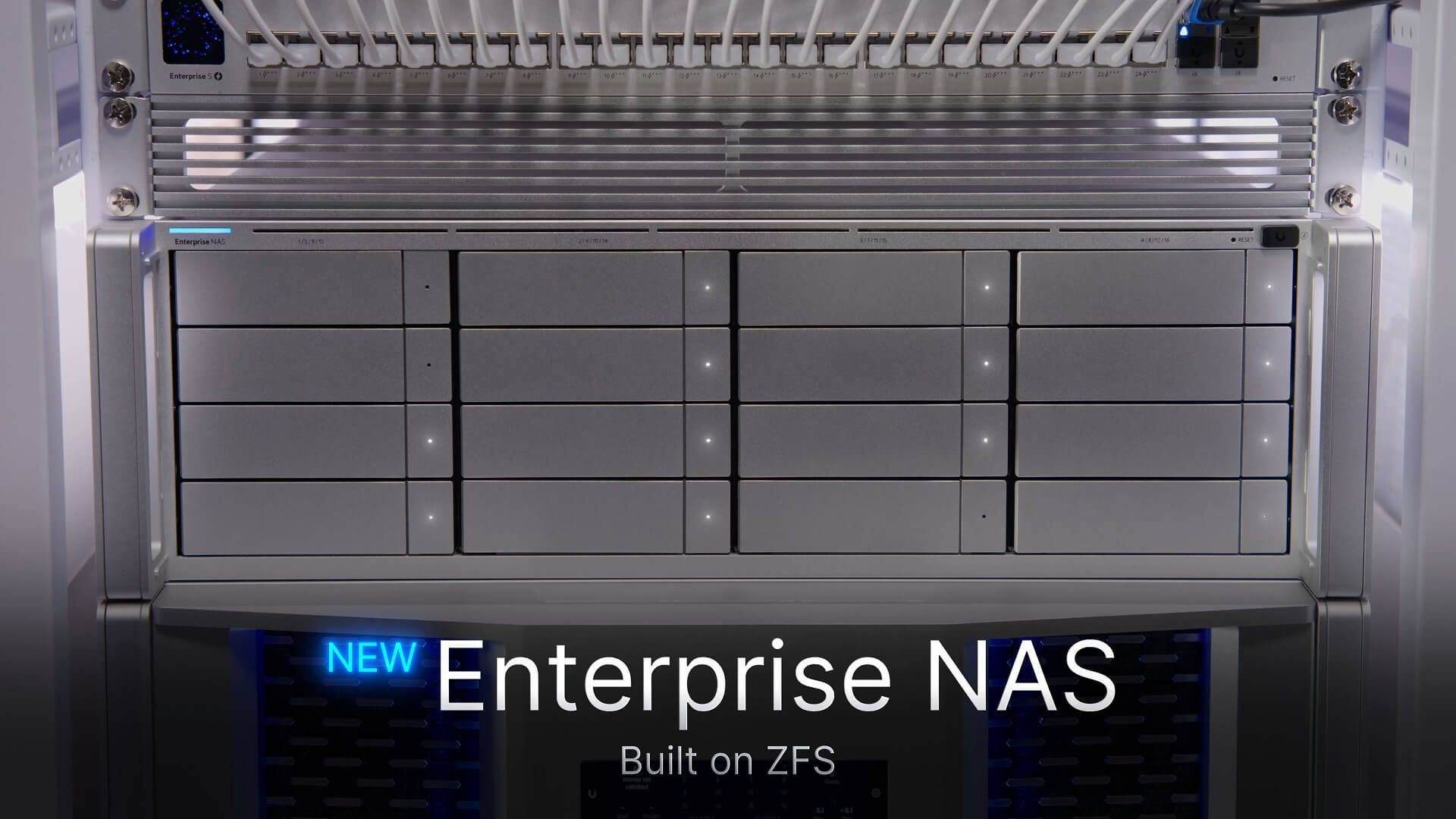
Introducing Enterprise NAS (ENAS), a license‑free, ZFS‑based storage solution from Ubiquiti that combines an ARM Neoverse N2 processor, 8 cores, 64 GB ECC memory, dual NVMe cache and up to 16 drive bays for petabyte‑scale capacity. It integrates with the UniFi platform for centralized, identity‑driven file and backup management, offers role‑based access controls, dual 25 Gbps SFP28 networking, redundant power, and native iSCSI support for virtualization (Proxmox, VMware, Hyper‑V). Future updates will add multi‑site backup orchestration and offsite replication, positioning ENAS as a high‑performance, scalable, and cost‑effective alternative to traditional enterprise storage.
MiniMax M3 vs. GLM 5.2: Codegen comparison across autonomous coding tasks

MiniMax M3 and GLM 5.2 were benchmarked on 72 autonomous coding tasks using the Thinkbench harness. Across 60 graded tasks, GLM achieved a higher correctness rate (92% full‑pass, 0.976 mean score) but cost three times more ($18.47) and took longer (80 s) than MiniMax (84% full‑pass, 0.961 mean score, $6.67, 45 s). The gap was most pronounced on greenfield builds, where GLM excelled in package layout and API completeness, while MiniMax performed better on a few hard builds (e.g., patchwise, migrato). For bug fixes, feature additions, and repair‑to‑green tasks both models performed almost identically. In ambiguous briefs, MiniMax tended to add more production‑grade scaffolding, whereas GLM stayed closer to the minimal spec. The author recommends GLM for from‑scratch projects needing reliability, and MiniMax for high‑volume, lower‑cost worker tasks, with a higher‑level coordinator (e.g., GPT‑5.5 or Claude Opus) overseeing delegation and final validation.
Modos Color Monitor Pushes E-Paper Displays Further

Modos is crowdfunding a new 13.3‑inch color e‑paper monitor called Modos Flow, which improves on their earlier Paper Monitor Dev Kit with a higher 3,200 × 2,400 resolution, touch input and a 60 Hz refresh rate enabled by the open‑source “Enchanter” display controller. The controller uses a newer FPGA, double DDR3 bandwidth, and a Chrontel CH7516 DisplayPort‑to‑LVDS chip supporting DisplayPort 1.1, allowing faster pixel response (~50 ms) that the founders argue offers perceptual latency comparable to early LCDs. Co‑founders Alexander Soto and Wenting Zhang discuss challenges of small‑scale manufacturing, supply disruptions, and the importance of community building over seeking venture funding, emphasizing that a strong user base and open documentation drive their product’s development. The campaign is live on Crowd Supply.
Show HN: Talos – Open-source WASM interpreter for Lean
Talos is a WebAssembly interpreter written in Lean 4 that doubles as a formal semantics framework, enabling both execution of Wasm programs and machine‑checked proofs about their behavior. The project emphasizes reasoning over performance, using a weakest precondition calculus to provide composable proofs for loops, branches, and function calls without re‑interpreting code at each step. It includes three Lake packages—an interpreter with AST and semantics, a CodeLib with lifting lemmas and reasoning helpers, and sample programs—and supports running .wat modules, fuel‑capped execution, and full correctness proofs (e.g., a factorial example). Talos is under active development, aims for full Wasm coverage (focusing initially on high‑level source constructs), and is licensed under the AGPL‑3.0.
Launch HN: TesterArmy (YC P26) – Agents that test web and mobile apps

TesterArmy offers an AI‑powered QA service that runs real browsers to automate testing of web and mobile applications without requiring test scripts or SDKs. Users describe test scenarios in plain English, and the AI agent navigates pages, handles logins, OAuth and OTPs, and generates screenshots, recordings, and actionable bug reports accessible via a dashboard, CLI, or pull‑request comments. The platform integrates with GitHub, CI/CD pipelines, Slack, Discord, Expo, Vercel, and webhooks, supporting continuous testing on staging, production, and preview deployments. A free trial is available, and testimonials cite rapid onboarding and reliable end‑to‑end testing for teams like Novu and HireVoice.
Ask HN: Will programmers write more efficient code during the memory shortage?
Ask HN: Users debate whether a looming memory shortage will push programmers to produce more memory‑efficient code. One commenter notes switching from Python to Go for better memory usage in LLM workloads, another criticizes modern developers’ lack of low‑level memory knowledge, while a third quips that LLMs themselves might become the ones writing efficient code.
.gitignore Isn't the only way to ignore files in Git
.gitignore isn’t the only way to ignore files in Git; you can also use .git/info/exclude for repository‑specific, non‑shared ignores, and ~/.config/git/ignore (or a custom global file set via git config --global core.excludesFile) for machine‑wide ignores. The article explains where each file lives, how they differ in scope and version control, and shows how to verify which ignore rule applies with git check-ignore -v.
The Token Compression Illusion: Why I'm Skeptical of RTK
Przemek Mroczek argues that the RTK tool, which markets itself as a way to “cut token usage, keep the same intelligence, pay 1/10 the price,” is fundamentally flawed. He notes that its advertised “60‑90% savings” only reflects reduced terminal output, not actual API costs, and that critical token drivers like file reads and model reasoning remain untouched. Open issues reveal silent failures where essential information—such as stack traces—is dropped, risking inaccurate or failed LLM operations. Mroczek points out the lack of accuracy benchmarks, emphasizing that token savings are meaningless if task success drops. He also warns that RTK is a fragile feature dependent on fragile parsing of CLI output; any change in tool formatting can break it without warning, and native compact modes in mainstream CLIs could render RTK obsolete. Concluding, he deems RTK a high‑risk, vanity‑metric solution unsuitable for production AI agent workflows.
CS 6120: Advanced Compilers: The Self-Guided Online Course (2020)
CS 6120: Advanced Compilers is a self‑guided, PhD‑level Cornell course led by Adrian Sampson that teaches universal compiler concepts—intermediate representations, data‑flow analysis, classic optimizations—and research‑oriented topics such as parallelization, JIT compilation, and garbage collection. The curriculum provides a linear timeline of video lessons, written notes, and open‑ended implementation tasks using LLVM and a custom IR, supplemented by scholarly papers. While mirroring the official course, the self‑guided version removes deadlines, Zulip discussions, and the semester‑long project, instead encouraging students to create their own compiler‑based impact. All materials are open source on GitHub, and learners are asked to submit feedback upon completion.
I told them forced consent was unlawful. 5 years later it cost Elkjop €1.8M

Alexander Hanff recounts how his 2021 complaint to the Swedish data‑protection authority over Elkjøp’s forced consent scheme—requiring customers to join its loyalty club to receive marketing—led to a 2026 Norwegian fine of NOK 20 million (€1.8 million). The regulator found the club’s consent was not freely given, that data were repurposed without a compatibility assessment, and that the authorities failed to inform Hanff of the outcome, prompting him to demand an explanation and consider further EU infringement action. The case highlights the illegality of bundled or pay‑or‑consent models across the digital economy.
Stop Naming Your Variables "Flag": The Art of Boolean Prefixes (2025)

Christopher Johnson warns that vague Boolean variable names like “flag” or “done” create confusion and bugs, proposing four clear prefixes—is for identity/state, has for containment, can for capability, and should for intent—and a “no negatives” rule to avoid double‑negatives. He advises refactoring functions with multiple Booleans into separate methods, Enums, or config objects, and highlights antipatterns such as “shrug” names, mismatched grammar, double negatives, multi‑purpose Booleans, and re‑used flags. Clear, positive naming improves readability and maintainability, saving future developers (often yourself) from costly misunderstandings.
Americans express unease over SpaceX's influence on retirement savings

Americans voice strong concerns that the SpaceX IPO and the broader AI boom could tie their retirement savings to a few powerful tech firms, potentially deepening inequality and market risk. Surveyed readers, many of whom rely on 401(k) plans invested in index funds, described the situation as a “casino” and a “scam,” fearing that the push to include SpaceX shares in major indices forces them to invest in a company they cannot hold accountable. Comments highlighted moral objections to Elon Musk’s wealth, worries about corporate concentration, and calls for greater diversification or complete withdrawal from the stock market. While some acknowledge SpaceX’s technological achievements, the overall sentiment emphasizes unease over the growing influence of such firms on ordinary Americans’ financial futures.
DuckDB Internals Part 1
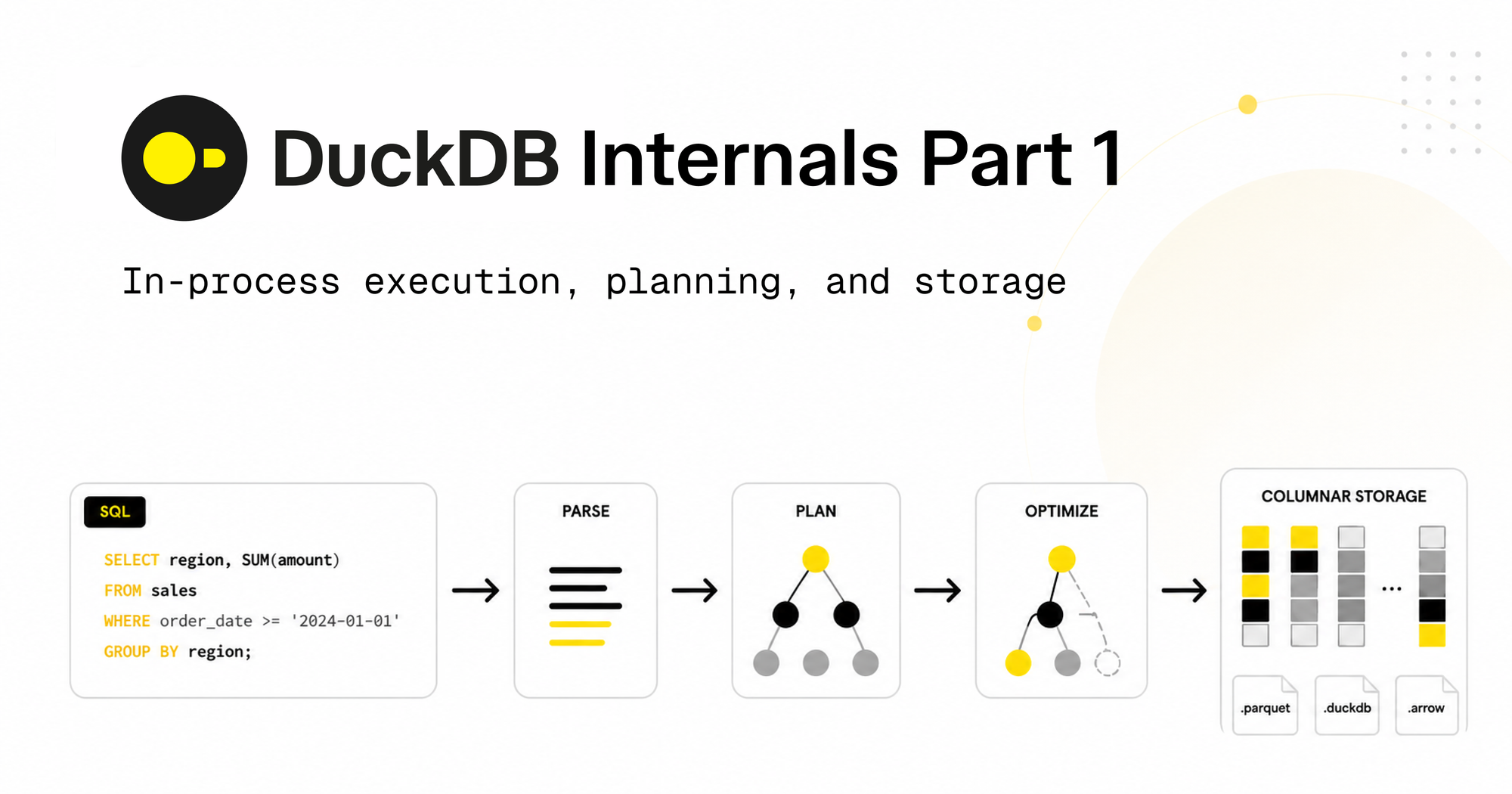
DuckDB is an in‑process analytical SQL database that achieves high performance through a combination of design choices: columnar compressed storage with zone maps, vectorized and morsel‑driven parallel execution, snapshot isolation with optimistic MVCC, and a lightweight optimizer that applies dozens of rule‑based transformations such as filter push‑down, join reordering, and subquery unnesting. By running inside the client process, DuckDB avoids network serialization overhead and can directly read data from Parquet, CSV, JSON, or Arrow buffers with zero‑copy when formats align. Its storage layer uses fixed‑size blocks, column‑wise layout, row groups, and per‑group min‑max statistics to skip irrelevant data, while its execution engine breaks queries into pipelines and sinks that run in parallel across cores, merging results efficiently. These features allow DuckDB to query multi‑gigabyte files on a laptop in under a second and compete with large cluster‑based analytics engines.
AURpocalypse now: a look at the recent AUR attacks
AURpocalypse now: a look at the recent AUR attacks – The Arch User Repository (AUR) has been hit by a large‑scale campaign in which attackers created new accounts, adopted hundreds of orphaned packages, and pushed malicious PKGBUILD updates that install malware via npm or Bun, compromising over 1,500 packages. The abuse exploits the AUR’s open‑door policy—any registered user can adopt an orphaned package without review—leading to the distribution of trojans and data‑stealing code, while official Arch repos remain unaffected. In response, the AUR has temporarily disabled new‑user registration and is considering stricter adoption controls, automated scanning, and tooling upgrades (e.g., warnings in AUR helpers, AI‑based analysis) to mitigate future attacks, though the “use at your own risk” disclaimer remains insufficient for many users.
The AirPods Effect
The AirPods Effect by Markham Heid argues that the widespread use of wireless earbuds in the United States is deepening social isolation and shaping beliefs. He notes a 28% drop in spoken words per person from 2005‑2019 and cites studies linking heavy headphone use to loneliness, reduced spontaneous conversation, and a “Do Not Disturb” vibe that discourages casual interaction. While earbuds can aid communication and make podcast voices feel warmer and more persuasive, they also create personal sound bubbles that limit face‑to‑face contact, erode public‑space chatter, and crowd out mental downtime needed for reflection. Heid urges more intentional, spontaneous human contact to counteract these subtle but growing social costs.
AI Engineer Claims to Have Cracked Linear A
Tom Di Mino, a self‑taught AI engineer and amateur linguist from the Hudson Valley, claims to have deciphered the Bronze‑age Minoan script Linear A, identifying it as an extinct Semitic language ancestral to biblical Hebrew. Using an AI‑driven engine built with Claude, he says a breakthrough on May 22 arose from analyzing prayer formulas, allowing him to assign sound values to all 13 unique Linear A signs, propose readings for 37 of the 102 symbols, and compile a lexicon of 383 terms. His findings, including a draft manuscript titled “Ya Diktu: Grammar of the Minoan Peak Sanctuary Libation Formula,” are under review by linguists at Rutgers and Cambridge and could reshape understanding of both Linear A and related Linear B inscriptions.
Zero-Touch OAuth for MCP

Enterprise-Managed Authorization (EMA) is now a stable extension to the Model Context Protocol, allowing organizations to centrally provision MCP server access through their identity provider. Users gain “zero‑touch” connectivity—servers are linked on first login without per‑app OAuth prompts—while admins enforce policies, audit access, and keep personal and corporate accounts separate. Early adopters include Okta, Anthropic, Microsoft, and servers such as Asana, Atlassian, Canva, Figma, Linear and Supabase. The flow uses an Identity Assertion JWT (ID‑JAG) from the IdP to obtain MCP access tokens, eliminating individual consent screens. The project invites further implementation and feedback from clients, servers, and identity platforms.
Show HN: Pagecast – Publish Markdown/HTML Reports to Cloudflare Pages
Pagecast is a local‑first tool that lets developers preview and publish HTML reports, Markdown documents, and static mini‑apps as shareable Cloudflare Pages URLs directly from the terminal or via coding agents. It provides a local admin UI for managing publications, renaming links, syncing updates, and revoking old URLs, plus headless CLI commands that wrap Wrangler for automated deployments. The tool requires Node 20+, a Cloudflare account (or API token), and works with static build folders (e.g., dist, build). Integration options include a Chrome extension for one‑click publishing, Codex/Claude agent skills for autonomous publishing, and support for CI workflows. Pagecast is open‑source under the MIT License and includes a React admin UI, a lightweight server with no runtime npm dependencies, and comprehensive documentation for setup and usage.
W Social, public institutions and the theater of European digital sovereignty

W Social, a for‑profit, Swedish‑founded microblogging platform marketed as Europe’s sovereign alternative to X, has quietly shifted high‑profile EU accounts—including those of the European Commission, Ursula von der Leyen, and Christine Lagarde—from Bluesky to its own servers, despite limited transparency about its infrastructure. The author discovered that W Social’s public GitHub repository was removed in March, suggesting the codebase may have become closed source, contradicting the EU’s own “Tech Sovereignty Package” which emphasizes open‑source digital autonomy. Further scrutiny revealed an advisory board populated by former Big‑Tech executives, raising concerns that the platform could serve as a surveillance‑oriented, profit‑driven service rather than an ethical, open‑source alternative like the non‑profit Eurosky project. The piece questions the EU’s due diligence, the true location of W Social’s backend components, and why public institutions opted for this opaque service over open alternatives.
My 1992 view of the problems of computer programming in 1992

The Universe of Discourse post recounts a 1992 insight that, despite dramatic advances in compiler technology—making compiler construction easy enough for undergraduate students—improving compiler quality no longer drives programming productivity. The author argues that the real challenges lie in programming methodology, language design, and the fundamental understanding of how to express computational intent, noting that programming remains a nascent, “black art” where better tools are often underutilized.
Reinventing the Renaissance
Reinventing the Renaissance reviews Ada Palmer’s new book Inventing the Renaissance: Myths of a Golden Age, noting its unconventional, personal style that blends scholarly insight with memoir-like anecdotes. Palmer argues that the Renaissance is a constructed idea, shaped by later eras and their biases, and she foregrounds her own positionality—American, disabled, anti‑colonial—to illustrate how historians’ viewpoints influence their narratives. The review highlights Palmer’s emphasis on historiography, her engaging short biographies of fifteen Renaissance figures, and her nuanced discussion of themes such as the myth of a “golden age,” the limits of humanist secularism, and the political realities of Italian city‑states. Despite its lively tone and occasional digressions, the book is praised as a valuable, thought‑provoking read for informed general audiences.
How Alberta Eradicated Rats

Alberta has remained rat‑free for over seventy years by establishing a narrow “Rat Control Zone” along its eastern border in the early 1950s, where officials inspected vehicles, farms and grain facilities and used large‑scale poisoning (first arsenic trioxide, later warfarin) to eliminate any incursions. The province created a “rodent surveillance state,” funding full‑time pest inspectors, public reporting hotlines and legal mandates requiring citizens and municipalities to destroy rats. Continuous monitoring, annual inspections of thousands of structures and cross‑border cooperation with Saskatchewan keep new rats from establishing breeding populations, allowing Alberta to maintain this status with an annual cost of about C$500,000—roughly $0.11 per resident—while neighboring regions still contend with costly infestations.
Show HN: Gerrymandle - Daily puzzle game where you redraw electoral districts

Gerrymandle is a daily online puzzle where players draw electoral districts on a map to maximize their party’s wins. Players click adjacent tiles to form connected districts of equal size, assigning every house to a district; the party with the most houses in a district wins it, ties give no winner. The game explains gerrymandering techniques—packing and cracking—and its historical roots, noting recent legal rulings that have made partisan map challenges harder, leading to frequent mid‑decade redistricting in states like Texas, California, Virginia, and Florida. JavaScript is required to play.
Norway greenlights first full-scale ship tunnel

Norwegian authorities have approved funding of NOK 8.6 billion (£671 m) to construct the world’s first full‑scale ship tunnel, the Stad Ship Tunnel, slated to begin in early 2027 and open to traffic by 2031. The 2‑km “drill‑and‑blast” tunnel through the hazardous Stad peninsula in Vestland will let ferries and small passenger vessels bypass one of Norway’s most dangerous coastal stretches—cutting voyages by about 56 km and reducing weather‑related delays—while requiring removal of roughly three million cubic metres of rock and a waterproof rock wall during construction.
Lore – Open source version control system designed for scalability
Lore is an open‑source, centrally managed version control system created by Epic Games, aimed at handling massive codebases and large binary assets common in game and entertainment development. It uses a content‑addressed storage model with Merkle trees and immutable revision chains for verifiable history, supports on‑demand data hydration, lightweight branching, and offers a full‑surface API in multiple languages (C/C++, C#, Rust, Go, Python, JavaScript). Available under an MIT license, Lore provides a CLI, SDKs, and integrates with Epic’s GitHub, targeting scalability for large teams while remaining free and community‑driven.
Zork name origin got an update on Wikipedia
A detailed blog post investigates the claim that “zork” was MIT hacker slang for unfinished code. The author traces the claim’s appearance on Wikipedia to an unsourced 2001 edit, later added a dubious 2014 citation, and compares it with multiple contemporary sources—including 1984 and 1979 articles and interviews with Marc Blank and Tim Anderson—showing that “zork” was described merely as a nonsense word, similar to “foobar.” Correspondence with Richard Stallman and Richard Gabriel yielded no support for the jargon theory. After finding no credible evidence, the author corrected the Wikipedia entry to reflect that the “unfinished‑program” usage was only Anderson’s claim, and notes ongoing work on Zork gameplay posts.
I hate compilers
I hate compilers details how the author tackled making WebAssembly‑based proof‑of‑work checks reproducible for the Anubis project when some users disable WebAssembly. To avoid locking out those users, the author recompiled the WebAssembly module to JavaScript using wasm2js, but discovered that distro versions of the tool produced nondeterministic output. The post explains the complexities of achieving reproducible builds—issues with __DATE__/__TIME__ macros, clang silently invoking outdated wasm-opt, address‑space randomisation affecting binary output, and architecture‑specific pointer ordering. The solution involved bundling a custom‑built wasm2js, disabling address randomisation, generating known SHA‑256 checksums for x86_64 and arm64, and adding CI jobs to verify deterministic builds, while noting that full cross‑architecture reproducibility remains hindered by an upstream LLVM bug.
Migrating from GNU Stow to Chezmoi

Migrating from GNU stow to chezmoi details Redowan’s shift from symlink‑based dotfile management with stow to the chezmoi tool across three macOS machines. He explains stow’s limitations—conflicting repos, manual bootstrapping, and lack of non‑file handling—and describes how chezmoi stores a single git‑tracked source tree (e.g., dot_zshrc, dot_gitconfig, Brewfile, and agent skill directories) and applies real files via chezmoi apply. The setup automates Homebrew installation, macOS defaults, and hostname configuration through scripted .chezmoiscripts, while per‑machine data is handled via a template prompt. Daily workflow involves editing source files with chezmoi edit --apply, committing changes, and syncing other machines with chezmoi update. He also adds LLM agent “skills” using a standard layout and a single symlink managed by chezmoi, unifying configuration for Claude Code and Codex. The post serves as a practical guide for adopting chezmoi for consistent dotfile management.
How Madrid built its metro cheaply (2024)

How Madrid built its metro cheaply – Between 1995 and 2007 Madrid’s metro network tripled in length, adding 126 miles (203 km) at a fraction of typical costs, making it one of the world’s fastest‑growing systems. The expansion succeeded thanks to four key factors: regional government control that combined planning, funding and construction authority, allowing politicians to tie electoral promises to delivery; streamlined environmental and permitting processes that cut assessments from years to months; deliberate design trade‑offs that favoured standardised, functional stations and proven fixed‑block signalling over costly architectural or technological innovations; and the creation of an in‑house engineering pipeline (via the public company Mintra) that retained expertise, used 24‑hour tunnelling with multiple TBMs, and procured contracts on value rather than lowest price. These lessons—centralised regional power, rapid approval, cost‑focused design, and sustained state capacity—are presented as a model for other cities aiming to expand transit networks cheaply and quickly.
There are no instances in ATProto
There Are No Instances in atproto explains that unlike Mastodon, which relies on “instances” (self‑hosted servers that also run the app), the atproto protocol – used by Bluesky – separates hosting from the apps that read the data. Content lives on interchangeable hosting services, and any atproto‑compatible app aggregates from all hosts, similar to how RSS feeds are read by Google Reader or Feedly. This architecture eliminates the concept of instances, allowing users to switch hosts or run their own servers freely, and encourages the development of diverse apps without the federation complexities of Mastodon. Consequently, counting “Bluesky instances” is misleading; true decentralization is measured by the variety of hosts and apps in use.
Surprising Economics of Load-Balanced Systems
Marc Brooker explains that in an M/M/c load‑balanced system where each of c servers handles a single request at a time and the offered load scales with c (0.8 requests per second per server), the mean client latency drops rapidly and asymptotically approaches the one‑second service time as c grows. Using Erlang’s C formula and Monte‑Carlo simulations, he shows that queuing probability falls from about 13 % at 2.5 rps to 3.6 % at 5 rps, and that median and high‑percentile latencies follow the same improving trend. The result means larger server pools achieve better latency at the same utilization, benefiting cloud economics, and the findings remain robust for modest values of c and different load factors.
Telescope Ranchers
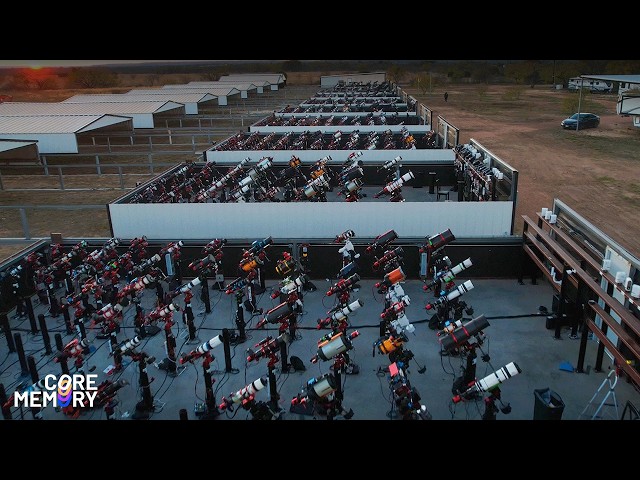
Starfront Observatories in Rockwood, Texas operates a “telescope ranch” where owner Bray Falls maintains over 550 remote telescopes on 40 acres of Class 1 dark‑sky land. Astrophotographers worldwide ship their equipment to the site and control the scopes via laptop for a subscription starting at $99 per month, benefiting from ultra‑dark skies, clear weather and fast internet. The observatory has produced notable images, including the newly discovered “Crown of Thorns Nebula” in Virgo—a rare supernova remnant far from the Milky Way plane that is now under professional study.
A new bill takes aim at government pressure to silence lawful online speech

Senators Ted Cruz and Ron Wyden have introduced the bipartisan JAWBONE Act, a bill that would create a federal cause of action against government officials who coerce online platforms, broadcasters, or AI providers to suppress lawful, First‑Amendment‑protected speech, and would mandate transparency for such government communications. The Electronic Frontier Foundation highlights recent instances of alleged coercion, including threats to the creator of the ICE‑reporting app ICEBlock that led to its removal from the App Store, and a Freedom of Information Act lawsuit seeking disclosure of related government‑platform communications. The EFF stresses the need to balance preventing unlawful “jawboning” with preserving platforms’ own First‑Amendment rights to moderate content, and welcomes the bill as a step toward stronger protections for online expression.
Gribouille 0.3.0: A Grammar of Graphics for Typst
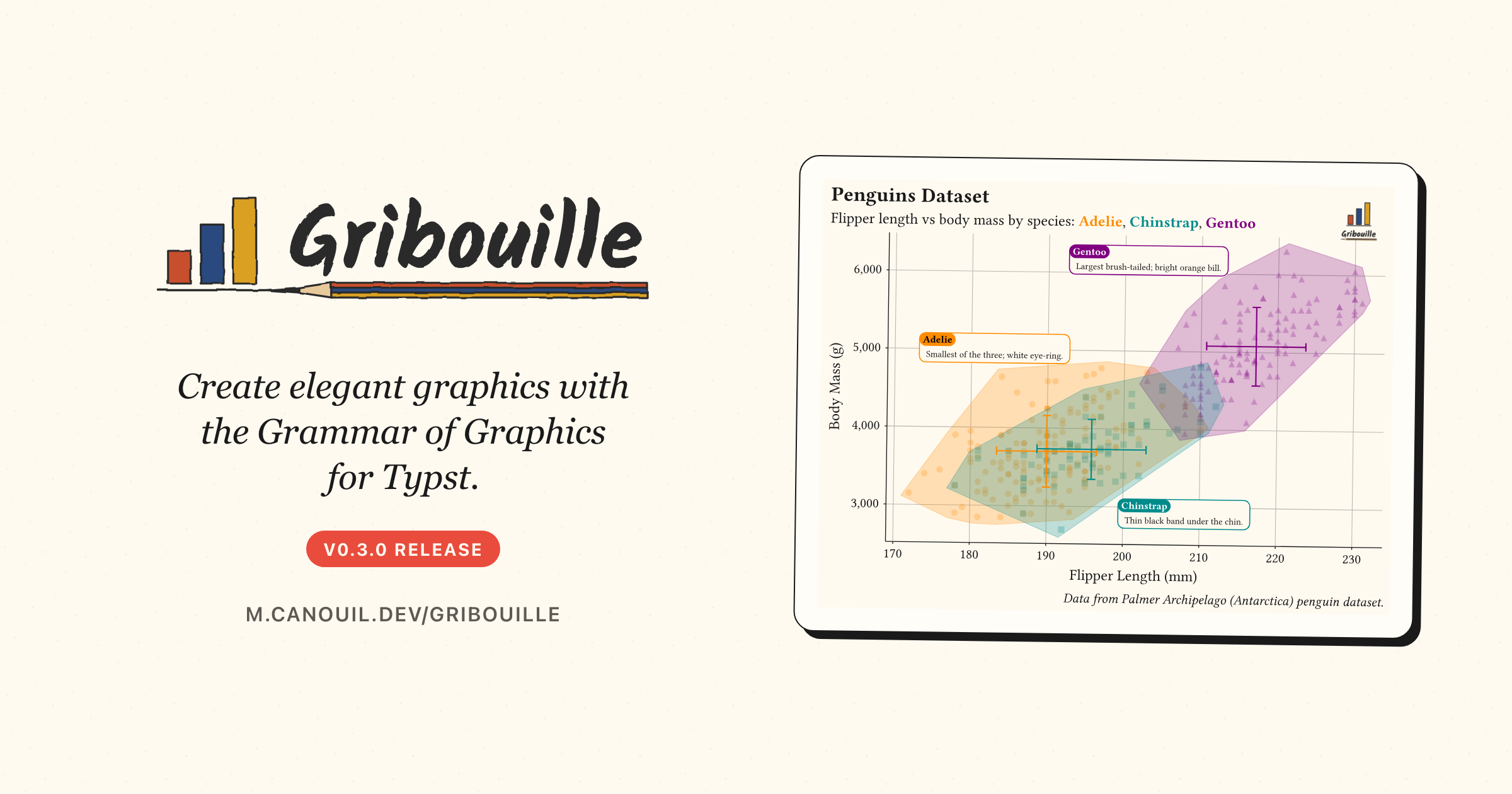
Gribouille 0.3.0 introduces a new guides() function that lets users hide axis ticks, labels, and legends with a simple on/off switch, while keeping axis lines, grids, and titles intact. The compose() function now accepts a theme: parameter to style composition chrome and propagate themes to panels, and replaces plot(..., defer: true) with a defer() helper. geom-area() defaults to stacked alignment, automatically resampling groups with mismatched x values. annotate() gains a clip: option to allow marks to overflow panel boundaries. The release also includes numerous legend and annotation fixes, improved radial guide controls, editor‑friendly Tinymist docstrings, and various under‑the‑hood bug fixes and enhancements.
Show HN: Continuous Nvidia CUDA PC Sampling Profiler
Polar Signals announced an open‑source, low‑overhead NVIDIA CUDA program‑counter (PC) sampling feature built on CUPTI, now available in the v0.48.0 Parca Agent. The blog explains how PC sampling records instruction‑level PC offsets and stall reasons with configurable sampling factors, and describes a dynamic “sampling the samples” algorithm that toggles sampling on short intervals to keep overhead low while still providing production‑grade data. Data is captured via a shim library injected into CUDA apps, emitted through USDT probes, and processed by a BPF‑based agent that caches kernel launches, aggregates counts, and forwards compressed Arrow records to Polar Signals’ backend. Symbolization is performed remotely by disassembling uploaded cubins, requiring the -lineinfo nvcc flag. The approach enables continuous, instruction‑level GPU profiling—including stall‑reason insight—without the high overhead of traditional tools like Nsight, and is offered with a free 14‑day trial and easy Kubernetes deployment.
How Japan's railways stayed one while splitting apart
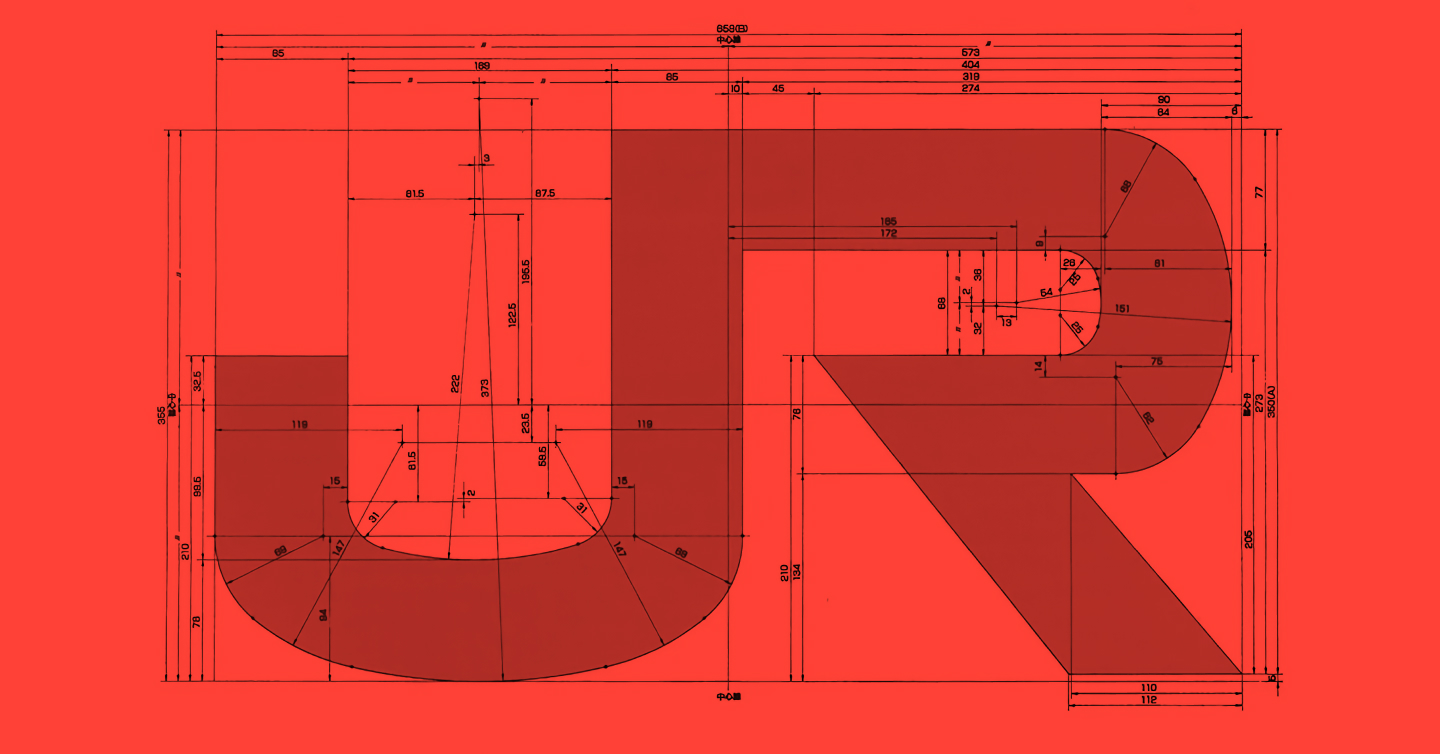
How Japan’s railways stayed one while splitting apart recounts the 1987 privatization of Japanese National Railways into six passenger and one freight companies, all adopting a unified JR logo despite becoming independent entities. Designed by the Nippon Design Center under Yōji Yamamoto, the logo’s letter‑mark and distinct regional colour schemes were chosen in a rapid 124‑day process, with clever compromises such as a custom kanji to avoid the meaning “lose money.” The rollout saw employees manually apply the branding to 10,000 vehicles in a single night, creating instant nationwide recognition. The article explains why the mark has endured for four decades—its clear, scalable design, alignment with corporate philosophy, and the stable management of the JR Group—contrasting it with brands like Japan Airlines that have changed logos repeatedly.
Flexport (YC W14) Is Hiring in Indonesia, India, and Thailand

Flexport is hiring globally for roles in AI‑driven logistics, offering positions across departments such as engineering, data science, freight management, customs, finance and product design at offices worldwide, including remote options. The company emphasizes its mission to simplify global trade with AI agents, highlights rapid revenue growth, a $8.6 trillion market opportunity, and a culture focused on customer obsession, long‑term thinking, entrepreneurship, simplicity and teamwork. Applicants are encouraged to apply regardless of logistics experience, with a merit‑based path to leadership and uncapped compensation tied to impact.
If your product is Great, it doesn't need to be Good (2010)
Paul Buchheit argues that a truly great product must focus on a few core attributes and excel at them, rather than trying to include many “missing” features. Citing the original iPod’s simple trio of portability, storage, and seamless Mac syncing, and Gmail’s speed, unlimited storage, and conversational interface, he illustrates how stripping away secondary functions leads to stronger user value. He criticizes reviewers who denigrate products like the iPad for lacking features that competitors offer, emphasizing that simplicity and execution trump feature breadth, especially in consumer‑focused markets where the purchaser is also the user. The piece concludes by urging creators to identify and perfect three key features, dedicating the bulk of effort to them.
GPT-5.5 hallucinates 3x more than MIT-licensed GLM-5.2
Oliver Shrimpton argues that the AI industry’s focus on ever‑larger language models is reaching a limit, citing recent bans on models like Claude Fable 5 and comparative tests showing that smaller, open‑weight models can match or surpass much larger proprietary ones in accuracy and hallucination rates. He highlights that massive models such as DeepSeek V4 Pro and GPT‑5.5 often generate confident but incorrect answers, while the 753‑billion‑parameter GLM‑5.2 from Z.ai produces far fewer hallucinations and correctly identifies logical impossibilities. Shrimpton calls for a shift toward balancing raw capability, uncertainty calibration, and computational efficiency rather than pursuing sheer size.
The Korean telecom giant at the center of Anthropic's Mythos controversy

The White House ordered AI lab Anthropic to cut off South Korean telecom giant SK Telecom from its advanced Claude Mythos and Fable 5 models after officials raised national‑security concerns over the firm’s historic ties to China, a move that followed Amazon’s report of possible guard‑rail bypasses in the models. Anthropic complied by disabling foreign access entirely, sparking a standoff over when the models might be reinstated. SK Telecom, which has invested heavily in Anthropic and participated in the limited‑access “Project Glasswing,” denies any current Chinese connections, though its parent SK Group maintains extensive business interests in China.
Ask HN: How do you separate intentional test boilerplate from real duplication?
Ask HN post by rafaepta discusses a challenge in his open‑source tool dupehound, a deterministic duplicate‑code detector. Users report that test code often contains intentional repetitive boilerplate, which the detector flags as duplication even though such repetition is desirable. The author seeks strategies for distinguishing intentional test scaffolding from unwanted code duplication, suggesting possibilities like a “human‑in‑the‑loop” approval system similar to linting tools, and asks the community for ideas and experiences. Links to the project repository and a detailed GitHub issue are provided.
Liberalism in the Age of Weaponized Interdependence

Liberalism in the Age of Weaponized Interdependence argues that the liberal international order must abandon the belief that deeper economic integration inevitably reduces rivalry and instead recognize that cooperation and competition are permanently intertwined. Citing the rise of China, the COVID‑19 disruptions, and Russia’s energy coercion, the essay shows how the very infrastructure of global trade—financial hubs, supply‑chain concentrations, and digital networks—has become a source of strategic leverage, creating a “mutual assured dependence” that is fragile and incentivizes decoupling and resilience measures. It proposes a reconstruction of liberal theory and policy that treats interdependence as both a welfare‑generating and coercive force, redesigns institutions as dual‑use architectures, differentiates productive competition from rent‑seeking, and builds transatlantic and epistemic networks to develop and implement a renewed, deterrence‑aware liberal agenda.
Microsoft new Outlook takes 10 seconds to do what Outlook Classic does instantly
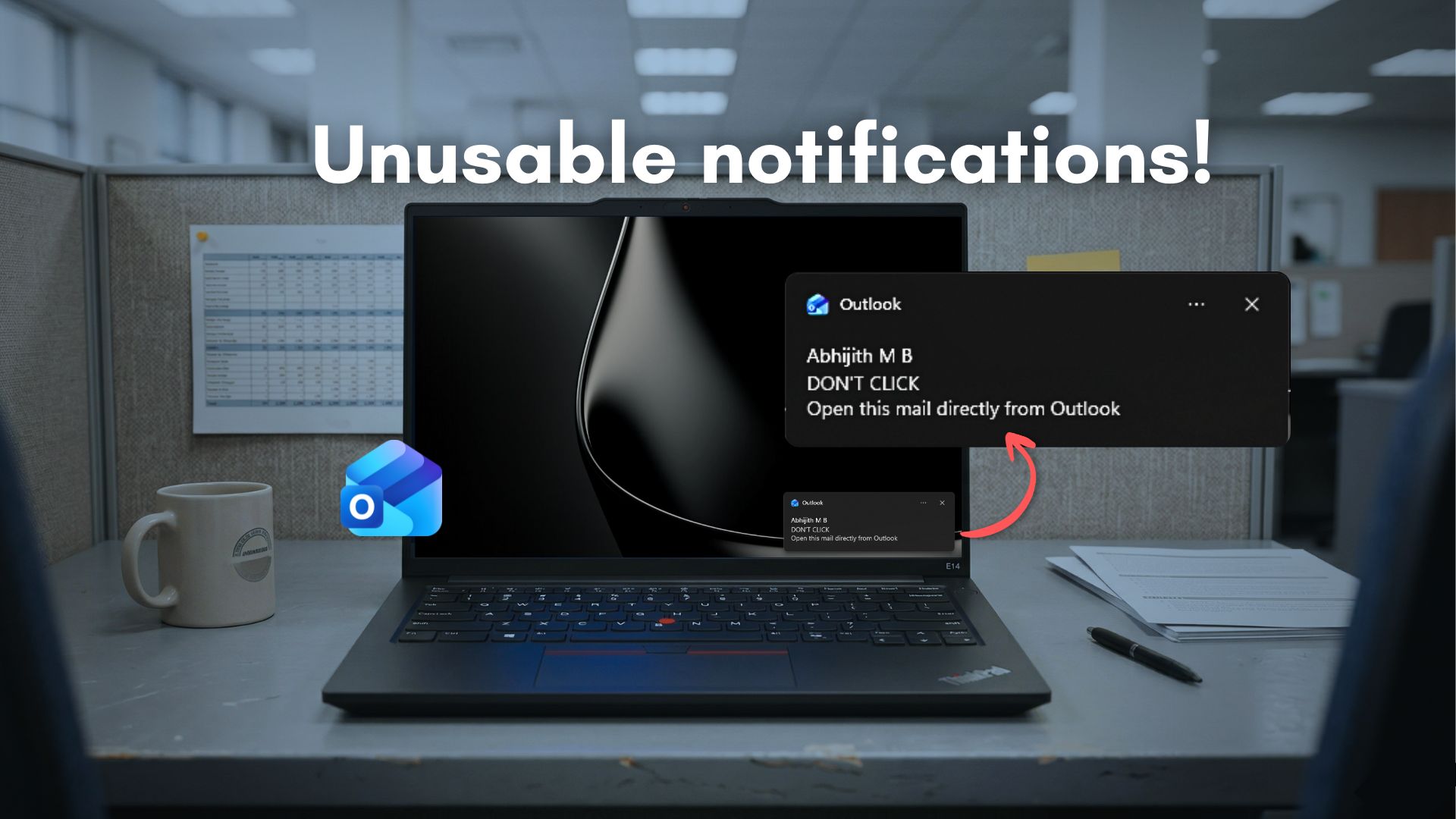
Microsoft’s new Outlook, built on the WebView2 browser engine, takes about ten seconds to open an email from a Windows 11 notification, far slower than the instant response of the legacy Win32 Outlook Classic. While the newer app has improved launch speed and added features such as unified inbox, better calendar integration, and expanded .PST support, its web‑based architecture consumes significantly more RAM (≈500‑630 MB vs 120‑150 MB) and CPU, and the notification delay remains a major drawback. Users needing fast email access are advised to stick with Outlook Classic, which will be supported until April 2029, while Microsoft continues to refine the new Outlook and plans a future native WinUI version.
APT28, an Evolution of Tradecraft

APT28, the Russian GRU‑linked intrusion set also known as Fancy Bear, has continuously evolved its tradecraft over two decades. From 2004‑2018 it relied on a stable “signature implant” chain (X‑Agent, X‑Tunnel) and a hack‑and‑leak playbook targeting governments, NATO and the 2016 U.S. election. After the 2019 Mueller report the group went largely unseen, using a custom privilege‑escalation tool (GooseEgg) while staying under the radar. From 2022‑2024 it shifted to disposable, single‑task modules and weaponised a zero‑click Outlook flaw to harvest NTLM hashes. By 2023‑2026 APT28 moved much of its infrastructure to compromised edge routers (Ubiquiti, MikroTik, TP‑Link), enabling credential harvesting, phishing hosting and DNS hijacking at scale, especially against Ukrainian civil‑society and government targets. In 2024‑2026 it revived a full‑stack implant (Operation Phantom Net Voxel) using cloud‑based C2 via legitimate services, and in 2025‑2026 piloted an LLM‑driven infostealer (LameHug) that queries a large language model for command execution. The report stresses that APT28’s toolkit now combines short‑lived modules with a hardened in‑house implant chain, leverages edge devices and cloud services for persistence, and is experimenting with AI‑enhanced malware.
So You Want to Define a Well-Known URI

Mark Nottingham outlines best practices for defining Well‑Known URIs, stressing they should be used only when a client already knows a site and needs to discover site‑wide information efficiently, such as policies (robots.txt) or services like password changes. He warns against treating registry slots as credentials or using well‑known locations as URL shorteners, which can create rigidity and unnecessary 1:1 service‑site ties. Common pitfalls include unclear discovery scopes (e.g., which hostname to query), handling multi‑publisher content metadata, and neglecting transition plans from legacy paths. He advises explicit scheme support, careful registration, and recognizing that “site” means an origin (scheme, host, port).
Hyundai buys Boston Dynamics

Hyundai Motor Group is buying SoftBank’s remaining 9.65% stake in Boston Dynamics for $325 million, giving Hyundai full ownership of the robotics firm. The purchase finalises a 2021 deal where Hyundai paid $880 million for an 80% stake, valuing Boston Dynamics at about $1.1 billion. Hyundai plans to deploy the Atlas humanoid robot in its Savannah, Georgia EV plant by 2028, leveraging its own components arm Hyundai Mobis for parts and service. SoftBank exits to focus on a larger AI infrastructure venture, Roze AI, aiming for a $100 billion valuation. The transaction highlights Hyundai’s push to integrate advanced robotics into its manufacturing while SoftBank reallocates capital toward broader AI bets.
Egyptian Fractions
Mark Dominus explains how the ancient Egyptian Rhind papyrus contains a table of fractions of the form 2/n for odd n and shows that this single table suffices to construct Egyptian fraction representations for any rational number. He describes the greedy algorithm for generating such representations, illustrates its limitations with examples like 2/9 and 19/20, and then presents an alternative method that uses the 2/n table, duplication rules, and simple arithmetic to derive optimal or near‑optimal unit‑fraction expansions without needing additional tables for other numerators. The post concludes that, once the 2/n table is available, all Egyptian fraction calculations become a straightforward, if sometimes labor‑intensive, process.
A 1976 university experiment spun up the U.S. wind industry

William Heronemus, a retired U.S. Navy captain and UMass Amherst professor, led a 1975‑76 student project that built a 25‑kilowatt “Wind Furnace” turbine from a truck axle and donated parts, proving wind could heat a modular home in New England winters. His bold advocacy for large‑scale wind—both on‑shore and floating offshore—against nuclear interests helped secure federal funding and inspired the first U.S. wind farms, the California wind boom, and the training of a generation of engineers known as the “UMass Mafia.” The turbine, now in the Smithsonian, is credited with kick‑starting the American wind industry, which today generates a growing share of U.S. power despite fluctuating policy support.
Court Records Should Be Free

Court Records Should Be Free – The Electronic Frontier Foundation (EFF) backs the Open Courts Act of 2026, a bill that would replace the fee‑laden PACER system with a modern, unified platform, eliminating the $150 million‑a‑year charge for public access to federal court filings. The legislation aims to improve accessibility, cybersecurity, and long‑term costs, garnering support from groups like Fix the Court, the Free Law Project, and various civil‑society and media organizations. EFF argues that free access to court records is essential for democratic accountability and urges Congress to remove financial barriers that impede low‑income individuals from viewing public judicial documents.
Zen and the Art of Machine Learning Research
Jack Morris argues that becoming an AI researcher requires a disciplined blend of reading and hands‑on building, emphasizing persistent effort over occasional insight. He advises novices to focus on fundamental concepts—cross‑entropy, SVD, policy gradients—rather than fleeting trends, and warns against chasing benchmark scores without deeper understanding. Morris stresses openness, humility, and rigorous experimentation, noting that many ideas fail due to unnoticed bugs or scale issues, and that fast, ergonomic workflows are essential for meaningful progress. Ultimately, he claims that temperament—curiosity, persistence, meticulousness—is as crucial as talent for research success.
Ten years of ClickHouse in open source

Ten years of ClickHouse in open source recounts how the column‑oriented OLAP database was created from scratch in 2009, open‑sourced in 2016, and grew to become the most popular analytical database with over 2 000 contributors. Founder Alexey Milovidov describes the incremental development stages—from early prototypes for web‑analytics logs, through the implementation of core components like columns, compression, table engines, and the MergeTree storage engine—to the first production deployments and the addition of replication via ZooKeeper. The post outlines open‑source maturity levels, emphasizes transparent contribution practices, and details the 2014 decision to release ClickHouse publicly, which propelled its adoption across major companies worldwide.
Amazon drops Sam Altman movie after announcing OpenAI partnership
Amazon has withdrawn from Luca Guadagnino’s nearly finished biopic Artificial, which stars Andrew Garfield as OpenAI founder Sam Altman, following the announcement of a major partnership with OpenAI that includes a $50 billion investment and expanded cloud services. The film, slated for a 2027 release and featuring a cast that includes Monica Barbaro, Ike Barinholtz, and portrayals of Elon Musk, was removed from Amazon’s slate despite positive early screen tests, with the studio saying it would be better served by a different distributor. The movie now seeks a new home as Amazon continues its deepening ties with Altman and OpenAI.
Akse3D – open-source 3D modelling anyone can master
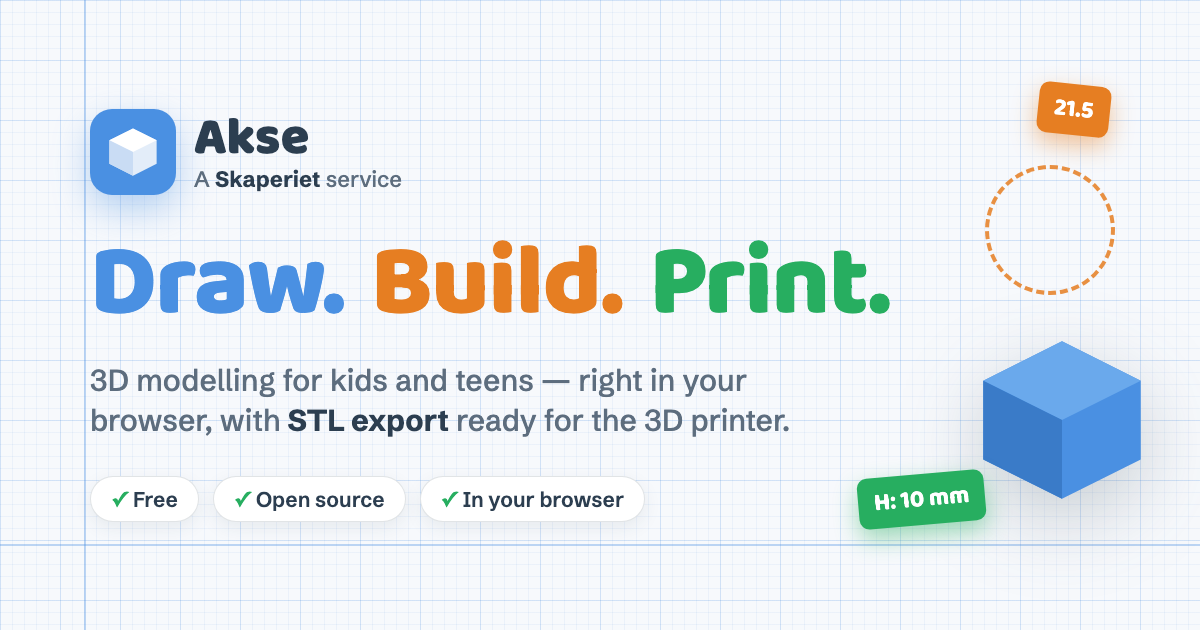
Akse is a free, browser‑based 3D modelling tool designed for kids and teens, created by the Skaperiet maker space. Users build models by combining primitive shapes or drawing 2D blueprints, with all dimensions shown in real millimetres for accurate 3D‑printing, and export projects as STL files. The interface features simple controls, touch support, boolean “hole” modes, precise snapping, undo/redo history, and optional cloud or local saving. Akse’s open‑source code (AGPL‑3.0) is available on GitHub, allowing schools and makers to self‑host or embed it in websites, while a commercial licence is offered for closed‑source use.
I found 10k GitHub repositories distributing Trojan malware
The author discovered a vast campaign of malicious GitHub repositories that repeatedly replace their README with a link to a zip file containing a Trojan‑laden executable, using a pattern of hourly commit replacements and full copy‑pasting of original project histories to appear legitimate. By mining GitHub’s public event archives and refining API queries, the author’s script identified roughly 10,000 distinct repositories matching the criteria—about 25% of the 40,000 frequently updated repos examined—each hosting a zip that evades VirusTotal scans unless unpacked. The post details the detection method, shares the full list and a “Git Malware Finder” script, and raises questions about the attackers’ tactics, GitHub’s detection gaps, and the broader scale of the operation.
Stem cells banish autoimmune disease for 15 years

Stem‑cell transplants achieve long‑term remission in two patients with neuromyelitis optica spectrum disorder (NMOSD) – an aggressive autoimmune disease that attacks the spinal cord and optic nerve. The first recipients, a man (treated in 2009 with his sister’s allogeneic haematopoietic stem cells) and a woman (treated in 2010 with an unrelated donor’s cells), have remained symptom‑free for over 15 years after a conditioning regimen of chemotherapy and B‑cell‑depleting antibodies, followed by a single stem‑cell infusion. Neither developed NMOSD‑associated antibodies, and both rebuilt healthy immune systems without graft‑versus‑host disease. Researchers say the results, reported in Med, justify larger clinical trials of allogeneic stem‑cell therapy as a potential durable reset of the immune system for NMOSD patients who fail conventional drugs.
Datasette Apps: Host custom HTML applications inside Datasette
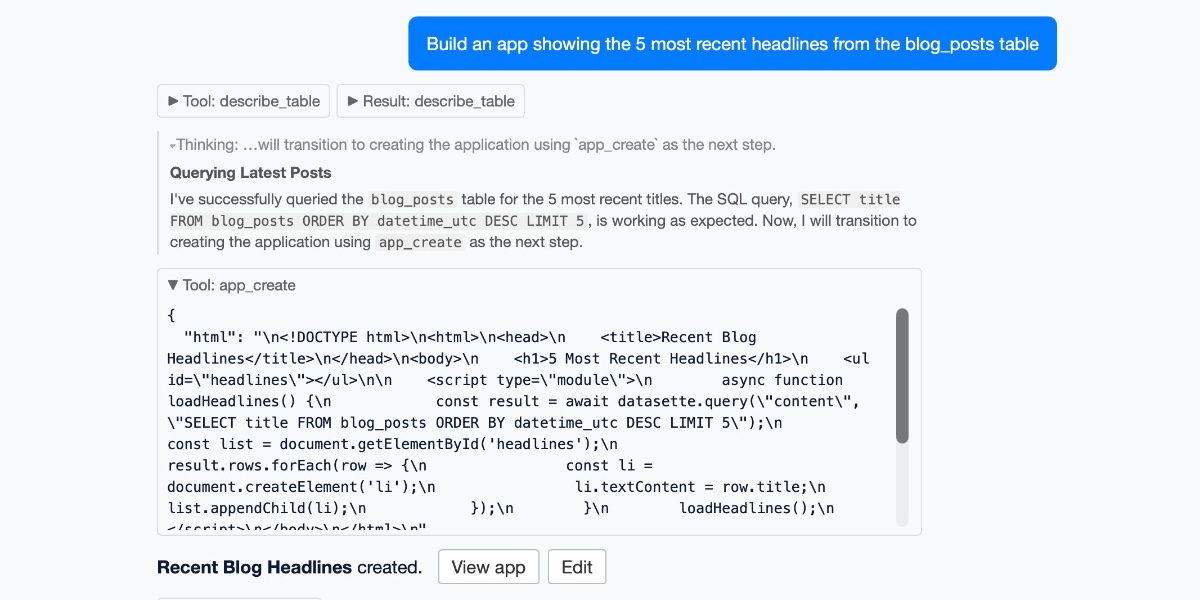
Datasette Apps is a new plugin announced by Simon Willison that lets developers embed self‑contained HTML + JavaScript applications inside a Datasette instance using a tightly sandboxed
From a 7 KB file to a 13-year backdoor operation

Security researcher Austin Ginder uncovered a 13‑year‑long supply‑chain malware operation hidden in the WordPress plugin ecosystem. Starting from a 7 KB compressed .dat file in the abandoned wp‑advanced‑math‑captcha plugin, he decoded a dropper that installed the siteguarding_tools.php backdoor and contacted siteguarding.com. Further analysis linked the plugin to a network of 44 malicious plugins across 19 anonymous WordPress.org accounts, all tied to the same infrastructure (domains siteguarding.com, cmsplughub.com, safetybis.com, IP 198.7.59.167 and related ranges). The campaign ran in three waves (2013‑2020 portfolio, 2024 batch, and 2025‑26 burners), using hidden binaries (.dat, .gzs, .key) and even injecting loaders into wp-config.php. The operator, originally a Cyprus company “SafetyBis Ltd.” dissolved in 2016, continued under the “SiteGuarding” brand, constantly updating the backdoor (latest v2.4 as of April 2026). Ginder’s systematic scans of closed plugins revealed the full scope, emphasizing that public data (plugin code, DNS records, Wayback snapshots) can expose long‑running malware supply chains. Sites running any of the identified plugins should be considered compromised and rebuilt.
Building a robotics research setup that lives next to my desk

Matthias Plappert details how he built a compact, sub‑€5,000 tabletop robotics research station that fits beside his desk, using a UFactory xArm Lite 6 robot arm, an Intel RealSense D405 wrist‑mounted depth camera, a Logitech C920 static webcam, and a 3Dconnexion SpaceMouse for teleoperation. He outlines the hardware bill of materials, explains choices such as a single‑arm design, depth sensing for policy training, and a simple DIY camera mount, then describes his custom Python software stack—named robo—that handles sensing, control, telemetry, and data recording via an in‑memory publish/subscribe architecture, avoiding ROS. The system logs multimodal data to Rerun files for later conversion to LeRobot datasets, and is set up for future policy inference on an external NVIDIA DGX Spark. Safety measures include hardware emergency stops, software‑enforced workspace limits, and fail‑loud process handling. Upcoming steps involve collecting demonstrations, training baseline and vision‑language‑action policies, and evaluating RGB vs. RGB‑D performance across varied tabletop tasks.
Agentic Resource Discovery Specification
Agentic Resource Discovery (ARD) is a specification that enables AI clients to automatically find and assess external capabilities—such as tools, APIs, workflows, and other agents—called agentic resources. As the number of these resources grows rapidly across public, vendor, and internal domains, manual discovery becomes impractical. ARD provides a standardized query interface where a client can ask, “What agentic resource can help with this task?” and receive detailed listings of matching capabilities, including their functions, providers, locations, and access methods. The specification focuses solely on discovery, leaving invocation to each resource’s native mechanisms, and can be implemented by various services like GitHub’s Agent Finder or Hugging Face’s Discover, facilitating broader, cross‑client accessibility of published resources.
Emacs 31 is around the corner: The changes I'm daily driving
Emacs 31 is nearing release, and author Rahul Juliato details how he’s already using its new built‑in features in his “Emacs Solo” no‑packages configuration. Highlights include streamlined tree‑sitter support that auto‑installs grammars, an experimental markdown‑ts‑mode with Org‑style navigation, syntax‑highlighted code blocks and inline images, and Eglot rendering docs via this mode. He also notes smarter completion toggles, revamped window‑layout commands, a side‑window Speedbar, version‑control niceties, editable xref buffers, ERC log handling, and a slew of quality‑of‑life tweaks such as kill‑region‑dwim, live lossage view, native‑comp battery handling, and terminal fixes. The post serves as a preview of Emacs 31’s improvements and a call for feedback on experimental features.
I need your clothes, your boots, and your motorcycle
Arbee details a 2026 effort using AI (Claude and GPT‑5.5) to debug and improve Power Macintosh emulation in MAME, fixing numerous issues across the Pippin, PowerMac 7200, and PowerMac 6100—including VIA emulation glitches, PowerPC 601 bugs, atomic load/store faults, and FPU flag handling—resulting in successful boot sequences, functional graphics, and a working Graphing Calculator demo. He notes AI’s usefulness for firmware analysis and memory mapping but stresses human supervision and manual code integration, warning against submitting unchecked AI‑generated patches to MAME.